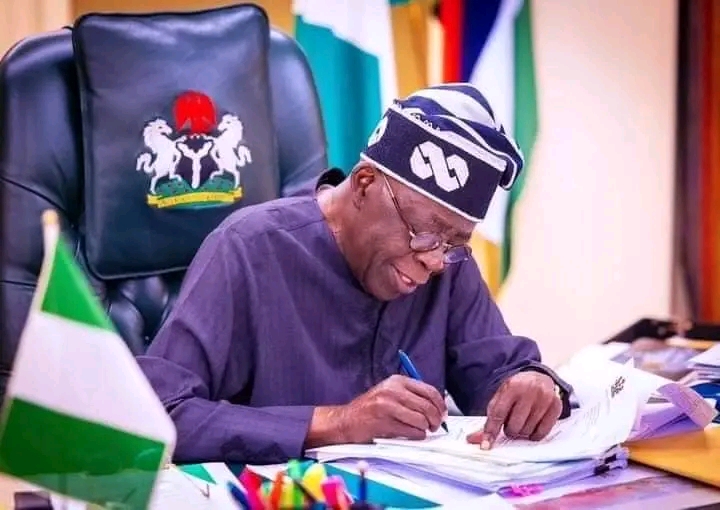
Asiwaju Bola Ahmed Tinubu

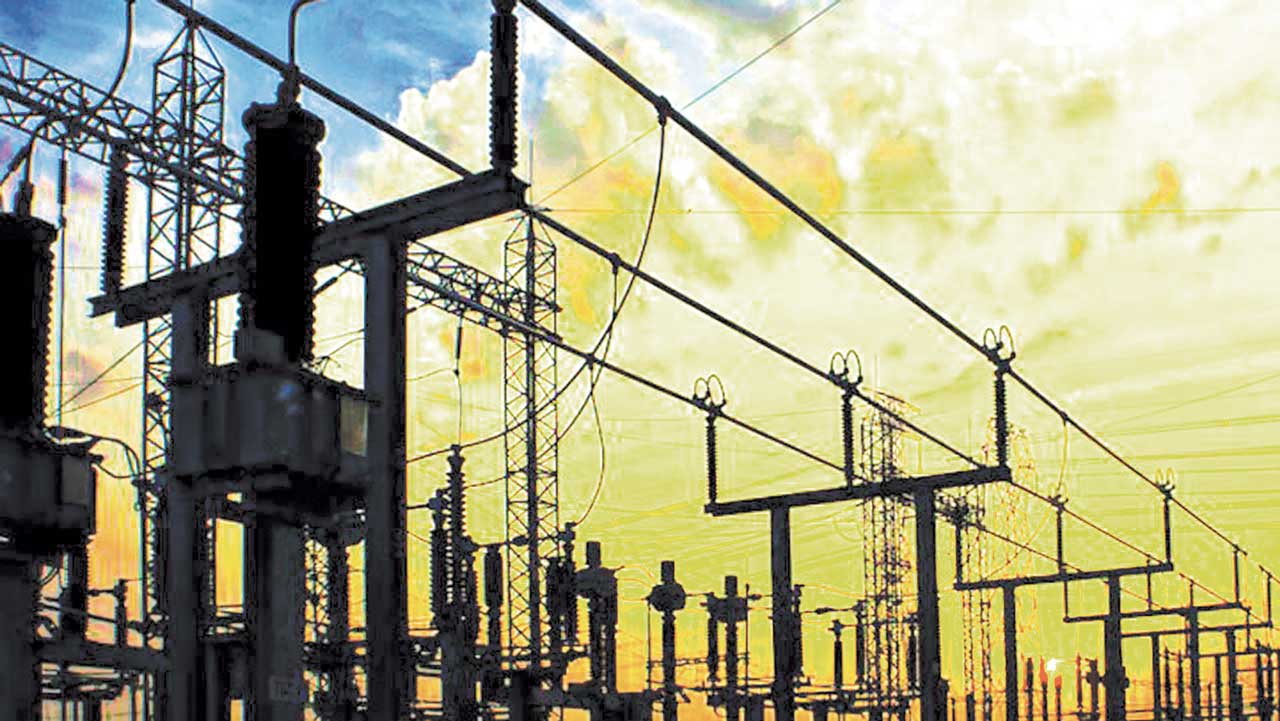
Power privatisation scam and the N4trn GenCos time bomb

By Lawal Dahiru Mamman

Nigeria’s struggle with electricity is not just about flickering bulbs or darkened homes. It is about the survival of industries, the health of small businesses, and the very foundation of national development. 

A stable power supply is the bedrock of productivity, yet, after more than a century of electricity generation, the sector still reflects more chaos than progress. The story began modestly in 1896, when Lagos hosted Nigeria’s first power plant, which had a capacity of just 60 kilowatts. 

Over the next few decades, plants sprouted in Port Harcourt, Kaduna, Enugu, Maiduguri, Yola, Zaria, Warri, and Calabar. However, the system was fragmented—managed by native authorities and the Public Works Department—until 1950, when the Electricity Corporation of Nigeria (ECN) was established.

ECN soon became a national monopoly, consolidated further in 1972 when it merged with the Niger Dams Authority to form NEPA. For decades, “NEPA” became a household word, but mainly for the wrong reasons: inefficiency, chronic underinvestment, system losses, power theft, and blackouts that forced families and businesses to rely on expensive generators.

By 1999, fewer than 20 of Nigeria’s 79 power plants were functional. Barely 28% of installed capacity was delivered, leaving millions in perpetual darkness. These failures spurred reform efforts. 

The National Electric Power Policy (2001) and the Electric Power Sector Reform Act (2005) paved the way for privatisation, resulting in the establishment of 18 successor companies: 6 generation companies (GenCos), 11 distribution companies (DisCos), and 1 transmission company (TCN).

The promise was clear: privatise, attract investors, boost efficiency, and deliver reliable power. By November 2013, the federal government sold its stakes in the GenCos and DisCos, earning $2.5 billion in proceeds. 

Companies like Transcorp Power, Geregu, Ughelli, Shiroro, Sapele, and Kainji took control of generation, while 11 Distribution Companies (DisCos) took charge of retail distribution. But the dream quickly soured. A decade later, efficiency gains remain elusive. 

Generation hovers below 5,000MW for a nation of over 200 million. Blackouts are frequent, tariffs are contested, infrastructure remains weak, and both Generation and Distribution Companies (GenCos and DisCos) are drowning in debt.

The situation worsened in 2025 when GenCos raised alarm over a staggering N4 trillion owed to them by the federal government—N1.9 trillion in legacy debts and N2 trillion for power supplied in 2024 alone. 

President Bola Tinubu admitted government liability, but insisted only verifiable claims would be honoured. By August, Finance Minister Wale Edun confirmed plans to clear the debts, signalling tacit acknowledgement.

This mountain of debt builds upon years of heavy subsidies and bailouts, with government interventions since 2023 alone estimated to be above N7 trillion. These include tariff adjustments through the Multi-Year Tariff Order (MYTO), direct subsidies, bailout funds, and payment guarantees. 

Yet, paradoxically, Nigeria continues to subsidise a sector that was supposed to thrive under private ownership. The Electricity Act 2023 pushed for cost-reflective tariffs, expanded metering, and transmission upgrades. 

But the larger question looms: has Nigeria’s privatisation model failed? Or has the government’s constant interference, through subsidies and political tariff control, undermined the very logic of privatisation?

As the GenCos demand arrears, the DisCos complain of low remittances, and consumers grumble under rising tariffs and unreliable supply, Nigeria must confront a harsh reality: electricity is not just an economic issue, but a governance test.

If the sector is to function effectively, the government must draw a clear line—provide enabling policies, enforce regulations, but step back from perpetual bailouts. The time has come to interrogate privatisation, recalibrate the framework, and design a power sector that delivers light, not debt. 

For without power, the dream of industrial Nigeria remains trapped in darkness.

Lawal Dahiru Mamman writes from Abuja. He can be reached at: dahirulawal90@gmail.com.

FG scraps 5% telecom tax on calls, data

By Muhammad Abubakar

The Federal Government has removed the 5% excise duty on telecommunications services in Nigeria.

The tax, introduced under the administration of former President Muhammadu Buhari, was to be applied on both voice and data services. It drew strong opposition from telecom operators and consumer groups.

Executive Vice Chairman of the Nigerian Communications Commission (NCC), Aminu Maida, said President Bola Ahmed Tinubu ordered its removal during discussions on the recently passed Finance Act.

The decision is expected to provide relief to over 171 million active telecom subscribers, who have also faced a 50 per cent tariff increase earlier this year.

Fuel subsidy gone, but the borrowing floodgates are open

By Nasiru Ibrahim 

Nigeria’s debt situation has become more confusing and concerning in recent years. After removing fuel subsidies, which had always been used to justify heavy borrowing, many expected a change in direction. But surprisingly, debt has continued to rise—and sharply. 

In less than two years, Bola Ahmed Tinubu’s administration has added over ₦62 trillion to our total debt. This comes on top of Muhammadu Buhari’s already heavy debt legacy. Yet if you check the 2025 budget, it still carries a huge deficit. This is despite relatively stable oil prices and a slight improvement in crude oil production. So, something is clearly not adding up.

How can a country that has removed one of its biggest expenditures—fuel subsidies—still be borrowing more than ever? Is it that the revenue reforms aren’t working, or is this a deeper issue with how we manage our economy? These are real questions that need honest answers. The reality is that Nigeria’s current borrowing trend is worrying not just because of the amount, but also because of the manner in which it’s happening and what it reflects.

According to the Debt Management Office, as of March 31, 2025, Nigeria’s public debt stood at ₦149.39 trillion. Tinubu alone has added ₦62.01 trillion to that figure in under two years. Now, let’s compare that with previous administrations: Goodluck Jonathan borrowed ₦5.9 trillion in five years. Buhari borrowed ₦74.78 trillion in eight years—including the controversial “Ways and Means” borrowing from the Central Bank of Nigeria (CBN). That’s how bad things have gotten.

“Ways and Means” are short-term loans from the Central Bank to the Federal Government, intended to cover urgent expenses such as paying salaries or addressing unexpected shortfalls. Think of it like an overdraft facility. But the law is clear—the CBN Act, 2007 (Section 38) states that the Federal Government can only borrow up to 5% of the previous year’s revenue from the CBN, and it must be repaid in the same year. Under Buhari, this law was ignored. His government borrowed ₦22.7 trillion through Ways and Means, without obtaining proper approval from the National Assembly.

This ₦22.7 trillion had not been reflected in official debt figures for a long time. It only became part of Nigeria’s domestic debt record in May 2023, when Buhari’s government securitised it—basically converted it into long-term bonds. That move alone caused the total public debt to jump from ₦44.06 trillion at the end of 2022 to ₦87.38 trillion by June 2023. That’s a massive increase in just six months.

Now, some economists argue that Tinubu’s debt figures appear worse primarily due to the exchange rate. That argument is simple: Nigeria borrows in foreign currencies, such as the dollar, euro, or yuan, but records the debt in naira. So when the naira weakens, the same dollar loan becomes much bigger in naira terms.

Let’s look at the exchange rate across administrations. Under Jonathan, the exchange rate was around ₦ 157 to $1 in 2015. Under Buhari, the exchange rate was ₦770/$ in 2023. And under Tinubu, the exchange rate is now approximately ₦1536/$ as of 2025. So when you convert the same external loan, the naira value explodes as the currency weakens. Just this exchange rate movement has added ₦29.75 trillion to Tinubu’s external debt and ₦5.9 trillion to Buhari’s.

To properly check if the debt spike is mainly due to FX changes, let’s fix the exchange rate at ₦157/$ for all the administrations and see how much was actually borrowed. The formula is simple:


Old Dollar Debt × New Exchange Rate – Old Dollar Debt × Old Exchange Rate.

Using the DMO’s external debt figure of $38.81 billion in 2023:
$38.81bn × ₦770 = ₦29.85 trillion
$38.81bn × ₦1536 = ₦59.63 trillion
₦59.63 trillion – ₦29.85 trillion = ₦29.78 trillion

So, if the exchange rate had remained at ₦157/$, Nigeria’s external debt of $42.46 billion in 2025 would have been approximately ₦6.6 trillion. Under that fixed exchange rate, Jonathan’s total external borrowing would have been approximately ₦1.07 trillion over five years. Buhari’s about ₦4.48 trillion in eight years.

Tinubu’s about ₦1.12 trillion in under two years. This means if Tinubu continues at this pace, he’ll hit Buhari’s figure—₦4.48 trillion—in about eight years. Yes, the exchange rate plays a significant role. But that’s not the whole story.

Others argue that Tinubu’s debt problem is not just about FX. It’s also about spending discipline. Unlike Buhari, Tinubu removed fuel subsidies and slightly increased oil production (1.5–1.6 million barrels per day, compared to Buhari’s average of 1.2–1.3 million barrels), and customs and tax revenue also improved. Buhari faced more challenging conditions—global oil crashes, two recessions in 2016 and 2020, the COVID-19 pandemic, and high subsidy payments—during his early years. So, Tinubu had more room to save, but instead, borrowing has increased.

The 2025 budget projects a deficit of ₦13.08 trillion. It assumes oil at $77.96 per barrel and production of 2.06 million barrels per day. However, in reality, March production was only 1.65 million barrels per day, including condensates. And as of July 8, Brent crude was $70.20 and WTI was $68.42—both below the assumed price. That means revenue projections may fall short, and the government will likely borrow even more.

Tinubu has already requested $21.6 billion in new loans. In May 2025, Reuters reported that he also asked the National Assembly to approve loans of €2.2 billion, ¥15 billion (approximately $104 million), and an additional $2 billion in domestic loans. That’s not all.

The Federal Government also secured a $747 million syndicated external loan to fund Phase 1, Section 1 of the Lagos-Calabar Coastal Highway—from Victoria Island to Eleko Village. At ₦1536/$, this loan adds ₦1.147 trillion to the debt. The lenders include Deutsche Bank, First Abu Dhabi Bank, Afreximbank, and Zenith Bank, among others. The Islamic Corporation for the Insurance of Investment and Export Credit (ICIEC) is providing insurance. That brings Tinubu’s total borrowing to about ₦63.157 trillion in under two years.

This highway is being built under a Public-Private Partnership using an EPC+F model. The road is over 70% complete and is designed using CRCP technology—concrete with a 50-year lifespan and low maintenance requirements. While the loan adds to debt, it shows some confidence from global investors and introduces a financing model that shares risk between the government and private firms.

Now to the bigger picture. As of 2024, Nigeria’s debt-to-GDP ratio is around 25.1%, based on ₦144.67 trillion in debt and a nominal GDP of about $375 billion. That means debt accounts for about one-quarter of the economy—not yet alarming, but becoming risky if borrowing continues at this rate. What’s more worrying is the cost of servicing debt.

In 2024, debt service took up 4.1% of GDP—up from 3.7% in 2023 (AfDB report). That’s a lot. Imagine 4.1% of the entire economy going towards just paying off debt, instead of building schools, roads, or hospitals. Even worse, the debt service-to-revenue ratio rose from 76.86% in 2023 to 77.4% in 2024 (APA News). This means more than three-quarters of government revenue is now used to repay debt. That leaves very little for anything else. That’s not sustainable.

As Economics graduates, the way forward is clear. First, we need to depoliticise how we manage public finances. Countries like Chile, Sweden, and the UK have independent Fiscal Councils that enforce rules like debt limits and balanced budgets. Nigeria needs something like that to restore discipline and rebuild investor trust.

Second, loans must be tied to development goals—not used for consumption. Borrowing should be used for essential services like roads, electricity, and digital infrastructure, rather than paying salaries or covering bloated administrative costs. Rwanda and Ethiopia have shown how debt used for infrastructure can boost exports and growth. A cost-benefit analysis should accompany every loan.

Third, we must cut waste and off-budget liabilities. That includes fuel subsidies, failing state-owned enterprises, and unauthorised bailouts. Ghana passed a Fiscal Responsibility Act in 2018, capped its deficit at 5% of GDP, and ran audits that exposed massive leakages. Nigeria can cut borrowing by 30–40% just by following that path.

Fourth, improve tax collection—not by harassing small traders, but through fairness and the use of technology. Indonesia raised its tax-to-GDP ratio by digitising filing, automating risk detection, and linking tax IDs with national identity numbers. Nigeria can do the same—target high earners and multinationals instead of informal workers.

Fifth, public-private partnerships and syndicated loans, such as the Lagos-Calabar road, shouldn’t be used to conceal debt. They should help us attract private capital, share risks, and deliver real development. Countries like Morocco and Kenya make their PPP contracts public. Nigeria should also strive for greater transparency.

Finally, if things get out of hand, we can consider debt restructuring—but only as a last resort and if tied to fundamental reforms. Ghana restructured its debt in 2023 by extending maturities and cutting interest under IMF guidance. But what made it work was reform—cutting subsidies and improving tax systems. Without reform, restructuring solves nothing.

This is the time for Nigeria to act. If we continue on this path, we are only postponing a more profound crisis. But with the right decisions, we can still change direction.

Ibrahim is a graduate of Economics from Bayero University, Kano. He can be reached via nasirfirji4@gmail.com.

Let the oil exports breathe

By Hanniel Sebatie Noboh

On the morning of July 30, Vanguard newspaper published an editorial titled “30% Processing of Export Raw Materials”, offering its perspective on the recently passed Senate bill mandating that all raw materials exported from Nigeria must be processed locally by at least 30 per cent. This long-overdue legislation is a welcome development in Nigeria’s quest for economic diversification.

Nigeria remains one of the most naturally endowed nations in the world. With abundant resources such as limestone, gold, natural gas, and the globally coveted crude oil, our country boasts mineral wealth that many developed nations lack. In agriculture too, from rice and groundnuts in the North to cassava and palm oil in the South, Nigeria’s fertile soil continues to bless us with variety and abundance.

Yet, successive governments have, for decades, focused disproportionately on crude oil, neglecting other sectors, such as agriculture and manufacturing. As the Vanguard editorial rightly observed, even during economic downturns—when necessity should inspire reform—there has been little effort to diversify our export base.

This is why the passage of this bill marks a significant shift. By requiring at least 30 per cent local processing of all export-bound raw materials, Nigeria takes a substantial step towards value addition and economic transformation.

The advantages are manifold. First, processed goods typically command higher prices in global markets. Take cocoa, for instance—a ton of raw beans sells for far less than the same quantity processed into cocoa butter. This principle applies to most commodities: the more value added, the greater the earnings.

Second, enforcing the 30 per cent processing threshold will spur the development of local industries. More processing facilities will mean more jobs, improved infrastructure, and Nigeria’s transition from an exporter of raw materials to a player in the global manufacturing and semi-processed goods market. Even for domestic buyers, the availability of semi-processed inputs will reduce dependency on fully imported goods, lowering costs and supporting local production.

Additionally, the bill aligns with President Bola Tinubu’s vision of making agriculture more attractive to Nigerian youth. Many young people may not be drawn to traditional farming, but with the emergence of new processing plants, opportunities will abound in machine operations, logistics, quality control, and related fields.

However, as Vanguard also warned, the real challenge lies in implementation. Nigeria has no shortage of well-intentioned policies, but history shows that many fail at the execution stage. A lack of infrastructure, regulatory oversight, and transparency could undermine the promise of this bill. The risk of corruption—particularly in granting exemptions or failing to enforce compliance—must be proactively addressed.

The responsibility for enforcement rests with the Raw Materials Research and Development Council (RMRDC), which must ensure compliance with the 30 per cent benchmark and uphold quality standards. Any exporter who fails to meet the requirement will face a 15% surcharge on the export value of their raw materials. This is a strong disincentive, but only if enforced fairly and transparently.

In conclusion, while the bill is commendable, its success depends on rigorous implementation, strong political will, and effective institutional accountability. If executed effectively, it could be a game-changer for Nigeria’s economy. Like many Nigerians, I remain hopeful that this won’t become another forgotten policy but the beginning of a new era of industrial growth and self-reliance.

Hanniel Sebatie Noboh is a Mass Communication student at Nile University and an intern at PRNigeria. She can be reached via nobohhanniel@gmail.com.

FG seeks fresh $1.75bn World Bank loan

By Muhammad Abubakar

The Federal Government of Nigeria has approached the World Bank for a fresh loan of $1.75 billion to support its economic reform agenda.

Minister of Finance and Coordinating Minister of the Economy, Wale Edun, disclosed that the facility would help cushion the impact of recent policy adjustments, including the removal of fuel subsidy and the unification of the exchange rate, which have placed significant strain on households and businesses.

He explained that the request, if approved, would provide critical budgetary support, strengthen fiscal sustainability, and help address the nation’s infrastructural and developmental challenges.

Nigeria’s President, Bola Ahmed Tinubu, has repeatedly defended his administration’s reforms, insisting they are necessary to revive the economy and attract foreign investment.

World Bank Country Director for Nigeria, Shubham Chaudhuri, confirmed that discussions are ongoing, although no official approval has been given yet.

Nigeria, Africa’s largest economy, has in recent years relied on multilateral loans to bridge financing gaps amid rising debt obligations and dwindling revenues.

I have to create state police to tackle insecurity — Tinubu

By Uzair 

President Bola Tinubu has reiterated that the creation of state police is inevitable in addressing Nigeria’s worsening insecurity.

Speaking at the Presidential Villa in Abuja on Tuesday during a courtesy visit by prominent Katsina indigenes led by Governor Dikko Radda, Tinubu assured that his administration is determined to confront the menace of banditry and other security threats.

He directed security agencies to review their strategies in Katsina, which has recently witnessed a surge in banditry, and announced plans to deploy advanced military equipment and surveillance technology. 

The president also disclosed that newly recruited forest guards in the state would receive enhanced training and support.

Tinubu acknowledged Nigeria’s security challenges, including porous borders and long-standing weaknesses, but stressed that with determination and a strategic approach, they could be overcome.

“The security challenges we are facing are surmountable. Yes, we have porous borders. We inherited weaknesses that could have been addressed earlier. It is a challenge that we must fix, and we are facing it,” he said.

He revealed that the federal government had approved the acquisition of additional drones and instructed him to receive daily updates on security operations in Katsina.

“I am reviewing all aspects of security; I have to create a state police. We are looking at that holistically,” Tinubu added.

The president reassured Nigerians that insecurity would be defeated, emphasising the need to protect children, places of worship, and livelihoods from criminal intimidation.

He reminded the delegation that in February 2024, the federal government established a committee to develop a framework for state policing, which has since garnered widespread support. 

However, by March, 20 states were yet to submit their reports, according to Vice-President Kashim Shettima.

Tinubu also paid tribute to former President Muhammadu Buhari, praising him for leaving behind a legacy of success.

Governor Radda and other members of the delegation, including former Governor Aminu Masari and Ibrahim Ida, the Wazirin of Katsina, commended Tinubu for his commitment to security and infrastructural development in the state. 

Ida urged the federal government to prioritise upgrading the Umaru Musa Yar’Adua International Airport and bolstering security in southern Katsina.

Atiku slams Tinubu administration on insecurity

By Muhammad Abubakar

Former Vice President Atiku Abubakar has launched a sharp attack on President Bola Tinubu’s administration, accusing it of failing to secure the North-Central region of Nigeria. 

Abubakar’s statement claims that the government has abandoned the area, resulting in a “monumental failure” in protecting its citizens.

Abubakar highlighted a dramatic rise in violence, citing Kwara State’s new status as a hotspot for kidnappings and bandit attacks. He also noted continued bloodshed in Niger, Plateau, and Benue states, where thousands have been killed in just two years.

The former Vice President went on to accuse the ruling APC of using thugs to disrupt opposition meetings, with security forces allegedly failing to act.

He warned that violence “is a vicious circle” that will harm those who use it, and called on the Nigeria Police Force to remain neutral and fair, reminding them that taxpayers, not the APC, fund them.

Ulama Forum rejects Nigeria-Israel security pact

By Muhammad Sulaiman

The Ulama Forum in Nigeria has condemned the reported Memorandum of Understanding (MoU) between the Federal Government and the State of Israel on security cooperation, describing it as “a dangerous and insensitive diplomatic move.”

In a statement signed by its Convener, Aminu Inuwa Muhammad, and Secretary, Engr. Basheer Adamu Aliyu, the Forum accused the Minister of State for Foreign Affairs, Mrs. Bianca Ojukwu, of unilaterally engaging Israel despite global outrage over its alleged genocide against Palestinians.

“At a time when the world of conscience is against Israel, Nigeria should be at the forefront of supporting South Africa’s genocide case at the International Court of Justice, not courting a state increasingly isolated for human rights violations,” the statement read.

The Forum warned that involving Israel in Nigeria’s internal security would erode national sovereignty, risk human rights abuses, and entrench dependence on foreign powers. It argued that “internal security issues require homegrown solutions that prioritise community engagement, social cohesion, and inclusive governance.”

Instead of seeking external assistance, the group urged the government to strengthen security institutions, address poverty and corruption, and ensure justice for offenders. It further called on President Bola Ahmed Tinubu to “call the erring minister to order” in the interest of national unity and public sensitivity.

The Forum reaffirmed its confidence in Nigeria’s security personnel and pledged continued prayers for “Allah’s guidance and support to our gallant forces.”

APC North-Central urges Tinubu to retain Shettima as VP

By Anwar Usman

The All Progressive Congress Forum North-Central has advised President Bola Tinubu to retain Vice President Kashim Shettima as his running mate for the 2027 presidential election.

The statement was made by the forum’s Chairman, Alhaji Saleh Zazzaga, in Abuja on Saturday.

In a recent appearance on Channels Television’s Politics Today, the Northern Ethnic Nationality Forum, led by Dominic Alancha, warned Tinubu against a repeat of the Muslim-Muslim ticket, noting that it cost the APC several northern states like Nasarawa, Plateau and the Federal Capital Territory in the 2023 presidential poll.

Alancha further warned that the APC would lose more ground in the North, particularly in the Middle Belt, if the party repeats the Muslim-Muslim ticket in the next presidential election.

However, according to the group, calls for the President to drop the Muslim-Muslim ticket in the next election are unnecessary, insisting that the combination worked for the APC in 2023.

Zazzaga explained that the choice of running mate was a political strategy aimed at ensuring victory for the party and should not be seen as an attempt to sideline any religious group.

He further argued that with key positions in government already occupied by prominent Christians from the Middle Belt, including the APC National Chairman, Prof. Nentawe Yilwatda, and the Secretary to the Government of the Federation, Senator George Akume, the region remains well represented.

 The statement in part read, “The Muslim-Muslim ticket will not affect President Bola Tinubu’s chances in the Middle Belt, which is part of the North-Central, and this is because of the key positions held by Middle Belt Christians in the APC government.

“We can guarantee that Tinubu will get 90 per cent of the votes from the North-Central. Tinubu’s achievements in office will guarantee his reelection, and as a result, there is no need to take the needless risk of changing a winning team.

“Those who are calling on President Bola Tinubu to change Vice President Kashim Shettima, basing their agitation on the Muslim-Muslim ticket, if you check, you will notice that in 2023, most of their communities voted for Peter Obi of the Labour Party.

“Now, if Peter Obi is to come out again in 2027, as expected, what is the guarantee that they will vote for Tinubu even if he drops Shettima and replaces him with a Christian? Does it mean that these people will now leave Peter Obi and vote for Tinubu?”

The Forum maintained that Tinubu’s performance in office would play a decisive role in determining his chances of re-election, adding that the President should focus on consolidating his achievements rather than altering the political structure that brought him victory in 2023.

 The statement concluded, “We advise Mr President not to change what worked in the last election. Maintaining the same team will further strengthen the chances of the APC in 2027″.

FG imposes 7-year ban on establishment of new federal tertiary institutions

By Abdullahi Mukhtar Algasgaini

The Federal Executive Council (FEC) has approved a seven-year moratorium on the establishment of new federal universities, polytechnics, and colleges of education across the country.

The decision, announced by the Minister of Education, Dr. Tunji Alausa, on Wednesday, aims to address declining standards and infrastructure challenges in Nigeria’s tertiary education sector.

The ban, which takes immediate effect, is intended to curb duplication, optimize resources, and improve existing institutions.

Alausa stated that Nigeria currently has 72 federal universities, 42 polytechnics, and 28 colleges of education, yet many struggle with low enrollment and inadequate facilities.

“Access to tertiary education is no longer the problem—quality is,” Alausa said.

He cited alarming statistics, including 199 universities with fewer than 100 applicants in the 2024/2025 academic session and 34 institutions with zero applicants.

Similar trends were observed in polytechnics and colleges of education.

The minister emphasized that the moratorium will allow the government to focus on upgrading infrastructure, enhancing staff capacity, and expanding the carrying capacities of current institutions.

He also warned that unchecked expansion risks producing unemployable graduates. Meanwhile, FEC approved nine new private universities, clarifying that these were long-pending applications.

Alausa noted that stricter guidelines would soon apply to private institutions to prevent unchecked growth at the expense of quality.