Arewa

Atiku’s $1.2M Washington Lobbying Effort Exposed as Political Gamble, Presidency Claims

By Abdullahi Mukhtar Algasgaini

The Presidency has strongly refuted claims circulating in some media circles that suggest President Bola Tinubu is connected to ongoing U.S. legal proceedings, describing the reports as a desperate political maneuver funded by opposition figures seeking foreign validation ahead of the 2027 elections.

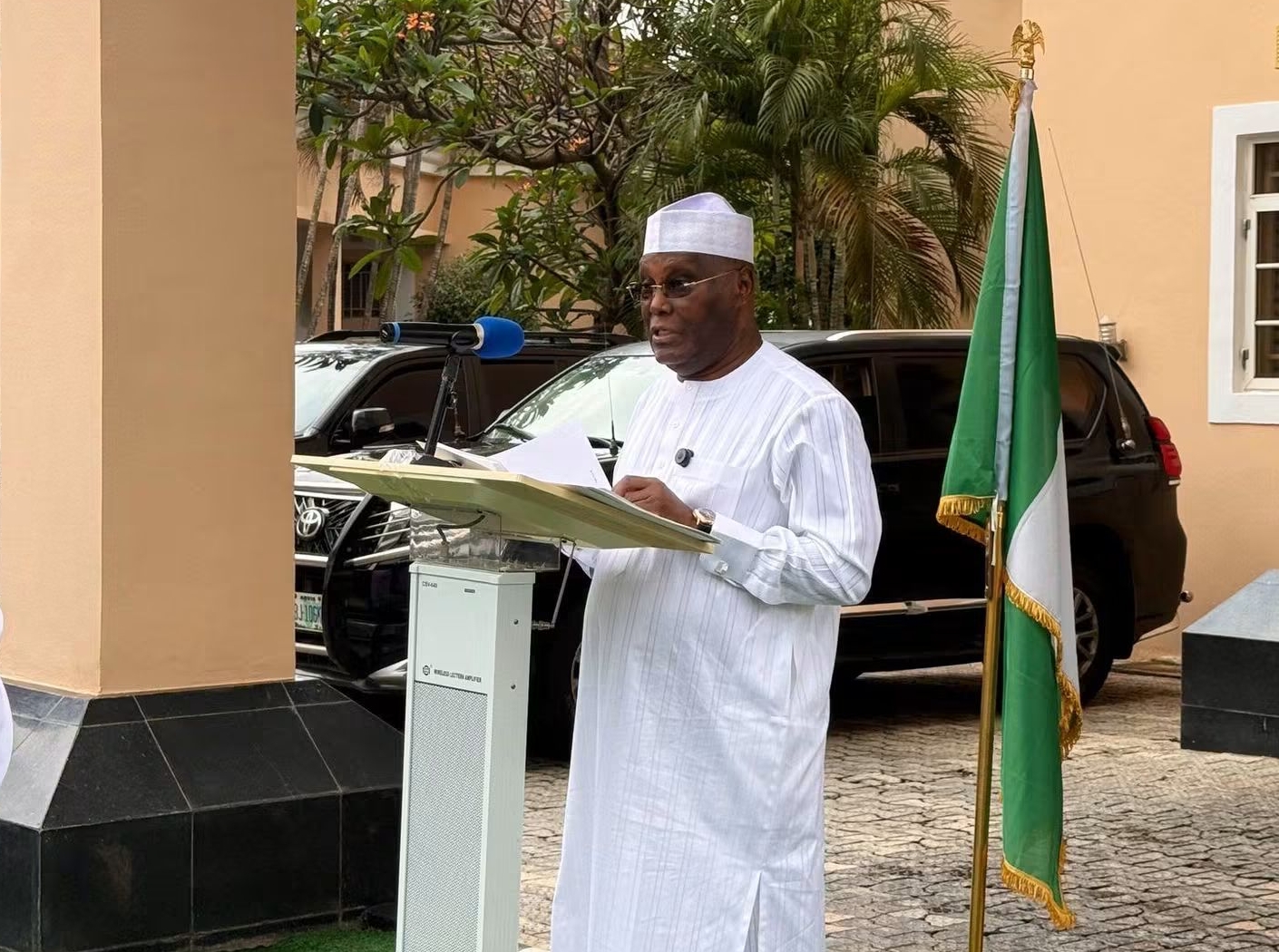
In a detailed statement issued Sunday, Dr. Sunday Dare, Special Adviser to the President on Media and Public Communications, characterized the coordinated media campaign as a “clinical demonstration of desperation” orchestrated by former Vice President Atiku Abubakar’s camp.

According to publicly verifiable filings with the U.S. Department of Justice under the Foreign Agents Registration Act (FARA), Atiku Abubakar contracted the Washington-based firm Von Batten-Montague-York, L.C. on a $1.2 million, 12-month retainer. The agreement’s explicit scope, Dare noted, is to execute a “targeted, partisan campaign” designed to “counterbalance” Nigerian government narratives and weaponize historical judicial archives for domestic political leverage.

The statement identified Dr. Karl-Marx Edward Okeke-Von Batten—a U.S.-based consultant of Nigerian origin who added the “Von Batten” surname following his marriage—as the commercial lobbyist behind what the Presidency termed “manufactured controversies.”

“Okeke-Von Batten must have conned a desperate Alhaji Abubakar Atiku into believing that he has access to everyone in the Trump administration, including President Trump himself, by falsely representing that he had reached out to President Trump to release the so-called FBI files,” Dare stated.

The Presidency emphasized that the case in question has been active since 2023, with the FBI’s primary concern being “the protection of the techniques by which it gathers information and the safety of its sources.”

“The report presents no intelligence document, no named Western official, and no evidence of any exchange involving Nigeria’s secrets or resources. It is nothing more than political speculation packaged as classified information,” Dare asserted.

Addressing what it termed “the recycled fixation on decades-old, settled U.S. legal filings,” the statement referenced recent public discourse where Wole Afolabi, SAN, appeared on Channels Television to clarify that actions taken by the legal team to withhold certain sections of FOIA requests align strictly with U.S. legal provisions designed to protect confidential investigative processes.

“If the president had been criminally liable under U.S. law during past investigations, American authorities would have indicted and prosecuted him at the time,” the statement quoted Afolabi as clarifying.

The Presidency also dismissed suggestions linking President Tinubu’s current European trip to U.S. legal proceedings, describing it as a “previously scheduled annual leave” with “absolutely no connection” to ongoing FOIA matters.

Dare concluded by challenging the opposition to present tangible evidence for their allegations, arguing that “true democratic validation is earned through the ballot box and tangible service delivery to the citizens at home, not through manufactured headlines bought and paid for in foreign currency.”

The statement emphasized that Nigerians are “no longer naive spectators easily swayed by rented international mouthpieces or imported falsehoods.”

Hausa Language at Risk of Decline, Former NAWOJ Chair Warns

By Sabiu Abdullahi

The growing influence of English and the declining practice of passing indigenous languages from parents to children could threaten the future of Hausa, former Chairperson of the Nigeria Association of Women Journalists (NAWOJ), Katsina State chapter, Hajiya Hannatu Mohammed, has warned.

Mohammed raised the concern while speaking with newsmen on Sunday in commemoration of Hausa Day. She called for deliberate efforts to protect Hausa and other indigenous Nigerian languages from gradual cultural erosion.

She said the importance of preserving indigenous languages extends beyond communication, as they carry the history, traditions, values and identities of different communities.

The Punch Newspapers quoted her as saying, “Nigeria needs to preserve Hausa and other indigenous languages because language is more than a means of communication. It is a repository of our history, culture, values and collective identity.”

She noted that the widespread use of Hausa across Northern Nigeria, especially in the media, education, commerce and cultural activities, makes its preservation an important cultural and social responsibility.

“We should be able to speak English for global communication while proudly maintaining Hausa and our other indigenous languages,” she insisted.

EFCC Tells Wanted Ex-Bayelsa Governor Sylva to Report for Questioning

By Sabiu Abdullahi

The Economic and Financial Crimes Commission (EFCC) has asked former Bayelsa State Governor, Timipre Sylva, to appear before the agency for questioning over an alleged $14.86m fraud case.

The commission declared Sylva wanted in connection with an alleged case of conspiracy and dishonest conversion involving $14,859,257.

EFCC spokesperson, Dele Oyewale, made the call on Monday while responding to accusations by the former governor that the anti-graft agency had become more of a political arm of the All Progressives Congress than a state institution.

“He has been declared wanted; he should make himself available to the commission,” Oyewale said.

The development came on the same day Sylva announced his resignation from the APC after more than a decade as a member of the ruling party.

In his resignation letter, which was addressed to the APC chairman of Ward 4 in Brass Local Government Area of Bayelsa State, Sylva said he had also sent copies to the national chairman of the party, the EFCC chairman and the APC chairman in Bayelsa State.

Sylva said his decision followed consultations with his family, associates, colleagues and supporters.

He described the APC as a “floundering ship whose fate appears to have been sealed by its irredeemable load of iniquities.”

The former governor also accused the party’s leadership of abandoning the principles that informed its creation.

In the letter dated August 31, 2026, Sylva wrote, “As a founding member of the APC, and one who joined other well-meaning Nigerians in building the Party with sweat and money, it is deeply saddening to witness how the ideals we espoused have been so thoroughly and unrecognisably thwarted.

“Moreover, I cannot, in all good conscience, continue to belong to a Party whose leaders believe that ‘all is fair in politics;’ and have consistently demonstrated that belief in practice.

“All cannot be fair in any endeavour of life. The demands of basic decency and morality forbid it. Unfortunately, this mentality appears to underpin virtually every action, and even inaction, of this administration.”

Sylva further criticised the administration of President Bola Tinubu, claiming that the Federal Government had failed to live up to the expectations of Nigerians.

“The present Government, formed under the banner of the APC we once loved, has disappointed the vast majority of Nigerians. And I can see neither a credible attempt nor any possibility of a revamp,” he stated.

He said he had decided to leave the party because he believed Nigerians would seek a political change at the next election.

“I am therefore left with no other choice than to jettison a floundering ship whose fate appears to have been sealed by its irredeemable load of iniquities. I have no doubt that, in the coming election, Nigerians will vote for Nigeria and free the Country from this stranglehold on our beautiful country,” he said.

Sylva also explained why he copied the EFCC in his resignation letter, accusing the commission of acting in a manner that suggested political alignment with the APC.

He wrote, “I am deliberately putting the EFCC in copy of this letter because, of late, it has conducted itself more as an organ of the APC than as an institution of State.

“I am fully aware that this action of mine may invite a redoubled witch-hunt against me and my associates, but that is a risk I am willing to take.”

The EFCC had declared Sylva wanted in November 2025 over the alleged $14.86m transaction.

The former governor has also been linked to an alleged plot against the Tinubu administration. He is listed as a defendant in a 13-count Federal High Court charge that includes allegations of treason, terrorism-related offences, conspiracy and money laundering.

He has denied involvement in the alleged plot.

Reports linked Sylva to an alleged financial contribution of about N785m to the purported operation through Purple Waves Limited, an Abuja-based company. Investigators reportedly traced the money through the company and a bureau de change operator.

The wider investigation allegedly involved more than N5bn, which investigators said was pooled for the operation. Funds paid into Purple Waves were also reportedly linked to contracts from the Niger Delta Development Commission and loans secured by the company.

The allegations remain before the courts, and Sylva has not been convicted of the offences.

In July 2026, the Department of State Services arraigned five associates of the former governor over allegations that they concealed his whereabouts after he was declared wanted in connection with the alleged plot. They pleaded not guilty and were granted bail.

Earlier, in May 2026, the Federal High Court in Abuja granted an interim forfeiture order over nine properties linked to Sylva following an application by the EFCC.

Sylva served as governor of Bayelsa State from 2007 to 2012, although his tenure was affected by court decisions. He later served as Minister of State for Petroleum Resources under former President Muhammadu Buhari.

APC Chieftain Bags Chieftaincy Title in Yobe

‎By Kasim Isa Muhammad


‎The Deputy Governorship Candidate of the All Progressives Congress in Yobe State, Barrister Saleh Samanja, has been conferred with the traditional title of Maradi of Fika by the Emir of Fika and Chairman of the Yobe State Council of Traditional Rulers, Alhaji Muhammadu Abali Ibn Muhammadu Idrissa.

‎‎Samanja received the official appointment letter from the Fika Emirate Council at a ceremony held in Potiskum Local Government Area of the state and attended by traditional rulers, community leaders, political associates and well-wishers.

‎‎The traditional title was conferred on Samanja in recognition of his exceptional service to the community, dedication to the advancement of Fika Emirate and his respected standing within society.

‎‎Speaking shortly after receiving the appointment letter, Samanja thanked the Emir of Fika and the Emirate Council for the honour, describing the restoration of the title as a source of immense joy.

‎He said the recognition also came with responsibility, assuring the traditional institution and the people of Fika Emirate of his loyalty and commitment.

‎‎Samanja said, “I feel highly elated, happy with the title restored on me. I want to assure the Emirate and the entire people of Fika that I have wholeheartedly accepted this title given to me.

‎‎“I will do my utmost best to ensure that I live up to His Royal Highness’ expectations as Maradi of Fika.”

‎The APC chieftain pledged not to betray the confidence reposed in him by the Emir, promising to uphold the values and responsibilities associated with the title.

‎He said the honour would further strengthen his commitment to supporting the traditional institution and contributing to the unity, progress and prosperity of the people of Fika Emirate.

‎‎Samanja also expressed surprise at the large turnout of people who gathered to witness the occasion, describing the reception as overwhelming and beyond his imagination.

‎‎“I am flabbergasted. I feel highly elated and beyond words. The level of attendance I witnessed today is something I never imagined,” he said.

‎‎He thanked Almighty Allah and appreciated the people who, despite all odds, came out to celebrate with him, describing their support as a gesture he would never forget.

‎Samanja said the occasion would remain indelible in his memory, adding that the honour had further inspired him to continue working for the unity, progress and prosperity of the people.

‎He said the traditional title would serve as an additional motivation for him to contribute to the development of Fika Emirate and support initiatives that would improve the wellbeing of its people.

‎‎The APC chieftain assured the Emirate of his continued loyalty, saying he would work to justify the confidence reposed in him by the traditional institution.

‎‎Samanja thanked the Emir, members of the Fika Emirate Council, community leaders and the people who attended the ceremony, saying their presence had made the occasion memorable.

‎‎He reiterated his commitment to supporting the traditional institution and contributing to the development and prosperity of the people of Fika Emirate.

‎Speaking on behalf of Samanja, the Marafan Machina, Engr. Mohammed Kati, thanked the Emir of Fika for the honour and confidence reposed in the APC chieftain.

‎‎Kati described the conferment as a significant recognition that also carried responsibility, saying Samanja would continue to uphold the values of loyalty, humility, service and commitment to the development of the emirate.

‎‎He said, “The conferment of this title is a significant recognition that carries responsibility. Barrister Samanja will continue to uphold the values of loyalty, humility, service and commitment to the development of the Emirate and its people.”

‎‎Kati said the honour would further strengthen Samanja’s dedication to supporting the traditional institution and contributing positively to the progress of Fika Emirate.

‎He thanked the Emir for finding Samanja worthy of the title and expressed confidence that the APC chieftain would justify the confidence reposed in him.

Jigawa Police Nab 17 Suspects, Recover Motorcycles, Livestock, Phones

By Sabiu Abdullahi

The Jigawa State Police Command has arrested 17 suspects over alleged involvement in theft, shop breaking, cattle rustling, vandalism and other criminal offences across the state.

The command said the arrests were made during separate operations in Malam Madori, Gwaram, Garki, Kiyawa, Taura, Birniwa, Dutse, Ringim, Miga, Kazaure and Roni Local Government Areas.

The Police Public Relations Officer, SP Shiisu Lawan Adam, disclosed this in a statement issued on Friday. He said the operations were based on credible intelligence, prompt responses and investigative efforts by the command.

Among the items recovered were five motorcycles, five cows, two goats and one sheep.

The police also recovered nine Android smartphones, a keypad phone, 44 batteries, four SIM cards and a Lenovo laptop.

Other items recovered included a plasma television, a solar battery, a ceiling fan, cutting pliers, a ring spanner, two pairs of shoes and parts of vandalised school desks.

The command further reported the arrest of three suspects over an alleged armed robbery involving a Boxer motorcycle valued at N1.2 million. The motorcycle has yet to be recovered.

Police said efforts were underway to trace the owners of the recovered property and return the items to them on bond. The command also said it was working to recover the stolen motorcycle.

The suspects were identified as Usman Sale, Abubakar Aminu, Musa Sale, Abubakar Bashir, Yau Yahaya, Shaibu Muhammed, Anas Uba, Gali Ibrahim, Shafiu Ilyasu, Haruna Alhaji, Musa Haruna, Basiru Datti, Abdullahi Bello, Usman Adamu, Adamu Sani, Umar Wada and Salisu Nasiru.

According to the command, the suspects had been taken before a court for prosecution. The armed robbery case was transferred to the State Criminal Investigation Department in Dutse for further investigation.

The Commissioner of Police, CP Tijjani Murtala, reaffirmed the command’s resolve to strengthen intelligence-led policing, surveillance and coordinated operations across Jigawa State.

He also warned criminals and those who assist them to abandon their activities, stressing that the police would ensure that offenders face the full weight of the law.

Nigerian Governors’ Offices, Travel Cost States N512.1bn in Six Months

By Sabiu Abdullahi

About more than 30 state governments spent at least N512.10bn on Government Houses, Governors’ Offices, travel and transport in the first six months of 2026, according to an analysis of state budget implementation reports.

The amount was about 4,713 times the combined six-month basic salaries of Nigeria’s 36 governors.

A governor’s official monthly salary of N503,000 amounts to N3.018m over six months. For all 36 governors, the combined salary would be N108.65m.

However, available records showed that N420.01bn was spent under Government House, Governor’s Office and related executive administration heads, while N92.09bn went to travel and transport.

The combined expenditure represented a sharp contrast with the salaries of the governors. Their total six-month basic pay accounted for only about 0.02 per cent of the identified spending on executive offices and official travel.

The figures have renewed attention on the broader cost of maintaining state executive offices, particularly amid recent comments by Delta State Governor, Sheriff Oborevwori, about the remuneration of governors.

Oborevwori had said his monthly salary was N503,000 and noted that some senior civil servants, including permanent secretaries, earned N900,000 monthly.

However, the analysis indicates that the basic salary of a governor constitutes only a small part of the public expenditure associated with the office.

The Government House and Governor’s Office expenditure covers several official costs, including administration, personnel, maintenance, utilities, official residences, protocol, security-related activities and state functions.

The travel and transport category also includes official domestic and foreign trips as well as transportation-related expenses across the state public service.

The figures therefore do not represent the personal income of the governors. Rather, they indicate the wider public resources required to operate the executive structures attached to their offices.

The analysis was based on available first- and second-quarter 2026 Budget Implementation Reports. It used the largest identifiable Government House, Governor’s Office or executive administration expenditure line in each state, alongside the general travel and transport budget head.

Comparable data were available for Abia, Adamawa, Bauchi, Bayelsa, Borno, Cross River, Ebonyi, Ekiti, Enugu, Gombe, Imo, Jigawa, Kaduna, Kano, Katsina, Kogi, Kwara, Lagos, Nasarawa, Niger, Ogun, Ondo, Oyo, Plateau, Sokoto, Taraba, Yobe and Zamfara. Data for Edo, Osun and Rivers were unavailable.

For the corresponding period in 2025, available records showed N465.07bn under Government House, Governor’s Office and similar executive administration heads, while N92.73bn was recorded for travel and transport.

The combined 2025 figure was N557.80bn, which means the comparable first-half 2026 expenditure declined by about N45.70bn, or 8.19 per cent.

Government House and Governor’s Office expenditure accounted for most of the reduction. It fell from N465.07bn in the first half of 2025 to N420.01bn in 2026, a decrease of N45.05bn, or 9.69 per cent.

Travel and transport expenditure remained relatively stable. States recorded N92.09bn under the category in the first six months of 2026, compared with N92.73bn in the same period of 2025. That represents a decline of about N643.66m, or 0.69 per cent.

A development economist, Aliyu Ilias, said the scale of expenditure showed why focusing only on governors’ basic salaries could give an incomplete picture of the cost of political office.

He said executive offices in Nigeria had become expensive to maintain because political office holders exert considerable influence over the structures and funding of institutions under their control.

“Ordinarily, anything that has to do with executive office in Nigeria appears to be much more expensive because they actually direct how it works there. And with the docile state assemblies we have, who always concur, it is clear that our democracy is very expensive because of the way we maintain their offices, and that is why it is very juicy.

“Some even want to go as far as borrowing money to win an election and, when they enter office, they believe they are going to repay the money. So, it is not correct to say that a Permanent Secretary is earning better than a governor when you isolate the governor’s salary without adding the other travel perks and expenses attached to the office.

“The governor just wanted to be sensational. But with the addition you have done, it shows that they are taking the bigger cheque from the spending arising from the high income that the state is generating,” Ilias said.

Kogi Tops Government House Spending

A state-by-state breakdown showed that Kogi recorded the highest identifiable Government House and Governor’s Office expenditure at N65.34bn during the first six months of 2026.

Ogun followed with N45.26bn, while Lagos recorded N45.04bn.

Kano spent N25.87bn, Ekiti N25.22bn and Cross River N23.92bn. Bayelsa recorded N22.99bn, Imo N19.43bn and Enugu N16.20bn.

At the lower end of the available figures, Oyo recorded about N1.95bn, followed by Sokoto with N2.20bn, Kwara with N2.59bn and Abia with N2.78bn.

Kogi’s N65.34bn accounted for more than 15 per cent of the identifiable Government House and Governor’s Office expenditure in the 2026 dataset.

For travel and transport, Plateau recorded the highest identifiable expenditure at N10.11bn.

Lagos followed with N8.23bn, while Taraba recorded N5.16bn. Niger spent N4.45bn, Ekiti N4.41bn, Bauchi N3.75bn and Yobe N3.68bn.

Oyo recorded about N667.52m under the category, while Kano recorded N626.95m.

The records also showed significant differences in spending patterns between states and between the two years.

Kogi’s Government House and Governor’s Office expenditure rose from N51.99bn in the first half of 2025 to N65.34bn in 2026. That represented an increase of about N13.34bn, or 25.66 per cent.

Bayelsa’s spending increased from N14.48bn to N22.99bn, a rise of N8.51bn, or 58.75 per cent.

Cross River recorded an even larger increase, from N9.91bn in 2025 to N23.92bn in 2026. The difference was about N14.01bn, representing 141.37 per cent.

Ekiti, which had no comparable 2025 figure in the dataset, recorded N25.22bn during the first six months of 2026.

Ogun, however, recorded a decline from N49.83bn in the first half of 2025 to N45.26bn in 2026. The reduction was N4.57bn, or 9.17 per cent.

Kano’s expenditure also fell from N28.84bn to N25.87bn, representing a decrease of about N2.98bn, or 10.32 per cent.

Niger’s figure rose from N13.13bn to N14.15bn, an increase of about N1.02bn, or 7.74 per cent.

Lagos recorded one of the largest increases, with its identifiable spending rising from N25.86bn in 2025 to N45.04bn in 2026. The increase amounted to about N19.18bn, or 74.16 per cent.

The Revenue Mobilisation Allocation and Fiscal Commission is responsible under the Constitution for determining the remuneration of governors and other political office holders.

The existing remuneration framework remains in force, while a broader review is being processed by the relevant authorities.

RMAFC recently said its review of the remuneration of executive and legislative office holders had reached an advanced stage, with proposed legislation expected to be presented to the National Assembly.

The expenditure has also come amid increased allocations to state governments from the Federation Account following the Federal Government’s economic reforms.

Previous Ministry of Finance data showed that N47.25tn was shared through the Federation Account between 2023 and 2025. The amount represented more than half of the N93.13tn distributed over the nine years from 2017 to 2025.

The increase in revenues has intensified scrutiny of how states utilise their additional resources, particularly whether higher allocations are producing improvements in infrastructure and public services.

FG Moves to Revive Kolmani Oil Project, RMAFC Begins Assessment


By Abdullahi Mukhtar Algasgaini

The Federal Government has initiated steps to resume exploration activities at the long-stalled Kolmani Oil Field in Bauchi State, following an assessment visit by the Revenue Mobilisation Allocation and Fiscal Commission (RMAFC) to evaluate the project’s current status.

The RMAFC Chairman, Muhammad Bello, disclosed this on Monday during a verification exercise at the oil field, stating that the commission’s primary objective is to determine the necessary steps for the project’s remobilisation.

“This verification is crucial to assess the state of the project and advocate for its continuation,” Bello said. He noted that the commission is committed to ensuring that the oil field, which holds significant potential for boosting Nigeria’s revenue base, does not remain inactive.

The Kolmani Oil Field, discovered in 2019, was heralded as a major breakthrough for the region, with the potential to transform the economic landscape of the North-East. However, exploration activities stalled due to a combination of technical challenges and funding constraints.

The RMAFC’s intervention is seen as a critical move to re-energize the project, as the commission plays a key role in monitoring revenue-generating ventures. Officials on the verification team are expected to submit a comprehensive report that will guide the federal government’s strategy for restarting full-scale operations. The government has reiterated its commitment to diversifying the nation’s oil assets and unlocking the hydrocarbon potential in the inland basins.

Kano L-PRES Completes 10-day AI Training For 23 Technicians, Targets 5,000 Inseminations


By Uzair Adam

The Kano State Coordination Office of the Livestock Productivity and Resilience Support Project (L-PRES) has concluded a 10-day intensive training for 23 community-based artificial insemination (AI) technicians, with the beneficiaries set to take the skills acquired to livestock-producing communities across the state.

The training, which commenced on August 10, 2026, was held at the Artificial Insemination Centre and Farmer Field School, Kadawa, Kano State, where participants received theoretical and practical training in AI and livestock reproductive management, including semen handling, heat detection, animal selection and insemination of live cattle.

At the end of the programme, the technicians received post-training support packages to enable them to commence and sustain AI services among pastoralist farmers and individual livestock farms across the state.

The Daily Reality reports that twenty-two of the beneficiaries will each cover two local government areas, while Abubakar Muhammad Kabiru, Animal Husbandry Officer with the Kano L-PRES Project, will supervise their activities as the 23rd member of the team.

The deployment forms part of L-PRES’s planned 5,000 artificial insemination exercises across Kano’s 44 local government areas, with the intervention expected to improve livestock breeding, increase milk and meat production, create employment opportunities for youths and strengthen the livestock value chain.

Speaking at the closing ceremony, Dr. Salisu Muhammad Inuwa, State Project Coordinator of Kano L-PRES, said the completion of the programme marked the beginning of the beneficiaries’ responsibility to apply the knowledge and practical skills they acquired in the field.

Inuwa told the trainees that the success of the programme would ultimately depend on how effectively they translate their training into services for livestock farmers and pastoralist communities.

“The real success of this programme, however, will be measured by how effectively you apply these skills in the field,” he said.

He said the post-training support packages were intended to empower the technicians to commence and sustain AI services among pastoralist farmers and individual livestock farms across Kano State and beyond.

The project coordinator urged the beneficiaries to use the resources responsibly, maintain proper records and uphold professional standards in the discharge of their duties.

He further appreciated the technical partners and facilitators for their contributions to the success of the programme, particularly the Aliko Dangote University of Science and Technology (ADUSTECH), Bayero University Kano (BUK) and the National Animal Production Research Institute (NAPRI), as well as the Kano State Government for its continued support.

Inuwa assured the trainees that Kano L-PRES would continue to monitor the utilisation of the support packages and assess the impact of the services provided.

He congratulated the beneficiaries on completing the intensive programme and encouraged them to become worthy ambassadors of improved livestock breeding technology in Kano State.

Speaking on what would be expected of the beneficiaries after the training, Abubakar Muhammad Kabiru, Animal Husbandry Officer with the Kano L-PRES Project, urged the technicians to strictly adhere to the procedures and technical guidelines they were taught.

“We advise these youths, both the females and males, that when they go out to carry out these activities, they should do so diligently as they were taught, adopt the technical guidelines and appropriate techniques, and try to convey the message that was taught to them to farmers across Kano State,” Kabiru said.

He said the technicians would help take AI services closer to livestock-producing communities, particularly farmers and pastoralists who may have limited access to specialised reproductive services.

Kabiru explained that 22 of the technicians would each be assigned to two local government areas, collectively covering the state’s 44 LGAs, while he would supervise their activities.

“Twenty-two of them will go around the 44 local governments. Each of them is assigned to two local governments, and I, as their supervisor, am the 23rd person,” he said.

According to him, the programme is expected to improve livestock genetics, increase productivity and reduce the spread of venereal diseases among animals.

He added that the intervention would create direct and indirect employment opportunities for youths across the state and contribute to internally generated revenue.

Kabiru said L-PRES would engage the technicians in implementing its planned 5,000 artificial insemination exercises, while their continued fieldwork would further sharpen the skills acquired during the programme.

He expressed optimism that the programme could eventually surpass the initial target as the technicians gain experience and expand access to AI services across the state.

Also speaking, Hajiya Rabi Ibrahim Waya, Permanent Secretary, Kano State Ministry of Livestock Development, described the initiative as part of the government’s efforts to strengthen the livestock value chain while creating economic opportunities for young people.

Waya said artificial insemination would contribute to economic diversification by improving livestock production and opening up employment opportunities for youths.

“This will increase the value chain of the livestock, at the same time provide employment opportunities for our teaming youth, as well as the economic growth of the state. That is the essence of it,” she said.

She commended L-PRES and other stakeholders for supporting the programme and assured the beneficiaries of continued government assistance as they begin their assignments.

Waya described the 23 technicians as the first set of beneficiaries and said more young people would benefit from similar programmes.

“This is just the beginning. They are the first set and, Insha Allah, soon many more will follow them,” she said.

She added that the state government had several training and development programmes aimed at engaging youths and ensuring that its interventions produced tangible results across Kano.

One of the beneficiaries, Rukayya Usman Umar, said the programme had significantly improved her knowledge despite having received AI training previously.

“I can say I have achieved a lot, both on the theoretical part and the practical aspect. In fact, I was trained before, but this training is one of the best. I have learned a lot,” Umar said.

She pledged to apply the knowledge acquired and contribute to the success of the L-PRES programme.

“I am very ready and I promise L-PRES that I will never let them down. I will try all my possible best to do my work,” she said.

However, Umar identified transportation and the need for assistance as challenges that could affect female technicians when visiting farms and rural communities.

She appealed for motorcycles to enable the technicians to reach their destinations and provide AI services more effectively.

“For us as females, we will have to have an assistant that will be assisting us when we are going to the farm. We also have the challenge of transportation. We really need a motorcycle so that it can help us to go to our destination to do our work,” she said.

The completion of the programme marks the transition from training to field implementation, with the beneficiaries expected to provide community-based AI services across Kano’s 44 local government areas.

The intervention is expected to support livestock genetic improvement, boost milk and meat production, create employment opportunities for youths and strengthen the livestock value chain as L-PRES works towards its target of 5,000 artificial insemination exercises across the state.

Police Recover Hand Grenade From Drainage Slab in Maiduguri

By Sabiu Abdullahi

The Borno State Police Command has recovered an unexploded ordnance, identified as a hand grenade, from a drainage slab in Moduganari, Maiduguri.

The command’s Public Relations Officer, Nahum Daso, disclosed this in a statement issued on Saturday.

Daso said the recovery followed a report received by the police at about 12:40pm on August 15, 2026, about a suspected explosive device found in the area.

According to the statement, operatives of the Explosive Ordnance Disposal-Chemical, Biological, Radiological and Nuclear (EOD-CBRN) Base 13, Maiduguri, were deployed to the location after the report.

The statement, titled, “Borno Police Command Recovers One UXO (Hand Grenade) in Maiduguri,” said the operatives safely removed the device from the drainage slab.

“Acting on the directives of the Commissioner of Police, CP Naziru Abdulmajid, psc, following a report received at about 1240hrs on 15 August 2026 regarding a suspected UXO found on a drainage slab in Moduganari area, operatives of the EOD-CBRN Base 13, Maiduguri, promptly mobilised to the scene and safely recovered the item,” it said.

The command said the recovered device had been secured for further examination. It added that an investigation had commenced to determine its origin and the circumstances that led to its discovery.

Daso said the Commissioner of Police appreciated residents who alerted the authorities after noticing the suspected explosive.

“The Commissioner of Police commends the vigilance of the members of the public who promptly alerted the Police and reiterates the Command’s commitment to protecting lives and property across the State,” he added.

The police spokesperson also warned residents against touching, moving or tampering with objects suspected to be explosive devices.

“The Borno State Police Command remains committed to ensuring the safety and security of all residents and urges continued cooperation and timely reporting of suspicious objects or activities,” the statement said.

I Led Alleged Coup Plot Out Of Patriotism, Not Ambition, Says Army Colonel

By Sabiu Abdullahi


A Nigerian Army colonel, Mohammed Ma’aji, has said his alleged involvement in a plot to overthrow President Bola Tinubu’s administration was motivated by patriotism and concern over the country’s worsening condition, rather than a quest for personal power.

Ma’aji, who has been accused of spearheading the alleged coup plot, cited economic difficulties, poor governance and concerns over the welfare of Nigerians and military personnel as factors that influenced his actions.

“What has happened has a very long history, and it is driven by patriotism and I love the job and country,” Premium Times quoted Ma’aji as saying.

“What has happened has a very long history, and it is driven by patriotism and I love the job and country,” he said.

“As we are all sitting down here, we have our biases and our thoughts and concerns on what was going on in our country from a state of gradual decline up to now, and we are almost at the point of collapse.”

The colonel also pointed to his personal financial difficulties as part of what shaped his concerns about the country.

“Every time I look at how I’m struggling to raise 5 children with my meager salary, I get worried,” he said.

“I attended Army Day Secondary School, but today, how many of us afford to take our children to these schools, and for one reason or the other, which is connected to the bad governance.”

Ma’aji further raised concerns about the treatment of military personnel, particularly soldiers who suffered injuries during combat.

He alleged that some wounded soldiers receiving treatment at the 44 Nigerian Army Reference Hospital in Kaduna were not getting adequate care. He said the situation reflected wider challenges within the armed forces.

According to the colonel, his concerns convinced him that significant changes were necessary to prevent further deterioration in the country.

“The summary of all this is that this action was driven by the desire to have a prosperous nation and country that we all can be proud of. It got to a point that I was worried that if nothing is done, we may not have a country to call our own in the near future,” he said.

Ma’aji said the alleged plan was still at the mobilisation stage when he was arrested. He explained that the intention was to bring together military officers who shared similar concerns about the state of the nation.

“Nigeria was turning into a banana republic right before our eyes. We know that during the era of the military regime, the country was functioning better. I believe that, as it is now, we are on a dangerous trajectory,” he added.

“The plan was to get enough officers of like minds who could participate. We were still at the stage of mobilizing to get more officers involved.

“This team has not been fully formed because there were supposed to be other meetings. There was no D-Day. We were waiting for the availability of resources and more officers and soldiers.”

He claimed that he personally financed a significant portion of the alleged plan, while Timipre Silva was said to have provided about N400 million.

Ma’aji denied any foreign involvement in the alleged plot and said no specific date had been fixed for its execution.

He also denied contacting some senior military officers. However, he said dissatisfaction among members of the armed forces and his unsuccessful promotion attempts were among the factors that contributed to the revival of the movement.

The colonel called for the establishment of a formal avenue through which military officers could present their grievances to the Chief of Army Staff, Waidi Shaibu, without fear of punishment.

He also advocated better salaries, improved welfare packages, stronger pension benefits and better educational opportunities for military personnel. He called for stronger measures against corruption within the country and the armed forces.

Ma’aji also criticised the removal of the fuel subsidy, arguing that the policy should have been phased out gradually.

Following his arrest and subsequent interaction with the panel investigating the matter, the colonel said he had reconsidered his approach and appealed for leniency.

“From the time I have been arrested till now, If I were to be released and these issues in the country persist, I will consider a different approach,” he said.

“We are pleading for leniency and pardon as first offenders. The system should take a deep breath and pardon us. They should give us a chance to mend our ways. We have no other country than Nigeria and no other job.

“This incident has really opened our eyes and has changed our mindset forever. It was not intended to destabilize the country at all.

“Everything we planned was born out of patriotism, love of country, and the desire to have a prosperous Nigeria that we all can be proud of.”

The alleged coup plot, which was uncovered in late September 2025, led to the cancellation of the October 1 Independence Day parade and changes within the military hierarchy.

The development also resulted in the removal of Christopher Musa as Chief of Army Staff at the time.