Arewa Facebook

Of Arewa Facebook Community “Alpha Men”

By Faruk Ak Waziri

I have always enjoyed learning new words, a hobby I developed while reading short stories and classic novels in junior secondary school. To better understand unfamiliar words, I began enriching my vocabulary, leading to a close friendship with the Oxford Dictionary.

Years of checking the dictionary have, apart from broadening the scope of my vocabulary, expedited my conversance with the basis behind the idea of a single word having several usages—a part of English language learning that wasn’t taught to me on a deep scope at school probably because it is deemed ‘advanced’ and therefore only sparsely incorporated into the Nigerian English curriculum for secondary school level. 

But my romantic attachment to the Oxford dictionary at that stage proved vital by equipping me with the knowledge I could have ended up missing, like the majority of my colleagues, because I had discovered therein that explanations regarding why a single word may have different meanings are attributed mainly to how people who lived within a particular period used it in context. This means a word may no longer have the meaning it used to entail a century ago. I found this idea of words evolving to adopt new meanings based on the context to which people living in a certain period apply them. 

My curiosity to learn more about this fascinating word metamorphosis led me to an English term called Etymology. Etymology is the history and study that trace the origin and development of a linguistic form, such as a word, to its earliest recorded usage in the language where it first appeared. Stumbling upon this term felt like putting the final jig in a puzzle. 

I finally learned that a word or term only translates to the meaning people consistently ascribe to it. And if, over time,such a term starts to be forced into use to convey a sense different from its original definition, the prevalent acceptance of this newfound usage gradually integrates into another connotation of the term, often suppressing the predominant standard meaning. 

When this happens, the new meaning of a word is said to have been absorbed into mainstream usage. Sometimes, this shift in meaning results from deliberate distortion by a select group of people. For example, the Hausa word “Aboki”, which traditionally means “friend” in English, has been twisted to carry a derogatory implication in southern parts of this country. 

This change often results from a willingness to accept one’s uninformed intuition about a word rather than its actual meaning. However, in most cases, distortion and bastardisation stem from a lack of understanding of the original meaning. This last point, which is the main purpose of this post, highlights the ongoing misrepresentation of the terms “alpha” and “alpha man” within the Arewa Facebook community as a case study. 

But before that, let’s briefly stroll through the history of what was once the world’s predominant usage. 

Originating from animal social dynamics, ‘Alpha’ is a word associated with the leader in a group of wolves known collectively as a pack. In a pack, the alpha is the fiercest, strongest, and most dominant male wolf. Embodying attributes such as bravery and those described by the aforementioned adjectives makes the alpha the standout leader of the pack. Metaphorically, “alpha” describes a male human possessing characteristics similar to the leader of a pack of wolves. He is referred to as an alpha male when a person excels above his peers, is assertive, and is hardly sentimental.

The term “alpha man” was continuously used to reference positive qualities in a man, such as leadership, charisma, ambition, confidence, decisiveness, and composure, up until the late 20th century, when it started to witness a semantic shift. The once positive connotations of the term began to be twisted to mirror the traits of toxic masculinity. This distortion continued through media portrayals, books, and online platforms, changing the concept into the laughing stock of what it once meant. Over two years, this distorted usage of the term graced the northern Nigeria online media space, especially the Arewa Facebook community, where it has since become a common address among male users who pridefully identify with the tag. 

The average Arewa Facebook alpha man propagates and would even argue that “alphanci”,; the ideal behaviour of an alpha man is a function of how stiff and emotionally closed off he tends to be mainly in his relationship with a loving partner—a wife or girlfriend. An alpha man shouldn’t chase a girl he likes and must never be explicit about his affections. However, as they believe, that must never be the case with the partner—she has to make it obvious her obsession with him, how much she loves and cares for him, because as enshrined in the alpanchi handbook, “man is always the prize”, and so the lady must contend with the burden of making the relationship work by constantly striving to maker her alpha man happy, lest she ends up losing him—her ‘very precious prize’. 

Today, especially within the Arewa Facebook community, the term “Alpha man” is no longer a tag for the confident, ambitious man—it is now a shorthand for someone overly aggressive, controlling, and egotistical. Instead of focusing on qualities like leadership, empathy, and care, the word is now a function of how domineering a man is to his spouse or girlfriend, a measure of how he treats her with dismissive nonchalance. 

In TV shows like The Originals and The Vampire Diaries, we’ve seen how Klaus Mikaelson, a hybrid possessing both the fiery vampire side and the ruthless werewolf gene, makes sacrifices for love. Despite being an alpha, Klaus listens to Camille and follows her guidance. For Caroline, he shows mercy on multiple occasions—something he rarely does.

In Twilight, Jacob Black did everything he could to win Isabella’s heart, embracing his role as an alpha. But now, the so-called “Arewa Facebook alpha man” does everything to the contrary. He treats his partner with disdain, wrapping toxic masculinity in the guise of being an alpha. The concept that was once premised on strength, leadership, and care now twists to an exaggerated caricature of masculinity, where aggression and control are celebrated. 

What is called “alphanci” has become more like masked misogyny. Alphopi or Alphawa, while hiding under the guise of a serious, no-nonsense persona, their actions towards women and even their stance within their circles only reveal a subtler form of suppressed misogyny. 

To the average Arewa Facebook alpha, you’re either an alpha or a simp—that’s the extent of their black-and-white thinking. They push for “alphanci” in a cult-like manner, and disagreeing with them means risking ridicule and condemnation from their ingroup. This behaviour has further mainstreamed the distortion of what was once a positive term. Now, when you hear “alpha,” it’s hard not to associate it with their toxic behaviour, even though most of them don’t even grasp the word’s true meaning. This is the effect of a concept that’s been relentlessly bastardised. Of Arewa Facebook community alpha men and the culture of mainstreamed bastardisation. 

And can be reached via farukakwaziri019@gmail.com or as Faruk Ak Waziri on Facebook.
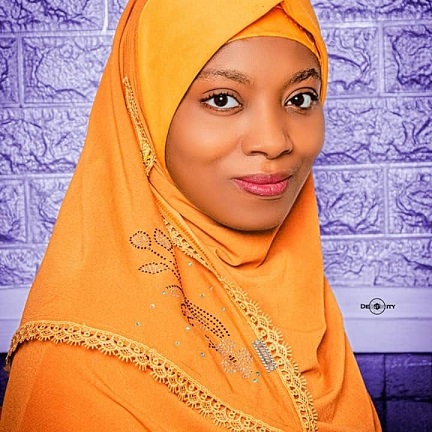
To wash, or not to wash: The bloody Samaritans contemplated

To wash, or not to wash: that is the question

‘Whether it is nobler in the mind to suffer the slings and arrows of outrageous’ servitude,

or to take a stand against a sea of troubles, mediocrity and ‘by opposing, end them?’

Since washing the husband’s clothes has found its way to the topmost topic worthy of discussion amidst many other issues ravaging our dear region, let’s talk about it then. We are unserious, first of all, I must admit. After wasting time and energy on such trivial topics, I wonder how we still expect an actual transformation to occur. How is that possible?

By the way, washing the husband’s clothes is not a crime; it fetches rewards from Allah and love from (some) husbands. If you want to be a diligent wife and conquer his heart by washing his clothes, please do, as there’s no user guide to a successful marriage. Just do what works for you. But remember, no good husband will wish slavery and suffering upon his wife. If he/she has the means to make life easier for you and they are not doing that, then dear, you are probably with the wrong partner.

Who are you married to? A lover or a husband?

Yes, because it’s about time we differentiate between the two. But I was married to both in one person, so to say that I washed his clothes out of love shouldn’t be surprising. We were newly married then. I was young (and not naive, thanks), energetic, and most of all, wanted to prove the ‘I am a good wife’ point. We both were pursuing our masters in India, so whenever he had classes and I didn’t, I would wash and iron his clothes before he returned. I love to see him appreciate me. That ‘Allah ya yi miki albarka‘ meant a lot to me, and I would do anything to get those blessings.

So while I was washing, he would try to dissuade me. Other times he would join when he was around, and because I wouldn’t stop, he searched, found and patronised dry cleaners in the neighbourhood until we got our washing machine. So, whether or not to do these little things is absolutely perspectival. I washed not just his clothes but those soiled with poop and vomit (when he was sick). It doesn’t make me feel lesser, and I would do that again if necessary because if I don’t, who will? I did it diligently, with enthusiasm and so much pride.

Moreover, that made us happier; it fetched me lots of love and admiration and earned me a good repute. As such, he washed mine and the kids’ too. We were abroad without any other relative, so whenever I put to bed, he’d be fully in charge of the laundry – and other domestic chores. What is love and compassion in marriage for?

I have seen similar arguments about cooking as well. So if you say women shouldn’t care for or serve their husbands in these little ways, how else should they do it if he is not rich enough to afford such services? Just how?

I am not saying being a slave is the only way to a man’s heart; instead, I want to rebuke the adamant claims that rule out the possibility of making these little gestures. If care is not taken, someday, women will argue about whether to have intercourse with their husbands. Hello!

It saddens me every time I see women following a so-called ideology trashing the institution of marriage – in the guise of ‘woke-ness’, for we may escape the traps of their unwavering criticisms, but what about our kids? The louder their voices, the more sceptical the next generation would be about marriage. Many youths are now feeling pessimistic about the whole idea of marriage – thanks to influencers and bloggers. Remember, if we continue to applaud life without marriage, we will watch our societies relapse into lethargic savagery.

I am not saying being a slave is the only thing about marriage; no, there’s a lot more. But please, let’s engage in marital discourses more positively and always keep in mind that the younger generation is watching. Marry, wash or cook if you want to, and if you don’t want to, just shut up! We shouldn’t be accomplices to the tacit agenda infesting our region.

Please do not misconstrue my opinion. Being servitude isn’t the key to every man’s heart. It depends on the man and the circumstances. Also, washing his clothes (among other courtesies) wouldn’t keep him, if you like wash his clothes and all of his village people’s, he will replace you in a snap if he wants to. No amount of endurance, sacrifice, compassion and diligence would guarantee that you have won him, my dear; only a man that wants to be kept can be kept.

So, as you put all your efforts into building your home, do everything for Allah’s sake to earn His pleasure only because man is naturally dynamic. Wash if you want to, I reiterate, but remember, it’s not your religious duty as a wife. However, you may do it for the fun of it. Be a bloody Samaritan. It’s fun! What is love without compassion and foolishness? Although my ‘breakfast’ was just recently served, I choose to say objectively: Marriage is sacred and an achievement, take it or leave it!

Yours humbly,

Dr Sadiya Abubakar

On the Hausa-Fulani virtual rift and need for caution

By Yakubu Aliyu

A huge global empire machination is afoot to put a wedge among major Nigerian nationalities, the Hausa and Fulani, to weaken the social and cultural fabric of the North and the Muslim Ummah, for eventual onslaught to take over the mineral deposits under our soil, now that oil and gas are no longer paying off as they historically used to.

Again, this kind of discussion that is promoted by tech giants like Twitter is deliberately orchestrated to lay the basis for putting Nigeria in a perpetual low intensity conflict, and warfare, meaning ba gaba, ba baya, and become incapable of confronting and dealing with the asymmetric war now being waged against the North, in the form of insurgency, via Boko Haram terrorism and armed banditry, by the global empire.

The objective is to distract the Nigerian state and pave the way for the continuous looting of our wealth and resources without invading us like Iraq, Libya, and Syria.

Now simple words like kaɗo and haɓe that have been used from time immemorial without disrupting the social harmony between the two nationalities are deliberately being given new meanings, misinterpreted, and weaponized. Firstly, for politics, and secondly to serve the purposes of the global agenda.

Fulbe and Hausa people have coexisted even before Hausa became the umbrella identity of the communities that existed right from Songhai Empire to the pre-existing Hausa states.

That process has been on-going even before the Jihad that brought about the Hausanisation of the Fulbe and the Fulanisation of the Hausa across the expanse of Northern Nigeria.

There are many dimensions to this process such that many have lost their previous identity and have taken on a new one. This transformation is about to be halted and replaced with internecine animosity, instigation, and reminders of distant unpalatable historical engagement.

The unity that has been seamlessly sealed and enabled by Islam is being shattered by flippant debates and enthroning ethnic identity over a more all-encompassing universal identity.

We are now regressing back to Assabiyya, the stage Ibn Khaldoun associates with primitivism, a stage we passed through well before the enlightenment brought to us by Islam and the exposure to local and international communities brought by trade and migration that have positively impacted our outlooks. All on the alter of the quest for political power.

The dimension this unnecessary nay abhorent online schism is taking has similitude with how some hatchet historians, some years ago tried to bifurcate the aspirations of the Kanuri from that of the Fulani through historical revisionism of the exchanges that took place between Usman bin Fodiye and Elkanemi of Borno at the beginning of the Jihad.

The Northerners of Hausa and Fulani stock who are also Muslims should be careful of the machinations of these merchants of carnage. We have not yet addressed our sectarian religious differences, and if we are not careful enough, we will be adding the altercations over who is Fulbe or Haɓe to the mix.

Okay, goodluck to us all.

Aliyu Yakubu writes in from Abuja and he can be contacted via his email address aliyakubus@gmail.com