Arabs

Illinois man sentenced to 53 years for killing Palestinian-American child

By Hadiza Abdulkadir

An Illinois man has been sentenced to 53 years in prison for the fatal stabbing of a six-year-old Palestinian-American boy in what prosecutors described as a hate-motivated attack.

Joseph Czuba, 71, was convicted earlier this year of first-degree murder, attempted murder, and aggravated battery after he attacked Wadea Al-Fayoume and the boy’s mother, Hanaan Shahin, at their home in Plainfield Township in October 2023. Authorities said Czuba targeted the victims because of their Muslim faith and the ongoing conflict in the Middle East.

During sentencing on Friday, the judge described the act as “brutal and senseless,” emphasising the need for justice and deterrence in cases driven by hate.

Wadea, who had recently celebrated his sixth birthday, was stabbed 26 times. His mother, who survived the attack, suffered multiple stab wounds and continues to recover.

The case drew national attention and widespread condemnation, with civil rights groups calling for greater protection of Muslim and Arab-American communities amid rising tensions.

Czuba showed no remorse during the hearing. His attorneys said they plan to appeal the conviction.

Israel-Hamas war: Has diplomacy failed?

By Hajara Abdullahi

The long reoccurring war between Israel and Palestine spans decades which can be traced to the Balfour Declaration of 1917  that led to the creation of a national home in Palestine for the Jewish people fleeing the Nazi Holocaust in Europe. After the creation of the zionist state in 1948, the Arab states went to war with Israel, which led to the first Nakba (Catastrophe) that led to the killing of hundreds of Palestinians and thousands of others fled their homes. Israel won the war, and the reality surfaced that the Zionist state had come to stay, especially with unwavering support from allies like the US, France, Germany and other European countries.

Since the creation of Israel, Palestinians have been subjected to the worst form of apartheid and dehumanisation, as well as the forceful annexation of their lands to establish Jewish settlements, which the U.N. have described as illegal under international law. Peace accords and diplomatic efforts have done little to address this decade-long conflict from Camp David to Oslo.

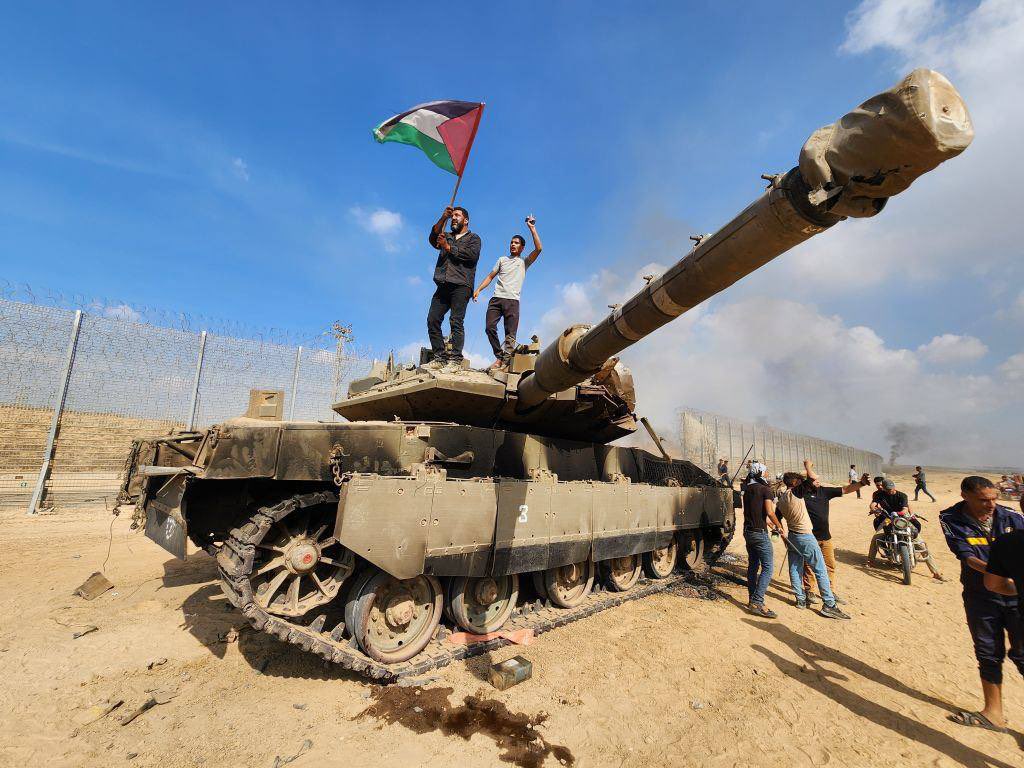
On October 7 2023, Hamas launched an unprecedented attack on Israel that led to the loss of about 1,139 lives, while about 250 were kidnapped, according to the BBC. This attack sparked rage worldwide, considering the strong support Israel enjoys from powerful allies like the U S and the U.K. This attack had led to the launch of a full-scale wall on the besieged Gaza Strip that has claimed the lives of at least 45,000 people, and almost 100,000 have been injured. It has also led to the displacement of nearly the entire population of 2.3 million, a hunger crisis and a genocide case at the World Court. Even the occupied West Bank is not spared, as IDF have carried out airstrikes and shellings that have killed civilians and displaced thousands. The U.N. has described 2024 as the deadliest year for Palestinians in Gaza, with the IDF offensive reducing the enclave to rubble.

Since the outbreak of the conflict, The U.N., E.U., U.S. and other world leaders have condemned the Hamas act and called for restraint to avoid escalation. Diplomatic efforts have been put in place after months of fighting with Iran-backed resistant groups Hezbollah and Houthi launching solidarity attacks against Israel. On October 18 2023, U.S. President Joe Biden visited Tel Aviv to make a peace deal between the warring parties. Similarly, the G7 leaders also met in Tokyo in June to push forward for a ceasefire to avoid a wider regional conflict.

On May 31, U.S. President Joe Biden announced a three-phase proposal to the U.N. Security Council to end the war in the Gaza Strip. He called, first, for a temporary ceasefire tied to partial withdrawals of Israeli forces, limited hostage exchanges, and an influx of aid. Negotiations would then begin and, if successful, lead to the second phase, involving a permanent cessation of hostilities tied to total withdrawals and complete hostage exchanges. The final phase would see reconstruction efforts being set up, but Israel’s refusal to accept the conditions witnessing the withdrawal of Israeli troops from Gaza a total setback amidst protests by families whose relatives are held as hostages in Gaza. However, the ceasefire plan was short-lived when Israel, with the assistance of intelligence support from the U.S., launched a deadly attack that led to the killing of at least 200 Palestinians while  4 Israeli captives held in Nuseirat camp in Central Gaza were rescued, according to the BBC.

Hopes were lit when U.S. Secretary of State Anthony Blinken, in his 11th trip to the Middle East on August 15 to avert a wider conflict after the killing of top Hamas leader by Israel, told a gathering of reporters while departing Tel Aviv that the ball is in the court of Hamas to accept the conditions as Israel has accepted the bridging proposal for the ceasefire to work. Unfortunately, Hamas said it won’t be part of a new proposal, saying it will only accept the initial proposal put forward by President Biden.

While Israeli Prime Minister Benjamin Netanyahu vehemently opposes the release of Palestinian prisoners held in Israel in exchange for captives held in Gaza, the withdrawal of IDF from Gaza while Hamas has not been dismantled, as well as leaving the strategic Philadelphi corridor  ditched the last hope of the ceasefire which two key mediators Egypt and Qatar have been working on.

Marwan Bishara, a senior political analyst with Aljazeera, said, “Both parties understand that they cannot achieve in diplomacy what they couldn’t achieve in war” This implies that the Israelis won’t get the captives back on a platter of gold, neither would Hamas get Gaza free of Israeli soldiers free of charge.

The  Wall Street Journal, in an exclusive article it published on September 20 2024, said it’s unlikely for a ceasefire to be reached in Gaza, citing top-level officials in the White House, State Department and Pentagon without naming them while explaining two obstacles will make it difficult: Israel’s demand to keep forces in the Philadelphi corridor between Gaza and Egypt and the specifics of an exchange of Israeli hostages for Palestinian prisoners held by Israel. In the recently concluded 79th session of the UNGA, world leaders called for restraint in Lebanon as tension heightened.

In the end, diplomatic efforts may produce little or no results because, as Tim Marshall explained in his book Prisoners of Geography, the map of the region is being redrawn in blood, and the current fault lines emerged from the artificial lines drawn by Europe. Therefore, the U.N., U.S, Arab League and other world leaders must work hand in hand for a two-state solution agreed upon in the Oslo Accord of 1993, as well as press Israel and Hamas to accept the conditions laid down for the ceasefire to work which will ensure a peaceful coexistence in the Middle East region as well as prevent a wider regional conflict the region risk facing with the recent clash between Hezbollah and Israel on the Lebanese southern border.

Hajara Abdullahi wrote from the Dept of Mass Communication, Bayero University Kano.

Israeli military occupation: Nigeria’s suggestion

By Bilyamin Abdulmumin

Last quarter of 2023, 7th October to be precise, the patience of Palestinians on the forceful occupation and increasing encroachment of Israel in the Gaza Strip, Westbank, and East Jerusalem reached the breaking point, as the voice and heartbeat of Palestine in the Gaza Strip, Hamas, launched a devastating attack on Israel in the occupied areas. The coordinated attack was said to bypass Israeli intelligence and caught their security off guard. But in a swift reaction, Israel has since been responding brutally, threatening the annihilation of not only Hamas but Palestinians in Gaza.

This article is the second from my reading of the book that Dr Muhsin Ibrahim generously shared: They called me a lioness.

 As far back as the beginning of the 19th century, the geopolitical entity now known as Israel did not exist. Instead, the Jewish population was scattered globally (this is a topic for another day); their population would be dispersed across Europe, America, and even our continent, Africa, as some reports claim. 

The clamour for Israel to settle in Palestine first gained traction after the First World War. When the Ottoman Empire collapsed, the control over Palestine fell under British rule.  Regardless of how one will view the situation,  the genesis of the Palestine-Israel turmoil must go back to the British. Because they sought both the help of Israel and Palestine during the war,   promising  Israel to establish a state for them on one hand and agreeing to get independence for Palestine from the Ottoman Empire on another, the British eventually sided with Israel.

So, in 1917, the British issued the Balfour Declaration, pledging to establish “a national home for the Jewish people” in Palestine. This marked (substantially) the beginning of a series of ongoing conflicts between Israel and Palestine.

 The Second World War saw the Zionist movement get even more traction.  According to Hitler’s fascist ideology, for humanity to attain Utopia, all forms of inefficiency must be removed, including problematic races and even physically or mentally challenged individuals. In Hitler’s vision, Israel fell in the former category,  so they have to be eradicated. In this regard, about six million Jews had been said to have met their brutal end. The individuals with discounts, either physically or mentally, should also have allied nations to thank for ending the fascism ideology; had Hitler succeeded, it would have been the beginning of their eradication, too.  But for Palestine, their predicament increased. Hundreds of thousands of Holocaust survivors fled Europe, with tens of thousands seeking refuge in Palestine.

It appears that Hitler’s apprehension against Israel had some element of truth because all European countries closed their doors to Jews both before and after the World War. The Jewish population seemed a burden, and the world grappled with an approach to address the puzzle.

In 1947, the United Nations formalised Zionism by approving a plan to partition Palestine into a Jewish state and a Palestinian state, with Jerusalem remaining under international control. This marked a triumphant year for Israel, the culmination of the Zionist struggle. Conversely, for Palestinians, it was a time of national mourning and sadness.

A whole new chapter of the standoff between Israel and Palestine would ensue as Arab nations united against Israel to stop the partition. However, the coalition achieved limited success, with only Jordan managing to capture East Jerusalem and the West Bank and Egypt taking control of Gaza after the 1948 war; Palestinians referred to this war as the “Nakba” or catastrophe, reflecting the extent of devastation that was inflicted on them by Israel.

Again, in the 1967 war, known as the Six-Day War, Israel got the upper hand, capturing Gaza, the West Bank, and East Jerusalem and initiating what Palestine currently fights with their heart in their mouth: the military occupation of Palestinian territories. In this process, Israel implemented various methods to relegate Palestinians to second-class status, including the construction of a separation wall, the issuance of green identification cards, and the assignment of white license plates to Palestinians, a sort of apartheid-style.

The fact that both Israel and Palestine are descendants of a common ancestor, Abraham, with the former tracing their lineage through Isaac and the latter through Ishmael, is significant and, at the same time, intriguing. To paraphrase former US president W. J. Clinton, dear brothers and sisters Shalom, sheathe the sword and make a sacrifice to accept the common deal beneficial to both sides like the one Nigeria offered.

 Through the then Ambassador/Permanent Representative of Nigeria to the UN, Tijjani Muhammad-Bande, Nigeria gave the suggestions: “We encourage Israel to take concrete steps to freeze and reverse all settlement-related activities in the West Bank and East Jerusalem. On their part, Palestinian leaders must also signal their readiness to return to the negotiating table, and we reaffirm our unwavering support for a two-state solution, with Israel and Palestine existing side-by-side in peace.” 

Bilyamin Abdulmumin is a doctoral researcher in chemical engineering at ABU Zaria.

Majma’al Bahrain: Arabs in Kano II – the sequel

By Prof. Abdalla Uba Adamu

My posting about MU Adamu’s 1968 paper on the influence of Arabs on Kano culture, economy and religious practices has ignited a few responses of personal nature from some readers interested in their own interconnected life stories. This is a follow-up and update.

I think it is wonderful that we begin to interrogate our past so that we can appreciate our present in order to make better plans for the future. We were all besotted with this implausible concept of ‘Hausa-Fulani’ that we tend to ignore other genetic tributaries that constitute the Hausa genetic pool, especially in Kano. Such Majma’al Bahrain is either unknown to many or ignored. Bringing it out means that the ethnic picture of the Hausa is more than the mingling of the Fulani genes with the Hausa – there were dashes of Arab in there thrown for good measure.

For the most part, the Arab voices had been silent. I think it is time for them to voice out their life histories in conversations with their elders. Not to further divide a monolithic Hausa society but demonstrate how the Hausa have been developing into distinct, absorptive people. Clearly, then Hausa is not a language but a people. Ask any individual in Kano with ‘Fulani’ or ‘Arab’ ancestorial roots, and they will tell you they are Hausa, ‘even though my grandmother is Fulani/Arab/Russian/Greek, etc.’

Let’s split hairs here. Having different languages but the same skin colour – whether you are black, white, brown, yellow or (if an alien) green, and submitting to the same central, national governing authority makes you ‘ethnic’. Having the same attributes but without recognition of national authority, only blood and kinship ties make you ‘tribal’. Separation across skin colour is a race, not an ethnic issue. Arabs are a separate race from Africans. So, what happens when the racial divide is crossed (bred)? Will a new ‘race’ emerge?

The Arabs’ contributions to the economy and culture of Kano are far more than any other ethnic group, including the Fulani. Consider the Yemeni alone and their massive contributions to the animal skin trade in northern Nigeria. Initially ‘imported’ as Italian trade agents from Yemen in the early 20th century, they have now become domesticated to the Hausa society. Yes, they are light-skinned, and quite a few speak Arabic; but the mid-generations have lost the Arabic language. As a ‘minority’ group, they intermarried with local African women and their offspring contributed to the sustainable development of culture and life in Hausa societies without the consciousness of being ‘the other’. What are then the cultural specificities that tie them to the Arab world? Can it be in dress, language, food, existential rites and rituals (birth, living, death)? How do theirs – if at all present – differ from those of the Hausa?

Then consider the Lebanese and their input into the goods and products found in various Kano markets – including their influence all over West Africa. They are less integrative with their African hosts but have been linguistically domesticated, and for all intents and purposes, many self-identify as Hausa and retain some living rituals (e.g., food habits). This is an area initially mapped out by Sabo Albasu’s monumental groundbreaking research, “The Lebanese in Kano” (which is based on his 1989 doctoral thesis), and unfortunately, not much else was done on such a scale by other people. I wish he could update and re-print it, as now, more than ever, is the time for it.

The Sudanese, more than the other Arabs, had integrated more effectively into northern Nigerian Hausa communities, perhaps due to the gradation in their skin colours – from extremely dark to extremely light – than either the Tripolitanians, Yemeni, Lebanese or Syrians/Jordanians, whose clearly light skins made them stand out in any group. Establishing themselves in the city of Kano at Sudawa (Sudanese settlement), they formed part of the identity of the Kano city populace.

The Sudanese influence was also more intellectual. While they were instrumental in trade, their main contribution was in education. For instance, when the School for Arabic Studies – undoubtedly the Oxford of Arabic Studies in Nigeria – was established in 1934, it was to Sudan that inspiration was sought, including the teachers. Even what later became Bayero University Kano was first headed by Abdullahi el-Tayyeb, a Sudanese. No talk of Sudan itself being a destination for studies at all levels by northern Nigerians. You don’t see such rush for education in Lebanon or Yemen.

While rummaging through the caverns of an old abandoned hard drive, I came across a booklet that Kantoma (Muhammad Uba Adamu) had asked me to extract from his “Confluences and Influences” as a standalone paper (presented in 1998) and later with additional material, as a booklet. We named it “The Presence of Arabs in Kano”. Lack of funding prevented its publication, but I was able to get it published as a paper in a book project. A link to the paper is given at the end of this posting.

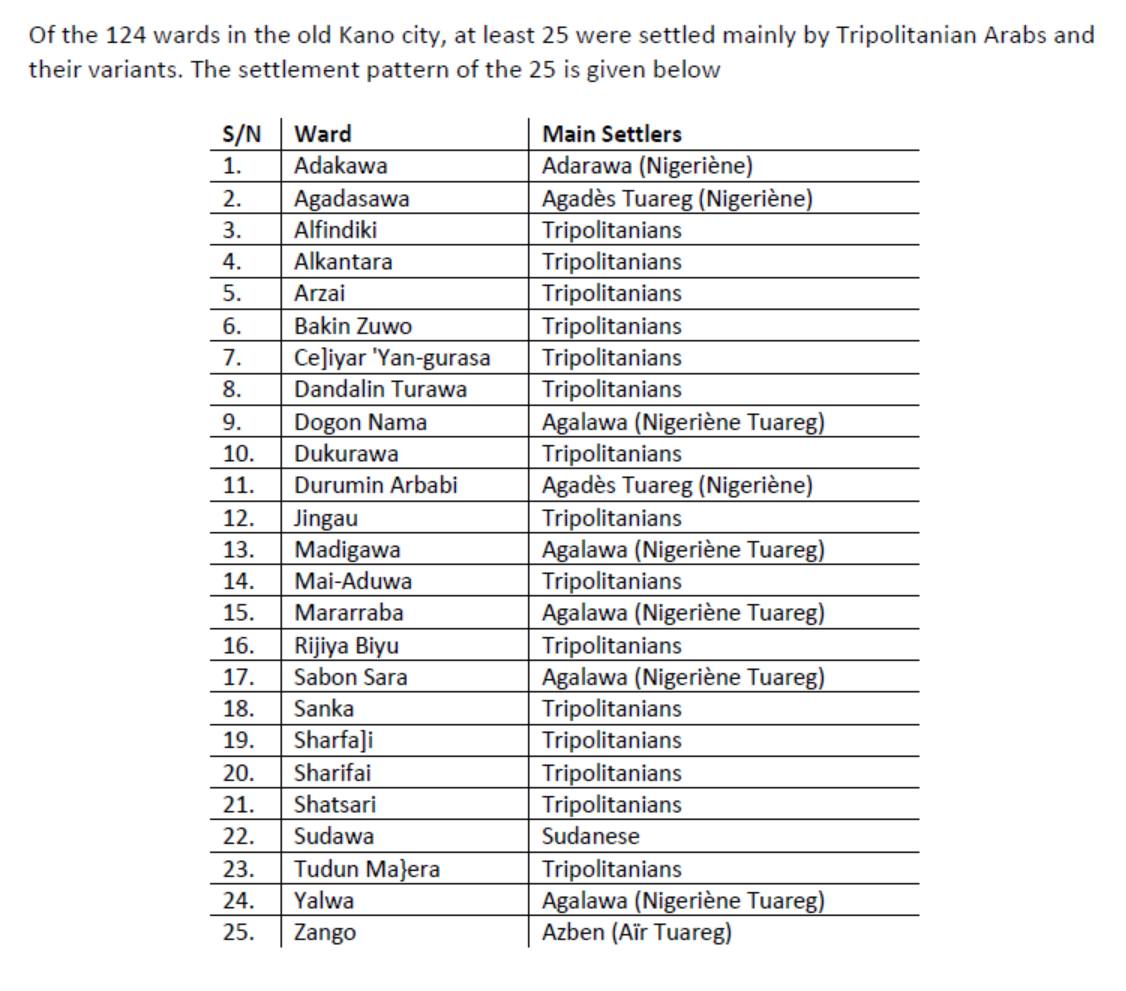
For those interested, I have included the table (from the paper attached) of the 25 Arab-dominated Kano inner city wards. I did this because not many would have the time to read 43 pages of the paper!

Adamu, Abdalla Uba. 2014. The presence of Arabs in Kano. In A.I. Tanko & S. B. Momole (Eds.). Kano: Environment, Society and Development (pp. 125-164). London & Abuja: Adonis & Abbey Publishers.

Or: https://shorturl.at/dgzW0

Domestic service or domestic slavery?

By Yusuf Shuaibu Yusuf

Though there is still one form of slavery or the other worldwide, I was particular on this topic after watching recent footage showing how a housemaid was savagely killed by her supposed Arab employer. I, therefore, aim to join multiple voices clamouring for the governments of some Gulf countries, United Nations and other international communities to end the practice of domestic servitude whose victims are primarily African and Asian migrants. These poor people are stuck in many Gulf countries. The housemaids undergo horrendous treatment. Among these victims are many Nigerians who leave their country for political or economic reasons. 

At first, I couldn’t have expounded on issues so sensitive as this, even more so, as it involves the place of birth of our Noble Prophet, the country inhabiting the holy sites, the Qibla and the pilgrimage of any Muslim. Still, the issue at hand transcends any sentiment. 

While many Arabs in Gulf countries are piously angelic, treating their housemaids with honour and dignity, others are contrary to that. Instead, they are fiendishly sadistic as they take delight in humiliating their African and Asian housemaids, turning them into modern-day slaves.

Since time immemorial, it has been a long tradition for African Muslims to stay in Saudi Arabia and work as domestic servants after performing their religious obligations. Consequently, domestic service in Saudi Arabia came to be considered lucrative jobs among many Asians and Africans, particularly Nigerians.

Recently, due to political and economic challenges, Nigeria has witnessed the proliferation of bogus travel agents who fill their clients with utopian ideals about Gulf countries and who themselves are loosely linked with the recruiting firms in those countries. Desperate to leave the country, these clients easily fall for these lies and illusions. Hence, there has been an influx of youth from Nigeria into Saudi Arabia, Oman, Dubai, Qatar, Lebanon and some few Arab countries in Africa like Libya and Algeria. 

While most of the pilgrims working as domestic servants in Saudi Arabia before were primarily people of diverse age and sex, the recent influx has seen political refugees and economic migrants constituting of youth – predominantly females. Some of these migrants usually become disillusioned a few days after their arrivals in such countries as their recruiters leave them at the mercy of their employers. Having nobody to turn to for help, they often become subject to molestation and other forms of gender-based violence.

Women are believed to be more exposed and vulnerable to all sorts of these harassments than men. Perhaps their relatively delicate biological constitution and the fact that most of them live in the same compounds with their employers heighten their risks of being abused. 

The emotional story of “Sarah”, a Ghanaian maid in Lebanon who narrowly made her escape from the abusive family she had been working for, is an excellent example of how prone to abuse housemaids are. Sarah is not her real name for privacy sake. Shortly after her escape, she narrates to Mark Stone, a Middle East correspondent, how she was raped at knifepoint by her employer’s brother while taking a bath. 

It was also recounted, in another video clip, by a former housemaid in one of the Arab countries that a housemaid can be called to work at any time. A housemaid is not assigned one particular job like cooking, cleaning, or attending to children. Instead, she is given different tasks like attending to the sexual needs of her employer or some members of his family or both. Should she fail one of these tasks, she is treated savagely. 

The case of housemaids being thrashed by their bosses in Gulf countries has become a norm. Racist and invective are the common languages used to address the housemaids on slight provocation.

I couldn’t believe what my eyes saw in one footage sent to my sister on September 16, 2021, from Saudi Arabia via WhatsApp. I had never before imagined a barbarous and atrocious act of that magnitude could be perpetrated against animals at this so-called civilized age, much less a human being. The footage videotapes a person, allegedly a Saudi nobleman, attired decently in Arab dress, closing in on a black lady, supposedly his maid, who is lying on the floor, screaming, frantically struggling to disentangle herself from her supposed killer. But, on the other hand, stands, a broadly built woman, dressed in a green jacket, clenched in her left hand is what looks like a syringe, yelling at the struggling and screaming woman to stop resisting (at what only God knows what). This second black lady could be a nurse or anything else.

I’m sure that she is also under the payroll of this assumed killer. Even though the man’s intention is bent on killing the other housemaid, this woman has never attempted to intervene. Throughout the footage, she can just be seen yelling and pleading with the screaming girl to stop resisting. The man is captured in the video clip incessantly hitting the face of this screaming lady with his right hand and his right knee while pinning her down with his left hand and his left knee so that she can’t escape. Finally, the man ruthlessly strangulates her.

Prompted by this macabre footage, I tenaciously grew more curious and went further to download some television interviews, more violent footage and audios (some of which I have already hinted about) of some ex-housemaids in Gulf countries recounting their harrowing experiences while conducting their jobs as housemaids. 

According to Middle East Eye, the first video is of Sumi Akter 25-year-old Bangladeshi maid, bitterly and soulfully crying and begging for her escape.  She shares how she was beaten, tortured and abused by her employer and his family in Saudi Arabia. She is said to have posted the video from a hidden location to her Facebook account, where millions viewed it, which prompted protests in Bangladesh. 

Another footage of a black lady trying to get out from what looks like a toilet while being sent back by repeated flogs by her supposed Arab boss. As shown in the video clip, the incident occurs in a family room in an Arab quarter in an unidentified country. Arab family and other black housemaids are in the footage. An Arab lady asks the enraged boss to stop beating the black lady, but he doesn’t seem to listen. Later the beaten housemaid is captured standing in the middle of the living room, desperate, her back awash with blood. 

An ex-Nigerian housemaid in Oman shared her tormenting experience in audio recently trending on social media. She recounts how she had to leave two jobs because of advances made to her by her lesbian mistresses.

To end this crime, the countries these victims come from should impose laws checkmating the activities of those bogus domestic service agencies and their clients internationally. They should also ensure the rights of their citizens are not only protected within their countries but also in foreign countries. The governments of the Gulf states should crack down on those households who take advantage of the defenceless migrant domestic workers in their states. The killers such as the one described above shouldn’t go unpunished. They should be tracked down and brought to justice to serve as deterrents to others. United Nations should also formulate stricter laws safeguarding the rights of domestic workers internationally. 

Yusuf Shuaibu Yusuf sent this via yusufshuaibuyusuf@gmail.com.

September 11 Attack: the unresolved mystery

By Salisu Yusuf

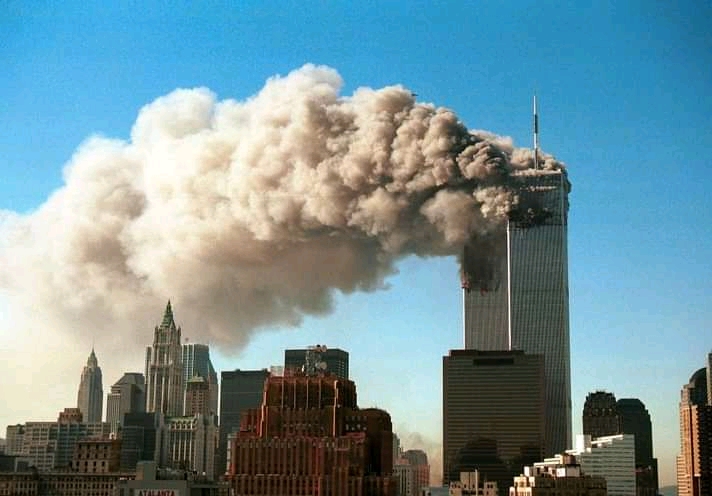
Saturday, September 11, 2021, marks exactly 20 years since the attack on the USA allegedly by a group of Arab Muslims. Forget about conspiracy theories; the 9/11 attack will continue to raise unanswered questions on America’s foreign policy on Muslims and their countries. Issuance of visas and visa bans on some Muslim countries, America’s Green Card, former President Bush’s ‘ you’re with them or with us’ rhetoric reminiscent of the holy war are all glaring issues of stigmatizing of Muslim community for a supposed fault of a few. 

The bizarre and mob driven death of former Libyan leader, Muammar Ghaddafi in 2011, Saddam Hussein’s decapitation while being hanged in 2006, America’s attitude towards the deposition of democratic Muslim Brotherhood in Egypt and the strange death of its leader, Mohammed Morsi, during his trial say a lot about Muslim countries in the eyes of America.

The above actions and inactions strip America naked of all her so-called democratic garments. Today, Libya is rocked, divided and destroyed. Yet, America folds her arms and watches as hundreds of people get killed daily. Setting up Guantanamo Bay in Cuba, where hundreds of allegedly Al-Qaida and Taliban fighters and sympathisers were held, tortured is the biggest of human rights abuse. Some were recently released after undergoing a series of traumatic experiences. They could neither be indicted nor tried for lack of evidence. Why were they captured and detained in the first place? Because they’re Muslims, so they should be stereotyped? 

America’s occupation of Afghanistan is the biggest mistake of all. Thousands of Afghans, Americans and other nationals are still being killed. Recently, Americans realised their mistake, the cost of the war, and Afghanistan’s ungovernable nature without the Taliban. Thus, they reached out to Qatar, called out a summit between former President Ghani and the Taliban. Earlier, they’d designated Taliban terrorists, then met with the terrorists and handed over Afghanistan to terrorists with a pact that the terrorists must not accommodate any foreign terror group!  

The 9/11 attack will continue to be a mystery. Khaled Sheikh Mohammed (KSM), a Kuwaiti national is under America’s custody for 20 years, yet, for 20 years, he could neither be indicted nor tried. An FBI agent called Pellegrino had pursued Khaled for over 3 DECADES in connection with terrorism before the 9/11 tragedy, yet, America couldn’t capture Khaled to avert the 9/11 attack! His lawyer (an American) recently told the BBC that it might take another 20 years to complete the longest trial in history.  

Moreover, Pellegrino, the man who had interrogated Khaled, who’s also to serve as a witness, delayed his retirement from the service by 3 years in the hope that Khaled’s MILITARY TRIAL trial at Guantanamo would be completed. 

The FBI also linked Khaled in connection with the 1993 bombing of the World Trade Center. In 1995, he was also linked to a plot to blow up multiple international airliners over the Pacific. The question is, are all these allegations mere suspicions and assumptions? If not, come open, try, convict and sentence him as murderers and killers are tried in American courts. According to the BBC, in 2003, Khaled was arrested in Pakistan because the FBI’s Pellegrino had reported him. He’s taken to ‘Black Site’ (is an obscure camp in Pakistan where criminals are tortured) using ‘enhanced interrogation technique.  

In Guantanamo and America, Khaled was waterboarded at least 183 times (BBC). Waterboarding is a torture technique where a wet rag is placed in the mouth, pouring water through the rag into the victim’s mouth. As a result, the victim would torturously feel like drowning in a sea. He and hundreds of other prisoners were also subjected to rectal rehydration (a technique where victims are fed through the anus). Other techniques used by the CIA on innocent Muslims include stress position (where a victim may be asked to stand on the ball of his feet for hours), sleep deprivation (where you’re denied sleep). 

Khaled’s MILITARY TRIAL that began in 2008 had 8 judges who presided over the case. The recent one is the 9th! Many of the judges resigned over abnormalities in the trial. A trial in New York wasn’t successful, nor were those in Guantanamo. The excuse is that Covid-19 compounded the trial. Poor Covid! Currently, there are over 35,000 pages of previous hearings and motions before the current judge starts presiding over the case. ” It’s the most controversial trial,” says the BBC.

Salisu Yusuf writes from Katsina. He can be reached via salisuyusuf111@gmail.com.