APC

Jonathan’s PDP comeback: A Political revival or vote-splitting sabotage? 

By Salisu Uba KofarWambai 

The latest buzz in Nigeria’s political arena is nothing short of explosive: former President Dr. Goodluck Jonathan is reportedly set to return and contest under the platform of the Peoples Democratic Party (PDP). The revelation has sent shockwaves across the nation and beyond. But beneath the headlines, a critical question lingers — what is the real motive behind this sudden political twist?

Before the emergence of the African Democratic Congress (ADC) as a viable coalition platform for the opposition, Nigerians had grown increasingly frustrated with what they saw as a weakened opposition front. The PDP, once a vibrant counterforce, had been reduced to what critics call a “toothless bulldog,” accused of being manipulated by President Bola Tinubu through Nyesom Wike, a PDP member who openly works in favour of the ruling party and now holds a position in Tinubu’s government.

Wike’s influence, according to party insiders, has been anything but peaceful. His repeated interventions and internal disputes have reportedly destabilised the PDP, a strategy many believe cost the party dearly in the 2023 general elections. With the backing of the current administration, Wike has consistently won key legal battles, tightening his grip on the PDP’s power structure.

Recognising the deepening crisis, several PDP heavyweights, including the party’s last presidential candidate, Atiku Abubakar, abandoned the PDP ship, aligning under the ADC banner to form a credible opposition. This development was warmly received by many Nigerians disillusioned by the ruling APC’s economic policies, from the sharp devaluation of the naira to the painful removal of fuel subsidies, policies they say have deepened poverty nationwide.

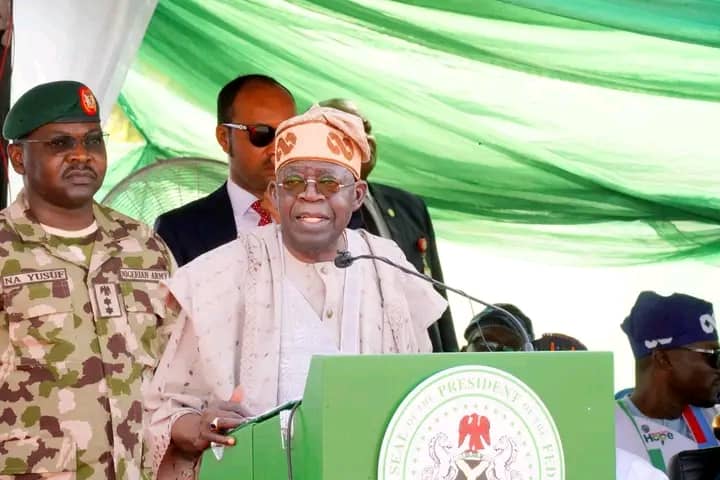
Alarmed by the growing acceptance of the ADC among struggling Nigerians, the APC-led government appears to be dusting off an old playbook. Just as they allegedly did with the Kwankwasiyya movement in 2023, they now seem ready to field a high-profile figure to split the opposition vote. This time, the role is reportedly being handed to none other than Jonathan — a move seen by many as orchestrated to weaken the ADC’s momentum.

For political observers, the pattern is clear: divide the opposition, consolidate power, and keep the electorate distracted, all while avoiding a united front that could unseat the government in 2027. What stings for some Nigerians is the idea of Jonathan, once the principal, now accepting political direction from his former protégé.

Whether Jonathan’s alleged return is a personal decision or part of a calculated strategy by the ruling party remains to be seen. But one thing is sure: the stage is set for a high-stakes political drama, and Nigerians will be watching closely to see how and where this political gunshot will be fired.

APC denies claim Canadian court labeled it “terrorist group”

By Abdullahi Mukhtar Algasgaini

The All Progressives Congress (APC) has dismissed media reports claiming that a Canadian court declared the party a terrorist organization, describing the reports as “patently erroneous and misleading.”

In a press statement signed by its National Publicity Secretary, Felix Morka, the APC clarified that the ruling in question involved a case between Douglas Egharevba and Canada’s Minister of Public Safety and Emergency Preparedness, which centered on Egharevba’s immigration status.

The court had dismissed Egharevba’s application for judicial review, citing his membership in Nigeria’s Peoples Democratic Party (PDP) and its alleged involvement in subversive acts during elections.

The APC noted that the only mention of the party in the 16-page judgment was in reference to Egharevba’s false claim of being an APC member as far back as 2007—years before the party was officially formed in 2013.

Morka noted that the court explicitly avoided ruling on terrorism, stating: “Having found that the IAD’s analysis on subversion was reasonable, this is sufficient to dismiss the application for review. I will therefore refrain from analyzing the IAD’s findings on terrorism.”

The APC urged its members and the public to disregard the misleading reports, stressing that the court made no such declaration against the party.

“Such a decision would have been an unjustifiable overreach and a breach of due process, as the APC was not a party to the proceedings,” Morka added.

Ex-agric minister Audu Ogbeh dies at 78

By Uzair Adam

Former Minister of Agriculture and Rural Development, Chief Audu Ogbeh, has Saturday died at the age of 78.

In a statement issued the same day, the Ogbeh family said the elder statesman died peacefully.

“It is with deep sadness that we announce the passing of our beloved husband, father, and grandfather; Chief Audu Ogbeh. He passed away today at the fulfilled age of 78,” the family said.

They described him as a man of integrity, service, and dedication to the nation and his community, noting that his life left an enduring impact on many.

“We are comforted by the many lives he touched and the example he set,” the statement added.

The family said funeral arrangements will be announced later and expressed gratitude to friends, colleagues, and well-wishers for their prayers and support.

They also requested privacy during the mourning period.

Bauchi’s unique politics and its swinging character

By Zayyad I. Muhammad 

Bauchi is one of the few states, perhaps the only one, in northern Nigeria that has consistently upheld a politics rooted in independence. The people of Bauchi are known for their distinct political culture: no candidate, political party, or ideology can be imposed on them. Incumbency holds little sway, and public or political office holders often fail to win elections.

From the days of the Northern Elements Progressive Union (NEPU) in the First Republic, to the politics of the Second Republic, and even the cult-like support for Muhammadu Buhari in more recent times, Bauchi has carved out a political identity that is both unique and enduring.

A review of Bauchi’s electoral history, particularly in gubernatorial contests, reveals a striking pattern of political independence that many analysts regard as unmatched in Nigeria. 

For instance:

In 1979, they elected Tatari Ali as Governor under the National Party of Nigeria (NPN) against their kinsman within the North East, in the person of Alhaji Ibrahim Waziri of the GNPP.

In 1992, they elected Alhaji Dahiru Mohammed Deba as Governor, alongside Alh Ibrahim Tofa of NRC, against the popular candidature of MKO Abiola 

Somehow in 1999, after a rerun election, PDP managed to win, and Adamu Mu’azu got elected as Governor, but later lost the bid to win senatorial elections after serving for 8 years as Governor. 

In 2007, Mal. Isa Yuguda won as Governor under ANPP against the incumbent PDP when Yar’Adua was president. 

In 2011, the state aligned with the opposition APC to produce Mohammed Abdullahi Abubakar as Governor, but lost his re-election bid despite being the sitting governor to the Present Governor Bala Mohammed of the PDP.

This pattern speaks volumes:

Abuja or any ‘interest’ cannot and has never dictated the governor’s emergence in Bauchi state. Imposing candidates rarely work. Incumbency does not guarantee re-election. High-profile public and political office holders have little impact. Governors have lost re-election, senatorial bids, and attempts to anoint successors in several Cases. The swinging nature of Bauchi politics is one of its most intriguing features

Equally remarkable is the background of those elected. Since 1999, Bauchi governors have consistently emerged from modest or unexpected circumstances- ‘Zero level, so to speak. Governors Adamu Mu’azu, Isa Yuguda, Mohammed Abubakar, and the present Bala Mohammed all came from zero disposition, meaning they did not hold a position or office for at least two years during the election period. This trend illustrates the state’s openness to merit and its resistance to political imposition.

Looking ahead to the 2027 elections, it appears to be the state with the highest number of contestants so far. 

1. Mohammed Auwal Jatau – the current Deputy Governor of Bauchi State

2. Muhammad Ali Pate – the current Minister of Health

3. Dr. Nura Manu Soro – Ex-Finance Commissioner and President Tinubu campaign Coordinator. 

4. Ambassador Yusuf Tuggar, current minister of foreign affairs. 

5. ⁠Senator Shehu Buba, a serving senator from the APC 

6. ⁠Alhaji Bala Wunti, former MD of NAPIMS

7. ⁠RTD Air Marshal Sadiq, former APC gubernatorial candidate 

8. ⁠Senator Halliru Jika, former senator 

9. ⁠Dr. MUSA Babayo, former chairman of TETFUND 

10. ⁠Senator Dahuwa Kaila, a serving senator, among numerous others. 

With such a lineup and Bauchi’s long history of voter independence, the 2027 elections promise to be as competitive and unpredictable as ever.

Bauchi’s politics remain firmly anchored in progressive and populist traditions. Candidates without a clear vision or strong grassroots connection are regularly rejected at the polls, and 2027 is likely to uphold that tradition.

Only time will tell.

Zayyad I. Muhammad writes from Abuja via zaymohd@yahoo.com.

APC elects humanitarian minister Nentawe Yilwatda as new chairman

By Abdullahi Mukhtar Algasgaini

Professor Nentawe Goshwe Yilwatda, Nigeria’s Minister of Humanitarian Affairs and Poverty Reduction, has been unanimously elected as the new National Chairman of the All Progressives Congress (APC).

The APC’s National Executive Committee (NEC) confirmed his appointment on Thursday following the resignation of former chairman Dr. Abdullahi Ganduje, who stepped down to attend to private matters.

Yilwatda, a seasoned academic and technocrat, brings decades of leadership experience in academia, electoral reforms, and public service.

A former Resident Electoral Commissioner (REC) at INEC, he played a key role in advancing electoral technology and inclusion policies before joining partisan politics.

In 2023, he served as the Plateau State gubernatorial candidate for the APC and later coordinated the Tinubu/Shettima presidential campaign in the state.

As the new APC chairman, Yilwatda is expected to steer the ruling party’s affairs ahead of future elections while balancing his ministerial duties.

His appointment has been widely welcomed by party stakeholders, who describe him as a unifier and reform-driven leader.

The professor holds a PhD in Electronic and Computer Engineering and has consulted for international organizations, including the World Bank and UNICEF.

Analysts say his technocratic background may influence the APC’s policy direction in the coming months.

APC shifts NEC meeting to presidential villa, adjusts time

By Abdullahi Mukhtar Algasgaini

The All Progressives Congress (APC) has announced a change in the venue and time for its National Executive Committee (NEC) meeting scheduled for Thursday, July 24, 2025.

Originally set to hold at the party’s National Secretariat on Blantyre Street, Wuse II, Abuja, the meeting will now take place at the Banquet Hall of the Presidential Villa by 2:00 PM.

In a press statement signed by the party’s National Publicity Secretary, Felix Morka, the APC cited “logistical reasons” for the adjustment.

The NEC meeting is a key gathering of the party’s leadership to discuss critical issues affecting the APC and the nation.

Further details on the agenda were not disclosed.

The passing of Muhammadu Buhari: A political loss for both APC and ADC

By Zayyad I. Muhammad

The passing of former President Muhammadu Buhari marks not just the end of an era but also a significant political loss for two of the three key political parties in Nigeria, the ruling All Progressives Congress (APC) and the rising coalition force, the African Democratic Congress (ADC).

For both parties, Buhari represented more than just a former head of state; he was a political symbol with immense influence. His mere presence at a campaign rally, no matter how brief, would have carried tremendous weight, particularly among his loyal base, which is estimated to be over 12 million strong. These supporters, often described as a “cult-like” following, have remained fiercely committed to him since his early political days under the Congress for Progressive Change (CPC) and the Buhari Organisation. However, the number may have decreased by now.

In recent times, many former CPC loyalists and Buhari-era political operatives have appeared to find a new home in the ADC, reshaping its structure and lending it a dose of national relevance. This quiet but strategic realignment has positioned the ADC as a potential beneficiary of some of the Buhari political legacy, especially in northern Nigeria, where his influence remains deeply rooted. However, a good number of the CPC bloc and the Buhari Organisation have remained in the APC.

Had Buhari lived to make even a symbolic appearance at an APC campaign event, it would have significantly dampened the ADC’s momentum and reinforced the APC’s claim to his enduring political capital. Conversely, had he chosen to lend his image, even silently, to the ADC, it would have sent shockwaves through the APC, raising questions about its hold over his base.

Now, with his passing, both parties are left in a competitive vacuum, each scrambling to appeal to the millions who revered Buhari for his perceived integrity, simple lifestyle, and northern populist appeal. The political battlefield is wide open, and neither the APC nor the ADC can confidently claim to be the rightful heir to Buhari’s legacy.

However, President Bola Ahmed Tinubu may have gained an early edge. His respectful and dignified handling of Buhari’s death, marked by prompt tributes, state honours, and symbolic gestures, may resonate with many of Buhari’s followers. In Nigerian politics, such symbolic acts are never underestimated. They signal alignment, loyalty, and shared values, all of which matter deeply to a base that is emotional, ideological, and still seeking a new political anchor.

As the 2027 election cycle approaches, the real question becomes: Who will inherit the Buhari political machinery? The answer may shape the future of both the APC and ADC, and by extension, Nigeria’s political landscape.

 Zayyad I. Muhammad writes from Abuja via zaymohd@yahoo.com.

Buhari: The Last March of a General

By Usman Abdullahi Koli, ANIPR 

Muhammadu Buhari, former President of Nigeria, is no more. For a moment, I felt very shocked and touched. Not because I expected him to live forever, but because I had never honestly imagined a Nigeria without him somewhere in the background watching, guiding, deciding, or simply being present. I asked myself why the end of some lives feels heavier than others. Perhaps it is because those lives were never ordinary. Buhari’s life was one of service, controversy, silence, and symbolism. Now that the chapter is closed, what remains is the long shadow of his presence, a legacy that will be remembered, questioned, and reflected upon for years to come.

Buhari was never a man you could ignore. You were either with him or against him. I, more often than not, stood in opposition. I challenged his approach to national security, criticised his handling of the education system, and voiced strong concerns about his oversight of Nigeria’s crude oil sector and economy. My criticisms were never born out of malice, but out of conviction. I believed, and still do, that our country deserves better. I thought it was our duty to demand it.

Yet, amid my disagreements, I never lost sight of the man behind the decisions. In 2020, during the #EndSARS movement, when the nation was boiling with fear and fury, I felt compelled to offer a different perspective. I wrote an article titled “Calming the Tide: Buhari’s Antidote.” In that piece, I tried to humanise him. I described him as a lanky man, often caught smiling with his teeth in full view, yet known for the signature frown that defined his public image. Something was striking about how he carried himself in his flowing babban-riga, standing tall and firm like the general he once was, even in the calm of civilian leadership.

Buhari’s story began long before he entered Aso Rock. As a young man, he embraced the uncertainties of military life. He rose through the ranks with grit, ultimately becoming a general in the Nigerian Army. He ruled Nigeria first as a military leader and returned, decades later, as a civilian president. His reemergence was not merely a political move; it was deeply personal. He saw his return as a duty to complete a mission he once began in uniform. Whether he succeeded or fell short, Buhari believed in his cause, and that belief fueled his resolve.

He was undeniably a man of sharp edges. His stubborn adherence to principle often came at a cost. He preferred silence when the nation needed clarity and stood firm when compromise was necessary. His integrity, once lauded, became the subject of scrutiny. Some wounds were self-inflicted; others were inherited from the complexities of leadership. Regardless, they will shape how history remembers him.

Despite it all, Buhari remained anchored in a modest way of life. He never sought extravagance. He governed in the way he understood best—that is, through order, discipline, and restraint. These traits, while admired by some, alienated others. Yet, behind that stoic exterior was a man deeply invested in the idea of service, even if the methods failed to reflect the expectations of many.

The end of a life always casts a different light on it. Legacies are never truly complete until the final chapter has been closed. Buhari’s legacy will be debated in homes, classrooms, and political circles for years to come. But today is not for judgment. Today is for remembrance. For the man, not just the president. For the soldier who once stood on the frontline, and for the leader who walked through the dust of Daura into the marble halls of national power.

At over eighty, he still had something to give. Not in speeches or policy, but in presence, in counsel, in memory. Nigeria needs his wisdom, perhaps now more than ever.

I mourn him, not because I always agreed with him, but because I respected the weight of the burden he carried. He did not lead perfectly. But he led. And in many ways, he led with sincerity.

Now he is gone. But his footprints remain on the battlefield, in the ballot box, and in the hearts of those who watched, waited, and sometimes wept. His story is one of contradictions, courage, convictions, and consequences. But above all, it is a Nigerian story.

Rest in peace, General Muhammadu Buhari. The march is over. The bugle has sounded. And history, in all its fullness, will remember you.

Usman Abdullahi Koli wrote via mernoukoli@gmail.com.

A nostalgic tribute to Muhammadu Buhari

By Amir Abdulazeez

During the early and mid-months of 2002, I would often visit an uncle (now deceased) who generously provided me with newspapers before he had even read them himself. On one such visit, I picked up a copy of the Daily Trust, a relatively new publication at the time, and while flipping through its pages, I read the delightful news that not only made me happy but also propelled me into a brief career in partisan politics. Retired General Muhammadu Buhari had decided to join democratic politics and announced his entry into the All Nigerian Peoples Party (ANPP).

At the time, the Obasanjo-led administration was widely perceived as underperforming, failing to address Nigeria’s mounting challenges sincerely. The PDP had morphed into a formidable political giant, while the ANPP was weakening steadily; other newly registered parties existed only in the briefcases of their founders.  Buhari’s decision to enter politics at that time represented the single most decisive move that changed the Nigerian democratic landscape over the last 25 years. Youths, pensioners, activists, comrades, veterans and even fence-sitters found a new rallying point, and almost everyone else joined the new messiah.

Although many harboured reservations about Buhari, especially those whose interests had been hurt during his military regime or the post-1999 established elite who saw him as a threat, I was among the countless young Nigerians who adored Buhari to a fault. My admiration for him was so intense that another uncle once felt compelled to caution me. It was just before the 2003 presidential election when he walked into my room, saw a large framed portrait of Buhari on my wall, smiled, and advised me to moderate my obsession.

My love for Buhari began about 30 years ago. The establishment of the Petroleum Trust Fund (PTF) by General Sani Abacha’s administration in 1994 coincided with our early years in secondary school. By the time the Fund was a year old in 1995, the name of Muhammadu Buhari was on the lips of virtually all Nigerians. In my estimation, then, he was the only tangible positive aspect of the Abacha government. In fact, he appeared to be more popular than Abacha himself; a hypothesis that reportedly inspired Obasanjo to scrap the Fund in 1999 to avoid ‘running a government inside a government’.

I vividly recall a day in 1995 or 1996 when I accompanied my father to a bookshop. The PTF low-price edition of every book we went to buy was available at a 50% or so discount without any compromise in quality. While paying the money, I could see the smile on my father’s face reflecting deep satisfaction and appreciation for the work of the PTF. That was the first time in my life that I truly felt and understood the direct impact of government on the people. In pharmacies, PTF drugs were sold at subsidised rates. There was no propaganda, rhetoric, cosmetics, or media packaging; the work of Buhari’s PTF was there for everyone to see and touch. I was fortunate as a young lad to join elders on travels across the country from 1995 to 1997. I got tired of seeing the PTF road projects that I once asked: “Why won’t this Buhari return as president to fix Nigeria?”

Muhammadu Buhari, a constant figure in Nigerian political discourse since 1983, is no longer with us. Few anticipated his death, as the brief illness he suffered in London seemed either a rumour or a routine medical trip. Ironically, many of his detractors had “killed” him multiple times in the past; some of them dying before he did. In 2014, former Ekiti State Governor Ayo Fayose ran a notorious advertisement predicting that Buhari wouldn’t last in office for months if elected. Yet he won, served for eight years, and died just months short of turning 83.

Buhari lived a long, dedicated, and enduring life of service and commitment to Nigeria, spanning about six decades in both military and civilian capacities. Save perhaps for Obasanjo, there’s no Nigerian, dead or alive, who matches his array of public portfolios. His personal reputation for discipline, honesty, integrity, and austerity endured throughout his public life. He stood as a symbol of principled and stoic leadership, leaving behind a legacy that will continue to resonate for generations.

Just before his death, the debate of who made him president in 2015 resurfaced with an exchange of tantrums between some pro-Tinubu and pro-Buhari gladiators. While I found the debate outdated, my position remains that Buhari ought to have become president 12 years earlier. For the avoidance of doubt, Muhammadu Buhari did not lose the 2003 presidential elections; it was brutally rigged to return Obasanjo for a second term. That year’s election ranks among the most fraudulent in modern global history. In 2007, the presidential election results were allegedly fabricated, so we can’t even call that an election, let alone determine who won or lost.

Despite my immense love for Buhari, I was left with no choice but to join his critics after 2015. Less than a year in, it became clear that his government lacked the vision and effectiveness many had hoped for. In 2015, I queued until about 10:00 p.m. to vote for him, believing he was Nigeria’s last chance. By 2018, I was disappointed and called for him to serve just one term. I argued then that if he couldn’t lead like Nelson Mandela, he could at least exit like Mandela. By 2021, while in his second term, I was so disillusioned that I openly advocated for his impeachment.

It remains a mystery how our much beloved, tested, and trusted (his campaign slogan in 2003) Buhari failed to meet expectations so short. Some blamed his arrogant and underperforming appointees; others cited a fractured and directionless party. But ultimately, he bore the responsibility. His inability or unwillingness to discipline ineffective ministers eroded his credibility. In 2022, during the eight-month strike by university lecturers, I contacted one of his aides (a relative), who confirmed that it was Buhari’s ministers, not Buhari himself, who opposed paying the lecturers. Another indicator that he wasn’t really in charge. 

In the midst of the storm, Buhari’s administration achieved several landmark milestones in infrastructure, social welfare, and the fight against terrorism. He delivered the elusive Second Niger Bridge, the Lagos-Ibadan and Abuja-Kaduna railways and upgraded numerous critical road networks. His government implemented the Treasury Single Account (TSA), which significantly improved public financial transparency and curbed leakages. Buhari’s war against Boko Haram yielded mixed results but succeeded in reclaiming substantial territory from insurgents. He introduced arguably the largest Social Investment Program in the history of Africa, targeting millions of beneficiaries through initiatives such as N-Power, Trader Moni, Survival Fund, Anchor Borrowers Scheme, and conditional cash transfers.

Nigerians are free to hold divergent views on Buhari. But there should be decency in how we express those views. No one is without flaws; we all have our good and bad sides. One day, we too shall pass, and others will speak of us. Buhari had both triumphs and failings; some reaped benefits, others suffered losses. If you can pray for him, please do. If not, be measured in your words.

The past few days have witnessed a flurry of deaths, a sobering reminder that life is fleeting and death is inevitable. Today’s giants will one day lie lifeless. When Garba Shehu broke the news of Buhari’s death, I immediately made up my mind to put up a tribute. A few minutes after the announcement, I visited his Wikipedia page to verify some information about the general. To my surprise, the information about his death had already been updated: “Muhammadu Buhari (1942-2025)”—so swiftly? I said to myself. Baba is gone. May Allah forgive and grant him Jannatul-Firdaus.

How the lack of strong opposition masks the government’s failures in Katsina 

By Muhammad Isyaku Malumfashi

One thing I despise about Katsina’s political realm is the absence of a strong and formidable opposition that will tackle the government’s dormancy and make them very focused and renaissance-like toward their responsibilities by using both envious and constructive criticism against those in power, so that at least the citizens may witness democratic dividends seen in some states.

But for the opposition to hold hands and keep mute without holding those in power accountable for any misfortune is unhealthy, and that’s the reason why we are here. Many citizens have questions about the power, but they are afraid to ask due to threats of arrest or intimidation by those close to the power. Perhaps some would disguise themselves in the name of advice to convince you not to oppose this failed government led by the so-called PhD, but they will not prove to you that what you said about the government is not true.

It’s a good thing to advise one to be cautious and watchful of his tongue, but it’s cowardice to intimidate him with arrest or cite the quibbles of his words without pointing out the error in them. The present Katsina government at all levels has become a failure despite the boasting made about the ‘educational qualification’ of the governor during the campaign and even after in his first year of office.

The governor made it clear that he would work with only ‘educated people’ because he is a PhD holder. His academic position was also used to deceive people into believing that Katsina would have a governor for the first time who had attained such a high level of education, unlike his predecessors, who were only master’s degree and diploma holders. People believed that the highest level of education equates to good governance until Governor Radda spent two years in office with nothing to show, or at least outshine or perform better than his predecessors.

That’s when we realised that a secondary school leaver may do better than a PhD in governance because it’s not about the qualification but fear of God, experience, integrity, and honesty. This administration of a PhD holder has not endangered any sector in Katsina. Take the security issue first, which is the most pressing issue in the state.

During the campaign, the governor made it clear that even if it’ll cost him not constructing a single gutter, he’ll eliminate insecurity in the state. We were happy to hear that and even began to see some desirable steps toward actualising that by distributing ammunition to citizens, launching the Katsina State Security Watch Corps, and arresting and killing many people found sabotaging the fight against insecurity. But what happened along the way?

The emphasis was later shifted to politics; the bold promise of no negotiation with bandits at the weak point was broken, and we saw negotiations made in some local governments when it was apparent that the bandits breached many trusts that had been placed in them by the previous government after the talks, and the insurgency escalated. It’s only during Radda that we’ve seen the worst of banditry, especially in my hometown of Malumfashi.

Initially, they only attacked villages, but later they expanded their attacks to cities. People are no longer safe. The son of our immediate local government chairman has been in bandits’ captivity for months now. My sibling, a sister of the same father and the same mother, was kidnapped in the same area where the ex-chairman lived while in office, and his child was abducted.

Many people inside Malumfashi were kidnapped; some were killed, and some had ransom paid to release them. Even today, I woke up seeing the sad news of the death of a PDP leader in Malumfashi from bandits. It’s under this government that dozens of villages in Malumfashi were evacuated due to banditry, and a whole brigadier general from Tsiga was kidnapped and spent more than 50 days in their hands before gaining freedom after millions were paid to them as ransom.

And a first-position winner from Katsina of the National Qur’anic Competition (Musabaqa) held in Kebbi was also kidnapped with his parents along their way back to Faskari from Katsina, where the governor gave him prizes and gifts, but was not able to ask security to escort him home despite the apparent danger of their town. And the governor made a blatant lie in a video, which I saved for my unborn children to remind them that ‘he’s the one feeding every family whose head is kidnapped in the state.’ This is not just a capital lie but a grievous one.

If you take education, you still have nothing to show. The previous government was paying WAEC and NECO for every student in government schools who passed the qualifying exams. Still, this government of ‘PhDs’ paid only NECO to every student, even if he or she passed both WAEC and NECO last year. Katsina’s NECO result was released late last year, after many schools had concluded their admission processes, and the pass rate was very low. Katsina was ranked among the three lowest-passing states in the NECO exam last year.

The governor employed thousands of teachers and a few from the health sector. I agreed, but he did not tell us how many thousands have retired in every sector every year and how far along the replacement process is. No school will go without seeing a shortage of teachers, and the same goes for clinics.

How long did it take him to implement the 70k minimum wage, and has it been implemented 100%? You’ll hardly see a civil servant who saw an increase of up to 50k in his salary, like in other states. What was the cause of his dispute with the university staff about the minimum wage implementation, and how many times did they reject his low implementation of minimum wage for them?

The tertiary school fees were raised when many students were dropping out due to the high cost of education, even though the governor is now earning more than his predecessor because of the removal of subsidies. His predecessor did not increase the school fees, but PhD did. In his just two years in office, he claims to have spent more on security than the previous government did in 8 years, yet there has been no clear difference between the two governments in their success against banditry in the state.

Only these two crucial areas are sufficient to condemn this Yan Boko government, but the lack of opposition in Katsina is giving the governor the confidence to speak badly about the coalition. 

Coalition/opposition has come to stay in Katsina, and no man born of a woman can stop it.