By Abdulrazak Iliyasu Sansani
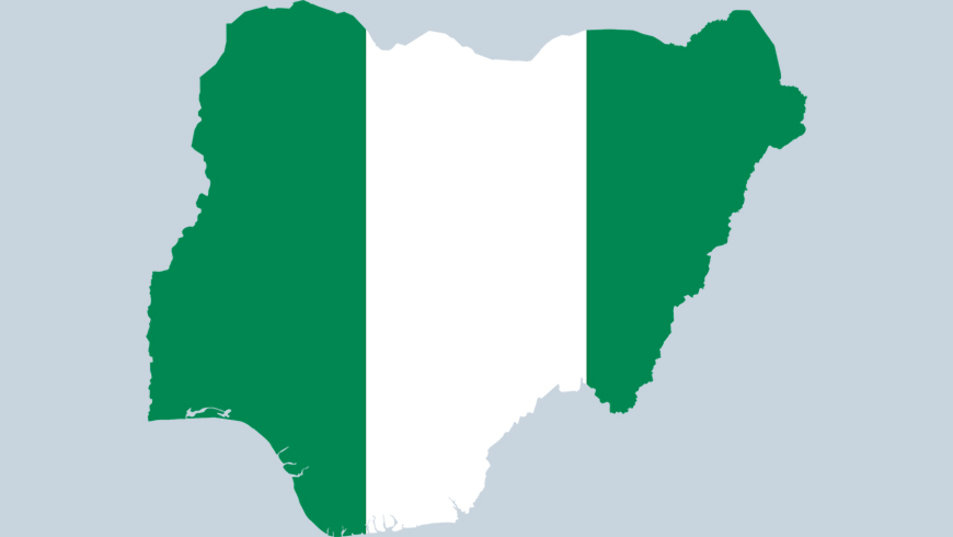
Nigeria, the most populous African country: endowed, cerebral, and should have been one of the most promising countries in the world has democracy as its form of government.
This has not always been the case for a country that will be celebrating her 61st anniversary as an independent country on October 1, 2021. Nigeria’s path to Independence was rather long, laced with procrastination, and unlike most of her fellow African countries. Some of them getting Independence earlier than Nigeria, even when Nigeria was more prepared to handle the travails of life in a newly independent country.
Some of the founding fathers of Nigeria, especially from the northern part of the country had a hand in how this panned out. So many accounts point to the fact that they did all that to protect the interests of our compatriots from the north, who were lagging behind in education, what is referred to as western education, especially in northern Nigeria to differentiate it from the Islamic education, which the north was already well established as a region, with the Kanem Bornu empire having a documented history of more than a millennium in Islamic scholarship.
Thus, some of the founding fathers thought that having independence at one point in time would have affected their region in managing the affairs of an independent state. They worked and took their time in preparation for having what it took to run self-government, which in the end delayed our independence from colonial rule. I hold no brief for any of them despite the fact that I will always have utmost esteem for all of our founding fathers’ because of their contributions to our dear country.
Six decades after Independence. We have tested disparate forms of government and systems. In these periods, Nigeria has seen what it means to be under any of these. It has taken us a long time to settle for what we today practise: democracy. Having experienced many civilians and military regimes in Nigeria. This civilian, democratic dispensation has lasted longer than any in our quest for true nationhood.
When on May 29, 1999, Chief Olusegun Aremu Obasanjo mounted the podium to take the most sacred oath of office, as the President and Commander-in-chief of the Nigerian armed forces. It was not only in fulfilment of the legitimate aspirations of Nigeria for a sound democratic country but also the inherent freedoms, respect for rule of law, justice, and all ensuing benefits of living in a country where a much-revered document, the constitution explicitly guaranteed all rights that preserve as well as uphold the dignity of all citizens irrespective of faith, region, gender, age, social status, etc.
22 years afterwards we are yet to decide on even the most salient of issues, which deciding who governs the country forms a big part of it at any given time. Since the zoning lexicon was introduced in the 2nd republic by the iconic Dr K.O Mbadiwe, zoning has taken centre stage throughout. Becoming more prominent by every electioneering even when it has been assumed erroneously to become less crucial. In fact, zoning in Nigeria is like the proverbial cat with nine lives that has refused to die.
Zoning of positions has taken an integral place in the political office sharing formula prior to elections and endorsements among political power cycle whether subtly or glaringly. It has reached a point where zoning has almost become a norm. Even though, it is not enshrined in our constitution or clearly stated in the constitution of any of the major political parties in Nigeria to the best of my knowledge. But there seems to be an unwritten rule vividly engraved in the minds of most of the major political actors, followers, average politicians, political pundits, etc. It is a stark reality that there is a gentleman agreement that drives agitation for zoning in the political sphere of Nigeria. This has continued to lead the quest for power at all levels: regions, zones, states, local governments, districts, wards, villages, etc.
Yet, we have failed as a nation to give zoning the priority it deserves in our political discourse. As far as Nigeria is concerned, we are living in self-denial as regards zoning. Zoning is abhorred, cherished, and even discussed when political interests are at stake on many occasions without the pure intent of the interest of the masses at heart. Examples abound in many states of Nigeria where people could study and comprehend zoning. I will dwell more on the presidency, which today is the focal point of strong proponents of zoning who have resolved to ride on the back of it to the Aso Rock Presidential Villa, the Nigerian President’s official workplace and residence.
‘The Forum reiterates its commitment to the politics of equity, fairness and unanimously agrees that the presidency of Nigeria be rotated between Southern and Northern Nigeria and resolved that the next president of Nigeria should emerge from the Southern Region,’ said in a communique issued at the conclusion of the meeting of governors of Southern Nigeria at the Lagos State Government House, Ikeja, Lagos State, on Monday, July 5, 2021, Nigeria.
While the same journey to the coveted Aso rock villa has invited the wrath of the sudden champions of merit over zoning, or any political consideration, the problem is that one doesn’t just grasp anything when zoning is the topic of discussion. For the same proponents of zoning today who believe it is the flawless solution to our difficult decision of the leadership of our country at any given time, most of them were the people who were absolutely against it and clearly asserted that it impedes our progress as a country. They believed only the best deserved to lead this country.
‘The Forum observed that some Northern States Governors had earlier expressed views for a power-shift to three Geo-Political Zone in the South with a view to promoting unity and peace in the Nation. Notwithstanding their comments, the Forum unanimously condemn the statement by the Southern Governors Forum that the Presidency must go to the South. The statement is quite contradictory with the provision of the Constitution of the Federal Republic of Nigeria (1999) as amended that the elected President shall:- score the majority votes; score at least 25% of the votes cast in 2/3 States of the Federation. In the case of run-up simple majority win the election,’ one of the resolutions of the Northern States Governors’ Forum meeting with Northern Emirs and Chiefs held on Monday, September 27, 2021, in Kaduna.
Today, the views remain astoundingly the same but the majority of those who shared them have seamlessly changed positions from Arewa Consultative Forum (ACF) is a political and cultural association of leaders in Northern Nigeria, which has sizeable influence in the political scene. Afenifere pan Yoruba socio-political group. Ohanaeze Ndigbo is the apex Igbo socio-political group. Northern Elders Forum, Southern Governors forum, an avalanche of powerful politicians from all over the country, and just recently Northern Governors Forum followed suit, etc.
When former President Goodluck Ebele Jonathan succeeded his boss, late President Umaru Musa Yar’adua I could vividly recall the north was against his candidacy, especially the PDP chieftains from the north who said it was the north’s tenure. I recounted the national press is awash with news that concentrated on the candidacy of the then occupant of the Presidential Villa, Dr Goodluck Jonathan. I remembered one of the popular songs then, which was urging him to contest. ‘Run, Goodluck, Run,’ which the amazon Onyeka Onwenu MFR recorded and released in 2011 in support of the former President’s electioneering.
Most of the people who are ardent supporters of zoning today are from the south and they were blatantly against it then and had the unconstitutionality of zoning as their chief reason. Of course, because it didn’t favour them. While those who are mostly antagonistic about it today, are amazingly from the north and have similar motives like those, who were against it then, certainly because it doesn’t favour them too now.
As it is President Muhammadu Buhari who hails from Katsina State, the northern part of the country finishing his last tenure. Should the next President come from the south, we would be back to this same situation in eight years time, if the needful is not done now. That is if we don’t make zoning constitutional now. We have to tackle this issue once and for all. If we fail to do it now, the northern and southern parts of Nigeria will simply change stance without any shame let alone remorse whenever it suits them. What country do we want to bequeath to our children and the future generations indeed, that is if we survive all these self-defeating and self-destruction onslaughts against the country? We must ponder on these things.
It must be noted some of these organisations I have mentioned above are not directly political in nature while others are. But they all have joined this discussion with all vigour, tenacity, and everything they have. This obviously shows that the issue of zoning in Nigeria has transcended political membership and affiliations. It has gone far beyond that.
Take the two different governors fora whose members come from different parties namely: the leading, All Progressives Congress, the main opposition party, People’s Democratic Party, and the All Progressives Grand Alliance. This speaks volumes for anyone to understand that zoning is what should be thoroughly discussed. For it is what the politicians talk about all the time and reject it only when others are to benefit from it. It is laughable, worrisome, and unfortunate. But it is the most consistent thing about zoning I have painstakingly observed over the years in Nigeria. Take your time, follow, observe, and study Nigerian politics with an emphasis on zoning you would arrive at my point. Nigerians must not shy away from discussing zoning. We have to talk over it with a view to finding lasting solutions.
Over the years, I have constantly advocated for merit over zoning. I have remained consistent on that with copious evidence. But I think there is a need for acceptance of a little change or even outright in my position with the benefit of insight. Time and again the idea of zoning remains constant in Nigeria, while politicians decide what the masses support more often than not without the people having a clue that they are being sacrificed on the altar of self-serving political goals.
Yes, to be fair to them there are quite a number of politicians who are genuinely interested in the sincere and fair sharing of power at all tiers of government. This is a huge reason for us to push forward for a critical discourse that treats this matter frankly with the ultimate goal of eventually completing this seeming personal jigsaw that has refused to fall in place or more correctly we haven’t done much as Nigerians as regards to this.
‘As I ponder on today’s event, I remember with great euphoria that one striking beauty of democracy is the glamour and solidity of majority rule in which the greater number of the people participate in the decision-making process of the system. Hence, de-emphasizing majority rule is a strong negation of democracy and an attempt to deprive the society of that unalienable privilege. However, there is also, the other side of the coin in this discourse…’ because the classical democracy oversimplified its essence to the exaltation of the tyranny of the majority and to the chagrin of the oppressed minority. Thus it is the effort to diminish the tyranny of the majority that people came up with various ideas of which consensus democracy and zoning of political power, etc. are part of.
‘Nigeria’s multi-faceted problems can be encapsulated into economic, cultural, religious and political, but I am of the opinion, that if we can be able to get our politics right, the others will follow suit, this is because, no Nation can be able to achieve meaningful national development if the polity is corrosive, structurally imbalanced and defective, no matter the amount of abundant resources at its disposal,’ Senator (DR.) Ben Ndi Obi CON said, in a seminar organised in 2017 on zoning in Anambra State, Nigeria by Anambra State council of traditional rulers.
Nigerians have to comprehend the peculiarities of their country. It is a unique, complex, diverse, sharply divided along ethnic and religious lines country. If you are a Nigerian full aware of these and all the consequences of these, how best do you advocate that we address this? Do you think after seeing this issue arising over and over again that the best way is to remain static and gloomily speculate that things will change on their own? This is apparently not the best route to take.
Nigerian lawmakers must make new laws or enact ones that will make zoning constitutional until we hopefully reach a point where Nigerians comprehend that only the best or those we believe to be the best based on their proven records of excellence service regardless of region, faith, gender, etc deserve to lead us. I pray that time comes in our lifetime. I hope we all match prayers with great efforts to see it through.
For now, we must address this issue based on the urgency, the state of our polity, and our realities permit. I propose that zoning be institutionalised in Nigeria. This should be made by amending the Nigerian constitution to incorporate zoning into it. But this idea should experiment within some specific years. There should be a well-defined scope of the zoning. I suggest it should be first among regions and then geo-political zones. Regions here means the north and south. Geo-Political zones here represent the northeast, the north-central, the north-west, the south-east, south south, and south-west.
Everyone must be carried along if we must close loopholes that politicians exploit. What is good for the north should definitely be good for the south. What is bad for the north should surely be bad for the south vice versa. If this country should thrive, we must eschew all sentiments and pursue causes that aid the whole country. We must have mutual respect, understanding, and love for one another. It doesn’t help any of us being acrimonious.
So many Nigerians may not agree with what I proposed. As I earlier stated, I was not a supporter of zoning. I still prefer merit to it. But in a country like Nigeria with the level of ethnic tensions, misunderstanding, mistrust, mischief, polarisation, evil machinations, etc: it is for the best that we make sacrifices, test new ideas, or old ones we have shied away from in our aim to get a workable solution for the country we all love.
Nigeria needs an accommodating, more inclusive, and better polity that gives room for everyone, even if it means getting it turn-by-turn. With time, we could reach the level where Nigerians will decide that we do away with zoning. Our level of understanding, maturity and development will warrant that one day. Policies, legislation, laws, and whatever are there for the purpose and time they best serve. Once they are no longer fashionable, they don’t address issues they were made in the first place to; amendments or new ones outrightly will be employed.
Nothing is too complicated, overly strenuous, inconceivable, or even impossible to explore in the quest of building that truly great nation that will be the envy of other nations and a clear example of the incredible success that could be achieved when we get it right. I work and I long for the day we will get it right as a nation. Happy 61st Independence anniversary Nigeria. God bless Nigeria.
Abdulrazak Iliyasu Sansani wrote from Turaki B, Jalingo, Taraba State. He can be reached via abdulrazaksansani93@gmail.com.