APC

Atiku-led coalition talks are bound to fail – Ganduje

By Uzair Adam

National Chairman of the All Progressives Congress (APC), Abdullahi Ganduje, has described the ongoing discussions among key opposition leaders on forming a coalition ahead of the 2027 general elections as a failed mission in the making.

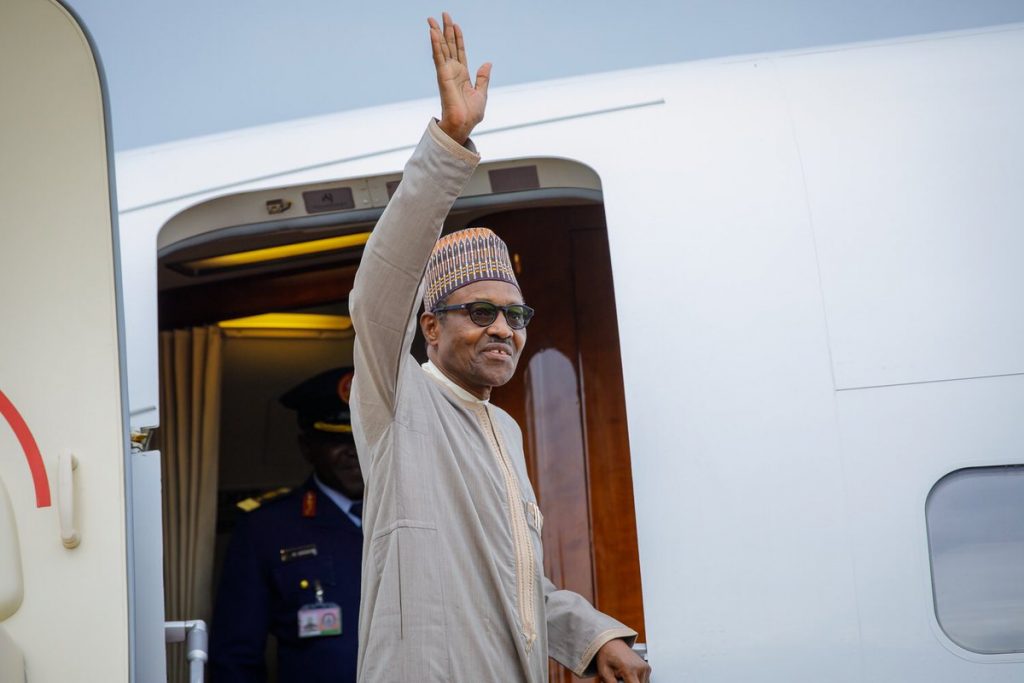
He made this known on Friday during a press briefing after leading members of the APC National Working Committee (NWC) on a Sallah visit to former President Muhammadu Buhari at his residence in Kaduna State.

Earlier that day, former Vice President Atiku Abubakar also visited Buhari, accompanied by former Kaduna State Governor Nasir El-Rufai, former Sokoto Governor Aminu Tambuwal, former Minister of Communications Isa Pantami, and ex-governors Gabriel Suswam (Benue), Jibrilla Bindow (Adamawa), and Achike Udenwa (Imo).

Atiku confirmed efforts were underway to establish a formidable opposition bloc but clarified that the visit to Buhari was unrelated to those plans.

When asked about the wave of consultations among opposition figures, particularly Atiku, Ganduje expressed confidence in the ruling party’s dominance and dismissed the alliance as unworkable.

“We are not worried at all. This is just history trying to repeat itself. They went on a joint venture, which will not work because from what we have seen, there are just some particles that cannot come together.

“It is a game, and we will not reveal our technicalities on how to handle it, but we assure you, we are equal to the task,” he said.

Ganduje boasted of the APC’s control of 21 states and described the party as “still the strongest in West Africa.”

He noted that the APC remains focused on not just retaining power, but also expanding its reach ahead of the 2027 elections.

“We are eyeing other states that will come into our fold. Either the governors themselves will come, or we go for election and defeat them to increase our tally. We are comfortable, but we are not resting. We shall continue,” he stated.

From Baba “Go Slow” to Baba “Going Very Fast” 

By Bilyamin Abdulmumin, PhD

Buhari was largely viewed as reluctant, whereas Tinubu engaged in tit-for-tat responses. Tinubu has demonstrated decisiveness on many occasions. For instance, when there was a public outcry over his Kano ministerial nominee, Maryam Shettima, he swiftly replaced her with Dr. Mariya Mahmoud, who enjoyed greater public approval. Buhari likely would have retained Shettima.

A few months after the ministers assumed office, the Minister of Humanitarian Affairs, a ministry infamous for waywardness—was caught in multiple scandals. In a swift response to public outrage, Tinubu suspended Betta Edu, and from all likelihood, she has gone for good.

No situation highlights the difference between Tinubu and Buhari more than the ongoing political crisis in Rivers State involving Governor Fubara and his former benefactor, Nyesom Wike. While Buhari would have turned a deaf ear to the situation, Tinubu reacted decisively. Those who once criticised Buhari for his passive leadership should now give a standing ovation to Tinubu’s stern control and decisiveness.

Nevertheless, Tinubu’s speech during the emergency declaration was notably one-sided. He sided with his FCT Minister, Nyesom Wike, heaping blame on Fubara for demolishing national assembly structures and failing to address pipeline bombings—while completely ignoring Wike’s role in the crisis. These reinforced accusations of federal government highhandedness in Nigeria’s most populous states.

Some argue that the federal government is involved in the debacles affecting Rivers, Lagos, and Kano due to its fear of losing these key states to the opposition. However, as the APC states, the allegations of internal conflicts in the Lagos government do not hold up. Since the state is governed by the ruling party, it seems to be just another political facade from the federal government.

A major issue for Tinubu’s camp is their position on Fubara and Uba Sani. If they oppose Fubara, they should also oppose Uba Sani. You cannot support Wike in Rivers while opposing El-Rufai in Kaduna. The two scenarios bear a striking resemblance.

Reflecting on how Nigerians criticized Buhari for lacking swiftness and displaying full control as the Commander-in-Chief of the Armed Forces of Nigeria, it is fair to say that Tinubu has now met that expectation.

Bilyamin Abdulmumin, PhD wrote via bilal4riid13@gmail.com.

Rivers State: The dangers of political betrayal and unconstitutional interventions

By Zayyad I. Muhammad

I strongly disapprove of Governor Siminalayi Fubara’s betrayal of his political godfather. Fubara entered the political arena without established structures, financial resources, or widespread recognition; he was relatively unknown. 

Former Governor Nyesom Wike provided him with the platform, support, and influence that ultimately led to his rise as governor. Yet, despite this, Fubara has turned against the very person who paved the way for his political ascent. 

Both sides should share the blame for not shifting grounds. The declaration of a state of emergency in Rivers State came at a critical time to address rising insecurity and unrest that threatened to spiral out of control. Left unchecked, the situation could have led to a resurgence of militancy and severely disrupted oil exploration activities, which are vital to both the state and national economy. 

Beyond the economic implications, the deteriorating security situation also risks derailing governance and has somehow ‘assisted’ Governor Fubara in escaping impeachment. President Tinubu may justify his decision—he has access to security intelligence and reports that the general public does not.

However, although addressing security concerns is essential, suspending an elected governor and members of the state assembly is not only unconstitutional but also sets a dangerous precedent for Nigeria’s democracy. This issue goes beyond the 2027 elections; it strikes at the heart of democratic governance and the principle of electoral legitimacy. 

Our democracy has matured to a point where a sitting governor can be removed only through due process, as outlined in Section 188 of the 1999 Constitution of the Federal Republic of Nigeria (as amended). If we are not careful, one day—God forbid—a president or his allies could create chaos in a state simply to justify declaring a state of emergency and unseating an elected governor for political gain. Such actions would undermine democracy and erode public trust in the electoral process. They pose a danger to our future. 

The Rivers state or any political conflicts should be resolved within the framework of the law, not through forceful interventions that threaten democratic stability.

The key actors in Rivers State must set aside their personal and political grievances to prioritize reconciliation. Prolonged instability is unacceptable, as it harms the people, governance, and economic progress. A peaceful resolution is the only path forward.

An elected Governor’s mandate is sacrosanct and must be respected. He is the top citizen in the subnational.

 Zayyad I. Muhammad writes from Abuja via zaymohd@yahoo.com.

Would Seyi Tinubu’s approach succeed in the North?

By Zayyad I. Muhammad

Whether you love him or dislike him, Seyi Tinubu is skillfully mastering the art of being close to power and leveraging his position as the son of Nigeria’s President. The President of Nigeria wields significant power and influence, and Seyi is gradually understanding both the intricacies of Nigerian politics and the delicate task of managing those around his father.

Now, he has taken on a significant and challenging task: restoring the APC’s once-unquestioned dominance in the North—a region that, while outwardly cordial, seems to be quietly drifting away from the party and the Tinubu/Kashim presidency. The North is revolting and smiling!

On this mission, Seyi could either succeed or fail, depending on his arithmetic skills, his father’s policies and programs, and, most crucially, President Tinubu’s willingness to hear uncomfortable truths, especially those his close associates might struggle to convey.

Seyi has identified a key battleground: the youth. His recent focus on distributing food items during Ramadan is a commendable step, so to speak. If executed strategically, it could yield positive results. However, food distribution alone remains a weak and short-lived strategy. 

What more can Seyi do? A multi-pronged approach is needed- an economic and political strategy. Beyond handouts, Seyi, as a young man, should focus on real empowerment. He must identify and support enterprising young Northerners who are not part of the political elite but are making tangible impacts in their communities. 

While he may have supported and empowered many individuals in the past, his new focus should be on fresh faces—ambitious, independent-minded young Northerners who, when given support, can drive real change. This could translate into both grassroots influence and renewed political goodwill for the APC in the region.

Expanding his political network thoughtfully will be impactful; Seyi needs to move beyond the usual circle of children from the political elite. The North is home to many educated and brilliant young minds who remain untapped. Bringing them into his circle could prove invaluable for rebuilding trust and influence.

Leveraging social media influencers will play a crucial role. This time, entertainment influencers will have little to no impact. Instead, Seyi should engage influencers whose voices carry weight—those known for insightful, educational, and impactful messaging that resonates with the region’s unique socio-political landscape.

Ultimately, Seyi Tinubu’s success in the North will depend on how well he moves beyond optics and embraces a more strategic, sustainable approach. The challenge is immense and thorny, but so are the opportunities. 

Zayyad I. Muhammad writes from Abuja via zaymohd@yahoo.com.

Not all that glitters is gold

By Isyaka Laminu Badamasi

As the wave of politicians leaving various political parties, especially the ruling party, to join the SDP gains momentum, remember that not everything that glitters is gold.

During the buildup to the 2015 general elections, some politicians capitalized on the failures of the PDP administration at that time. They formed what is now known as the All Progressives Congress (APC), a decision we all regret in unison. 

As observers, and considering the caliber and number of individuals joining the Social Democratic Party (SDP), I must confess that the county’s political landscape leading up to 2027 will be fascinating in the days, months, and years ahead. 

Before then, we should not fold our arms while watching the gullibility of our people and how it has led us to where theAPC administration has brought us today. It is crucial that we examine the actors involved in this process of decamping, reminding ourselves not to be swept away by the razzmatazz of this drama and to avoid making another unforgivable mistake, as not all that glitters is gold. 

We should be very observant of who joined SDP from our states and from which political party. What are their contributions to the development of the state? Are they relevant to the party they left? Are they capable of changing the narratives in the scheme of things, or is it just to make headlines? 

While they have the right to make whatever political decisions regarding 2027, we shouldn’t be naive enough to believe that the ongoing alignments and realignments are unrelated to us. Remember the pervasive nature of politics.

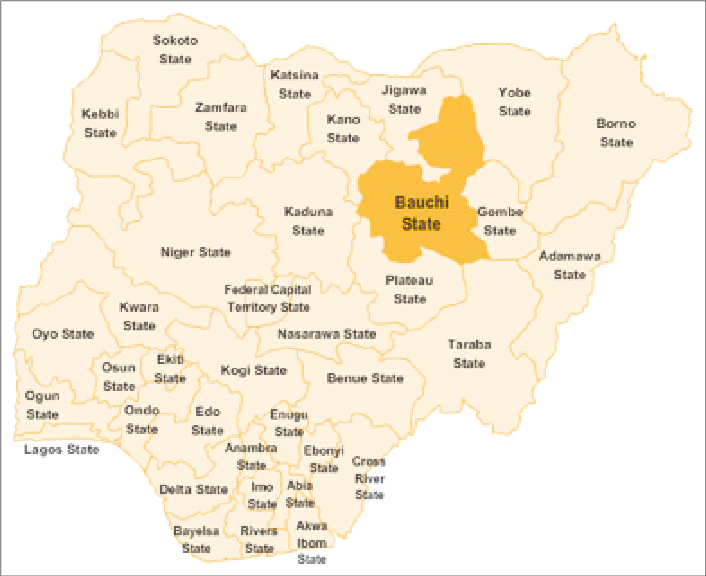
Isyaka Laminu Badamasi wrote from Bauchi State via makwalla82@gmail.com.

El-Rufai’s defection and APC’s growing fractures

By Abdulhamid Abdullahi Aliyu

In a move that has sent shockwaves through Nigeria’s political landscape, former Kaduna State Governor Nasir El-Rufai has officially parted ways with the All Progressives Congress (APC) and pitched his tent with the Social Democratic Party (SDP).

While party defections are common in Nigerian politics, El-Rufai’s departure from the ruling party carries significant political implications that could alter the dynamics leading up to the 2027 elections.

For a man instrumental in the formation of the APC and a staunch ally of former President Muhammadu Buhari, El-Rufai’s departure raises critical questions. Is this a strategic move to remain politically relevant? A protest against President Bola Tinubu’s leadership? Or does it signal widening cracks within the APC that could deepen in the coming years?

El-Rufai’s political journey within the APC has been marked by loyalty, controversy, and influence. As a key figure in the party’s 2015 victory over the PDP, he was regarded as one of the strongest voices in Buhari’s inner circle.

His tenure as Kaduna governor further solidified his image as a reformist, albeit one who often courted controversy. From restructuring Kaduna’s civil service to his hardline stance on security issues, El-Rufai commanded attention. Under Buhari, he wielded significant influence, not just within Kaduna but on the national stage.

Many expected him to secure a prominent role in Tinubu’s government. However, cracks began to show when he was dropped from the ministerial list, allegedly over security concerns flagged by the National Security Adviser.

El-Rufai’s departure from the APC is not a hasty decision; it represents the culmination of increasing frustration. His rejection as a minister was perceived by many as a calculated marginalization, signaling the start of his estrangement from the ruling party’s core decision-making processes. 

Reports suggest he became increasingly disillusioned with Tinubu’s governance style, particularly in handling economic and security challenges. The former governor is known for his bluntness, and sources indicate that his inability to influence policies within the APC played a significant role in his decision.

While his supporters argue that his move to the SDP is based on principle, critics suggest it is driven by personal ambition—positioning himself for a possible political comeback in 2027.

El-Rufai’s choice of the SDP, rather than the PDP or a new political movement, is intriguing. The SDP remains a relatively small force compared to the APC and PDP, raising questions about whether he genuinely believes in the party’s ideology or sees it as a convenient platform to negotiate his future.

Some analysts believe El-Rufai is playing the long game—joining a smaller party now to avoid confrontations with APC heavyweights while testing the waters for potential alliances with other opposition figures ahead of 2027. Others argue that he has limited options, given his strained relationship with Tinubu’s camp and his unlikelihood of returning to the PDP, a party he once fiercely opposed.

Expectedly, the APC has brushed off El-Rufai’s departure, with the Presidency dismissing it as driven by “inordinate ambition.” Kaduna’s APC leadership has also claimed they are unbothered, arguing that his influence has waned significantly since leaving office. 

However, political observers note that El-Rufai’s defection could have ripple effects. While he may not command a nationwide political structure, his ability to shape narratives, especially in northern politics, should not be underestimated. Some opposition figures, including former Senator Shehu Sani, have downplayed his move, arguing that El-Rufai’s political relevance has diminished.

El-Rufai’s defection is not just about one man leaving a party—it reflects deeper tensions within the APC. Since taking power in 2023, Tinubu has had to balance competing interests within the ruling party, from former Buhari loyalists to his own political allies. The cracks within the party are becoming more visible, and if not managed properly, they could deepen before 2027.

For El-Rufai, the road ahead is uncertain. Aligning with the SDP may be a strategic step, but it remains to be seen whether it will translate into real political leverage. Is this the beginning of a broader coalition to challenge APC dominance, or will it end up as another failed defection story in Nigeria’s political history?

One thing is clear—El-Rufai’s move has reignited conversations about Nigeria’s shifting political landscape. Whether it leads to a major realignment or fizzles out as an individual protest remains to be seen.

Abdulhamid Abdullahi Aliyu, an NYSC serving corps member, writes from the Center for Crisis Communication (CCC) in Abuja.

Kwankwaso condemns state of emergency in Rivers State

By Hadiza Abdulkadir

Following a prolonged silence and social media appeals urging NNPP chieftain and former governor of Kano State, Rabi’u Musa Kwankwaso, to address the ongoing political situation in Nigeria, Kwankwaso issued a statement to the press through his social media accounts.

Kwankwaso strongly criticized President Bola Tinubu’s recent declaration of a state of emergency in Rivers State. The proclamation includes the suspension of Governor Similayi Fubara and all elected state legislators, a move Kwankwaso deems unconstitutional and dangerous for Nigeria’s democracy.

Reflecting on past political lessons, he expressed concern over the National Assembly’s rapid ratification of the president’s decision, calling it a deviation from proper legislative procedures. “This 10th Assembly has become more rubberstamp than any of its predecessors,” he stated.

Kwankwaso also condemned the involvement of military leadership in a civilian power structure, warning that such actions could lead to chaos and erode public trust in democratic institutions. He emphasized the risks of permitting military influence over civilian governance, recalling the need to keep military forces away from political power.

As the situation unfolds, the implications for democracy in Rivers State and across Nigeria remain uncertain, highlighting the necessity for political and judicial bodies to uphold the rule of law.

Lamido rejects El-Rufai’s call to join SDP, defends loyalty to PDP

By Uzair Adam 

Former Jigawa State Governor, Sule Lamido, has dismissed an invitation from former Kaduna State Governor, Nasir El-Rufai, urging opposition politicians to join the Social Democratic Party (SDP).  

El-Rufai, who recently defected from the ruling All Progressives Congress (APC) to the SDP, made the appeal in an interview with BBC Hausa, inviting prominent figures such as Atiku Abubakar, Peter Obi, Rotimi Amaechi, and Rauf Aregbesola to join him in the party.  

Responding in a separate BBC Hausa interview on Sunday, March 16, 2025, Lamido described El-Rufai’s call as an insult, emphasizing that the People’s Democratic Party (PDP) was instrumental in shaping the former Kaduna governor’s political career.  

“The party we built, the PDP, is what gave birth to El-Rufai. He is not in a position to make us abandon it,” Lamido said.  

He also criticized El-Rufai’s leadership approach, questioning his sudden shift to the SDP after years in the APC.  

“Leadership requires patience, vision, and commitment to the peace and stability of the country. It should not be driven by anger or personal interests,” he added.  

Reaffirming his allegiance to the PDP, Lamido stated that he had no reason to leave the party, saying, “If I wanted to leave, I would have done so in 2014 when the APC was formed.”  

He advised El-Rufai to prioritize national interest over political grievances, stressing that the PDP remains focused on rebuilding its strength after losing the 2015 presidential election.

SDP national chairman alleges threats and withdrawal of security detail

By Abdullahi Mukhtar Algasgaini

The National Chairman of the Social Democratic Party (SDP), Alhaji Shehu Musa Gabam, has revealed that he has been threatened and his security detail withdrawn without justification.

He made this known in a statement to journalists on Sunday night.

Gabam stated, “We must uphold justice, truth, and human rights in our democracy. Unfortunately, injustice continues to be meted out to some citizens, including myself, for exercising our constitutional rights. Despite following due process, my security detail was withdrawn without any valid reason.”

He described the move as an attempt to intimidate opposition members and silence government critics. Gabam noted that past opposition leaders, including the current president, were not subjected to such threats and intimidation.

He reiterated the need to ensure that every citizen’s rights and freedoms are respected without fear.

Gabam also stated the case of Raye, a young woman serving in the National Youth Service Corps (NYSC), who is allegedly being intimidated. He called on the NYSC to address her case with fairness and truth, without threats.

He urged unity in building a society that respects the freedom of every citizen, regardless of their political views.

Why we overlooked Tinubu’s Chicago university saga and backed him—El-Rufai

By Uzair Adam

Malam Nasir El-Rufai has admitted that he and other politicians supported President Bola Tinubu in the 2023 presidential election despite being aware of the controversy surrounding his academic records at Chicago State University.

In an interview with the BBC, the former Kaduna State governor explained that their backing was based on the belief that Tinubu would replicate his performance as Lagos State governor on a national scale.

“What pains me is that the government we supported, and had confidence in, is not delivering as expected. We knew about his Chicago issue, but we believed if he could do for Nigeria what he did in Lagos, it would be worth supporting him,” El-Rufai said.

After openly criticizing Tinubu’s administration and the ruling All Progressives Congress (APC), El-Rufai defected to the Social Democratic Party (SDP) on March 10, 2025.

Since then, he has been making efforts to attract other politicians to join the party in a bid to challenge the APC in the 2027 elections.

As part of his political maneuvers, the former governor recently met with Pastor Tunde Bakare and former Osun State governor Rauf Aregbesola, a former ally of Tinubu.

He has also called on former Vice President Atiku Abubakar and Labour Party’s presidential candidate Peter Obi to join the SDP.

Addressing speculation that he left the APC to contest for the presidency in 2027, El-Rufai said the decision is not his alone to make.

“It is not for me to decide; it is the party and the people who will determine that. Even when I contested for governor, it was people who met and convinced Muhammadu Buhari, and he called me to contest,” he said.