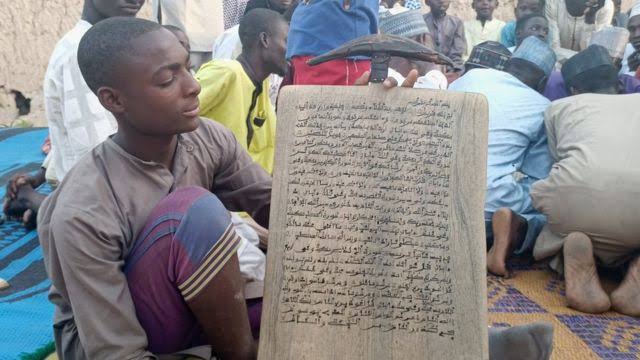
Almajiri system

We can do without them

By Yasira Muhammad Bello 

Since the Academic Staff Union of Universities (ASUU) went on strike from the first week of their warning strike in February, I have been busy with my literary activities, busy schedules and many other things.

In the first three months, I was engaged with an empowerment program called EGMA and EGRA (Feed and Read program for Almajiri’s) taking place all over Nigeria under different NGOs. Luckily, I got to be on the supervising committee under the Halimafactor community initiative (HFCI).

During this period, ASUU extended their warning strike, allowing me to continue my empowerment program skills.

Spending time with the Almajiri’s teaching them, feeding them and interacting with them gave me an instinct that ASUU has done me a favour because it’s a splendid opportunity to be with them and see their understanding of English and Mathematics.

I feel that it’s a considerable achievement and fulfilment. However, right on track before the completion of the program, I heard that ASUU would soon call off the strike (maybe or maybe not).

Alongside I saw another fantastic and golden opportunity; the NGO I am volunteering with will host training for Photography and Videography in collaboration with ITF/NECA. Immediately after I saw the form, I decided to participate since photography was my hobby and passion, and it would be another huge achievement during the ASUU strike. So I registered free and was screened and interviewed. So luckily for me, I got hitched up and selected to participate.

It wasn’t an easy-going job waking up as early as possible to be there at the training venue from (9:00 am to 3:00 pm). Sometimes it went beyond the closing time. Still, I kept going by putting my unending effort and strengthening my mind and soul for the task full option.

Right on the way, some of my co-trainees got tired and left, but I did not give up. On the contrary, I struggled every morning for the task ahead. Gradually, they say, an elephant can fly. Of course, it did.

The three consecutive months weren’t easy, but with all the hardships and criticism, I strived for it to be independent and stand out from other women of my age who think that women don’t have room in photography. Independence is my most cherished and number one value.

All of a sudden, it ended with a great one-week entrepreneurship class. Wow, it’s a massive point for me in 2022 and during the ASUU strike. The classes ended just a week ago (on Friday). I am now a certified photographer and videographer.

From last week to today, not up to a week, I have been doing nothing but staying at home. I feel like I have been idle for a year without doing anything. It’s a big step back to my dear independent life. Since the Federal Government is not ready to dialogue with ASUU, and ASUU aren’t prepared and willing to call off the strike, I wouldn’t hesitate to call myself to strike hard for my independent and entrepreneurial habits and morals.

This is just a brief account of my struggle during the period of ASUU. I decided to share this story with all my comrades at university and outside campus, especially my dear girls sitting idle at home doing nothing and expecting everything. If Nigeria cannot do it for us, let’s grow to be responsible and do it ourselves. With or without school, my 2022 agenda is almost fulfilled.

Be independent; you must overcome all the challenges and critics before you get to the root you want to grab in life.

I was criticized to the extent that I was thinking of backing down, but I decided not to. I learnt a life lesson that we can never do without criticism. When they criticize and talk about you, this shows that you are getting somewhere high. Believe me; many people are praying and hoping to be in your constant point. It’s their praying point, but you might not know. I refused to be trapped down doing nothing.

Yasira Muhammad Bello is a 100L student of Science Laboratory Technology, Gombe State University. She is an entrepreneur, writer, poetess, photographer, videographer, and spoken word artist. She sent this via misseerahbello@gmail.com.

WANTED: The reformation of the Almajiri system in Nigeria

By Kabir Fagge Ali

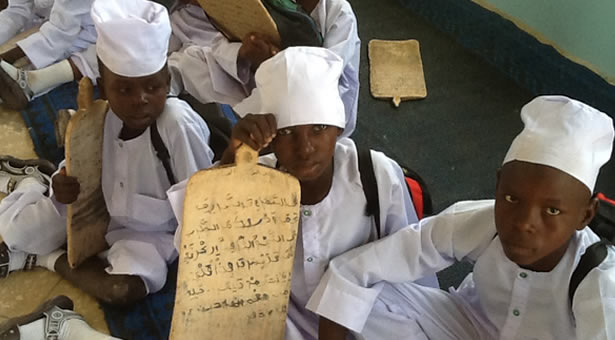
Almajiri is a system of Islamic education practised primarily in Northern Nigeria. The term is also used to denote a person who is taught or undergoing learning within this system called “Almajiranci.”

Almajiri is derived from the Arabic “Al-Muhajjirun”, an “Emigrant” who migrates from his home to a particular Islamic school in the quest for knowledge.

Over the years, it has been a normal feature, a cultural norm to have seen children roaming the streets in certain parts of (mainly northern) Nigeria, all in the name of seeking Islamic Education through the system of Almajiri.

Before the arrival of British colonial masters, a system of education called ‘Tsangaya’ has since prevailed in the Kanem-Borno Empire. It was established as an organised and comprehensive education system for learning Islamic principles, values, jurisprudence and theology.

Established after madrasahs in other parts of the Muslim world, Tsangaya was primarily funded by the state. Islam traditionally encourages charity, so the community readily supported these Almajiri. In return, he (Almajiri) gives back to society through manual labour.

The system also produced the judges, clerks, and teachers who provided the colonial administration with the needed staff. The Almajiri schools provided the first set of colonial staff in Northern Nigeria.

The Colonial masters abolished state funding of Tsangaya, arguing that they were religious schools. “Karatun Boko”, western education was introduced and funded instead. With this loss of support, the system collapsed.

A 2014 UNICEF report put the number of Almajiri in Nigeria at 9.5 million, or 72 per cent of the country’s 13.2 million out-of-school children. Unfortunately, this is a disaster unfolding before our eyes, as some estimates claim that the number of out-of-school children in the country has risen past the 15 million mark, most of whom originated from the North.

Regrettably, the Almajiri culture has since outlived its purpose and has become a breeding ground for child begging and, in extreme cases, potential materials for recruitment into terrorist groups. Moreover, the pupils who were meant to be trained to become Islamic scholars have now had to struggle to cater for themselves, begging rather than learning under the watch and supervision of some semi-literate Quranic teachers or Mallams who themselves lacked the requisite financial and moral support. Hence, the system runs more as a means of survival rather than a way of life.

This is because the Qur’anic schools became hapless, unable to render any help. After all, the head of the school is not also financially stable. This ultimately leads him to enforce a rule that ensures the students get him food or money. The most annoying part is making it mandatory, as punishment is enforced on anyone who fails to turn in what is expected from him.

Deprived of a normal and decent upbringing, Almajiri children, usually little boys between the ages of 4 and 15, may have been direct products of polygamous marriage or broken homes or simply due to economic challenges that hit the family. They lack adequate family cover as children are sent out to the streets under the guise of Almajiri as soon as the family’s resources are overstretched.

The Almajiri grows up in the streets without their parents’ love, care, and guidance; his struggle for survival exposes him to abuse (homosexuality and paedophilia), used as a slave, brainwashed, and recruited for anti-social activities, and used for destructive and violent activities. This is the picture of the pitiful plight of an Almajiri child in Nigeria.

Additionally, Almajiri culture epitomises child abuse, social exclusion, and chronic poverty in all ramifications. Because the system is believed to be rooted in Islamic religion and Fulani cultural practices, many attempts to reverse the trend or end such abuse of humanity have always hit a brick wall.

The fact that Islamic teaching strongly forbids begging, except in exceptional circumstances, which include a man’s loss of properties or wealth in a disaster or when a man has loaned much of his money for the common good, such as bringing peace between two warring parties already proves that Almajiri system as it is being practised today is unIslamic. A child neglected by his parents is vulnerable to diseases and social crimes. To survive, he often has to beg from ‘dusk to dawn’, after which he returns to the Tsangaya (Almajiri school).

For the past years, the Almajiri system has created a cover for criminally minded individuals to abuse Nigerian children through trafficking and expose them to anti-social behaviours such as forced labour and sex slaves.

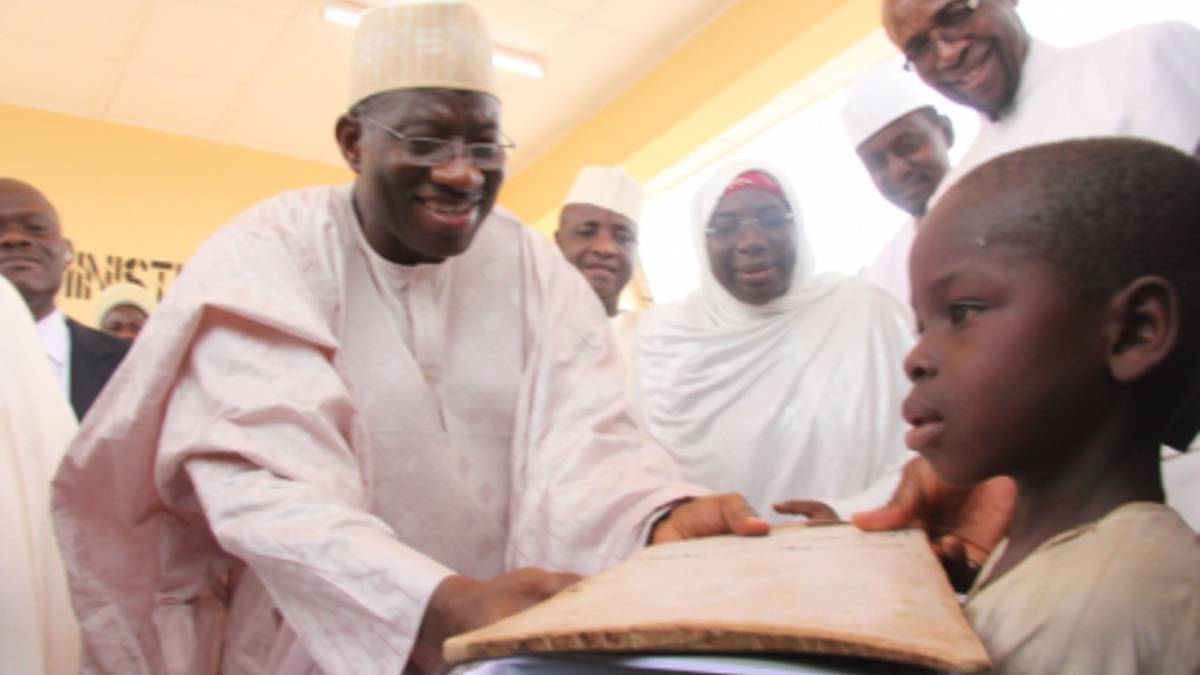
Even former President Goodluck Jonathan designed a program under which a few Almajiri Model Boarding schools were established, which was aimed at integrating conventional western education into Islamic education, only turned out to be merely ‘removing a spoonful of water from a filled tank’, it wasn’t enough to adequately address the problem. As a result, less than five per cent of the children were captured by the Federal Government’s program meant to remove the Almajiri off the streets.

Therefore, as urgent, the government should take reasonable measures to address the Almajiri system in Nigeria to take them off the streets, even if it means banning the culture.

Unless it is banned or adequately reformed to meet the modern challenges and realities, the problems of underdevelopment, educational backwardness, and mass poverty in (northern) Nigeria will worsen. People will continue to bear children they do not have the resources to cater for, knowing that they could easily push such children out into the Almajiri system.

To conclude that the Almajiri system has deviated from its original purpose and is currently giving Nigeria a bad image in the international community is to admit the obvious.

This problem is a ticking time bomb waiting to explode at any time. And when it does, it will consume us all. But, it is still not late. So, something can be done to stem the tides.

Fagge is a student of Mass Communication at Skyline University Nigeria. He sent this via faggekabir29@gmail.com.

Almajiri System: The way out of the Armageddon           

By Lawi Auwal Yusuf

I have been keenly following the recent raging altercation aroused by the hard-hitting comments of Nafisa Abdullahi. Many people have voiced their diverging opinions; some took an affirmative position while others came out against her. However, there is a consensus between the different parties that Almajiris are in a dire condition. Hence, no one would like to see his son in such a critical situation.

Though everybody has the leeway to express his mind, why are we wasting our energies on arguments that will come to nothing? These children are clamouring for justice, not a palaver over their plight. Such wrangle will never let us escape from the shackles of mutual antagonism. I believe that this issue is beyond mere accusation and counter-accusation. On the contrary, we have to go the extra mile. We have to give it our best shot to mark a turning point in this issue. Thus, we must debate matters that will help us clinch a victory over the problem. Put another way, it is more important to shift our attention from pointing accusing fingers at each other and focusing on the solution. This tendency to emphasise the problem rather than the solution is deeply entrenched in society and ravages our daily lives. Instead, it is more logical to put the solution above the issue.

Concentrating more on the problem will put us on a road that goes nowhere. It will keep us going around in circles, remain coasting and yield no helpful result. It will always go against us while our efforts remain in the doldrums. If you think this is the right way to ward off the problem. Indeed, you are living in a dream world. It is time to stop the dispute, draw a line under the issue and face reality, as this intractable desertion is getting out of hand.

Those on the same wavelength with the actress should know that not all the children they see on the street begging are actually Almajiris. Many children from impoverished homes disguise themselves as Almajiris to beg for food or scavenge through garbage, looking for valuable materials to sell for a living.

Furthermore, I want to remind those lilliputians that ridicule the Tsangaya that immensurable successes had been achieved through the system. It was the only institution that catered to the educational needs of our people before the inception of Western education. It was the bedrock of our ancient civilisation that paved the way for modern civilisation. It was the institution upon which the foundation for the development of society rested. It was attended by both the nobles and the commoners.

The Sultans of the Sokoto Caliphate, emirs of its semi-autonomous city-states and other members of the aristocratic class all went to Tsangaya. Also, they received their leadership skills training there and trained other administrators who served in different capacities. Moreover, Tsangaya scholars designed the constitution used to govern such a gigantic empire effectively. In addition to all these, it rolled out the khadis (Shari’a court judges) that administered justice, the Imams that led prayers, and Muftis that issued verdicts to guide authorities and the people on both their spiritual and worldly affairs. They also served then as the think tank.

Similarly, great scholars impart knowledge, herbalists that cure ailments, astrologists that determined praying times, crescent sighting, weather forecasts and navigation routes came from such a school system. On this basis, Northerners were proud boastfully that they were literates with a systematic way of life even before the imperialists invaded the region. So, we must be grateful for that.

On the other hand, those who take an unfavourable position from the Kannywood model should understand that the system now doesn’t go; it has a lot of issues and needs momentous changes. It is not what it used to be before. It has taken a different dimension in the last decades. We can’t keep going like that. The Tsangaya must be radically renewed, and these downtrodden children must be liberated from such bondage. Their future must be secured. They need to be under the vehement supervision of their parents, accompanied by their affection, psychological support and care. They have to enjoy the comfort of their homes and the bond of kinship ties, as we have all enjoyed. They deserve a decent life.

Lastly, politicians that have been dilatory in dealing with this problem and wash their hands on the matter must back away from such attitude. They must show genuine commitment to eradicating this menace. We must help these children to salvage the country because we have no other country than Nigeria. IT’S OURS!

Lawi Auwal Yusuf wrote from Kano, Nigeria, via laymaikanawa@gmail.com.

Almajiri System: From the prism of broken marriages

By Nusaiba Ibrahim

When all this brouhaha on the Almajiri system of education is over just before we hop on another discussion likely to be initiated by random persons online, we will then realise we have failed to acknowledge the failed infrastructure that has created and will continue to fuel the unrefined Almajiranci system of education by the day.

The earlier we realise how enormous challenges have, over the years, consumed our societies in the North, courtesy of broken marriages or homes, the better for us to understand the enormous task ahead of us in empowering our communities with the correct information and strategies to face greater challenges now and in the future, especially with regards to marriage as an important social institution. No matter how hard you try, as an optimistic Northerner, to overlook the series of ongoing debates in the past week online, it is practically difficult and impossible to ignore them, given the current reality that we have found ourselves in.

There is a reason why I choose to deliberately sideline discussing the Almajiri system from the premise of system reformation, the aspect of its essence or in contrast to modern primary education that has continuously screamed for aid. Unless we address the myriads of problems faced by the major social institution that is essential for development – family/marriage, we are hence, collectively wasting our efforts and brains to come up with solutions to transforming the system. At the same time, many under-aged will continue to be pumped out into these traditional Islamic schools, which are, of course, overwhelmed in the name of Qur’anic education.

It’s impossible to continue thinking that only strategic transformation, erasing the system or replacing it with a standard Islamiyya system, will bring a lasting solution to this misery. Agreed, they are essential to improving the system and even sustaining it. But as time flies, if they ever get a chance to be thoroughly revamped, they too will be overwhelmed to take care of these children sent to them in multitudes.

Now, let us take a quick recap of why our primary education has continued to suffer greatly. If you choose to think critically, you will understand that it’s the same reason in the context of the Almajiri system of education that has continued to promote this unending menace. It continues to act as a shield to a lack of good parenting, thanks to unsuccessful marriages. It’s nothing other than overpopulation alongside a dwindling economy. Hence, a multi-faceted menace like this requires a robust approach from virtually all aspects of social life.

My thoughts on why broken homes have the lion’s share of Almajiri menace are based on the facts highlighted in many of the reports that have been consistently aired on our local radio stations in Kano State and a recent publication by The Daily Reality on the 28th of March 2022. Several instances of why these unkempt children are sent to these schools all boil down to the separation of parents either directly or indirectly, which necessitates living with grandparents and stepmothers, who are eventually left without no quicker choice but to use the Almajiri system as an escape route from discharging their parental duties.

In a bid to understand the in-depth social ills of our dearest Northern Nigeria, particularly on the marriage institution, The Daily Reality published a report highlighting the rate of divorce in Kano State to be at about 32%, with an average age of divorcees ranging from 20-25. Presenting these figures shows a red flag and a slap on our faces as we boast of some of the best religious scholars, undisputed morals and values compared to our neighbouring counterparts.

But unfortunately, some low-IQ dimwits denied the facts with fierce rebuttals. While some challenged the veracity of the facts, another portion challenged the authenticity of the reportage/research findings by reducing it to mere propaganda than research. And for others, it doesn’t even reflect the reality on the ground. And the consequences aren’t confined to their families alone, which we are well aware of. Unfortunately, with developments in several aspects of social life around the world, we are still in the age of denying facts that are under our noses.

Let’s assume the facts aren’t authentic enough. Still, mere observations and intuitions have made us all realise that there exists a particular season of the year when agricultural products are everywhere in the markets. The number of these children quadruple on our streets. These periods always signal the season of new marriages in villages with the bit of fortune made from the sales of agricultural produce, thereby forcing these children out of the homes to accommodate new wives. You may choose to argue with whatever is next to you – these are undeniable facts. Interviews during the height of the ban against street begging unveiled many children narrating experiences of their grandparents, fathers and step-mothers taking them to traditional Qur’anic education alias Almajirci before harmattan season kicks off. Radio stations in Kano State primarily documented these.

Delving deep into the report, what struck me hard was, who will then take responsibility for the children out of these marriages? In whose custody will they survive if their mothers remarry? Will their new stepmothers be willing to accommodate them? What about their step-fathers? Indeed not the government, and it cannot be the community either. So, they’ll add another layer of complexity to our complex problems. In my thoughts, I silently hoped that people might look at this dimension which happens to be the root cause. If you think broken marriages aren’t the problem, try surveying many Almajirai in your community.

In all sense of honesty, I must recognise that the essence of the Qur’anic education in the North has not only proven to be undisputedly essential for authentic Islamic education but is also the pillar that sets the pace for all modern Islamiyya education in Northern Nigeria. Contemporary Islamic education has only gone further to modern teaching and learning methods in line with global Islamic development based on the strategies of traditional Quranic education. Many of our reputable religious scholars, professors and other professionals in different fields of endeavour are beneficiaries of the conventional Qur’anic systems.

Apparently, we have seen examples of why transforming the Almajiri system of education is almost impossible, especially because of government inconsistencies, discontinuity of government policies and lack of political will to tackle the menace. Besides, there are even mightier problems that are yet to be addressed. However, I firmly believe that strengthening marriages via introducing policies to safeguard and sustain good parenting can be a strategic move to tackle the menace of Almajirai. It will undoubtedly produce a desirable result by solving multiple challenges simultaneously.

Nusaiba Ibrahim Na’abba is a master’s student from the Department of Mass Communication, BUK. She is a freelance writer and researcher. She can be reached via nusaibaibrahim66@gmail.com.

Double standards in outright vilification of Almajirai

By Yusuf Muhammad Tukur Illo

It has obviously become the norm among those who call themselves ‘intellectuals’ or arrogate to themselves ‘advanced civilization’ especially from the North, to at the slightest opportunity, revile not only the poor Almajiri children but also their parents and anyone/anything they deem directly or indirectly connected with their own notion of Almajiranci practice.

You will often read them carelessly throwing descriptions such as ‘irresponsible parents who bring to the world children that they cannot take care of’, showing absolutely zero regard to the plight of most of those children and their parents – being victims of systemic injustice who otherwise should deserve better treatment from their governments.

Moreover, the so-called intellectuals have constituted themselves into an anti-Almajirai vanguard, advocating for banning of the practice in its entirety and vehemently opposing any call or move to reform the system. Literally, giving the children no chance to benefit from any initiative to improve their lives, especially from the governments that have neglected and reduced them to destitution.

HOWEVER, the attitude shown by these ‘civilised intellectuals’ is an entirely different ball game when other than Almajiranci is the case. I will give a few examples attesting to that double standard.

1. They passionately call out any State Government (from those Northern States where Almajiranci is prevalent) that has failed to pay the examination fees (WASSCE and NECO) of its graduating secondary school students, criticising and blackmailing the government until it settles the money running into hundreds of millions. The flimsy reasons they advance is that there are children of the poor who cannot afford the examination fees. But to them there are no children of poor among the Almajirai that deserve government support in whatever form.

After enjoying virtually free education with feeding (mostly for those in boarding schools) courtesy of the State Governments, the parents failing to pay only the exam fees of their children are not irresponsible and not deserving of condemnation, simply because they sent their children to a school other than an Almajiri school. Consequently, our ‘intellectuals’ will pressure the governments to shoulder that responsibility on their behalf.

2. They equally criticize any State Government that discontinues payment of University Registration fees for its indigenes (as is the case in some Northern States) or cuts down scholarship stipends of its students in the highly subsidized public universities. Why won’t they deserve free or highly subsidized education from Primary School to the University since it is Western Education, as it is popularly called?
And their parents are not irresponsible for giving birth to children whose education in public institutions they cannot even pay for, but rely on the Government to do it for them.

But the Almajiranci practice should not benefit from any government scheme that will aim to reform it, because their parents are irresponsible for giving birth to them and failing to look after them.

3. They always support the struggle of ASUU (which I have been a member of, for over a decade) in demanding more Government funding to revitalize our universities, making all kinds of commentaries on how our governments care less about the educational sector due to low budgetary provisions for the sector. That is because university education is sacred to them.

But they will oppose groups that advocate for schemes to intervene and reform Almajiri practice, because those who engage in it are lesser humans and therefore deserve no such interventions. That’s even though the Almajiri school settings are no where near the universities in terms of needs.

4. They endlessly praise any State Governor that sponsors his indigenes to study abroad. And any successor who dares to end the sponsorship due to lack of funds or redistribute the students across universities in less expensive countries or even transfer them to private universities in Nigeria, will come under fierce criticisms of the ‘intellectuals’.

But the Almajiri practice should receive total ban rather than government initiatives that will reform it and make it better for the citizens who have chosen it.

With all sense of modesty, I have been a beneficiary of government funded foreign scholarships for both MSc and PhD, and I know the humongous amounts of money the government spends on foreign scholars yearly, which has yielded only very low Return on Investment for the country so far.

Should a meagre fraction of those amounts be allocated and used to reform Almajiranci practice, the impact will be immediately noticed and the poor children will have a chance to live a decent life facilitated by their governments. But our ‘intellectuals’ are opposed to that, because Almajiranci practice is a useless venture from which comes no good, as they have repeatedly claimed.

5. After all the aforementioned interventions, the students of Western Education graduate from the universities and complete their NYSC, then majority sit at home idle, only adding to the country’s unemployment statistics. Our ‘intellectuals’ will seize the opportunity to criticise the governments once more for failing to create jobs or provide employment opportunities for the youths.

Interestingly, the graduates are not irresponsible for failing to secure a job or even knowing where to start from, despite benefitting from free or highly subsidised education. Likewise, their parents are not irresponsible for giving birth to them and failing to guide them to obtaining jobs or entrepreneurship, even though the government has shouldered most of their educational responsibilities.

However, our ‘intellectuals’ expect the neglected Almajirai and their disadvantaged parents who have most likely never benefited anything from the government, to be self educated and enlightened and even create those enabling environments and opportunities for themselves to thrive and become ‘responsible’.

6. Whenever they discuss about the Almajiri practice, they try to bring out only the woes of it, without a single possible benefit which they have already concluded does not exist.

However, whenever anyone discusses the ills of their unimpeachable Western Education, they go berserk, pouring invectives on the person regardless of their social status – accusing them of trying to drive Northerners away from acquiring modern education to be able to compete nationally instead of encouraging them, and eventually blackmailing them into silence.

But the fact they keep denying is that there are as much troubles and abuses in our Western educational systems as there are in the Almajiri practice.
I do not need anyone to tell me this, because I am a stakeholder with nearly 2 decades of cumulative teaching and lecturing experience across Nursery and Primary Schools, Polytechnic and University.

Even for non-stakeholders, the incessant cases reported in the media of abuses in formal school settings from defilement of Nursery/Primary schools pupils by teachers, sexual harassment of junior students by their seniors, induction of high school and tertiary students into prostitution syndicates as well as sex for grade incidents, are more than enough pointers to the degree of rot and risks in the system. But we can continue living in denial and looking the other way.

The Sexual Harassment Act made by the National Assemlby to arrest sex for grade cases in our universities is what has hit the final nail on the coffin in that regard. So, whoever wants to keep denying let them do.

Therefore, for those whose major argument for advocating ban on Almajiranci practice is the risk of abuse the children are exposed to, they would really have to try harder to prove how free our formal education sector is, from those risks.

A very silly argument some of the ‘intellectuals’ often put forward is: “since Almajiranci practice in its current form is good, why don’t you send your child to an Almajiri school?”

Well, the chances of me sending my child to Almajiranci is as non-existent as the chances of me sending them to any formal boarding school. The probability is zero. Because the risks are as high in both, and only effective reforms could endear either of them to me. That is why we call for the reform of the Almajiri practice with integrated skills training and basic literacy and numeracy, to engage the poor kids and offer them chance to live a decent life, at least. At AMORGIC Foundation, we are making plans to give such contributions to some Almajirai, as a pilot scheme. While the ‘intellectuals’ can continue attacking whoever dares to expose the vices that have become rampant in our formal educational sector as they are in the Almajiranci practice.

Another irrationality yet displayed by groups of those intellectuals is: “the Almajiranci practice has outlived its usefulness”, “what do the Almajirai even achieve after graduation?”, bla, bla, bla… That is the shallow and pseudo kind of their ‘intellectualism’. They can see sense in music, drama, film making and what not, but none in graduating from an Almajiri School after committing most or all of The Holy Qur’an to memory?

They should perhaps try to first explain what the millions of our unemployed graduates have achieved after graduation, with some spending as much as 5-10 years searching for jobs. That is when we can easily think of factors responsible for that, right? Likewise, there are factors responsible for the sorry state the Almajirai have found themselves in. So, for every bastardised Almajiri School that you want to use as a model, there are equally bastardised formal institutions that produce millions of graduates adjudged unemployable – many that cannot even write a formal job application letter.

And in case our so-called intellectuals have no idea, a reformed Almajiranci practice brings with it numerous benefits. Apart from producing responsible and law abiding citizens and boosting the skilled labour market, the graduates of those schools can even be ‘exported’ to other countries where their expertise are needed. Yes, exported!

If the Almajirai can have decent learning environments with proper, formalised certifications for their completed studies, there are opportunities for them to be hired internationally and get handsomely paid. A quick destination for them could be the complex for printing and publication of The Holy Qur’an in Saudi Arabia, to be proofreading millions of copies of printed Qur’an among other tasks.

In fact, the graduate Almajirai can be hired even in the United Kingdom where you least expect, as full time Imams.
From experience, an Imam leading just Taraweeh prayers in Ramadaan (who are in high demand) could earn up to £1,000 only, an equivalent of about N750,000.
As full time Imams, they could be entitled to a house from the mosque and a monthly wage of up to £700 – £800 (N525,000 – N600,000). While some mosques have a rate of pay for the Imams per prayer he has led.
Plus, the Imams can run Qur’anic classes for adults or kids or both, with an average charge of £6 – £10 (N4,500 – N7,500) per person per week. Details about this may be discussed another day.

In conclusion, it is apparent that most of those bashing the Almajirai and calling for the abolishment of Almajiranci practice in its entirety, are not really after the betterment of those poor children’s lives. They are only furious because the children roam the streets of our big cities, hence they are insisting that every child be returned to their villages so that our streets are rid of Almajirai completely. They do not care what becomes of them at the villages where there is no government presence whatsoever, in most cases. They will be just fine and comfortable as long as they don’t see Almajirai on their way.

But those ‘deported’ children may be there gradually metamorphosing into monsters that will come to hunt us much later, probably worse than the neglected forest Fulanis who are now terrorising us whenever we pass through their territories. We should have learnt serious lessons by now, honestly.

That is why at AMORGIC Foundation, we try to approach the issue critically rather than emotionally. The children should not be summarily condemned to their villages where their respective governments have failed to provide them any form of basic education. From initial engagements with some of these Almajirai, they do not have even a single block of classroom in their villages. What exactly do we want them to do if they are deported?

We hope to in no distant future, conduct a comprehensive study involving the Almajirai and their Malams, into a multitude of factors that have contributed to the current state of Almajiranci, including the failure of governments in discharging their responsibilities of providing free, accessible basic education for all citizens. Because we believe that for any drastic reformative measures to be successful, governments must fulfil their own part of the bargain. They must take responsibility!

Then if we want justice and fairness for the Almajirai, let us pressure all Northern States Governments with Almajiranci issues to halt the payment of WASSCE, NECO, University Registration fees and/or scholarships for just 3 years and use the money to reform Almajiranci practice. Let us see the results we are going to have.

Until that is that chance is given to them, I don’t think we have the right to scorn them at will.

President Goodluck Jonathan walked the Almajiri talk

By Engr. Mustapha Habu Ringim

The innovative Almajiri School Initiative of President Goodluck Ebele Jonathan (GEJ), directly or indirectly, challenged northern Nigerian elites on the intense need for a proper plan and execution of any sustainable way of curtailing the menace of the Almajiri system of education. He did his best during his tenure. We expect the incumbent government and the next one to build on where that administration stopped to ensure continuity.

I don’t know how Northern Nigeria is becoming so loose that our communities find it difficult to maintain essential infrastructures like those installed during the GEJ government. Instead of optimising the system, we allowed the structures and the equipment to rot away. We abandoned the schools. Today no one cares to adopt the strategy even in our localities, neither our philanthropists nor any NGO.

Most of our elites are only good at criticism. You will never see them when it comes to action. They instead spend their energy on empty talks and promises. While in a situation like the one Arewa is subjected to, action is mostly needed, with less noise. Though we all agree that “facta non verba”, actions speak louder than words, we always end up talking the wrong walk instead of walking the right talks.

Alhamdu Lillah, we started a model of such a system within our jurisdiction, called ENGAUSAR ALMAJIRAI, under Engausa Global Tech. Hub, which has recently attracted an intervention from NITDA Nigeria and a solo philanthropist from JOS Plateau State, Alh. Yusuf Yahaya Kwande. I don’t want to say much about the outcomes at the moment until we achieve enough to discuss. I always prepare walking the talk instead of the opposite.

We had witnessed a similar effort to revamp the TSANGAYA SYSTEM in Kano State during Malam Ibrahim Shekarau’s tenure. Shekarau transformed the Tasanga (Almajiri School) system and provided Almajirai and their teachers (Malaman Tsangaya) with sustainable means of livelihood. But unfortunately, the innovative Tsangaya System, sphere-headed by Dr Bashir Galadanci, a man with a sincerity of purpose, was abolished by the successor of Shekarau. And all the achievements recorded from the innovative system were brought back to square one.

Moreover, this is how the monotonous lack of continuity in governance, lack of patriotism, and focus are consuming every program or policy designed to transform our socioeconomic and sociocultural activities. In the same way, Kano ICT Park and Jigawa Galaxy Back Borne and Informatics suffered from the unpatriotic people at the helm of the affairs of Nothern Nigeria. Both Jigawa and Kano would have been ahead of Lagos regarding the digital ecosystem and digital economy. As of 2005, Jigawa was rated as the best ICT State in Nigeria due to the achievements recorded from those iconic “digital wings”.

Our society needs a new set of purposeful leaders, the likes of Borno State Governor Prof. Babagana Umara Zulum. We require leaders who are ready to sacrifice their lives for any struggle necessary to save our society from obscurity to prominence. With such Zulum’s prominent achievements, the progress recorded under Shekarau in Kano, and that of Goodluck at the federal level, we now have a concrete reason to disagree with anyone who thinks Nigerians will never be taken to the proverbial promised land.

Engr. Mustapha Habu Ringim wrote from Kano via ringims@gmail.com.

Why the Almajiri debate will never end

By Shafi’i Sheikh Jr.

Reading through posts, articles, and comments, I think I now know why our debates on almajiri/bara will never end in Northern Nigeria. And as long as it remains a debate, it will continue to ravage every fabric of our society. 

Despite being the very foundation of today’s society, a debate is no longer a discourse among people with contrasting arguments using facts, logic, and evidence to exchange views and/or ideas. 

I have realised that once a debate revolves around  Almajiri and begging, people of certain sects see it as an opportunity to bash another sect. In defence, the others also find a way to come back. In doing so, the purpose of debate suffers the consequences, and debating parties end up being more determined and confused than they were before it began.

Until debating parties start arming themselves with facts, figures, logic, and most importantly, open minds to accept or exchange ideas, the problem will always win. Parties will always return confused, and the solution to the menace of “Bara” will never be found. 

At this juncture, I will like to point out that there is a fine distinction between Almajiri, which has its roots in the Arabic word “Al-Muhajirun” and loosely translates to “Migrators”, and “Bara”, which means begging for alms from people (often done as a means of sustenance). And until our people can differentiate between the two, ours will be a confused and misguided society. 

Perhaps, further clarification will disabuse the minds of debaters on the wrong usage of the two concepts. 

The former is a term that was first used in Islamic history to refer to those who migrated with the Prophet (S.A.W) from Makkah to Medina (Ogunkan and David Victor, 2011). The term was later ‘Hausanized’ to Almajirai, which today refers to seekers of knowledge who migrate from their comfort zones to concentrate only on acquiring Islamic knowledge. 

Now, some greedy Mallams (Islamic teachers) laid a fertile ground for this misconception to thrive by taking away small children who can not shoulder the bulk of their responsibilities to major towns and cities to acquire Islamic knowledge. And because neither the mallams nor the children can shoulder their responsibilities, especially in cities where life itself is expensive, the children engage in begging and other menial jobs, the proceeds of which the mallams extort from them hence, ditching the primary reason they left home. 

This gave birth to “Bara” (begging), which many non-Muslims and even some Muslims alike erroneously ascribe to Islam. To people with such minds, they believe Islam is associated with begging and encourages its practice by declaring almsgiving (Zakat) to be so weighty that it is a pillar of the religion. Also, it is believed that the five pillars of Islam are dependent on each other. Therefore, neglecting the pillar of Zakat (almsgiving) will render the others fall and ruin a person’s faith. 

This they justify by quoting, among other things, chapter 76, verse 9 of the Holy Qur’an, which says:

“And who give food – however great be their own want of it – unto the needy; and the orphan, and the captive (saying in their hearts) “We feed you for the sake of God alone: we desire no recompense from you, nor thanks.”

Yes, Islam encourages the giving of alms. There is no doubt about that. However, it also frowns on taking begging (Bara) to be a means of livelihood. Qabisah ibn Mukhariq reported: I was under debt, so I came to the Messenger of Allah, peace, and blessings be upon him, and I asked him about it. The Prophet said, 

“Wait until we receive charity, then we will order it to be given to you.” Then the Prophet said, “O Qabisah, begging is not lawful except for one of three cases: a man who is in heavy debt, so asking others is permissible for him until he pays it, after which he must stop; a man whose property is destroyed by a calamity, so asking is permissible for him until he can support himself; and a man who is afflicted by poverty attested to by three astute members of his people, so asking is permissible for him until he can support himself. O Qabisah, besides these three, begging is forbidden, and the beggar consumes what is forbidden.” (Sahih Muslim 1044)

Hakim Ibn Hizam, a poor companion of the Prophet, also went to beg the Prophet three times. The Prophet on each occasion granted his request, but on a subsequent occasion, the Prophet discouraged him from begging, telling him that “the upper hand is better than the lower hand”. The Prophet admonished his followers, saying:

“I swear by Allah that it is better for one of you to take his rope and gather firewood on his back than to come to a man and beg him whether he gives or refuses to give.”

To sum it all up, one may be right to opine that “Almajiranci” in its truest form is a system of Islamic education that should be practised and encouraged while “Bara is not only unIslamic but also a menace that should be eradicated.

The above suggests that no relationship exists between Islam and begging. Therefore, the menace can only be attributed to socio-cultural and socio-economic realities in the region and, to a larger extent, the country. Consequently, it is now left to Islamic scholars, religious leaders, and stakeholders to embark on an enlightenment campaign to raise awareness and educate the general populace on the difference between the two practices. 

May Allah guide us, amin.

Shafi’i Sheikh Jr. writes from Jos and can reach via talk2sheikh.esq@gmail.com.

Islamiyya System: A perfect replacement for the archaic Almajiri system

By Muhammad Dattijo Kabir

Islamiyya system has been proven to be an alternative to the Almajiri system. In the Islamiyya system, it is easier to commit the Qur’an to memory within the shortest period with decency. And it also allows the children to seek other knowledge that will aid them in confronting the present challenges. Almajiri system can only be insisted to be reformed when it is proven that that is the only way to learn the Qur’an. The system poses a lot of danger to the children, such as health challenges, inferiority and, of course, most of them become morally debased in the end.

Reforming this system alternatively means rewarding irresponsible parents for their irresponsibility, creating unsustainable programs which cannot see the light of the day. Instead, the government should ban and criminalise the system and absorb all the already enrolled Almajiri into formal schools. Then any other parent that wants his child to learn the Qur’an by traditional means must first provide shelter, food, and health facilities for the welfare of the child and must ensure that the child goes to school to at least get primary education.

No one is saying karatun allo should be banned. Karatun allo differs in content and operation from the Almajiri system. While the former entails learning Qur’an by the traditional design by all and sundry, the latter entails recruiting young persons to learn Qur’an by traditional means without provision for food, shelter and medical facility for children recruited. The said recruited army of children relies only on begging leftover food and tattered clothes for subsistence.

It requires no second thought to believe that this system of taking young children away from their parents at the ages they need their parents the most should be stopped and criminalised. No child under the age of 12 should be taken away from his parents’ house in whatever guise. There is nothing good in the Almajiri system as practised today. The system has served and outlived its usefulness. It became archaic and, to some extent, barbaric considering the conditions of the children involved in the system.

There are more decent systems which are alternatives to the already abused system. The system indirectly supports irresponsible parents to breed bundles of children they know they cannot cater for. The parents use the system to abdicate their parental responsibility of feeding, clothing, educating and sheltering their children.

Also, the half-baked Malllams use the system as a means of income. The activists are using it to get themselves employment from international NGOs. The nagging question is, can Qur’an be learned through a more decent system than this child molesting system? The answer is yes. Thousands of children have committed the entire Qur’an to memory through the modern Islamiyya system.

Let’s move on; the system is not viable in the present era. The era of dogma has passed. Let every child be supported by his father and take Quranic education before his parents while attending school. Any system that encourages parents to take their children to the street is barbaric and should not be encouraged.

Muhammad Dattijo Kabir. Muhammad is a lawyer, a human rights activist and a public affairs commentator. He lives in Kaduna and can be reached via jibrilmuhammad27@gmail.com.

Nafisat Abdullahi, Naziru Sarkin Waka and our attack-the-messenger-to-discredit-the-message syndrome

By Ishaq Habeeb

I’ve met Nafisa twice, first at Zoo Road, Kano, hanging out with a friend who’s in business with many Kannywood industry people. Second, when I escorted a friend who visited Kano, Nigeria, from Niamey, Niger Republic. He had been pen pals with Nafisa for some time. So they agreed to meet whenever she’s in Kano.

After my initial attempts to dodge being part of making this meeting happen, I grudgingly agreed to link them up. But, aside from that, I don’t know Nafisa enough as an actress to know whether I like her or her movies.

I mostly remember her from the one-time popular song, “Bankwana sai watarana“, sang by Nazifi Asnanic. But following this Almajiranci debate, I already like her as an activist and looking forward to liking her as – hopefully – a good actress.

As for Naziru, I’ve met him several times. Besides being best friends with his childhood friend Rabiu Uba, I’ve had business reasons to visit his T/Fulani residence last year with Usman G. Abubakar and spent time with the singer in his living room. That aside, I am no fan of his mostly-political music. Nothing personal, just not my genre.

Now back to the original reason behind this write-up; the Almajiranci debate. My stand; Nafisat Abdullahi is right, so is Naziru Sarkin Waka. For those of us that know people in the Kannywood industry and have lived in Kano (the headquarters of Almajiranci in the world) long enough to see the horror of Almajiranci at its peak, we are in a better position to say they’re both right.

Victims of inadequate parenting primarily dominate both Kannywood and Almajiranci systems. Therefore, inadequate parenting is the monster we need to kill. Given that, bearing more children than one can adequately cater for is hugely responsible for bad parenting. This fact proves Nafisa and Naziru right.

Conclusively, the major problem lies with the people that make it their life’s calling always to attack messengers to discredit a message that often serves the good of all – however factual and tangible the facts in the message may be.

First, it was Digital Imam, speaking truth to Presidency on the escalating level of insecurity. Then Nafisat, for speaking out against Almajiranci, a menace we all agree needs urgent addressing. Then almost concurrently, Naziru, for speaking out against the prevalent immoralities in Kannywood, which is being perpetrated chiefly by victims of inadequate parenting.

Now, one can only pray, as a people, may we learn to hate our problems more than we love judging who’s reminding us of their presence for us to FIX them.

Ishaq Habeeb wrote from Kano via simplyishaqhabeeb@gmail.com.

Reforming the Almajiri system: More action, less talking

By Khairat Suleiman Jaruma

It took too long for us to realize that one of our biggest problems in northern Nigeria is the Almajiri system, even though we still have a few slowpokes that believe there isn’t anything wrong with the archaic and inhumane system.

We have criticized and blamed the system enough. It’s high time we started doing more action and less talking. But how do we go about it? Can we stop the influx of children into the system? Completely? No, but to a very reasonable extent, yes. But, how do we deal with those in the system already? You might say they should be taken back to their parents, and you are not wrong, but some can’t even remember their parents or where they come from. We also have those who have lost their families and villages due to banditry and terrorism. So, how do you go about it?

Baffah (2022) explained, “The best way to check the Almajiri system is to empower local governments. When you create wealth at the local level, rural to urban migration becomes unattractive, economic equality is everything”. But there is more to do than just this.

It is almost impossible to abolish the Almajiri system, and previous – and even ongoing – efforts to ban it failed woefully. What the Almajiri system needs are sustainable reforms, as opposed to the white elephant reforms that have been made in the past.

NexTier SPD suggests government must adopt the Child Right Act, which is an effort by UNICEF to protect children and ease the prosecution of violators of child rights. It is equally vital that the government criminalizes the movement of Almajiris from one place to another. In addition, begging and child labour should be banned entirely.

Also, the government must work with informal structures such as religious and traditional institutions to support and promote reforms by emphasizing the gain of a reformed Almajiri system to individuals, parents, and the society at large while discouraging incessant childbirths and implementing childbirth control policies.

The importance of religious leaders and traditional stakeholders in sustainable Almajiri reforms can’t be overemphasized. But, it’s also essential that, as individuals, we stop using Almajiris as henchmen for committing heinous crimes or as a source of cheap labour.

Khairat Suleiman Jaruma wrote from Kaduna via khairatsuleh@gmail.com.