Almajiri system

The Almajiri System: A broken legacy we must bury

By Umar Sani Adamu

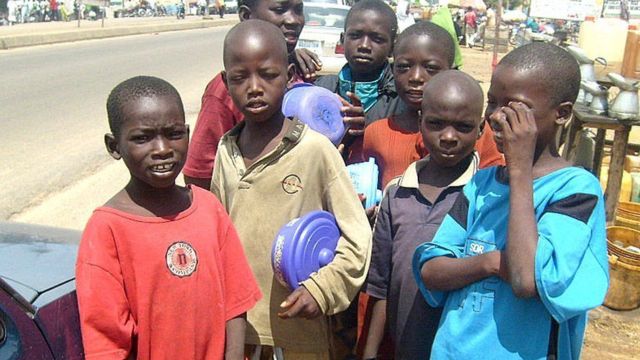
The Almajiri system, once a noble pursuit of Islamic knowledge, has degenerated into a humanitarian disaster spread across Northern Nigeria. From the streets of Kano to the slums of Sokoto, thousands of children wander barefoot, hungry, and hopeless victims of a tradition that has outlived its purpose.

The idea behind Almajiranci was simple: young boys, mostly from rural or poor families, would be sent to Islamic scholars for religious education. But over time, what began as a pathway to learning became a pipeline to poverty, abuse, and neglect. Today, these children beg for survival, live in unhygienic conditions, and face constant exposure to criminality and exploitation.

Every year, thousands more are pushed into this cycle. With no formal curriculum, no sanitation, no feeding structure, and no monitoring, the system violates every principle of child welfare and human dignity. Many of these almajiris live in overcrowded, unventilated rooms, sometimes as many as 18 children in a single space, with no access to health care, no protection, and no future.

While governments talk reform, very little action meets the urgency. Integration programs are underfunded, religious institutions are left unchecked, and families often forced by poverty continue to submit their children to this outdated system. Meanwhile, the streets of Northern Nigeria grow more unsafe as vulnerable children are manipulated by extremist groups and criminal syndicates.

Let’s be clear: the Almajiri system, in its current form, is not education. It is abandonment. It is state-sanctioned child endangerment masquerading as religion. Any society that claims moral or spiritual uprightness cannot continue to tolerate this level of systemic neglect.

What Northern Nigeria needs is not a patchwork of reforms, but a complete overhaul. Islamic education should be formalised, monitored, and integrated into the broader national curriculum. Children should learn in safe environments where Qur’anic knowledge is integrated with literacy, numeracy, hygiene, and vocational training. Religious scholars must be trained, certified, and held accountable.

Above all, we must shift the responsibility from children back to adults. Governments, communities, parents, and religious leaders must admit the system has failed and work together to end it. The Almajiri child deserves more than survival. He deserves dignity, opportunity, and a future.

This is not just a social concern. It is a national emergency.

Umar Sani Adamu can be reached via umarhashidu1994@gmail.com

Kano’s crying streets

By Fatima Ishaq Muhammad 

Kano, the city of ancient walls, now bears a heavy burden of the haunting presence of women and children who line its streets, begging for survival. From Sabon Gari to Kofar Ruwa, from traffic lights to mosque entrances, their stretched palms have become a renowned yet disturbing sight, painting a picture of poverty, moral negligence, and broken systems.

What was first considered a social crack has now widened into a full-blown crisis. Most of these street beggars are displaced women, widows, divorcees, and children.

Some as young as four roam the streets daily in search of food, coins, or sympathy. For the women, it’s often the last resort after being abandoned or driven from rural homes. For the children, it’s a stolen childhood, spent in sun-scorched rags rather than classrooms.

The roots of this problem run deep, encompassing widespread poverty, displacement from conflicts in the Northeast, the collapse of social welfare structures, and the controversial Almajiri system, all of which contribute to the cycle. 

While religious and cultural values once nurtured compassion and communal responsibility, they have been distorted over time to excuse neglect and indifference.

Government efforts, while numerous in announcements, remain largely cosmetic. Street begging has been “banned” multiple times in Kano State, but the bans vanish as quickly as they are declared. 

Relocation schemes and rehabilitation centres are often poorly managed or underfunded, leading many beggars to eventually return to the streets, as it is the only place they know.

Even worse, some of these children are exploited, trafficked, or “hired” to pose as beggars in a growing underground network. Women, too, face harassment, sexual violence, and daily humiliation. 

The streets that should offer opportunity are now a stage for public suffering, and this suffering is becoming normalised.

The situation is more than a humanitarian concern; it is a social and security time bomb. The longer these vulnerable groups remain on the streets, the more likely they are to fall into crime, radicalisation, or permanent poverty. And as the city’s population grows, so does the danger of institutional failure.

But all hope is not lost. With the right political will, inclusive policies, and collaboration between government, religious institutions, and civil society, change is possible.

 Empowering women with skills and microloans, integrating Almajiri children into formal education, investing in social welfare, and offering proper shelter to displaced families are realistic solutions not just dreams.

Kano must reclaim its dignity. The crying voices on its streets are not just those of beggars; they are those of citizens, future leaders, mothers, and children with untapped potential. Ignoring them is no longer an option. As the city grows, so should its compassion and responsibility.

Until we act, the story of Kano will not be written in its history books or palaces, but on the tired faces of women and children who call its streets home.

Fatima Ishaq Muhammad wrote via fatimaishaq021@gmail.com.

Reforming the Almajiri system: A path to inclusive education

By Ibrahim Inusa

Over the years, the Almajiri system of education has served as a traditional form of Islamic education in northern Nigeria, where young boys, often aged between 7 and 14, are sent far from home to memorise the Qur’an by their parents under the supervision of a Malam (teacher). While the system’s intent was to instil religious knowledge, encourage direct engagement in Islamic activities, and provide practical moral learning, it has largely become disconnected from its original purpose.

At present, the system has turned millions of pupils into nuisances, leaving most of them without literacy or numeracy skills. Pupils divide their day between reading and wandering the streets to beg for food and money, intended to cover their living and schooling costs. This model places the pupils in highly vulnerable situations, exposing them to all forms of exploitation and manipulation, and even rendering them a threat to national security.

The Almajiri system of education has been a cornerstone of learning for many Nigerian children. However, its implementation has raised concerns about child welfare, education, and human rights. As Nigeria strives for progress, it is essential to address the challenges within the Almajiri system. One major issue is the lack of regulation and oversight, which leaves children vulnerable to all forms of abuse.

Another significant challenge is the limited access to quality education. Traditional Almajiri schools focus solely on Islamic studies, neglecting secular subjects such as mathematics, science, and English. This restricted curriculum can hinder students’ ability to compete in the modern world. By incorporating modern subjects, Almajiri schools can offer students a more comprehensive education.

The Almajiri system also raises concerns about radicalisation. Some Almajiri schools may promote extremist ideologies, which can have far-reaching consequences. To mitigate this risk, it is essential to encourage critical thinking, tolerance, and inclusivity within Almajiri schools.

To reform the Almajiri system, a decisive approach is necessary. Government agencies, NGOs, and communities must collaborate to provide support for Almajiri students, including access to healthcare, nutrition, and protection from abuse. Almajiri schools should be encouraged to adopt a modern curriculum and teaching methods.

Furthermore, teachers and caregivers in Almajiri schools require training and support to provide a quality education. Community engagement is also important, and parents, guardians, and community leaders involved in decision-making processes are encouraged to prioritise children’s welfare and education.

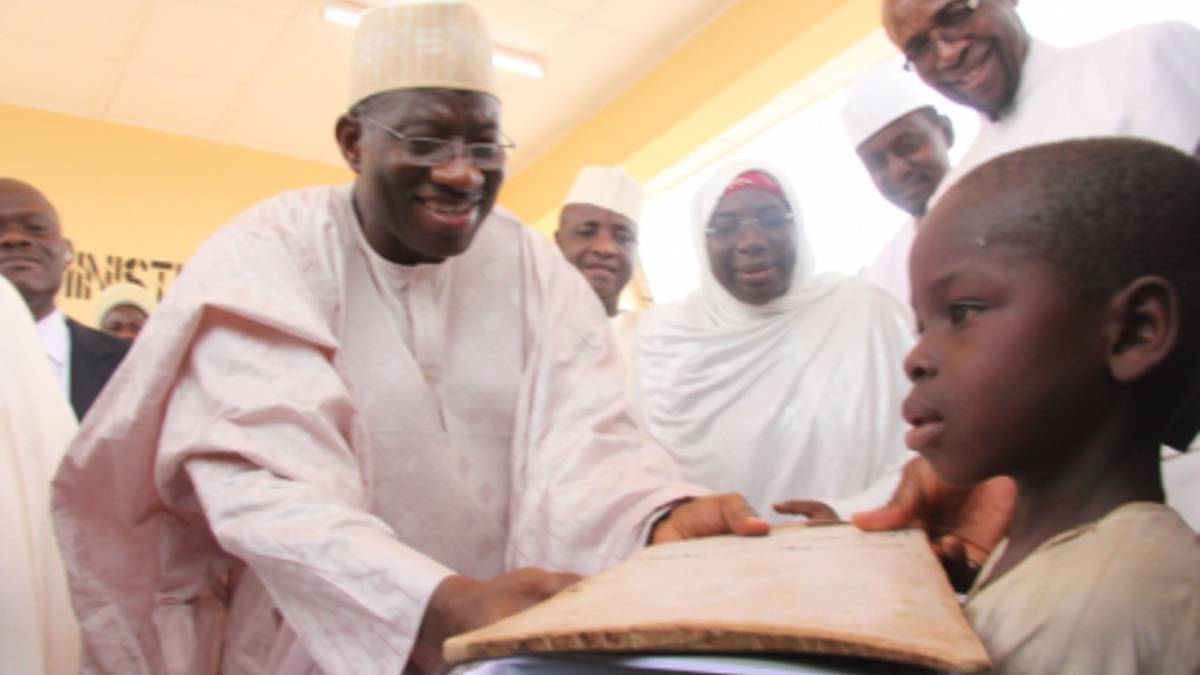
The current Nigerian government can play a crucial role in reforming the Almajiri system through policy initiatives, such as the Almajiri Education Programme. However, more needs to be done to ensure effective implementation and sustainability. Long-term commitment to reform requires a sustained effort to improve the lives of Nigerian children. By working together, we can create a more inclusive, equitable, and prosperous society for all.

In conclusion, monitoring and evaluation mechanisms are essential for tracking progress, identifying challenges, and making adjustments to reform initiatives. Reforming the Almajiri system is a complex task that requires collaboration, commitment, and creativity. By working together, we can create a more just and equitable education system that benefits all Nigerian children.

Ibrahim Inusa writes from the Department of Mass Communication at Abubakar Tatari Ali Polytechnic Bauchi and can be reached via Ibrahiminusa216@gmail.com.

KAYI Microfinance Bank: Empowering Tsangaya schools for economic transformation in Northern Nigeria

By Rabiu Alhassan Elkanawi

As Nigeria continues to champion financial inclusion and socio-economic development, KAYI Microfinance Bank has taken a decisive step to address the needs of remote communities through an initiative named Grassroots Empowerment and Engagement Project.

Recognising the unique challenges faced by Tsangaya (Almajiri) schools in Northern Nigeria, KAYI Bank has launched a pilot program across four states—Kano, Katsina, Kaduna, and Jigawa—targeting these centuries-old learning centres to boost financial literacy, entrepreneurial activities, and access to digital banking services.

Tsangaya schools have traditionally offered Islamic knowledge, basic literacy, and numeracy skills, primarily in Arabic. Many of these centres are located in areas with little or no access to conventional banking facilities, leaving them vulnerable to financial exclusion. Poverty and unemployment continue to be rampant in these communities, where students (almajirai) often resort to street begging to meet their needs. This new program by KAYI Microfinance Bank directly tackles these issues by positioning Tsangaya instructors and leaders as community champions of digital financial inclusion and economic empowerment.

Piloted in August 2024, the program provides each participating Tsangaya school with a range of resources valued at about five million naira. This includes training sessions on financial literacy, business management, and start-up funds. These investments enable each school to establish and operate a cash point business, offering critical services such as deposits, withdrawals, and transfers. By eliminating the need for community residents to travel long distances to access banking, the initiative significantly cuts costs and eases residents’ financial transactions.

The empowering nature of this approach promotes trust in financial institutions. Community members can interact with familiar faces—teachers and leaders from the Tsangaya schools—who have undergone comprehensive training to provide financial literacy and other training to the community and effectively manage these cash points. Over time, the program will enhance economic engagement, stimulate local entrepreneurship, and help reduce poverty rates in historically underserved regions.

By placing financial tools within reach of marginalised populations, KAYI’s initiative offers a sustainable solution. Stakeholders, including students, parents, and local traders, gain firsthand exposure to the benefits of digital banking. Basic financial concepts—saving, budgeting, and prudent money management—are introduced in an environment that respects the community’s cultural norms and values.

This program’s potential extends beyond immediate monetary benefits. Supporting Tsangaya schools contributes to the broader goal of social development and community upliftment. If children have better prospects for skills acquisition and financial stability, fewer may be compelled to resort to street begging. Building trust and familiarity with digital banking services encourages more people to open savings accounts, apply for microloans, and engage in entrepreneurial endeavours.

KAYI Microfinance Bank’s efforts align with the broader objectives of financial inclusion strategies set by the Central Bank of Nigeria (CBN). With many remote regions in the North still lagging in access to credit and other essential banking products, the bank’s model provides a blueprint for how financial institutions can partner with local leaders to overcome distrust and logistical barriers. Further replication of this approach will likely spur economic activities, reduce unemployment, and help alleviate poverty.

As the pilot program continues, KAYI plans to monitor and measure outcomes to refine and expand the model. The ultimate goal is to replicate the initiative across more states in Northern Nigeria and beyond. The bank envisions a future where every region, no matter how remote, can participate actively in the digital financial system, thereby nurturing entrepreneurship and uplifting entire communities.

KAYI Microfinance Bank is a beacon of corporate social responsibility. By creating a culture of financial literacy among grassroots populations, the bank has set a high standard for other financial institutions to follow. By merging profit-driven objectives with a genuine commitment to social impact, the bank has created a virtuous cycle: stronger local economies, lower poverty rates, and a more inclusive financial ecosystem that can drive sustainable development across Nigeria.

Rabiu Alhassan Elkanawi writes from Kano, and he can be reached via email at alhassanelkanawi@gmail.com.

The challenges of integrating Almajiri traditional schools into mainstream education

By AbdulMajid Haruna

Several policies on education span across four decades, and yet Nigeria is still grappling with the menace of out-of-school children. Recent statistics from UNESCO projected a figure hovering around twenty million, with a significant portion of the children being the Almajiri Quranic students. 

Issues such as inconsistent government policies, poor implementation, inadequate funding, and limitations in terms of the scalability and scope of interventions provided by non-state partners and international donors have hindered efforts to address the problem. However, cultural and religious resistance remains a significant barrier.  

The classical system of Quranic Almajiri education imbibes Islamic teaching that every Muslim must acquire religious knowledge. However, culturally, the system aims to instill self-reliance and a sense of responsibility in the social and moral training of the child through hardship, toil, and hunger.

Sufism, the doctrine on which the system was founded, frowns at self-indulgence and believes asceticism and humility to be the hallmarks of a seeker of knowledge. This sentiment was echoed in the Weekend Triumph Newspaper of August 26, 1989, by Abdulkareem A. Bello, who describes the system as “the old wine in an old bottle”. 

In this article, Samaila Ado, an Almajiri in the Kano municipality, was reported to have said, “Our deplorable and wretched condition is a symbol of selflessness and humility.” According to Samaila, a true Almajiri is not concerned with worldly gains but rather is busy preparing for eternal life, which is more paramount.

Historically, the system had flourished owing to the support from the state’s public finances, the local community, and the philanthropic efforts from elites that catered to the modest needs of the children. During this time, the Almajiri scholars were artisans who, during their lecture-free hours, engaged in farming, fishing, well construction, production, masonry, trade, and tailoring. Most were farmers of the iconic Northern Nigerian cotton and groundnut pyramids. Some engaged in leather tanning and shoe and bag making in the old Sokoto empire. 

Sadly, however, the system has failed to adapt to the realities of the twenty-first century, with the modern Quranic Islamiyyas overshadowing the traditional Tsangayas and the Western secular education providing the safest route to climb up the socio-economic ladder. But more worrisome is the report that said six out of ten Almajiri pupils never find their way back home, and many lose their lives through street violence, ritual killing, kidnapping, disease and hunger.

Over the years, Integration has proven difficult due to the inadequacy of our policies. A careful analysis of the failure of Jonathan’s Almajiri integrated Model Schools by the Former Director of the Universal Basic Education Commission, Professor Ahmed Modibbo Mohammed, at Arewa House In Kaduna revealed that the lack of sensitisation and mobilisation of the nation affected the level of buy-in leading to a decrease in support and acceptance of the new system.  

Qualitative assessment research corroborated this analysis, carried out among Almajiri communities in Adamawa State. It demonstrated that including secular subjects was one of the major reasons parents did not welcome the program. 

Time and again, our policymakers have underplayed the subtle but widespread sentiment among the Islamic traditionalists who fear the new order poses the danger of erasing the cultural identity of the people. In a 2021 report published by The Resource Centre for Human Rights and Civic Education (CHRICED), Sheikh Bakura Assusaawi was remarked to have said: “Every Islamic scholar had gone through the system which shows us that there is indeed a great benefit in that system which we cannot afford to lose. There is no other help apart from helping the religion, and when we all neglect to do that, there is never a way forward.”

This allegiance to the old system and aversion towards Western education is rooted in the early events of the 20th century. On October 9, 1902, Fredrick John Lugard replaced Arabic & Hausa-Ajami (Hausa written with Arabic alphabets) with English & Romanized Hausa as the official language of Northern Nigeria. 

This single act in history changed the region’s educational scholarship trajectory. Not only did it render the rich knowledge produced in Ajami in the fields of humanity, science, and social science by the preeminent Sokoto caliphate obsolete and dying, but it relegated those proficient in this script to the background because to be “literate” and “employable” means to speak English and to write in the Roman script.

Tragically, the British also failed to recognise the Almajiri schools and abolished their state funding, tagging them as mere religious schools. This linguistic displacement brewed an identity threat in the people’s social psyche, igniting disdain and antagonism for the new system introduced by the colonial state and the Christian missionaries. 

Unfortunately, a century gap is still not enough to change the thought patterns of the Almajiri community. A recent story shared by a Twitter user about his late colleague’s son aptly drives home my point: 

The colleague had died, and the possibility of sponsoring the child’s education was hanging in the balance because the grandmother was standing in the way. She wanted the son to be enrolled in an Almajiri Quranic school instead of a secular Western school. 

The Twitter user was baffled because the grandma wouldn’t budge even when it was suggested that the child attend a formal school on weekdays and the Almajiri school on the weekends.

Many juxtaposing factors remain underpinning enrolment in traditional Almajiri education, barring socio-religious commitments and an aversion to Western education. These include rural-urban migration in search of greener pastures, disbanded families due to divorce or the death of the breadwinner, poverty, irresponsible parenting, and bad governance. 

Integration begins by fixing the stated problems, but reorienting society to the limitations of this age-long conservative approach to Islamic scholarship takes precedence.  Ever since the pilot scheme of 1964 to modernise Islamic schooling in the Northern Nigerian government headed by Sir Ahmadu Bello that ran successfully for few years before coming to a halt after his assassination, subsequent education policies namely Universal Primary Education (1976), National Primary Education Commission (mid-1980s), Universal Basic Education Act(2004) and Ministerial Committee on Madrasa Education (2009) which led to the establishment of President Jonathan’s Almajiri Model Schools have suffered detrimental setbacks.

Policies are cathedrals in the grand scheme of things; reality is the quicksand sinking them to the bottom. The government and relevant stakeholders must develop the political will to implement policies to their very ends. Most importantly, they must engage in intensive enlightenment, mobilisation, and re-orientation of the populace through the mass media, town hall meetings, and active involvement of the traditional Ulamas and leaders. 

AbdulMajid Haruna is an education thought leader and an inclusive education advocate primarily focused on vulnerable Almajiri children. He can be reached via abdoulmajeed570@gmail.com.

Almajiri system of education needs reform

By Dahiru Kasimu Adamu

The word “almajiri” emanated from the Arabic word used earlier to refer to the companion of the prophet Muhammad (peace be upon him), who migrated on his instruction for the sake of Islam from Mecca to Madina.

Later, “almuhajirun” refers to knowledge seekers who move from one place to another in search of religious knowledge, predominantly the holy Qur’an.

Therefore, the word “Almajiranci” refers to the traditional method of acquiring and memorising the glorious Qur’an, where boys at a tender age are sent by their parents or guardians to other villages, towns, or cities to acquire Qur’anic education under a knowledgeable Islam scholar called “Malam.”

The Almajiri system of education involves somebody who migrated for learning or for the sake of advocating Islamic knowledge.

This migration is tied to a system in which people in a particular community gather male children of school age and hand them to a teacher yearly. The purpose is for Malam to teach those young children the basics of Islam through Qur’anic schools, popularly known as “Tsanagaya or Makarantun allo”.

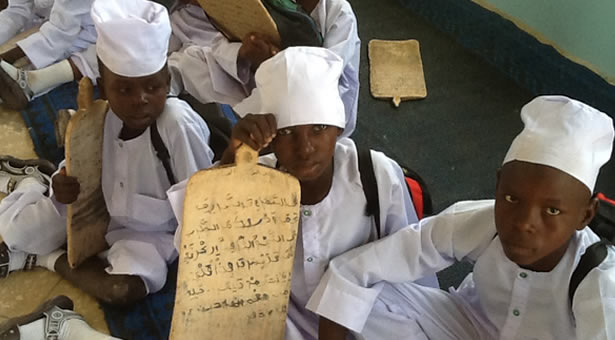
The pupils are taught how to read the Qur’an and write the Arabic alphabet. They also learn strict discipline and aspects of living.

Due to environmental distractions, the malam may relocate his pupil to a distant area, such as a town or city and camp them there. Almajirai (plural of Almajiri) learn self-reliance and discipline in the camp.

History shows that the population provides free accommodation and leftover food for the pupil and their teacher; even though the food may not be enough, Malam sends his students into the neighbourhood to solicit food. One reason compelling Almajiri to beg is to let them experience and appreciate the hardship and necessity they will face in life.

According to the record, after the efforts of various communities and later Native authorities around the twentieth century, a modernised version of Makarantun allo-cum-Islamiyya schools emerged. This gave birth to at least four types of Islamic schools: Quranic Schools (Makarantun allo, Tsanagaya), Islamiyya Schools, Public and private model Quranic schools, and government Arabic and Islamic institutions.

The information indicates that begging was not involved during pre-colonial times, and Almajirai were doing menial jobs. They have not been abused before they could get a job. Their noticeable hygiene and good manners can simply identify them.

Islamically, it is responsible or necessary for a parent to provide moral education to their children. But the kind of Almajiri system being practised today is an entirely bastardised system compared to the one practised in the past, as mentioned above.

Now, children are seen wandering, begging for food; Almajirai are seen and identified by their unwanted hygiene, unkempt, tattered clothes, and disease-afflicted and ulcerated skins.

Many Almajirai spend most of their time on the street, which can lead some of them to intermingle with different people, including criminals. Several reports indicate how some of them engage in theft, drug abuse and other crimes. Also, lack of food has made them vulnerable to some diseases.

In summary, as the Qur’an mentions, Islam has identified several rights granted to children. These include the right to a stable family, proper development, showing love towards children, being mindful of education and spiritual growth, and having the right to the good life (chapter 19:98).

But nowadays, due to some factors, including economic hardship and extreme poverty,  most parents are running away from their economic responsibilities enshrined in Islam, sending their children at a very tender age to mallams in towns and cities. This led to behavioural changes among all age groups.

The research found that other factors include some parents who obtained only the knowledge of the glorious Qur’an without understanding its inner meaning, always supporting the Almajiri system, and some seeing Malams benefit from the size of the Almajiri studying under him because school size increased the Malam’s life.

Due to the street begging among Almajirai and other activities, hunger and lack of moral upbringing, many Almajirai are not observing proper Islamic values in their daily life. Some take it just as traditional because if it’s education, everyone can study in his locality.

To address these issues, all hands must be on deck. Leaders must be committed to fighting against extreme poverty, illiteracy and unemployment.

Come out with a new master plan towards a new method of the Almajiri system. This includes verification of all teachers to participate in teaching Almajirai because some are not even qualified to teach, allocating the number of children every mallam should teach, and he should not allowed to exceed the number assigned to him.

Parents and mallams should at least create a new way of accommodating and feeding the pupils. There should be the right place where pupils or Almajirai could get food instead of begging on the street. This includes the total elimination of street begging.

The authorities, Malams, and stakeholders should be sensitised about the importance of this educational sector, and they should provide shelters, health care services, clothes, and other essential things that will end street begging.

This can also be achieved by empowering pupils with vocational skills to sustain themselves and improve socioeconomic standards. There should be a good record of the numbers of Almajiri in each locality, state and country at large. In addition, the fundamental human rights of Almajirai and Malam should be promoted.

Good teaching and learning materials and a conducive atmosphere for learning should be provided for both Malams and Almajirai. Seminars, workshops, lectures, campaigns, and other mobilisation activities should be carried out to counsel Almajirai, other stakeholders, and the general public on career development. Almajirai should be included in acquiring Western education and skills.

By working on all the items mentioned above and more activities, the Almajiri system would be reformed and improved. All Almajiri,malam, and society’s socioeconomic standards will improve out of illegal nature and other sundry.

Dahiru Kasimu Adamu, Argungu, Kebbi State, is a young journalist and Mass Communication student at UDUS. He can be reached at dahirukasimuadamuargungu@gmail.com.

Not all street beggars are actual Almajirai

By Muhammad Isyaku

I closed late in the shop the other day at around 11:00 pm and went straight to our plaza’s parking space to take my bike since our shop was upstairs. I drove earnestly home, knowing it was already night and there was nothing I had to buy. From Malumfashi’s township market to our community is a journey. I have to pass many communities before reaching ours. 

Along my way down home, around the Gwamutsawa community, I saw a small boy of 7 to 8 years crying loudly and terribly on the other side of the road. The road has a long-cemented expressway that divides it for motorists’ passage. I had to stop by and call the boy to cross the road by climbing the expressway to come and meet me where I parked. He did as I instructed but still kept on crying, which utterly moved me. I have to overpower the pity and emotions to interrogate him. 

What was the matter, and from where is he? He told me he is an Almajiri of one Malam at Hawan-Usman-Lado. He added that he was hungry and didn’t want to go to school because their Malam would beat him. I asked what you did to him. He answered that he didn’t return to school for the evening lesson, for which the offence attracts a penalty. 

I admonished him to return to school on time so that he would not miss any lessons that would make their Malam flog him. He obediently said, “Okay, I would.” I asked him where he was from, and he said Maraban Jos. I further asked if his parents were alive, and he answered no. His answer nearly made me shed tears, as I thought only an orphan who is abandoned by his family and a child born by a careless parent could be sent to a traditional Qur’anic school in such a faraway place at this tender age. 

Two passers-by also met us on the spot and joined me in sympathy and condemnation. One of them even cursed the teacher (Malam) the child mentioned. The other person who didn’t curse the teacher, as his ally did, put his hand in his pocket and brought out some change, which he gave to the boy. I gave him my change, too, and asked him to climb my bike to take him to school and apologise to the teacher on his behalf. 

Upon hearing that, he continued to cry by firmly refusing to climb my bike. Those two people asked to follow me, and he said their teacher would flog him after I left. We insisted he climb, assuring him we would not allow him to flog him. He had no option but to climb, and he did, so I made a U-turn and headed to the community where he alleged their school was located.

Unfortunately for the boy, he started asking me to drop him off before I reached the roundabout, saying he would go by himself. I ignored him and continued moving until I reached the roundabout and saw a group of Almajirai by the other roadside. I asked them if they knew him and were from the same school; they said yes. I then asked him to use the money we gave him to buy food and eat after he should then follow them to school. 

They all started shouting ‘Dangari ne fa’, meaning he’s an indigenous boy! I was shocked by their confession. When I turned to him, he was nowhere to be found. They asked, “How much did you give him?’ I told them it was a small amount just for food.

I bid them good night and went home. However, I still questioned the kind of home training that boy was given and the level of his smartness for mischievously looking innocent and faking his identity. If a boy of such age could lie that way, then I wonder what he might be capable of doing if he grows into a full-fledged man.

In Allah, we seek rectitude!

Rethinking my legacy: How our local tradition wowed Western intellectuals at an Ivy League University

By Umar Sheikh Tahir (Bauchi)

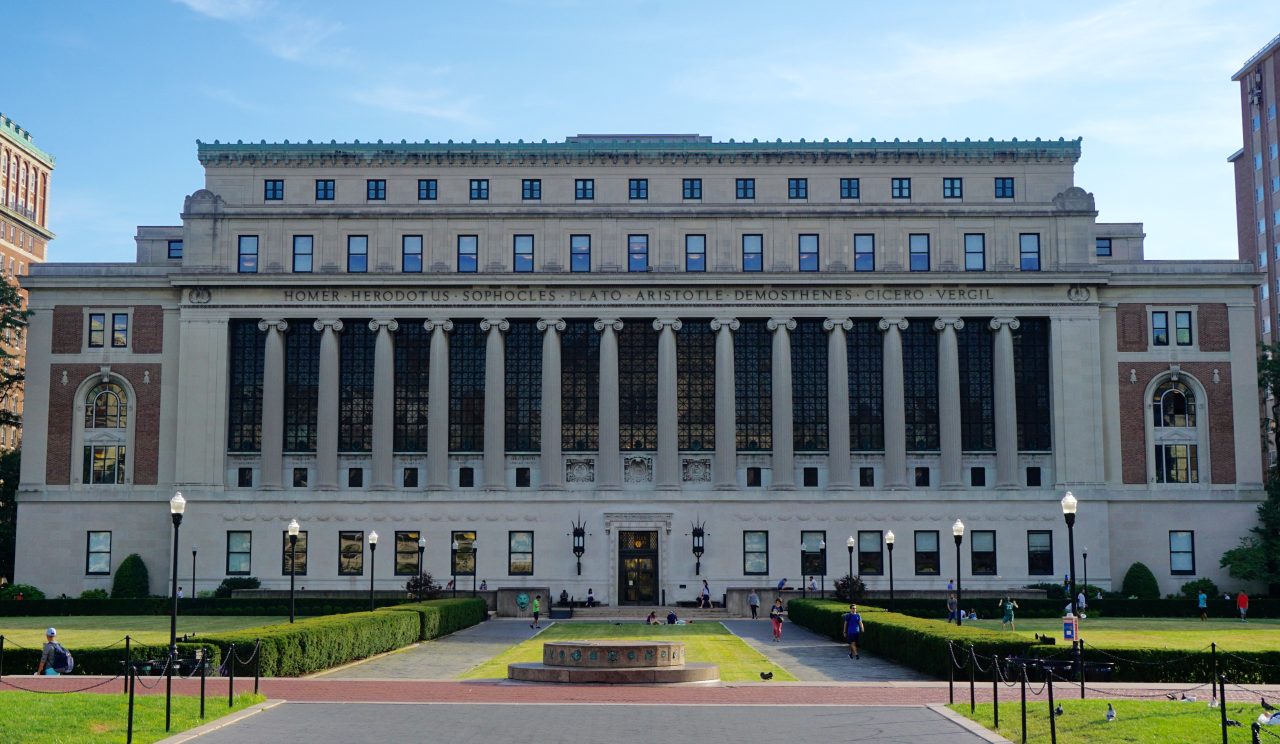
Columbia is an Ivy League University, one of the eight most prestigious institutions in the United States of America. Ph.D. students at this university undergo two years of coursework. One of the classes I took was Islam, Knowledge and Forms, which a visiting professor from Germany taught. Part of the course is a library visit to the exhibitions section under the project of Islamic Sciences, Science, Nature, and Beauty: Harmony and Cosmological Perspectives in Islamic Science (2022) at Butler Library, the largest library of Columbia University with millions of resources. 

The exhibition contained objects, images, rare manuscripts, and other learning materials. Two materials, among others, became the most astonishing factors in the exhibition: one of them is a rare copy of the Holy Quran, and the second is a locally handmade wooden tablet (Allo).   

The instructor asked everyone to talk about any material in the exhibition. Students gave their feedback on the experiences passionately; different things wowed everyone. When it came to my turn as someone who had known these items since childhood in my father’s private library, where we sneaked as children, which housed similar treasures. To us, these are the most useful items in his library as we do not read books; we only view images and magazines, such things that are not viewed as essential to the readers. Then, I shared my familiarity with these items, telling them I was exposed to most of the exhibited materials from my upbringing in Northern Nigeria, including “rare manuscripts” of the Quran. 

The Quran displayed was a giant copy of the original Uthmanic Quran, denoted to the third Caliphate of the Muslim nations who reigned (644/23H–656/35H). It was so amazing to all of us. As for me, the Quran is the most frequently read book in my entire life, and to their surprise, I can read this copy fluently without diacritical marks. I highlighted that memorising the holy Quran, even without understanding Arabic, is common in Northern Nigeria.  Most of my fellows never knew that sometimes people memorise it at an early age. I did not shock them with that, as I am one of them. 

In the second incident, Professor Brinkley Messick invited me to speak in his class on Islamic Shariah Law as someone with experience with an Islamic Madrasa background and went to Azhar University in Egypt. The theme of the class is the Islamic madrasa. He is interested in the Islamic tradition, as evident from the cover of his book, “Calligraphic State.” 

Allo

The Professor brought Allo a wooden tablet to the class and circulated it to students. Everyone was looking at it with surprise. I named it to them as a personal tablet for inscription and memorisation of the holy Quran, and the students asked for more details. I said we write verses from the holy Quran for memorisation after repeating it several times; not everyone understands how that works, except those with Islamic background. However, when I told them when we wash the script, we drink it, everyone was left with open mouths, surprising our embodiment of the holy book, including the professor. They could not process as modernised individuals with high sensitivity to germs and bacteria. Again, as I told our class last semester, this is very common in Northern Nigeria. 

Coincidently, one of the attendees from a Saudi background added that people used some scripts for Talismite and protection from Djinn (Ruqyā in Arabic or Ruqiyya in Hausa) by reciting some verses in water. I told her this is true; we have that part in our culture too, but the biggest part is that we drink washed script for the embodiment and show respect for not letting a drop of that water on the ground as a sacred word. As kids, we were told that whatever verses we memorise from the holy Quran and drink will stay in our hearts for a long time.

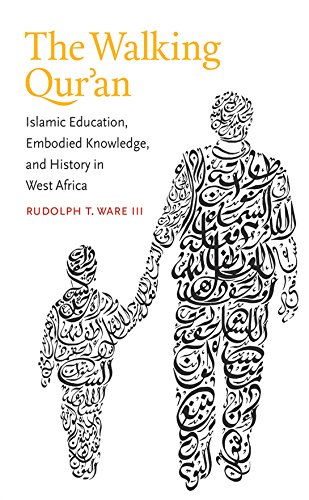
In reference to that, American Professor of Islam in Africa Rudolph Ware published his book Walking Quran on the Madrasa system in West Africa. He referred to those Quranic students’ embodiment as the Walking Quran in relation to the narration of the Hadith reported in the books of Hadith such as Ṣaḥīḥ Muslim; Aisha was asked about Prophet Muhammad’s PBUH character, and she said he was a Walking Quran.  

Our cultural legacy, often undervalued by some of us in our region, gained recognition at Ivy League institutions. Those people appreciate a centuries-old Quranic educational tradition or Almajiri system and show their respect to our subregion. Even our way of drinking the washed script of the Quran mesmerised them. 

A professor dedicated his projects to studying a school system called Daara schools in Senegambia or the Tsangaya schools in Northern Nigeria, making it evident that our legacy is an astonishing point to those communities. Then, as indigenous Africans who were introduced to the colonial system of Education less than a century ago in Northern Nigeria, we should be more proud of our system by appreciating those communities who choose to preserve it, as they make our subregion a central point of high intellectual conversation around the world. 

We should not deny our legacy by stigmatising the Almajiri system of education. Instead, we should support it and create a way of modernising it to empower and preserve our centuries-old legacy.  Whoever shows kindness to the Quran and its reciters will receive people’s applauses in this life, including Western intellectuals, and God’s reward in the hereafter. Thanks to those state governments in Northern Nigeria who support and recognise this system of education.

Umar Sheikh Tahir is a PhD student at Columbia University, New York, USA. He can be reached via ust2102@columbia.edu.

On the concept of Almajiri

By Aisha Yahya Ibrahim

Almajiri is a word deduced from the Arabic word “Almuhajir, “ meaning an immigrant. Almajiri is a localised Arabic word. It is from the root word called “Hijra”, which means migration from one place to another for the sake of ‘Allah’. This concept of migration implies that one could relocate from where he does find conducive for worshipping his creator (Allah) to where he could find a conducive environment for worshipping Allah.

At this height, Nigerians correlated this concept with relocating children from one place to another in search of knowledge of Islam generally or the Quran in particular. The reason could be traced to the followings:

1. We have observed the misconception and misapplication because the children are relocating to places without proper care and sponsorship. They’ve become a nuisance to society.

2. The reason for the migration is that it is not conducive due to oppression. Whether one is oppressed or violent against people seeking Islamic knowledge cannot be equated to such oppression or violence.

3. Children are moved from where the knowledge is available without care or sponsorship, e.g. moving children from Kano to Kaduna instead of remaining with their parents in Kano, where they can have proper care and support. This results in the children begging on the street for sustenance.

4. There are instances where the children are even moved from where the knowledge is available, and the environment is conducive to where the command is not open, e.g., children being moved from Kano to Abuja.

THE IMPLICATIONS ASSOCIATED WITH THE AL-MAJIRI SYSTEM NIGERIA.

The following are some of the apparent implications of the Almajiri system in Nigeria.

1. The children become vulnerable to health hazards regarding their food and clothes; in most cases, some of these children walk barefoot.

– The food they eat: In most cases, these foods are remnants, and the actual eaters are unknown how the food was cooked and kept.

– The clothes they wear: We often see these children wearing the same cloth for up to a week or more without washing them.

This can lead them to develop skin problems due to accumulated germs.

– Walking barefoot: Some of these children walk barefoot. As a result, it leads to them contracting fungal infections on the nails (Onychomycosis) or the skin of the feet (Tinea pedis), better known as athlete’s foot.

2. They tend to be influenced negatively in terms of behaviour, e.g. They become exposed to drugs, i.e., taking drugs.

There’s a high level of theft mainly carried out by these children, e.g. snatching people’s items on the road when they get the chance.

3. These children will grow into adulthood as lazy citizens who depend solely on what people give or forcefully take away from people for survival.

 In today’s society, mainly in Northern Nigeria, children living with their parents sometimes disguise themselves as Almajiris just to get free money and food from people. These children have become so lazy that they don’t want to work; they prefer to go out and beg.

It’s important to note that this is due to some parents not taking responsibility for their children. 

A CALL FOR ACTION

For a better society, it is high time the government at all levels came in and ensured that these children are taken off the street to ensure that these children don’t become a threat to society and its people.

WAY FORWARD

The government cannot do that alone to ensure that these children are taken off the streets.

A collaboration between Government at all levels, Non-governmental organisations, Islamic religious leaders and Traditional Rulers.

Religious leaders: Religious leaders here can ensure the actual concept of the word is correctly explained to their followers as well as the need for these children to be taken off the streets through enlightening the general public about the negative consequences and acts of sins that are incurred as a result of the misapplication and the need to bring lasting solutions to it, at this moment working together to ensure that the real thing is established and the actual aim achieved.

The religious leaders are responsible for enlightening the Quranic teachers of these Almajiris on the danger of allowing the children to flood the streets begging for food.

The religious leaders also have to mediate between the Quranic teachers and wealthy Muslims to educate the rich Muslims on the need for charitable work to feed these Almajiris. They are also responsible for alerting the government through the Ministry of Youth and Development on the need to aid these Almajiri institutions and their Quranic teachers because that’s part of the government’s social responsibility instead of letting them become a menace to society. 

Traditional Rulers: Traditional rulers here are the closest people to this institution. They can physically mediate between the Almajiri institution and the government. They can ensure no child is found roaming about through their local security outfit. They can quickly investigate where the children came from, who the parents are, and so on since we now have parents who no longer take responsibility for their children.

Non-governmental organisation: The non-governmental organisation here can assist through some charitable work. i.e. distribution of food and other relevant materials.

Government: The federal government’s role in combating this menace cannot be overemphasised. The government here can put laws in place to ensure that no child is roaming the street as an Almajiri. The government can help shelter these children, i.e., just as we have government orphanages, we can adopt the same method and other assistance through collaboration with religious leaders, Traditional rulers and non-governmental organisations.

Above all, agitation for eradicating the Almajiri institution won’t be right, but a reformation.

And I hope this gets to the appropriate authority!

Aisha Yahya Ibrahim  wrote via ibrahimaishat432@gmail.com.

The other side of Almajirai

By Sulaiman Maijama’a

Almajiri System, over the last few years, has come under intense pressure, greeted with mixed reactions by stakeholders, especially in northern Nigeria. Many people have written many pieces on the negative consequences of the system, ascribing it to be one of the underlying causes of poverty, hunger, and insecurity, among other social vices in northern Nigeria. For this reason, it has been a topic of debate. Some call for repositioning the system, and some agitate for its total abolishment. In contrast, others argue that it should remain as it is today.

Undoubtedly, the present-day Almajiri system is, to a greater extent, different from what was obtainable in the pre-colonial era, hence the need for a review. Before British colonisation, the system, aside from the authorities’  high recognition and promotion, had enjoyed the support of other major stakeholders, such as the community, the parents and the pupils. So also, the whole financial burden of the system was being taken by the authorities with public funds. These indicate that the Almajiri system in those days was somewhat formal and, therefore, more organised.

However, the magnitude of the attack the system has now come under has given it a distorted image. It has developed a stereotype in some people, so much so that on the mention of the word “Almajiri”, the first connotation that comes to mind is negativity – illiteracy, poverty, hunger, dishonesty, insecurity and all sorts of social vices.

The word “Almajiri” is a derivative of an Arabic word, “Al muhajirun”, which could be traced right from the migration of Prophet Muhammad (peace be upon him) from Makka to Madina. Those who migrated with the prophet to Madina were called ‘Al-Muhajirrun’, meaning migrants. In Nigeria, the word “Almajiri” refers to those, usually teenagers, who are sent by their parents from respective villages and settlements to urban centres in the quest for Qur’an knowledge.

2014 UNICEF report estimated the number of Almajiri conservatively to be 9.5 million in Nigeria, predominantly in the northern part. If all of them were a nuisance, as widely believed by some people, the situation of our region would be worse than we could imagine. 

There is no doubt that there are bad eggs among them, which applies to every category of people. But, as much as bad eggs, there are equally good ones among the Almajiris who have passed through the system and become successful in different facets of life.

Almajiris excelled

Adamu Garba, a former Nigerian presidential aspirant, in an interview with the Punch Newspaper, says the Almajiri system in northern Nigeria produced some of the wealthiest men, including Africa’s pride, Aliko Dangote and the founder of BUA Group, Abdul Samad Rabiu, amongst others. Garba said he was once an Almajiri before he acquired Western education.

When asked whether the Almajiri system promotes terrorism, Garba said Boko Haram has no connection with the Almajiri system because of the dichotomy between Islamic denominations in northern Nigeria. “So, it is very unlikely that you have an Almajiri man becoming a Boko Haram,” he told The Punch.

Garba also mentioned that many business giants are products of the Almajiri system. “Again, if you go to [the] Kano market, most of the rich people in the market are Almajiri. They came through Almajiri, they were able to get [the] necessary training in the Almajiri institutions, and they were able to get to where they are.”

Similarly, several renowned Islamic scholars were once Almajiris. A typical example is Sheik Muhammad Bin-Uthman.

Testimonies from people

Some people interviewed narrated how their encounters with some Almajiri lefts them with a memorable impression.

Abdullahi Muhammad, a resident of Kobi, an Almajiri-dominated area in Bauchi, narrated how an Almajiri once returned his valuable lost items.

“I once forgot my valuable properties around my house. I gave up finding them, but to my surprise, an Almajiri found and returned them to a nearby mosque. It was announced after a couple of days. I claimed ownership and recovered my items intact. I was surprised [at] how honest the boy was.”

In an interview, Aisha Abubakar, a housewife in the Kobi area in Bauchi, revealed that she had two little Almajis coming to help her with housework.

“Two little Almajis come daily to help me with some housework — they fetch me water, wash clothes, and sometimes I send them on an errand. I give them food and sew them clothing when they go home during holidays. For the past two years, they have been coming. They are honest”, she said.

Maryam Abdullahi, another housewife in the Gwallaga area, Bauchi, said she retained an Almajiri who, apart from helping her with housework, teaches her little children Arabic alphabets.

“I have an Almajiri that comes on Thursdays and Fridays to give Qur’an lessons to my children. I’m happy now that my children are good in the Arabic alphabet and Qur’an recitation, courtesy of the lesson they receive from this boy ( the Almajiri). I cannot thank him enough.”

When asked how honest and disciplined she finds the Almajiri, she said, “I send him uncountable times with money to buy foodstuff and other items, and I always find him unblemished.”

Murtala Aminu (Ɗankasuwa), a trader in an Almajiri-dominated area, when asked how he finds the Almajiris around him, he asserted that their stay in the area is a blessing.

“They recite the Qur’an every blessed day and night. This gives us tranquillity and peace of mind. In addition, we cite them as an example for our children to emulate their hard work searching for knowledge. Many of them memorised the Qur’an by heart. What could be more delightful?”.

We take good care of Almajiris under our watch — Almajiri teachers

When interviewed, some Almajiri teachers revealed to us how they strictly manage the Almajiris under their tutelage to be well brought up and face the realities of life early.

Mallam Muhammad Shafi’u Inuwa, an Almajiri teacher in Sabon Gida Tsangaya school, said, “under our school, we have about a  hundred Almajiris. We raise them early in the morning to take classes between 5:00 am and 10:00 pm. In the afternoon, we allow them to work to earn a living. At night, between 8:00 pm and 10:00 pm, is also time for classes. We ensure that all the Almajiris return to their apartments when it is time for sleeping.”

On his part, Mallam Khamisu Ali (Gwani), another Almajiri teacher, said, “we try in this Tsangaya (Almajiri school) to imbue in them (the Almajiris) the spirit of hard work. Moreover, we encourage them to be self-reliant because to work and earn a living is better than to beg; that is why we allow them on school-free days (Thursdays and Fridays) to acquire skills.”

When asked whether the parents of the Almajiris come to check on their wards, Mallam Gwani said, “we are in contact with their parents. We face some challenges regarding this, but plans are underway to make it necessary for every parent to come in person and check on their wards at certain intervals.”

Regarding learning efficiency, Mallam Gwani stated that they had produced brilliant reciters, some of whom memorised the Qur’an by heart as teenagers.

Some Almajiris do not beg nor chant for food

In their efforts to face the realities of life and actualise self-reliance, some Almajiris interviewed claimed to have never begged nor gone to houses chanting for food

In this interview, a teen Almajiri, Zaharadden  Manu, explained how he sustains his life by harnessing and utilising the skill he learned back home before he was taken to Almajiranci.

“Every day after school hours, I go around nearby communities to do shoe shining, and it earns me a living. Then, on Thursdays and Fridays, I fetch water to housewives for food or money”, he said.

Musa Aliyu is an ambitious Almajiri who reconciles Qur’an learning and hand work. When asked where he sees himself in the decade, he said, “I see myself in the future as an educated person and a business owner with employees under me. I pursue this dream to the best of my ability.”

It was observed that on school-free days, markets and commercial centres get populated with Almajiris who do different works to earn some money to live on.

Give Almajiris the atmosphere to harness their full potential – Educationist

Comrade Abdullahi Yalwa, an educationist lecturer with the Department of Crimes Management and Control, Abubakar Tatari Ali Polytechnic, Bauchi, opined, “I think that abolishing the system may not be realistic or so easily achieved. What should be done is to review and revise to align with realities. There is a correlation between nature and nurture, and the two must synchronise to give an effective and responsible person. If one is bound to succeed if given a better condition, he would be double or triple or would be in the book of record for the exceptional display of talent.”

Comrade Yalwa further said, “to maximise the benefits and reduce or eliminate the negative effects of the system. Parents need to be responsible by sponsoring their children when searching for knowledge. They should give them enough resources to manage themselves, visit them periodically, give them what they need in terms of their basic need and also appreciate the person taking care of them in order not for him to use them as slaves.”

On what the government and relevant authorities should do, Comrade Yalwa recommended that “the Almajiri teachers ought to be registered by the government, and a maximum number of students should be allotted to each, and they should have the basic necessities, especially accommodation facilities, where people have a responsible and decent life.”

Maijama’a is a student at the Faculty of Communication, Bayero University, Kano and wrote via  sulaimanmaija@gmail.com.