Almajirci

The Almajiri System: A broken legacy we must bury

By Umar Sani Adamu

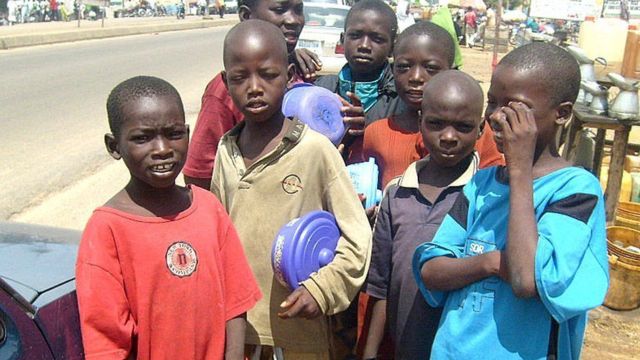
The Almajiri system, once a noble pursuit of Islamic knowledge, has degenerated into a humanitarian disaster spread across Northern Nigeria. From the streets of Kano to the slums of Sokoto, thousands of children wander barefoot, hungry, and hopeless victims of a tradition that has outlived its purpose.

The idea behind Almajiranci was simple: young boys, mostly from rural or poor families, would be sent to Islamic scholars for religious education. But over time, what began as a pathway to learning became a pipeline to poverty, abuse, and neglect. Today, these children beg for survival, live in unhygienic conditions, and face constant exposure to criminality and exploitation.

Every year, thousands more are pushed into this cycle. With no formal curriculum, no sanitation, no feeding structure, and no monitoring, the system violates every principle of child welfare and human dignity. Many of these almajiris live in overcrowded, unventilated rooms, sometimes as many as 18 children in a single space, with no access to health care, no protection, and no future.

While governments talk reform, very little action meets the urgency. Integration programs are underfunded, religious institutions are left unchecked, and families often forced by poverty continue to submit their children to this outdated system. Meanwhile, the streets of Northern Nigeria grow more unsafe as vulnerable children are manipulated by extremist groups and criminal syndicates.

Let’s be clear: the Almajiri system, in its current form, is not education. It is abandonment. It is state-sanctioned child endangerment masquerading as religion. Any society that claims moral or spiritual uprightness cannot continue to tolerate this level of systemic neglect.

What Northern Nigeria needs is not a patchwork of reforms, but a complete overhaul. Islamic education should be formalised, monitored, and integrated into the broader national curriculum. Children should learn in safe environments where Qur’anic knowledge is integrated with literacy, numeracy, hygiene, and vocational training. Religious scholars must be trained, certified, and held accountable.

Above all, we must shift the responsibility from children back to adults. Governments, communities, parents, and religious leaders must admit the system has failed and work together to end it. The Almajiri child deserves more than survival. He deserves dignity, opportunity, and a future.

This is not just a social concern. It is a national emergency.

Umar Sani Adamu can be reached via umarhashidu1994@gmail.com

Reforming the Almajiri system: A path to inclusive education

By Ibrahim Inusa

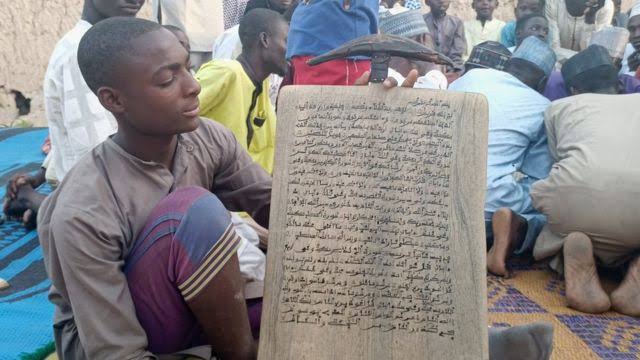
Over the years, the Almajiri system of education has served as a traditional form of Islamic education in northern Nigeria, where young boys, often aged between 7 and 14, are sent far from home to memorise the Qur’an by their parents under the supervision of a Malam (teacher). While the system’s intent was to instil religious knowledge, encourage direct engagement in Islamic activities, and provide practical moral learning, it has largely become disconnected from its original purpose.

At present, the system has turned millions of pupils into nuisances, leaving most of them without literacy or numeracy skills. Pupils divide their day between reading and wandering the streets to beg for food and money, intended to cover their living and schooling costs. This model places the pupils in highly vulnerable situations, exposing them to all forms of exploitation and manipulation, and even rendering them a threat to national security.

The Almajiri system of education has been a cornerstone of learning for many Nigerian children. However, its implementation has raised concerns about child welfare, education, and human rights. As Nigeria strives for progress, it is essential to address the challenges within the Almajiri system. One major issue is the lack of regulation and oversight, which leaves children vulnerable to all forms of abuse.

Another significant challenge is the limited access to quality education. Traditional Almajiri schools focus solely on Islamic studies, neglecting secular subjects such as mathematics, science, and English. This restricted curriculum can hinder students’ ability to compete in the modern world. By incorporating modern subjects, Almajiri schools can offer students a more comprehensive education.

The Almajiri system also raises concerns about radicalisation. Some Almajiri schools may promote extremist ideologies, which can have far-reaching consequences. To mitigate this risk, it is essential to encourage critical thinking, tolerance, and inclusivity within Almajiri schools.

To reform the Almajiri system, a decisive approach is necessary. Government agencies, NGOs, and communities must collaborate to provide support for Almajiri students, including access to healthcare, nutrition, and protection from abuse. Almajiri schools should be encouraged to adopt a modern curriculum and teaching methods.

Furthermore, teachers and caregivers in Almajiri schools require training and support to provide a quality education. Community engagement is also important, and parents, guardians, and community leaders involved in decision-making processes are encouraged to prioritise children’s welfare and education.

The current Nigerian government can play a crucial role in reforming the Almajiri system through policy initiatives, such as the Almajiri Education Programme. However, more needs to be done to ensure effective implementation and sustainability. Long-term commitment to reform requires a sustained effort to improve the lives of Nigerian children. By working together, we can create a more inclusive, equitable, and prosperous society for all.

In conclusion, monitoring and evaluation mechanisms are essential for tracking progress, identifying challenges, and making adjustments to reform initiatives. Reforming the Almajiri system is a complex task that requires collaboration, commitment, and creativity. By working together, we can create a more just and equitable education system that benefits all Nigerian children.

Ibrahim Inusa writes from the Department of Mass Communication at Abubakar Tatari Ali Polytechnic Bauchi and can be reached via Ibrahiminusa216@gmail.com.

On the concept of Almajiri

By Aisha Yahya Ibrahim

Almajiri is a word deduced from the Arabic word “Almuhajir, “ meaning an immigrant. Almajiri is a localised Arabic word. It is from the root word called “Hijra”, which means migration from one place to another for the sake of ‘Allah’. This concept of migration implies that one could relocate from where he does find conducive for worshipping his creator (Allah) to where he could find a conducive environment for worshipping Allah.

At this height, Nigerians correlated this concept with relocating children from one place to another in search of knowledge of Islam generally or the Quran in particular. The reason could be traced to the followings:

1. We have observed the misconception and misapplication because the children are relocating to places without proper care and sponsorship. They’ve become a nuisance to society.

2. The reason for the migration is that it is not conducive due to oppression. Whether one is oppressed or violent against people seeking Islamic knowledge cannot be equated to such oppression or violence.

3. Children are moved from where the knowledge is available without care or sponsorship, e.g. moving children from Kano to Kaduna instead of remaining with their parents in Kano, where they can have proper care and support. This results in the children begging on the street for sustenance.

4. There are instances where the children are even moved from where the knowledge is available, and the environment is conducive to where the command is not open, e.g., children being moved from Kano to Abuja.

THE IMPLICATIONS ASSOCIATED WITH THE AL-MAJIRI SYSTEM NIGERIA.

The following are some of the apparent implications of the Almajiri system in Nigeria.

1. The children become vulnerable to health hazards regarding their food and clothes; in most cases, some of these children walk barefoot.

– The food they eat: In most cases, these foods are remnants, and the actual eaters are unknown how the food was cooked and kept.

– The clothes they wear: We often see these children wearing the same cloth for up to a week or more without washing them.

This can lead them to develop skin problems due to accumulated germs.

– Walking barefoot: Some of these children walk barefoot. As a result, it leads to them contracting fungal infections on the nails (Onychomycosis) or the skin of the feet (Tinea pedis), better known as athlete’s foot.

2. They tend to be influenced negatively in terms of behaviour, e.g. They become exposed to drugs, i.e., taking drugs.

There’s a high level of theft mainly carried out by these children, e.g. snatching people’s items on the road when they get the chance.

3. These children will grow into adulthood as lazy citizens who depend solely on what people give or forcefully take away from people for survival.

 In today’s society, mainly in Northern Nigeria, children living with their parents sometimes disguise themselves as Almajiris just to get free money and food from people. These children have become so lazy that they don’t want to work; they prefer to go out and beg.

It’s important to note that this is due to some parents not taking responsibility for their children. 

A CALL FOR ACTION

For a better society, it is high time the government at all levels came in and ensured that these children are taken off the street to ensure that these children don’t become a threat to society and its people.

WAY FORWARD

The government cannot do that alone to ensure that these children are taken off the streets.

A collaboration between Government at all levels, Non-governmental organisations, Islamic religious leaders and Traditional Rulers.

Religious leaders: Religious leaders here can ensure the actual concept of the word is correctly explained to their followers as well as the need for these children to be taken off the streets through enlightening the general public about the negative consequences and acts of sins that are incurred as a result of the misapplication and the need to bring lasting solutions to it, at this moment working together to ensure that the real thing is established and the actual aim achieved.

The religious leaders are responsible for enlightening the Quranic teachers of these Almajiris on the danger of allowing the children to flood the streets begging for food.

The religious leaders also have to mediate between the Quranic teachers and wealthy Muslims to educate the rich Muslims on the need for charitable work to feed these Almajiris. They are also responsible for alerting the government through the Ministry of Youth and Development on the need to aid these Almajiri institutions and their Quranic teachers because that’s part of the government’s social responsibility instead of letting them become a menace to society. 

Traditional Rulers: Traditional rulers here are the closest people to this institution. They can physically mediate between the Almajiri institution and the government. They can ensure no child is found roaming about through their local security outfit. They can quickly investigate where the children came from, who the parents are, and so on since we now have parents who no longer take responsibility for their children.

Non-governmental organisation: The non-governmental organisation here can assist through some charitable work. i.e. distribution of food and other relevant materials.

Government: The federal government’s role in combating this menace cannot be overemphasised. The government here can put laws in place to ensure that no child is roaming the street as an Almajiri. The government can help shelter these children, i.e., just as we have government orphanages, we can adopt the same method and other assistance through collaboration with religious leaders, Traditional rulers and non-governmental organisations.

Above all, agitation for eradicating the Almajiri institution won’t be right, but a reformation.

And I hope this gets to the appropriate authority!

Aisha Yahya Ibrahim  wrote via ibrahimaishat432@gmail.com.

Neglectful parenting in contemporary society

By Hadiza Abdullahi

Many parents do not care to deliver their responsibilities, leading to different social problems in Nigeria and the world. In layman’s terms, parental negligence can be seen as the failure or inability of parents to fulfil their parental responsibilities of providing the proper and adequate care and attention to their children.

The child-parent relationship is supposed to be affectionate, harmonious, supportive, and productive, but this relationship is becoming conflicting, unsupportive, destructive and agonizing due to certain factors. For example, some parents may be emotionally unsupportive to their children yet provide all their basic needs, i.e. food, clothing and shelter, while some are not supportive.

A study conducted on improper parenting and parental negligence by Dr Manzoor Hussain pointed out that good parenting quality depends on several factors. They include; the mature personality of the parents, which is an essential element of good quality parenting, stable and intimate marital relationship, as well as the form of the pregnancy, i.e. planned or not, as planned pregnancy implies better preparation to be a parent.

On the other hand, a broken home is believed to be the primary factor that contributes enormously to the issue of neglectful parenting, as children from such families are usually brought up by either their biological parent or a step-parent. These children often undergo different sorts of challenges, trauma and agonies from the step-parents, particularly stepmothers, who do not like having a stepchild under their custody. 

A typical example is the case of two minor Almajiris, an eight-year-old Habu and his six-year-old younger brother Tanko (not real names), whose parents got separated and had to live with their father and his new wife. Although the father is financially stable and could cater for their basic needs and education, he refused to do so due to the influence of their stepmother, who rejected them. As a result, the innocent boys left the house, roaming the street as Almajiris.

Research has indicated that couples’ desperation toward becoming a parent also promotes this issue. Some couples, especially the rural residents, who consider the number of children as pride, are only interested in giving birth to as many children as possible without having any adequate plan for their wellbeing. Instead, they exploit the children by engaging them in different forms of child labour such as domestic chores, street hawking, street begging or even working as house helps, all in the name of sourcing for income. The World Health Organization (WHO) regards it as child abuse. This exposes children to dangers when they mingle with bad people who may negatively influence and/or harm them.

These children quickly go astray because their parents are not around to watch and caution their wrong behaviours. Hence most of them end up going into drug abuse, prostitution or even being recruited into terrorist groups, among other crimes.

Hajiya Salamatu Yaqub, a housewife and a mother, lamented that the absence of adequate face-to-face interaction (which is an essential principle for a good parent-child relationship, in which both children and their parents understand each other’s needs, views, emotions, and brings about strong and growing intimacy between them) contributes immensely to this problem.

Similarly, Malama Maryam, another mother, expressed her grief over how some so-called civilized and educated Nigerian parents, especially young mothers, adopt an improper way of parenting. They focus more on their jobs, education, and other forms of businesses instead of the primary role of every traditional Nigerian parent, specifically mothers who are supposed to put the welfare of their families ahead of anything else. However, some abandon these responsibilities altogether while some entrust the responsibilities to nannies and other house helps, who may not be morally upright and talk more of instilling moral values in children.

A teenager (who refused to be named) and a victim of neglectful parenting said, “being neglected by your own parent is the worst and most traumatizing experience of every child”. She further disclosed how she and her siblings went through a lot due to this issue. Even though their parents took proper care of all their basic needs, they are always absent to watch over them, support them emotionally and caution them. She added, “we miss our parents badly and do a lot of things we should not do and mingle with people we would not have been mingling with supposing our parents are around”.

Children with intellectual, psychological, emotional and developmental disabilities are especially vulnerable to being forced into child labour and are more likely to face threats of violence and abuse. These children— especially girls—are often victims of trafficking, prostitution, domestic enslavement, forced marriage and other forms of abuse. In addition, some children who have physical and visual disabilities, visible congenital disabilities, or disfigurement are forced by traffickers to beg. In extreme cases, traffickers intentionally disfigure children to exploit them through forced begging. 

Yusuf Muhammad Daura, a student at the Department of Special Education, Bayero University, Kano, described parents who take advantage of their children’s physical disabilities and refuse to work hard, instead using them as a source of income, as irresponsible and self-centred. He added that when interviewed, most of these children seen on the street begging or hawking explained how they were forced into it and if they were to have an opportunity of living a normal life, they would be more than happy to join their mates in going to school.

However, it is understood that some children undergo neglectful parenting not because the parents or guardians are not around to support them emotionally or failed to provide for their basic needs. It’s, instead, due to their inability to home train and discipline the children properly.

The implications of parental negligence are many. They include a lack of mutual understanding and affection between parents and their children; children’s needs also weaken the close bond that is supposed to exist between their parents and their children. In addition, the children may feel the parent are worthless since they cannot cater for them, which might make them disrespect or hate the parents.

Research indicates that children who lack proper parenting behave aggressively and violently and perform poorly in academic activities. When interviewed, Mr Yahuza Abdullahi, a primary school teacher, confirmed that most children going through improper parenting perform poorly in academics and recreational activities as they do not have the extra support they need, such as helping them with their home works and getting the necessary learning materials.

Therefore, it is paramount that couples must be physically, psychologically and financially ready before they venture into the demanding task of parenting. As someone planning to have a child, prepare for your children or unborn children on how you intend to take adequate care of them. Make provisions for their basic needs, i.e. food, clothing, shelter, education and proper medical care. Also, provide a conducive environment to protect and keep them safe while instilling sound morals and values in them and having a plan on how you intend to caution and correct them whenever they are wrong. 

Also, the government has a critical role in tackling this menace because, as citizens of Nigeria, these children have fundamental rights that the government must protect. Thus, the government should have the full authority to punish any parent or guardian caught abusing or neglecting their parental responsibilities. 

Hadiza Abdullahi, Department of Mass Communication, Bayero University, Kano.

Double standards in outright vilification of Almajirai

By Yusuf Muhammad Tukur Illo

It has obviously become the norm among those who call themselves ‘intellectuals’ or arrogate to themselves ‘advanced civilization’ especially from the North, to at the slightest opportunity, revile not only the poor Almajiri children but also their parents and anyone/anything they deem directly or indirectly connected with their own notion of Almajiranci practice.

You will often read them carelessly throwing descriptions such as ‘irresponsible parents who bring to the world children that they cannot take care of’, showing absolutely zero regard to the plight of most of those children and their parents – being victims of systemic injustice who otherwise should deserve better treatment from their governments.

Moreover, the so-called intellectuals have constituted themselves into an anti-Almajirai vanguard, advocating for banning of the practice in its entirety and vehemently opposing any call or move to reform the system. Literally, giving the children no chance to benefit from any initiative to improve their lives, especially from the governments that have neglected and reduced them to destitution.

HOWEVER, the attitude shown by these ‘civilised intellectuals’ is an entirely different ball game when other than Almajiranci is the case. I will give a few examples attesting to that double standard.

1. They passionately call out any State Government (from those Northern States where Almajiranci is prevalent) that has failed to pay the examination fees (WASSCE and NECO) of its graduating secondary school students, criticising and blackmailing the government until it settles the money running into hundreds of millions. The flimsy reasons they advance is that there are children of the poor who cannot afford the examination fees. But to them there are no children of poor among the Almajirai that deserve government support in whatever form.

After enjoying virtually free education with feeding (mostly for those in boarding schools) courtesy of the State Governments, the parents failing to pay only the exam fees of their children are not irresponsible and not deserving of condemnation, simply because they sent their children to a school other than an Almajiri school. Consequently, our ‘intellectuals’ will pressure the governments to shoulder that responsibility on their behalf.

2. They equally criticize any State Government that discontinues payment of University Registration fees for its indigenes (as is the case in some Northern States) or cuts down scholarship stipends of its students in the highly subsidized public universities. Why won’t they deserve free or highly subsidized education from Primary School to the University since it is Western Education, as it is popularly called?
And their parents are not irresponsible for giving birth to children whose education in public institutions they cannot even pay for, but rely on the Government to do it for them.

But the Almajiranci practice should not benefit from any government scheme that will aim to reform it, because their parents are irresponsible for giving birth to them and failing to look after them.

3. They always support the struggle of ASUU (which I have been a member of, for over a decade) in demanding more Government funding to revitalize our universities, making all kinds of commentaries on how our governments care less about the educational sector due to low budgetary provisions for the sector. That is because university education is sacred to them.

But they will oppose groups that advocate for schemes to intervene and reform Almajiri practice, because those who engage in it are lesser humans and therefore deserve no such interventions. That’s even though the Almajiri school settings are no where near the universities in terms of needs.

4. They endlessly praise any State Governor that sponsors his indigenes to study abroad. And any successor who dares to end the sponsorship due to lack of funds or redistribute the students across universities in less expensive countries or even transfer them to private universities in Nigeria, will come under fierce criticisms of the ‘intellectuals’.

But the Almajiri practice should receive total ban rather than government initiatives that will reform it and make it better for the citizens who have chosen it.

With all sense of modesty, I have been a beneficiary of government funded foreign scholarships for both MSc and PhD, and I know the humongous amounts of money the government spends on foreign scholars yearly, which has yielded only very low Return on Investment for the country so far.

Should a meagre fraction of those amounts be allocated and used to reform Almajiranci practice, the impact will be immediately noticed and the poor children will have a chance to live a decent life facilitated by their governments. But our ‘intellectuals’ are opposed to that, because Almajiranci practice is a useless venture from which comes no good, as they have repeatedly claimed.

5. After all the aforementioned interventions, the students of Western Education graduate from the universities and complete their NYSC, then majority sit at home idle, only adding to the country’s unemployment statistics. Our ‘intellectuals’ will seize the opportunity to criticise the governments once more for failing to create jobs or provide employment opportunities for the youths.

Interestingly, the graduates are not irresponsible for failing to secure a job or even knowing where to start from, despite benefitting from free or highly subsidised education. Likewise, their parents are not irresponsible for giving birth to them and failing to guide them to obtaining jobs or entrepreneurship, even though the government has shouldered most of their educational responsibilities.

However, our ‘intellectuals’ expect the neglected Almajirai and their disadvantaged parents who have most likely never benefited anything from the government, to be self educated and enlightened and even create those enabling environments and opportunities for themselves to thrive and become ‘responsible’.

6. Whenever they discuss about the Almajiri practice, they try to bring out only the woes of it, without a single possible benefit which they have already concluded does not exist.

However, whenever anyone discusses the ills of their unimpeachable Western Education, they go berserk, pouring invectives on the person regardless of their social status – accusing them of trying to drive Northerners away from acquiring modern education to be able to compete nationally instead of encouraging them, and eventually blackmailing them into silence.

But the fact they keep denying is that there are as much troubles and abuses in our Western educational systems as there are in the Almajiri practice.
I do not need anyone to tell me this, because I am a stakeholder with nearly 2 decades of cumulative teaching and lecturing experience across Nursery and Primary Schools, Polytechnic and University.

Even for non-stakeholders, the incessant cases reported in the media of abuses in formal school settings from defilement of Nursery/Primary schools pupils by teachers, sexual harassment of junior students by their seniors, induction of high school and tertiary students into prostitution syndicates as well as sex for grade incidents, are more than enough pointers to the degree of rot and risks in the system. But we can continue living in denial and looking the other way.

The Sexual Harassment Act made by the National Assemlby to arrest sex for grade cases in our universities is what has hit the final nail on the coffin in that regard. So, whoever wants to keep denying let them do.

Therefore, for those whose major argument for advocating ban on Almajiranci practice is the risk of abuse the children are exposed to, they would really have to try harder to prove how free our formal education sector is, from those risks.

A very silly argument some of the ‘intellectuals’ often put forward is: “since Almajiranci practice in its current form is good, why don’t you send your child to an Almajiri school?”

Well, the chances of me sending my child to Almajiranci is as non-existent as the chances of me sending them to any formal boarding school. The probability is zero. Because the risks are as high in both, and only effective reforms could endear either of them to me. That is why we call for the reform of the Almajiri practice with integrated skills training and basic literacy and numeracy, to engage the poor kids and offer them chance to live a decent life, at least. At AMORGIC Foundation, we are making plans to give such contributions to some Almajirai, as a pilot scheme. While the ‘intellectuals’ can continue attacking whoever dares to expose the vices that have become rampant in our formal educational sector as they are in the Almajiranci practice.

Another irrationality yet displayed by groups of those intellectuals is: “the Almajiranci practice has outlived its usefulness”, “what do the Almajirai even achieve after graduation?”, bla, bla, bla… That is the shallow and pseudo kind of their ‘intellectualism’. They can see sense in music, drama, film making and what not, but none in graduating from an Almajiri School after committing most or all of The Holy Qur’an to memory?

They should perhaps try to first explain what the millions of our unemployed graduates have achieved after graduation, with some spending as much as 5-10 years searching for jobs. That is when we can easily think of factors responsible for that, right? Likewise, there are factors responsible for the sorry state the Almajirai have found themselves in. So, for every bastardised Almajiri School that you want to use as a model, there are equally bastardised formal institutions that produce millions of graduates adjudged unemployable – many that cannot even write a formal job application letter.

And in case our so-called intellectuals have no idea, a reformed Almajiranci practice brings with it numerous benefits. Apart from producing responsible and law abiding citizens and boosting the skilled labour market, the graduates of those schools can even be ‘exported’ to other countries where their expertise are needed. Yes, exported!

If the Almajirai can have decent learning environments with proper, formalised certifications for their completed studies, there are opportunities for them to be hired internationally and get handsomely paid. A quick destination for them could be the complex for printing and publication of The Holy Qur’an in Saudi Arabia, to be proofreading millions of copies of printed Qur’an among other tasks.

In fact, the graduate Almajirai can be hired even in the United Kingdom where you least expect, as full time Imams.
From experience, an Imam leading just Taraweeh prayers in Ramadaan (who are in high demand) could earn up to £1,000 only, an equivalent of about N750,000.
As full time Imams, they could be entitled to a house from the mosque and a monthly wage of up to £700 – £800 (N525,000 – N600,000). While some mosques have a rate of pay for the Imams per prayer he has led.
Plus, the Imams can run Qur’anic classes for adults or kids or both, with an average charge of £6 – £10 (N4,500 – N7,500) per person per week. Details about this may be discussed another day.

In conclusion, it is apparent that most of those bashing the Almajirai and calling for the abolishment of Almajiranci practice in its entirety, are not really after the betterment of those poor children’s lives. They are only furious because the children roam the streets of our big cities, hence they are insisting that every child be returned to their villages so that our streets are rid of Almajirai completely. They do not care what becomes of them at the villages where there is no government presence whatsoever, in most cases. They will be just fine and comfortable as long as they don’t see Almajirai on their way.

But those ‘deported’ children may be there gradually metamorphosing into monsters that will come to hunt us much later, probably worse than the neglected forest Fulanis who are now terrorising us whenever we pass through their territories. We should have learnt serious lessons by now, honestly.

That is why at AMORGIC Foundation, we try to approach the issue critically rather than emotionally. The children should not be summarily condemned to their villages where their respective governments have failed to provide them any form of basic education. From initial engagements with some of these Almajirai, they do not have even a single block of classroom in their villages. What exactly do we want them to do if they are deported?

We hope to in no distant future, conduct a comprehensive study involving the Almajirai and their Malams, into a multitude of factors that have contributed to the current state of Almajiranci, including the failure of governments in discharging their responsibilities of providing free, accessible basic education for all citizens. Because we believe that for any drastic reformative measures to be successful, governments must fulfil their own part of the bargain. They must take responsibility!

Then if we want justice and fairness for the Almajirai, let us pressure all Northern States Governments with Almajiranci issues to halt the payment of WASSCE, NECO, University Registration fees and/or scholarships for just 3 years and use the money to reform Almajiranci practice. Let us see the results we are going to have.

Until that is that chance is given to them, I don’t think we have the right to scorn them at will.