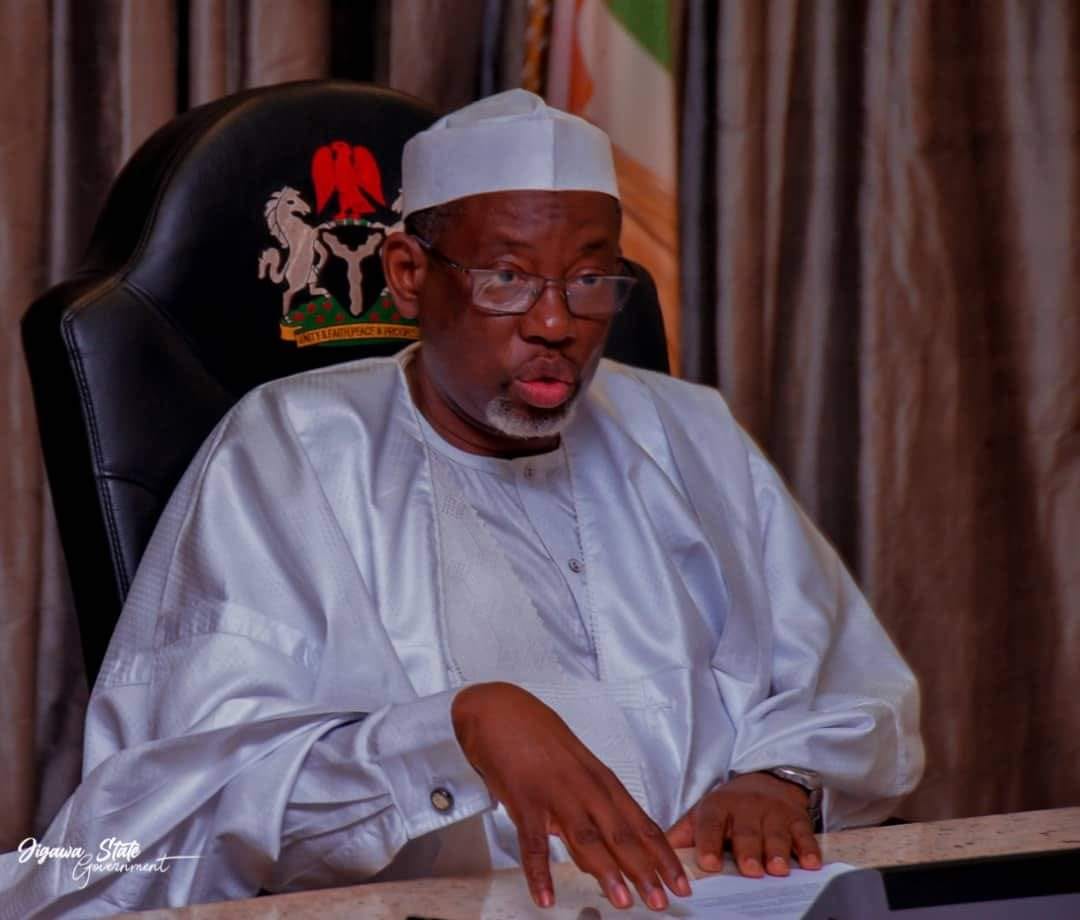
Alhaji Umar Namadi (Danmodi)

From promises to politics: How Jigawa’s focus is slipping toward 2027

By Abba Marke

Across the length and breadth of Jigawa State, conversations are heating up. In tea joints, markets, and political circles, people are talking, and what they’re talking about is the sudden and somewhat surprising shift in tone from the administration of Governor Malam Umar Namadi Danmodi.

Barely halfway through its first tenure, the Jigawa State Government has begun sending strong signals that it intends to seek re-election in 2027. The governor’s close allies and political associates have, in recent weeks, made comments and gestures that clearly point toward a second-term ambition.

To many observers, this early campaign-like posture has come as a shock. The people of Jigawa expected that, at this midpoint in his administration, the governor’s main focus would be on governance, performance, and fulfilment of campaign promises made during the 2023 elections. Instead, they now see high-ranking officials raising eight fingers — a symbolic declaration of a “second term” agenda — while many of the promises that inspired the electorate’s trust remain unfulfilled.

This development has left the public asking some serious and legitimate questions:

1. Is it already time to begin campaigning for the 2027 elections?

2. Have all the commitments made to the people of Jigawa in 2023 been accomplished?

These questions are not born out of malice or opposition politics; they stem from a genuine concern among citizens who want to see their state move forward. The people yearn for progress — for improved infrastructure, better schools, reliable healthcare, job opportunities for the youth, and meaningful reforms that impact their daily lives.

However, they now worry that the government’s attention is shifting away from governance toward political preservation. Many fear that this early flirtation with the idea of a second term could become a major distraction, diverting energy and resources from the actual work of leadership.

History has shown that once a sitting government becomes preoccupied with re-election, governance often suffers. Projects slow down. Accountability weakens. Public servants often start aligning themselves with political interests rather than serving the public. The people of Jigawa, who have placed their hopes in this administration, fear that this could be the same path being taken once again.

What the public is calling for is simple: focus on the job at hand. Let the government channel its full strength into delivering on its promises — building roads, improving agriculture, empowering the youth, reforming education, and uplifting rural communities. Once visible progress is made and the people feel the impact of good governance, the question of a second term will naturally answer itself.

For now, the citizens of Jigawa are watching closely. They want results, not rallies. They want action, not ambition. And they want their leaders to remember that time spent seeking a second term could be better spent earning it.

Abba Marke wrote via abbayusufmarke@gmail.com.

First Class or 2.1: Jigawa’s bright minds deserve place

By Muhammad Abubakar Tahir

Jigawa State has, in recent years, earned praise for its progressive policy of offering automatic employment to university graduates who finish with First Class degrees. It is a remarkable gesture, one that highlights the state government’s commitment to education, excellence, and the future of its youth.

However, as commendable as this initiative is, it also calls for reflection. The state government must review the policy to ensure that other brilliant and hardworking graduates are not left behind, particularly those with a Cumulative Grade Point Average (CGPA) between 4.0 and 4.49.

These students, though officially classified as Second Class Upper (2.1), have equally demonstrated distinction, resilience, and intellectual depth. In some disciplines — especially the technical and science-based ones — attaining a First Class degree is extraordinarily demanding. 

Yet many of these students, with CGPAs slightly below the First-Class cut-off, are as competent and deserving of opportunities as their peers who crossed the 4.5 mark. Around the world, employers and institutions recognise this nuance. Graduates with Second Class Upper degrees are widely regarded as strong performers and are eligible for both public- and private-sector roles. 

They also qualify for prestigious international fellowships and postgraduate scholarships. Indeed, scholarship programmes such as Chevening, Commonwealth, and several others typically set their minimum CGPA requirement between 3.5 and 3.7 on a 5.0 scale — comfortably within the Second Class Upper range. 

This shows that the global academic and professional community values not only top-tier excellence but also consistent, well-rounded performance. It is on this basis that Governor Mallam Umar Namadi is urged to broaden the scope of Jigawa’s First-Class employment initiative. 

By extending consideration to graduates within the 4.0 to 4.49 range, the government would not only promote fairness but also maximise the state’s pool of talent. Such an inclusive policy could be designed to include a fair, transparent screening process that rewards skill, creativity, and innovation — qualities not confined to a single grade level.

A similar example can be seen in neighbouring Kano State, where the government recently introduced a domestic scholarship scheme that also accommodates Second Class Upper graduates. Many beneficiaries of that programme come from humble backgrounds, and their stories have shown how such policies can transform lives and families. 

Jigawa State can take inspiration from this model and adapt it to its own development priorities. Governor Namadi has already demonstrated a listening and compassionate leadership style, particularly through his swift interventions during last Ramadan when he responded to citizens’ needs with empathy and urgency. 

Extending opportunities to deserving 2.1 graduates would further strengthen public confidence in his administration and reinforce his image as a people-centred leader who believes in inclusive governance.

History will not forget him if he heeds this call. His legacy will be remembered not just for rewarding excellence, but for redefining it — by recognising that excellence wears many shades. That brilliance sometimes exists just a decimal point below a First Class.

In the end, what truly defines a visionary leader is not only how he uplifts the best but how he ensures that no capable hand is left idle when there is work to be done for the good of the state.

Muhammad Abubakar Tahir is a journalist based in Hadejia, Jigawa State. He can be reached via abubakarmtahir81@gmail.com.

Is fighting His Excellency Namadi like fighting the Hadejia Emirate?

By Garba Sidi

The strategy used to support His Excellency, the Governor of Jigawa State, Malam Umar Namadi, made his emergence seem like a golden opportunity, especially for the people of Hadejia. That’s why people from this region, regardless of political affiliation, united in full support behind him.

In fact, it got to the point where anyone who didn’t support him was branded as someone who didn’t care about Hadejia’s interests. Youths and other residents were mobilised in large numbers to vote overwhelmingly for him, resulting in a decisive defeat for his opponent. All this was done with the hope that having “their son” in power would finally bring the kind of development other governors had brought to their own regions.

BUT DID IT BRING GOOD RRSUL?

The general assumption is that if a governor comes from a certain area, that area should naturally receive more projects, opportunities, and attention than others. Unfortunately, in the case of Malam Umar Namadi, this has not been the reality.

Right from the appointment of commissioners, things started to take a different turn. Prominent politicians from Hadejia—those who invested their money, time, and energy into mobilising support—were sidelined. Instead, individuals who contributed nothing to the campaign were brought in and handed key positions. These new appointees now operate as they please, whether their actions are right or wrong.

This understandably caused frustration among the loyal politicians, many of whom withdrew, allowing their protégés to take to social media to criticise the government openly. Their anger is rooted in the fact that they were abandoned, while others who made no sacrifices are now enjoying the fruits of power.

Even in terms of developmental projects, Hadejia has not seen any significant attention that reflects the governor’s origins. For instance, the Specialist Hospital that the former governor and the Current Minister of Defence, Badaru Abubakar, initiated has been abandoned under the current administration, despite the region’s urgent need for it, particularly due to the high incidence of kidney-related diseases. Patients are frequently referred to Federal Medical Centre Nguru, Rasheed Shekoni Specialist Hospital, Dutse and Aminu Kano Teaching Hospital.

So far, the government has no tangible project it can point to as a benefit for the people of Hadejia, despite their overwhelming support. Ironically, the previous governor—who isn’t even from Hadejia—executed more meaningful projects there. Clearly, “Kwalliya ba ta biya kuɗin Sabulu ba”.

WHO IS CRITICIZING MALAM UMAR NAMADI’S GOVERNMENT?

Some supporters of Governor Malam Umar Danmodi claim there is a grand conspiracy to sabotage his government, supposedly because it originates from Hadejia. They even suggest that people from other regions, aided by unpatriotic elements within Hadejia, are driving the opposition. But that narrative is misleading. And the critics of this government can be broadly categorised into three groups:

THE POLITICIANS.

These are politicians who worked tirelessly and spent their resources to bring this administration to power. After the victory, they were cast aside. Their disappointment and frustration have led them to form alliances and challenge the government.

LOYALISTS OF THE FORMER GOVERNOR.

While not necessarily politicians, these individuals are close to the former governor. They took offense when Malam Umar began probing the previous administration and took actions perceived as targeting their benefactor. In retaliation, they began opposing the current government, criticizing its every move and encouraging others to do the same.

THE COMMON PEOPLE.

These are ordinary citizens who feel betrayed. Despite numerous announcements of new projects and the release of funds, they see little to no work on the ground. They witness government officials living lavishly while their schools lack teachers, hospitals lack doctors and medicines, and basic infrastructure is crumbling. These are the same citizens whose votes made this government possible, and now they are rightfully speaking out. So, is it a crime for the people of Hadejia to fall into any of these groups?

Some people are trying to twist the narrative, making it seem like the government is being attacked simply because it’s from Hadejia. But the reality is this: it’s the government being critized, not the region.

WHAT’S THE SOLUTION?

There is still time for reflection and correction. The administration should reach out to the neglected politicians from Hadejia who worked hard for its victory. Offer them a sincere apology and reintegrate them into the fold. Once that happens, their supporters will follow suit, and the political tension will ease.

Likewise, the faction loyal to the former governor and now Minister of Defense, Badaru Abubakar, should be approached with humility. Apologize where necessary, stop discriminating against his allies, and rebuild that bridge. Doing so will reduce hostility from that quarter.

Lastly, address the real issues affecting the people: poor healthcare, teacher shortages, and neglected infrastructure. Let the people see and feel the benefit of the support they gave. Prove to them that they made the right choice.

CONCLUSION

No one fights their own child. The people of Hadejia do not hate Malam Umar Namadi. They are simply disappointed by the neglect and lack of attention he has shown them—despite the overwhelming support they gave him when he needed it most.

Once he wakes up to this reality and takes action—not just words—to correct his course, the people will forgive and support him again.

May Allah guide us to do what is right.

I wrote the Article in Hausa, and I used ChatGPT to translate it into English.

An open letter to Governor Namadi of Jigawa State

Your Excellency,

I offer my warmest congratulations on your two-year milestone as the Executive Governor of Jigawa State. Steering the affairs of a diverse and dynamic state is no small feat, and under your leadership, we have indeed witnessed tangible progress. 

May Almighty Allah continue to strengthen your resolve and guide your hands as you navigate public service responsibilities.

In these two years, your administration has recorded remarkable achievements across critical sectors—agriculture, education, infrastructure, security, and healthcare. There is much to commend, from the introduction of bold reforms to the implementation of people-centred policies. 

Notably, your decision to approve a ₦70,000 minimum wage—nearly double the previous figure—has sent a powerful signal of your administration’s commitment to workers’ welfare. This singular act resonates deeply with civil servants across the state, who now have renewed hope in a more dignified standard of living.

Sir, these achievements have not gone unnoticed. Numerous awards and recognitions by reputable organisations are a testament to the strides your government has made. 

Yet, as a concerned citizen and journalist, I feel compelled to highlight areas still yearning for attention, not to diminish your efforts, but to reinforce the voices of everyday Jigawans who earnestly seek your listening ear and urgent intervention.

Our healthcare system, for instance, still bears the scars of neglect, particularly in rural communities. Several hospitals lack basic medical facilities, suffer chronic shortages of essential drugs, and are grossly understaffed. 

During my recent fieldwork, enrollees under the Jigawa State Contributory Healthcare Management Agency (JCHMA) lamented being forced to purchase prescribed medications from private pharmacies due to stockouts in government hospitals.

Even more concerning is the plight of newly recruited nurses and midwives, many of whom are yet to be captured under the new salary structure. Their morale is low, which understandably affects service delivery quality. 

Surely, if we must strengthen healthcare delivery, the welfare of frontline health workers must not be overlooked. In the agricultural sector, where Jigawa’s reputation shines, a widening gap exists between government efforts and grassroots impact. 

According to the National Bureau of Statistics, Jigawa accounts for 75% of Nigeria’s agricultural exports, and nearly 90% of our people depend on farming for their livelihood. Yet, many smallholder farmers, particularly those in remote villages, say they have not received the much-publicised palliatives and support inputs. 

Some have had to rely on exploitative loans from private lenders, only to repay in harvests, leaving them at the mercy of uncertain seasons and fluctuating prices.

I humbly suggest the establishment of community-based monitoring committees, drawn from trusted local stakeholders, to ensure transparent and equitable distribution of agricultural support. The rural populace, whose turnout during elections often determines the course of governance, must not be left behind when dividends are shared.

Your recruitment of over 3,000 teachers and 147 first-class graduates in education is indeed laudable. This has brought renewed energy to our classrooms. However, many more qualified youths remain unemployed, submitting CVs into what seems like an unresponsive system. 

The discovery of 6,348 ghost workers and the savings of over ₦314 million monthly offer a golden opportunity to absorb some deserving graduates. The teacher shortage still looms large. The Nigeria Union of Teachers reported a deficit of 32,000 teachers in Jigawa. 

This is not just a statistic—it is a call to action. If we must invest in our future, we must first empower those who educate the future. Your administration’s empowerment initiatives have also made notable impacts—programs like the mobile kitchen distribution scheme have provided many with a path to self-reliance. 

But the landscape of youth enterprise is vast and diverse. Young people engaged in trades such as phone repairs, tailoring, and tricycle operations have felt excluded. 

To build an inclusive economy, your empowerment programs must evolve to accommodate a broader range of trades and offer skills training as well as access to starter kits or seed capital.

Your Excellency, when hope meets genuine leadership, progress becomes inevitable. The people of Jigawa have shown faith, and now they ask for more inclusion, visibility, and compassion in policy execution. Their plea is not one of criticism, but of partnership. 

They long to be part of the story you are writing for Jigawa—one of transformation, equity, and shared prosperity.

Sincerely yours,

Muhammad Abubakar Tahir,

A concerned Jigawa indigene.

Letter to HE Umar Namadi on improving accountability in the N4.8b Ramadan Feeding Program

Assalamu Alaikum Your Excellency,

I trust this message finds you well. May Almighty Allah accept our ibadah and make us among those pardoned in this blessed month.

I am writing to express my concerns about the Ramadan Feeding Program, which began last week. It is imperative that thorough measures are taken to ensure that the entire N4.8 billion budget reaches the deserving people of our state.

It is evident that the program has been plagued by numerous issues, including a lack of proper hygiene during food preparation, insufficient nutritional quality, and the replacement of community members with individuals from different areas, among other concerns.

Your Excellency, you know that N4.8 billion is a substantial amount—funds that could have been allocated for infrastructure and human capital development. However, you used it to alleviate the economic burden on the masses. This makes it even more critical to ensure that the program is implemented with the highest level of transparency and efficiency.

In this regard, I urge Your Excellency to involve Community-Based Organizations (CBOs) in each local government area to enhance accountability and transparency in executing the program. A case in point is our neighboring state of Kano, whose population is nearly double that of Jigawa. They allocated N8 billion for their Ramadan Feeding Program, and anyone can attest to the high quality of the food distributed, as strict measures regarding safety, quality, and nutrition have been met.

Meanwhile, in Jigawa, some images have surfaced showing a lack of proper hygiene, inadequate nutritional content, and an overall lack of transparency in the process. Since you are already planning a visit, I urge you to take this opportunity to probe some of the concerns raised about the program. It would be unethical to ignore how such a massive sum is being managed.

I commend your unwavering commitment to improving the lives of the people of Jigawa. However, Your Excellency, do not allow these successes to overshadow critical issues in other initiatives under your leadership.

Recently, we heard claims from the Commissioner of Health that the people of Birnin Kudu were denied access to billions of naira meant for the health sector. These concerns warrant urgent investigation.

Your initiative, Gwamnati da Jama’a (Government and the People), is commendable. I urge you to take this open letter as a direct message from the masses, calling for necessary action.

As a journalist, my responsibility is to ensure that Jigawa excels in every aspect and that the government remains accountable. I sincerely hope that Your Excellency will take the necessary measures to address these concerns and maintain the trust and respect of the people you serve.

Muhammad Abubakar Tahir is a freelance journalist, PRNigeria fellow and PDGP fellow. He can be contacted atabubakarmtahir81@gmail.com.

2025 Jigawa State Appropriation Bill: Where Governor Namadi got it wrong

By Isah Dahiru

On Friday, December 6, 2024, while skywatchers marvelled at the serene night sky adorned with celestial wonders, a different spectacle unfolded in Jigawa State. Governor Namadi, alongside his entourage of government officials, presented the much-anticipated 2025 Appropriation Bill to the State Assembly. Tagged the “Budget of Innovation & Transformation for Greater Jigawa”, the document was intended to embody progress and forward-thinking leadership.

At first glance, the title seems aspirational, promising groundbreaking initiatives to propel Jigawa into an era of sustainable development. However, a closer examination of the budget reveals glaring contradictions, misplaced priorities, and a lack of the innovation and transformation it proclaims.

A Misleading Budget Title

Though grammatically correct, the ambitious budget title seems to serve as a deceptive marketing strategy rather than an accurate reflection of its contents. Far from being innovative or transformational, the budget largely perpetuates conventional methods of governance, burdening the state with debt while ignoring pressing human capital development needs. A more suitable title could have highlighted its illogical allocation and amateurish approach, as the document fails to address critical issues facing the state.

Unrealistic Revenue Projections

The proposed total budget stands at a staggering NGN698.3 billion, with expected revenues broken down as follows:

  • Federation Account Allocation: NGN34 billion
  • VAT Share: NGN80 billion
  • Other Federal Government Contributions: NGN134.1 billion
  • Internally Generated Revenue (IGR): NGN130.6825 billion

Governor Namadi’s administration has estimated NGN219.517 billion in loans to finance the deficit, an amount alarmingly higher than the state’s entire IGR. This reliance on borrowing raises significant concerns about the sustainability of the state’s fiscal policy. Borrowing such colossal sums without substantial revenue-generation mechanisms is reckless and poses long-term risks to Jigawa’s economic stability.

The governor’s failure to leverage Jigawa’s rich agricultural resources, untapped natural wealth, and the potential of smart farming to bolster IGR demonstrates a lack of foresight. Instead of pursuing innovative strategies to grow revenue, the administration has opted for unsustainable borrowing, leaving future generations to bear the burden.


Misplaced Capital Expenditure Priorities

A whopping 76% of the budget (NGN536.750 billion) is allocated for capital projects, including the construction of 45 new roads spanning 830 kilometres. While infrastructure is essential, this allocation overlooks the state’s urgent needs in human capital development, education, and healthcare.

Recent tragedies highlight the misplaced priorities of this budget. From the Majia tanker explosion, which claimed over 200 lives, to the tragic road accidents in Adiyani (Guri LGA) and Auyo LGA, which resulted in the deaths of women, children, and youth, road safety remains a pressing issue. Constructing new roads without addressing the underlying factors contributing to road traffic accidents is counterproductive. Jigawa needs safer transportation systems, not a roadmap to more tragedies.

Furthermore, questions about the NGN30 billion mobilisation payment for these road projects linger. It is unclear whether this payment adheres to constitutional provisions or represents the notorious 10% kickback culture often associated with government contracts. Transparency in budget execution is non-negotiable, and the state deserves clarity on these expenditures.

A Failing Healthcare System

Jigawa’s healthcare sector is in crisis, yet the budget allocates insufficient resources to address the challenges. Since June 2024, over 25 professional healthcare providers have resigned due to poor remuneration and working conditions. This mass exodus has left hospitals understaffed and unable to deliver quality care, pushing Jigawa’s residents into greater health risks.

Governor Namadi’s “J-Health” initiative—designed to improve healthcare delivery—has proven ineffective. The program is plagued by untrained personnel and a lack of infrastructure, turning hospitals into death traps rather than centres of healing. Ironically, the governor does not rely on “J-Health” workers for his medical care, further exposing the inadequacies of the initiative.

Neglecting Education Amid a Crisis

The BBC recently reported that Jigawa has one of the highest numbers of out-of-school children in Nigeria. Yet, the budget’s allocation to education falls woefully short of addressing this crisis. With thousands of children lacking access to quality education, the future of Jigawa’s youth hangs in the balance. Instead of investing in human capital through education and skill development, the government prioritises infrastructure projects that offer minimal long-term benefits to the people.

Leadership Is About Priorities

Leadership is not about laying asphalt or unveiling ambitious-sounding projects but about using available resources to deliver well-tailored programs that directly impact citizens’ lives. Governor Namadi’s budget fails to address the core challenges facing Jigawa State, including:

  • The alarming rate of out-of-school children
  • The exodus of healthcare professionals
  • The rising tide of road traffic accidents
  • The lack of sustainable revenue-generation mechanisms

Jigawa needs a government that prioritises its people—one that invests in human capital, builds safe and functional infrastructure, and ensures fiscal responsibility. The 2025 Appropriation Bill, as it stands, is far from being the “Budget of Innovation & Transformation for Greater Jigawa.” It is a missed opportunity to create meaningful change and lay a solid foundation for the state’s future.

Governor Namadi must rethink his approach, listen to the cries of his people, and refocus on what truly matters: the well-being, education, and prosperity of Jigawa’s citizens. Only then can the state genuinely embark on a path of innovation and transformation.

Isah Dahiru, B. Pharm. MPSN, wrote via easerdahiru@gmail.com.

Namadi’s SSA was wrong: A clarification concerning students’ allowances

By Isma’il Alkasim

Since the Jigawa State government announced a 100% increase in scholarship allowances for state students, it has served as a beacon of hope and high expectations. This timely intervention comes amid the economic hardship caused by the removal of fuel subsidies and the subsequent increase in registration fees at tertiary institutions. 

The government emphasised that Governor Umar A. Namadi understands the challenges students face. To support their education, the state’s scholarship board was instructed to disburse scholarship payments before the start of each academic session. This directive has undoubtedly restored hope and brought joy to the students.

The State Executive Council approved a series of memos and tags to supplement the payment, but only to a few institutions. Although the state government boasts of having paid all students, over eighty percent of institutions have not received any payment from the board. We have repeatedly read that the government approved a substantial sum for the payment, but to no avail. This has engendered mistrust and left a deep scar in our memory, raising concerns that heartless and corrupt opportunists may have stolen the funds.

Moreover, in an interview with Radio Jigawa, the Senior Special Assistant on Students Matters to the Executive Governor of Jigawa State claimed that the government had given scholarship allowances to all Jigawa State students. This claim either demonstrates his inability to represent his office truthfully or suggests his complicity in misappropriating public funds intended for student support. 

Furthermore, to strike a balance and provide an honest treatment of this issue, we attempted to reach Ambassador Muhammad Salisu Seeker, the SSA, to clarify his ill-founded assertion. However, despite our numerous text messages, he arrogantly refused to answer our calls. He did not even have the courtesy to respond. This arrogance is unbecoming of a public servant who represents the government in students’ eyes. 

As a concerned student, I find the SSA’s claim offensive and insulting. To date, Ahmadu Bello University, Zaria students have not received any payment from the Jigawa State Scholarship Board. The Senior Special Assistant has abused the trust bestowed on him by the Governor, demonstrating sheer incompetence and a monumental failure in public service.

Finally, as a concerned citizen of Jigawa State, I call upon Governor Umar A. Namadi to investigate this matter thoroughly and ensure that anyone found guilty faces the full force of the law. I also urge him to address the misconduct of his Senior Special Assistant on Students Affairs, Amb Muhammad Salisu (Seeker), who has demonstrated a pattern of abusing his office through gross incompetence.

Isma’il Alkasim is a student at Ahmadu Bello University in Zaria. He writes from Garki Jigawa State and can be reached at kogasgarki@gmail.com.

Governor Mallam Umar Namadi loses mother

By Muhammad Sulaiman

The Governor of Jigawa State, Mallam Umar Namadi, mourns the loss of his mother, Hajiya Maryam Namadi Umar, who died in the early hours of Wednesday, December 25 2024.

The late Hajiya Maryam was a respected matriarch known for her compassion and dedication to her family and community. Her passing has left a significant void in the lives of her loved ones and the people of Jigawa State.

Under Islamic traditions, the burial rites are scheduled to take place later today at 4:30 PM in her hometown of Kafin Hausa. The family has called on well-wishers to join them in offering prayers for her eternal peace.

In a statement from his Chief Press Secretary, Hamisu Mohammed Gumel, the Governor prayed for Allah’s mercy to grant his mother eternal rest in Jannah and comfort the bereaved family.

The people of Jigawa State stand united with the Governor in mourning, reflecting on the cherished memories and legacy of Hajiya Maryam Namadi Umar.

May her soul rest in peace.

Gov Namadi suspends commissioner amid allegations of misconduct

By Uzair Adam

Jigawa State Governor Malam Umar A. Namadi has ordered the immediate suspension of Auwalu Danladi Sankara, Commissioner for Special Duties, following serious allegations raised by the Kano State Hisbah Board.

The suspension, announced in a statement signed by Malam Bala Ibrahim, Secretary to the Government of Jigawa State, is intended to allow a thorough investigation into the matter.

Sankara is accused of engaging in an illicit relationship with a married woman, among other offenses.

The Kano Hisbah Board confirmed the arrest of Sankara on Friday after tracking his activities.

According to the board’s Director General, Dr. Abba Sufi, Sankara was caught in an uncompleted building with a married woman, following complaints from her husband’s younger brother.

“We have arrested Auwalu Danladi Sankara, the Jigawa Commissioner, with a married woman in an uncompleted building,” Dr. Sufi told reporters, adding that the arrest was part of a broader investigation into Sankara’s alleged immoral behavior.

The woman’s husband, Nasiru Bulama, had filed a formal complaint with the Kano Police, Department of State Services, and Hisbah Board, accusing the commissioner of having an affair with his wife, Tasleem Baba Nabegu, the mother of his two children.

In addition to the adultery accusations, Sankara is reportedly facing charges for allegedly operating illicit drug centers under names like Picklock and 360.

The Jigawa State Government emphasized that the suspension is a precautionary step to ensure transparency and integrity in the state’s administration, with Governor Namadi committed to upholding accountability in governance.

“The suspension is a precautionary measure intended to facilitate a fair investigation,” said Bala Ibrahim, underscoring the government’s dedication to ethical standards and its responsibility to the people of Jigawa.

Jigawa: Gov Namadi suspends adviser over premature minimum wage announcement

By Uzair Adam 

Governor Umar Namadi of Jigawa State has suspended his Special Adviser on Salary and Pensions, Alhaji Bashir Ado, following a premature announcement regarding a proposed N70,000 minimum wage.

The suspension was confirmed in a statement issued by Bala Ibrahim, the Secretary to the State Government, in Dutse on Saturday. 

The statement revealed that a circulating media report claiming the governor had approved the new minimum wage was both inaccurate and premature.

“This is an embarrassing situation, as the committee tasked with advising on the appropriate wage, led by the Head of the State Civil Service, has yet to finalize its report,” Ibrahim explained.

Due to the incident, the governor has approved Ado’s immediate suspension pending the outcome of an investigation. 

A committee, chaired by the State Attorney-General and Commissioner of Justice, Bello Abdulkadir, has been set up to probe the source and intent behind the statement.

The committee, which includes Commissioner for Information, Youth, Sports and Culture Sagir Musa, Commissioner for Health Dr Abdullahi Muhammad, and Muhammad Hahaha, Permanent Secretary of Establishment and Service Matters, is expected to submit its report within two weeks.