Airlines

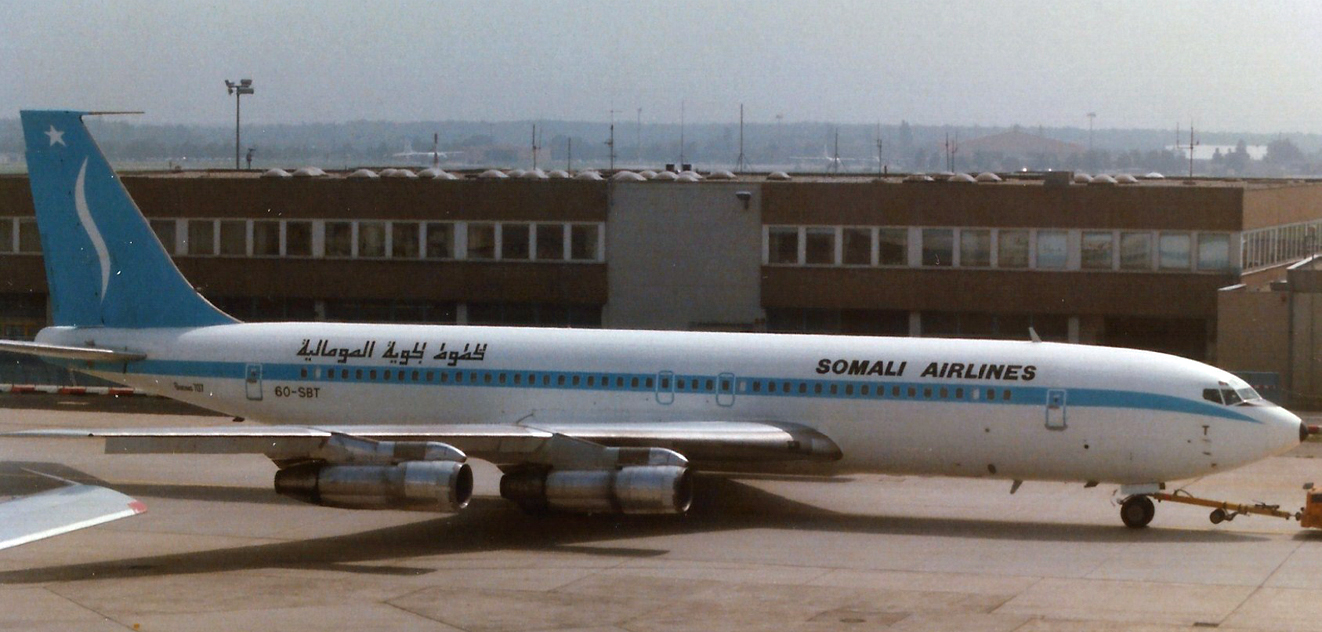
Somali Airlines to Resume Flights After 35 Years

By Hadiza Abdulkadir

Somalia’s national carrier, Somali Airlines, is expected to resume operations next month, more than three decades after its flights were grounded following the outbreak of civil war in 1991.

The planned return of the airline marks a significant step in Somalia’s efforts to rebuild its aviation sector and restore a national carrier that once operated domestic and international routes.

The government has acquired two Airbus A320 aircraft as part of the revival plan. Officials say the relaunch is intended to reduce the country’s reliance on foreign airlines, create employment opportunities and improve air connectivity for Somalis at home and abroad.

Somali Airlines ceased operations in 1991 following the collapse of the government of President Siad Barre and the subsequent civil conflict. Its absence for more than three decades left the country dependent on privately owned and foreign carriers for commercial air travel.

The revival has been welcomed by many Somalis, although the government has previously announced several anticipated launch dates that were not met. The latest plan is therefore being watched closely as preparations continue for the return of the national flag carrier.

If successful, the relaunch would restore an important symbol of Somalia’s statehood and reconnect the country with a chapter of its aviation history that ended 35 years ago.

NCAA bans phones on planes, takes hard line on unruly passengers

By Abdullahi Mukhtar Algasgaini

In a significant shift from global norms, the Nigeria Civil Aviation Authority (NCAA) has ordered that all mobile phones and portable electronic devices must be completely switched off, not just on flight mode – during take-off and landing on all flights within Nigeria.

The directive was announced by the NCAA Director General, Capt. Chris Najomo, on Tuesday at a stakeholders’ meeting in Abuja.

The move ends the long-standing practice where passengers were permitted to use devices in airplane mode throughout a flight.

“All mobile phones, I repeat, all mobile phones and other portable electronic devices should be switched off during at least the critical phase of flight on all Nigerian airlines. Switched off,” Najomo stated.

“There’s nothing like anything like flight mode any longer. Must be switched off.”

The new rule requires Nigerian airlines to immediately amend their operations manuals to reflect this change and submit them to the NCAA for approval.

The phone ban is part of a broader crackdown on the growing trend of disruptive passenger behaviour at Nigerian airports. Najomo declared that the era of “business as usual” is over, warning that unruly passengers will face strict consequences.

He announced plans for public enlightenment campaigns, including radio and TV jingles, to educate travellers on their responsibilities.

The NCAA will also compel airlines to provide adequate training for their staff in conflict resolution.

“If you’re unruly, you’re unruly… It will not be as business as usual. I can assure you that,” Najomo emphasized.

Highlighting the security risks, Najomo announced that the NCAA will conduct mock response exercises next week at the Lagos and Abuja airports to test readiness.

The results of these drills will be made public.

“Aviation security personnel and law enforcement must be reinforced with training, professionalism, and clearly defined rules of engagement,” he said.

Supporting the DG’s stance, the Director of Consumer Protection, Michael Achimugu, noted that Nigeria’s handling of unruly passengers is already more humane than in many other countries, where such behaviour is “treated with extreme prejudice.”

He also referenced recent high-profile incidents, involving figures like Fuji musician KWAM1 and actress Comfort, stating that while the parties involved had learned their lessons, the events revealed systemic gaps that need urgent addressing.