AFCON

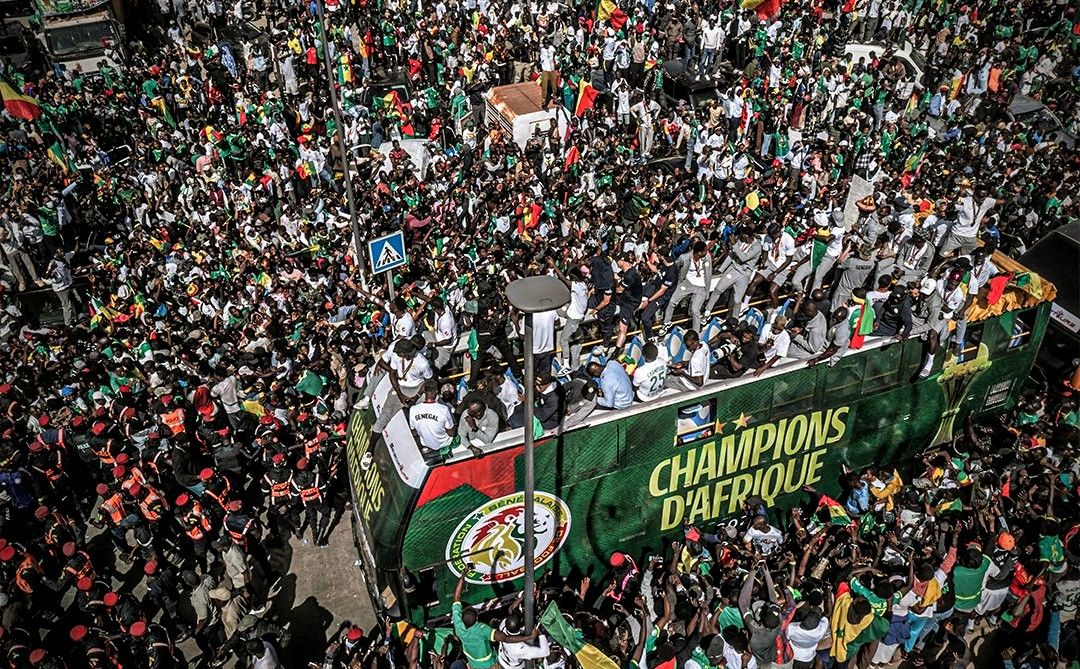
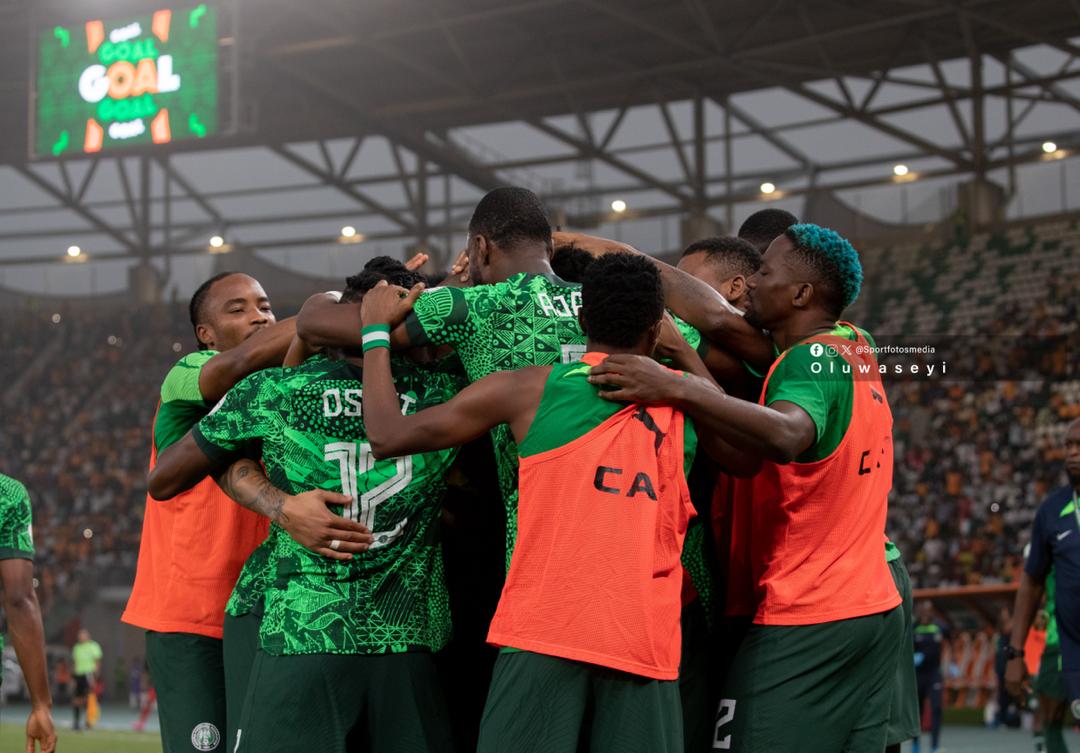
Abdul Samad Rabiu pledges massive cash for Super Eagles after Algeria victory

By Muhammad Sulaiman

Nigerian businessman and philanthropist Abdul Samad Rabiu has announced substantial financial incentives for the Super Eagles following their impressive victory over Algeria, a win that has lifted national morale and secured Nigeria a place in the semi-finals.

In a congratulatory message released on Friday, Rabiu praised the team for making the nation proud and pledged USD $500,000 to the players should they win the semi-final, with an additional USD $50,000 for every goal scored in that match.

He further stated that if the Super Eagles go on to win the final, he would reward the team with USD $1,000,000, alongside a bonus of USD $100,000 per goal scored in the final.

Rabiu described the players as symbols of national pride and unity, expressing confidence in their ability to carry Nigeria forward in the tournament.

He ended his message with a call for continued excellence, reaffirming his pride in the team and the country.

The announcement has been widely welcomed by fans, adding extra motivation as the Super Eagles prepare for the decisive stages of the competition.

Mozambique leader offers cash prize for upsetting Nigeria

By Abdullahi Mukhtar Algasgaini

Mozambique President Daniel Francisco Chapo has pledged a special bonus of 500,000 meticais (approximately ₦11.3 million) to each player and staff member if the team defeats Nigeria in the Africa Cup of Nations Round of 16.

The announcement was made in a presidential message on Thursday, where Chapo praised the Mambas for their historic qualification to the knockout stage. He commended the team’s courage, discipline, and determination, calling their group-stage performance a source of national pride.

Mozambique advanced to third place in Group F despite a final-match loss to Cameroon. They now face a formidable Super Eagles side, one of the tournament’s standout teams, in Monday’s clash at the Complexe Sportif de Fès in Morocco.

President Chapo’s financial incentive underscores the high stakes as Mozambique seeks an unprecedented quarter-final berth. The match is scheduled for 8 p.m. local time on January 5.

AFCON winner will receive $10m

By Ibrahim Yunusa

Confederation of African Football (CAF) President, Dr. Patrice Motsepe has announced an increment of $3m to the winner of the African Cup of Nationa that is currently being hosted by Morocco.

The winner’s prize of the 2025 African Cup of Nations (AFCON) has been raised to $10 million from $7 million that was initially given to the winner of 2023 edition, following an increase approved by the Confederation of African Football.

This marks a significant boost aimed at rewarding excellence and further elevating the prestige of the tournament.

The 2025 tournament kicked off yesterday with a thrilling opening match between the host, Morocco, versus Comoros, in which the Moroccan team defeated Comoros with two goals to nil.

Indomitable Lions’ AFCON preparations descend into chaos

By Muhammad Abubakar

Cameroon’s upcoming Africa Cup of Nations (AFCON) campaign is in turmoil due to a major power struggle between FECAFOOT President Samuel Eto’o and head coach Marc Brys, who remains under contract until 2026. Eto’o unilaterally declared Brys’s role was over.

The dispute has resulted in two rival 28-man AFCON squads.

Eto’o’s faction released a list naming David Pagou as coach and controversially omitted stars Andre Onana, Eric Choupo-Moting, and captain Vincent Aboubakar. Reports suggest Aboubakar was dropped to protect Eto’o’s national scoring record.

Coach Brys responded with his own squad announcement, restoring the high-profile players and questioning the team’s ability to compete in Morocco without them. This internal conflict severely undermines the Indomitable Lions’ preparations.

Ballon d’Or and the credibility question

By Amir Abdulazeez

I am writing on this not because I have any significant concern for the award or its credibility, or because it has any correlation with the well-being of anybody in need (which I am often more concerned about). I am doing so instead due to the massive perennial debate it generates, especially among youths in Nigeria, as well as the misinformed opinions surrounding it. 

Again, the Ballon d’Or, like football itself, has transcended sport to become part of international politics and history. I became shocked when I saw a globally renowned Muslim scholar congratulating Ousmane Dembele for winning the 2025 version and hailing its award to a ‘practising Muslim’. Obviously, the crown now carries political significance that stretches well beyond the pitch. 

Since its inception in 1956, the Ballon d’Or has been regarded as football’s most prestigious individual award. Founded by France Football (conceived by sports writers Gabriel Hanot and Jacques Ferran), the award was initially designed to honour the best European player annually, with Stanley Matthews of Blackpool becoming the pioneer winner. Later, it evolved into a global prize, celebrating many other icons. Many have rightly questioned the credibility of the award, but mostly on myopic grounds centred around player and club sentiments. However, as a long-time football observer, I believe there are much broader issues regarding the credibility of the award that are worth discussing. 

Let us start with the politics. During the Cold War (1947-1991), Eastern European players (more aligned to the Soviet Union) often struggled to receive equal recognition despite dazzling performances, while Western European stars (more aligned to the United States and friends) enjoyed more favourable media attention. Although Russian goalkeeper Lev Yashin won the award in 1963, many argue that his case was only the exception that proved the unwritten rule of ‘politics, geography, and media exposure consistently play decisive roles’. Today, the award continues to reflect broader inequalities in the sport of football. European clubs dominate global coverage, which inflates the recognition of their stars. Players performing in less visible leagues, whether in South America, Africa, or Asia, rarely receive consideration, even if their contributions are extraordinary. 

Another concern is the award’s inconsistent eligibility rules over time. Until 1995, only European players competing in European clubs were considered, excluding legendary figures such as Pelé and Diego Maradona from even receiving a nomination. It was only after a rule change that non-Europeans in European leagues became eligible, allowing George Weah to win in 1995. Yet, by then, the award had already excluded decades of worthy non-European and non-European-based winners. Mild allegations of racism also cast a dark shadow over the award. Many believe players like Didier Drogba, Samuel Eto’o, Yaya Touré, Sadio Mané and Mohammed Salah were routinely ranked below their pedigree. In 2021, French pundit Emmanuel Petit openly questioned whether African players were judged by double standards. 

The selection of voters itself raises concerns. Initially restricted to journalists, it later expanded between 2010 and 2015 after a merger with FIFA’s “World Player of the Year,” adding coaches and captains to the electorate whose votes often reflected tribal, national or club loyalties rather than merit. The 2016 reversion to journalist-only voting may be a tacit admission of voting flaws, thereby creating difficulties in making comparisons across eras. For example, Lionel Messi’s consecutive wins (2009-2013) under a global, mixed electorate cannot be objectively compared to Michel Platini’s (1983-1985) under a European-only jury. The current co-organisation with UEFA, which began in 2024, signifies another attempt to lend the award more institutional weight. However, the constant changes in its format and governing alliances suggest an award in search of a stable identity, struggling to balance its commercial ambitions with its original purpose.

Bias towards attacking players has been an emerging hallmark of Ballon d’Or selections. Legendary defenders like Paolo Maldini, Alessandro Nesta, Sergio Ramos and Roberto Carlos, who defined an era of defensive excellence, always fell short. The exception of Fabio Cannavaro in 2006, along with a few others in the past, after a World Cup-winning campaign with Italy, serves as a testament to the rarity of a defender being recognised. 

More recently, Virgil van Dijk’s 2019 narrow runner-up finish sparked debate about whether non-attacking players could ever realistically win in a sport increasingly obsessed with goals and flair. The award relies heavily on football journalists who often prioritise goal highlight reels, statistics and global recognition over tactical nuance and defensive brilliance. Strikers and playmakers dominate the headlines that directly feed into voting behaviour. 

To combat positional bias, a more revolutionary approach could be implemented: nomination by quota. Why not have separate shortlists and voting panels for goalkeepers, defenders, midfielders and forwards? The top three or five of these categories could then be considered for the overall voting and eventual award. This would ensure that the unique skills of each position are evaluated by those who best understand them, guaranteeing that players are judged on their specialisations rather than against others with contrasting roles. 

The criteria for judgment also lack clarity and consistency. Officially, the award considers individual performance, team achievements, talent, fair play and career consistency. In practice, however, voters often seem swayed by a single outstanding tournament or by sentimental narratives. Luka Modrić’s 2018 victory after Croatia’s World Cup run exemplified this. While Modrić was superb, critics argued that other players had stronger year-round performances, but the emotional weight of Croatia’s fairy tale run tilted the scales. But how come this same emotion did not sway voters to select any player from Leicester City’s 2016 Premier League incredible winning team? A pervasive, though often unstated, criterion for many voters is team success. 

To win the Champions League or a major international tournament has become almost a prerequisite for contention. This creates an inherent unfairness, elevating players in dominant teams while punishing extraordinary individuals in less successful sides. This inconsistency reveals a fundamental confusion: is the award for the “best player,” “most popular player,” or the “most successful player”?

The timing and calendar controversies are another issue. International tournaments occur every two years, creating periods where national team success heavily influences voting. World Cup years traditionally favour tournament winners, regardless of club form. The recent calendar change, from July to August, aimed to address this imbalance but created new problems, with voters now contending with assessing performances from overlapping seasons and tournaments. This temporal confusion affects not just voting patterns but also the public’s understanding of what the award represents: is it recognition for calendar year performance, season achievement, or tournament success? The 2013 Ballon d’Or win by Cristiano Ronaldo was criticised following timing inconsistencies due to odd deadline extensions. The current system, which allows a player to win a major tournament in the summer and have their performance rewarded a year later, creates a disjointed narrative. 

The question of authority is another big one. FIFA represents 211 national associations, UEFA oversees European football’s institutional framework, yet it is a private French publication that bestows football’s most prestigious individual honour. The comparison with FIFA’s The Best awards and UEFA’s Player of the Year exposes this imbalance. This raises the paradox: why should a magazine possess such outsized influence in determining football’s most prestigious individual accolade, overshadowing awards backed by governing institutions? While there is nothing fundamentally wrong with this, it only emphasises the need for France Football to show more responsibility by sanitising and standardising its award.

I am not in a position to coach France Football on how to reform its awards to minimise the credibility dilemma; they have much better experts who can do that. My concern is to see young football followers and analysts become more informed and equipped for deeper debates that are beyond sentiments. My other concern, which has little to do with the Ballon d’Or, is to see football giving a little back to its estimated 3.5 billion fans that have made it powerful. While fans give it a lot, the sport appears to be offering almost nothing significant in return. 

It is sad to see football remaining silent, biased and indifferent in the face of global oppression and injustice. While it took FIFA and UEFA just four days to suspend Russia after it invaded Ukraine in 2022, both bodies have remained criminally silent for over two years since Israel launched its genocide on the football supporting people of Palestine.

Amir Abdulazeez, PhD, can be reached via abdulazeezamir@hotmail.com.
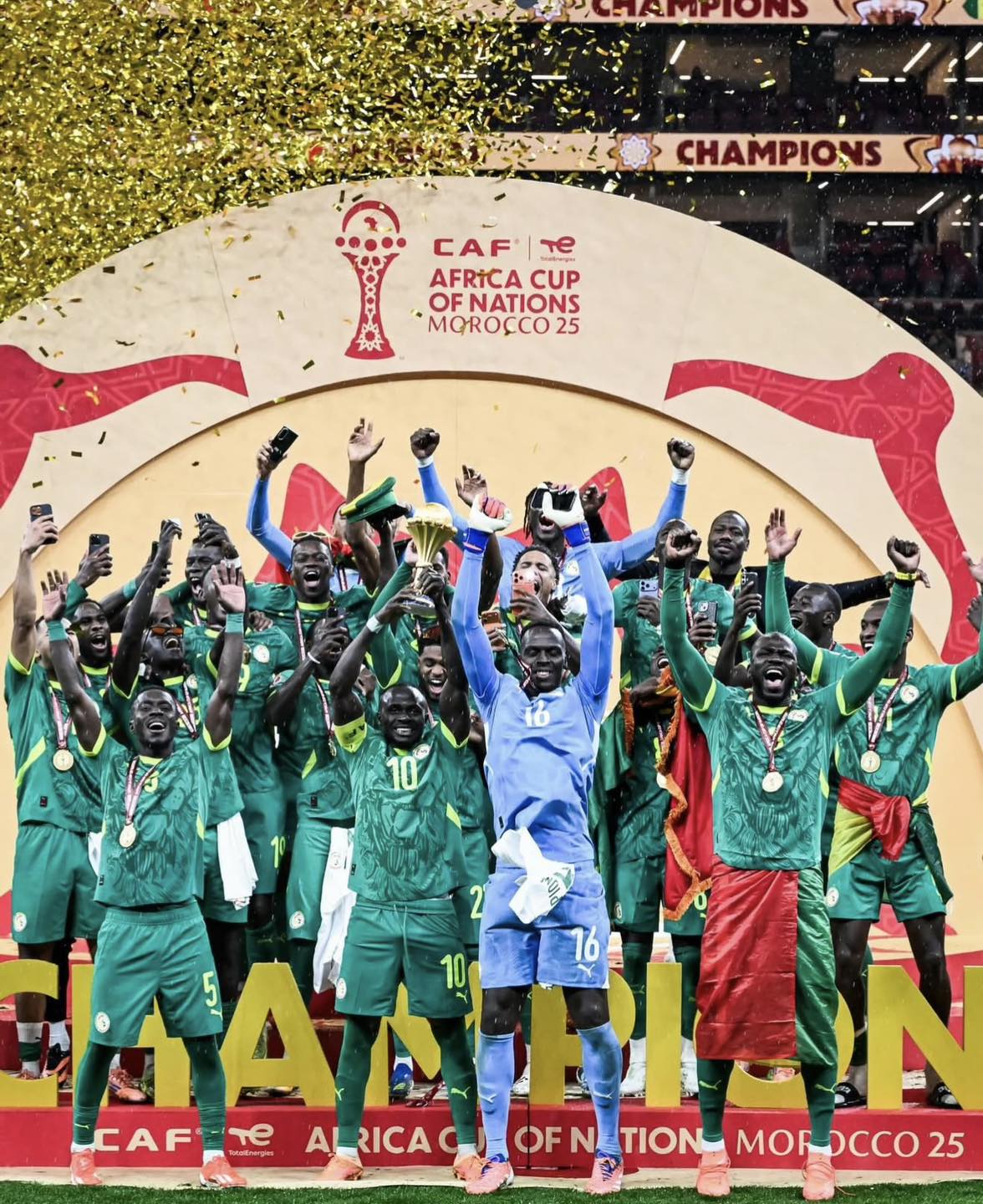
Flying Eagles edge Egypt on penalties to finish third at AFCONU20

By Muhammad Abubakar

Nigeria’s U20 national team, the Flying Eagles, secured third place at the AFCON U20 tournament after a tense victory in a penalty shootout against host nation Egypt.

The third-place playoff ended in a deadlock after regulation time, with both teams creating but failing to convert keychances. 

In the ensuing shootout, Nigeria maintained their composure and emerged victorious, silencing the home crowd and concluding their campaign on a high note.

Head coach Aliyu Zubairu praised his players for their determination and mental toughness throughout the match. “Beating the hosts in front of their fans, and doing so under the pressure of a shootout, speaks volumes about the character of this team,” he said.

South Africa went on to win the tournament, claiming the championship after an impressive performance in the finalagainst Morocco.

The AFCONU20 tournament showcased elite youth teams from across the continent, providing a platform for emerging talent and fierce competition.

Nigeria advances to AFCON Final after crushing South Africa

By Sabiu Abdullahi  

The Super Eagles of Nigeria soared to the Africa Cup of Nations (AFCON) final, edging out the resilient Bafana Bafana of South Africa in a tense penalty shootout.

The match, which culminated in a one-all draw through regular play and extra time, showcased the grit and determination of both sides. 

The encounter marked the Super Eagles’ record 15th appearance in the AFCON semi-finals, a testament to their enduring legacy in African football.

However, it was far from an easy feat, as the match pushed them to their limits. 

Nigeria’s journey to the final was fraught with challenges, including last-minute fitness concerns.

Star striker Victor Osimhen overcame abdominal discomfort to lead the line, while a late injury forced coach Jose Peseiro to shuffle his starting lineup, with Bright Osayi-Samuel stepping in for the injured Zaidu Sanusi. 

The tactical battle unfolded with Nigeria opting for a 3-4-3 formation, mirrored by Hugo Broos’ Bafana Bafana. However, the Eagles initially struggled to contain the pace and positional awareness of South Africa’s attacking duo, Percy Tau and Evidence Makgopa. 

Despite the early setbacks, Nigeria showcased resilience and determination, gradually asserting control as the match progressed.

The defensive trio of William Troost-Ekong, Semi Ajayi, and Calvin Bassey weathered the storm, thwarting numerous attempts from the South African side.

As the tension mounted, neither team could find the breakthrough, leading to a nail-biting penalty shootout. In a display of nerves of steel, the Super Eagles held their composure, clinching a thrilling 4-2 victory from the spot, much to the delight of their passionate supporters. 

With this hard-fought triumph, Nigeria secures a spot in the AFCON final, poised to vie for continental glory against a formidable opposition.

AFCON 2023: Senegal sent packing 

By Aliyu Yakubu Yusuf

The reigning champions and the best national team in the continent, Senegal, had met its waterloo at the hands of the host, Ivory Coast, who must be buoyant, having qualified to the Round of 16 by the skin of their teeth when all around them was doom and gloom. 

The Teranga Lions entered the tournament as the undisputed favourites to record a back-to-back triumph. They justified their billing by becoming the only country to win all three group games, often at a canter. The stage was set for Mane and Co. to dominate the knockout stages. However, the Ivorians read a different script.

The Elephants came into the tournament as the host country with little expectations. Gone are the days of Drogba, Yaya and Kolo Toure, Kalou and Zokora. So, one expected the host to mount a serious title challenge. But no one expected them to lose embarrassingly to Equatorial Guinea either. Ultimately, they qualified into the knockouts as the worst of all the 16 entrants. Few people gave them a chance to overcome the swaggering Senegal. And that’s what they just did.

Such is the cruel nature of winner-takes-all international football. The Ivorians must now be cautiously optimistic about their chances, having surmounted the most difficult of obstacles. Senegal must be ruing what might have been while they lick their wounds.

Foreign coaches or indigenous coaches, what way Africa?

By Abdulrazak Iliyasu Sansani

It is no longer news that another African coach has won the African Cup of Nations, bringing it to six out of the last nine editions won by African coaches. Coach Aliou Cisse of Senegal joined the illustrious list of African coaches that have won it in the period under review:  Hassan Shehata of Egypt, three times, Steven Keshi of Nigeria, Djamel Belmadi of Algeria,  all once.

While I don’t know have anything personal against expatriate coaches, I have everything against the perception that our African coaches are not technically sound to manage our national teams. This is absurd. There are good coaches all over the world.

There are brilliant football managers all across mother Africa who should not be disapproved merely because of what can be referred to as our syndrome of not valuing our own. It shouldn’t be so. 

Of course, Nigeria’s best coach in history is a Dutchman, Clemens Westerhof, who coached Nigeria from 1989 to 1994: winning silver in Algeria 1990, bronze in Senegal 1992, and winning gold in Tunisia 1994.

Westerhof Qualified Nigeria to her maiden World Cup, played some of the most entertaining football ever in Africa and achieved the highest ranking by an African national team, 5th in April 1994 FIFA rankings.

Thus, there isn’t any way I would despise foreign coaches. It isn’t logical. However, I advocate that they be given fairgrounds to compete with our local coaches, and when appointed, all should be supported sufficiently to succeed. 

It is still fresh in my mind how Nigeria Football Federation got itself trapped in a web it is still striving to overcome. They sacked Gernot Rohr at the eleventh hour, which I still think is debatable. Yet, they went ahead to ‘appoint’ a new manager while an interim manager was in place. Who does that before a major tournament and the World Cup playoff around the corner? 

I had thought they should have waited for the AFCON to conclude before appointing any manager, especially with an interim manager already appointed. And all those who shared my views have been proven right with the latest development of allowing the interim manager, Austin Eguavoen, to continue until after the World Cup playoff against Ghana.

I think we would have been saved all this rigmarole if the NFF had at least trusted him enough to be the interim manager and not gone ahead to supposedly have an agreement with someone to succeed him regardless of his performances. 

Until, the Nigerian football fanatics reigned and rallied around the interim manager after some spectacular displays at the group stage of the AFCON, which seemed to have been adequate to make NFF take this recent decision, despite our shock elimination at the last 16 by Tunisia.  May we learn to give our best any job, support, and trust them to deliver. God bless Nigeria. 

Abdulrazak Iliyasu Sansani wrote from Turaki B, Jalingo, Taraba State via abdulrazaksansani93@gmail.com.

Stadium to be named after Sadio Mane in Senegal

By Ahmad Deedat Zakari

A stadium is set to be named after Sadio Mane in his home town of Sedhiou in Senegal after helping his country to win the just concluded AFCON.

Senegal’s minister of culture and communication, Abdoulaye Diop, confirmed the news this past week.

According to Diop, the stadium is named after the region’s favourite son.

“I would like, through this decision to give the name of Sadio Mané to the Stade de Sédhiou, to express the recognition of all the daughters and sons of the region, towards a man who makes known to the humanity as a whole, Bambali and its regional capital, namely Sédhiou,” Diop was quoted saying by the local media.

Diop added that “Sadio Mane really deserves this honour.”

The Liverpool forward scored the winning penalty as Senegal beat Egypt 4-2 to win the 2021 African Cup of Nations held in Cameroon for the first time in history. Mane also earned the love and respect of millions of people owing to his charity works.