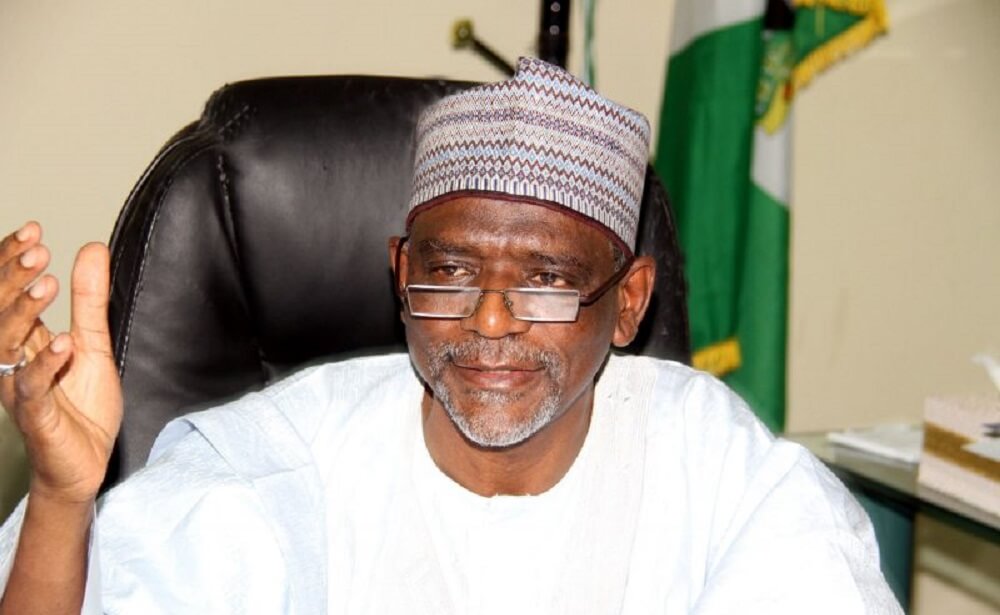
Adamu Adamu

Adamu Adamu, public service, critics and the rest of us

By Abubakar Suleiman

“Why waste your money to study your family tree? Just go into politics, and your opponents will do it for you free.” – Mark Twain

The Minister of Education, Adamu Adamu, has become the subject of public scrutiny lately, after members of the Academic Staff Union of Universities (ASUU) deserted university classrooms for a one-month warning strike to drive home their demands.

To compound Mallam Adamu Adamu’s ordeal, the National Association of Nigerian Students (NANS) President, Asefon Sunday Dayo, threw decency, good English grammar and coherence to the dogs and confronted him for the way forward on these incessant strikes. The Minister, within his rights, could not stomach zingers from the NANS President; hence, he peacefully walked out.

What the Nigerian academics and critics need to crucify Adamu any day is to comb his past articles on the sorry state of education in the country and the possible solutions he highlighted in addressing the anomaly, notwithstanding the practicability or sustainability of the solutions. Blessed with astonishing writing prowess, Adamu doesn’t pull punches whenever he decides to take the government of the day to the cleaners on education.

Mallam Adamu is not alone in the blowback of past written or spoken words. Isa Ali Pantami, Reno Omokri and Reuben Abati are good examples of how venturing into public service can force critics to chew some of their words or elegant analyses raw. They get to see, first hand, the depth of the rot in the system they seek to reform. Moreover, thanks to their fantastic writings, their readers or fans expect them to do wonders, including unrealistic expectations actions.

History is replete with critics who ended up being the worst versions of the people or policies they obsessively criticised. So also, the grave is filled up with critics whose know-it-all dispositions and elegant solutions never get tested.

Criticism is sweet and romantic. However, it is undeniably required to hold elected or appointed leaders accountable as humanly possible. It helps improve a system and checks leaders’ excesses, thereby insulating them from being despots or demagogues.

However, criticism should be accompanied by good knowledge or grasp of the subject matter, moderation, realistic approaches, and viable solutions. The quick urge or attitude of some critics pontificating on, or criticising, everything under the sun without critical thinking is among the reasons many critics presumed as messiahs ended up as disasters.

Nothing humbles most critics like public service. So, they either choose sheer populism or face the realities or challenges that come with purposeful leadership amidst competing demands, meagre resources, criticism and tough decisions, which are often unpopular. With the latter, they get more kicks than halfpence.

As it is true with an onlooker who sees most of the game, their opinions are birthed from the outside on the premise of poor exposure and little information, which invariably make them see complex and daunting challenges as straightforward.

Interestingly, opinions could change due to contexts or circumstances. People learn from exposure, old age or new knowledge. We may find ourselves opposing some views we hold so dear today in the future when we are eventually called to serve the people. Therefore, if you are called to serve the people, don’t hesitate to oblige. However, be ready to get your fair share of kicks and past opinions unearthed.

Abubakar Suleiman writes from Kaduna and can be reached via abusuleiman06@yahoo.com.

FG is ready to meet with ASUU on all issues they’ve raised – Education Minister

By Uzair Adam Imam

 The Minister of Education, Malam Adamu Adamu, has said that the federal government is ready to meet with the Academic Staff Union of Universities (ASUU) on all issues they have raised.

Adamu said that he was surprised by the decision of the union to embark on a four-week strike. 

He added that the decision of the university lecturers came abruptly amidst ongoing meetings that aimed at resolving the menace.

The minister stated this on Wednesday while fielding questions from State House reporters after the Federal Executive Council (FEC) meeting in Abuja. 

However, despite several negotiations, the minister also cleared the government of any fault over failure to reach an agreement with ASUU. 

According to him, “ASUU, unfortunately, they have gone on strike, and I am looking for them because all the issues are being addressed. The last thing that happened was that our committee looked at their demands, but there are renegotiations going on. They submitted a draft agreement which the ministry is looking at.”

Speaking on ASUU’s draft agreement, Adamu said, “A committee is looking at it. Immediately it finishes, the government is meant to announce what it had accepted. Then suddenly, I heard them going on strike.”

Clearing his name over allegations from ASUU about his absence from meetings, the minister said, “ASUU will never say that. I always call the meeting myself. The meetings I didn’t attend were those that happened when I was in hospital in Germany.

“We want a peaceful resolution. The federal government is ready to meet them on all issues they have raised, and if there are so many meetings and the gap is not closing, then I think it’s not the fault of the government.

Asked about the possibilities of reconciliation between the FG and ASUU  before the end of the 30-day strike, he said, “I can’t give you time. I am ready to reach an agreement with ASUU now, but since I’m not the only one, I can’t give you time, but certainly, we are going to reach an agreement very soon.”

NAPTAN rejects teacher-service elongation, stipends for students

By Uzair Adam Imam

The National Association of Parents/Teachers of Nigeria (NAPTAN) has rejected the federal government policies on education, particularly the elongation of service years and payment of stipends to students reading education in higher institutions.

The association added that the government should implement the minimum wage of N30,000 to workers first, which is considered more important than the stipends.

Recently, the Minister of Education, Adamu Adamu, announced the payment of N75,000 per semester for every student of public universities studying education programmes and N50,000 for students of colleges of education.

Dr Ekundayo Ademola, the National Publicity Secretary of NAPTAN, made the information available to reporters on Sunday, warning the federal government of Nigeria not to politicize education.

However, Ademola described the new policy of salary scale for teachers and the elongation of years of service from 60 to 65 years as a Greek gift.

He added that the promise made by the federal government is nothing but deceit: “We think that the promise by the government that has refused to diligently implement N30 minimum wage to increase salary for teachers is nothing but deceit.

“If one may ask, how many states are, in truth paying N30,000 Minimum Wage to workers? Asking the state to start paying with a special scale to teachers, when minimum wage of N30,000 is not dutifully given to them, will lead to industrial unrest.

“We demand that federal government and states should pay N30,000 minimum wage to teachers first before considering special scale for teachers.”

“Elongation of service year from 60 to 65 years is also odd, in a situation the country is presently is. Many educated graduates are seeking unemployment. Keeping those that are supposed to rest in service till 65 is nothing but a misplaced priority. Instead of doing that, FG and states must gear efforts towards timely payment of retirement benefits to teachers. If that is done, many of them will prefer to go on retirement even before reaching 60 years, knowing full well that their benefits would be paid.

“We also consider payment of N75, 000 and N50,000 to students reading education in University and NCE as ill-conceived and quite uncalled for. This amount is even bigger than the minimum wage. Before coming up with this idea, is the FG aware that the number of students studying education-related courses is in multiple thousand?

“Also, after being paid in school, do we have job placements waiting for them? Is there a plan for several unemployed graduates and NCE holders that read education-related courses? Many Nigerians that had passed through the Npower programme and worked in schools, are now back on the streets looking for jobs.”

The association also called upon the government to have a special package for teachers working in the rural areas that are facing security challenges.

“We also advise the government to have a special package for teachers working in the rural areas and areas facing security challenges.”

Education: Bauchi, other northern states have highest number of out-of-school kids

By Muhammad Sabiu

In a report released by a Lagos-based research firm, SB Morgen, Bauchi is the state with the highest number of out-of-school children in Nigeria, with figures rising to 1,239,759.

Figures in the report have indicated that Katsina State is second to Bauchi, with about 873,633 out-of-school children, who might have been prevented from going to school due to so many reasons.

Bringing the above figures, SB Morgen discussed recent occurrences in Kaduna State, which came fifth on the list and where schools remain closed until further notice due to the rising rate of kidnappings and other security challenges in the state.

“The Kaduna State Government has said that all primary and secondary schools will remain closed until the security situation improves across the state,” SB Morgen wrote.

It’s now apparent that one of the major factors that hinder the progress of education in northern Nigeria is kidnapping, which is not quotidian in only Kaduna. Most northwestern states have been witnessing kidnap of students in their hundreds, which usually forces authorities to order the suspension of school activities “until further notice.”

Not only northwestern states, recently, Niger State in the north-central part of Nigeria saw students in their hundreds kidnapped from their school, with many still being held by their abductors.

Officials also lament the general backwardness of education in Nigeria as there are approximately over 10 million out-of-school kids.

The Minister of State, Education, Chukwuemeka Nwajiuba, was in June 2021 quoted by the News Agency of Nigeria as saying, “The current challenges affecting the Nigerian education system has left much to be desired, the system is characterised by high illiteracy level, infrastructural decay and deficits.”

“We have inadequate number of qualified teachers, inadequate infrastructural facilities/resources and poor funding,” he added.

The figures, which are said to have been sourced from the Federal Ministry of Education, are presented as follows in order of the size of the number of out-of-school kids:

BAUCHI: 1,239,759

KATSINA: 873,633

KANO: 837,479

KADUNA: 652,990

GOMBE: 567,852

KEBBI: 484,702

ADAMAWA: 483,702

NIGER: 478,412

OYO: 463,280

SOKOTO: 462,164

YOBE: 405,100

ZAMFARA: 383,952

BENUE: 383,022

TARABA: 338,975

BORNO: 266,178

OSUN: 260,222

PLATEAU: 258,256

LAGOS: 229,264

NASARAWA: 204,771

RIVERS: 196,581

A’ IBOM: 194,018

DELTA: 181,995

KOGI: 169,316

OGUN: 158,797

EBONYI: 151,000

KWARA: 141,325

CROSS RIVER: 140,944

IMO: 125,414

FCT: 121,587

ENUGU: 117,091

ONDO: 113,746

EKITI: 99,778

ANAMBRA: 92,332

BAYELSA: 86,778

ABIA: 86,124

EDO: 79,446

Looking at the above statistics, out of the first 15 states on the list, only one is in the southern part of the country: Oyo.

Therefore, this calls for more effort and attention of stakeholders to put their shoulder to the wheel to curb this problem of the rising number of out-of-school children.