Abuja

Customs initiate housing scheme to boost personnel’s welfare 

By Sabiu Abdullahi

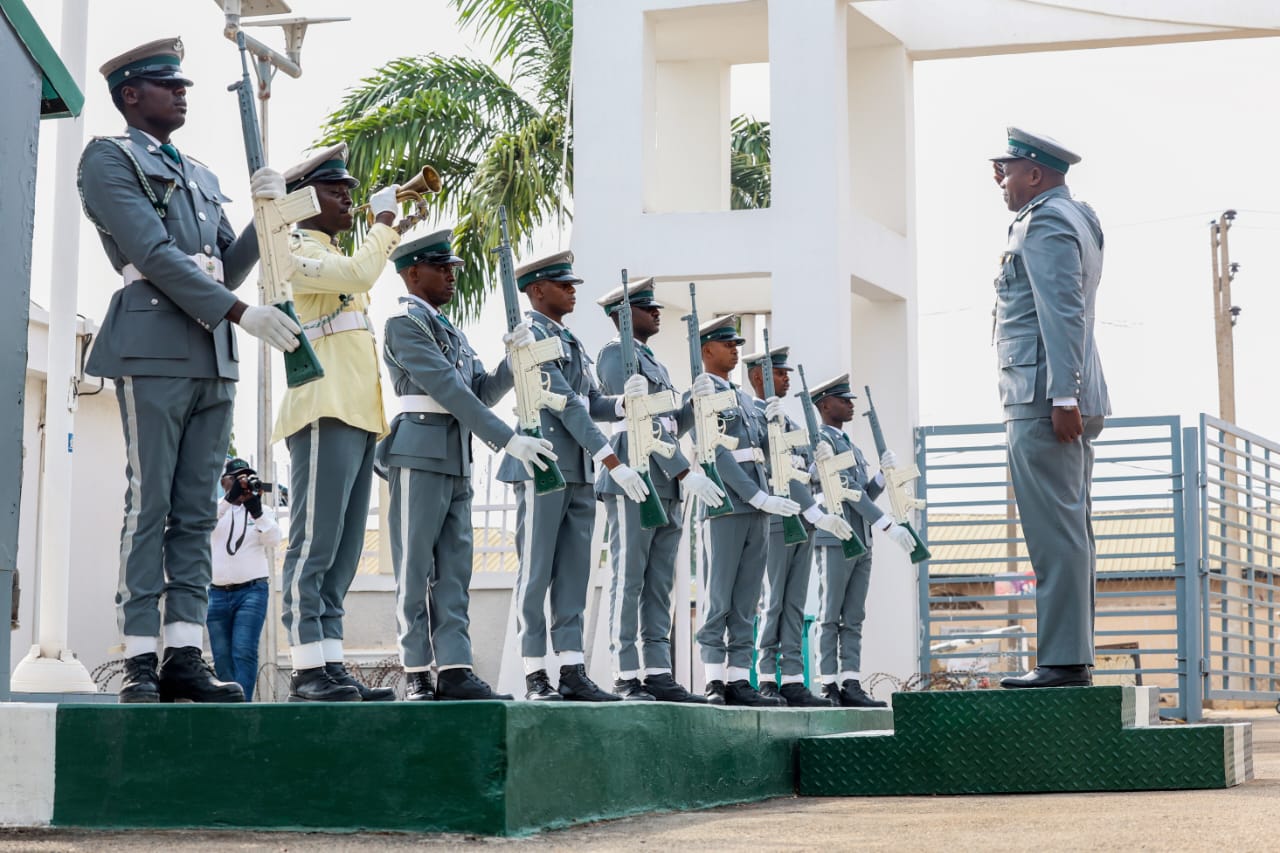
The Comptroller-General of the Nigeria Customs Service, Bashir Adewale Adeniyi MFR, has unveiled plans to provide shelters for Customs officers and men. 

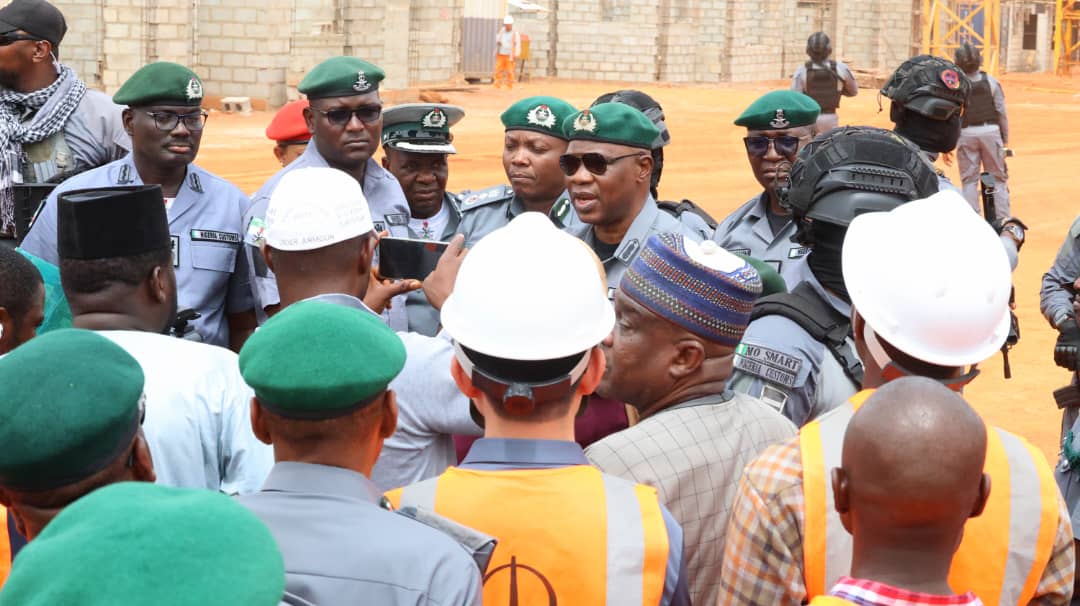
Speaking at the flag-off ceremony of the NCS housing scheme in Kaduna on Thursday, CGC Adeniyi emphasised the significance of the initiative, stating, “This ceremony is not the last episode of what we have planned. There are projects similar to this in Kano, Asaba, Yola, Abuja, Enugu, and Uyo ready for flag-off.” 

Highlighting the service’s commitment to addressing the housing needs of its personnel, CGC Adeniyi recalled a similar project launched in Ibadan in December 2023 aimed at serving officers and men of the NCS.

He stated the importance of providing suitable housing options, especially for retired personnel. 

The CGC indicated that the initiative aligns with President Tinubu’s vision of providing affordable housing to Nigerians and commended Governor Uba Sani of Kaduna State for his support for the success of the exercise. 

Addressing officers interested in the housing scheme, CGC Adeniyi urged them to remain steadfast, announcing plans for the service to collaborate with Cooperative Mortgage Bank to streamline the payment process. 

George Anih, Portfolio and Assets Manager of Family Homes, reiterated his firm’s commitment to providing affordable housing solutions, pledging to partner with the Nigeria Customs Service to deliver 5000 houses for its officers and men. 

Mr. Musa Abubakar, Managing Director of Cooperative Mortgage Bank, affirmed his dedication to ensuring the timely completion of the housing project, assuring the Comptroller-General of Customs of his bank’s support. 

The NCS housing scheme represents a significant step towards enhancing the welfare and livelihoods of customs personnel, reflecting the service’s dedication to serving its workforce and contributing to national development.

Nigeria Customs Service offers 90-day window to regularise vehicle import duties 

By Sabiu Abdullahi 

The Nigeria Customs Service (NCS) has announced a new initiative aimed at improving compliance and streamlining import processes for vehicles.

For a limited time, vehicle owners will have a 90-day window to regularise their import duties. 

This program applies to vehicles that have not been seized or condemned by customs officials.

Owners of such vehicles can apply to Zonal Coordinators to rectify their import duties. 

To participate in this initiative, vehicle owners will need to submit all necessary documents along with their application.

Additionally, a 25% penalty will be applied on top of the standard import duty. 

This move by the NCS is seen as a positive step towards improving compliance and generating revenue for the country.

It also provides an opportunity for vehicle owners to rectify their import status and avoid potential penalties in the future. 

The 90-day window provides a limited window for vehicle owners to take advantage of this program.

Those who wish to regularise their import duties are encouraged to contact their nearest NCS Zonal Coordinator for more information and to initiate the application process.

Nigeria Customs Service initiates 2-day ICT/modernization retreat for management team

By Sabiu Abdullahi 

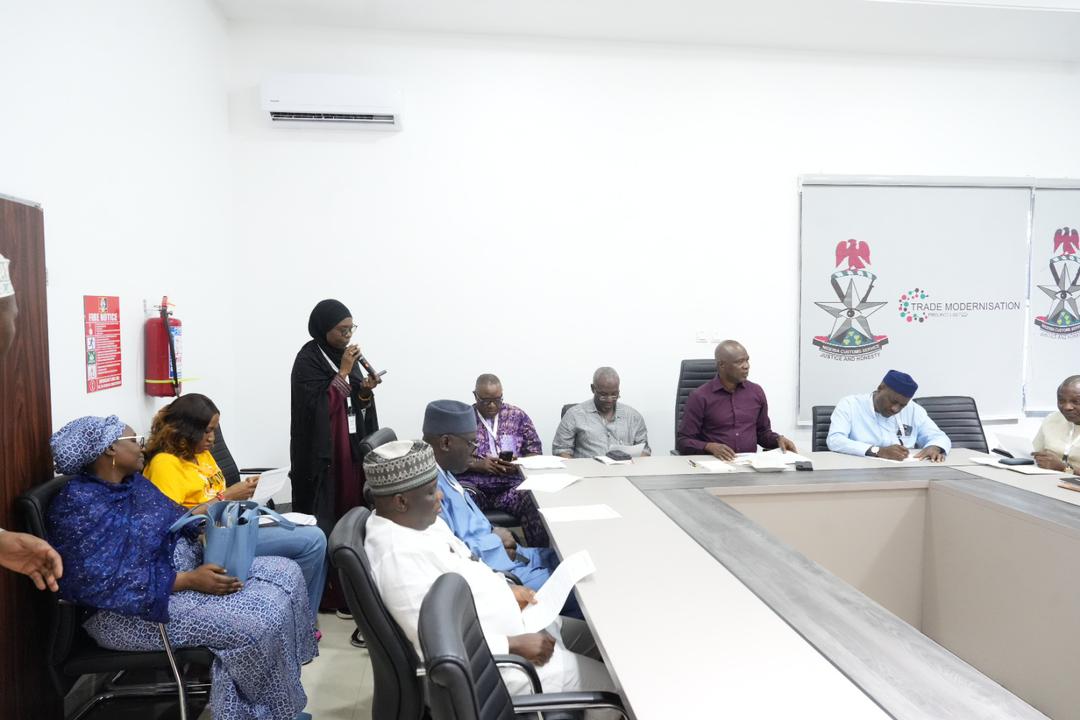
The Nigeria Customs Service (NCS) commenced a 2-day ICT—Modernization Management Retreat in Abuja, spearheaded by the Comptroller-General of Customs (CGC), Bashir Adewale Adeniyi. The event, which began on Friday, March 1, 2024, marks a significant milestone in the service’s journey towards digital transformation. 

In his address to attendees, CGC Bashir Adewale stated the imperative of embracing technology to enhance customs operations.

He stressed the need for collaboration with stakeholders to ensure the seamless execution of the modernization project, citing the demand for efficiency and transparency from stakeholders. CGC Adeniyi urged his Management Team, particularly in ICT, to lead the digitalization efforts and utilize internal resources to expedite the implementation of the electronic cargo tracking system.

He noted the importance of modernizing every aspect of the Customs Enforcement Ecosystem to fortify operations. Alhaji Saleh Ahmadu, Chairman of Trade Modernization Project Limited, commended the CGC’s commitment to modernization, recognising the pivotal role of trade in national development.

He expressed optimism that the initiative would revolutionise NCS operations, facilitating trade across Nigeria and the African continent. 

Assistant Comptroller-General of Customs in charge of ICT/Modernization, ACG Kikelomo Adeola, lauded the CGC’s dedication to the modernization project, emphasising its significance in reshaping and digitising NCS activities. She welcomed participants to the retreat.

NCS leverages technological advancements to improve trade facilitation

By Sabiu Abdullahi 

The Comptroller-General of Customs (CGC), Bashir Adewale Adeniyi MFR, has convened a crucial steering committee meeting aimed at consolidating the strides made in the Nigeria Customs Service (NCS) Trade Modernization Project (TMP), focused on enhancing trade facilitation through technological innovations. 

Held behind closed doors at the Customs Corporate Headquarters in Abuja on Thursday, February 15, 2024, the meeting brought together members of the TMP Steering Committee, underscoring the strategic importance attached to advancing digital solutions within the NCS. 

CGC Adeniyi unveiled the overarching objectives of the Trade Modernization Project, emphasising its pivotal role in driving end-to-end automation of customs processes and procedures.

He delineated key components of the project, including the Unified Customs Management System, Trade Portal, Cargo Release System, and Automation Services such as Big Data & AI Integration and Document Management System. 

“This project signifies a milestone in our journey towards digital transformation, heralding a new era of transparency, efficiency, and effectiveness in customs operations,” remarked the CGC, highlighting the imperative of adapting to evolving market dynamics and unlocking revenue streams through digitization. 

Addressing the TMP Steering Committee, CGC Adeniyi underscored the project’s long-term vision, spanning twenty years and encompassing three distinct phases aimed at enhancing core services, implementing automation solutions, and facilitating seamless transition and handback processes. 

“We are poised to tackle prevailing challenges, make informed decisions, and chart a trajectory of progress for the service,” affirmed the CGC, expressing optimism regarding the committee’s capacity to navigate complexities and drive impactful outcomes. 

Echoing the sentiment of unwavering support, Saleh Ahmadu, Chairman of the Trade Modernization Project Limited, reaffirmed his team’s commitment to bolstering the NCS’s revenue generation efforts.

Ahmadu stated the development of software solutions geared towards integrating revenue collection systems, thereby advancing the NCS’s ambitious revenue target of N6 trillion for 2024. 

“As lifelong partners to the Nigeria Customs Service, we remain steadfast in our commitment to revolutionizing trade facilitation in Nigeria,” Ahmadu asserted, underscoring the proactive approach adopted by the steering committee in driving tangible progress.

Inflation: Cement prices soar to about ₦15k in Abuja

By Sabiu Abdullahi

The cost of cement in Abuja, the Federal Capital Territory, has seen a significant spike, with prices now ranging between N10,000 and N15,000 for a 50-kg bag.

A survey, conducted in various areas, including Gwarimpa, Area 10, Kubwa, Lugbe, and Dawaki, revealed that Dangote cement is priced at N10,000 per bag, while BUA cement is selling for N15,000.

Yinka Adebayo, a retailer in Gwarimpa, expressed dismay over the rapid increase in prices, highlighting that just last month, he sold a bag of cement for N6,000.

“We sell Dangote cement for N10,000 per bag, and the BUA is N15,000. Unfortunately, it may surprise you that I sold the same bag of cement for N5,500 to N6000 last month,” he stated.

Similarly, Rukiyat Abdullahi, a retailer in Kubwa, echoed similar sentiments, stating that Dangote cement is now priced at N10,200, while BUA costs N16,000 per bag.

Retailers in Lugbe confirmed the escalating prices, with Dangote and BUA cement being sold at N10,000 and N15,000, respectively.

The surge in cement prices in Abuja mirrors the trend observed in other parts of the country, reflecting challenges such as scarcity and increased production costs.

FG seals Sahad Store for alleged lack of price transparency

By Sabiu Abdullahi

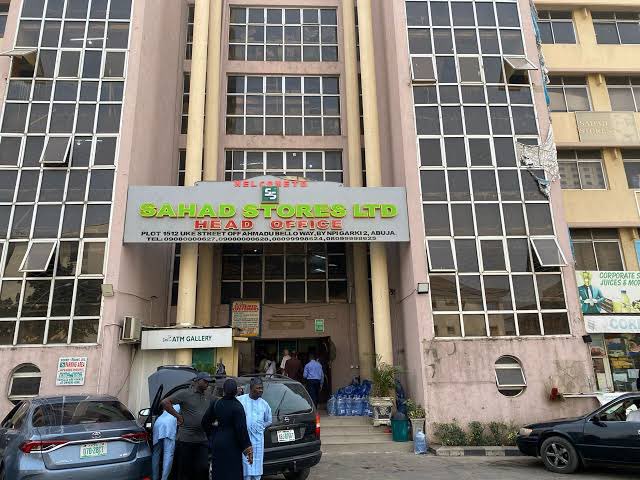
The Federal Competition and Consumer Protection Commission (FCCPC) took decisive action on Friday by sealing Sahad Store, a prominent supermarket located in the Garki area of Abuja.

The commission cited the store’s lack of transparency in price fixing as the reason for the closure. 

This development comes just a day after President Bola Tinubu announced plans to address factors contributing to the ongoing food crisis in Nigeria.

Following a meeting with state governors, security agency heads, and ministers at the Presidential Villa in Abuja, Minister of Information and National Orientation, Mohammed Idris, revealed that a committee would be established to combat product hoarding. 

According to Idris, some traders have been accused of hoarding food products, exacerbating the challenges faced by Nigerians.

He emphasised the need to ensure that essential commodities are readily available to people at fair prices. 

The enforcement team from FCCPC, led by Acting Executive Vice Chairman Adamu Ahmed Abdullahi, found Sahad Store guilty of misleading pricing and lack of transparency during a preliminary investigation.

Abdullahi stated that the store would remain sealed until further investigations are completed. 

The commission invoked Section 115(3) of the law, which prohibits charging consumers prices higher than those displayed.

Additionally, Section 155 outlines severe penalties for corporate entities found in violation, including fines and potential imprisonment for directors. 

Despite being summoned to defend their actions, Sahad Store’s management failed to appear, only sending a lawyer who was not familiar with the case. Abdullahi emphasised that compliance with the law is necessary for the store’s reopening. 

The closure of Sahad Store underscores the government’s commitment to ensuring fair pricing practices and protecting consumers from exploitation amidst the current economic challenges facing Nigeria.

Customs boss presents 2024 budget

By Sabiu Abdullahi 

The Comptroller-General of the Customs, CGC Bashir Adewale Adeniyi MFR, presented the service’s 2024 budget on February 5, 2024, to the Nigeria Senate Committee on Customs at the National Assembly. 

The CG, while defending the 2024 budget of 706.43 billion naira, focused attention on consolidating carried-over projects, increasing staff welfare by improving and motivating officers’ performance, and integrating technologies into Customs processes. 

Regarding Officers’ welfare, CG Adeniyi mentioned that Officers will be encouraged in various ways to increase efficiency and improve their well-being.

He stated that this would be done through awards, promotions, and payment of allowances. 

Additionally, the Comptroller General pledges to surpass the revenue target of 5.079 trillion naira in 2024. According to him, the revenue target for 2024 is 27.75 percent higher than the target of 2023. 

Furthermore, the Comptroller-General outlined strategies to achieve the 2024 target, including implementing the National Single Window championed by the Federal Ministry of Finance.

He also harps on strategies to agonize and standardize Customs processes, port decongestion, collaboration with other agencies for efficiency and competitiveness, anti-smuggling operations, integrating ICT into operations, investing in capacity building, and stakeholder engagement, among others. 

The CG also noted supporting local production and taking food security seriously.

He stated, “We intend to grant waivers to vehicle owners to pay duties within a specific time to avoid sanctions and to regularize the importation of vehicles through payment of duties.” 

He added, “The service plans to recruit 1,600 personnel in 2024. The low figure is due to the small vacancies we have available. These vacancies are primarily for junior staff who will carry out Customs operations and guard duties. In subsequent years, more recruitment exercises will be carried out.” 

CG Bashir, however, noted that the service had a shortfall of 12.62 percent in its 2023 revenue target, citing concessions in Section 99 of the Common External Tariff (CET), import duty exemption certificates, cash crunch, general elections, and other factors affecting revenue generation negatively.

He assured a positive outcome in 2024.

Mr. President, should we count on you?

By Mahmud Dambazau

With a new year, we were anxiously anticipating a renewed hope. Unfortunately, no. In this devastating economic dilemma, we have been overwhelmed with cries to crowd-fund to secure the release of various victims from kidnappers. 

The latest trending across social media, most especially on X (formally Twitter), was the case of Najeebah and her sisters, who were kidnapped alongside their father. He was later released to go and get 60 million naira for the release of his six daughters! They subsequently killed one of the sisters when the amount was not realised at the expected time to serve as a warning and even increased the amount to 65 million naira initially and then to 100 million naira. 

The kidnappers had the audacity to return her dead body because they were confident that they would escape scot-free,and unfortunately, they were not disappointed. I was delighted to read the news of their release this morning after the ransom of 100 million naira was paid.

There is yet another case seeking public support where 14 children were kidnapped along the Abuja – Kaduna highway on 6th January. One miss Praise God; a student from the Nasarawa State University was also kidnapped a few days ago. Ajeni Mary Olamide and her two friends, Mary and Miriam, from the same university, all 400-level students of Mass Communication, were also kidnapped on their way to Abia state for a wedding, with 15 million nairas requested before their release. 

I just came across another appeal on X where a Navy Officer was also alleged to have been kidnapped with 100 million requested by his kidnappers to secure his release. These are just a few of the numerous in the public domain. Fresh in my memory are the female students from the Federal University Gusau, approaching four months now in captivity. 

The Abuja–Kaduna highway was, at a time, the most dangerous road with incessant incidences of kidnappings. Still, we were all witnesses to its near absolute contentment when the runway of Abuja airport was closed for repairs, and Kaduna airport was used instead. There was constant and consistent patrol, which drastically tackled the issue then. The scourge has now returned when the elites no longer needed that road. 

Within this week, there has been a significant improvement by the security operatives, with several arrests made after several cries across all mediums. Why do we always have to be reactive rather than proactive? In many instances, the capacities and capabilities of our security are top-notch, but only when pressures have been mounted are such improvements seen. Why is it so difficult to maintain progress made?

The president has been commended when he recently suspended some officials of his government who were accused of corruption so that their investigation will go unhindered. That was a good move, undoubtedly sending other officials a strong message. Why can’t that be applied to security heads when results are negative? If corruption has repercussions, doesn’t non-performance have more? Besides, even the perpetrators may not have committed such crimes if all officials had done their duties accordingly. 

Security of lives and properties is the most essential duty of government. Everything else comes second. The fight must be sustained, the perpetrators apprehended should be tried and punished accordingly, and the security operatives should be given the modern gadgets required to confront such criminals as soon as possible. There should be increased collaboration between security agencies, and capital punishment should be introduced for crimes such as this and those responsible; the teams, heads of the security responsible, and ministers should be fired and replaced with those who can because security is not to be joked with! Can we count on you, Mr. President? 

Customs Senior Course 10, Junior 18 inaugurated at NCCSC Gwagwalada

By Sabiu Abdullahi 

The Nigeria Customs Command and Staff College (NCCSC) in Gwagwalada witnessed a significant event on January 23, 2024, as the Comptroller-General of Customs (CGC), Bashir Adewale Adeniyi MFR, inaugurated the Senior Course 10 and Junior Course 18.

This inauguration marks a crucial step in shaping the career trajectories of the participating officers. 

Represented by the Deputy Comptroller-General in charge of Training and Doctrine Command (TRADOC), Saidu Galadima, CGC Adeniyi encouraged the participants to seize the golden opportunity to enrich their careers within the Customs service.

He highlighted ongoing discussions with prestigious Nigerian universities for potential postgraduate degrees upon course completion, underscoring the importance of generating innovative ideas for the service’s transformation. 

“I encourage you to make positive impacts and view your facilitators as role models, aspiring to become like them in the future,” remarked the CG.

He further urged trainers to provide attentive support to participants in their studies and welfare matters, noting the importance of acquiring knowledge for propelling the service forward. 

DCG Saidu Galadima expressed confidence in the participants, assuring them of the CGC’s commitment to supporting any officer eager to enhance their capacity.

He stated that the participants would undoubtedly make the service proud as drivers of positive transformation. 

The Commandant of the Nigeria Customs Command and Staff College, Gwagwalada, Assistant Comptroller-General Kingsley Emeka, highlighted the critical role of the course in enabling participants to progress in their noble careers.

Emeka urged the officers to enhance their confidence and competence in areas such as revenue generation, trade facilitation, and national security. 

“The course is designed to develop your Command, leadership, and communication skills to effectively carry out your work in the service. These skills are essential to address challenges confronting modern Customs operations,” explained Emeka. 

He noted the College’s zero-tolerance policy for ineffectiveness and academic dishonesty, stating, “Only students found worthy in character, discipline, and learning are allowed to graduate, as the College strictly forbids academic dishonesty such as exam malpractice, misrepresentation of facts, and plagiarism.”

Escalating drug prices in Nigeria: Post-subsidy removal

By Abdullahi D. Hassan

Nigeria is described as the most populous black nation in the world, with over 200 million inhabitants, Africa’s biggest economy, and endowed with variant mineral deposits to improve the living standards of its citizens. Yet, the country is bedevilled by gross corruption. Poor governance, ethnic tension, and abject poverty threaten integrity and sovereignty.

Even though, in the past, Nigeria witnessed serial military rulers, The nation transitioned to democracy in 1999. Since then, Nigeria’s leadership has emerged; leaders have been elected from different platforms and regions. Thus, the problems lingered; most elections were marred by irregularities, political interference, and power tussles from one inch to the next.

The political parties adopt the concept of rotating power between the north and south to accommodate the plural ethno-religious groups in the country. After the two tenures of Muhammadu Buhari. Bola Tinubu was nominated by the All Progressive Congress (APC). Amidst serials of allegations labelled against him by the opposition to hinder his andidacy, The bulk of Nigerians were enthusiastic about the level of experiences and transformation built in Lagos from 1999 to 2032.

On May 29, a new Nigeria’s president, Bola, was sworn in. In his inauguration speech, he made a striking remark on Nigeria, mentioning, ‘Subsidy has gone, the controversial fuel subsidy scheme. Four decades of financial assistance were institutionalised in the 1970s by the government to minimise the excessive cost of fuel (Premium Motor Spirit) to consumers and affordability to average citizens. Within a week’s time, the prices of basic household items, transport fares, and electricity began to rise at a high pace. Thus, fuel subsidy is the direct government intervention for the common man that benefits directly, without an odd process. Subsequently, the price increment affects the pharmaceutical industry acutely.

In recent months, patients from economically deprived backgrounds with terminal illnesses and diseases have been on recommended drugs and life-support medications. They are exposed to the brunt of fuel subsidy removal principles. Patients with asthma, diabetes, cancer, hypertension, and sickle cell diseases find it hard to afford medications at exorbitant prices. Due to financial hardship, inflation, and 1000 per cent hikes in drug prices.

GlaxoSmithKline (GSK), a British pharmaceutical and biotechnological company, withdraws from Nigeria. After 51 years of operation, The pharmaceutical firm is known for producing effective drugs, anti-biotics, anti-asthma, anti-malaria, allergy relief, painkillers, pain cream, and nasal decongestion. According to the report by the International Centre for Investigative Reporting (ICIR), GlaxoSmithKline Consumer Nigeria faced a setback in sales of N7.75 billion ($9.83 million) from N14.8 billion last year. GlaxoSmithKline’s existence leads to a drug hike, patients being unable to have medication and an increase in fake drugs. Similarly, GSK faces challenges from the high cost of importation of active pharmaceutical ingredients (APIs), a lack of steady power supply, and the depreciation of the naira against the US dollar.

According to the National Bureau of Statistics (NBS), the value of pharmaceutical products imported into Nigeria rose by 68 per cent to N81.8 billion ($99.1 million) between July and September 2023. The reports revealed that most of the drugs were imported from China, India, the United States, France, and Germany.

From the price survey across the country, the drugs were selling: asthma inhalers from N4,000 ($4.86) to N12,000 ($14.57), hypertension drugs from N10,000 ($12.14) to N20,000 ($24.28), augmentin tablets from N6, 000 ($7.28) to N24, 000 ($29.14), and Glucophage from N3, 800 ($4.61) to N6, 200 ($7.53). The prices vary between cities and regions.

David Uja, 63, a retired army officer frail from prostate cancer, undergoes chemotherapy for two sessions. Each cost him $100. She said, “For almost two months. All the prescribed drugs I used have already expired. The little pension received from the government is not enough to buy medicines at a high price. The economy is bad for us; people battle deadly sickness.”

“After I complained to my doctor, who relocated to the UK, Thanks to him, he sent me an Orgovyx tablet via courier, an expensive drug over $400, said Mr David.

Dataphyte reports that in 2021, only three per cent of the Nigerian population will have health insurance. Despite the guidelines of the National Health Insurance Scheme (NHIS), it is mandatory for Nigeria to benefit from the insurance. Public servants have smooth access to it. An employer will contribute 10% of the monthly basic salary, while the employee contributes 5%. The insurance covers the contributor, spouse, and four biological children less than 18 years old. The current monthly minimum wage is $44.45. Technical non-government workers are denied access to health facilities and medication.

In October, the Central Bank of Nigeria lifted the ban on 43 items after 8 years to allow access to foreign exchange and import-listed goods in the country. Never, pharmaceuticals and medical essentials are excluded from the list.

Interestingly, oil is the mainstay of Nigeria’s economy. Even so, the country has remained poor, with its citizens living below the poverty line of $1 per day. Nigeria has been nearly six months without a fuel subsidy. The majority of Nigerians are unable to afford standard health service delivery. These led to fast and quick deaths among the vulnerable. Others reside in rural areas that lack the means to buy drugs at a high rate. Alternative to traditional medicines.

Therefore, deciding on traditional medicine, given its low cost of purchase, Such medicine lacks a scientific approach, and most traditional doctors determine the nature of an ailment by mere observation. Outwardly of any examination and sometimes depend on spiritual healings in order to detect the course of sickness. These have made life more difficult in a nation with a life expectancy of 53.87 years.

Abdullahi D. Hassan is a freelance journalist and writer from Abuja, Nigeria. His journalistic and literary pieces were published in Daily Trust, The Guardian, Triumph, Politics Today, The Daily Reality, and Kalahari Review.