ABU Zaria

ABU lecturer wins ASR prize for Best Africa-Based Doctoral Dissertation

By Ahmad Deedat Zakari

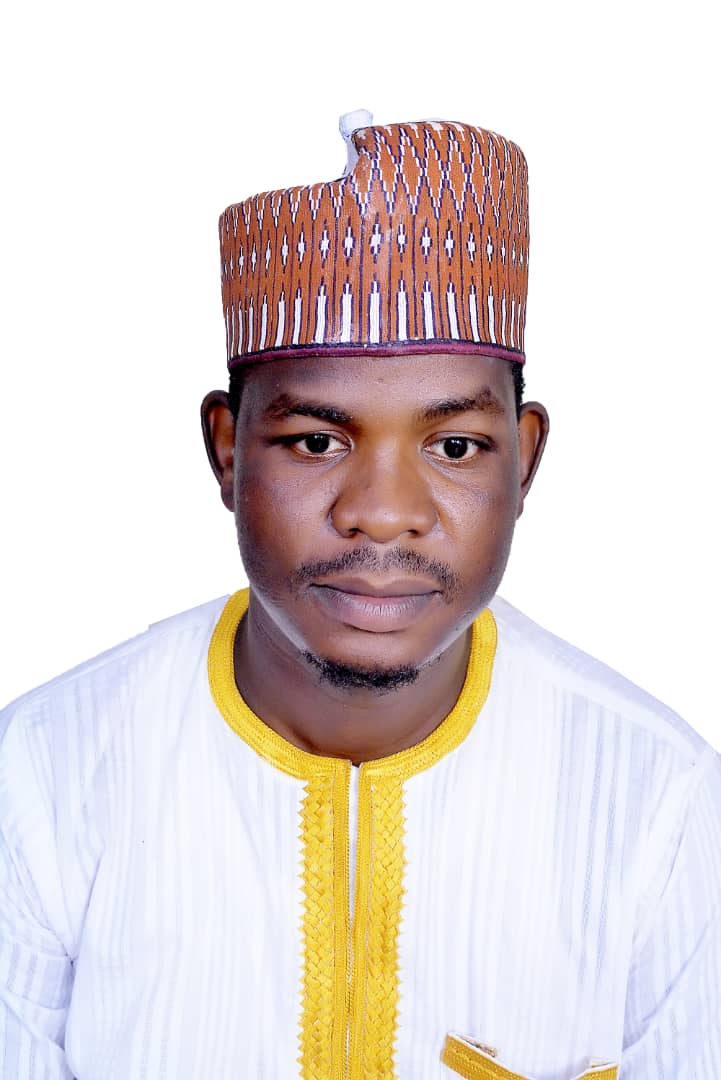
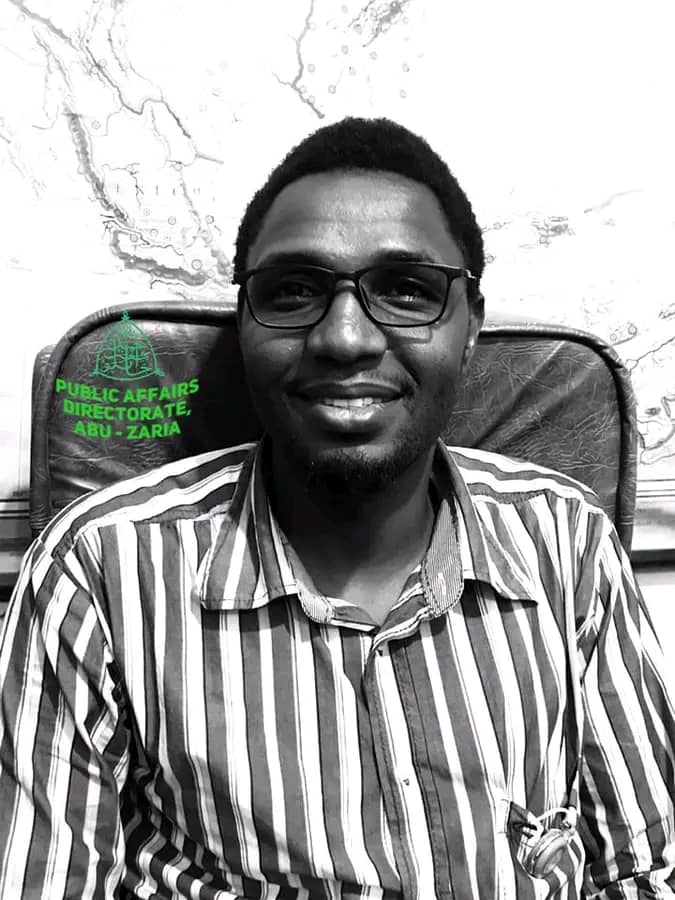
A lecturer with Ahmadu Bello University, Zaria, Dr Nadir A. Nasidi, has been declared winner of the African Studies Review prize for ‘Best Africa-Based Dissertation’

The Public Affairs Directorate of the institution announced Dr Nasidi’s success in a statement on Thursday, November 24, 2022.

According to the statement, “Dr Nadir A Nasidi’s dissertation ‘ A Contextual Analysis of Sufi Saint Paintings in Kano Nigeria’ has won the 2022 African Studies Review (ASR) Prize for the ‘Best Africa-Based Doctoral Dissertation”.

The statement said Dr Nasidi will also be given a certificate recognizing the award and a $500 e-certificate from Cambridge University Press.

The Vice-Chancellor of ABU, Prof. Kabiru Bala, has congratulated him saying that the “University always takes pride to see its students and staff excel in a given task.”

Dr Nasidi is a lecturer at the History Department of Ahmadu Bello University, Zaria and had defended the award-winning dissertation in 2021 at the same institution.

Abdalla Uba Adamu has double professorships! Seriously? (I)

By Prof. Abdalla Uba Adamu

Pilot: The journey, the chrysalis

Right, it is time to address this issue. I am blessed and honoured to have variously been acknowledged and hailed as a ‘double professor’, ‘dual professor’, the only one from northern Nigeria, etc. How’s that even possible?

The first professorship was in 1997 (Science Education and Comparative Higher Education, to give it its full title), and the second one was in 2012 (Media and Cultural Communication). Two totally different disciplines. I delivered an inaugural lecture for each in 2004 and 2014, respectively. Further, I am both a Member of the Nigerian Academy of Education (MNAE) and a Member of the Nigerian Academy of Letters (MNAL) – a cross-over that is quite rare in Nigeria. A close friend says I am nuts to have two professorships. It’s okay; we used to call him nuts, too, when we were kids. I admit, though, it does take a bit of nuttiness. However, the whole ‘double professor’ thing came about by happenstance, thanks to the innovative, courageous Prof. Abubakar Adamu Rasheed, Vice-Chancellor, Bayero University Kano from 2010 to 2015, now Executive Secretary, National Universities Commission from 2016. Here is the whole backstory to the opera in one season of three episodes!

S01EP01: Liftoff

As a senior high school student, I had a target: to become a professor by 40. Given that I was born in 1956, that gave me up to 1996 to do my gig, exit stage left and hopefully seek new directions. Right from elementary school, I had wanted to work in a university after a visit to the house of then Malam Sani Zahradeen in 1966 on the old campus of Bayero University. Awed by the splendour of the house (and quite frankly, the wonderful breakfast I was offered), I decided right there and then the University will be my abode. I was ten at the time.

After going through the grind of schooling and finishing at Ahmadu Bello University, a degree in Science Education (Biology/Physiology) saw me getting employed as a Graduate Assistant in July 1980 at Bayero University Kano. The clock had started ticking – I had seventeen years to contact. I felt like I was in a cryogenic sleep capsule bound for a planet in the Betelgeuse star system, a mere 500 light-years from Earth. A confession, though. Education was not my preferred choice of Faculty at employment. It was the Faculty of Science. Made attractive by a blind ambition to become a research scientist – not a teacher. Plus, many top-notch teachers from the Department of Biological Sciences, ABU, my alma mater, had migrated to BUK during the period. I wanted to continue being their students because of their brilliance (fondly remembered, included Dr Shotter). But as fate would have it, I was employed in the Department of Education.

I did everything necessary to progress through the system, getting a DPhil at Sussex (courtesy of the Commonwealth Scholarship Commission) and a Fulbright Senior Scholar residency at the University of California, Berkely, US. I also became a Resident Fellow at the Rockefeller Foundation’s Bellagio Center near Lake Como in Italy. Beautiful view, wonderful neighbourhood, made only grisly by the fact that the Italian dictator Benito Mussolini (1925 to 1945) and his wife (or was it mistress?) Claretta Petacci were executed at Dongo, near the Lake, in 1945. A gruesome tourist attraction whose grimness does not take away the timeless beauty of the area.

Finally, after submitting all the necessary papers for assessment, I was conferred first Associate Professor of Science Education and Comparative Higher Education in 1994, and with more publications, full tenured Professor of Science Education in 1997. I was 41. Missed the mark by a year. Due to the weird BUK politics at the time, the professorship was only announced in 2001 but suitably backdated to its proper date, October 1997. I immediately wanted to give my inaugural lecture, but I was asked ‘join the line’ of others who were to present – all six of them. Eventually, I was asked to come and give mine after three years. I did so on April 24, 2004. It was the seventh in the university. I had wanted it on my birthday, but considering that April 25, 2004, was a Sunday, I settled for Saturday.

When I reached the point of being promoted and awaiting results back in 1996, I found myself interrogating the rest of my life. At that time, university lecturers retire at the age of 65. So that meant I had about 25 years to retire in 2021 – a futuristic date then. I had also crossed all the t’s and dotted all the i’s in Education, at least as far as I could see. I found myself deeply involved in alphabet soup agencies – you know, USAID, DFID, UNICEF, NPEC, UBEC, WB, etc., mostly talking loudly and saying nothing. I simply can’t see myself day in and day out enmeshed in this process of eventually recommending things to the government through reports nobody bothered to read. If I didn’t find something to do, there was every chance of me becoming truly nuts.

Prof. Abdalla Uba Adamu wrote from the Department of Information and Media Studies, Bayero University Kano, Nigeria. He is, among many other things, the former Vice-Chancellor of the National Open University of Nigeria (NOUN). He can be reached via auadamu@yahoo.com.

Narrating our pain as Law School’s new session begins

By Abdul Mutallib Muktar

It is with excruciating pain that one starts writing something of this nature. It is akin to the pain that hits an inmate upon the renewal of his terms of years in prison. Studying in a Nigerian public university comes with a series of frustrating issues. But for necessity, I seriously doubt if any student would wish to spend more than a year in these problems-wracked public universities.

ASUU has been on strike for about 200 days, and nothing seemed to be wrong until this week when loud voices started roaring in protest of the lingering strike. When ASUU embarked on strike in 2020, Nigerian students spent eight months at home, which sadly prolonged their stay in the university by one year. As ASUU called off the strike that year, students thought things had once again become normal because of the temporary stability of academic activities. On 14 February 2022, the strike news hit our ears while we were receiving lectures in our respective classes. The shock of that news is still in us!

The hope of the final year Law student in public university to make it to the Nigerian Law School this year reached its crescendo before the ASUU strike began. Some of us had already started writing our final year project, while others had even finished. One can imagine the pain of staying for additional two years in the university with no certainty of even rounding up in 2023. It is even more painful when we look at our school ID cards and realise they bear “2021”, our graduation year—seven years for a five-year programme.

As the new session of the Nigerian Law School begins in October this year, Law students in public universities have nothing to do except look at the graduates of private universities and foreign institutions marching into the Nigerian school, most of whom are the children of our leaders. Whether ASUU calls off the strike this month or even backdates it to June, public university students cannot make it to the Nigerian Law School. The year is a waste for us!

What if a miracle would make the public university students make it to the Nigerian Law School this year? And how can this miracle occur? The answer is multifaceted.

Firstly, the Federal Government must be unprecedentedly serious in negotiating with ASUU, showcasing strong sympathy for the condition of service of lecturers and utmost concern for the future of education in Nigeria.

Secondly, the Nigerian Law School’s management should extend its calendar to accommodate candidates from public universities.

Thirdly, after the strike is called off, the management of public universities should rushingly round up the session with some level of leniency to the students.

Lastly, the students must be relentlessly prayerful for the occurrence of this miracle. May these challenges become some form of blessing in disguise.

Abdul Mutallib Muktar is a law student at ABU, Zaria, and can be reached via abdulmutallib.muktar@gmail.com.

Maikyau wins NBA presidential election

By Ahmad Deedat Zakari

Yakubu Chonoko Maikyau, SAN, has emerged winner in the presidential election of the Nigerian Bar Association, NBA.

The Electoral Committee of the Nigerian Bar Association, ECNBA, conducted an electronic election on Saturday, June 16, 2022, to elect the association’s president and 10 other national executives. 

Maikyau, SAN, polled 22342 in the election to defeat his closest rival, JK Gadzama SAN, who polled 10842.

Maikyau was born on February 6, 1965. He obtained a Bachelor of Laws (LLB) Degree from the Ahmadu Bello University, Zaria, Kaduna State, in 1989, then attended the Nigerian Law School, Lagos Campus and was called to the Nigerian Bar on December 12, 1990.

Maikyau would be succeeding Olumide AKpata as the 36th president of the NBA.

ASUU Strike: ABU student picks APC nomination form

By Ahmad Deedat Zakari

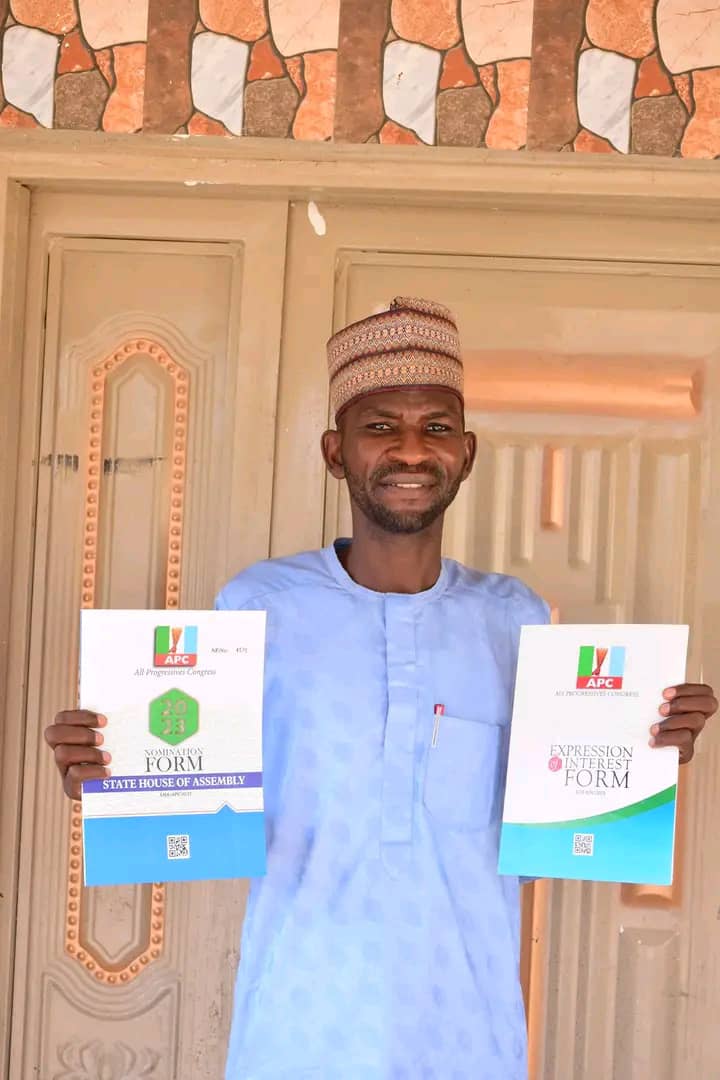
Bashir Bakari, a final year student of the Faculty of Law, Ahmadu Bello University, Zaria, has picked the ruling All Progressives Congress’s (APC) expression of interest and nomination form.

Bakari picked the form on Friday, May 6 2022, to vie for the position of a member in the Taraba’s State House of Assembly.

In an interview with The Daily Reality, Bakari disclosed that his decision to contest is not unconnected with the ASUU strike. He explained that the strike had given him enough free time to campaign and participate actively in partisan politics. 

“We are at home, and there is time for campaign and active participation. If not for the strike, I would have been thinking about exams, projects and the Law School. But the strike avails an opportunity,” he said.

When asked about his chances of getting the APC’s ticket, he said any victory was from Allah.  

Bakari wishes to defeat three other aspirants in a primary election on May 27 to clinch the APC’s ticket.

The liar in the Punch Newspapers

By Abdullahi O Haruna Haruspice

I have never seen a liar like the guy who said his life was under threat for renouncing his scholarship as a PG student of Ahmadu Bello University (ABU) Zaria over the killing of Deborah Samuel.

He allegedly feared what befell Deborah in Sokoto may happen to him in Zaria if care was not taken. He added that he faced the fiercest discrimination in Zaria, particularly in the Department of Political Science, where he studied comparative politics. Moreover, he was allegedly forced to dress like northerners, say Assalamu Alaikum and his rented apartment the off-campus always targeted!

The same Zaria we graduated from, oh! the same Zaria where you are likely to grasp more Igbo words than even the Hausa language? Political science where you have representatives of all tribes as lecturers and students! I have never seen a pugnacious liar like that dude.

People like this guy should be avoided at all costs. They are the triggers of the ethnic faultlines we have. They brew discord to sustain the mutual distrust. He is as toxic and barbaric as the mob that lynched Deborah in Sokoto, the mob that killed the four souls in Lekki and the so-called unknown gunmen that decapitated the lawmaker yesterday in Anambra State.

Ahmadu Bello University Zaria admission is the most sought after in Nigeria. People travel from far to study at ABU. All the departmental student heads in the social sciences faculty were Igbo, Yoruba, Idoma and all Christians during my time. You have all tribes as students. Zaria was a pilot ground and still a model of national cohesion. You have giant mosques and churches in the school with no one infringing on another person’s right.

Whoever comes to the media to paint a grotesque picture of ABU Zaria as a reflection of bigotry is nothing but a merchant of lies and fabricated mischief. People like that guy that a whole Punch newspaper is giving full page to spew his diatribe should be asked to shut up.

Stop the Islamophobia, stop your ethnocentrism and be human. There is more gain in being human than a purveyor of hate and bigotry.

Abdullahi O Haruna Haruspice wrote from Abuja. He can be reached via haruspicee@yahoo.com.

PWI at 6: A Northern Nigerian Literary Voyage

By Shehu Mubarak Sulaiman

“I believe that the best learning process of any kind of craft is to look at the works of others” – Wole Soyinka

About a month ago, I woke up to a message on my Facebook Messenger. I was perplexed as to why a message would come in that early. It was dawn, and the skies had not brightened significantly enough for the layman’s morning to be declared.

The sender was someone who had once informed me of his interest in poetry. He had slid into my inbox a couple of months ago, and had registered his love for my writings, after which he requested that I mentored him.

Without wasting much time, I had introduced him to Poetic Wednesdays Initiative and urged him to follow-up on their activities. I had also introduced him to similar platforms, like the Poets in Nigeria Initiative Facebook Group.

 A week later, I sent him a flyer for a forthcoming workshop and asked him to register. The workshop was organized by Poetic Wednesdays Initiative, and was to be facilitated by top-notch poets: Umar Abubakar Sidi and Dr. Ismail Bala. To cut the long story short and hit the nail on the head, Abdul-Rahman Jafaru Wali, a medical student of Ahmadu Bello University, Zaria was the person in my inbox.

He had messaged me that early to inform me of his emergence as one of the ten winners of the recently-concluded “The Nigeria I See” poetry competition organized by MOP (Movement of the People). His feat had come just about a month after he had registered for a workshop organized by Poetic Wednesdays Initiative.

That is a practical portrayal of how much of a platform Poetic Wednesdays Initiative is, one does not come and leave empty-handed.

For three years now, I have been approached consistently by people slightly younger or even older than I am. Their solicitation has over the years lost every element of surprise. Whenever I receive a message from a stranger on Facebook, half of the time, it’s about poetry writing or writing pertaining to other genres of literature.

The question had always been the same from all of these people. They keep asking: “How can I learn poetry?” This is such a difficult question to answer, as there is a never-ending debate about whether poetry writing is an innate or a learnt skill.

Regardless, I refer back to Wole Soyinka’s quote about learning the craft of writing; how it relies heavily on imitation, and Poetic Wednesdays Initiative had always been my first recommendation for them.

First, if the advances are offline, I will ask them if they have a Facebook account. And if they answer in the affirmative, I’d urge them to like the page, and submit poems of any quality every Wednesday of the week. Over the years, I have lost count of people I had introduced to this platform.  Some of them have now grown to become a significant fraction of the finest writers that we have around.

The journey of these wonderful poets and wannabe poets reminds me of my own journey. I had started just like them, a newbie, and a sprouting seed.  In the concluding months of the year 2016, I had grown tired of talking about my dream of becoming a writer. The more I talked about it, the more I felt like a fraud, my impostor syndrome was becoming more and more intense that I had contemplated giving up writing altogether.

I was at the crossroads, one road led to an Eldorado of a life I had always made up in my head; the fantasies of what a celebrated writer’s life seems, and the other led to a path of giving up, a one-way route to despair.

Being a science student was more than enough deterrent already. I talked to a friend who had graduated from the university a year before me and who I believe had more life experience than I. He spoke of his friend called Salim Yunusa, who has founded this small literary platform that aims at nurturing young talents in literary-inclined endeavors.

I talked to Salim Yunusa and he introduced me to a platform called Poetic Wednesdays, that was before it became Poetic Wednesdays Initiative. It was the newly-founded platform of his. I had written a couple of poems before then, but I had posted none, they were all in my phone’s notepad, longing to be seen.

So, all I did was waited for that fateful Wednesday before making my entry. My poem was handpicked and afterwards posted on the page. I followed the poem up, and relished some of the praise-coated comments. That was my first official encounter with poem writing.

As time went by, submissions from me became more and more regular. I enjoyed every bit of it; the praise, the feeling of having written something someone else enjoyed reading. Amidst all that nursing school monotony, consistent memorization, and voracious reading to stay afloat, I found an escape.

I had started to look forward to every Wednesday, it felt refreshing reading through poems on the page, and sometimes using them as a blueprint to craft mine. I started to make friends online, Facebook transfigured from a place where I come to catch up on viral gossip, or post pictures, to a place where I have direct contact with intellectuals and like minds. My time online started to become more of an educative endeavor rather than a fun-seeking one.

Weeks passed by and I had started to play with different themes, I had become a favorite on the platform. People looked forward to every Wednesday, so they could catch a glimpse of my poem and savor all its flavors. I had copied styles of poets like Maryam Gatawa, Salim Yunusa, Sani Ammani, Nasiba Babale, and a host of others, before I had come to find my feet.

In 2018, there was a literary hangout somewhere in Ahmadu Bello University, Zaria organized by this selfless platform. We dined, and recited poems for the relish of fellow poets and literature lovers present. We had a swell time. In 2019, I rendered my masterpiece titled “I AM NORTH” at one of Poetic Wednesday Initiative’s get-together at Kongo Campus, Ahmadu Bello University, Zaria.

It is the reception it received that had led me to promoting it on different platforms. The video of the poem was played at the 2020 edition of the Nigerian Students Poetry Prize event that held in Lagos. The written form of the poem was published on Daily Trust Newspapers, Yasmin El-Rufai Foundation official website, and other notable platforms in Nigeria.

The creatively titled essay of Sa’id Sa’ad “Poetifying the North” is not a coincidence. I particularly love the witty coinage of the word ‘Poetifying’. Indeed, the North has been ‘Poetified’.   Today, in northern Nigeria, as opposed to the nearest past, there is a resurgence of literary activities and discussions like never before. There has been a fast-rising awareness of what literature stands for, and many have continued to embrace it.

Virtually all the states in northern Nigeria have one festival or the other, celebrating literature and further educating young minds on the importance of both literature in English as well as in other indigenous languages. This is not to say that the region had always been dormant in the realms of literature and arts, that won’t be fair to a region that has produced notable writers like Helon Habila, Abubakar Imam Kagara, Abuabakar Adam Ibrahim, Ahmed Maiwada, Ismail Bala, Aliyu Kamal, Victor Dugga, Maria Ajima, Zainab Alkali, Abubakar Gimba, and many others.

It is to say that the awareness about writing, reading, and other literary-inclined endeavors has been quite unprecedented in the last decade. Many young people have come to find it as interesting as any other thing young people enjoy. There are now more festivals, literary contests, literary magazines, literary organizations, school-based literary clubs and so on.

The younger generation had come to transform reading and writing from a tortuous exercise to something exceptionally pleasurable.

The perception towards literature has taken an entirely different dimension. If I am asked to pinpoint literary organizations in the north that have contributed immensely to this growth and literary resurgence, I will place Poetic Wednesdays Initiative amongst the first five on my list.

For the fact that it deals basically with young people and neophytes who may have or have not written anything before, it lays a solid foundation for those who develop cold feet when literary matters are being brought to the table.

This is quite hypothetical, but if one is to assemble ten young writers in northern Nigeria today, I am rest assured that two to three of them would attribute their literary indoctrination and growth from having to read, follow, or interact with poets and literature lovers like the likes of Salim Yunusa, Nasiba Babale, Aliyu Jalal, Mujahid Ameen Lilo, Abdulbasit Abubakar Adamu, Abdul-Rahman Abu-Yaman, Hajaar Muhammad Bashar,Usman Karofi, Maryam Gatawa, Sani Ammani, Abduljalal Musa Aliyu, Sa’id Sa’ad Ababakar and many more.

These writers that I have all had or still have something to do with Poetic Wednesdays Initiative. Nothing makes one more proudhearted.

Poetic Wednesdays Initiative’s six years anniversary is a celebration of poetry, literature, passion, creativity, community development, man-power development, and social change. As it stands, the initiative has organized offline creative writing workshops for more than three hundred secondary school students in Kano, Katsina, Yobe, and Kaduna. It has organized several literary hangouts for free, while also partnering with literary organizations like PIN (Poets in Nigeria), Ahmadu Bello University Arts Festival (ABUFEST), The Arts-Muse Fair, Open Arts, Creative Writer’s club, ABU, Minna Book and Arts Festival (MinnaBAF), Hausa International Book and Arts Festival (HIBAF) and many others, all to promote literary activities, especially in northern Nigeria.  

If this literary organization is assisted in its selfless strides, the future of literature in northern Nigeria will be as rosy as it could ever get.
Only ASUU can decide on end to strike, says Chris Ngige

By Ahmad Deedat Zakari

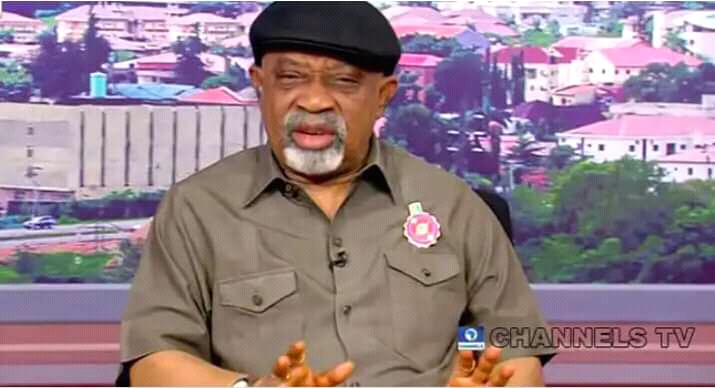
Nigeria’s Minister of Labour and Employment, Chris Ngige, on Thursday,  April 21, 2022, said the decision to halt the ongoing strike solely lies with the Academic Staff Union of Universities,  ASUU. 

Ngige said this on Channels TV while featuring as a guest in the televised program ‘Politics Today.’

According to Ngige, the time the strike will end is only for ASUU to decide and that it is expected of the Union to decide if they have the student’s best interest at heart. 

On when the strike, which has crippled academic activities in Nigeria’s public universities, will end, the Labour Minister said, “It depends on ASUU. The ball is in their court. They should go and meet the Benimi Briggs Committee and look at what the committee is doing and make further inputs so that work can be accelerated, ” he said

Ngige added that ASUU’s attitude towards the labour crisis is not helping the situation. 

“ASUU has to come down from their high horse. You cannot go and start intimidating people in NITDA and threatening the Minister of Digital Economy and Communication with revocation of his professorship that he is a fake professor. You go to ABU and say you are going to withdraw the certificate of the director of NITDA. That’s bullying. It is not allowed in Labour negotiations,” he stated.

Fire guts ABU SRC secretariat, destroys student leaders properties

By Ahmad Deedat Zakari

The Secretariat of the Students Representatives Council (SRC) of the Institute of Administration, Kongo, Ahmadu Bello University, Zaria, was gutted by fire on Friday, February 18.

The secretariat, which served as an office and accommodation for SRC executives, was gutted by fire that reportedly started from a neighbouring shop at about 5:50 pm.

After speaking with the Director of Welfare of the ABU SRC, Comrade Usman Tukur Babangida, the Daily Reality gathered that the fire razed about two rooms down and personal properties of the students’ executives occupying those rooms were destroyed entirely. He also said other rooms of the SRC executives were partially affected.

Mr Tukur noted that if not for the timely intervention of the institution’s fire service, the fire would have razed down the entire secretariat and nearby buildings. 

The Daily Reality also gathered from sources who witnessed the accident that no loss of life or injury was recorded.

Hope, destiny and dilemma: letter to a former student

By A. A. Bukar

Dear Iroro,
It still touches my heart that you feel entrapped by frustration and desperation as a banker. And hope you will find solace in the fact that this is not your making. Life has an inexplicable way of fixing us where it pleases. That’s what we call destiny, isn’t it? A mysterious power beyond the freedom of our choices.

In the vicissitudes affecting your life and career, I am sure you’ve wondered: what on earth has Chemistry got to do with Banking? I have also thought about it when another mentee recently joined the apex bank of the country with a degree in Linguistics. But remember it wasn’t either your dream to be a chemist, nor of your teachers and mentors. Here’s an exposè on the initial agenda:

Fresh from College, we were entrusted with your intellectual upbringing as freshers in that private secondary school. Unbeknownst to you and our teachers that brought us there, we were equally at a point of self-discovery; with youthful exuberance, spurred by desire and desperation to make impact on our immediate society. Our immediate concern was the state of the general hospital, dearth of health personnel and what to do about it – big as it was and the multitude it supposed to serve, the hospital could not boast of having 3 medical officers whether resident or itinerant then. We were worried by how, for example, when a family member fell sick, we had to rely on a chemist or a ‘family doctor’ who probably had only a certificate in Community Health. For all type of ailments – from malaria, typhoid to child delivery.

So what to do? We started brainstorming with your other teacher – Audu Bulama. Initially we agreed to abandon our NCE certificates and return to a science secondary school, obtain another SSCE and gun for Medicine. This was in spite of my numero-phobia. Upon further discussions, we decided to maintain our charted course but encourage you to pick up the battle on our behalf; on behalf of all. This largely motivated the extraordinary devotion given to your generation. You’d no Saturdays of your weekends. Extracurricular activities, lab practicals and whatnot. The teachers, on the other hand, made the school their second home, passing the night when duty forced. We were gladdened when, after the career talks in which late Dr Gishiwa was involved, many of the finest brains opted for science class. But in no time destiny began to take toll.

First, your headgirl and her friend got married. That was the end. Travails of UME transposed you and the other boys to B.Eds. Now, one of the two Bashirs that graduated with first class in Mathematics is in airforce. You’re in a bank instead of laboratory. Your close friend, Tijjani, a thoroughbred from art class wanted to study Law but ended up with B. A. in Hausa Language. You can always feel how he struggles to suppress his dissatisfaction ever after. Zarah, your overall best in the first session, found her “destiny” in the kitchen! Only your headboy went nearer to fulfilling the dream with a degree in Pharmacy. My sisters, who I similarly encouraged thus, followed the same pattern of career trajectory – Mathematics, Pharmacy, Medical Imaging Technology and so on.

Dear Iroro, you’re not alone. We were all at this crossroads of dilemma and indecision in the process of evolution. Sometimes due to lack of choice or due to multiplicity of choices. In 2007 I got two admission offers to study B. Sc Mass Communication (100 level) or B. Ed English (200 level) at Bayero University. For obvious reasons I registered for Mass Communication. But before lectures could start, my friend Musa Lawan Kaku , who was doing his double honors in English and Islamic Studies, began to take me to the exciting classes of Prof. Saleh Abdu, IBK and Mustapha Muhammad. I instantly found home and wanted to switch over. We even went to the admin. block with Usman Abdullahi making inquiries on how my registration in Mass Communication could be converted to English. When they said the ink had dried, we, in desperation, asked further whether new registration was possible – that meant a forfeiture of the former. When, along the way, I placed a call on your proprietor (who was my teacher and mentor), Dr AbdulRahman, with regards to this I found consolation and wisdom in his advice. His argument was our community had teachers in excess, dividend of the CoE in the locality but not so journalists. Thus I remained. Happy thereafter, grateful for ever.

Enthused by my editorship of our departmental newspapers and magazines, I kept an eye on practice after graduation. But destiny took me elsewhere. NYSC posting took me closer home – where I was to teach Hausa (another irony) in a Jigawa state village school. Dissatisfied; without any prodding from anyone; without knowing anyone, I ventured into a nearby College of Legal/Islamic Studies requesting to be given a part time job in Mass Communication to kill the idleness precipitated by my posting. After brief perusal of my CV, the provost, Sheikh (now Dr.) Muhammad Al-khamis looked up and said: “Abubakar, we will give you a full time job. We are looking for people like you…” In the voice of Wajahat Ali, “That’s how they (read: destiny) pulled me back to classroom”. Grateful for ever.

But let me be very blunt here. Nurtured to be one, I know I will remain a teacher. But a decade or more in my life was intended for journalism practice before reverting to the classroom. That reminds one of Peter Nazareth or some other literary critics who said Ngugi wa Thion’go, the Kenyan writer, was a village writer. By that he meant Ngugi’s setting has always been village. Even if he starts his story in the city, rest assured he will end up in a village. That’s me with teaching. My friend, Barr. Maidugu Abubakar, once said teaching is just like cultism – obsessing. Axiomatic.

In May 2018, just few months after my Master’s degree, I met with the bureau chief of a leading national daily at a function. We struck a discussion wherein I revealed to him my itching for practice and even told him that I was currently earning a little above hundred thousand in my lecturing job; if they could give me the equivalent I would join them. He looked up in suprise, telling me how he’s on the other hand eager and lobbying to be a lecturer. Note: months earlier than this ABU Zaria had began beckoning. Details some other day. Such an irony.

More ironic about journalism is that while those who have university degrees in it often find themselves elsewhere, those who studied other things find themselves in it. When we reflected over this with my final year students recently, one of them retorted that “It’s because there is no money in practice. That’s why we prefer marketing aspect of it – Advertising or Public Relations”. In recent times Political PR, probably, to be singing “Napoleon is always right.” Remembered Squealer? This in itself is the end target of many veterans in the field; which affects the overall quality of journalistic output currently, sadly.

Now back to you once again. Was your inability to study Medicine an intransmutable destiny? I doubt. Increasingly I see things more from the prism of political economy nowadays. Suppose we liased with a sympathetic powerful politician or a certain influential rich man in the community – since it’s said with anything from 500k such admission offers could be obtained. This is Nigeria! Achebe’s aphorism in “A Man of the People is starker than ever!” The issue is that most of us brought up in this tradition (of knowledge generation and dissemination) were conditioned to see politicians as dirty filthy selfish do-no-gooders. Again, don’t ask me whether it’s right or wrong to bribe for admission offers in this regard. It is a matter of intense debate and disagreement between teleologists and deontologists in Ethics philosophy.

It might have stunned you either that my generation in the community can boast of only a medical laboratory scientist – the cerebral Alwali. Well, ours was largely a victim of educational policy somersaults that excised Sciences during our days and left the Arts students with no option but be boarders once interested in it. And with apathetic parents that were like “just go to this your Boko school and come back to write receipts in the shop”, the outcome is apparent. They were partly so for you will be shocked if you’re told what the take home of a graduate civil servant (read: teacher) was in the ’90s. It was a point in time also when the whole locality had no a single private school that could provide the alternative. You think Boko Haram found ground for nothing? Much a commingle of cultural, economic and doctrinal factors. In the Jigawa village school where I did my “service”, pupils disappeared to farm and never returned for after-break-fast classes. Reason? Parental inducement and priority. So much to talk about which makes this a roller coaster of some sort.

I have intended intimating you on the WHEN question on marriage at this stage. A character in Leo Tolstoy’s War & Peace would tell you after accomplishing all goals – an AOB in the agenda of your life. How reasonable and practicable this is, we discuss later inter alia.

With the proliferation of degree awarding institutions in the locality, we will soon start grappling with how to contend with graduates bulge. I hope one day someone will fish out your likes with strong science background and place them on scholarship for a second first degree in where the community has the most pressing need. Meanwhile keep your eye on a foreign one – especially for a post graduate degrees. That opens windows for unimaginable opportunities. Sorry for writing you this: So Long a Letter. It is coming while completing Anne Frank’s Diary on transit, and made open perchance your type herein will stumble, benefit, or relate. At least.

A. A. Bukar writes from ABU Zaria, Department of Mass Communication.