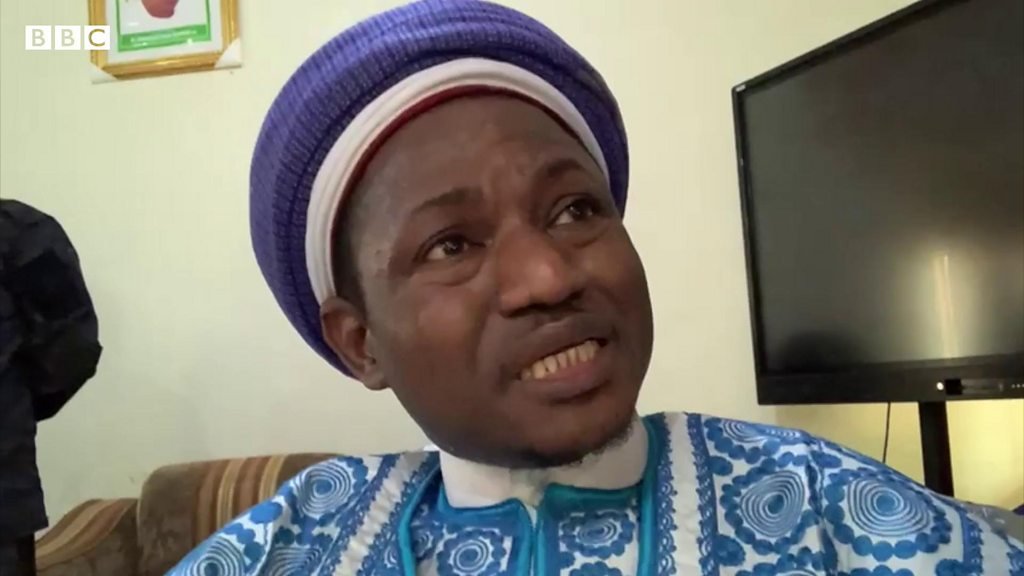
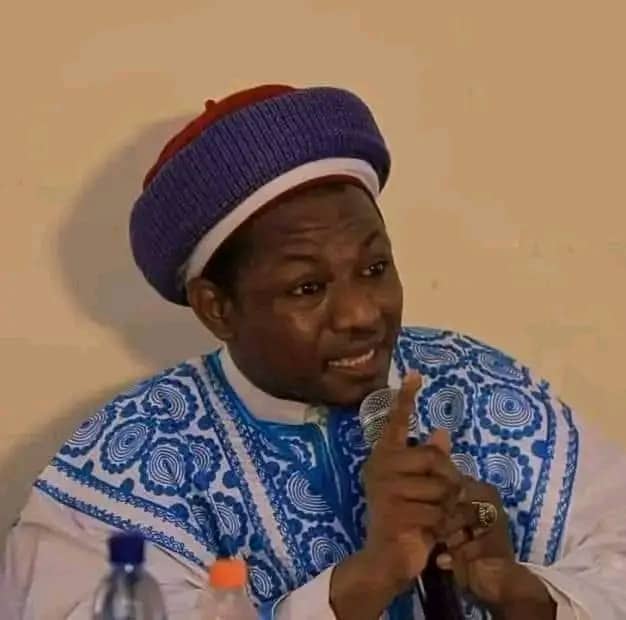
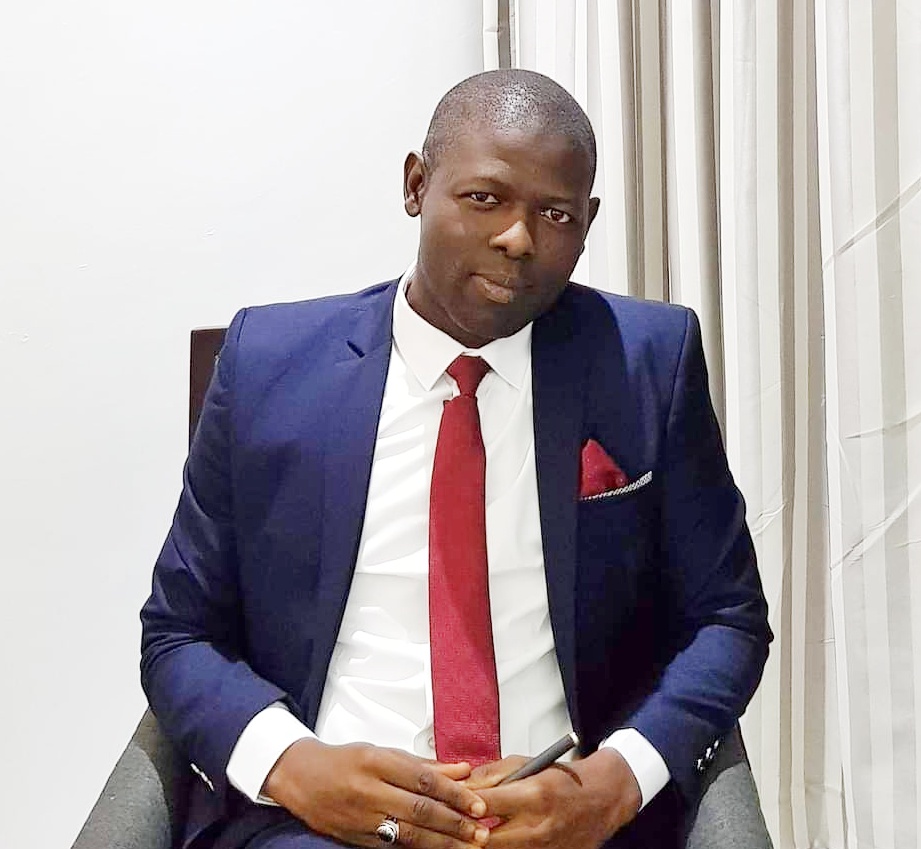
Abduljabbar Nasiru Kabara

Double blessings: A tribute to Prof. Salisu Shehu

By Isma’il Hashim Abubakar, PhD

In one month, our mentor, leader, teacher, and father, Professor Salisu Shehu, the Vice Chancellor of Al-Istiqamah University Sumaila, Kano, and Deputy Secretary-General of the Nigerian Supreme Council of Islamic Affairs, received two distinguished honorary awards in recognition of his years of exemplary leadership, meritorious services, and contributions to the development of Islamic education.

The National Association of Teachers of Arabic and Islamic Studies (NATAIS) conferred one of these awards on Professor Salisu Shehu in a grand ceremony on November 16, 2024, at the Federal College of Education, Yola. The event was part of the Association’s 41st Annual International Conference. 

The note of the Association’s highest Merit Award, inscribed on the crest presented to our beloved mentor, reads, “For your Exemplary Leadership and Contributions Towards the Islamic Propagation and Development in Kano State and Nigeria at Large.” 

Coincidentally, the Bauchi State Qur’anic Recitation Competition in Jama’are presented the second award to the professor on the same day. Like its peer, this award recognises and celebrates the role played by our mentor in the dissemination of Islamic knowledge, societal enlightenment, and mentoring of the upcoming generation. 

Interestingly, however, this second award is both a reward of excellence and a turbaning ceremony of Professor Salisu Shehu as Khadimul Qur’an (Custodian of the Qur’an), the highest title that connotes the peak one attains in promoting the knowledge of Islamic Scripture. The note of the award reads, “Islamic Knowledge Award presented to Prof. Salisu Shehu, V.C, Al-Istiqamah University, Sumaila, Kano State, for his tireless efforts in spreading Islamic knowledge, guiding our community, and inspiring a new generation of Muslims to embrace their faith.Congratulations Khadimul Qur’an”.

For hundreds of mentees and millions of Muslim followers of Professor Salisu Shehu, these esteemed awards clearly testify to the commitment and devotion for which the Professor has been known over the decades. This reputation is justified by his successes in various positions, including his position and duties at Bayero University Kano, where he taught before becoming the founding Vice Chancellor of Al-Istiqamah University Sumaila.

Professor Salisu Shehu displayed an inimitable commitment to modifying the establishment of the Centre of Continuing Education establishment at Bayero University. The centre grew from strength to strength, eventually transforming into the Institute of Continuing Education (ICE) and finally to the School of Continuing Education (SCE). 

Professor Salisu Shehu was appointed as the first head of this centre, which started from scratch. He led a tenacious staff team, some of whom were younger colleagues he mentored or guided, to develop and upgrade this academic centre into a formidable educational unit of Bayero University. The place has already transformed from a diploma-awarding body to a degree-awarding school within one of Nigeria’s leading and most prestigious learning institutions.

Professor Salisu Shehu is a man in whom one can have confidence and a guarantee of success in any project or mission he undertakes or participates in. His years as the National Coordinator of the International Institute of Islamic Thought (IIIT) can, without much ado, testify to and validate this claim. Space will not allow us to marshal the achievements this Institute recorded when Professor Salisu Shehu headed it. 

The same can be said of various other capacities and ranks in which he served and holds, such as being the first  North-west Coordinator of JAMB organised for the visually impaired as the chairman of the Bauchi State Qur’anic Recitation Competition Committee (2007-2011); his role as the Executive Secretary of the Islamic Forum of Nigeria; Deputy Secretary-General, Nigerian Supreme Council of Islamic Affairs (NSCIA) and a host of other duties including imamship and delivery of sermons and Islamic lessons.

Besides all these, our distinguished scholar is also an effective mediator; all Nigerians can proudly vouch for his accomplishments. Northern Nigerian Muslims still remember the Professor’s role in facilitating the remarkable debate between some scholars and Abduljabbar Kabara, who shook the religious polity in Kano with his utterances that were considered highly aberrational. 

Nigerian citizens and their counterparts of the Niger Republic, as well as their posterities, will remain forever indebted to Professor Shehu and his colleagues among religious leaders who intervened and brought about an understanding that averted war between two neighbours.

As our mentor was conferred these honours by both NATAIS and the Bauchi State Qur’anic Recitation Competition Committee, we pray that he will continue to receive more recognition and blessings in his life. More importantly, however, we pray that these recognitions are precursors to Divine recognition and honour by Allah on the Day of Judgement in the Hereafter.

Isma’il writes from the Advancing Education and Research Centre (AERC) in Rabat and can be reached at ismailiiit18@gmail.com.
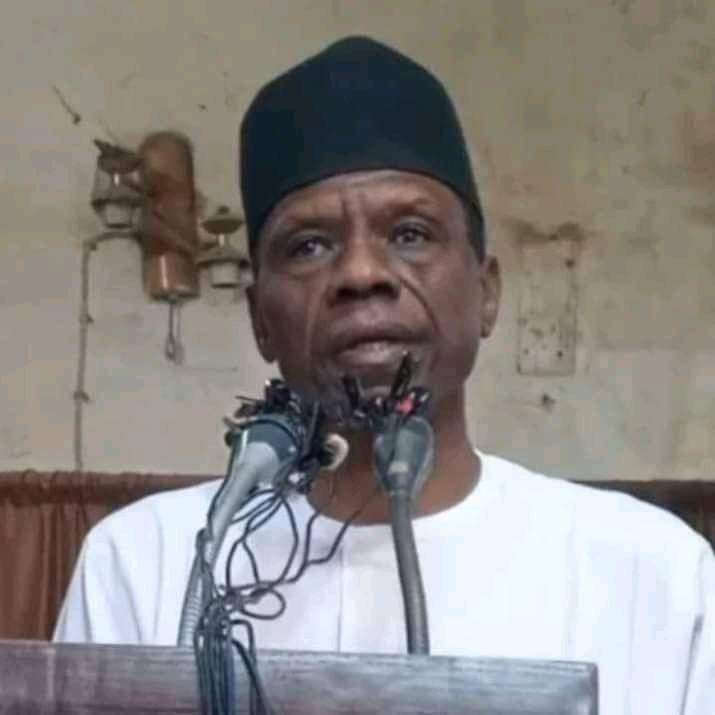
Is Sheikh Idris Abdulazeez a victim of sacrilege or political vendetta?

By Zaharaddeen Muhammad Azare

Years back, people saw it as taboo to question or criticise what religious scholars said, regardless of how illogical it sounded. However, as people started becoming wiser and more educated, they discovered that religious scholars, as fellow human beings, can understand and misunderstand laws, ministerial statements and concepts. Thus their comments are subject to verification, reconstruction and even falsification.

What happened to Sheikh Abduljabbar Nasiru Kabara that led to his imprisonment in Kano due to his inability to defend his speeches that were considered blasphemous serves as a motivative factor for holding religious scholars accountable for their actions and inaction.

Many people see the case of a known Bauchi-based Islamic scholar Sheikh Idris Abdulazeez as similar to Sheikh Abduljabbar’s, which led to the imprisonment of Sheikh Idris too. But is Sheikh Idris indeed being imprisoned for blasphemy or political reasons?

To answer this question, I take us back to some historical antecedents. Sheikh Idris Abdulazeez is a religious scholar who sees himself as a representative of his people and believes that as a citizen of Nigeria should be politically active to improve efficiency in governance and promote the welfare of the citizenry.

Sheikh Idris supported and criticised political leaders, which seems to be for the public good; the scholar condemned the state government’s actions when Barr. Mohammed Abdullahi Abubakar SAN who believed in the constitution, the application of the rule of law and the whole exercise and grant of human rights, was the state’s governor from 2015-2019.

The  Sheikh saw the then leadership as dust to the people of the state, thus needing elimination. And the then governor allowed him to voice out his opinions as an indigene of the state; the scholar condemned the ruled APC government and endorsed the incumbent state’s governor under the platform of PDP.

After the victory of the incumbent governor of the state Sen. Bala Mohammed Abdulkadir, in the 2019 general election, the government started doing activities contrary to what the scholar believed to be right; for this, he began criticising the government and was tagged as an enemy. In the recent 2023 general elections, the scholar directed his followers to vote for the former Nigerian Chief Of Air Staff Baba Sadiq (Air Marshall) of the All progressive congress (APC), against his counterpart Sen. Bala Mohammed of the People’s Democratic Party (PDP). Bala Mohammed got re-elected.

Some see the case which led to the imprisonment of the religious scholar as revenge for he was not allowed to defend his statements, like what happened to Sheikh Abduljabbar in Kano, where Islamic scholars of different sects were gathered for him to intellectually defend himself in a public which failure to do so bagged his imprisonment.

Most people believe that not allowing Sheikh Idris Abdulazeez to defend himself originated from the fact that he has legal evidence for his statement and how deeply educated religious scholars influx into Bauchi from several states to attest to his statement before the organised debate was cancelled due to these reasons which could set the scholar free. He was later taken to court and got jailed. Not Sheikh Idris alone, who is in jail for nearly a month over the so-called public disturbance. This week, Some traditional rulers have been dethroned by the state governor for what he describes as  “involvement in partisan politics” during the 2023 general election.

Someone who can’t endure opposition shouldn’t go into politics in a democratic state.

Zaharaddeen Muhammad Azare writes from Bauchi state and can be reached via zahmuhaza@gmail.com.

Blasphemy: Court sentences Kano cleric to death

By Ahmad Deedat Zakari

An Upper Shariah Court sitting at Kano has sentenced the controversial Kano Islamic cleric, Sheikh Abduljabbar Nasiru-Kabara, to death for blasphemy.

Delivering the much-anticipated judgement on Thursday, the presiding judge, Ibrahim Yola, declared the defendant guilty and hereby sentenced him to death by hanging.

The embattled cleric was charged to court by the Kano State Government after making comments deemed blasphemous to the personality of Prophet Muhammad (SAW).

Before delivering the judgement, the presiding judge said he was convinced that the prosecution did their part and had proven their case beyond a reasonable doubt.

He said: “I am convinced that the prosecution counsel has done their part and proven their points beyond a reasonable doubt.”

Before the conviction of the defendant, the embattled cleric had disowned his lawyer, Aminu Abubakar, in court and interjected his plea for mercy. Mr Abubakar had opined the cleric acted in ignorance.

Abduljabbar Nasiru-Kabara stated that he did not know the lawyer nor needed the court’s mercy. He added that he would die a hero.

The Daily Reality learnt that Abduljabbar was quoted as saying: “I don’t know him. This is the first time I am seeing him. He should not be allowed to speak on my behalf. I can and should be allowed to speak for myself,” he said.

Speaking further, Abduljabbar said: “My lord, after I heard how you twisted all my evidence, you turned around all my submissions upside down, you have assigned words to me that I have never uttered.

“Deliver your judgement, and I am not asking for leniency at all. I want all my followers to know that I will die a hero, and I don’t want you (the Judge) Ibrahim Sarki Yola to do me any favour or grant me leniency. This is my last word. Assalamu Alaikum.”

Blasphemy: Abduljabbar Kabara knows fate Thursday 

By Uzair Adam Imam

The case of Sheikh Abduljabbar Nasiru Kabara, a famous Kano-based controversial cleric, accused of defamation, has continued to attract a great deal of public attention.

The entire Kano population is eagerly waiting to see what the court will decide on the fate of the embattled sheikh on Thursday, December 15, 2022.

However, while the court decision on the case remains unpredictable, the two parties, Kabara and the Kano State Coalition of Ulama, wish to win the case.

On July 10, 2021, Kano State Government organised a debate between Kabara and some of the state’s scholars to defend himself over what the Ulama Coalition described as blasphemy.

However, according to the statement made by the judge of the debate, Professor Salisu Shehu, Kabara failed to clear his name or defend his utterances.

‘Where Abduljabbar gets it wrong’ – Awaisu Al’arabee Fagge

In several commentaries and reading sessions, the embattled cleric assumes himself more knowledgeable than any other Islamic scholar of his time and history. He also disregards and criticises any view that does not sit well with his belief.

Holding to this belief, Kabara lambasts any legal pronouncement by the prophet’s companions and, worse, defames Prophet Muhammad (SAW) himself in his subsequent preaches, which he falsely attributes to some Islamic scholars. 

However, Kabara’s counterparts in Kano stood up to put an end to his unsavoury teachings and controversies while bringing many books, including rejoinders some of the scholars published.

The Kano State Government also organised a debate between Kabara and some of the state’s scholars, where, as judged, he failed woefully.

Kabara drags to the court after his defeat

Abduljabbar was subsequently arraigned on Friday, July 16, before an Upper Sharia Court Judge, Kofar Kudu, Alkali Ibrahim Sarki Yola, where the charges included blasphemy, incitement, and sundry offences were mentioned.

The development followed the receipt of the First Information Report from the police by the Office of the Attorney General and Commissioner for Justice, which prepared charges against the cleric.

However, something dramatic happened at the court as Kabara alleged that his attorney, Dalhatu Shehu Usman, received N2 million as a bribe to influence the Upper Shari’ah court judge presiding over the case.

“My lawyer told me he gave the judge N1.3 million, another person N200,000, and he himself took N500,000,” Kabara alleged.

Thus, the cleric continued to quarrel with his lawyers and laid claims and allegations against them since the beginning of the court sitting.

All this comes to an end tomorrow, Thursday, 15 December 2022.

My lawyer collects N2m to bribe judge – Abduljabbar Kabara

By Muhammad Sabiu

Sheikh Abduljabbar Nasiru Kabara, who is on trial for alleged blasphemy against the Prophet Muhammad (SAW), claims that his attorney, Dalhatu Shehu Usman, received N2 million as bribe to influence the Upper Shari’a court judge presiding over the case.

During the resumption of the meeting, the defense counsel, Dalhatu Shehu Usman, who was represented by Mr. Muhammad Lawan, pleaded with the court to permit the defendant to adopt his final written remarks on his own behalf.

In adopting his last written arguments, dated and submitted on September 20, the defendant asked the court to dismiss the lawsuit brought by the Kano State Government against him and direct the state to issue an apology to him.

“I urge the court to adopt the written addresses as my argument in this case and evidence, my audio preachings.”

Kabara continued to claim that the attorney chosen by the court to represent him had amassed N2 million to bribe the judge, stating the attorney had come to the prison and informed him that the judge had instructed him to do so in order to release and exonerate the defendant.

“My lawyer told me he gave the judge N1.3 million, another person N200,000 and he himself took N500,000.”

In his final written arguments, Mamman Lawan-Yusufari SAN, the prosecution’s attorney, pleaded with the court to find the defendant guilty in accordance with the law and accept their arguments as evidence against him in a document dated and filed on September 22.

The defense presented one witness and offered 24 books and a memory card as proof, while the prosecution rested its case on the testimony of four witnesses.

Malam Ibrahim Sarki-Yola, the preeminent judge, refuted the claim that he accepted a bribe.

He stated that both parties would later be informed of the judgment date.

After the court session, Shehu Usman spoke to reporters and refuted the claim that he had accepted the sum of N2 million as a bribe.

Shehu added, “I am not surprised, my client had also made some allegations against his other three sets of lawyers before.”

Advocacy, ethics and the trial of Abduljabbar Nasiru Kabara (I)

By Ibrahim Ahmad Kala, LL.M

The one-time Attorney General of the Federation and Minister for Justice in the Second Republic, Late Chief Richard Akinjede, SAN once asserted that oral Advocacy is a special science and art skill of good courtroom lawyers which is likened to the scene in Julius Caeser that took the form of funeral orations by Brutus and Antony over Ceaser’s corpse. Having just killed Ceaser, the conspirators wanted Brutus to assure the Romans that all was well and that Ceaser’s death was necessary to prevent tyranny. Antony, Ceaser’s close friend, feigned solidarity with the conspirators and persuaded them that he too should say a few words over Ceaser’s body.

In comparing Brutus and Antony as orators, we should remember two other classical orators: Cicero and Demosthenes. When Cicero finished an oration, the people would say: “How well he spoke”.  But when Demosthenes finished speaking, the people would say: “Let us March”. Brutus was like Cicero and Antony like Demosthenes. Brutus won respect, but Antony started a riot.

The funeral orations which exemplify an extraordinary example of how Shakespeare can bear on the law, underscore the effectiveness of oral Advocacy which a lawyer should read before addressing the court in a major trial.

Regrettably, like Antony, Bar Shehu Usman Dalhatu on 7/7/2022 in his appearance while defending Sheikh Abduljabbar Nasiru Kabara before a Sharia Court of Kano State, caused stirred on social media and openly accused the trial judge of being unlike Ceaser’s wife of not sitting above board in the case. As seen in a viral video, the counsel was heard castigating the court for allowing the prosecution to ask “all sorts of questions such as asking the defendant when his father died? Which he argued, is not contained in the charge,” during cross-examination,  and “denying his client right to make a no-case submission”, saying no prima facie case was established against him. According to the Daily Trust report, the mild drama led the defence counsel, Dalhatu Shehu-Usman to walk out on the judge.

The Kano State Government had charged Kabara with four counts, bordering on blasphemous comments against Prophet Muhammad (PBUH) on Aug.10, Oct. 25 and Dec 20, 2019.

With due respect to all, the entire scenario that played out in the court is, to say the least, highly nauseating and totally against the professional ethics required of players in the administration of justice in this country. In one of my previous articles on the relationship between the Bar and the Bench, I penned down as follows:

In R. vs. O’Connell (1844) p261 at 312-313 lifted from Oputa JSC’s book “OUR TEMPLE OF JUSTICE” p.14, Crampton J. said thus:

“This court in which we sit is a Temple of Justice, and the Advocate at the Bar as well as the Judge on the Bench are equally ministers in that Temple. The object of all, equally, would be the attainment of justice…”

Oputa JSC further distilled some guiding principles on the relationship between the Bench and the Bar as follows:

 “Lawyers and Judges being instruments of justice are honoured and honourable.

Such honourable men should not allow ‘the infirmity of human nature and the strength of human passion’ to lead them astray, let alone lead them to perpetuate an outright injustice.

The Legal profession is not just another avenue for quick money-making by hook or crook. To so conceive the profession, is to degrade it.”

Similarly, Richard Du Cann in his book: “The Art of the Advocate” speaking on the duty of the Advocate while quoting Lord MacMillan, a Lord Advocate-General in Scotland and a member of the Judicial Committee of the House of Lord’s declared the duty in fivefold as follows:

“In the discharge of his office, the Advocate has a duty to his client, a duty to his opponent, a duty to the court, a duty to himself, and a duty to the state. The duties, in fact, begin long before he rises to his feet resplendent in horsehair wig and stuff gown”.

Hence, it is not part of the duties of a Lawyer to win at all costs or at any cost. There is rather a heavy cost to winning at all costs and that cost is disdain and dishonour and the desecration of the sacred temple of justice. Judges and Lawyers have a prior and perpetual retainer on behalf of the truth.

All these, therefore, reflect very much the tradition of the legal profession on the relationship between the Bar and the Bench, and which is one of reciprocity. The smooth administration of justice envisages the existence of courageous, efficient, honest and fearless Bar and Bench.

The Bench is entitled to unqualified respect from the Bar and so expects it. The least Magistrate Court, Area, Sharia or Customary Court and the highest court of the land are equally entitled to this respect. Members of the Bar stand up when they address or are addressed by the Bench.

The counsel who easily picks up quarrels with the Bench acts in contravention of this important duty. The duty of respect which is as old as the profession itself is highlighted under Rule 1(a) of Rules of Professional Conduct as follows:

It is the duty of the Lawyer to maintain toward the Court, a respectful attitude, not for the sake of the temporary incumbent of the judicial office, but for the maintenance of its supreme importance. Judges not being wholly free to defend themselves against criticism and clamour. Whenever there is a proper ground for a serious complaint of a judicial officer, it is the duty of the Lawyer to submit his grievances to the proper authority. In such cases, but not otherwise, such charges should be encouraged and the person making them should be protected.

This aged-long tradition of respect has crystallized into a solid cornerstone in the edifice of the Bar-and-Bench relationship. You alone cannot change the position overnight. The tradition is so well established at the Bar that, even when counsel has nothing but rude remarks to make, by tradition he is expected to start by saying: “With respect”.

These ethics demanded the best of Man: obedience and decency, as it was demanded that Adam (A.S) should keep his own part of the bargain, and he did not; that was unethical and there came his fall.

The court is where counsel will spend the rest of his years at the Bar trying to persuade to his view. One cannot carry it along with him if, by lack of manners, one alienates its feelings beyond recall or consistently.

To be continued

Ibrahim Muhammad Kala Esq is the Head of Litigation Department, Court of Appeal Gombe division and can be reached via ibrokalaesq@gmail.com