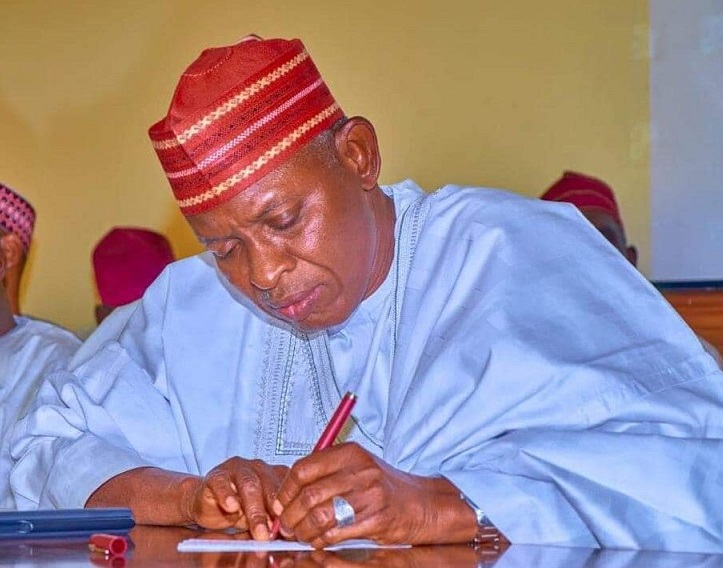
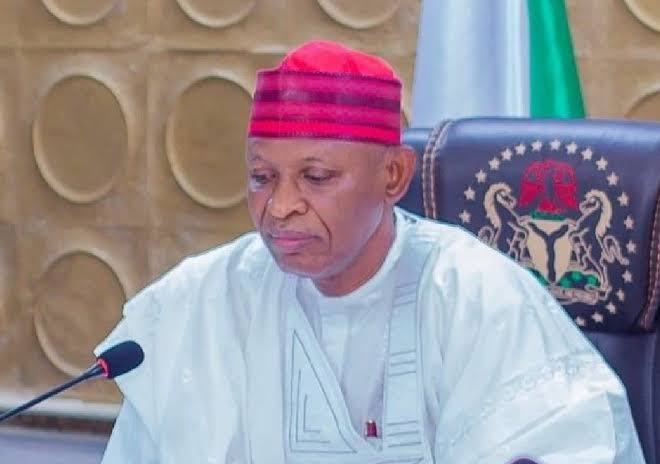
Abba Kabir Yusuf

Another batch of 50 graduates fly to India for master’s degrees under Kano government’s scholarship

By Sabiu Abdullahi 

The Kano state government has dispatched the fifth batch of 50 first-class graduates to pursue their Master’s Degree programmes in India. 

The beneficiaries, part of the 1,100 indigenous students sponsored by the state government for overseas studies, departed from Malam Aminu Kano International Airport for Lagos on a Max Air aircraft at 7:30 a.m. on Friday. 

The Commissioner for Higher Education, Dr. Yusuf Kofarmata, and other government officials were present to witness the departure.

From Lagos, the beneficiaries are scheduled to board an Air Peace flight to India at 2:00 p.m. Speaking after the takeoff, Dr. Kofarmata noted that this initiative is a continuation of the government’s commitment to the 1,100 postgraduate scholarship programme for the academic year 23-2024. 

The selected graduates, now on their way to reputed institutions like Sharda, Symbiosis, Mewar, Sri Sai, Swarnnim, and Kalinga, were chosen based on their outstanding performance during their undergraduate studies. 

Highlighting the significance of the programme, Dr. Kofarmata stressed that the students would focus on internationally competitive fields, contributing to bridging the manpower gap not only in Kano State but also across the nation. 

“A total of 550 students are the first batch who are going to eight reputable universities to study in internationally competitive areas of professionalism to bridge the manpower gap in the state and across the nation.  

“The students are also expected to acquire experience, skills, and knowledge with the view to revamp the state commercial status and explore other potential for socio-economic development,” he said. 

Providing an update on the progress of the previous batches, Dr. Kofarmata revealed that the students had already commenced their academic pursuits, and approximately 30 beneficiaries had secured casual employment with their respective institutions, a testament to their academic prowess. 

Acknowledging the support and commitment of Governor Yusuf, the Commissioner noted the celebration among beneficiaries, parents, well-wishers, and citizens of the state.

Kano governorship saga continues as Abba takes battle to Supreme Court

By Sabiu Abdullahi

Kano governorship saga continues as Abba takes battle to Supreme Court Kano State Governor Abba Yusuf, ousted by the electoral tribunal and subsequently denied reprieve by the Court of Appeal, has pledged to contest the ruling at the Supreme Court.

The appeal court, situated in Abuja, upheld the tribunal’s decision, unseating Yusuf and confirming Nasiru Gawuna of the All Progressives Congress (APC) as the legitimate winner of the March 18 election. 

Governor Yusuf, undeterred by the setback, conveyed his determination in a televised address on Friday night.

“Our lawyers will challenge the Appeal Court judgment at the Supreme Court. We trust that the Supreme Court will restore the mandate entrusted to us by the people of Kano,” he asserted, urging citizens to remain law-abiding amid the legal wrangling, with security measures in place to ensure public order. 

Conversely, the National Chairman of the APC, Abdullahi Ganduje, hailed the court’s decision as a triumph for democracy.

Expressing gratitude to the judiciary for maintaining a fair administration of justice, Ganduje acknowledged the challenges faced during the case.

“This victory is for all of us. We know what happened during the election, and by the grace of God, we got a fair judgement in favour of our great party, APC,” he remarked. 

Ganduje, anticipating further legal manoeuvres, remarked, “There is nothing wrong for them to go to the Supreme Court. We too, we are ready to meet them in the Supreme Court. Insha Allah, we will win at the Supreme Court as well.”

On Abba Kabir Yusuf and human capital devt

By Anas Abbas

In recent years, there has been a growing emphasis on infrastructure development as a key indicator of progress and development in many countries. Governments often prioritize the construction of bridges, roads, and other physical structures as a means of showcasing their commitment to progress.

However, it is important to recognize that true development goes beyond just the physical infrastructure and involves the development of human capital.

While infrastructure development is undoubtedly important, it is equally crucial to invest in the development of human resources. This includes providing access to quality education, training, and opportunities for personal and professional growth. Human capital development is essential for creating a skilled and knowledgeable workforce that can contribute to the overall development of a nation.

A recent example of the emphasis on human capital development can be seen in the actions of the current Kano state government. Instead of solely focusing on infrastructure development, it also recognized the importance of investing in human capital develop. The administration sponsored numerous students who had graduated with first-class honors to pursue their Master’s degrees in India. This intervention is set to enable the beneficiaries to advance their education and acquire valuable knowledge that can be applied in the development of the state and the nation.

This programme us not new in the state. During Rabiu Kwankwaso second tenure as governor of the state, he sponsored over one thousand students abroad to pursue their Master’s degrees in different countries of the world.Infrastructure is doubtlessly important for the development of a nation, but it is crucial to recognize that human capital development should be the top priority If you critically observe the society today, you will find out that infrastructure can deteriorate over time and require continuous maintenance and investment, human capital development is enduring and can be needed for such maintainance need.

The knowledge and skills acquired by individuals remain with them and can be passed on to future generations, creating a lasting impact on the nation’s development. This initiative highlights the significance of human capital development in driving sustainable development.

By investing in the education and training of individuals, governments can empower their citizens to become active participants in the development process. These individuals can then use their expertise to address local challenges, drive innovation, and contribute to economic growth.

Furthermore, human capital development has a ripple effect on society. When individuals are equipped with knowledge and skills, they are better positioned to create positive change within their communities. They can become leaders, entrepreneurs, and advocates for social and economic progress. This, in turn, can lead to a more inclusive and sustainable development that benefits all members of society.

I found it laughable when in the trending Kaduna vs Kano online banter sparked by one Hafsat Paki video in which she talked Kano people down, many commenters paid undue attention to buildings as a way to show that Kaduna is more developed than Kano (Kano has fair share of beautiful buildings if you ask me). For me the ongoing effort in place by the government to better the human capital of the state deserves more attention than anything thing else.

In conclusion, while infrastructure development is important, it is equally crucial to prioritize human capital development as a key component of overall development. The recent initiative by Governor Abba Kabiru Yusuf to send students abroad for further education serves as a powerful example of the value of investing in human capital.

By focusing on human capital development, governments can create a foundation for long-term sustainable development that empowers their citizens and drives progress from within.

Anas Abbas is communication student at Bayero University, Kano . And can be reached via anasabbas2099@gmail.com

Kano gov’t sends 4th batch of 150 first-class graduates to India on scholarship

By Sabiu Abdullahi 

Kano State has dispatched the fourth batch of 150 graduates to India under its foreign scholarship program.

These graduates, part of the 1,001 indigenous students sponsored by the state government, departed from Malam Aminu Kano International Airport at 7:30 a.m. on Friday. 

The Commissioner for Higher Education, Dr Yusuf Kofarmata, and other government officials were present at the airport to witness the departure. The flight is scheduled to land in Lagos before continuing its journey to India. 

Dr. Kofarmata emphasised that the departure of this batch is a continuation of the government’s commitment to implementing the 1,001 postgraduate scholarship programme for 23–2024.

The beneficiaries, all first-class graduates, were selected based on their outstanding performance in undergraduate studies. Upon arrival in India, the students will be enrolled in various universities to pursue their Master’s degree programs.

Dr. Kofarmata highlighted that they will focus on internationally competitive areas of professionalism, contributing to bridging the manpower gap not only in Kano State but across the nation. 

“A total of 550 students make up the first batch, heading to eight reputable universities, aiming to fill the manpower gap in the state and across the nation. The students are also expected to acquire experience, skills, and knowledge to revamp the state’s commercial status and explore other potentials for socio-economic development,” explained the commissioner. 

The initiative, in line with the campaign promises of Governor Abba Kabir Yusuf, aims to revive and strengthen the educational sector.

The first batch of 140 students had already departed for India on October 20, followed by the second batch of 33 graduates heading to the Islamic University in Uganda. 

The beneficiaries expressed their gratitude to Governor Yusuf for fulfilling his campaign promises and reviving the scholarship program, originally introduced by the former governor, Senator Rabi’u Musa Kwankwaso.

The Commissioner noted the joyous celebrations among the beneficiaries, their parents, and well-wishers, reflecting the positive impact of the government’s commitment to educational development in the state.

Contrasting priorities and policy impact between Abba and Ganduje

By Mansur Hassan, PhD

Engr. Abba Kabir Yusuf, the Executive Governor of Kano State, has recently shed light on the alleged misappropriation of funds by Nigerian governors, exposing lack of impactful policies.

Over the past eight years, Kano State witnessed a dearth of policies that benefit the less privileged directly. In contrast, the Kwankwasiyya administration, led by Abba Gida Gida, has swiftly demonstrated its prowess in governance within five months, particularly through transformative healthcare and educational ‘revolution’ spanning from primary to tertiary levels.

Under Kwankwasiyya’s leadership, there has been a significant focus on education, including sponsoring first-class graduates to foreign universities—an initiative emulated by other nations. The educational revolution initiated during the 1999-2003 and 2011-2015 periods has left an enduring mark, with numerous scholars benefiting from foreign scholarships.

However, the governors who presided over the state from 2015 to 2023 failed to implement any substantial policies for the state’s improvement. Criticism was leveled against the transformative programs introduced by H.E. Abba Kabir Yusuf, particularly after the mass wedding event known as “auren ‘yangata.” The sponsorship of 1001 first-class graduates further intensified opposition, with the former Governor of Kano State, Abdullahi Umar Ganduje, dismissing the program as useless.

This criticism seemingly stemmed from the program’s focus on underprivileged children, contrasting with Ganduje’s past sponsorship of his own children’s education abroad. The clash underscores a debate on priorities and equitable policies in Kano State.

Dr. Mansur Hassan is a Senior Lecturer, Department of Mathematics, Yusuf Maitama Sule University Kano

Kano governor rescues students, releases funds for outstanding university fee

By Sabiu Abdullahi 

Kano State Governor Abba Kabir Yusuf has approved the release of funds to settle overdue registration fees for students sponsored by the state at Bells, Igbinedion, and Al-Qalam Universities. 

The decision aims to alleviate the burden on students who have faced eight years of neglect by the previous administration, enabling them to finally receive their graduation certificates. 

Governor Yusuf, emphasising his commitment to education, announced the move via his official Facebook page. 

The timely intervention has been met with relief and gratitude from students and their families, ensuring a brighter future for these deserving scholars.   

Governor Yusuf elevates governance with strategic parastatal appointments in Kano

By Sabiu Abdullahi 

Governor Abba Kabir Yusuf has announced a series of key appointments in various government parastatals. 

These appointments, made with a focus on expertise and experience, are poised to bring fresh vigour to the state’s administration. 

Among the notable appointees are Salisu A. Kabo, who takes charge as the Director General of Youth Empowerment, and Dr. Hamisu Sadi Ali, entrusted with the position of Director General at the Debt Management Office.

Additionally, Yusuf Kabir Gaya has been appointed as the Executive Chairman of the State Universal Basic Education Board (SUBEB), reflecting the government’s commitment to bolstering the education sector. 

These placements also include essential roles such as Abduljabbar Mohammed Umar (Director General, KAN-INVEST), Mustapha Adamu Indabawa (Managing Director, Abubakar Rimi Television), and Hamisu Dogon Nama (Managing Director, Kantin Kwari Market). Abdulkadir B. Hussain, Dr. Kabiru Sani Magashi, Aminu Aminu Mai-Famfo, and Engr. Abubakar Sadiq J. complete the roster, taking on vital responsibilities in their respective sectors. 

Governor Yusuf has called upon these appointees to harness their expertise and experience to serve the people of Kano State diligently. 

Court slaps Kano gov’t with N30b fine over illegal demolition of buildings 

By Sabiu Abdullahi 

The Federal High Court in Gyadi-Gyadi, Kano, has fined the Kano State Government 30 billion Naira for the unauthorised demolition of shops within the historic Idi Mosque premises at Kofar Mata. 

The ruling, delivered by Justice Simon Ameboda, strongly condemned the government’s actions, labelling the demolition as an “illegal activity full of brutality and malice.” 

The court’s decision also mandated the state government to compensate the affected businessmen whose shops were razed to the ground.

Justice Ameboda emphasised the severity of the government’s offence against the less privileged members of the community, leading to the imposition of a significant fine. 

This substantial penalty serves as a stern warning against any future attempts by government entities to infringe upon the property rights of individuals and small businesses within the state. 

The ruling also included a restraining order, preventing the Kano Government from interfering with the lands and affairs of the shops, including reallocating them to other entities. 

The legal community and activists have applauded the court’s decision, highlighting its crucial role in ensuring accountability and justice, particularly for those who are economically vulnerable. 

The affected businessmen, their legal representatives, and the community have expressed relief and satisfaction with the court’s verdict, hoping that this landmark judgement will serve as a precedent, deterring any similar actions by government authorities in the future. 

Quick thoughts on the Kano State governorship election petition tribunal judgement

By  Rabiu Gama

I had the (dis)pleasure of reading the full judgement of the Kano State Governorship Election Petition Tribunal last night, which was delivered on Wednesday, October 20, 2023, via Zoom. Here are my humble thoughts on it.

By the way, I am writing this under the safe assumption that anyone who is reading this is quite familiar with the story behind the judgment. Nonetheless, clarity is important. So, for the sake of clarity, let me quickly state that APC is the Petitioner in this case, while INEC, Abba Kabir Yusuf (AKY) and NNPP are the First, Second and Third Respondents, respectively. Nasiru Yusuf Gawuna, APC’s candidate, was not a party in the suit. The Tribunal, relying on the provision of Section 133 (1) of the Electoral Act, 2022, and some judicial authorities, held, correctly in my opinion, that Gawuna must not be a party before the Tribunal.

As I see it, NNPP’s and AKY’s lawyers did a bad job. INEC’s lawyers did worse, though: INEC’s legal team failed miserably to prove that the election was conducted in compliance with the provisions of the Electoral Act, 2022 (the burden or onus of proof was on them in that regard) as alleged by the Petitioner (the APC). The First Respondent, i.e., INEC, made a terrible and costly mistake of relying lazily on the weaknesses of the Petitioner’s case. The cost of not doing the right thing at the right time is always high!

Since the outcome of an appeal largely, if not completely so, hinges on the proceedings of the lower court (the Tribunal in this case), then it is my humble opinion that NNPP’s (AKY’s) chances of winning at the Court of Appeal might not be as promising as many hope it to be. It shocked me that NNPP’s lawyers could not even establish that AKY was a legitimate member of the party when he contested the 18th of March Governorship Election. The Tribunal was benevolent enough to point out some ways that they could have followed to establish it, but they couldn’t.

I, however, failed to grasp or discern why the Tribunal refused to apply “the principle of margin of lead” when it went ahead to declare that APC’s candidate, Nasiru Gawuna, was the winner of the election even though it had already found and, in no uncertain terms, admitted that the number of cancellations was in hundreds of thousands while its final finding showed Nasiru Gawuna was leading with tens of thousands only. The Tribunal, in my humble opinion, should have ordered a re-run: based on that finding, the election was supposed to be declared “inconclusive”.

The Tribunal also seems to have disregarded the provision of Section 63(2) of the Electoral Act, 2022 when it invalidated over 165,000 votes that were cast in favour of NNPP/AKY for the reason that the ballot papers were neither signed nor stamped, in other words, the ballot papers did not carry the official mark that was prescribed by the commission (INEC). The said provision of the Electoral Act is to the effect that even if a ballot paper is not signed or stamped, the Presiding Officer of the concerned Polling Unit can go ahead and count the ballot paper as valid.

All in all, I find some of the reasonings and conclusions of the Tribunal, based on what was laid before it, legally sound. But the Tribunal’s failure to apply “the principle of margin of lead”, as well as its apparent disregard for the provision of Section 63(2) of the Electoral Act, 2022, do not sit well with me.

Even though it is trite that nobody knows for sure what a court of law will do, I will still strongly advise that AKY’s supporters (of which I am not ashamed to admit I am one) should manage their hopes regarding the chances of success in the Court of Appeal. This is because the odds seem frighteningly balanced. The scale might tilt in favour of any side.

The right thing to do right now is to pray for a “legal miracle” – whatever that means. Some miracle might happen, hopefully in the Court of Appeal, as the Supreme Court rarely tempers with the concurrent findings of the lower courts (the Tribunal and the Court of Appeal) unless those findings are glaringly perverse or have occasioned a miscarriage of justice.

Rabiu Gama is Law student. He writes from the Faculty of Law at Bayero University, Kano. He can be reached on 09061912994 or at rabiuinuwagama@gmail.com.

Kano guber tribunal judgement: An eyewitness account

By Muhammad Shamsuddeen

On the first ground, which alleges that Engr. Abba Kabir Yusuf was not qualified to contest the election because his name was not submitted by the party 30 days before the primary election. The tribunal accepted the respondent’s contention in their preliminary objection to the effect that this ground is an internal affair of the party and mainly a pre-election matter in respect of which the tribunal has no jurisdiction.

The court then proceeded to hold that even if the evidence before the court proves the failure to submit the name as alleged by the petitioners, the court had no power to make pronouncement in that respect. Consequently, the ground was struck out for want of jurisdiction.

The second ground is that the election was invalid by reason of non-compliance with the provisions of the Electoral Act 2022 in over 300 polling units. To prove this case, the petitioners called only 31 witnesses, 30 among whom are Polling Unit agents of only 30 of the affected Polling Units. The law, as held in a plethora of authorities, is that to prove noncompliance in several Polling Units, the petitioner is under a duty to call witnesses from each of the Polling Units who saw the noncompliance first-hand.

Despite the reiteration of the above provisions in Obi v INEC and Atiku v INEC, the Kano tribunal shut its eyes against the doctrine of judicial precedent and held that it would rely on the documents dumped on the court, investigate the same at its Chambers and made findings in respect thereto.

The court, on its own, analysed the documents and held that all the Polling Units in respect of which the petitioner complained must be cancelled, and the number of PVCs collected in the Polling Units is 231,843. The tribunal, instead of making a pronouncement of inconclusive, considering that the margin between the candidates is less than 231,843, just kept quiet on that.

It should be noted that the tribunal did not advert its mind to the foundational position of the law of ‘he who asserts must prove’ and went ahead to believe that whatever was presented before it by APC was true and need not be validated by credible witnesses. The greatest error is from the tribunal’s determination of ground 3 of the petition, which alleges that the 2nd respondent was not elected by valid lawful votes at the election.

The petitioner’s contention here was that there were several ballot papers that were not stamped, signed or dated, for which reason they alleged that the votes were invalid. As a preliminary point, it should be noted that the petitioners did not plead the number of ballots affected by the alleged non-compliance. The law is that parties are bound by their pleadings.

Section 63 of the Electoral Act provides that; “(1) Subject to subsection (2), a ballot paper which does not bear official mark prescribed by the Commission shall not be counted. (2) If the returning officer is satisfied that a ballot paper which does not bear the official mark was from a book of ballot papers which was furnished to the presiding officer of the polling unit in which the vote was cast for use at the election in question, he or she shall, notwithstanding the absence of the official mark, count that ballot paper.”

The petitioners called only one Dr Harbau, who alleged that he is an expert and that he analysed the ballot papers and discovered that they were unsigned, undated, unstamped or affected by a combination of two or more of these. However, the written statement on oath of this witness was filed long after the hearing had commenced, and not along with the petition as mandated by the Electoral Act and the case of Obi v Inec decided 2 weeks ago.

Instead of discountenancing the oath of the witness, the court believed him line, hook and sinker. There is no evidence from the Petitioner that any of the ballot papers were rejected by the respective presiding officers or the collation officers. There is, therefore, the presumption that they were believed by the officials as having emanated from INEC.

Similarly, in Boni v Muazu (2004) 16 NWLR PT. 900, the Court of Appeal held that to prove ballot votes stuffing, it is the duty of the petitioners not only to produce the ballot papers allegedly stuffed, they must also produce the particular ballot boxes in which the ballots were stuffed, and same must be demonstrated before the court by bringing out the ballot papers from the boxes and counting them before the court to establish the claim. This did not happen.

The court still went ahead to unilaterally cancel the votes, namely 165,763 belonging to the 2nd respondent. With this cancellation, the margin between the parties is 36,766, with Gawuna leading. However, since the court earlier held that the number of collected PVCs in the cancelled polling units is 231,843, the only conclusion is to declare the election inconclusive. The court shut its eyes to this legal position and declared Gawuna, who is not a party in the proceedings, a winner of the election.

In the determination of grounds 2 and 3 of the petition, the tribunal refused to follow the precedent in Obi v INEC, Atiku v INEC, AYETOLA V INEC, BONI V MUAZU and several other decisions decided by the superior court. This decision is indeed one of a kind!

Muhammad Shamsuddeen is a legal practitioner based in Kano.