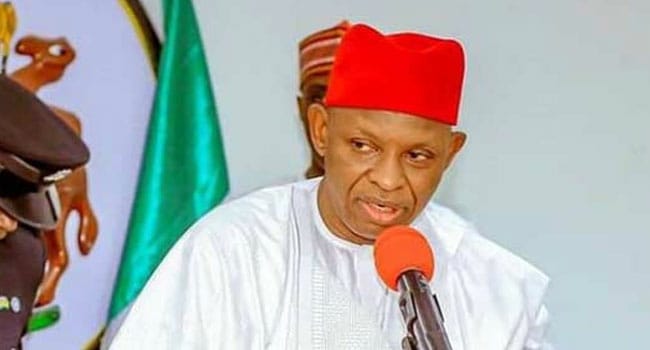
Abba Kabir Yusuf

Kwankwasiyya Movement: A Model of excellence in aspirants’ selection

By Dr. Mansur Hassan

The Kwankwasiyya movement, founded and led by Senior Dr. Rabi’u Musa Kwankwaso, has emerged as a dominant force in Nigerian politics, particularly in Kano State. With a reputation for championing transparency, good governance, and the empowerment of the masses, Kwankwasiyya has also developed a unique and highly effective method for selecting political candidates. This process reflects the movement’s deep-rooted commitment to democracy, grassroot participation, and merit-based leadership.

A Thoughtful Approach to Candidate Selection

At the heart of the Kwankwasiyya movement’s political ideology is the belief that leadership should reflect the will of the people while upholding competence, dedication, and integrity. In line with these principles, the movement has designed a multi-layered process for selecting candidates for both primary and secondary elections, ensuring that only the best and most qualified individuals are chosen to represent the party.

The selection process begins at the local level, where the local government caucuses play a crucial role. The caucus engages in a consensus-building exercise among the aspirants within the constituency. This initial step underscores the movement’s emphasis on local representation and grassroots decision-making, allowing the community to participate in choosing those who will best serve their interests.

In cases where the consensus fails and the local leadership is unable to agree on a single candidate, a screening process is initiated. This screening is designed to assess the qualifications, leadership capabilities, and electability of the aspirants. The goal is to streamline the number of candidates, ensuring that only the most capable individuals advance to the next stage.

The Role of the National Leader

Once the screening process is complete, the shortlisted candidates are presented to the national leader, Senior Dr. Kwankwaso, for final review. Here, the movement’s supreme leader plays a pivotal role in ensuring that the selected candidates align with the values and vision of the Kwankwasiyya movement. Dr. Kwankwaso, with his vast political experience and insight, assesses whether the shortlisted candidates truly reflect the will and aspirations of the people. If there is any indication that the candidates do not align with popular sentiment, the national leader has the authority to call for further changes, ensuring that the process remains fair and representative.

However, when the consensus and the screening process successfully produce a candidate that meets both the local caucus’s approval and the movement’s broader ideological standards, the national leader endorses the candidate. This method guarantees that the selected candidates are not only popular but also competent, ethical, and aligned with the movement’s long-term vision for societal progress and development.

An Open Democratic Platform

Despite the careful and thoughtful selection process, the Kwankwasiyya movement remains committed to upholding democracy within the party. For any aspirant who feels dissatisfied with the outcome of the selection process, the opportunity to contest in the party primaries remains open. This option ensures that all candidates have a fair chance to present their case to the party’s larger membership, maintaining transparency and inclusivity within the movement.

This democratic safety valve is another reason why Kwankwasiyya’s method of candidate selection stands out. It allows for robust internal debate and competition while ultimately reinforcing party unity and strength.

A Cornerstone of Political Dominance

The Kwankwasiyya movement’s candidate selection process is a key factor behind its sustained political dominance in Kano State and its growing influence across Nigeria. The movement’s ability to produce competent, popular, and well-prepared candidates has earned it the trust of the people. The process ensures that leadership emerges from a foundation of integrity, merit, and accountability, reflecting the movement’s broader commitment to progressive governance.

Beyond mere electoral success, the Kwankwasiyya movement represents a political ideology that is centered on empowering the masses, fostering development, and ensuring that governance is responsive to the needs of the people. Its candidate selection process is a reflection of this ideology, ensuring that leadership is not imposed but earned through consensus, merit, and democratic principles.

Conclusion

The Kwankwasiyya movement, under the guidance of Senior Dr. Rabi’u Musa Kwankwaso, has set an exemplary standard for political organization and candidate selection. By balancing grassroots participation with strong national leadership, the movement has created a model that ensures only the best candidates emerge, reinforcing its dominance and appeal. As Kwankwasiyya continues to grow in influence, its political ideology and practices will undoubtedly shape the future of Nigerian politics, setting a standard for others to follow.

Mansur Hassan, PhD
Secretary, Kwankwasiyya movement
Kano state.

JUST IN: Kano Government Eases Curfew by 12 Hours

By Uzair Adam

Kano State Government has announced a relaxation of the curfew, which will now be in effect from 6 AM to 6 PM.

This decision was revealed by Kano Police Commissioner Dogo Salman following a joint security meeting with Governor Abba Yusuf at the Government House.

Commissioner Salman highlighted the government’s ongoing commitment to maintaining peace and order while gradually lifting restrictions to allow residents to resume normal activities.

The adjustment in curfew hours reflects the improved security situation and the efforts of security agencies in restoring normalcy to the state.

Governor Yusuf urged citizens to cooperate with law enforcement and adhere to the revised curfew regulations to ensure continued safety and stability in Kano.

New Kano CP vows to tackle thuggery

By Abdullahi Mukhtar Algasgaini 

The newly appointed Kano State Commissioner of Police, CP Salman Dogo Garba, has convened a strategic meeting with Area Commanders, Divisional Police Officers (DPOs), Tactical and Operational Commanders.

This meeting is part of a broader effort to strengthen security and safeguard the lives and properties of all residents in the state. 

The Commissioner of Police appreciates the officers for their commitment and dedication to crime fighting and maintaining peace despite the daunting security situation in the state.

He further charged them to remain resolute and redouble efforts towards surmounting the scourge of thuggery and other violent criminal activities that had hitherto bedevilled the good people of the state. 

He charged the officers to continue with the community policing engagements with their stakeholders and to ensure no thuggery (Daba) incidents are recorded in their areas of responsibilities.

They are also warned to always be available to supervise their men, as the CP will be going around on supervision. 

Dogo reminded the officers that accountability and professionalism will be his driving forces.

In addition, he urges all the supervising officers to ensure the cleanliness of their offices, including detention facilities. 

The CP reiterated that “I can not be sitting in my office to allow thugs (Yan Daba) and other perpetrators of criminal activities to disrupt the peace being enjoyed in the State.”

Court postpones ruling on Kano Emirates Council repeal law

By Sabiu Abdullahi

A Federal High Court in Kano has postponed its ruling on the validity of the Kano Emirates Council Repeal Law 2024 to 2 pm today.

The judgement was initially set for 12 pm but was shifted before midday, and all parties in the suit were notified. 

The Kano Emirates Council Repeal Law 2024 was recently passed by the Kano State House of Assembly and signed into law by Governor Abba Yusuf.

The law led to the dethronement of Emir Aminu Ado Bayero and the reappointment of Muhammadu Sanusi II as the 16th Emir of Kano.

It also reversed the creation of four emirates established by former governor Abdullahi Ganduje in 2020. 

However, Sarkin Dawaki Babba, Aminu Danagundi, challenged the legality of the new law and asked the court to declare it null and void.

After hearing the motion last Friday, Justice Abdullahi Liman of the Federal High Court sitting in Kano adjourned the ruling till today. 

Counsel to the State House of Assembly and its speaker, Eyitayo Fatogun (SAN), informed the court of a notice of appeal filed at the Court of Appeal, seeking a stay of proceedings.

However, Justice Liman noted that there was no evidence that the appeal had been entered nor any formal application for a stay filed. 

The court’s ruling today will determine the fate of the Kano Emirates Council Repeal Law 2024 and its implications for the emirates in Kano State.

Kano CP denies Govnor Yusuf’s disobedience allegations

By Uzair Adam Imam

Kano State Police Commissioner, Usani Gumel, has vehemently denied allegations of disobeying Governor Abba Yusuf’s orders and taking instructions from unknown sources.

Gumel reiterated his commitment to maintaining peace and order in the state, citing his track record as a champion of community safety and sustainable peace.

The denial comes on the heels of accusations leveled by the state Attorney General, Haruna Dederi, who alleged that Gumel consistently disobeyed the governor’s instructions and unilaterally banned Eid-el Kabir festivities without consultation.

Dederi further accused the police commissioner of attempting to undermine the constitutional authority of the governor by taking instructions from unknown sources.

The ongoing crisis in Kano State revolves around the contentious emirate issue, with two claimants, Aminu Ado Bayero and Muhammadu Sanusi II, vying for the throne.

This has created palpable tension in the state, prompting the police to ban traditional Sallah Durbar processions to maintain peace.Gumel expressed shock and surprise at the allegations, noting his dedication to upholding the law and maintaining order in the state.

He reassured the public that the police would enforce the existing court order and work to resolve the emirate issue, prevailing on the two contending parties to respect the law.

Governor Yusuf accuses CP of disobeying orders

By Uzair Adam Imam

Kano State Governor, Abba Kabir Yusuf, has accused the State Police Commissioner of disobeying his directives, particularly regarding the banning of Eid-el-Kabir festivities.

The Commissioner’s actions have been described as “disheartening and dangerous to peaceful coexistence” by the State Attorney General and Commissioner for Justice, Haruna Isa Dederi.

The government explained that the Commissioner’s decision to ban the festivities was unilateral, without consulting the Governor or the State Security Council.

This has raised concerns, as the Governor is the Chief Security Officer of the State.

The government also addressed the recent judgment by the Federal High Court No. 3 in Kano, which claimed that the former emir’s fundamental rights were infringed upon, including allegations of house arrest.

The government disputed this, stating that the former emir was not forced into Gidan Nassarawa, a government property, and was accompanied by security guards.

The government reiterated the Governor’s constitutional duty to ensure the protection of lives and properties.

They urged the people of Kano to continue their legitimate activities peacefully and promised to keep them informed as events unfold.

The government called on well-meaning Nigerians and international friends to intervene and allow the people of Kano to live in peace, stating that any attempt to undo the peace is an assault on democracy.

Correspondents’ Chapel boycotts Kano govt activities over alleged maltreatment

By Uzair Adam Imam

The Correspondents’ Chapel of the Nigerian Union of Journalists (NUJ) in Kano State has announced a boycott of all Kano State Government activities, effective immediately.

This decision comes in response to the alleged persistent mistreatment of chapel members by the government and its agents while carrying out their duties.

According to Aminu Ahmed Garko, Chairman of the Correspondents’ Chapel, despite efforts to engage with the government to address these issues, there has been no improvement.

Members continue to face harassment, intimidation, and physical assault while performing their duties.

The government’s prioritization of non-professionals over trained journalists has also been criticized, with the chapel stating that this has become a state policy to sideline those best equipped to handle the job.

As a result, the chapel has announced that its members will no longer participate in press conferences, cover government events, or conduct interviews with state officials until a tangible commitment to press freedom and journalist safety is seen.

All members have been directed to comply with this directive and join the protest against the ill treatment of journalists in Kano State.

The chapel believes that a free and independent press is essential to a functioning democracy and will not stand idly by while its members are mistreated and intimidated.

Garko stated that the chapel will only reconsider its position when the government demonstrates a genuine commitment to addressing these issues and ensuring a safe and enabling environment for journalists to perform their duties.

Court halts reinstatement of Sanusi as emir of Kano

By Uzair Adam Imam

A Federal High Court in Kano has issued an order halting the reinstatement of Muhammadu Sanusi II as the Emir of Kano.

The court’s decision came in response to a lawsuit filed by Alhaji Aminu Bappa Dan Agundi, also known as Sarkin Dawaki Babba, on Thursday.

Justice A.M Liman, the presiding judge, granted an interim injunction suspending the implementation of the repealed Kano Emirate law, which aimed to reinstate Sanusi II as the Emir.

The court ordered that the operation of the Kano State Emirate Council (Repeal) Law, 2024, be suspended, affecting all offices and institutions created under the provision of the Kano State Emirate Council Law, 2019.

The court also restrained the 5th to 8th respondents (not specified in the report) from enforcing, executing, or implementing the repealed law.

Additionally, the court ordered the maintenance and preservation of the status quo by all parties involved, pending the hearing and determination of the plaintiff’s originating motion.

The court also granted an order for an accelerated hearing on the matter.

This development means that Sanusi II’s reinstatement as Emir of Kano has been put on hold pending the court’s further decision.

Sanusi Lamido reinstated as Emir of Kano, dothroned emirs ordered to vacate palaces

By Uzair Adam Imam

Governor Abba Kabir Yusuf of Kano State has reappointed Malam Muhammadu Sanusi II as the Emir of Kano, a position he was removed from in 2020.

The governor announced the appointment on Thursday at the Government House, shortly after signing the Kano Emirate Law as amended.

The signing ceremony was attended by the Deputy Governor, Speaker of the State Assembly, and other principal officers of the government.

With this development, Sanusi II has been officially reinstated as the Emir of Kano.

In a related development, Governor Yusuf has directed the five former emirs of Kano, Bichi, Rano, Gaya, and Karaye to vacate their palaces within 48 hours, starting from 5:00 pm on the day of the announcement.

They have also been ordered to hand over all properties in their possession to the Commissioner for Local Government/Deputy Governor.

This move is seen as a reversal of the decision made by former Governor Abdullahi Ganduje, who had dethroned Sanusi II in 2020 following a personal rift.

More details to follow…

JUST IN: Kano assembly repeals emirates council law

By Uzair Adam Imam  

The Kano state house of assembly has passed the Kano Emirates Council Law (Repeal Bill) 2024 after scaling its third reading.  

The law has abrogated the establishment of five new Emirates in the state. All offices established under the repealed law have been set aside by the new bill. 

Also, all district heads elevated or appointed under the repealed law are to revert to their previous positions. 

The Kano State Emirates Council (Amendment number 2) Law, 2024, was sponsored by the Majority Leader and member representing the Dala Constituency, Lawan Hussaini Chediyar Yan Gurasa.  

The law, which created five new emirates, was first assented to by ex-Governor Abdullahi Umar Ganduje on December 5, 2019. 

A principal officer of the assembly, who did not want his name mentioned, said, “No Jupiter can stop the assembly from amending the law.”