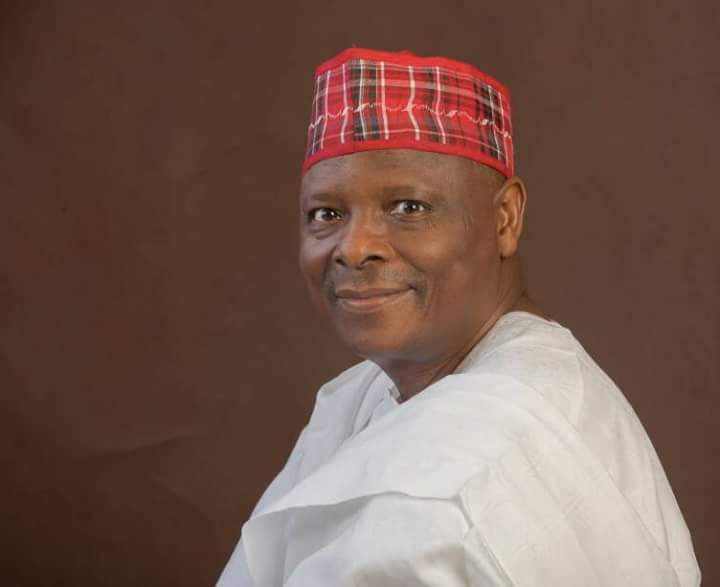
Abba Kabir Yusuf

Governor Yusuf reshapes Kano administration with new appointments

By Abdullahi Mukhtar Algasgaini

In an administrative reshuffle aimed at enhancing governance, Kano State Governor, Alhaji Abba Kabir Yusuf, has approved a series of new appointments and promotions for key officials.

The governor’s spokesperson, Sunusi Bature Dawakin Tofa, confirmed the changes in a statement released on Wednesday, January 28th, 2026.

The newly appointed officials include Hon. Abdulkadir Balarabe Kankarofi, who moves from Senior Special Assistant-Protocol I to Special Adviser on Humanitarian Affairs. Hajia Aisha Tamburawa, formerly a Supervisory Councillor in Dawakin Kudu, is now Special Adviser on Positive Propaganda.

Several promotions were also announced within state agencies. Engr. Mukhtar Yusuf ascends from Deputy Managing Director to Managing Director of the Water Resources Engineering and Construction Agency (WRECA), with Zakari Usman Balan stepping into the vacated Deputy role.

Similarly, Engr. Abba Kankarofi is now Managing Director of the Kano Road and Maintenance Agency (KARMA), having previously served as its Deputy Managing Director.

Other notable appointments include Dr. Mukhtar Bello Maisudan, a senior lecturer at Bayero University Kano, as Executive Secretary of the State Scholarship Board, and Hon. Musayyib Kawu Ungoggo as Managing Director of the Kano Zoological Garden.

Governor Yusuf charged the appointees to justify their new roles through dedication, transparency, and a firm commitment to the people of Kano. He reiterated that the moves align with his administration’s focus on strengthening institutions and delivering people-oriented governance under the “Kano First Agenda.”

2027: APC grants Governor Abba Kabir Yusuf automatic ticket, Ganduje declares

By Sabiu Abdullahi

Former National Chairman of the All Progressives Congress (APC), Dr. Umar Abdullahi Ganduje, has announced that Governor Abba Kabir Yusuf will enjoy full backing of the party ahead of the 2027 governorship election in Kano State.

Ganduje made the declaration while formally receiving Yusuf back into the APC. He stated that all other aspirants interested in the governorship seat had agreed to step aside in favour of the governor.

According to him, “I can categorically tell you that you are going to wins 2027 with a landslide because all those contesting for the same seat have agreed to allow you alone go for it.”

He described Yusuf’s return as a historic moment for the party. “To us, leaders of the APC, this is a memorable occasion we are all waiting for. I strongly welcomed Governor Abba Kabir Yusuf back to his home,” Ganduje said.

The former party chairman recalled the governor’s earlier exit from the APC and expressed appreciation over his return. He said, “We were in APC together with you, it was formed with you, but later on because of some political differences, political redirection, you left the party to NNPP. But now we are thankful that you are back to our party and your home.”

Ganduje also praised Yusuf’s leadership style and governance approach. “You as our brother, the Governor of Kano State, you are a progressive politician from your utterances, your policies and the implementation of those policies,” he added.

He stressed that within the APC structure, Governor Yusuf now occupies the position of party leader in Kano State. Ganduje noted that the declaration was meant to end speculation and internal disagreements over the party’s leadership in the state.

He further spoke on President Bola Ahmed Tinubu, describing him as a leader who does not discriminate. Ganduje said the president treats Nigerians equally, without regard to religion or ethnicity, and expressed confidence that Yusuf would secure victory in the 2027 election.

In his remarks, the Deputy President of the Senate, Senator Barau Jibrin, praised Governor Yusuf for his decision to return to the APC. He maintained that the move was firm and irreversible.

The development has continued to draw attention within political circles as preparations gradually begin ahead of the 2027 polls.

BREAKING: Finally, Kano governor Abba Kabir Yusuf to rejoin APC

By Sabiu Abdullahi

Kano State Governor, Alhaji Abba Kabir Yusuf, will return to the All Progressives Congress (APC) on Monday, 26 January 2026, days after he resigned from the New Nigeria Peoples Party (NNPP).

The development was disclosed in a statement issued on Sunday by the governor’s spokesperson, Sunusi Bature Dawakin Tofa.

According to the statement, Yusuf initially joined the APC in 2014 and emerged winner of the party’s primary election for the Kano Central Senatorial seat. He later stepped down from the contest in favour of Senator Rabiu Musa Kwankwaso.

The statement explained that the governor’s decision to rejoin the APC followed years of political participation on different platforms, including his recent stay in the NNPP.

It added that current realities linked to governance, national cohesion and development informed his move back to the APC, which he described as “a familiar and structured platform for progressive governance.”

Governor Yusuf said his return to the ruling party would boost collaboration with the Federal Government, fast-track infrastructural projects, strengthen security coordination and improve service delivery across Kano State.

He also noted that the move would promote political stability and unity within the state.

The statement further revealed that on Monday, the governor will formally register as an APC member in Kano. He will do so alongside 22 members of the Kano State House of Assembly, eight members of the House of Representatives and the 44 local government chairmen in the state.

Yusuf is also expected to formally inaugurate the APC electronic registration exercise in Kano on the same day.

Gov. Yusuf quits NNPP amid escalating internal crisis in Kano

By Sabiu Abdullahi

Kano State Governor, Alhaji Abba Kabir Yusuf, has resigned his membership of the New Nigeria People’s Party (NNPP), attributing his decision to worsening internal disputes and a resolve to protect the overall interest of the people of Kano State.

The development was disclosed in a press statement dated January 23, 2026, and signed by the governor’s spokesperson, Sunusi Bature Dawakin Tofa.

According to the statement, Governor Yusuf conveyed his decision in a letter addressed to the Chairman of Diso-Chiranchi Ward of the NNPP in Gwale Local Government Area, with the resignation taking effect from Friday, January 23, 2026.

In the letter, the governor stated, “I write with a deep sense of gratitude to formally notify the leadership of the New Nigeria People’s Party (NNPP) of my decision to resign my membership of the party, with effect from Friday, 23rd, January 2026.”

Governor Yusuf expressed appreciation to the party for the opportunity and support it offered him throughout his time as a member.

“I remain sincerely appreciative of the opportunity given to me by the party, its leadership, and members across Kano State to be part of its political journey since 2022, as well as the support, goodwill, and cooperation extended to me during my time in the party.”

He explained that persistent leadership disputes and legal battles had continued to destabilize the party at the national level.

“In recent times, the party has been confronted with persistent internal challenges arising from leadership disagreements and ongoing legal processes, many of which are presently before the courts for judicial determination.”

The governor noted that the situation had led to serious divisions and weakened unity within the party.

“The growing disenfranchisement among party members has created deep divisions within the party structure, resulting in cracks that appear increasingly irreconcilable and have generated uncertainty at both state and national levels.”Governor Yusuf said his resignation followed careful consideration and was based strictly on public interest.“

After careful reflection, and without prejudice to the party’s capacity to resolve its internal challenges, I have come to the conclusion that my resignation is in the best interest of the people of Kano State.”

He added that the move was made without animosity and with a continued commitment to peace and development.

“This decision is taken in good faith, without any ill will, and with a continued commitment to peace, unity, and the progress of Kano State.”

The statement disclosed that the governor’s resignation was accompanied by that of 21 members of the Kano State House of Assembly, eight members of the House of Representatives, and 44 local government chairmen across the state.

The NNPP acknowledged receipt of the resignation letter through the party’s Secretary in Diso-Chiranchi Ward, Hon. Kabiru Zubairu, who praised the governor’s achievements in governance.

“I wish to concur with His Excellency on the lingering crisis in our party, though we are trying our best to contain it, but we have no option than to accept the resignation of a one and most performing Governor of the NNPP.”

Kwankwaso softens stance to supporters on APC defection

By Uzair Adam

Former Kano State Governor and leader of the Kwankwasiyya Movement, Senator Rabiu Musa Kwankwaso, has said mounting political tension and pressure on grassroots officials informed his decision to allow some of his supporters in the state to align with the All Progressives Congress (APC).

Kwankwaso made the disclosure in a video message that went viral on Tuesday evening, where he described the political climate in Kano as increasingly tense and emotionally draining for local government officials following the political dominance of former Governor Abdullahi Ganduje and President Bola Ahmed Tinubu.

He said the situation had taken a serious toll on several chairmen, councillors and other political appointees, many of whom reached out to him in distress.

According to Kwankwaso, some of the officials were experiencing sleepless nights and deep confusion, while others reportedly required medical attention due to the pressure they were under.

“Many chairmen and councillors called me to explain what they were going through. Some could not sleep, some were deeply confused, and some were even placed on hospital drips,” he said.

The former governor explained that the rising tension compelled him to consult widely in order to reduce the hardship being faced by his loyalists, noting that many of their legitimate expectations from government were yet to be met.

He said maintaining a rigid political position under such circumstances could have worsened the suffering of the affected officials, which led to the decision to allow them to take steps that would bring relief.

“We agreed that all chairmen, councillors, supervisory councillors and anyone who was asked to sign should go ahead and do so. We have no issue with that,” Kwankwaso said.

He dismissed suggestions that the move was linked to early preparations for the 2027 general elections, stressing that the time for such political battles had not yet arrived.

“2027 is still far away. We pray that Allah spares our lives to reach that time. Our supporters are everywhere; we know them and they know themselves,” he added.

Kwankwaso expressed hope that the decision would help calm political tension in Kano State, particularly among those he said were being subjected to pressure, while thanking residents of the state for their patience and understanding.

He also praised Governor Abba Kabir Yusuf, noting that the governor had recently acknowledged the achievements of the Kwankwasiyya administration and highlighted actions of the immediate past government which, according to him, hindered progress in the state.

In the video, Kwankwaso further alleged that the state government had introduced measures aimed at intimidating local government officials and political appointees.

He claimed that chairmen, councillors, secretaries and other office holders were allegedly compelled to write their names on lists indicating whether they supported the Kwankwasiyya movement or the Ganduje political camp.

Describing the practice as unacceptable, Kwankwaso said such actions would discomfort any well-meaning resident of Kano State, regardless of political affiliation.

He also reflected on the 2015 political transition, alleging that acts of betrayal at the time resulted in years of hardship for his supporters.

“We looked back at history and remembered what happened in 2015, when our supporters suffered for eight years because of political disloyalty,” he said.

The video has continued to generate reactions within and outside Kano State, with supporters and critics offering differing interpretations of Kwankwaso’s remarks and the broader political implications.

When power meets purpose: Why Abba Kabir Yusuf’s APC move is Kano’s necessary turn

By Abdulkadir Ahmed Ibrahim (Kwakwatawa), FNGE

In politics, moments arise when loyalty to a platform must give way to loyalty to the people. There are seasons when courage is not found in standing still, but in moving forward with clarity of purpose. Kano State stands at such a moment. The planned defection of Governor Abba Kabir Yusuf to the ruling All Progressives Congress is not an act of betrayal. It is a call to responsibility, a deliberate choice shaped by necessity, foresight, and the overriding interest of Kano and its people.

Perhaps power, when isolated, grows weak. Governance, when detached from the centre, struggles to deliver. Since the emergence of Abba Kabir Yusuf as governor, Kano has found itself standing alone in the national space. Federal presence is thin, strategic attention limited. The state that once sat confidently at the table of national influence now watches key decisions pass by without its voice fully heard. This isolation is not a reflection of the governor’s intent or capacity; it is the reality of operating outside the ruling structure in a political environment where access often determines outcomes.

It is common knowledge that governors do not govern in a vacuum. Roads, security, education, health, and economic revival depend on cooperation between state and federal authorities. When that bridge is weak, the people bear the cost. Kano today needs bridges, not walls. It needs inclusion, not distance. It needs a seat where decisions are shaped, not a gallery where outcomes are merely observed.

The internal tension surrounding the emirate question has further deepened uncertainty. While history and tradition demand respect, governance demands stability. Prolonged disputes distract leadership, unsettle investors, and weigh heavily on public confidence. At such a time, a governor requires strong institutional backing and political leverage to navigate sensitive reforms with balance and authority. Standing alone makes that task far more difficult than it ought to be.More troubling is the visible absence of federal projects and partnerships. In a country where development is often driven by political proximity, Kano cannot afford to remain on the margins. A state of its stature, population, and historical relevance deserves more than sympathetic silence. It deserves action, presence, and partnership.

It is within this context that Abba Kabir Yusuf’s movement toward the APC must be understood. Not as personal ambition, but as strategic realism. Not as political convenience, but as a pathway to unlock opportunities long denied by distance from power.

By extension, Senator Rabi’u Musa Kwankwaso stands at a defining crossroads. History has placed him in a rare position. He is respected across party lines, commands a loyal following, and remains one of the most influential political figures in Northern Nigeria. Above all, President Bola Ahmed Tinubu holds him in high regard. They share a common political generation, having both served as governors in 1999, shaped by the same democratic rebirth and seasoned by time and experience.

In addition, one can recall that both Rabi’u Kwankwaso and Bola Tinubu were at the National Assembly under the platform of the now defunct Social Democratic Party, SDP, during the short-lived 3rd Republic. The former was the Deputy Speaker at the House of Representatives while the latter was a Senator together with Late Senator Engineer Magaji Abdullahi who was also elected under the same SDP ticket.

Late Engineer Magaji Abdullahi a former Deputy Governor of Kano State (2003 to 2007) and also a former Chief Executive of the State owned Water Resources and Engineering Construction Agency, WRECA, in the 1980s was a benefactor of Engineers Rabi’u Kwankwaso and Abba Kabir Yusuf were they first met as members of staff.

The late successful Kano technocrat, accomplished engineer, career civil servant charismatic and vibrant national politician was a close ally and associate of Asiwaju Bola Ahmed Tinubu starting from the SDP days and the duo was some of the foundation members of the APC.

The President’s repeated extension of an olive branch to Kwankwaso is therefore not accidental. These gestures are acknowledgements of value, respect, and shared history. They signal recognition of Kwankwaso’s political weight and his capacity to contribute meaningfully at the national level. When such calls come consistently, wisdom suggests they should not be ignored. Kwankwaso should heed the call by moving along with the political direction of Kano State.

The truth is unavoidable. The political home Kwankwaso once built no longer offers the shelter it promised. The NNPP is enmeshed in internal crises that threaten its very identity. Court cases over party ownership and recognition pose serious risks. With the Independent National Electoral Commission recognising one faction amid raging disputes, the platform has become unstable ground for any serious electoral ambition. Under these circumstances, entering the 2027 race either with Abba Kabir Yusuf seeking re election on the NNPP platform or Kwankwaso pursuing a presidential ambition would amount to gambling against history and reason.

The alternatives are no better. The Peoples Democratic Party is fractured, weakened by internal contradictions and persistent leadership disputes. Its once formidable structure now struggles to inspire confidence. The African Democratic Congress, on the other hand, is ideologically and historically uncomfortable for Kwankwaso. Many of its leading figures were once his fiercest rivals. They resisted him in the PDP and are unlikely to allow him meaningful influence now. Political memory is long, and grudges rarely dissolve.

Beyond current realities lies a deeper lesson from history. Regional parties, no matter how passionate or popular within their strongholds, have rarely succeeded on the national stage. From the First Republic to the Fourth, the pattern remains consistent. Nigeria rewards broad coalitions, not narrow bases. Power flows where diversity converges.

The APC today represents that convergence. It is not perfect, but it is expansive. It is national in outlook, broad in structure, and firmly in control of the federal machinery. For Kano, aligning with the APC is not surrender. It is strategy. It is an investment in relevance, access, and development.

For Abba Kabir Yusuf, the move is about delivering tangible dividends of democracy. For Kwankwaso, it is about securing a future that reflects his stature and experience. Loyalty, in its truest sense, is not blind attachment to a platform. It is fidelity to the welfare of followers, to the aspirations of a people, and to the demands of the moment.

Politics is not static. It is a living conversation between ideals and realities. When realities change, wisdom adapts. Kano’s future demands bold choices, not sentimental delays. The music is louder now. The moment is clearer. The door is open.

History favours those who recognise when to move. For Abba Kabir Yusuf and Senator Rabi’u Musa Kwankwaso, the path toward the APC is not a retreat from principle. It is a step toward purpose. They should go back to where they rightly belong. And for Kano, it may well be the bridge back to the centre, where its voice belongs and its destiny can be fully pursued.

Abdulkadir, a Fellow of Nigerian Guild of Editors, former National Vice President of the NUJ, Veteran Journalist, was the Press Secretary of the former Deputy Governor Late Engineer Magaji Abdullahi.
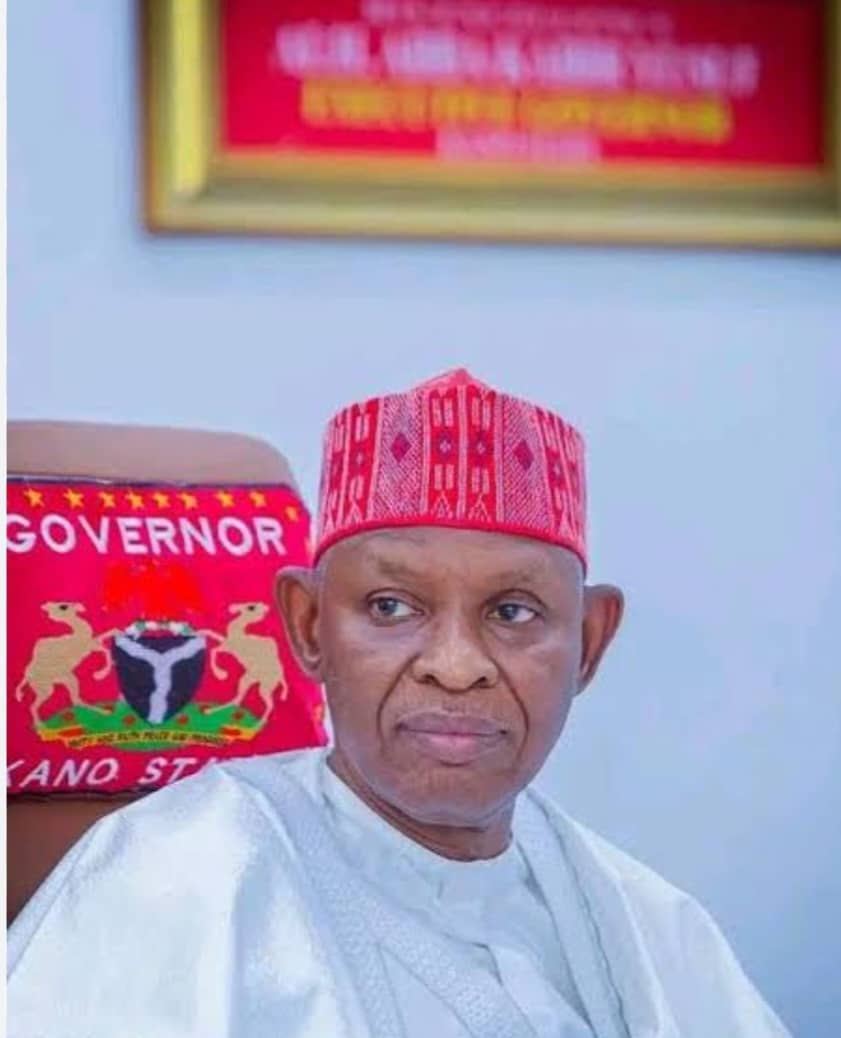
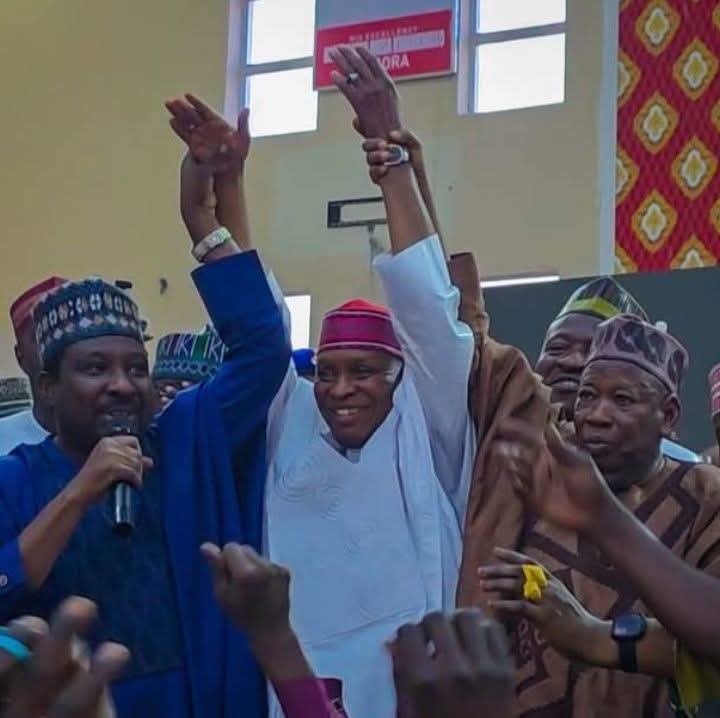
Kano governor to defect to APC Monday

By Anwar Usman

The governor of Kano State, Abba Yusuf, will officially join the ruling All Progressives Congress, APC, on Monday, as provided by sources familiar with the development.

Reports have it that, the governor will be received by the Vice President Kashim Shettima and the national chairman of the party Yitwalda Nentawe in Abuja.

Additionally, the party leader in Kano, Abdullahi Ganduje, has been recalled from a Dubai trip, just as the Kano state chairman, Abdullahi Abbas, was asked to cut short his lesser hajj trip to issue APC membership card to the governor at his Diso Ward of Gwale Local Government Area of Kano State during the week.

The Daily Reality reports hat President Bola Tinubu was initially reluctant to accept Mr Yusuf’s defection without his godfather, who commands cult following in Kano and some parts of the North, as said by a source familiar with the development.

The entire local government caucuses in the state had made aattempt to convince the governor to join the ruling APC by showing open alliance with the governor and calling on him to lead them into the APC.

Recall that, earlier this week members of the NNPP from some local government called on the governor to join the APC wich caused a backlash in the Kwankwasiyya camp, with some describing it as betrayal and many adherents calling out the governor and reiterating loyalty to Mr Kwankwaso.

[OPINION]: A swift response to insecurity: commending Governor Abba Kabir Yusuf

By Anas Abbas

The launch of Kano State Security and Neighbourhood Watch Guard on December 23 by Governor Abba Kabir Yusuf is a timely and reassuring response to growing concerns about insecurity across the state.

At a moment when residents were increasingly raising alarm over safety in their communities, the governor chose action over silence.

In recent months, reports of petty crimes and organised disturbances have unsettled many neighbourhoods, threatening Kano’s long-held reputation as one of the more peaceful states in the North.

These concerns were not distant headlines but daily experiences discussed in markets and almost everywhere in Kano state. Acknowledging this reality, Governor Abba Kabir Yusuf’s administration moved swiftly to confront the challenge.

Central to the initiative is the deployment of 2,000 security personnel, carefully drawn from all local government areas of the state. This structure ensures broad representation, local knowledge, and community trust key elements in effective crime prevention. By embedding security personnel within familiar environments, the government strengthens early detection and rapid response.

The neighbourhood watch guard complements existing security agencies rather than replacing them. It is designed to close the gaps where formal policing alone may struggle, particularly at the grassroots. This layered approach reflects a practical understanding that modern security requires cooperation, intelligence sharing, and community participation.

Beyond physical protection, the initiative delivers psychological reassurance. Visible security presence restores confidence, discourages criminal behaviour, and reassures residents that the government is attentive to their fears. Insecurity thrives where people feel abandoned; decisive leadership reverses that narrative.

Governor Abba Kabir Yusuf deserves commendation for the timing of this intervention. Launched during a period of heightened social and economic activity, it demonstrates foresight and sensitivity to public safety risks. It also reinforces the principle that governance must be proactive, not reactive.

However,as implementation unfolds, sustained training, accountability, and respect for human rights will be essential to long-term success. If properly managed, the neighbourhood watch guard can become a durable pillar of community safety.

In taking immediate steps to safeguard lives and property, Governor Abba Kabir Yusuf has sent a clear message: the security of Kano’s people is paramount. This initiative stands as a strong example of responsive leadership in challenging times.

[OPINION]: AKY, security and the road ahead

By Engr. Kabiru Garba

Kano State remains one of Nigeria’s most populous states, where security is not an abstract policy but a daily reality.

For every citizen, security is the bedrock of daily life, commerce, and culture. It is undoubtedly a concern that resonates from the crowded city markets to the vast, farm-lined hinterlands.

For Governor Abba Kabir Yusuf, confronting this challenge has demanded a strategy that is equally multifaceted. It requires moving beyond a centralised command to embedding safety within the communities themselves. This is not a top-down decree, but rather a ground-up compact.

This conviction now drives a multi-million naira, multi-layered initiative aimed at turning the tide through visibility, mobility, and local intelligence.

The most visible symbol of this compact is the newly inaugurated Kano State Neighbourhood Watch Corps.

On Tuesday, at the Sani Abacha Stadium, the governor stood before 2,000 recruits, comprising of 1,870 men and 130 women drawn from every one of the state’s 44 Local Government Areas.

Their passing-out parade activated a frontline distinct from the conventional vigilante groups. These corps members have undergone formal training and will be legally equipped. Their primary advantage is intrinsic: they are local. They know the alleyways, the dialects, the rhythms, and the people.

Their mandate is to act as the first line of defence and intelligence, helping to combat crimes like banditry, kidnapping, and rural violence that have tested the region’s peace.

Recognising that even the most knowledgeable personnel need mobility to cover ground, the state has made a substantial investment in logistics.

At the inauguration, Governor Yusuf commissioned 88 new Hilux patrol vehicles and 440 motorcycles for the corps. This fleet is a force multiplier, designed to make security presence constant. The practical goal is to shrink emergency response times, enable patrols across difficult terrain, and ensure a visible, reassuring presence that deters crime before it begins.

This deployment is part of a sustained financial commitment. Just before the launch, the governor approved N484 million to procure 300 Boxer motorcycles to further amplify the corps’ reach at the community level.

This sequential investment reveals a strategy of layered reinforcement, building capacity piece by critical piece.

The neighbourhood watch initiative is the Kano’s newest layer in a security architecture that has been under construction.

Months earlier, in November, the governor targeted areas under acute pressure. He provided 10 vehicles and 50 motorcycles to the federal-state Joint Task Force (JTF). This aimed at boosting their operational efficiency in seven frontline local government areas: Kiru, Tsanyawa, Kunchi, Gwarzo, Shanono, Tudun Wada, and Doguwa.

This support was a direct response to immediate threats, enhancing rapid response and inter-agency coordination in the state’s most vulnerable regions.

Perhaps the most forward-thinking layer of Governor Abba’s strategy focuses on protection beyond immediate conflict.

In May this year, he approved the immediate recruitment of 17,600 security guards for public schools across Kano.

This move, while distinct from law enforcement, addresses a deep societal anxiety. By hardening these soft targets, the government seeks to safeguard not only buildings but the state’s future, its children, and to restore a fundamental sense of normalcy and security to education.

Taken together, these actions sketch a comprehensive philosophy that simply says security is interconnected. It requires empowering formal task forces, establishing legitimate community-based forces, and proactively protecting critical social infrastructure.

Analysts observe that the governor’s approach tackles Kano’s complex security situation on three fronts: strengthening formal joint operations with the JTF, establishing a dedicated, locally-rooted armed corps, and hardening soft targets like schools.

Meanwhile, the substantial allocation of resources, from hundreds of millions for motorcycles to over a hundred patrol vehicles signals a clear prioritization of security expenditure in our dear state, Kano.

Therefore, it is the hope of every citizen that the true measure of this security compact will determine the state’s trajectory of peace and prosperity for years to come.

Gov Yusuf okays varsity allowance payment, orders NWU land review

By Uzair Adam

Kano State Governor, Alhaji Abba Kabir Yusuf, has assured that all outstanding earned academic allowances owed to staff of state-owned universities will be fully paid before the end of December 2025.

The governor also directed the Commissioner for Land and Physical Planning to conduct a comprehensive assessment of land belonging to Northwest University, Kano, with a mandate to revoke any illegal allocations or encroachments linked to the previous administration.

These decisions were disclosed in a statement issued on Thursday by the governor’s spokesperson, Sunusi Bature Dawakin Tofa.

Governor Yusuf spoke during the 35th State Executive Council meeting, which featured a courtesy visit by the Pro-Chancellor of Northwest University, Kano, alongside members of the Governing Council and the university’s management.

The visit was to formally present Prof. Amina Salihi Bayero as the newly appointed Vice-Chancellor of the institution.

Prof. Bayero, a pioneer academic staff member of the university, recently made history as the first female Vice-Chancellor to emerge from within the institution’s academic ranks.

According to the statement, the governor commended the Governing Council for concluding a rigorous and transparent process that led to the appointment of a substantive Vice-Chancellor.

He urged Prof. Bayero to carry out her responsibilities with diligence and to work closely with all stakeholders to enhance academic excellence throughout her five-year tenure.

Governor Yusuf further reassured the new management of his administration’s commitment to addressing the challenges confronting the university, while expressing optimism that the institution would witness improved academic standards and institutional growth under the new leadership.

Earlier, the Pro-Chancellor, Prof. Hafiz Abubakar, revealed that the selection process for the Vice-Chancellor lasted ten months and received unanimous approval from the Governing Council.

He added that the appointment of the university’s first female Vice-Chancellor had been widely welcomed.

In her remarks, Prof. Bayero expressed gratitude for the opportunity to serve and pledged her full commitment to the task ahead.

She also unveiled a 14-point agenda aimed at repositioning Northwest University, Kano, for greater academic and administrative excellence.