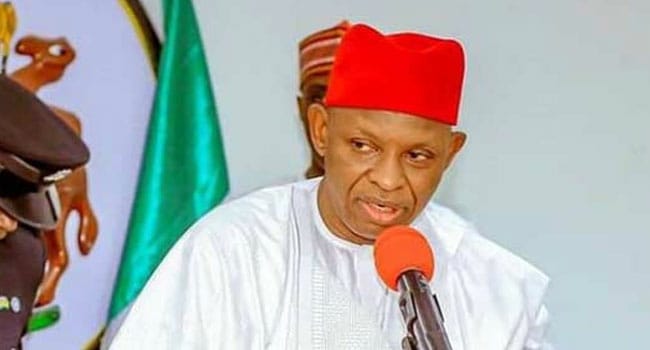
Abba Kabir Yusuf

Abba Kabir frowns at dilapidated conditions of state-owned teaching hospital

By Uzair Adam Imam

Governor Abba Kabir Yusuf of Kano State has expressed his deepest displeasure over the dilapidated conditions of Muhammad Abdullahi Wase Teaching Hospital, a government-owned and one of the busiest hospitals in the state.

The Governor showed dissatisfaction concerning the state of the facility when he led other top government functionaries on an unscheduled visit and on-the-spot assessment of the hospital over the weekend.

Sunusi Bature Dawakin-Tofa, the state’s Chief Press Secretary, made this disclosure in a statement he signed and made available to journalists on the weekend.

Dawakin-Tofa quoted the governor to have said, “As a teaching hospital for training medical professionals and provision of tertiary medical care, the hospital needs to be overhauled and expand its services, especially maternity services and care for the children.

“It is disheartening to meet the hospital that caters for the medical needs of thousands of patients daily in a condition uncomfortable for human inhabitation, a situation that needs to be checked and corrected,” Governor Yusuf stressed.

“I do instruct the management of the hospital to, as a matter of urgency, forward the request for rehabilitation and expansion of the hospital for immediate action to restore the lost glory of the gigantic health facility,” he added.

The Daily Reality, in an investigative report last year, recounted the monstrous condition of another state-owned hospital, Sir Muhammadu Sunusi Specialist Hospital, Yankaba, where patients were living miserably without water and light.

Our reporter visited the hospital and met some patients in dire situations, fighting excessive heat with their hand fans, which has thrown many of them into a dilemma.

The Daily Reality learned that all the taps in the hospital were not working, except one borehole, which the patients said works for less than one hour every day.

Recounting their experiences, some patient sitters complained that they used sachet water, alias pure water, to bathe, flush toilets, make ablutions and wash their dishes.

They also complained about the lack of electricity, which they said was responsible for many problems in the hospital.

NBA applauds Kano governor for sacking aides over death threat, derogatory remarks

By Muhammadu Sabiu

The Nigerian Bar Association (NBA) has commended Kano State Governor, Abba Kabir Yusuf, for his prompt response in dismissing two of his aides following a disturbing incident involving a death threat against judges of the governorship tribunal and derogatory comments made about Vice President Khasim Shettima.

The incident unfolded on Thursday when the Commissioner for Lands and Physical Planning, Adamu Aliyu Kibiya, addressed journalists during a special prayer session organized by NNPP supporters.

In a shocking statement, Kibiya issued a threat to the judges of the governorship tribunal, warning that anyone accepting a bribe to manipulate the judgement would face dire consequences.

Simultaneously, during the same prayer session, Special Adviser to the Governor on Youth and Sport, Yusuf Imam, known as Ogan Boye, made a series of derogatory remarks against Vice President Khasim Shettima concerning the impending gubernatorial tribunal judgement.

Barr. Suleiman Gezawa, Chairman of the NBA’s Kano branch, expressed his views on the matter in on Friday during an interview with a Nigerian online newspaper.

Gezawa called upon Governor Abba Kabir Yusuf to take disciplinary action against Commissioner Kibiya, emphasising that the statements made did not represent the official stance of the state government.

In a swift response, the State Commissioner for Information, Baba Halilu Dantiye, confirmed on Friday evening that Governor Abba Kabir Yusuf had terminated the appointments of Commissioner Adamu Aliyu Kibiya and Special Adviser Yusuf Imam.

Governor Yusuf also issued a directive, instructing all heads of Ministries, Departments, and Agencies (MDAs) to confine their comments and interviews to their respective offices.

Chairman Gezawa of the Kano NBA applauded Governor Yusuf’s decisive actions, emphasising the importance of distancing the administration from the careless comments made by his aides.

Gezawa further called upon security agencies to launch an investigation into the death threat issued by Commissioner Kibiya, suggesting that there might be ulterior motives behind the threat.

The swift response by Governor Abba Kabir Yusuf has been described by many as a clear show of commitment to upholding the integrity of the judicial process and preserving the dignity of public office in Kano State.

H.E. Abba Kabir Yusuf’s First 100 Days in Office 

By Mansur Hassan, PhD

In the first 100 days of His Excellency Abba Kabir Yusuf’s administration, significant strides have been made towards transforming and improving various sectors of governance in Kano State. This report highlights the key accomplishments achieved during this period. 

Governance and Social Welfare: 

Timely Salary Payments: The administration successfully implemented a policy to ensure that all civil servants receive their salaries promptly on the 25th of each month. This initiative has contributed to boosting the morale and well-being of the state’s workforce. 

Settlement of Outstanding NECO Fees: Addressing a longstanding concern, the government cleared the backlog of National Examinations Council (NECO) registration fees that were left unpaid by the previous government. This commitment to education underscores the administration’s dedication to investing in the future of Kano youth.  Governor Abba Kabir Yusuf has made a significant decision that will undoubtedly have a positive impact on the accessibility of education in our state. In a move that showcases his commitment to affordable education, the governor has decided to reduce the school fees across all state-owned tertiary institutions by an impressive 50 percent. This decision is poised to make higher education more attainable for a larger portion of the population, opening up new avenues of learning and skill development. By taking this step, Governor Abba Kabir Yusuf not only showcases his dedication to fostering a well-educated society but also demonstrates his understanding of the importance of reducing financial barriers to education. This move has the potential to encourage more students to pursue tertiary education and contribute to the overall growth and development of our state. 

Support for Students: A noteworthy achievement was the financial support provided to 7000 Kano State students studying at Bayero University Kano. This initiative eased the financial burden on students and their families, facilitating access to higher education. 

Higher Education Sponsorship: The administration extended its commitment to education by sponsoring first-class students to pursue master’s degrees at foreign universities. This initiative not only promotes academic excellence but also contributes to building a skilled and globally competitive workforce. 

Hospitals Renovation: The administration took a significant step in healthcare by renovating the Hasiya Bayero Paediatric Hospital, which had been previously sold during the Ganduje administration. This restoration ensures better healthcare access for Kano’s youngest residents. 

Infrastructure Development: The continuation of the Faculty of Engineering building at Yusuf Maitama Sule University underscores the administration’s focus on enhancing education infrastructure, fostering academic growth, and preparing students for technical careers. 

Infrastructure and Security: Kano State’s streets have regained their illumination, with functional street lights now contributing to improved security and a safer urban environment. 

Sanitation and Management: The reinstatement of the Kano State Refuse Management and Sanitation Board (REMASAB) highlights the administration’s commitment to maintaining clean and hygienic surroundings, promoting public health, and a better quality of life. 

Infrastructure Rehabilitation: The administration’s decision to continue the Wuju-Wuju road project, abandoned by the previous government, demonstrates dedication to completing unfinished projects and improving transportation infrastructure. 

Local Development: The commitment to extending 5 kilometres of roads in each local government contributes to improved connectivity and accessibility within communities, fostering economic growth and social development. 

Social Services and Security:

Revival of the CRC: The revival of the Community Reorientation Committee in Kano state is a significant step towards fostering community engagement and positive social change. By reestablishing this committee, the state is likely aiming to address various issues, promote awareness, and encourage citizens to participate in activities that contribute to the betterment of their communities. This effort reflects the state’s commitment to strengthening local connections and promoting a sense of shared responsibility among its residents. 

Water Access: A major accomplishment has been the reestablishment of tap water supply across Kano State after an eight-year hiatus. This achievement significantly improves the daily lives of citizens, providing them with a basic necessity.  

Resolving Issues about Pensioners’ Payments: Pensioners are now receiving their full payments, rectifying a long-standing issue and ensuring that retired public servants are able to lead dignified lives. 

Benefits for Families: The administration’s approval of benefit payments to the families of state civil service employees who lost their lives between 2018 and 2023 demonstrates compassion and support for those who have made sacrifices for the state. 

Enhanced Security: The reduction in daily reports of phone snatching incidents indicates an improvement in the state’s security situation, enhancing the safety and well-being of residents. 

Humanitarian Aid:

Palliatives for Vulnerable Citizens: The distribution of palliatives worth 1.6 billion naira to needy and vulnerable citizens signifies the administration’s commitment to addressing immediate challenges and ensuring the welfare of its most disadvantaged citizens.  

Conclusion:  

In just 100 days, His Excellency Abba Kabir Yusuf’s administration has achieved significant milestones across various sectors, including education, healthcare, infrastructure, social services, and security. These accomplishments reflect a dedicated effort to uplift Kano State and improve the quality of life for its citizens. As the administration moves forward, these achievements provide a strong foundation for continued progress and development. 

Dr. Mansur Hassan is a Senior Lecturer in the Department of Mathematics, Yusuf Maitama Sule University Kano and he can be reached via mhassan@yumsuk.edu.ng

Kano government to spend N854m on mass wedding 

By Muhammadu Sabiu 

The Auren Zaurawa Mass Wedding Initiative will get N854 million from the Kano State Government. 

According to the government, this was approved on Wednesday at the state executive council meeting, looking at the nation’s economic situation. 

Abba Kabir Yusuf, the governor of the state, announced this on his verified X handle, formerly known as Twitter, on Thursday. 

He wrote, “Also from yesterday’s meeting. The Kano State Executive Council has approved the release of the sum of N854 million for the first phase of the Auren Zaurawa Mass Wedding Initiative. 

“And the sum of N700 Million for tuition fees of 7000 students of Bayero University Kano (BUK).” 

Recall that the governor also made an allocation for 7,000 native students at Bayero University Kano (BUK), who will receive N700 million to cover their tuition. 

Kano State governor allocates N700m for tuition fees of Kano natives at BUK

By Muhammadu Sabiu  

In a bid to alleviate the financial burden on students and families in the face of ongoing economic challenges, Governor Abba Kabir Yusuf of Kano State announced a significant financial commitment on his verified Facebook page yesterday. 

The governor’s post highlighted the decision made by the Kano State Executive Council, under his leadership, to allocate approximately 700 million naira for the payment of school fees for about 7,000 students hailing from Kano State and enrolled at Bayero University Kano (BUK). 

The move is expected to provide crucial financial relief to families struggling to meet educational expenses during these trying times. 

Details regarding the distribution and disbursement of the funds will be communicated to the students and the public in the near future. 

This initiative is part of the state government’s continued efforts to support education and ensure that the youth have access to quality learning opportunities despite the current economic constraints. 

Education has been a cornerstone of Governor Abba Kabir Yusuf’s administration, and this latest move underscores his commitment to prioritising the welfare of students and their families. 

As the payment process unfolds, many are anticipating the positive impact this allocation will have on the lives of the students and their educational journeys. 

Recall that tuition fees at Bayero University have recently increased to an unprecedented high, which forced many students to drop out due to their inability to meet the payment.

Kano State governor swears in 19 commissioners

By Muhammad Abdurrahman

Today, the Executive Governor of Kano state, Engr. Abba Kabir Yusuf, swore in his newly appointed commissioners and assigned them to their respective ministries.

During the governor’s speech, he urged the appointed commissioners to prioritize honesty and sincerity and avoid any involvement in corrupt practices.

The commissioners and their ministries are as follows:

1-Comr. Aminu Abdulsalam  – Ministry for Local Government

2-Hon. Haruna Umar Doguwa -Commissioner for Education

3-Hon. Ali Bukar Makoda -Commissioner for Water Resources

4-Dr. Abubakar Labaran Yusuf – Commissioner Ministry of Health

5-Engr. Marwan Ahmad – Commissioner Ministry of Works, Housing and Infrastructure

6-Barr. Haruna Dederi – Commissioner Ministry for Justice

7-Dr. Yusuf Kofar Mata – Commissioner Ministry for Higher Education

8-Hon. Nasiru sule Garo-Commissioner Ministry for Environment

9-Engr. Muhammad Diggol – Commissioner Ministry for transport

10-Hon. Abbas Sani Abbas-Commissioner Ministry for Commerce and Investment

11-Hon. Hamza Safiyanu-Commissioner Ministry for Rural Affairs

12-Dr. Danjuma Mahmoud -Commissioner Ministry for Agriculture

13-Hon. Musa Sulaiman Shanono – Commissioner Ministry for Budget and Planning

14-Haj. Ladidi Garko -Commissioner Ministry for Culture and Tourism

15-Hon. Adamu Ali Kibiya – Commissioner Ministry for Land and survey

16-Hon. Tajuddeen Othman- Commissioner Ministry for Science and Technology

17-Hon. Baba Halilu Dantiye – Commissioner Ministry for Information

18-Sheik Tijjani Auwal – Ministry for Religious Affairs.

19-Aisha L. – Commissioner Ministry for Women Affairs

On demolishing and restoration of order in Kano

By Mansur Hassan, PhD.

The abuse of the Kano State master plan during the administration of Governor Abdullahi Umar Ganduje has led to a proliferation of illegal structures. These include shops built within school premises, encroachments on mosques, hospitals, graveyards, and other areas not designated for such purposes.

Urban planning principles dictate that every city should have distinct residential, commercial, educational, and industrial areas. In line with his campaign promises, Governor Abba Kabir Yusuf’s decision to demolish these structures is a step in the right direction, aimed at restoring order and proper planning in Kano State.

Urban planning is crucial for the development of sustainable and functional cities. A well-designed master plan ensures that cities function efficiently, with designated zones for different purposes.

Residential areas provide housing and essential amenities, commercial areas drive economic activities, educational areas facilitate learning, and industrial areas promote economic growth and employment opportunities.

Under the Ganduje administration, the master plan of Kano State was severely abused. Illegal structures were erected without regard for zoning regulations, leading to numerous consequences. Shops built within the compounds of existing schools not only compromised the safety and security of students but also disrupted their learning environment.

Encroachments on mosques and hospitals within residential areas caused congestion and noise pollution, disturbing the peace and privacy of residents. Additionally, the encroachment of graveyards demonstrated a lack of sensitivity and respect for the deceased and their families.

Governor Abba Kabir Yusuf’s decision to demolish these illegal structures is a positive and necessary step toward restoring order and rectifying the abuses that occurred under the previous administration. By adhering to his campaign promises, the governor demonstrates a commitment to responsible urban development in Kano State.

The demolition of illegal structures will yield several benefits. It will reinstate order and organization, as buildings will be appropriately placed within designated areas. Schools will regain their intended space, ensuring a safe and conducive learning environment for students.

Governor Abba Kabir Yusuf’s commitment to demolishing these illegal structures helps restore public trust in the government’s ability to enforce regulations and ensure responsible urban planning. It also highlights the governor’s long-term vision for the sustainable development of Kano State.

By adhering to the master plan, the government can effectively manage the city’s growth and expansion while meeting the needs of its residents. Governor Abba Kabir Yusuf’s decision to demolish illegal structures in Kano State represents a commendable effort to restore order and proper urban planning.

By rectifying the abuses that occurred under the previous administration, the government aims to create a more organized and functional city. This action reflects the governor’s commitment to fulfilling his campaign promises and ensuring the long-term development of Kano State.

As the city progresses, prioritizing adherence to the master plan will foster sustainable growth and improve the quality of life for all residents.

Mansur Hassan, PhD is a lecturer in the Department of Mathematics, Yusuf Maitama Sule UniversityHe can be reached via mhassan@yumsuk.edu.ng

Increasing Kano’s IGR: roadmap for economic recovery under Abba

By Bashir Abdu Muzakkari, Ph.D.

Internally generated revenue (IGR) plays a crucial role in the economic development and sustainability of every state. As the Governor-elect of Kano State, His Excellency, Abba Kabir Yusuf, has shown a strong commitment to enhancing the state’s revenue generation through various innovative strategies and plans of action.

One of the key strategies proposed by Abba Kabir Yusuf is innovative financing. This involves exploring new and creative ways of generating revenue beyond traditional tax collection methods. For instance, the governor-elect plans to leverage partnerships with private investors and financial institutions to invest in revenue-generating projects such as infrastructure development, agriculture, tourism, and technology. By diversifying the sources of revenue, Kano State can reduce its overreliance on tax collection and increase its IGR.

Another critical decision towards his plan is the disengagement of current tax consultants. The governor-elect recognizes the need for a more efficient and transparent tax collection system that minimizes leakages and maximizes revenue collection. As such, he intends to review existing contracts with tax consultants and ensure that only reputable and qualified consultants would manage the state’s tax administration. This will help in plugging revenue loopholes and improving the overall effectiveness of tax collection in Kano State.

Furthermore, Abba emphasizes the need to improve the capacity and welfare of state tax collectors. He recognizes their important role played by tax collectors in revenue generation and believes that their welfare and capacity building are critical for optimal performance.

He plans to invest in the capacity-building programmes for tax collectors to enhance their skills and knowledge in modern tax administration practices. Additionally, he intends to prioritize the welfare of tax collectors by providing them with adequate remuneration, incentives, and tools necessary for effective tax collection.

Transparency and accountability in revenue generation are also key components of Abba’s plans of action. He aims to establish a robust system that ensures all revenue collected by the state is properly accounted for and utilized for the benefit of the people of Kano State. This will involve regular audits of revenue collection processes, the use of technology to track revenue inflows and outflows, and the publication of audited financial reports to ensure transparency and accountability in revenue management.

Moreover, the governor-elect is committed to enhancing tax legislation and administration in Kano State. He recognizes the need for an up-to-date and robust legal framework that supports effective tax administration. He plans to collaborate with relevant stakeholders, including the state House of Assembly, tax experts, and civil society organizations, to review and update existing tax laws and regulations to align with international best practices. This will help in creating an enabling environment for businesses and individuals to comply with tax obligations, thereby boosting revenue generation.

In addition, Abba Kabir Yusuf works to identify additional revenue sources for Kano State. This involves exploring new sectors and industries that have the potential to generate significant revenue for the state. For instance, the governor-elect plans to explore opportunities in the creative industry, solid minerals and other untapped sectors to diversify the state’s revenue base. By identifying and harnessing new revenue sources, Kano State can reduce its reliance on the federal grants by creating a more sustainable and resilient revenue generation system.

Abba also recognizes the importance of providing tax relief and incentives to relevant taxpayers. He plans to review the current tax system and identify areas where tax burdens can be reduced for businesses and individuals, especially small and medium-sized enterprises (SMEs), which are key drivers of economic growth. By providing tax relief and incentives, Kano State can attract more investment, stimulate economic activities, and ultimately increase its IGR.

In conclusion, Abba Kabir Yusuf envisions the creation of the Kano State Advertisement and Signage Agency (KASIA) as an additional revenue generation strategy. This agency will be responsible for regulating and managing outdoor advertising and signage in the state, including billboards, banners, and other forms of outdoor advertising. By properly regulating and taxing outdoor advertising, Kano State can generate additional revenue while also improving the aesthetics and environmental sustainability.

Bashir Abdu Muzakkari writes from Kano.

Addressing Kano’s environmental challenge under Abba Kabir Yusuf

By Bashir Abdu Muzakkari, Ph.D.

Climate change and environmental control are critical issues that require urgent attention and action from policymakers and leaders around the world. The newly elected governor of Kano State, His Excellency Abba Kabir Yusuf, has outlined a comprehensive plan to address these challenges and promote sustainable environmental practices in Kano state.

One of the key commitments of Abba Kabir Yusuf is the development and implementation of a Kano drainage master plan. Flooding has been a recurrent issue in Kano State, causing damage to infrastructure, disrupting economic activities, and displacing communities. The incoming administration aims to tackle this problem through a well-designed drainage master plan that includes the modernization of existing drainage systems, the construction of new drains, and effective flood control measures. This plan will not only mitigate the impact of flooding but also enhance the resilience of Kano state to climate-related risks.

Another important aspect of Abba’s environmental plan is the reclamation of the Refuse Management and Sanitation Board (REMASAB) and the facilitation of waste-to-wealth initiatives. Proper waste management is crucial for maintaining a clean and healthy environment. The new government will revitalize REMASAB to ensure efficient waste collection, disposal and recycling.

Moreover, his new government to promote waste-to-wealth initiatives, such as composting, recycling, and upcycling, to transform waste into valuable resources, generate employment opportunities, and contribute to the circular economy.

Urban beautification is also a priority in Abba’s plan for climate change and environmental control. He recognizes that a clean, green, and visually appealing urban environment not only enhances the quality of life for residents but also attracts investments and tourism. He also plans to embark on urban beautification initiatives, including landscaping, tree planting, and public space development, to create a more sustainable and aesthetically pleasing urban environment in Kano State.

In addition to this, His Excellency, Abba Kabir Yusuf emphasizes the creation of oxygen banks as part of his environmental plan. Trees play a crucial role in mitigating climate change by absorbing carbon dioxide and releasing oxygen through the process of photosynthesis. He plans to implement a comprehensive tree planting program to combat desertification, enhance ecological control, and improve air quality in Kano State. This includes planting trees in urban areas, along highways and in degraded lands to restore the ecosystem and protect against the adverse effects of climate change.

Furthermore, the governor-elect recognizes the importance of environmental health practitioners in safeguarding public health and promoting environmental sustainability. He aims to reinvigorate the roles and capacities of environmental health practitioners in Kano State through capacity building, training and the provision of necessary tools and resources. This includes ensuring proper enforcement of environmental health regulations, monitoring compliance, and establishing partnerships with relevant stakeholders to enhance environmental governance.

Bashir Abdu Muzakkari writes from Kano

Towards addressing Kano’s decrepit health sector: A glimpse into Abba’s policy initiatives

By Bashir Abdu Muzakkari, Ph.D.

Kano State is the most populous state in Nigeria with a projection of over 20 million people. Access to quality and affordable healthcare services in Kano state have been a major challenge for many years which is due to various factors: inadequate healthcare facilities, shortage of healthcare professionals, poverty, and a lack of awareness and enlightenment among the people about the importance of healthcare. The incoming government under His Excellency, Abba K. Yusuf, has made a commitment to revive the healthcare system in the state through a range of initiatives.

One of the major initiatives is the recruitment of human resources for health sector. This is because, Kano has a shortage of healthcare professionals which has led to inadequate access to quality healthcare services. The government aims to attract more healthcare workers to work in the state by providing incentives and partnering with medical schools to train more healthcare experts locally.

The establishment of mobile clinics and ambulance services is also a key initiative of the government. These services will provide basic healthcare services to people living in remote areas who may not have access to healthcare otherwise. Ambulance services ensure that patients can be transported to hospitals quickly in case of an emergency, improving their chances of survival.

The free Maternal and Child Health (MNCH) program is another significant initiative. This program will provide free healthcare services to pregnant women and children under the age of five. This initiative will help in reducing maternal and child mortality rates in the state as more women will have access to free antenatal care and delivery services.

Primary healthcare services are also a priority for the government. The provision of basic healthcare services at the community level helps to reduce the burden on hospitals and clinics. This initiative will help people access healthcare services closer to their homes, especially those in remote areas.

Partnerships and donor coordination in the health sector are also critical. This initiative will lead to increased funding for healthcare services in the state and partnerships with international organizations and donors to improve healthcare infrastructure and services.

The renovation of major hospitals in the state will also be a crucial part of the incoming government’s efforts. This initiative will improve healthcare services and increase patient satisfaction. The government will also encourage private investment in the health sector to improve access to health services.

To make it easier for people, the government will set up a smart contributory health plan. The scheme is aimed at ensuring that people have access to healthcare services regardless of their income level. This initiative has helped poor and marginalized people all over the world to get better access to healthcare services.

Finally, the government will provide support for medical students and doctors in residency training. This ensures that healthcare professionals are adequately trained and prepared to provide high-quality healthcare services.

In conclusion, the incoming government under His Excellency Abba K. Yusuf’s leadership has shown a commitment to improving access to quality and affordable healthcare services in Kano state. If implemented by the government, the initiatives: recruitment of healthcare professionals, establishment of mobile clinics and ambulance services, free maternal and child health program, primary healthcare services, partnership and donor coordination in the health sector, renovation of major hospitals, private investment in the health sector, a contributory health scheme, doctor residency training and support for medical students will contribute to the improvement of healthcare services in Kano state. These initiatives have the potential to transform the healthcare system in the state and improve access to healthcare services for the people of Kano state.

Bashir A. Muzakkari, Ph.D. writes from Kano.