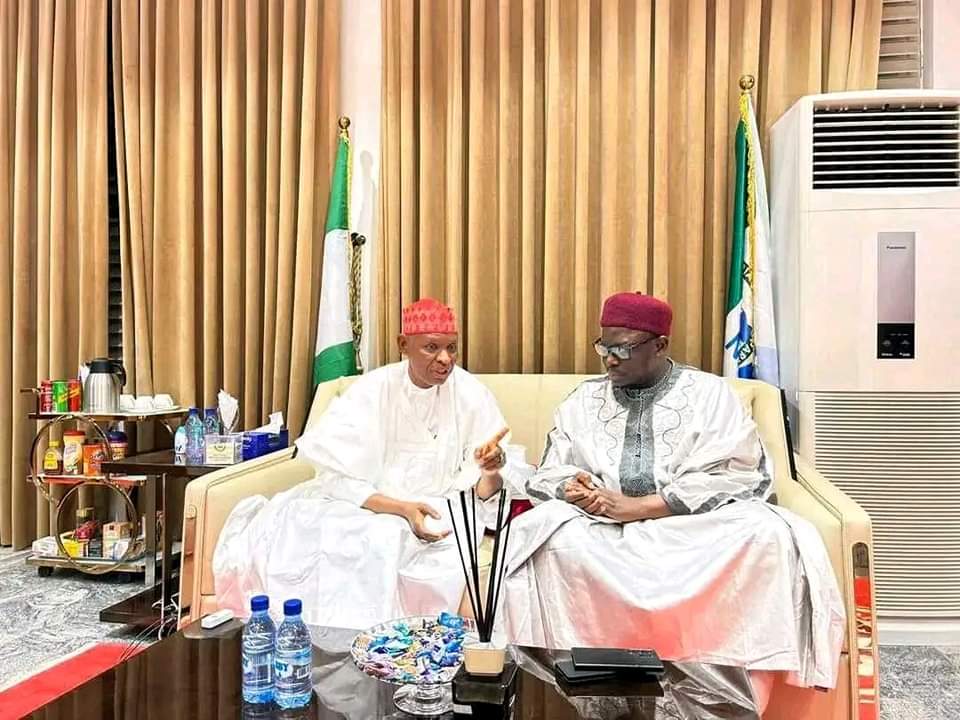
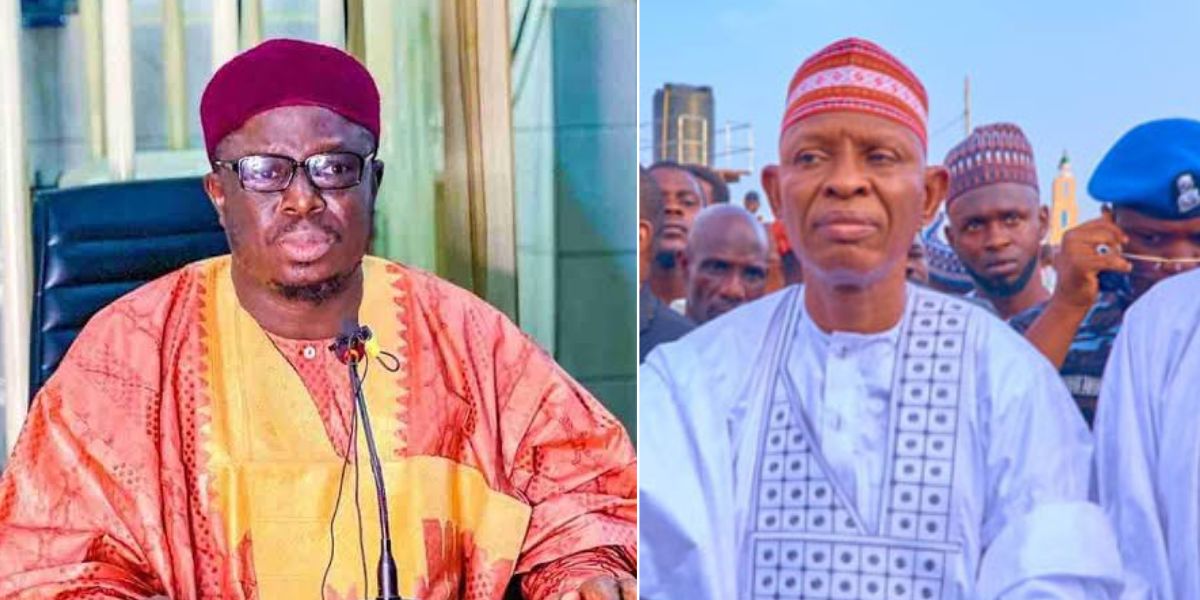
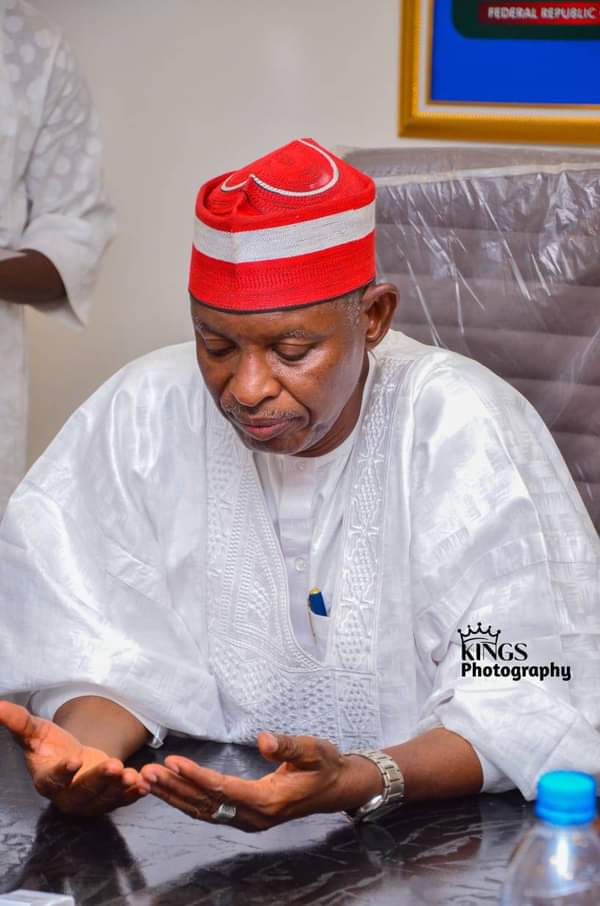
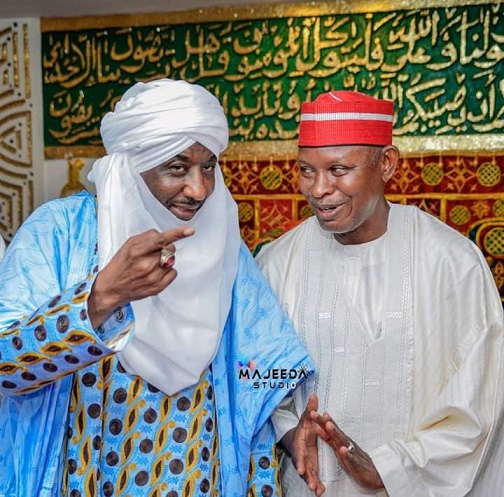
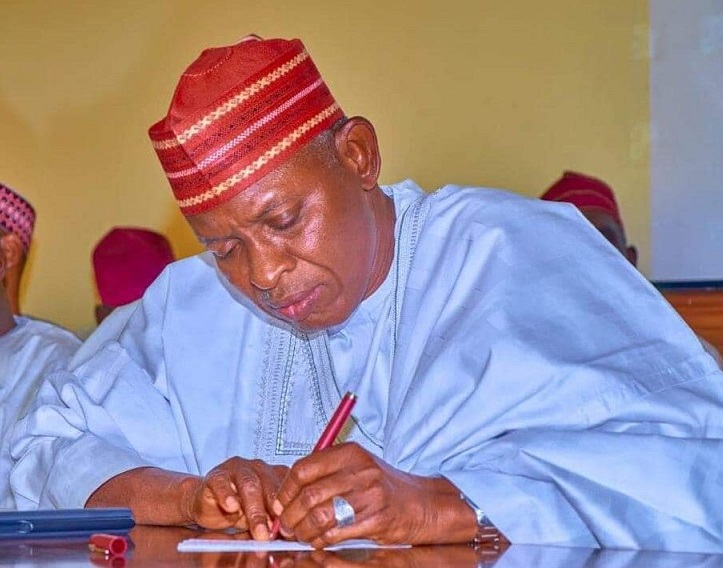
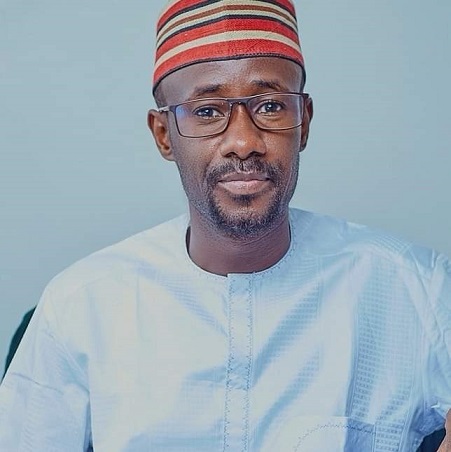
Abba Kabir Yusuf (Gida-Gida)

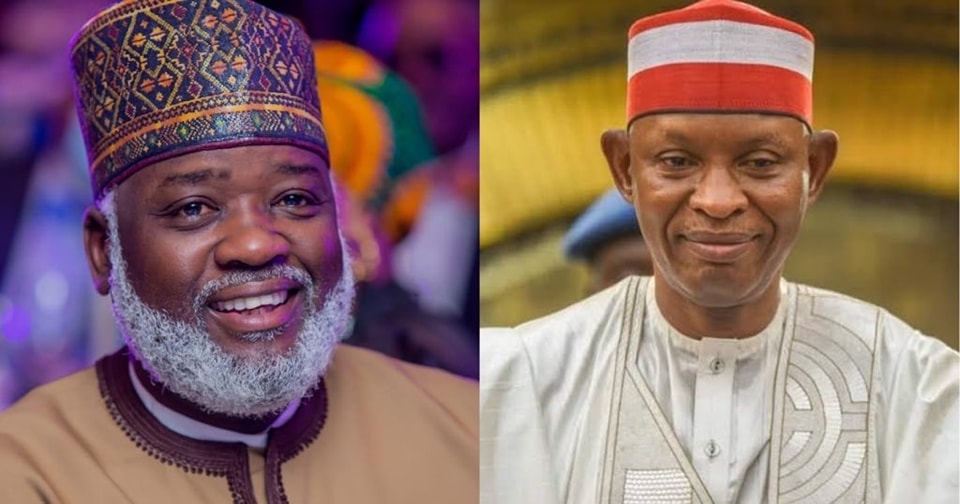
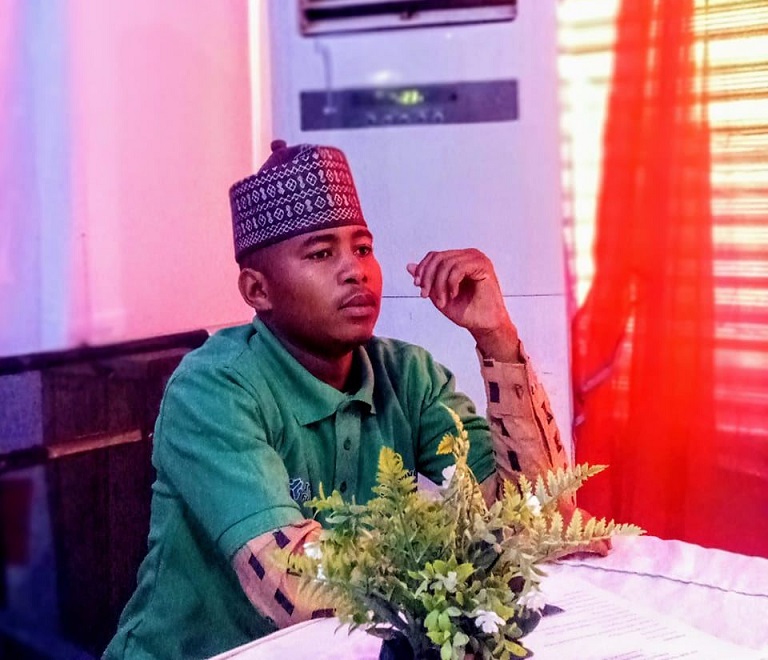
Meet Dr Aliyu Isa Aliyu, the new DG of Kano State Bureau of Statistics

By Dr Yusuf Ya’u Gambo

Thirty-nine years ago, Dr Aliyu Isa Aliyu came into this world just a year after Late Governor Muhammadu Abubakar Rimi left office. With over a decade of work experience, Aliyu is an Assistant Professor of Mathematics and the Deputy Director of the Research and Development Directorate at Federal University Dutse.

He was a research fellow at the School of Mathematics, Sun Yat-Sen University, China, where he served as the assistant head of the research and development committee. He also worked as a part-time lecturer of mathematics at Kano State Polytechnic more than ten years ago. 

Aliyu’s dedication and high-impact works have earned him widespread recognition in the global mathematical community, which has seen him listed among the top 2 per cent researchers in the world by Standford University, USA, among the top 2 per cent Mathematicians in Africa in the AD Scientific Index 2022, and among the top peer reviewers in Mathematics by Publons Web of Science.

His research primarily focuses on fractional calculus and its applications, Solition Theory, computational science and engineering, symmetry analysis and conservation laws of differential equations.

Aliyu has an impressive track record of scholarly accomplishments, having won the National Natural Science Foundation of China research grant and authored numerous influential publications in prestigious mathematical journals that generate over 2,700 citations with an H-index of 33 and an i10-index of 71.

The research pundit is currently a reviewer of about 20 highly regarded international journals, including the well-known IEEE Access, Frontiers in Physics, Journal of Computational and Applied Mathematics, Mathematical Methods in the Applied Sciences, among others.

Aliyu has taught several courses at both undergraduate and postgraduate levels and has participated in various international conferences, some of which are the Computational Management Science Conference, Designing Health Care Appointment Systems using Genetic Algorithm and Simulated Annealing Algorithm in Spain, International Conference of Mathematics and Mathematics Education- A Solution of Telegraph Equation by Natural Decomposition Method in Turkey, International Conference on Mathematical Modelling in Applied Sciences, Optimal system, nonlinear self-adjointness and conservation laws for generalised shallow water wave equation in Russia, among others.

Over the years, the Assistant Prof. has acquired technical skills in numerous mathematical and statistical software packages, including MATLAB, Mathematica, Maple, C++, LaTex, among others. He holds a PhD in Applied Mathematics from Firat University Turkey, an M.Sc. in Mathematics from Jordan University of Science and Technology Jordan, and a B.Sc. in Mathematics from Bayero University Kano.

Aside from his academic pursuits, Dr Aliyu is actively involved in politics, showcasing his commitment to public service. He holds the esteemed position of Financial Secretary in the New Nigeria Peoples Party (NNPP) Kano State, advocating for policies that promote education, science, technology and youth inclusion. Additionally, he served as the Administrative Secretary in the 2023 Gubernatorial/Presidential campaign directorate of the NNPP Kano.

Kano State Foreign Scholarships: Review and Recommendations

By Mahmud Aminu Dambazau

One of the trending topics in the past weeks has been the increase in registration fees of students by Bayero University, Kano. Before that, the University of Maiduguri, Federal University Dutse, University of Uyo and several others had increased theirs, and of course, it was anticipated following the revelation from the federal government that it could no longer fund universities.

I am glad the state universities in Kano have not toed that path yet, as several state universities have followed suit or tried to. Engr Rabi’u Kwankwaso’s administration has, among its biggest achievements, sponsored thousands of students abroad and within the country for undergraduate and postgraduate studies. While such numbers were unprecedented and unmatched by any other state administration, there is a need to reflect, assess the previous intervention, and possibly look for alternative ways to achieve the same result without necessarily taking the same route.

Many students had dropped out of tertiary institutions even when they had a passion for the study and were lucky to pass all stages of admission simply because they could not afford the then registration fees. A day hardly passes during registrations by tertiary institutions without students begging for public support to pay their fees on radio programs in the state. Now that most of these institutions have increased their fees which are in most cases more than 100%, we are likely to have an influx of dropouts across the state. With few job opportunities and frustrations of a crumbled dream, such could threaten a volatile security situation. More students will benefit from a home-based scholarship, even if partly, than a foreign one.

Between 2011 to 2015, when Kwankwaso sent students abroad, a dollar was exchanged for less than ₦200. With the dollar now fluctuating around ₦800. It means what would be spent for a single student now would be more than what was paid for three students then; if they are to be sent to the same institutions, fees will remain unchanged. Is Kano generating at least three times what was developed during Senator Kwankwaso’s administration, even if other factors were to be constant?

I have friends that had graduated years back from private universities within the country who were also sponsored by the then administration but are unable to serve their country (NYSC) or secure employment with the government because the schools have not issued their original results to them due to inability of the successive administration to complete their payments. A relative of mine could only graduate from India because her father paid her outstanding fees.

I have heard different appeals from students sent to different countries but later abandoned after Kwankwaso’s tenure. Wouldn’t it be better to investigate and ensure all those previously sponsored thoroughly have successfully graduated and issued their original results and then devise a sustainable plan for similar future interventions even if it is to be continued?

The Kwankwaso administration established more than 20 different institutes, none of which are currently functioning. I am glad; HE Abba Kabir Yusuf had, among his first acts in government, visited the Reformatory Institute, Kiru and given directives for its revival, among others. To borrow the title of Prof. Isa Ali Pantami’s recent book, Skills Rather than Just Degrees, re-establishing these institutions will allow even those who have already acquired degrees to further polish them with relevant skills. Reviving them will certainly gulf millions if not billions. All other stages of education at the state are currently requiring urgent attention.

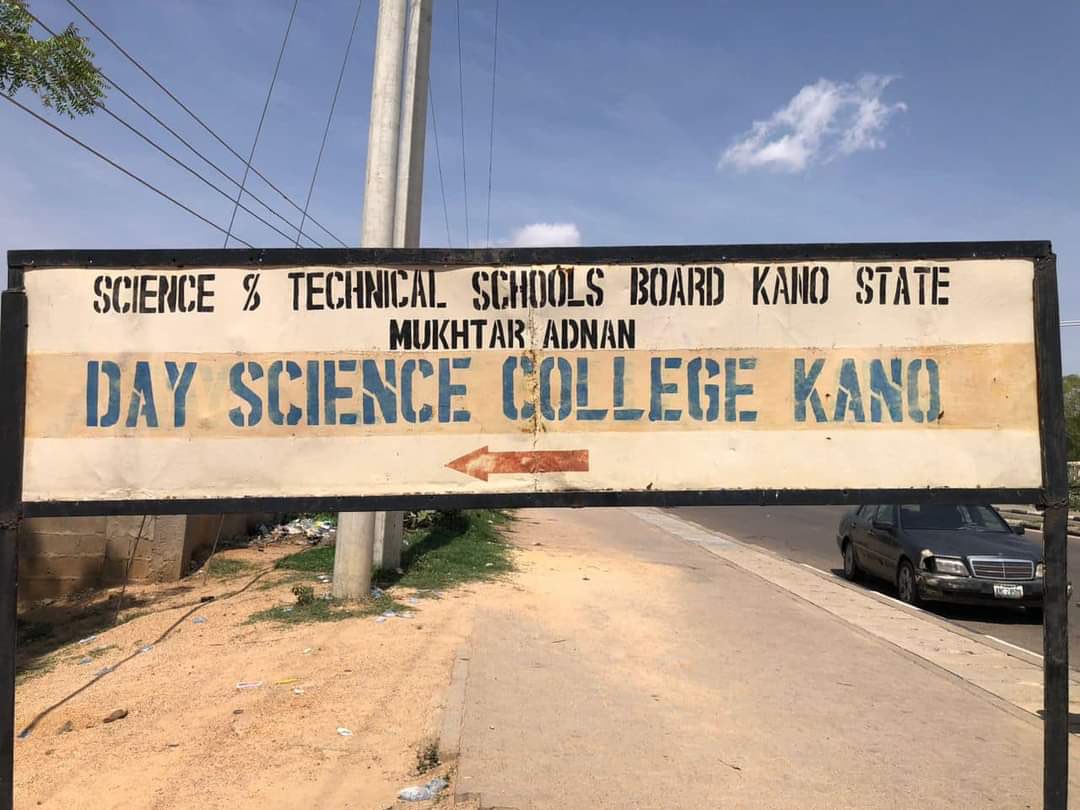
Recent pictures from the once glorious Science and Technical Schools Board schools are disturbing. Bringing back these institutes, Technical Schools; Schools for Arabic Studies; Adult and Nomadic schools, without doubt, are better avenues to invest rather than foreign scholarships.

Again, as an alternative to foreign scholarships, why not invest the money in needed infrastructures in our universities, get them the latest equipment and employ on contract foreign scholars while giving them specific targets to train a certain number of masters and PhD students? With that, a considerably greater number of students would benefit, meaning more research output, recognition, and higher ranking of the state universities and might even attract foreign students or grants.

Lastly and more importantly, there is a saying, thus, “Teach a man to fish rather than give him a fish”. Some months back, just before the elections, a friend of mine who graduated with a first-class degree from Bayero University, Kano, and a distinction during his masters at a university in India sponsored by the Kwankwasiyya Foundation appealed to his followers on Twitter to vote for the NNPP, at least so he and of course, others could further their studies once more, abroad. For him, it would be a PhD. There are currently multiple scholarship opportunities, such as the PTDF, especially for students with excellent results. There are even more opportunities from several universities, including some of the best universities in the world. In almost every instance, those who get such opportunities from Nigeria are usually from the southern part of the country, who are more informed and enlightened in aspects like this.

An association, Arewa Youth Mentorship Forum, comprising mainly academics that secured foreign scholarships, is mentoring the younger ones from the North. Luckily, many succeeded in securing scholarships for both undergraduate and postgraduate levels. I came across a post on their Telegram group earlier this week where they provided a list of universities in the US that offer scholarships to even second-class lower and third-class graduates. If second-class and third-class graduates could get foreign scholarships, why should scarce resources be expended on sending those who could easily get such scholarships to institutions that even the government could probably not afford to send them?

If the Kano state government can utilise these opportunities and provide an avenue for these graduates to be mentored, trained and guided on securing foreign scholarships, more students would benefit. In contrast, the government can invest the scholarship money in other areas requiring more urgent attention.

Mahmud Aminu Dambazau can be contacted via madambazau@gmail.com.

Demolition: Court awards N2m damages against Kano gov’t

By Uzair Adam Imam

A Federal High Court in Kano state has ordered the state Governor, Abba Kabir Yusuf, and other respondents to jointly pay two brothers the sum of one million naira each for attempting to demolish their properties at Salanta quarters.

In a court sitting on Friday, Justice Simon Amobeda described the attempt by the state government and its agents as an infringement to the applicants right to own immovable property as guaranteed by the Nigerian constitution.

Justice Amobeda stated that the intrusion to the applicants’ properties around 11pm on 14th June, 2023, in an attempt to carry out demolition is clearly infringement to their private and family life as enshrined by the constitution.

He stated, “The Respondents are also ordered to remove the red signing marked: 14th June,/KN/ KNUPDA made by their staff or Agents on the Wall of the Applicant’s Properties situated at Salanta and to repaint the wall to the satisfaction of all respondents.”

Barrister Bashir Ibrahim, who filed the suit on behalf of the applicants, applauded the court judgement and described it as a landmark for protection of human rights.

However, also speaking with the journalists after the judgement, counsel to Kano State Government and other respondents, Barrister Musa Dahuru Muhd, said they would study the judgement and advise the Government on the next step.

Islamic New Year: Kano gov’t declares Wednesday work-free day

By Uzair Adam Imam

The Kano State Govenor, Abba Kabir Yusuf, has declared tomorrow Wednesday as a work-free day in commemoration of the 1445 Islamic new year.

A statement by the Commissioner of Information, Baba Halilu Dantiye, disclosed this on Tuesday.

The statement read in part ‘’The Governor who congratulated Muslims around the world on the dawn of the new Islamic year, enjoined the civil servants and the people in the state to pray for peace and tranquility as well as economic development of our dear state and the country at large.’’

According to Dantiye, the govenor also called on the good people of Kano state to live in accordance with the teachings of prophet Muhammad (SAW).

He added that, “The Governor also called on people to live their lives based on the teachings of Islam and practice the virtues of kindness, love and tolerance as exemplified by our Holy prophet Muhammad peace be upon him.”

Tracing the crime of phone snatching

By Adnan Abdullahi Adam

Even before his swearing-in as Kano State Governor, Abba Kabir Yusuf had issued a public warning that any state government land or property awarded by former Governor Ganduje’s administration to any private individuals would be revoked and demolished and reverted as own state property.  Soon after his swearing-in, the execution of the Governor’s exclusive order started. Heavy-duty bulldozers were deployed near Kano Race Course and Daula Hotel at midnight. Soon, the new buildings developed by Ganduje were raised down into piles of rubble.

 At the speed of light, pictures and video clips filtered on social media platforms carrying the demolishing scene instantly became a trending topic. And the out of the blue, just before dawn, youths rushed to the scene “looting”, carrying away everything valuable that may be sold for reuse or recycling. It is like a free for all; a hundred youths went out scampering and carting away so-called “Booty” from roofing sheets, doors, iron rods, and wood, among other things of valuable importance.

Similarly, the next day multiple shops building outside the parameters of historic Old Eid Ground, along IBB Way, were demolished. Again, hundreds of youths went out pillaging and carting away people’s valuable goods and properties. Likewise, rumours spread about the following line of demolishing.  In anticipation, some youths converged and burst into The Triumph Newspapers Publishing House Building and carted away doors, windows, iron rods, and other expensive building materials.

Before this “looting” by the youths, there were many outcries across the residents of Kano about the rising crimes of phone snatching in Kano. The city is becoming dangerous, primarily by night; it is impossible to walk across busy streets carrying your smartphone freely. This may amount to losing one’s life. Several disturbing stories from media houses reported mobs carrying dangerous weapons and robbing unsuspecting victims of their phones and valuable goods. If he plays a hero or tries to resist, they attack him with knives and pointed steel objects. In many cases, the victim is killed or sustained life-threatening injuries.  

Hardly a week goes by without the PRO of Nigeria Police Force, Abdullahi Musa Haruna Kiyawa, parades apprehended suspects of various crimes from stealing cars or motorcycles, phones robbery, killings, homicide, clashes between thugs, drug peddling and addiction, among others. Recently, the spate of rising crimes perpetrated by some harmful youth elements has changed the tranquil city of Kano, the second biggest commercial city in Nigeria.

Worried and disturbed by the incessant phone-snatching crimes, some Kano residents call for the death sentence to be meted out to the culprits of this capital punishment, including a summary death sentence on the spot; some even justified a jungle justice on phone snatchers.

Firstly, we must constantly remind ourselves that youths are the backbone of society. If they are empowered, guided, educated and equipped with in-demand skills, they will develop their community and make it a good place to live. Likewise, society will fail if society neglects its youth’s potential resources, both male and female. Therefore, youths are like a double-edged sword to serve as an ingredient of potential development or a recipe for impending great disaster.

Secondly, we should not just look for the outward behaviour of youths but also its deep causative agents. There are immediate and remote causes of this ever-increasing crime rate among the youth. We must dig deep to know why things have become how they are. In single shot execution of criminals cannot blot out crimes in society. There is the law of cause and effect. Youth must be redirected, guided, and oriented toward achieving a meaningful and productive life. 

They say, “Satan finds some mischief still for the idle hands”. Something must be found to fill the void of the prime time of the youths. Youths must be made to know how to learn. They must be educated and learn positive thinking, which will birth positive action. It is only when a person knows better that they can do better.

Thirdly, elders and parents must set a good example for the younger ones. Children learn from imitation rather than just verbal admonishing. Children are brilliant. They do not listen to what their parents say but copy from their habits and patterns. If you want your children to tell the truth, start by telling the truth yourself in your words and action. Only after you earn respect from your children, you may likely emulate them. In the same analogy, if a politician tries to get power by hiring youth thugs giving them drugs and arms to attack opponents or buying them phones to bully his political opponent on social media, he inevitably has set a negative pattern.

Fourthly, no society would know peace if drugs could be bought and sold cheaply and easily like pure water. There is a correlation between the availability of drugs and rising crimes. Many heinous were traced to be committed under the potent influence of drugs. And among all Godly creations, thinking and reasoning are the qualities of only human beings; if a man loses his human sense, he becomes a wild beast. So to all fight crimes, first and famous you must fight drugs. 

In addition, media has a profound influence, especially television, smartphones, and computers. The Russian Communist leader, Joseph Stalin, called TV “The “greatest propaganda machine to be invented”. It can retain attention and indoctrinate a person or even an entire community. As we lack reading culture, we consume and learn from TV content more than radio, newspapers, and magazines. Most films and music videos our youths watch nowadays glorify thug life, drugs and sex. It has brainwashed our youths to think of thuggery, drug taking and having extra-marital sex as the best thing to do on earth. So to stamp out social evils and every form of crime, including phone snatching, parents should guide children to watch only educational programs and other non-toxic entertainment programs. 

Lastly, our first line of action, if we want to stamp out the menace of crimes, phone snatching and many social vices in Kano and elsewhere, we must trace the root cause. Capital punishment, jungle justice or summary execution is not enough to break the jinx of the rising crime rate. It is like a saying,” so much to be done, but so little is done”. So also, it would not yield the desired outcome of mitigating crimes among youths. If not, our action will become like a proverbial Hausa saying of killing a snake without cutting its poisonous head. 

Adnan Abdullahi Wrotes From Kano Ungogo via adnanadam37@gmail.com.

Gov. Yusuf meets designer of demolished Golden Jubilee roundabout, vows to rebuild it

By Uzair Adam Imam

The Kano State Governor, Abba Kabir Yusuf, has met with the designer of the demolished Kano Golden Jubilee Edifice of the Government House Roundabout.

The governor who made this disclosure Monday on his verified Twitter handle, said the roundabout will be reconstructed along Na’ibawa Flyover, Zaria Road.

According to the governor, the demolition of the Government House Roundabout was for security purposes and structural considerations.

He stated, “Recently, we took the decision to move the Kano Golden Jubilee Edifice from the Government House Roundabout, due to security and structural considerations. 

“It was therefore in that regard, I met with its designer, at the structure’s new home, along the Naibawa Flyover, Zaria Road. 

“Our government is highly committed to the massive improvement of Kano’s infrastructural architecture, and its accessibility to all,” he added.

The Daily Reality recalls that the demolition of the roundabout a few weeks ago generated painful arguments with many people saying the demolition was meant to satisfy the political anger of the Abba’s Godfather, Kwankwaso, against the immediate past governor, Ganduje.

Reimagining education in Kano State: A call for visionary leadership

By Huzaifa Dokaji

Imagine a bustling city nestled in the heart of West Africa that radiated intellectual brilliance and creativity long before the Europeans reached the region. This is Kano, a city whose intellectual achievements have shone brightly throughout history, never hidden from the world’s gaze. A state North African merchants describe as “a city like a thousand city”. Allow me to paint a vivid picture of Kano’s intellectual past, a portrait that will captivate your imagination and unveil the greatness that lies within.

Centuries before the arrival of colonial powers, Kano was a thriving centre of learning, attracting scholars from far and wide. It was a place where minds converged, knowledge was cherished, and intellectual pursuits flourished thanks to state and privately-sponsored academic spaces. In the corridors of Kano’s renowned educational institutions, such as the intimidating Madabo centre, scholars delved into the depths of philosophy, science, literature, and Islamic studies. They engaged in intellectual debates, exchanged ideas, and produced works that left an indelible mark on the intellectual landscape of their time and beyond. This legacy, however, is at peril more than ever.

In a state that once boasted of kings and emirs renowned for their generous support of scholars and students, state scholarships are now only disbursed on the eve of elections, serving as mere tools for vote canvassing. Our schools are among the worse in the world. Although once a space where literary production was at its fines, schools in Kano lack access to any useful library resources. Lecturers resort to illegally downloading books online or relying on pirated copies to fulfil their teaching duties.

It is genuinely dismaying that a junior lecturer in our universities must spend nearly half their monthly wage to order an essential textbook on Amazon, while students at even the poorest universities in America have access to such materials through interlibrary loans. Adding to this bleak scenario, for example, over three years, Stony Brook University in New York spent about half of our 2023 budget for education to renovate its Student Union building. As worrying as this is, I believe Kano State still possesses the potential to emerge as a shining example of educational brilliance once again. My intervention is limited to institutions of higher learning.

To transform the Kwankwasiyya vision for education into a reality, we must transcend the mere provision of basic educational infrastructure and sponsoring students to study abroad. We must embrace a bold approach that surpasses the efforts of our Nigerian and West African counterparts. We need visionary leadership and innovative infrastructure. We need leaders who understand that education is not merely about constructing classrooms and dashing out scholarships; it is about providing qualitative and enduring infrastructure and creating an environment that fosters intellectual growth, critical thinking, and cutting-edge research. We need leaders who recognise that the quality of education is directly proportional to the quality of infrastructure provided and the system created.

Imagine a Kano State where universities boast state-of-the-art research laboratories with cutting-edge technology. Envision lecture halls that facilitate interactive and engaging teaching methods, equipped with the latest audiovisual tools and comfortable seating arrangements. Picture libraries filled with a vast array of books, journals, and digital resources, providing students and faculty with access to a world of knowledge at their fingertips. Imagine campuses adorned with green spaces, inspiring architecture, and modern facilities that foster an atmosphere conducive to learning and intellectual exploration. Imagine a Kano where lecturers are paid a decent wage.

We must transcend those dilapidated buildings that even counties are ashamed of building abroad. There is a critical need to dream beyond the limitations of what other Nigerian governors have failed to achieve. We must look to the examples set by leaders in more progressive societies and strive for such excellence. Let us aim to provide our students and faculty with infrastructure that not only meets their basic needs but also inspires them to reach new heights of knowledge and innovation. This should be the Kwankwasiyya vision.

The interventions

a. Infrastructure

To realise this vision, it is crucial to prioritise the modernisation and expansion of our universities’ infrastructure. Outdated facilities, overcrowded classrooms, and limited resources hinder the educational experience and impede the pursuit of cutting-edge research. It is time to break free from the shackles of mediocrity and invest in infrastructure that reflects our commitment to academic excellence. We need well-equipped laboratories, not just buildings with nothing to offer our science students. By allocating a significant portion of the state budget to education and ensuring the judicious utilisation of funds, we can establish a sustainable funding model that facilitates the development of world-class infrastructure.

The above investment will benefit our universities and attract renowned scholars and researchers from around the world. They will see Kano as a place where they can pursue their academic endeavours in an environment that supports and nurtures their intellectual growth. By looking at what governors in more advanced regions are doing, we can identify innovative approaches to infrastructure development. These leaders understand that modernising educational institutions goes beyond constructing buildings; it involves creating spaces that foster collaboration, critical thinking, and creativity. They invest in research facilities, technological resources, and student support services that enrich the educational experience and provide students with the skills needed to thrive in the global economy.

b. Wages and Allowances

There is a pressing need for Governor Abba Kabir Yusuf to reconsider the current remuneration package for lecturers in our state-owned higher institutions. It is essential to rise above the confines of the narrow mindset that accepts the prevailing notion of meagre salaries for lecturers on the selfish idea that it is what all states and the federal government are paying. In this era, marked by heightened awareness and accountability, there is no plausible justification for not paying a reasonable wage when politicians have continued to show ingenuity in sourcing money to fund their expensive and outrageous lifestyles. Paying lecturers a meagre salary of $200 a month undermines their professional dedication and the essence of a vibrant and dynamic education system. Recognising the invaluable contributions of these esteemed educators, Governor Yusuf must transcend the limitations of prevalent practices and champion a new paradigm of valuing and rewarding academic expertise. By offering a respectable and competitive wage, he can demonstrate his unwavering commitment to nurturing an environment that attracts and retains top-notch scholars, who, in turn, inspire students to reach new intellectual heights.

c. Grants and fellowships

The absence of grants in Kano universities is not only a concern for the institutions themselves but also a reflection of the broader condition of education in our beloved state. No society can truly develop its education system and produce graduates who can address the nation’s needs without ensuring access to basic resources, such as grants, which fuel academic progress and knowledge dissemination. To rectify this pressing issue, there is an urgent need to prioritise establishing grant programs that cater to the needs of faculty members and students across all universities in Kano State. It is imperative to allocate funds in the state budget specifically dedicated to supporting and rewarding research, innovation, and academic excellence.

For several reasons, grants and fellowships are crucial in developing academic research, especially in developing countries. First, they provide financial support to researchers who may not have the resources to pursue their studies. Second, they facilitate collaborations between researchers worldwide, enabling the exchange of ideas and knowledge. Third, grants and fellowships often come with opportunities for training and mentorship, which can enhance the skills and expertise of researchers. Finally, supporting academic research, grants, and fellowships can lead to the developing of new technologies, products, and services that can have significant social and economic benefits for developing countries.

The government should collaborate with private organisations, philanthropists, and international institutions to establish a successful fellowship and grant program in Kano. By working together, the government can leverage existing resources to create a sustainable program that supports research and innovation in academic institutions.

Grants, both for lecturers and students, are crucial lifelines that enable universities to flourish and produce graduates equipped with the skills necessary to thrive in today’s rapidly evolving world. They will provide financial support for research projects, allow for acquiring state-of-the-art equipment and resources, and facilitate collaboration with industry partners. Without grants, universities face a significant impediment to progress and risk falling behind in the global academic landscape. Establishing fellowships and grants in Kano can help bridge the gap between local and international education systems by attracting talented scholars and researchers worldwide. This will give students and scholars access to diverse ideas and perspectives, enabling them to compete globally.

Grant investments will demonstrate Abba Kabir Yusuf’s commitment to developing Kano’s education system. It will make him, perhaps, the only governor to establish such in the entire Northern region. Such a move will enhance the quality of education and attract renowned researchers, industry partnerships, and prestigious grants to our universities. The ripple effect of such investment will position Kano State as a hub for innovation, drive economic growth, and nurture a generation of graduates ready to tackle local and global challenges.

Denying students access to grants limits their potential and hampers their ability to engage in hands-on, practical research experiences that enrich their educational journey. By investing in grants, we empower our students to contribute meaningfully to their respective fields upon graduation. Moreover, these programs will create a culture of research and innovation in academic institutions, leading to increased productivity and competitiveness.

In conclusion, by embracing visionary leadership, investing in infrastructure, and establishing grant programs, Kano State can transcend the limitations of the past and emerge as a leader in educational excellence. Let us not settle for mediocrity but strive for greatness in our pursuit of knowledge and innovation. The future of Kano’s education system lies in our collective commitment to providing world-class infrastructure and nurturing a generation of scholars capable of making significant contributions to society. Together, we can transform Kano into an educational powerhouse that inspires and empowers future generations.

Huzaifa Dokaji is a PhD student and teaching assistant at the Department of History, State University of New York at Sony Brook. He can be reached via huzaifa.dokaji@stonybrook.edu.

Restoring Muhammadu Sanusi II

By Dr. Aliyu U. Tilde

History repeats itself, they say. However, that recurrence was less frequent in the history of rulers of Northern Nigeria. While historians can remember two, we may be at a point of witnessing the third.  

Sometime in December 1652, Muhammadu Kakuna, the 33rd Sultan of Kano, was ousted under the influence of the powerful Maidaki Auwa, who installed her son, Soyaki. Kakuna retreated to Zaria and, within days, fought back his way to the throne just before the year ran out. That was the only time a ruler of Kano was restored.

In 1901, the British colonialists occupied Kontagora—tudu makwantar rikici—and deposed its 3rd Emir, Ibrahim Nagwamatse, for his notorious slave expeditions. They installed his son. For some reason, after just two years, the British returned Ibrahim from exile in 1903 and made him the Sarkin Sudan, and he reigned until he died in 1929.  

Muhammadu Sanusi II, the 14th Emir of Kano, may soon be the third. Like in the case of Kakuna, many saw his removal by Governor Abdullahi Umar Ganduje on the grounds of insubordination as a live specimen of highhandedness, intolerance, and vengeance. The Emir was arrested and banished to Loko, Nassarawa State, for confinement, an action which he successfully fought against before a federal high court in Abuja. On 30th November 2020, the court declared the internment and the Emirate Council Law under which it was undertaken unconstitutional. It restored the fundamental rights of the deposed Emir to human dignity and personal liberty.  

In contrast to Maidaki Auwa of 1652, Governor Ganduje went beyond the Emir and balkanised the Emirate. He divided it into five independent emirates to prevent the emergence of any strong Emir of Kano in the future. This act of downgrading the system, the first of its kind since Bagauda founded Kano 1,025 years ago, is understandably repugnant to the Kano ruling family and many of its subjects. If the malware, they argue, had only changed the driver file—in this case, the Emir—the system could tolerate that and continue with the same speed. But corrupting the entire system files and downgrading its performance to a status of a photocopier cannot be tolerated. A ‘system restore’ is necessary.  

Restoring the Kano Emirate system to its 9 March 2020 date is now on the fingers of the new administration in the State. It will undoubtedly be greeted with mixed feelings in the next few days, especially as it will portend restoring its unified disk configuration and the deleted driver file.  

History is about to witness that restoration if the feelers from Kano are accurate. How the ancient city would absorb the heat of the operation and bounce back as one of the most important emirates in the region is a matter of immediate concern to its citizens. As Nigerians, we can only hope that it does so without boiling.

Dr Aliyu is a former Bauchi State Commissioner of Education. He can be reached via Twitter @Dr_AliyuTilde.

Uproar over demolition exercise in Kano

By Bilkisu Kabir Ibrahim (Mrs)

It is often said, “Destruction is easy, but rebuilding takes more time to achieve.” 

Politics and governance are two sides of the same coin, as they are often used interchangeably even though they differ in veracity. In modern democratic societies, citizens (and leaders, by extension) fail to understand the difference between the two concepts in terms of meaning and operation. 

Barely less than two weeks after the swearing-in of the newly democratically elected governors and members of the states’ assemblies across the states of the federation, several governors focus on so many engagements as part of the fulfilment of their campaign promises, ranging from suspension and removing many top heads of the state’s ministries, departments and agencies alongside forwarding of new nominees to their respective state house of assemblies for various positions.  

However, the reverse is the case in Kano State as the new governor fulfils his campaign promises where demolishing illegal structures is part. In his inaugural speech, his Excellency Abba Kabir Yusif revoked all sold public places and assets by his predecessor by ordering security agencies to take over such sites. A few days later, he began a demolition exercise with a 3-story building with 90No. Shops along Racecourse Road Nassarawa GRA which were reportedly owned by the son of the outgoing governor of the state, followed by another multi-billion Naira project via Public Private Partnership (PPP) arrangement initiated by his predecessor, situated at old Daula Hotel (state’s property) on Murtala Muhammad Way, Kano.

Nevertheless, several structures have been marked and knocked down as illegal buildings, which include; Eid-Ground Shops (Masallacin Idi), shops detached from Sani Abacha Stadium Kofar Mata and Buildings at GGSS Dukawuya Goron Dutse as well as some structures at Kano Hajj Camp among others. 

Subsequently, mayhem erupted in the state capital and neighbourhood when the governor ordered the demolition of the historic Kano roundabout structure in the early hours of Wednesday, 14th June 2023. The roundabout, known as Kano Golden Jubilee Monument, was erected in 2017 and conceived and designed by a young female architect to commemorate Kano’s 50-year attainment as a state.

While several indigenes and residents have condemned in totality the demolition of the monument, the press secretary to the governor, Sunusi Bature D/Tofa, in his reaction, revealed that the roundabout was demolished for security and safety reasons, “it also poses traffic challenges around the area due to its size blocking the view of drivers accessing all routes linked through the roundabout”. 

Nonetheless, mixed reactions become the order of the day; some residents are hailing the governor for staying firmly to his campaign promises, while many traders lament the demolition exercise as it truly affects their commercial activities by creating a hostile business environment forcing many of their customers from within and outside the state to stay away. During my interview sessions, a respondent feared the ongoing action as “it scared away private investments in the state, which is the time needed for a successful administration”. Another respondent (a victim) revealed that, on Saturday, he supplied aluminium and other equipment for a window project at Old Daula Hotel worth N30,000,000.00 but were all looted in the night immediately after the demolition, which the looters termed as “GANIMA” in Hausa. 

Similarly, it was reported that, in the heart-wrenching incident, a young boy lost his life after being struck by a truck during the demolition of a structure. The unfortunate event occurred amidst the efforts to clear the unauthorised constructions. The boy was not the only one affected, but also several individuals sustained severe injuries as they attempted to take advantage of the demolition exercise and loot multimillion items.

Some critical questions were asked about this light exercise. This government is supposed to concentrate on critical infrastructure and human development to overshadow its predecessors instead engaged in revenge and self-centred aggrandisement. 

His Excellency Abba Kabir may wish to remember that some projects need maintenance and sustenance to suit the rising demands of the good people of the state. Instead, the government should have to determine the legality or otherwise of the allocated lands by constituting high-powered technical committees to, among other things, investigate the following: 

a. Whether the due process for land allocation is followed;

b. Whether all building codes and regulations have been complied with;

c. The rationale behind the building purpose;

d. Was the land sold at market price, and whose account was the money deposited into or allocated as enshrined in the Land Use Act?

e. Was the land allocated to the rightful applicant? 

f. Was the roundabout demolition in the interest of most of the populace? Etc.

g. The committee to proffer some recommendations to the government for a proper solution. 

To crown it all, the governor may further wish to recall the Oath of Office taken during the swearing-in session, that “….I will not allow my personal interest to influence my official conducts or my official decisions …” Surely, Almighty God will ask for such utterances. 

Bilkisu Kabir Ibrahim (Mrs) wrote from Kano state, Nigeria. She can be reached via bilkisukabir1@gmail.com.

Kano Demolition: Doctor who built house with overseas loan begs Abba

By Uzair Adam Imam

A Nigerian doctor based in Russia has pleaded with the Kano State Governor, Engr. Abba Kabir Yusuf, to spare his newly built house from demolition.

The doctor, whose name is withheld, told Kano Chronicle that he borrowed almost $500,000 and added his savings of $500,000 to build the house.

The passionate plea to the governor was in a letter written by the doctor, which Kano Chronicle shared on its verified Twitter handle.

Recall that the governor had decided not to back down on demolishing illegal structures built by his predecessor.

Abba’s administration had torn down a three-storey shopping complex located at Race Course Road, Nasarawa GRA, with 90 shops, Daula Hotel and other buildings at Hajj Camp, to mention but a few.

However, the doctor, who insisted that he put the house up for N500,000,000, pleaded with the governor to spare his home, adding that he would be at a loss if the house is demolished.

He stated, “I spent close to 8 years working in Russia now, and I have developed a successful business. So I decided to take a loan on my business name and use my savings to move to real estate back in my home state Kano Nigeria. I borrowed close to $500,000 and added $500,000 together with saving from some family members to buy land for 15,000,000 nairas and build a mansion on it.

“My home has been completed, sir, and I have even put it on the market to service my debt due to the economic situation in Nigeria. I won’t even make a profit on it. I will take a loss because I put the house up for 500,000,000 Naira as a distress sale.”

“Yesterday, I was informed that (Knupda)  has marked my house for removal, and I followed all instructions before building. I got their approval and a C of O . I didn’t put up a single block on that land until (Knupda)  gave me approval. Please consider my situation, sir. 

“If that house is taken from me. I will be in very serious financial problems coupled with the debt I took for the building,” he added.