2023 Elections

Between Atiku, Wike and the PDP

By Zayyad I. Muhammad

The 2023 presidential elections present the Peoples Democratic Party (PDP) with a golden opportunity to wrestle power from the ruling All Progressive Congress (APC). However, the PDP faces a daunting challenge in how to utilize this opportunity. To do this, the PDP needs to present a common interest from the party’s wide, and sometimes, varying interests so as to secure for the party, sufficient internal and external support during the elections.

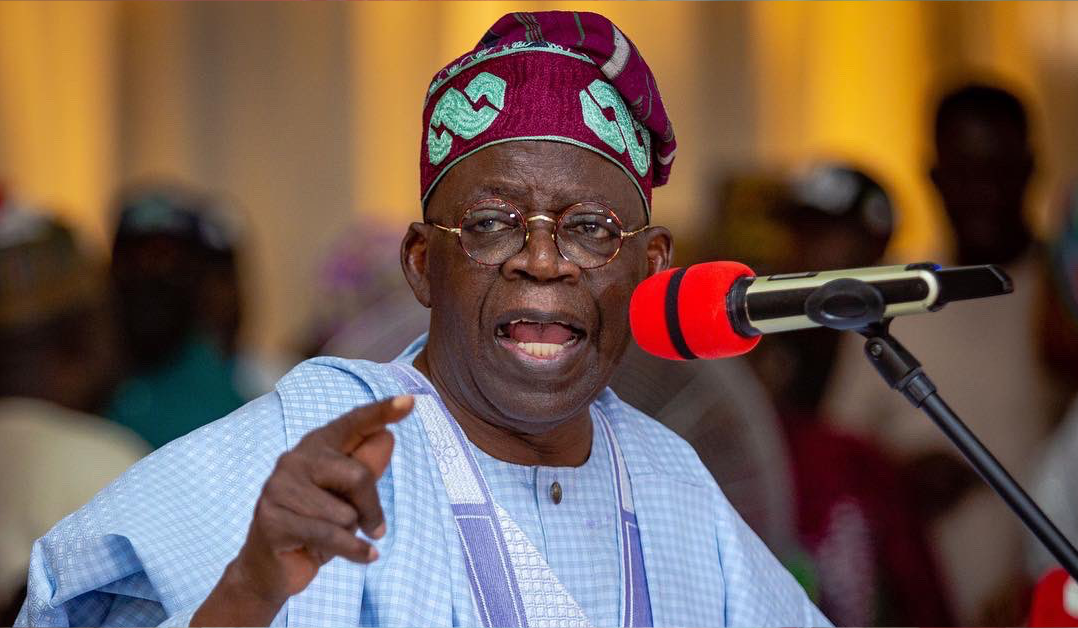
PDP got its calculations right. The All Progressives Congress (APC) picked its presidential candidate from the South, especially the Southwest – Asiwaju Ahmed Bola Tinubu, is APC’s presidential candidate.

The emergence of Alhaji Atiku Abubakar as the presidential candidate for the main opposition party – (PDP) was a product of three things. The party has settled for someone who has the national outlook; the party wants to outwit the ruling All Progressive Congress ( APC) in one of the latter’s strongholds — the North, and lastly, the party needs a strong war-chest for the 2023 presidential elections.

Atiku’s emergence was smooth, despite the political intrigues that occurred before and during the presidential primaries. The selection of Ifeanyi Okowa as Atiku’s running mate had appeared also a smooth one. But two weeks after, it is causing dangerous stirs in the PDP camp that had appeared united, initially after the primaries. Former Governor Ayo Fayose scratched the ‘ old-wound’ of the call for a southern presidential candidate, Governor Samuel Ortom of Benue state is fuming, while  Governor  Nyesom Wike’s camp is causing more ‘commotion’ within the party by threatening the much-needed unity in the party. 

To be nominated or selected as a Vice Presidential candidate, the person must bring something to the table — votes, a daring war chest, well-established political structures, or influence in the political party.

Had Atiku picked Wike, the PDP would have appeared to opt for someone that will bring a massive war-chest and “home votes”. At the same time, the PDP would appear to have succumbed to pressure and tried to calm ‘a bull in a china shop’.

The APC, on the other hand, would have been happy, if Wike had emerged as the PDP vice presidential candidate. Firstly, it would have ‘balanced’ its controversial Muslim-Muslim ticket. Secondly, the APC would have used Wike’s candidacy to consolidate its votes in one of its strongholds — the North. In the 2019 presidential elections, the APC used Peter Obi’s Vice Presidential candidacy to de-market the PDP in the north. Peter Obi’s deportation of northerners was massively used against him. Like Peter Obi, Wike doesn’t have longtime friends, political associates or structures in the north, to defend him. However, to be fair to Wike, during the campaign for the PDP presidential primaries, he was able to tour the country, thus making some new networks and contacts. Furthermore, if Atiku had picked Wike, the former would have had to work extra hard in the north, because Wike will be a good recipe for APC’s strategy in the North. With Wike as VP, those people who are unhappy with APC or have not decided, may not want to thumbprint a ballot paper with a “Wike.”

The selection of Governor Ifeanyi Okowa as Atiku’s running mate is a product of PDP’s strategy to consolidate its footings in its strongholds — the Southeast and the South-South while not jeopardizing its attempt to strike the APC in the North. Okowa is controversy-free and the North will not have any issue with him.

Any person in Governor Nyesom Wike’s shoes will certainly feel hurt and demeaned — he has been a pillar in the PDP when the party was ‘deserted’ and he’s among the very bigwigs that have never left the PDP to another party. Furthermore, Mr. Wike polled 16 votes to defeat Mr. Okowa who scored three votes in a shadow election by a committee set up by the PDP to pick a running mate as reported by many media houses in the country. Moreover, whether one likes or dislikes Wike, for sure, he has something to offer the PDP.

That window created by Atiku for the PDP to setup a committee to select for him the Vice Presidential candidate, was an error on Atiku, so to say. The selection of a running mate is the absolute right of the flagbearer. Since Atiku already had someone in his mind, that committee was unnecessary. Though, it appears it was an honest attempt to bring everybody on board in making or taking a decision.

When it comes to elections, every political party has its own strategy. Had Atiku accepted the choice of the ‘VP Selection Committee’, it would have been the first time in the history of Nigerian politics, that a political party will solely determine the VP candidate for its presidential candidate. Though the PDP said, it was Atiku that requested the party to recommend to him, a VP. Atiku has the final say!

Atiku Abubakar is a master in negotiations, give and take and reaching out to people, including adversaries. Atiku should sit down with Wike, one-on-one, to resolve all the issues. It’s politics. It’s all about winning!

Zayyad I. Muhammad writes from Abuja, Nigeria. He can be reached via; 08036070980 or zaymohd@yahoo.com.
Reflections on inflation and our ineffective population

By Nusaiba Ibrahim Na’abba

The ongoing unexpected outrageous hike in prices of goods and services stringed by inflation is not all new to our survival in Nigeria as we’ve learnt the hard way to navigate through hurdles and thorns to manage our lives. Simply put, things are at the moment not falling apart but in their right places – exactly where we want them to be. And by extension, we are reaping the seeds our predecessors sowed.

Contextualizing the global outrage on inflation unveils how our population crises are highly influential to the inflation catastrophe we are recently experiencing in Nigeria. Conversations around our incapacitated population have always been cumbersome. People keep reproducing to demonstrate their selfish reasons and associating them with religion, even when they’re fully aware of their inability to cater for their needs – a lifetime debate. Due to cultural and religious reasons, overpopulation is always quite a sensitive issue. Religious gatherings, cultural discussions and even governmental activities deliberately skip them to avoid chaotic scenes.

For reasons best known to the Nigerian government, the census that was supposed to take place a year after President Buhari assumed office in 2016 was unfortunately not prioritized in the list of essential development activities. There wasn’t even a convincing explanation for why it did not occur. I buy that the President was out of office as he severely fought to regain sound health. Still, his deputy, Prof. Yemi Osibanjo, was acting President until he recovered. He also didn’t give it the much significance it deserves. The worth of a National Census isn’t that shabby to escape their radar, as it assumes an unchallenged role in catalyzing the development of every society and nation-building.

Well, as it stands, many international sources now place the Nigerian population to have surpassed 200 million. But, referring to our precedents, the past administrations were unwilling to manage rapid population increase by corroborating it with needed economic, financial and health opportunities, among others. Instead, they were more or less obsessed with starting gigantic projects to leave them halfway done when leaving offices. Regrettably, from budgets, policies and programs among myriad activities, the population is often not carefully factored in.

At this point, explaining the statistical representations of our ailing population is almost unnecessary, especially since we are gradually failing to comprehend the magnitude of our plight in statistical terms. Presently, there exists a colossal number of youths that are desperately seeking jobs. Not only that, they are unemployed. Some are drug addicts, miscreants, and even kidnappers and whatnot. Their realm also includes people still hopeful for job opportunities, including a handful employed but in deep struggles, as they continue to shoulder countless responsibilities. This fraction is the largest among the demography of our country and, sadly, the most ineffective.

Then we have children, who contribute a fair share to the general population. A disturbing figure is that of out-of-school children due to their being part of the lower class and a lot who are quadrupling in number as insecurity is not slowing down in forcing them out of their communities. Visibly, most of them embrace street hawking and begging while others aimlessly litter the streets and little girls into forced labour. Picturing our population from a pie sketch, we also have the elderly, many of whom have delivered relentless service to the nation but have only been rewarded unkempt wretched feet as they search for their legitimate hard-earned pensions. And I don’t forget that we have People Living with Disabilities (PLWDs) who wallow in poverty. This is a fair elucidation of Nigeria’s population pie sketch.

Indeed, how inflation is ripping us apart in this country is an incredibly devastating experience. Development activities here have always journeyed long, and even more terrifying is that slow processes in everything aren’t much valued in today’s fast-paced world. As frightening as it appears, the race to the 2023 general elections is already painting a horrible scene for us. The primary elections recently concluded with alleged countless irregularities and corruption aren’t appealing. Hence, it becomes challenging to collate one’s thoughts regarding how life will likely be as we fight to forge ahead.

In a way, this current plight provokes the young minds who are already out of viable options to embark on deadly voyages to Europe. They risk their lives in search of a better life there. It is terrifying to know that the number of youths clamoring for these voyages includes graduates and those earning petty stipends and are well conscious of the dangers involved. However, they aren’t blameworthy for viewing their lives from angles of their responsibilities.

Many optimists, including myself, are hopeful about Nigeria’s transformation for the best. But, until alternative routes to utilizing our teeming population for efficient development are incurred, we’ll keep chasing the uncertain light at the end of the tunnel. Nigeria is behind schedule on capitalizing on effective strategies to breed an efficient population, opposing its self-anointed maxim of “no dey carry last”. We must reinvent this unfortunate wheel of inefficiency by adopting a knowledge-based economy model to harness the enormous potential of our massive population for the best.

Nusaiba Ibrahim Na’abba is a master’s student from the Department of Mass Communication, BUK. She is a freelance writer and researcher. She can be reached via nusaibaibrahim66@gmail.com.

Youths tasked on eschewing hate speech, constructive use of new media 

By Muhammad Aminu 

Youths have been advised to eschew hate speech and use new media constructively for peacebuilding and sustaining peace and peaceful coexistence in their communities.

A communication expert and media scholar, Dr Ruqayya Yusuf Aliyu, gave the advice while engaging youths in a Critical Knowledge Production Dialogue Organised by the Center for Information Technology and Development (CITAD) on Wednesday.

Dr Ruqayya, who discussed the Roles of Youths in Peace Building From a Communication Perspective, said youths play active roles in conflict and peacebuilding situations due to their agility and activeness.

She reminded the youths that peace and peaceful coexistence are the bedrock for the development of any society.

“Youths can be used for good or bad, peace or violence; hence it’s imperative that they know the importance of their roles in peacebuilding in their communities.

“Although conflict is inevitable in any society, managing it matters most in escalating or de-escalating the situation, ” she added.

“You can be partisan, but avoid hate speech and use new media positively.

According to her, communication is relevant in peace building through mobilisation, advocacy, persuasion and behaviour change among the youths.

In another development, CITAD, in collaboration with eTrash2Cash, has trained 220 low-income women on plastic waste entrepreneurship in Bauchi.

Chief Executive Officer (CEO) of eTrash2Cash Abdullahi Salisu said the participants were trained to convert plastic waste into weaved bags, shoes, bangles, and flower vases, among others.

He said:” Items made from these wastes seem so original and authentic that one cannot tell if they are made from the “wastes” we improperly dispose of. Perhaps, one of the main reasons why so much keen interest is evident in the faces of the women beneficiaries.”

Some of the beneficiaries expressed their appreciation for the opportunity. 

Amina Bello and Hafsat Adamu said their newly acquired skills would enhance their living standard.

Hafsatu Adamu, while thanking the training organisers, said she benefitted greatly and had never known wastes could become useful in this way. “I’m proud to be a waste champion, and I will step down the training to my siblings, friends and immediate dependents,” she added.

According to Abdullahi Salisu, plans are underway to ensure that the trained women are continuously engaged and supported to keep cleaning the environment and support others to improve their lives and livelihoods.

Salisu said: “This social responsibility is continuous. It is non-stop. Other stakeholders have already expressed their interest to keep the impact going. We hope to keep engaging these beneficiaries through an innovation centre that will further help them in other areas of business development and entrepreneurship”.

2023: Tension rocks APC over Tinubu’s ‘missing’ school certificates 

By Uzair Adam Imam

Tension rocks the All Progressives Congress (APC) as the party’s presidential candidate, Ahmed Bola Tinubu, allegedly obtained no primary and secondary school certificates. 

However, Tinubu insisted that he had two degrees from two American universities. Yet, he stated that the certificates were stolen by unknown soldiers during the military junta of the 1990s.

The Daily Reality gathered that the information was in an affidavit submitted by Tinubu to the INEC office as part of his eligibility filings for the 2023 presidential elections.

The documents released Friday by the electoral body showed that Tinubu completely left the columns for his primary and secondary schools unmarked.

Additionally, the latest claims by Tinubu in his submission to INEC reportedly contradicted the previous submissions of 1999 and 2003 when contested as a governorship candidate in Lagos state.

It was gathered that Tinubu allegedly claimed in 1999 and 2003 that he attended primary and secondary schools.

He indicated that he attended St. Paul Children’s Home School, Ibadan, between 1958 and 1964 and secondary school at the Government College, Ibadan, between 1965 and 1968.

Tinubu’s Emergence: A demonstration of political mentorship and lesson to Northern leaders

By Adamu Abubakar Kumo

Mentorship has been the way through which a more experienced, more skilled and usually more elderly person passes his experience, expertise, knowledge etc. to the younger ones. From education to politics, business to occupation, mentorship is instrumental to the continuance of the flow of wisdom from one generation to another.

The history of Nigeria’s founding fathers is undoubtedly that of heroes and legends who wrote their names in gold in the books of history. But, looking at today’s Nigeria, one would be right to say that the wisdom of those great men has not been successfully passed down to today’s generation.

Among the six geo-political regions of the country, South-West has distinguished itself. The region seems to uphold the principles of mentorship. From Sir Herbert Macaulay, Chief Obafemi Awolowo, Chief Samuel Akintola, Aare M.K.O. Abiola and now Asiwaju Bola Tinubu, Yoruba leaders have been producing leaders who subsequently would take over from them. They deliberately ‘build’ people; they sow the seeds and look after them until they grow into large formidable and strong iroko trees that can hardly be trampled or tempered with by just lilliputians if I were to borrow Shattima’s word.

The successful emergence of Asiwaju Ahmed Bola Tinubu is a testimony of the presence of mentors and the continuance of political mentorship in Yoruba land.

Asiwaju, for the past two decades, has been working, influencing the appointment of some of his mentees in strategic government positions, politically supporting his allies and subordinates to attain power and building political bridges and structures across the country. The man waited patiently until when it is time, the time for the Jagaban to reap the fruits of his labour, the time when Amaechi has support from within; the time when Lawan seems to have the blessings of some party juggernauts, the time when some northerners feel that only a Northerner can defeat the opposition’s candidate. At this precious time, Bola Ahmed ‘summoned’ his mentees across the length and breadth of the country and alas, they answered! They come in their thousands with all the vigour and support the Jagaban needs.

Despite the eloquence of Prof. Yemi Osinbajo, the grammar of Ayade, the bluntness of Yahaya Bello, the doggedness of Rotimi Amaechi and the ‘appeal for sympathy’ of the aspirants from the South East, Bola emerged victorious, defeating them hands down.

This ‘political war’ fought and won by the  Southwesterner may compel one to ask, where are the Asiwajus of other regions? Can somebody from North-East, North-West or North-Central brag about having the capacity to do something similar to what this septuagenarian did?

The likes of Sirs Sardauna and Balewa don’t exist anymore in the North. Moreover, nobody is following the footsteps of Hassan Usman Katsina, Sir Kasim Ibrahim, Malam Aminu Kano and many other patriots – the mentorship thread is broken. Though North has been boasting of having great and influential leaders, the problem remains that none is willing to ‘nurture’ his successor.

While Alhaji Atiku Abubakar was busy contesting to become the president right from 2007, Kwankwaso was busy fighting Ganduje and so on. On his part, Bola Tinubu was busy, making sure his candidates become governors in Ogun, Oyo, Lagos, etc. He was influencing ministerial nominations, making sure he appointed Vice President. He was equally working to bring Dimeji Bankole, Ahmed Lawan, Femi Gbajabiamila etc. In other words, Tinubu was busy ‘building’ people. Because he believes even if some choose to betray him, many others will not.

The lesson Asiwaju taught most of our leaders, especially from the North, is that, if you have a plan of twenty years, start mentoring people who will help you achieve it right from today. More importantly, look beyond your family and kinsmen when choosing your proteges.

Another point of note is that you will mentor a person who may rise to a position that you have never attained. This is normal. Don’t get upset when the person tried to rub shoulders with you. Instead, be focused, determined and strategic in your dealings.

Dear Northern leaders, make sure you mentor another person who may likely take over from you. Succession is natural, if you did not breed anybody, someone may grow on his own and come to fight and overtake you one day. Mentor your proteges today to have loyal mentees that will always be proud of you tomorrow.

Adamu Abubakar Kumo wrote via akumo89@gmail.com.

ASUU strike and Nigerian students’ dilemma

By Aliyu Idris

The trouble with Nigeria is simply and squarely a failure of leadership. The Nigerian problem is the unwillingness or inability of its leaders to rise to the responsibility, to the challenge of personal example which are the hallmarks of true leadership. – Chinua Achebe.

It’s exactly four months since universities were shut down due to the lingering ASUU Strike. It’s disheartening for millions of university students like me in Nigeria who are at home idle; their fundamental rights to education are thwarted.

The government and politicians are busy with their political and elections shenanigans and do not bother to look into the menace of these excessive strikes.

None of the aspirants vying for the presidential throne has talked about curtailing the ASUU strike. This is utterly devastating. I always think about who to vote for regarding the issue of education in Nigeria.

To be candid, I don’t know how will this country continue to survive when its education sector is crippled. When the aviation sector wanted to embark on strike, the issue was solved a day before the strike because it’s not the education sector, which is too ironic for Nigeria.

The elections misdemeanour is their concern now. They invest heavily in politics and neglect education and other relevant sectors that will foster the country forward. The strike may be over soon or next year after the elections.

Let’s turn to the Lord (Allah) in prayers to give us the best leaders who have the country at heart, fulfil our vision and mission, and make our country great.

Aliyu Idris is a student of Bayero University Kano and can be reached via his email: aliyuidris063@gmail.com.

2023: CITAD launches hate speech monitoring team

By Muhammad Aminu

The Center for Information Technology and Development (CITAD) has launched a hate speech monitoring team to monitor and record politically inclined cases of hate speech on social media as the 2023 general elections approach.

In a press briefing in Kano, the head of monitoring team, Malam Hamza Ibrahim, said the team would provide database for incidents of hate speech in Nigeria.

Mal. Ibrahim noted that monitors were trained to monitor utterances in both English and the Nigerian languages on the Nigerian political process leading to the 2023 election.

“The essence of the monitoring is to record instances of hate speech and sensitise stakeholders about them and devise strategies to counter them,” he said.

According to him, hate speech on social media when left uncountered could impede unity and diversity of Nigeria as a country.

He cautioned political actors to avoid engaging in hate speech in their electioneering as many elected political actors engaged in it during the 2019 elections.

“In 2019, politicians used hate speech for political gain and incited violence. Government elected officials used hate speech.

“Politicians need to be cautioned. We advised that as we approach the 2023 election, politicians’ utterances should be free from inciting violence and hate speech.”

He called on scial media influencers, bloggers and the media to support in countering hate speech which he described as “a cancer that must be eliminated.”

He regretted that youths were mostly used hence targeting the youths in CITAD’s intervention against the menace of hate speech.

He further revealed that June 18 was set aside by the United Nations to observe countering of hate speech. That signifies the serious attention it’s getting because of its roles in conflicts that could lead to loss of lives and displacement.

“It’s timely recognition by the UN because many lives were lost due to conflicts induced by hate speech,” he noted.

The team unveiled a publication titled “Extinguishing Hate Speech: Roles for Politicians, Religious and Community Leaders” to help guide key stakeholders to ensure peaceful election in 2013.

“It is based on researches across Nigeria with recommendation for political, religious and community leaders on how prevent and tackle hate speech,” he concluded.

In another development, CITAD converged a roundtable on the draft code of practice released by the National Information Technology and Development Agency (NITDA) to guide operations of major social media platforms in Nigeria.

Experts argued that while some parts of the codes were needed to checkmate the excesses of the giant tech, others were aimed at stifling freedom of speech and expression.

They called on Nigerians to have their inputs before the draft codes were operationalized in the country.

If Nigerians are normal, APC will never be voted again

By Aliyu Nuhu

There is no way Nigerians will vote APC back to power if the country is a normal society with normal people. But the people voting our leaders are not the ones reading this write up. They are the people who vote with their stomach instead of their conscience. Stomach infrastructure is very much around and it is the reason why governors will be the deciding factor in who becomes the Nigeria’s president.

Here are APC failures and why Nigerians are not happy with it. But first let’s mention the areas the government made some progress.

This government built infrastructure. It is the best in Africa by regional standard. More are needed but within its two terms it completed Kaduna-Abuja railway and kept it running. It completed Itakpe-Aladja rail and it is operating. It built in record time Ibadan-Lagos railway and it is running. It has started Kano-Kaduna rail, Kano-Katsina-Maradi rails. It has almost completed second Niger bridge. It has almost completed Lagos-Ibadan express. It has gone far in building Kano-Kaduna-Abuja express. It has almost completed Kano-Maiduguri express. It has expanded and improved all the international airports to very high standards. Aminu Kano international airport, Nnamdi Azikwe international airport, Murtala Muhammed international airport, Portharcourt international airport and Enugu international airport. There are many roads that cannot be mentioned. In terms of infrastructure, APC has developed Nigeria.

Economic development is about infrastructure. That has been achieved to a modest standard. The next government will build on it. That is how societies develop.

However, the areas of failures are here but not according to their importance though.

1- Electricity: APC did not build power plants and did not build transmission infrastructure. The Siemens $2.3 bn power deal is still on paper. The government inherited 4000mw Electricity generation and today we have national grid collapse and abysmal 2000mw generation. Nigeria can never grow without electricity. Any claim of growing the economy is simply preposterous.

2- APC did not build refineries. The country is still shamelessly importing fuel. Petroleum products are the country’s biggest import and biggest waste of foreign earnings. Whatever the country gains in exporting crude oil is wasted in importing refined petroleum products in the most corrupt and dubious style. Nigeria will never grow by importing a commodity it has in abundance and has comparative advantage over 160 countries. Because Nigeria imports fuel the commodity is never enough nor available.

3- Insecurity: by any standard, Nigeria is among the most violent countries on Earth. The whole country is circled by terror so much that killing of 40 worshippers is quickly overshadowed by more violent events. Most of Nigeria’s roads are taken over by bandits. People no longer travel for normal living. A journey from Abuja to Kaduna is becoming a suicide mission.

4- Bad economy: the economic health indicators are level of poverty, inequality, corruption, hunger unemployment, inflation, interest rates, foreign exchange rate and volume of international trade. There is no space to take each of them but in a nutshell Nigeria is simply facing economic crisis.

5- Education: APC inherited university strikes and is bequeathing university strikes. Primary school enrollment is at its worst level with 12 million children roaming thr streets. Child education is the telescope used in looking at the future of a nation. If the children who will be around in the future are not getting education, then it is easy to know the kind of Nigerians in the next 20 years.

6- Health: the hospitals are still what they were before APC or even worse. No equipments, no trained personnel, no drugs and no electricity. Nigerians travel outside for medical treatment and those that have no money stay and die.

7- Corruption: this government is gradually overtaking PDP in official stealing. The little gain made in jailing few governors has been reversed by the departing president who made fight against corruption his cardinal goal.

These are just few areas critical to nation’s life that makes APC a terrible choice for Nigerians. But unfortunately and very sadly APC may still remain in power because of a weak opposition. If the small parties don’t merge and present a single candidate in PDP there is no way APC will not form the next government. Mark my words. No political party can take on APC alone.

Votes Count! Take note, Nigerian youths

Tordue Simon Targema

One of the most disturbing illusions in the Nigerian political space is the age-long notion that “votes don’t count”. This notion is mainly responsible for wide-scale political apathy among the citizens, especially the youths who constitute the majority of the voting population. A striking irony with the notion, however, is that those who peddle and promote it are active voters who always make sure they vote at each poll- from the ward to national elections! This irony, therefore, exposes the folly of those who accept the notion and, thus, disenfranchise themselves.

Of course, it is no longer news that the Nigerian electoral process is enmeshed in malpractices – from vote-buying to actual duplication of ballot figures. Yes, the enormity of malpractices in the Nigerian electoral system is weighty and serves to sustain this ugly notion that has become a great source of worry today.

Notwithstanding these malpractices, a fact that cannot be contested remains that votes are still essential and determine who wins the election. Yes, this is a reality, and even a casual observation of the Nigerian electoral process justifies it. For example, have you ever wondered why electoral evils such as vote-buying, underage voting, ballot snatching and massive thumbprinting of ballot papers by thugs all thrive during elections? The answer is simple: it is because politicians understand that the final vote-tally matters most and would stop at nothing to ensure that more individuals vote for them!

As a Presiding Officer in one of Nigeria’s most keenly contested national elections- the 2015 general elections, and as a voter at several elections, both local and national, I have sufficient grounds to attest to the fact that votes do not just count, but that politicians also realise this fact and stop at nothing to get their supporters to vote for them. The desperation they usually demonstrate during election seasons to woo voters justifies this. You can, therefore, refuse to vote at your sole expense!

I served as a Presiding Officer in one of the most strategic elections in Nigeria’s Fourth Republic. A popular candidate with a wide fan margin- Muhammadu Buhari, contested against the then-incumbent President Goodluck Jonathan. Buhari and his kingmakers had convinced the masses that they had all the solutions to Nigeria’s numerous problems- which were, at that time, overwhelming like always. This narrative was supported by the fact that realities proved Jonathan to be a clueless weakling who lacked the strategy and tact to successfully navigate the country out of its numerous woes- endemic insecurity, pervasive corruption and deteriorating living standards.

Despite his limitations, Jonathan had a pool of supporters who still believed in his leadership philosophy, sympathised with him based on his developmental strides, tribe, region and religion, and also had the potent privilege of incumbency! Never underestimate the power of incumbency in Nigerian elections. This made the election one of the most highly contested, as the margin between the two top contenders eventually indicated.

But most striking is the fact that technology was introduced for the first time in the conduct of elections – the almighty card reader! This made almost all the difference and took the political class aback during the polls. The political class, sensing that it would no longer be business as usual, embarked on massive mobilisation and canvassing for votes. Money flew in the air- as it has become the custom with elections in the country, gifts and inducements of all kinds – clothes, foodstuffs, livestock etc., exchanged between the political class and the masses to woo them to vote.

I had an experience as a Presiding Officer that made me believe that politicians believe in voting as the surest way to win elections! Stakeholders in my polling unit tried their best to get me to manipulate the outcome of the presidential election but to no avail. I would tactically tell them that I had a template, and any manipulation of the outcome would go against my template. Although I had no problem with that, the results would be rejected at the collation centre! This would quickly disarm them, and I had my way through without any rancour. That way, I finished the presidential election without a hitch from any angle.

By the second election- gubernatorial and state assembly, I had to contend with yet another challenge! The elite had studied the workings of the card reader and decided on how to manipulate the election, but that could only still be possible if they got people to vote- even if they were illegal voters. A particular stakeholder insisted he would convey me on his bike from the collation centre to the polling unit- some several kilometres away from the ward collation centre, which was equally an interior rural area, far removed from the local government headquarters. I obliged.

On our way, he intimated to me of his ambition: he had hundreds of unclaimed voters cards belonging to his polling unit, which he wanted to use. He observed during the presidential election that voters whose cards were successfully authenticated by the card reader and those that the machine could not authenticate their cards due to one reason or the other were eligible to vote.

The card reader operates at two levels: accreditation, which confirms whether a given card belongs to a polling unit or not, and authentication, which verifies that a voter’s biometric records match those of the card they are carrying. Authentication is usually successful once the card confirms a voter’s thumbprint. Where it fails to confirm, authentication is deemed unsuccessful, but the voter can still vote – provided that the card is successfully accredited. The Presiding Officer then fills an incident report form for such a voter. At the end of the voting process, the total number of successfully authenticated cards and the unsuccessful ones is expected to tally with- or at least, be more than the total votes cast, not the other way round.

The stakeholder pleaded with me to allow him to use the cards he was carrying since both those whose biometric records are successfully authenticated and those whose records fail are eligible voters. When I consulted with my team at the polling unit, I discovered that they had already mobilised and were ready to disrupt the election should we reject the bid. As a confirmation, we had early reports from the neighbouring polling unit that the electoral officers were booted out of the village! The Supervisory Officer had to call all of us and seek our tactical cooperation in the interest of peace.

Stakeholders at our unit then embarked on aggressive canvassing for voters- because I categorically told them that I would not allow one person to vote twice, whatever happened! So they had to pay willing young men with no cards to the turn of N500 per voting to use the unclaimed cards and vote for their political parties. Funny enough, all political parties cooperated and brought their supporters to use the unclaimed cards and vote. We had a peaceful voting process afterwards.  

During the 2019 general elections, I had an amusing but similar experience, this time around as a voter and not an electoral staff. The stakeholders of my polling unit had hundreds of unclaimed voters cards belonging to the unit. They undertook to pay each available voter N500 to vote for their parties. My friend was into the game and had to vote as many as four times! In the fourth round, the Presiding Officer warned him to respect himself and not return.

Now tell me: if votes don’t count as purported – or say they don’t matter, why would politicians go that far to get people to vote for their parties? Have you ever observed how desperate political stakeholders are during voter registration? For example, in the first and only voter registration exercise I participated in as ad-hoc staff, I was posted to the village of a one-time Member, the House of Representatives, a very interior village that is hardly accessible.

The ex-Member solely undertook to take care of our welfare; provided our accommodation, a generator for our comfort at night, ensured that we had the best meals and all of that. Why would a man do that if he had known that votes are needless and all he needs to do is manipulate election results during elections?

By my analysis, winning an election in Nigeria today is the responsibility of two sets of individuals within a political party: the individual voters and the elite class. As a voter, your duty to your party and the preferred candidate is to vote – and get as many of your friends as possible to vote for him as well. Once you do that, you have fulfilled your responsibility as a party loyalist and patriotic citizen. Leave the rest to the elite; it does not concern you. Even if your party did not win in the end, the conviction that you played your part- as a patriotic citizen would- is enough consolation.

The greatest disservice many young men do to their favourite political parties and the country at large is to make all the noise on social media while they do not know what a voters card looks like, have never voted and have no intention to vote, after all, wallowing in the illusion that “votes don’t count in Nigeria after all”. This crop of individuals is the major problem we have in Nigeria.

A clarion call to all Nigerian youths as the 2023 election approaches is to disabuse your mindset of this counterproductive notion, register, get your voters card and vote. Votes actually count! Don’t be deceived.

Tordue Simon Targema is a doctoral student at the Department of Communication Arts, University of Uyo, and teaches in the department of Mass Communication, Taraba State University Jalingo. Email: torduesimon@gmail.com.