


Nnamdi Kanu sentenced to life imprisonment
By Muhammad Abubakar
A federal court in Abuja has sentenced Nnamdi Kanu, leader of the banned Indigenous People of Biafra (IPOB), to life imprisonment for terrorism-related charges. The judge stated that Kanu’s calls for “sit-at-home” orders incited violence and constituted acts of terrorism.
The court ruled that for several of the charges, the law prescribes either life imprisonment or the death penalty. In delivering the verdict, the judge described Kanu as a “tyrant” capable of violence and said he should no longer remain a part of society.
The prosecution immediately called for the death penalty following the conviction. Kanu has previously been imprisoned, first in 2015 and again in 2021 after a controversial extradition from Kenya.
Supporters of Kanu have staged protests, and opposition politicians have criticised the government, alleging that the trial was politically motivated.

A letter to Nicki Minaj
Dear Nicki Minaj,
As the latest spokesperson in America speaking on Nigeria, I must clarify that the script provided to you by internal actors back home in Nigeria and their collaborators in the United States is biased and one-sided. You might not fully understand the complexities of insecurity in my country, and you have been fed false lies about fictitious claims of ongoing Christian genocidal attacks.
Here is the reality:
1. In North West Nigeria, banditry devastates the region, with Muslims frequently killing fellow Muslims.
2. In North East Nigeria, Boko Haram and ISWAP, both Muslim terrorist groups, mainly kill fellow Muslims in Borno and Yobe.
3. In North Central Nigeria—Plateau, Southern Kaduna, Taraba, Benue—farmer-herder conflicts, caused by land disputes, are often wrongly seen as religious wars. These conflicts affect both Christians (farmers) and Muslims (Hausa-Fulani herders).
4. In South East Nigeria—Anambra, Enugu, Ebonyi, Abia—IPOB terrorists, who are Igbo Christians, are killing fellow Igbo Christians in their bid for secession.
Dear Nicki, insecurity in Nigeria impacts Muslims, Christians, traditionalists, and atheists equally. The narrative you received is incomplete and misleading.
Nicki Minaj, the Muslims being killed in Nigeria, and other heinous crimes being perpetrated against them do not get to the headlines of international media for you and others to see and understand. The Muslims back home in my country bury their loved ones killed in silence, for they do not believe in using dead bodies for propaganda or to attract sympathy or donations from international organisations.
If you care about speaking for Nigerian Christians, I urge you also to speak for Black Americans facing police brutality. Just as you highlighted Nigeria’s challenges, you can bring the reality of racial injustice in the US to global attention.
Just like you are calling for global international attention on what has been tagged as ongoing Christians’ genocidal attacks in Nigeria, kindly also call global attention to the silent, ongoing police brutality against your fellow Black Americans and the racial discrimination they are facing.
If Nigerian Christians’ lives matter to you, then let the lives of your fellow Black Americans matter as well.
Thanks.
Mustapha Gembu is a Nigerian citizen and a proud advocate for peace, unity, and harmonious coexistence among my fellow Nigerians.

Selective Silence: Amnesty International, Arewa Intellectuals, and the tale of two clerics
By Engr. Abubakar Sulaiman
The Amnesty International Nigeria and some Northern Intellectuals were asleep or in a state of limbo when the Kano state government invited Mallam Lawan Shuaibu Triumph to appear before the Shura Committee and defend what some segments of Muslims considered blasphemous or disrespectful. He appeared, defended his statements, and heaven did not fall. He also made it clear that he was open to further discussion or debate.
Waking up from slumber, Amnesty International found its voice only when the ‘anointed’ Yahaya Masussuka (whom some people laughably expect to bring about a ‘revolution’ in mainstream Islam and its preachings) was invited by the Katsina state government to appear before a committee regarding his preachments. That was when they realised someone was about to be stripped of their freedom. The olive branch that wasn’t extended to Mallam Lawal Shuaibu Triumph.
Is it double standards or hypocrisy from the organisation and the so-called intellectuals? It is both. And it is a clever-by-half and calculated attempt to arm-twist a government procedure. But this is a discussion for another day.
That said, I believe state governments should find a way to disengage from organising religious debates. They should enact laws that regulate religious preaching and require JNI or CAN (or any other faith-based body) to license preachers. Whoever has a disagreement or believes a cleric’s preachment is an affront to overriding public interest should approach the court. Based on the enacted laws, the court should determine what constitutes extremism or actions inimical to social stability and thereby de-license a cleric or even sentence them to time in correctional facilities where appropriate.
I think debates on religious ideologies should be organised by faith-based organisations, or anyone who has an axe to grind with another person on religious issues should extend an invitation to a debate. Two Salafi scholars, Shaykh Isa Ali Pantami and the late Shaykh Idris Abdulaziz, extended such an invitation to the Boko Haram leader, the late Muhammad Yusuf, without any state government spearheading or supervising the engagement. Many people later renounced the Boko Haram ideology after listening to that debate. Additionally, Mallam Al-Qasim Hotoro also approached Mallam AbdulJabbar Nasiru Kabara for a debate, though AbdulJabbar used a ‘tactical manoeuvre’ to decline the engagement. The populace will then be the judge of who can present convincing evidence for their beliefs or ideology from such debates.
State governments risk falling into a quagmire if they continue to entertain complaints and organise religious debates without referring them to government-recognised faith-based organisations or a court of competent jurisdiction. It is difficult to digest, given the fear of censorship from our kind of governments, but regulation is key to taming religious hiccups and extreme tendencies while enhancing social integration.
Abubakar writes from Kaduna and can be reached via abusuleiman06@gmail.com.

Fresh debate erupts as Katsina summons Masussuka, critics accuse Amnesty International of selective outrage, double standard
By Sabiu Abdullahi
A new wave of public debate has followed the Katsina State Government’s invitation to Yahaya Masussuka to defend his religious preachings before a committee of scholars, with some analysts accusing Amnesty International and northern intellectuals of inconsistency in their reactions to similar cases.
The development comes after the state government released a statement on November 18 acknowledging that it had received complaints alleging that Masussuka’s teachings “contravenes the general principles of Islamic Law.” Authorities also noted that Masussuka himself had reported threats from members of Jama’atu Izalatil Bid’a.
According to the statement, the government escalated the concerns to the Katsina Emirate Council, where the Emir invited Masussuka and other clerics for discussions and cautioned all parties against preaching that could offend other Muslims. Despite that intervention, the government said tensions persisted. It explained that Governor Dikko Umaru Radda subsequently directed Masussuka to appear before a Committee of Ulamas to defend himself, after which standards for preaching would be set and violations addressed.
While the state urged the public to remain calm, the invitation triggered sharp reactions from Amnesty International and some activists who insist Masussuka’s rights must be protected.
Commentators Challenge Amnesty’s Position
Public commentator Abubakar Suleiman questioned why similar advocacy was absent when Kano authorities invited another cleric, Lawan Shuaibu Triumph, to defend statements some groups considered blasphemous. He said:
“The Amnesty International Nigeria and some Northern Intellectuals were asleep or in a state of limbo when Mallam Lawan Shuaibu Triumph was invited by the Kano state government… He appeared, defended his statements, and heaven did not fall.”
Suleiman argued that Amnesty International only found its voice when the Katsina government invited Masussuka, whom he described as “the ‘anointed’ Yahaya Masussuka (whom some people laughably expect to bring about a ‘revolution’ in mainstream Islam and its preachings).”
He accused the organisation and some northern intellectuals of “double standards or hypocrisy,” calling their intervention “a clever-by-half and calculated attempt to arm-twist a government procedure.”
Suleiman also advised state governments to stay away from organizing doctrinal debates, proposing instead that legislative frameworks and faith-based regulatory bodies like JNI or CAN oversee preaching. He noted that disagreements over religious messages should go before the courts, not government panels. He warned that continued direct intervention by state executives could place them “in a quagmire.”
Khaleel: Masussuka’s Teachings Resemble Maitatsine Doctrine
Another analyst, Ibrahim Khaleel, linked Masussuka’s ideology to historical radical movements. He wrote:
“Yahaya Masussuka’s ideology of Qur’anism is what Maitatsine preached in the 1970s. The only difference is that Masussuka has not picked up arms yet.”
Khaleel described Masussuka’s approach as involving “rejection of Hadith, rejection of mainstream Islamic scholarship, personal interpretation of the Qur’an, provocative sermons of puritanism.”
He argued that the government is right to be wary, especially given what he described as troubling advocacy from international NGOs. He said these organisations “are not friends of our fragile country” and referenced past allegations that they assisted hostile groups.
Khaleel insisted the Katsina government acted responsibly by inviting Masussuka only for a scholarly clarification, stating:
“The government hasn’t done anything more than inviting him to come before a scholarly committee to discuss his beliefs, just to ensure that he doesn’t be the next problem the government will spend a lot of money trying to solve.”
He also questioned the defense of Masussuka’s freedom of expression, asking:
“Wasn’t freedom of speech what has landed us in terrorism today?”
Khaleel urged authorities to regulate unconventional religious teachings to prevent potential crises and declared, “Let the panel discussion proceed.”
Katsina Government Pledges Caution
The Katsina Government, in its press release signed by Director of Press Ibrahim Almu Gafai, said the matter is being “judiciously handled.” It said guidelines for preaching will be issued after the committee concludes its review and that decisive action will follow any violations.
The state further appealed to the public to remain patient as the process unfolds.
Masussuka has not publicly responded to the invitation as of the time of this report.

Influencer Aisha Falke shares harrowing past amid renewed tensions over Kebbi schoolgirls’ abduction
By Hadiza Abdulkadir
A detailed personal account posted by northern Nigerian social media influencer Aisha Falke has drawn significant public attention as debates intensify over insecurity and religious rhetoric in the region.
Falke, founder of the popular online platform Northern Hibiscus, published a two-part account describing how her family narrowly escaped an attack during the 2001 ethno-religious crisis in Jos. In the account, she recalls waking to reports of killings at roadblocks and later watching her mother’s Christian friend—described as a close family companion—allegedly approach their home with a machete as mobs advanced toward their neighbourhood.
According to her narration, the family fled moments before large groups of armed youths descended on the area. She also recounted scenes of panic on the roads as fleeing residents warned of roadblocks where travellers were reportedly attacked and burned.
Falke’s post has generated extensive reactions across northern Nigeria, with many users describing it as a reminder of the human toll of past communal violence.
The renewed attention comes as security agencies continue the search for 25 Muslim schoolgirls abducted from their school in Kebbi State last week. The incident has prompted widespread condemnation, though it has unfolded alongside online claims by some groups alleging “genocide against Christians” in the region—claims many northern residents and government officials dispute, arguing that ongoing attacks by bandits and insurgents have targeted communities irrespective of religion.
Falke did not link her story to the Kebbi abductions, but analysts say the timing has contributed to broader conversations about the dangers of inflammatory narratives and the need for balanced reporting on insecurity.
Authorities have not yet provided updates on the rescue operation, while families of the abducted students continue to appeal for swift action.
Uncovering Truths: Christian genocide myths and Muslim suffering in Nigeria
By Umar Sani Adamu,
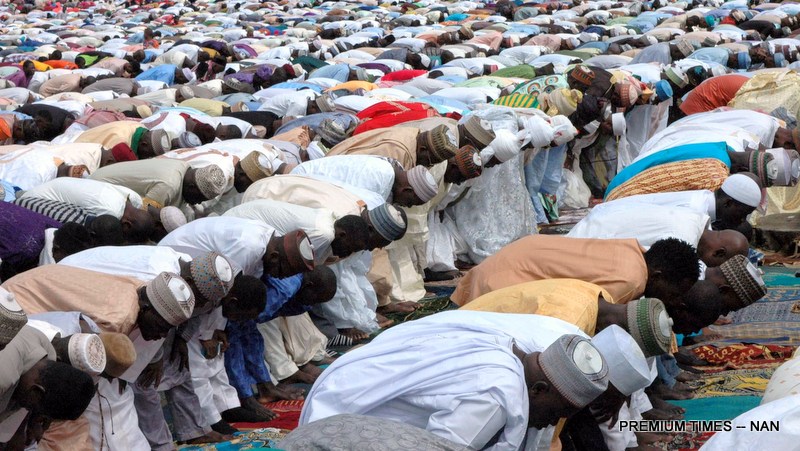
For a long time, Western media outlets, foreign politicians, and advocacy groups have repeatedly described Nigeria as the scene of an ongoing “Christian genocide” at the hands of Muslims, particularly Fulani herdsmen. The charge is serious, emotional, and widely circulated. However, a closer examination of the facts on the ground reveals a much more complex and painful truth: the primary victims of the country’s deadliest insecurity crisis, armed banditry, are overwhelmingly northern Muslims.
Multiple independent investigations have found no evidence of a systematic, religiously motivated campaign to exterminate Christians. A 2024 BBC Global Disinformation Unit report, fact-checks by AFP and Al Jazeera, and even cautious statements from Open Doors, the Christian persecution monitor frequently quoted by genocide advocates, have all warned that the term “genocide” is being misused and exaggerated in the Nigerian context.
The violence plaguing the country is real, but it is predominantly criminal, not confessional. Since 2015, armed banditry, kidnapping for ransom, cattle rustling, village raids and mass killings have turned Zamfara, Katsina, Kaduna, Sokoto and parts of Niger State into killing fields. These states are 90–98 per cent Muslim. Most bandits are ethnic Fulani Muslims who prey primarily on Hausa Muslim farming communities.
Complex numbers tell the story that western headlines rarely do:
– Zamfara State alone recorded over 1,200 banditry-related deaths in 2023, almost all Muslim.
– In the first nine months of 2025, more than 2,800 people were killed by bandits across the North West, according to the Nigerian Atrocities Documentation Project. The vast majority were Muslim.
– The U.S. Commission on International Religious Freedom stated in its 2025 report that banditry “disproportionately affects Muslim-majority areas”.
While Christians have suffered real losses in Middle Belt farmer-herder clashes and church attacks, the scale and frequency pale in comparison to the daily carnage in the Muslim North West.
When the clergy cross the line
This month, Plateau State Police Command arrested a Catholic priest for allegedly supplying AK-47 rifles and thousands of rounds of ammunition to bandit gangs operating across Plateau, Kaduna and Bauchi. Weapons recovered from the cleric have reportedly been linked to recent deadly raids. He was paraded on November 12.
It is not an isolated case. In February 2025, another Reverend Father, a deaconess and several church members were arrested in Taraba for allegedly running arms to both Boko Haram and bandit groups. Similar arrests of Christian clergy and lay workers have occurred in Benue and Nasarawa.
Social media reaction was swift and furious: “They label every Fulani man a terrorist, yet a Reverend Father is caught red-handed arming the same killers,” wrote one widely shared post.
Why the false narrative endures
Images of burnt churches and grieving Christian widows travel fast on global networks. Footage of torched Muslim villages in remote Zurmi or Tsafe rarely does. Poor, Hausa-speaking northerners lack the lobbying machinery that amplifies Middle Belt voices in Washington and London.
As one northern governor privately admitted: “When they shout ‘Christian genocide’ abroad, the grants go to NGOs in Jos and Enugu — never to the millions of displaced Muslims rotting in camps in Gusau and Birnin Gwari.”
The way forward
Nigeria’s crisis is one of state failure, poverty, climate stress and organised crime not a holy war. Treating banditry as jihad only deepens division and delays solutions. Community policing, economic revival in the rural North, and ruthless prosecution of arms suppliers regardless of collar or turban offer the only realistic path to peace.
Until the world stops peddling a convenient myth, the people bearing the heaviest burden — ordinary Muslim farmers, women and children of the North West — will continue to bleed in silence.
There is no Christian genocide in Nigeria. There is, however, a predominantly Muslim tragedy that the world has chosen not to see.
Umar Sani Adamu can be reached via umarhashidu1994@gmail.com.

SGF Akume says Trump’s remarks sparked fresh attacks by violent groups
By Sabiu Abdullahi
Secretary to the Government of the Federation, George Akume, has said that recent statements made by former United States President Donald Trump have revived the confidence of violent groups that are seeking to exploit global narratives for renewed attacks.
Akume issued the warning in a statement released on Wednesday. He addressed the evolving pattern of violent extremism, banditry and the broader security issues confronting Nigeria.
Trump had declared Nigeria a “country of particular concern’’ on October 31 over allegations of a Christian genocide.
He cautioned that American forces could be deployed to Nigeria if the alleged killings of Christians continued.
He also said he had directed the U.S. Department of War to prepare for “possible action” should the situation deteriorate.
Trump further threatened to suspend all American assistance to Nigeria if President Bola Tinubu’s government failed to stop the purported persecution.
Akume said insurgent networks had been weakened before those remarks were made. He noted that some groups are now attempting to use the international attention as an advantage.
His statement read in part, “Recent pronouncements from the United States have inadvertently emboldened opportunistic violent groups seeking to exploit international narratives and make bold statements by attacking soft targets.
“Before these statements, insurgency structures had been significantly degraded and reduced to isolated banditry. This resurgence underscores the vital need for collaboration—not public labeling—between Nigeria and the United States.”
He reaffirmed the Federal Government’s stance that Nigeria does not need foreign troops. According to him, the Nigerian Armed Forces have reclaimed territories and dismantled Boko Haram and ISWAP command structures.
He stressed that the country requires specific support in the areas of intelligence, technology and equipment rather than foreign boots on the ground.
He said, “The Nigerian Armed Forces are highly capable, experienced and professional. They have reclaimed vast territories, degraded Boko Haram/ISWAP leadership structures, and conducted successful multi-theatre operations.
“Nigeria does not require foreign troops. What is needed is targeted support from partners, especially the United States, in the areas of intelligence cooperation, technology and military equipment support for advanced engagement against the insurgents.”
Akume also rejected claims that the conflict in Nigeria amounts to a “Christian genocide”. He said available evidence shows that insurgents and criminal elements attack both churches and mosques and that victims include Muslims and Christians.
He added that Nigeria remains a secular nation and that government appointments represent the country’s religious and ethnic diversity.
He stated, “Nigeria rejects any characterisation of the conflict as a genocide against Christians or any group. Verified evidence shows that insurgents and criminal networks attack both churches and mosques, killing Muslims and Christians alike. The Government remains committed to protecting all citizens and strengthening cooperation with international partners—especially the United States—to dismantle extremist and criminal networks.
“Nigeria is a secular state as guaranteed by various provisions of the Constitution of the Federal Republic of Nigeria 1999 as amended. No state religion is adopted as a national religion and no citizen of Nigeria is above the Nigerian constitution.
“The appointment made by the present administration reflects the diversities of our nation and both Christians and Muslims and members of the Federal Executive Council holding key positions in equal proportion, including the Nigerian security council, the body that deals with all security challenges in Nigeria.”

Dr. Audu Bulama Bukarti: A man steadfast in his principles
By Abubakar AbdusSalam Muhammad (Baban Gwale).
Dr Audu Bulama Bukarti is one of the individuals I admire most in today’s Nigeria.
Recently, during the deeply thought-provoking Zoom discussion organised by Professor Toyin Falola on President Donald Trump’s comments about Nigeria, Bulama once again demonstrated remarkable clarity, courage, and sincerity. His contributions stood out with intellectual depth and honesty, and he represented our nation with dignity and unwavering principle.
Beyond his powerful voice in national discourse, Dr Bukarti is an expert legal practitioner, a meticulous researcher, an exceptional analyst, and a genuine freedom fighter whose work continues to inspire countless Nigerians.
What truly sets him apart is his unshakable commitment to Islam and truth. I recall during an episode of Fashin Baki on President Tinubu’s recent pardons, when he was asked about the case of DCP Abba Kyari and other inmates. His response was firm, principled, and full of integrity:
“I don’t talk on anything that contradicts Islam whatsoever.” These words reflect the heart of a man guided by faith before anything else, a man whose compass does not bend under pressure or public opinion.
A true Nigerian, a proud Muslim, a committed Northerner, a brilliant mind, and indeed a one-man army “KAI KAƊAI GAYYA”
I am deeply proud of him, not only for his intellectual contributions, but for who he is as a true Muslim brother whose sincerity, courage, and patriotism strengthen my love and respect for him.
May Allah preserve him upon goodness, protect him, and continue to make his voice a source of benefit, justice, and guidance for our beloved nation.

Katsina State Government summons controversial cleric, Yahaya Masussuka, amid divisive preaching
By Ibrahim Mukhtar
The Katsina State Government has formally invited the Quranist preacher, Yahaya Ibrahim Masussuka, who has recently become well-known, especially on Social Media, to appear before an Ulamas’ committee following complaints that his teachings allegedly breach “the general principles of Islamic law.”
The preacher debunks all prophetic sayings (Hadith) and calls the famous Hadith reporters liars. He later adjusted his stance, saying he agrees with three forms of Hadith and refutes all others. According to Masussuka’s new stand, he agrees with any Hadith on three conditions: 1) If the Hadith didn’t violate anything from the Qur’an; 2) If the Hadith didn’t say anything bad against the Holy Prophet, and or 3) If the Hadith preaches peace. However, some scholars have already labelled his current stance as clever bait to catch gullible, ignorant followers.
Masussuka has preached and discussed controversial issues and dismissed some fundamental issues of the Islamic religion as heresy and disowned all the revered Hadith books of Islam as mere concocted lies.
According to the Katsina State’s Secretary to the State Government, Alhaji Abdullahi Faskari, the government has received petitions from some scholars and concerned citizens regarding the nature and manner in which Masussuka’s preachings and sermons do not align with orthodox interpretations of Islamic jurisprudence.
At the same time, Masussuka himself has filed a complaint, claiming that some members of Jama’atu Izalatul Bid’ah (also known as Izala) have insulted and threatened him.
Although Masussuka has great backing and massive support from some Darika disciples, his heretic preaching still continues to stir controversy as many scholars, even among the Darika, see his teachings, which are based on debunking all prophetic sayings, as being completely un-Islamic.
In a bid to resolve the tension, the matter was referred to the Katsina Emirate Council, where both parties were invited to engage in dialogue. After the discussions, Emir Abdulmuminu Kabir Usman reportedly admonished that no one must preach in a way that offends fellow Muslims.
Following the Emir’s intervention, Governor Dikko Umaru Radda directed that Masussuka defend himself “before a Committee of Ulamas.” The SSG’s office also announced that standards and guidelines for preaching would be developed; anyone found to contravene them may face “appropriate action.”
Authorities have called on the public to remain calm, noting that the process will be handled “judiciously.”
The summoning has drawn mixed reactions from several groups, while many others, especially from the Dariqah and other rights and religious-freedom groups, vow to support the preacher. ICADAR (Impactive Centre for Accountability, Democracy, and Rights) warned that targeting Masussuka, whom they describe as “a preacher known for his peaceful teachings,” could undermine Nigerians’ religious expression.
Similarly, Amnesty International has raised concern over what it describes as a coordinated attempt to silence Masussuka. The group cautioned that shutting down his religious activities might violate his constitutional right to freedom of religion.
Another rights organisation, Ettrah: Voice for Freedom and Human Rights, called on both state and federal governments to protect Masussuka, arguing that calls to question his preaching risk “deepening misunderstanding” and threatening national unity.
On the other hand, some social analysts see the current development as worth pursuing, as many scholars were invited to defend their stands, which were deemed contrary to the general teachings of Islam. Some others view it as sectarian tensions, which, if not managed carefully, could inflame existing tensions between different Islamic groups in Katsina and beyond, particularly between Masussuka’s following and the Izala movement.
Sheikh Masussuka’s invitation by the Katsina State Government to defend his teachings marks a critical moment in northern Nigeria’s debate over religious freedom, state intervention, and sectarian balance. With vocal responses from rights groups and religious leaders alike, the outcome of this committee could resonate far beyond Katsina, touching on broader issues of governance, faith, and coexistence in Nigeria.

Kebbi LG chairman rejects U.S. Congressman’s comment on abducted Maga school girls, says claim is false
By Sabiu Abdullahi
The Chairman of Danko/Wasagu Local Government Area in Kebbi State, Hussaini Aliyu, has refuted a statement attributed to U.S. lawmaker Riley Moore, who alleged that the abduction of the Maga school girls occurred in a Christian community.
Aliyu stated that every one of the abducted students is Muslim.
He described the lawmaker’s remark as misleading and harmful, warning that such comments could stir needless religious tension at a period when authorities are concentrating on securing the girls’ release.
He explained that the Maga community falls under the Zuru Emirate, a district known for its long record of religious harmony. According to him, the area has never witnessed faith-related crises.
He urged the U.S. congressman to avoid issuing unverified claims that cast Nigeria in a negative light or threaten national cohesion.
The names of the abducted students released by the chairman are listed below:
Senior Secondary School 2A
1. Fatima Sani Zimri
2. Hafsat Ibrahim
3. Nana Firdausi Jibril
4. Masauda Yakubu Romo
Senior Secondary School 2B
5. Hauwa Saleh
6. Hauwa’u Umar Imam
Senior Secondary School 3A & 3B
7. Salima Garba Umar
8. Salima Sani Zimri
9. Amina G. Umar
10. Rashida Muhammad Dingu
11. Saliha Umar
12. Aisha Usman
13. Jamila Iliyasu
14. Maryam Illiyasu
15. Najaatu Abdullahi
16. Zainab Kolo
Junior Secondary School 3A
17. Surraya Tukur
18. Hafsat Umar Yalmo
19. Maryam Usman
20. Amina Illiyasu
21. Ikilima Suleman
Junior Secondary School
22. Khadija Nazifi
23. Hauwa’u Iliyasu
24. Hauwa’u Lawali
25. Ummu Kulsum Abdulkarim