

CBN/Aboki FX Saga: Currency Play and Lessons from Billions TV Show
By Abdulhaleem Ishaq Ringim
While explaining the reason behind the Central Bank of Nigeria’s clampdown on the parallel market exchange rate aggregation and publication website, AbokiFx, the CBN Governor submitted that the CBN’s preliminary findings suggested that AbokiFX was used for foreign exchange “manipulation and speculation”.
“They get Naira notes, use it to purchase dollars, take a position, change the rate over a given period, sell the dollars they purchase and make a profit. This is completely illegal and unacceptable and we will pursue them”, he said.
This remark sparked rage in the minds of many Nigerians, most of whom are oblivious of the technicalities of foreign exchange market operations. They outrightly dismissed the move by the CBN on AbokiFX as a mere attempt to shift the blame on the consistent crash of the Naira against the Dollar to AbokiFX. They considered it somewhat impossible that AbokiFX’s operations could have any impact on the exchange rates.
But currency play or currency manipulation is real, and even while it might indeed be an attempt by CBN to shift blame, the possibility of currency manipulation cannot be discounted. And to understand how it works, one needs to be conversant with some basic FOREX trading operations; the “long” and “short” positions.
A “long” position in FOREX trading signifies buying a particular currency at a certain rate by selling another currency while expecting the bought currency to appreciate against the sold currency. Let’s take NGN and USD for example, going long on this currency pair means buying Naira at a lower rate(by selling US Dollars) and selling it at a higher rate as it appreciates to buy back the Dollar sold initially. For example, one goes long if he buys NGN at the rate of let’s say N100(by selling $1) and sells the Naira as it appreciates perhaps to N50(for $1) to buy back $2 now instead of $1 thereby making a $1 profit. Meaning he bought N100 by selling $1 and now 1$ is N50, so N100 will now be worth $2 since N50 represents $1 now.
A “short” or “short-sell” position signifies borrowing a particular currency at a certain rate to sell and acquire another currency while expecting the borrowed currency to depreciate against the acquired currency so that you can buy it back at a lower rate. Let’s use the same example of NGN and USD, a short-sell would mean borrowing let’s say N50 and selling it to acquire $1, then wait until the Naira depreciates to N100 per $1, then sell your $1 dollar to buy back N100 now instead of the N50 it was before thereby realizing a profit of N50. Meaning one borrowed N50, sold it for $1, then waited until $1 equals N100, then sells his $1 which now represents N100.
Now, recall the CBN Governor’s statement of suspicion about how AbokiFX is being used for currency manipulation and compare it with the explanation of the “short-sell” above, you’d definitely find a correlation. But how does the manipulation happen?
I was able to find an answer to this question while watching “Billions” which is a TV show about the financial markets and their many intrigues. An episode titled “Currency”, which is the 5th episode in season 2 of the TV show was majorly about how Nigeria’s currency could be manipulated.
In the episode, a certain financial markets trader claimed that Nigeria’s CBN Governor told him that the Naira was going to be devalued due to the increasing weakness of the country’s oil industry and overvaluation of the country’s currency. However, the timing was ambiguous as nobody knew when the devaluation would happen.
However, he suggested that there was a way the timing could be determined and controlled, and that is if somebody takes a massive “Short” position against the Naira so as to pressurize the CBN to devalue immediately. The “short” he said would have to be massive. He was unveiling this to a hedge fund manager.
The hedge fund manager saw it as an opportunity to prop up his profits but knows clearly that a “short” position from only him would not do the work. So he sought the advice of a renowned banker and economist and he was counselled to assemble some other hedge fund managers(his competitors), pitch the idea to them so that they could work together to achieve a massive “short” against the Naira. And this he did.
He assembled them and offered them the glad tidings. Some of them raised concerns regarding the risks attached to this form of “currency play” because one has to enter the position at the right time for one can go too late and find nothing or enter too early and get wiped out due to increased interest rates. He convinced them that they could control the timing by taking monster “short” positions against the Naira. They all bought the idea and collectively agreed to “short” the Naira with a $5 Billion worth “short” position. And so they did.
Unfortunately, one of them had personal grievances with the hedge fund manager that brought the idea and he saw this as an opportunity to get back at him. So he leaked the information and CBN was alerted and they started raising interest rates which could bleed the hedge fund managers who took this massive “short” out of their trade positions.
Only one option remained for them to prevent losing their positions, and that was to get a renowned economist and banker to talk in a renowned international business television station about the Nigerian situation and conclude that the only option left for the country was devaluing their currency. So he reverted back to the economist that initially advised him about the situation and they finished the work together by granting an interview to a renowned international business television station concluding that Nigeria’s only remaining option was devaluing their currency. And so it happened and they profited massively from their “short” positions.
Even though this American TV Show is a work of fiction, it describes clearly and perfectly how a country’s currency can be manipulated by speculators hoping to benefit from the manipulation. And this is exactly what AbokiFX might have been doing with their platform as the value of a currency to a large extent is determined by people’s perception of and confidence in the currency. Hence, the CBN Governor’s alarm and subsequent measure. This is only but a possibility though, as the CBN has not yet offered substantial evidence to back this, the measure is still a product of “preliminary findings”.
Another possibility, however, is as described by the first-generation model of currency crisis as presented by Paul Krugman (and adapted from Stephen Salant and Dale Henderson’s model of speculative attacks in the gold market). Krugman explains that fixed exchange rate regimes are usually prone to attack by speculators especially when stakeholders perceive that the fixed regime is coming to an end due to certain fiscal and monetary signals.
And to tackle this, I must end by concurring with Tope Fasua’s suggestion as presented in his article titled “As Nigerians joyfully gather to kill the naira”. He said, “The CBN must be very nuanced and professional in its pronouncements around the naira. Ignore the black market. Face your market. Know that there are speculators reading your lips and gauging your resolve. Most financial market players are shorting the naira already, constantly on the lookout for dollars. Shock them without saying a word. Be unpredictable. Ensure your information does not leak to the market until you take action. Subtly put out the word through proxies sometimes, but act independently. Check your ranks. It is filled with non-believers in the Naira or even in the Nigerian project. What is going on presently is a speculative attack on the naira, through the black market.”
Abdulhaleem Ishaq Ringim is a political and public affairs analyst, he writes from Zaria and can be reached through haleemabdul1999@gmail.com.

30 killed in fresh attack on Kaduna village
By Sumayyah Auwal Ishaq
At least 30 persons have been killed by unidentified gunmen in Madamai attack in Kaura Local Government Area, Kaduna State. The incident was confirmed by the Kaduna State Commissioner for Internal Security and Home Affairs, Mr. Samuel Aruwan.
According to Aruwan, “some houses were set ablaze by the attackers at one end of the village. The troops put out the fire at three of the burning houses, and rescued six locals from the infernos”
He further states that “Governor El-Rufai has stated that the Kaduna State Government will bear the full cost of injured victims’ treatment”
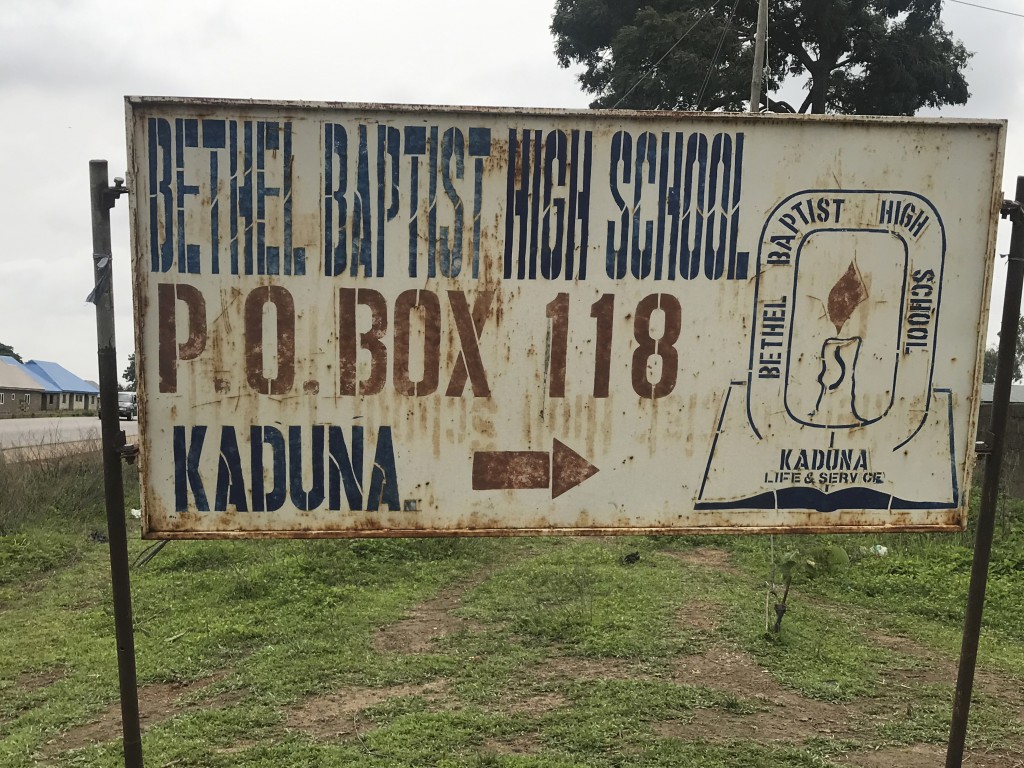
CAN confirms release of 10 more abducted Bethel students
By Muhammad Sabiu
Ten of the students abducted at a Kaduna Christian school have been released, the Christian Association of Nigeria (CAN) has said.
Rev. Joseph John Hayab, a top CAN official, announced the release to journalists.
He was quoted as saying, “Ten more students of Baptist High School were released this afternoon. We have 11 now with bandits.
“We are thanking all Nigerians for their prayers and support.
“We are trusting God that the rest will be released very soon. All have been reunited with their parents.”
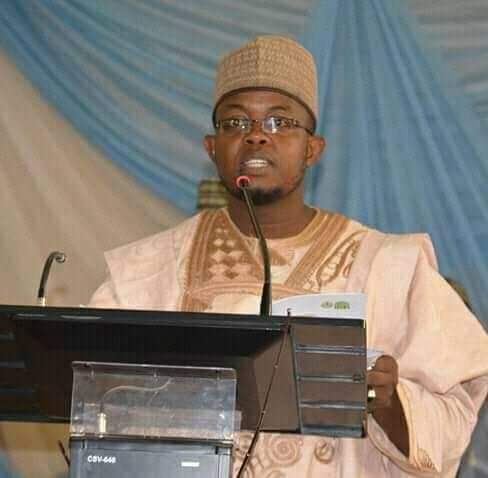
Making Waqf a serious business in Nigeria
By Abdullahi Abubakar Lamido
Waqf, translated as Islamic endowment, simply means a perpetual charity. As a strategic Islamic socio-economic institution, it entails dedicating a benefit-creating or revenue-generating asset for the sustainable provision of free public services to the society – especially for the less privileged. It can be created by an individual, a group of individuals, a corporate body or even a governmental institution. Waqfable asset is that which is legally owned by the endower and is cable of perpetually creating benefit or generating revenues which would be channelled to defined religious or charitable purposes.
From the dawn of Islam passing through the periods of the companions, Umayyads, Abbasids, Ayyubis and the Ottomans, waqf was maximally utilized as a unique instrument for addressing virtually all aspects of societal religious, economic, educational, healthcare and environmental development needs. In fact, what “substantial historical evidence” suggests, as established by Islamic economic historians like Murat Cizakca and before him, Marshall G.S. Hodgson, is that, “waqf, not zakah was the most important institution for redistribution of wealth” in Muslim history.
Historically, waqf has sufficiently financed virtually all aspects of public welfare and developmental needs, especially education and healthcare. To wit, in the area of education, it was used for building schools, libraries, laboratories, student hostels and lodgings for teachers, scholars and researchers. It also funded scholarships, payment of teachers’ salaries and the provision of food, clothing, learning and instruction materials as well as creating conducive teaching-learning atmospheres. Great Muslim Universities were built as waqfs and have continued to be substantially financed from waqf proceeds. It grew so ubiquitous that “A person can be born in a house belonging to a waqf, sleep in a cradle provided by that waqf, be educated in the school of the waqf and read the books provided by it, become a teacher in the waqf school, earn a waqf-financed salary and at his death be placed in a waqf-provided coffin for burial in a waqf cemetery”.
Relating to health, waqf has been used to build hospitals, clinics and medical laboratories which provide a wide range of free medical services, including surgery. It is documented that it was due to the advancement in service provision through waqf that the need was not even felt for governmental ministries or departments for education and health, as these were fully financed by waqfs.
Education and health were not the only areas of waqf interventions. Waqfs sustainably financed all forms of social, economic and community development services including transportation, environmental protection and beautification among others. At some historical epochs, various Muslim nations relied on waqf sources for a substantial portion of their national income. Waqfs were used to finance the building and maintenance of mosques, traveller’s lodgings, orphanages, bridges, water-wells, public conveniences, soup kitchens, roads, street lights and gardens. In fact, in many Muslim communities, waqfs were created for the sustainable provision of all conceivable public welfare services. Until the colonization of Muslim societies, waqf remained a significant contributor to socio-economic development in many Muslim countries. It was colonialism that changed the subject of the formula.
Having realized how waqf provided social, cultural and economic independence to especially Muslim scholars and intellectuals, who incidentally were usually the most resilient class against selfish imperial policies; the colonial “monsters”, implemented well-orchestrated policies that saw to the hibernation of the waqf sector. They syphoned many waqf assets, weakened many, deliberately rendered many irrelevant, and calculatingly destroyed the functioning and autonomy of waqfs by subjecting them to government control. They created governmental ministries that coordinate waqfs, with all the negative consequences of that.
Worth stressing is the fact that western imperialists destroyed the waqf system in Muslim lands only after they had already copied the concept from the Muslim Middle East through the crusaders, and then developed it as an instrument for financing developmental services. In her celebrated 1988 study titled “The Influence of the Islamic Law of Waqf on the Development of the Trust in England: The Case of Merton College”, Monica Gaudiosi established that it was actually the waqf institution that gave birth to the concept of Trusts and Foundations in the West. Modified and enhanced waqf was used to establish great western institutions such as the Merton College which still shares clear similarities with the waqf institution. And except for a few changes in the English law of Trust, most features of waqf have remained unchanged in the western practice of Trusts till date.
Interestingly, for more than two decades now there has been a growing global waqf reawakening. From the Middle East to Africa, and from the West to the East, waqf consciousness has continued to balloon. Despite the big blow that colonialism did to the waqf sector, making it reduced to merely an atomized institution concerned with financing some aspects of the spiritualties, the global Muslim communities have now rejuvenated their commitment to reposition waqf as a dynamic Islamic, third sector socio-economic institution. Waqf is seen and promoted as an engine of poverty reduction, wealth creation and distribution, employment generation and socio-economic development. In 2016, the World Bank noted that if properly harnessed “even if partly”, waqf, alongside zakah, can eradicate poverty in Africa, the Middle East and Southeast Asia. For a long time, combine global assets are estimated to be close to USD 1 trillion and growing.
Conversely, the story of waqf in Nigeria is largely different from other Muslim communities like Turkey, Morocco, Egypt, Saudi Arabia, and even others like Malaysia, Indonesia and Singapore. Yes, waqf knowledge and practice have existed in Nigeria for well over a millennium. But for several reasons, including historical, it was not comprehensively institutionalized in Nigeria’s pre-colonial history as a holistic, comprehensive socio-economic institution that provides a wide range of public welfare and developmental services. Its knowledge and practice have largely been reduced to the religious waqf, mostly mosques, cemeteries and religious schools. Even these waqfs, hardly had other revenue-generating waqfs for their sustainable funding as obtained in other climes.
But why should waqf be of great significance to Nigerian Muslims? It is of course factual that poverty is largely a Muslim phenomenon in Nigeria. All official statistics show that the states with the highest poverty rate are the Muslim dominated states. The majority of the Muslim population live in sorry conditions of socio-economic deprivations; poverty, hunger, squalor, illiteracy and poor healthcare. Muslims account for the highest number of out of formal schools and vulnerable children. These – combined with other factors – have resulted in rising insecurity and underdevelopment. For long, the solution to this has been largely viewed by many as the sole responsibility of the government. Only a few have realized that while governments have a great responsibility, Muslims can only alleviate their sufferings if they explore, among other things, Islamic socio-economic institutions in addition to agitating for good governance.
One important instrument that can significantly reduce the poverty and socio-economic backwardness of the Nigerian Muslims is no doubt the waqf institution. The flexibility and dynamism of the waqf institution provide for the mobilization of diverse resources in the forms of cash, landed properties, real estate, and other resources, which would be developed and invested, such that their revenues and fruits would be channelled to developmental services.
Nigerian Muslims already have the potentials for this. The long history of Islamic belief and practice, the enthusiasm of the population towards anything connected to Islam, the high spirit of giving that exist within the rich, middle class and even the masses, the availability of Islamic intuitions such as mosques, Islamic schools and media channels, the prevalence of governmental and non-governmental zakah and waqf institutions, among others, all provide a handy infrastructure that can be explored and utilized in the campaign for a new holistic waqf regime in Nigeria.
Particularly, the growing atmosphere of waqf consciousness among the elites and Islamic scholars, as exemplified in the increased awareness creation and establishment of Islamic charitable foundations in especially the last five to seven years, all point to existing opportunities for making waqf a veritable instrument for socio-economic empowerment. All this can also be added to the vast arable land an array of professionals and intellectuals that the Muslim community is blessed with. It is our opinion that with these and several other potentials, if philanthropic waqf were to be well studied, promoted, institutionalized and maximally harnessed and utilized, poverty would be largely reduced and socio-economic empowerment would be greatly triggered in Nigeria.
In this regard, there is the need to utilize several platforms for waqf discourse such that its potentials would be unearthed, its dimensions analyzed, its impediments examined; goals defined, priorities set and methods of actualizing the dream well spelt out. These platforms should bring together the Islamic scholars, business persons, professionals, community leaders and all important stakeholders to common thinking tables. In the light of this, the AZAWON Newsletter presents itself as a primary platform for debating, dialoguing and analyzing waqf matters (alongside other Islamic social finance instruments).
Scholars, intellectuals, professionals and other concerned citizens are therefore invited to continue contributing articles, reports (written, pictorial or otherwise), opinions, comments and all valuable information that can enrich and smoothen the journey to making waqf a serious business in Nigeria.
Malam Abdullahi Lamido is the Chairman, Zakah and Waqf Foundation, Gombe, Nigeria. He can be reached via lamidomabudi@gmail.com.
Emerging intrigues in Adamawa politics
By Mohammed Zayyad
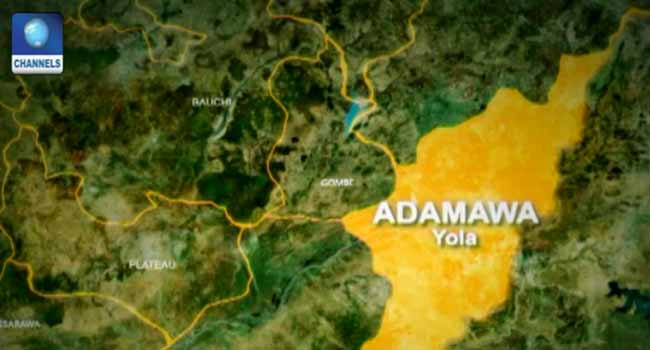
The Ward and Local Government Congresses of the All Progressive Congress (APC) and the replacements at the wards, and the preparation for the LGA congresses by the Peoples Democratic Party (PDP) have brought to the fore the emerging intrigues in Adamawa politic: The attempt to outweigh each other in the control of the two party’s structures among the party stakeholders is apparent.
The APC congresses, in most cases, were conducted based on Abuja’s directives of consensus and that the incumbents offer the Right of First Refusal, including accommodating newcomers. While for the PDP – if you have held the office for up to 8 years, death or resignation, your office is automatically vacant.
An interesting scenario in the APC is in Mubi North and Mubi South LGAs – the place has a former immediate governor – Bindow Umaru Jibrilla, and a sitting Senator, Ishaku Cliff Abbo. Abubakar Jafaru Member Representing Mubi North, Mubi South and Maiha Federal Constituency appeared to have been schemed out. For instance, while the Bindow and Cliff group were at Yazaram Cinema waiting for the election to be conducted, the actual election took place at Yelwa Primary School, with Jafar having the upper hand. What also weakened Bindow active participation was the issue of the leaked audio against President Muhammadu Buhari.
Another place of interest is Yola North, Yola South, Girei and Song LGAs- Senator Aishatu Dahiru Ahmed Binani, Adamawa Central, wanted to replace most of the Exco at those LGAs, but all her candidates lost woefully. Many people were surprised by Binani’s politics. The Excos Binani wanted to replace were those that assisted her in getting the senatorial ticket by narrowly defeating Aliyu Wakili Boya, Sarki Matasa.
In the APC congresses, three governorship hopefuls- Muhammadu Umaru Jibrill Bindow, Senator Cliff Ishaku Abbo and Senator Aishatu Dahiru Binani were casualties, while three other governorship hopefuls Modi Halilu, Nuhu Ribadu and Abdul Razak Namadaz appeared to have made their intelligent moves silently. Namdas doesn’t have any issues at his constituency.
On the other hand, Boss Mustapha was not that enthusiastic – he only showed interest in one or two places in Yola North and Hong LGA. Former Governor Murtala Nyako played the role of a stabilizer and elder. The person that called the shots the most was Comrade Mustapha Salihu, APC NorthEast Vice Chairman. He doggedly implemented the APC Caretaker Committee’s instruction of consensus, giving the incumbent the right of first refusal and accommodating newcomers. The big game will be at the state congress. In particular, the State Chairmanship position- the big picture will be more precise- the grievances, crises, and contentment from each stakeholder and the group will be more open.
The PDP, being the party in power in the state and having some considerable interest within it, its replacements at the ward level and preparations for other congresses were unique. Governor Ahmadu Umaru Fintiri made some political attempts- Most of the loyalists of Chief Joe Madaki and former Governor Boni Haruna were blocked.
An interesting place is the Numan Federation, where the Deputy Governor comes from. Crowther Seth was made ineffectual at his base; the person pulling the string is the Member Representing Numan, Demsa and Lamurde constituency, Kwamoti Laori; he is Fintiri’s right-hand man. It is still a surprise to many that Crowther Seth was made ineffective at Numan Federation. However, some pundits said it shouldn’t be surprised- Seth, as Deputy Governor, still operate from his house, of which the road to the house is not even tarred. Therefore, many people see Numan Federation as the big losers in the Fintiri government, despite being the joker for the PDP in the 2019 governorship election.
To be fair to Governor Fintiri, a sitting governor often dictates the direction of his party, and, Fintiri’s politics now goes beyond Adamawa; it has national elements in it- so he must have ‘the home’ in his control. Fintiri has some big PDP national assignments. This is also knit with his political ambition and the Wike connection. It was reported that Governor Wike flew to Yola twice or thrice in a specific week to confer with Fintiri and left within some hours. – Any political tête-à-tête that cannot be done via a cell phone is a big one.
There is a report that Fintiri will definitely try as much as he can to replace A.T. Shehu as the state chairman of the PDP. That’s why some politicians are of the view that Fintiri refuses to empower Shehu economically.
Fintiri means business, you can’t blame him. Recently, when the move to fill in the vacant position at the PDP Board of Trustee which was created by the death of former Governor Wilberforce Juta, Fintiri presented the name of Hamza Madagali Adamawa PDP Organizing Secretary, but former Vice President Atiku Abubakar and PDP former National Chairman Uche Secondus intervened, and presented the name of Boni Haruna, being a former Governor as Wilberforce Juta.
As the intrigues in both the Adamawa PDP and the APC further unfold, we will analyze it from the angle of the moment.
Zayyad I. Muhammad writes from Abuja, 08036070980, zaymohd@yahoo.com.
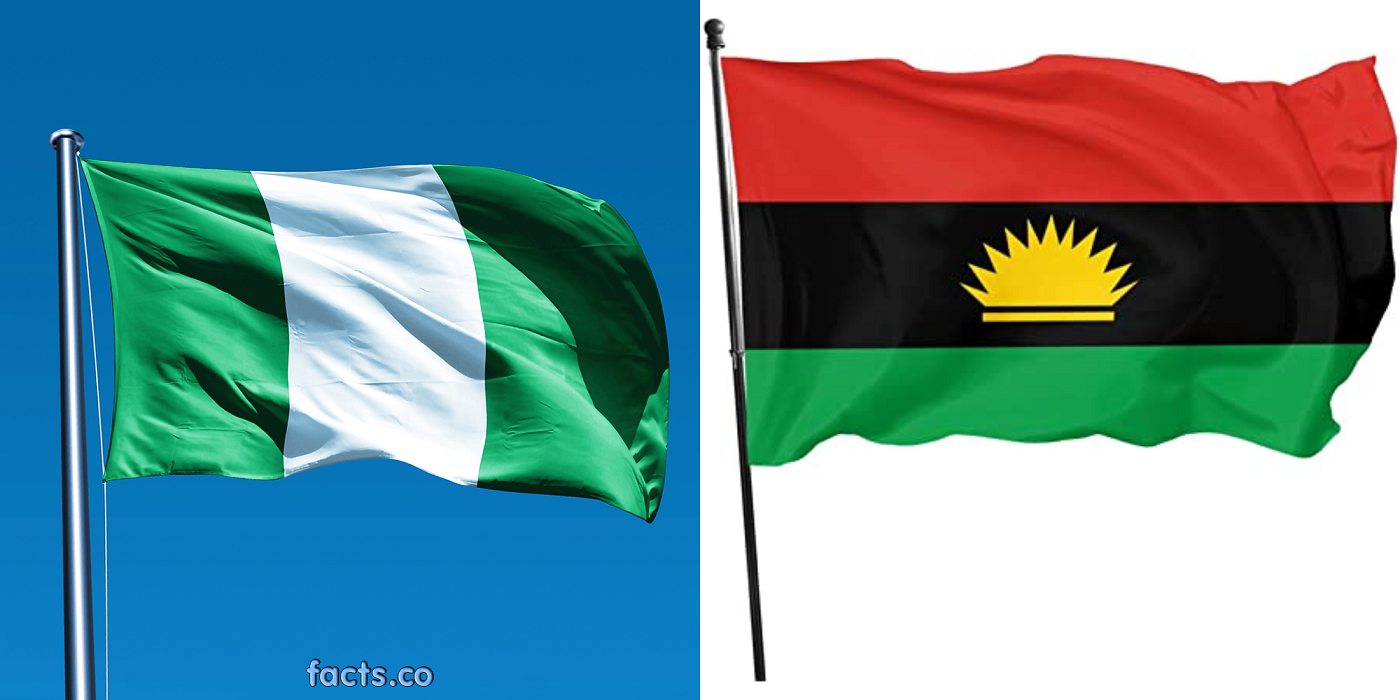
October 1: IPOB declares sit-at-home, urges removal of Nigerian flags in region
By Muhammad Sabiu
The Indigenous People of Biafra (IPOB), a proscribed secessionist organisation agitating for the breakaway of Nigeria’s southeast, has declared that the 1st of October would be a sit-at-home day.
The group has also ordered all Nigerian flags in the region to be removed.
The proscribed organisation, in a statement by its spokesman on Saturday, Emma Powerful, stressed that it had commenced its “no Nigerian flag in Southeast” campaign.
“IPOB has declared 1st of October 2021 total shutdown in Biafra land as a sign of our rejection of the evil construct called Nigeria and there shall be no movement in Biafra land on this day.
“Also, IPOB has declared from today 25th September 2021 that all Nigerian flag mounted anywhere in Biafra land must be brought down, Banks exceptional, IPOB leadership will communicate to Banks directly and give them reason they must peacefully bring down Nigeria flag in their banking premises before we do it ourselves in our own way.
“Every body must strictly adhere to this directives from IPOB leadership, we want to let the world know you that Biafraland is not Nigeria and shall not be. Don’t say I don’t know, a word is enough for the wise,” the statement reads.
Recall that IPOB leader, Nnamdi Kanu, is currently awaiting trial on charges relating to treason, illegal possession of firearms.
He was in recent months reportedly arrested in Kenya and later repatriated to Nigeria after spending years in the United Kingdom as what could be described as an “asylum seeker.”
Sultan of Sokoto urges resident doctors to end strike
By Muhammad Sabiu
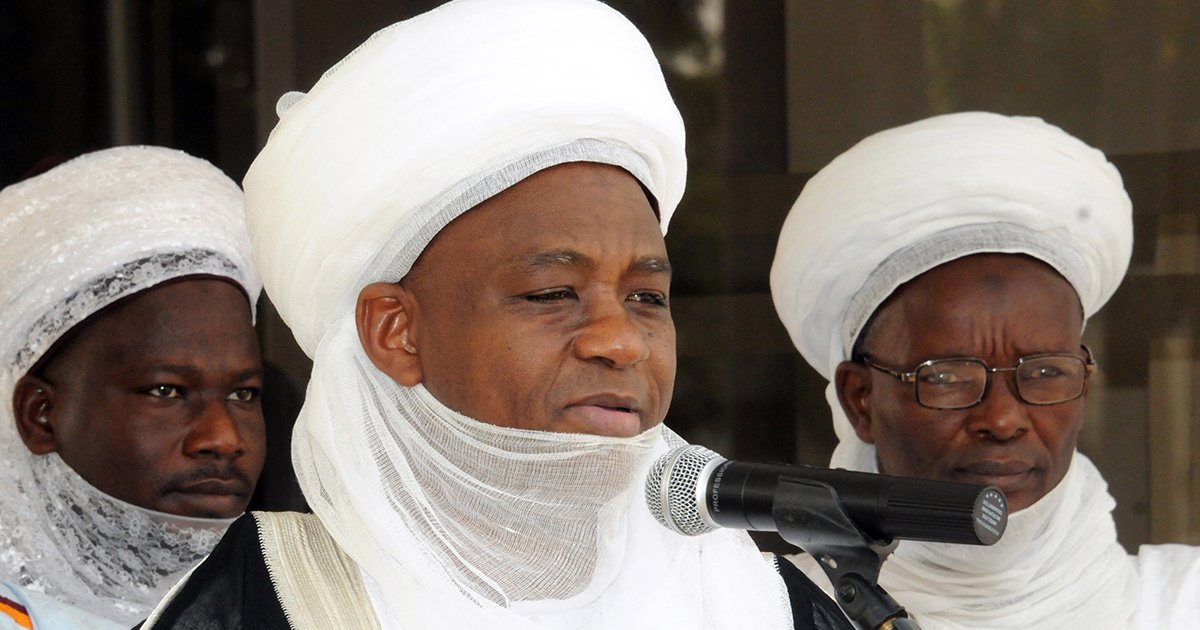
The Sultan of Sokoto, Alhaji Sa’ad Abubakar III, has appealed to the National Association of Resident Doctors (NARD) members to call off their ongoing strike, advising them to embrace dialogue.
Recall that the doctors have been on strike for months in an effort to air their grievances over poor funding.
Speaking on Friday in Sokoto at the 20th Conference of the National Pediatric Surgeons of Nigeria (APSON) opening ceremony, the Sultan made the plea, urging the“doctors also to respect the court order to resume work in the interest of the nation.”
The industrial action should be the “last option in resolving industrial conflict, especially for medical workers whose responsibility has to do with saving lives of citizens,” Alhaji Abubakar said.

After 16 years, Germans vote for Merkel’s successor
By Muhsin Ibrahim
German Chancellor Angela Merkel doesn’t need any introduction. Divorced and with a doctorate in Physics, Merkel, 67, has been a leader of Germany for sixteen years. She is the first woman to lead Europe’s economic powerhouse and the beacon of democracy.
Chancellor Merkel wanted to leave in 2016. However, many people, including world leaders, encouraged her to stay. With Donald Trump coming to power in the US, Brexit knocking on the door of the European Union and the smoke of refugee crises still smouldering, almost everyone knew that Merkel was the best in that crucial position. Thus, she re-contested in 2017 and, expectedly, won.
But, whatever has a beginning has an end. Germans go to poll tomorrow, Sunday 26, 2021, to elect Merkel’s successor. The electorates are practically voting for parties, not a particular candidate for the chancellery. The parties would, of course, want to have the majority to form a government, but it does not happen. Often if not always, a party will have to negotiate with another party – or even other parties – to have enough votes to appoint a chancellor in the Bundestag. The negotiations can take months.
There are three chief contestants from three major political parties. They are 60-year-old Armin Laschet (CDU/CSU), 40-year-old Annalena Baerbock (Greens) and 62-year-old Olaf Scholz (SPD). The first, Mr Laschet, is the current Minister-President of North Rhine-Westphalia (where Cologne is) and leader of Merkel’s party, CDU.
Despite Merkel’s endorsement of Mr Laschet, he is unlikely to win. It may surprise you to know that what may cause him this defeat is mere laughter. Deadly flooding killed people in Germany and some neighbouring countries in July. The President of Germany visited a town destroyed by the catastrophic flood. While the President was delivering a sombre speech, a camera caught Mr Laschet laughing behind him. Since that faux pas, many people have lost confidence in him.
Ms Baerbock is young, energetic and confident and started her campaign with a lot of optimism. Nonetheless, her party does not have enough clout to win nationally. But, that is not the real issue for their candidate. You may also find it astonishing to hear what has befallen Baerbock’s candidacy and tarnished her reputation. It was possible plagiarism and padding of her CV.
Olaf Scholz is Vice-Chancellor and Minister of Finance. So far, opinion polls favour his chances of succeeding Merkel. Unlike the two other leading contestants, he has almost no major ‘sin’ affecting his campaign. Moreover, his party, SPD, was in power until Merkel’s outstanding victory in 2005. Thus, they are thirsty for a win and are therefore doing everything possible to come back.
Frau Merkel will be greatly missed. People around the world will never forget her extraordinary benevolence during the 2015 refugee crisis. As a German resident with no right to vote yet, I wish for the best outcome in the elections. May we continue to live in peace and prosperity, amin.
Muhsin Ibrahim is a Nigerian. He studies and works at the Institute of African Studies and Egyptology of the University of Cologne. He can be reached via muhsin2008@gmail.com.
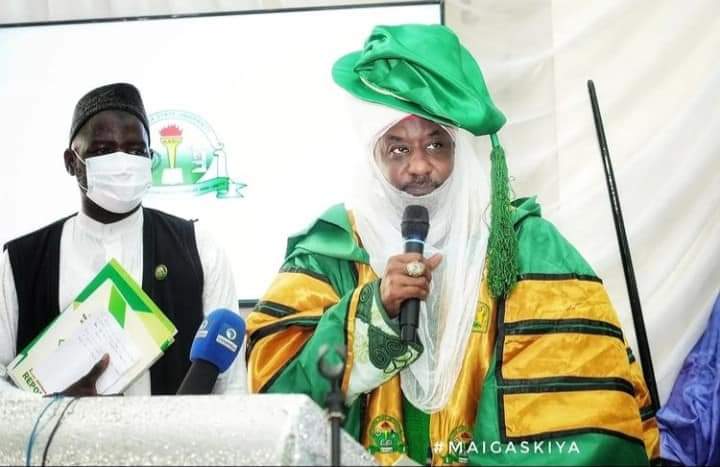
El-Rufa’I installs Khalifa Sanusi II as KASU Chancellor
By Sumayyah Auwal Ishaq
Kaduna State Governor, Malam Nasir Ahmad El-Rufa’i and the Visitor to the Kaduna State University (KASU) has installed Khalifa Muhammadu Sanusi II as the Chancellor of the University.
The installation was done at the University’s 4th convocation ceremony at the Malam Nasir Ahmad El-Rufa’i Lecture Auditorium at the university campus in Unguwar Rimi, Kaduna.
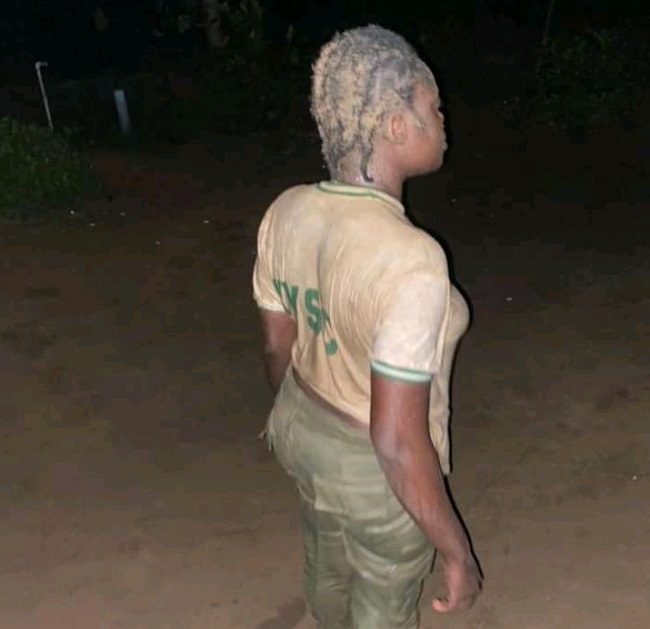
Army condemns dehumanisation of NYSC member in viral video
By Hussaina Ahmed Sufyan
The video that went viral on the internet during the early hours of Thursday left the Nigerian Army in disarray and Nigerians in shock. The video showed a female Nigerian Youth Service Corp Member (NYSC) identified as Ezeiruaku Ifeyinws Fidelia being molested by an officer named Lt. Chika Viola Anele.
An unidentified onlooker recorded the dehumanising act and shared it online. In it, we see the officer pouring on the Corps member an unknown substance.
It is said that there was an argument between the duo which led to the officer punishing the Corps member. The incident happened in 13 Brigade Calabar, Cross River State.
The Nigerian Army, however, released a statement condemning the act.
In a statement, the Director of Public Relations under the Nigerian Army, Cross River State, Brigadier General Onyema Nwachukwu condemned the act and tagged it “unprofessional”. While being apologetic, he also stated that Lt. Anele had been sanctioned.
“The Nigerian Army, therefore, condemns in strong terms this act of gross misconduct. Undoubtedly, the officer’s actions have caused the NA embarrassment and is highly regrettable. This unfortunate act of indiscipline does not in any way represent the Nigerian Army and will not be confined in its entirety.”
“The NA wishes to tender an apology to the victim, her family members, friends, National Youth Service Corps and to Nigerians in general for the unwholesome treatment melted out to the corps member”.