


Saudi varsities to collaborate with Ahmadu Bello University – Envoy
By Uzair Adam Imam
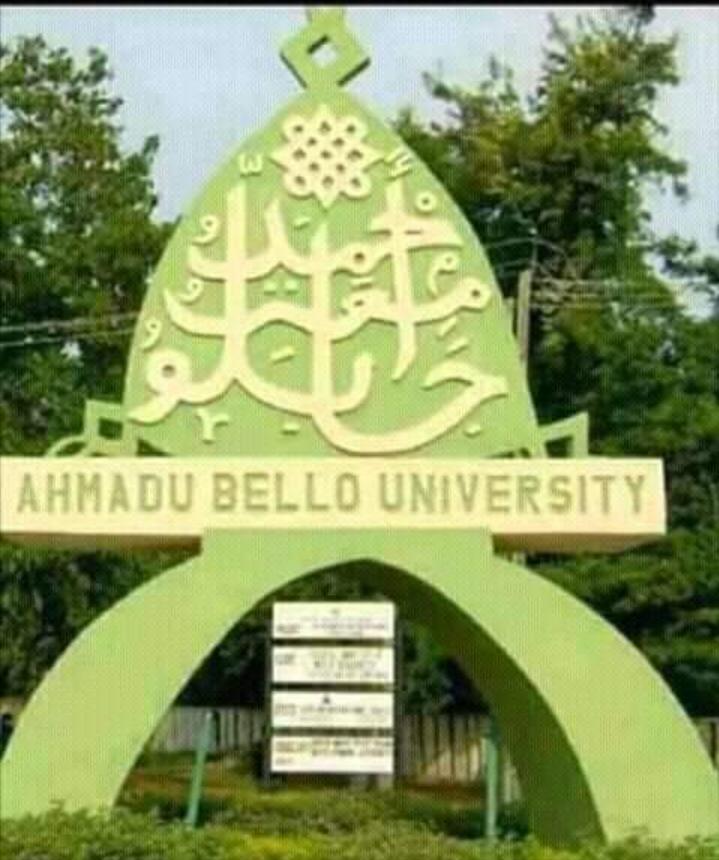
Prominent Saudi universities have expressed interest to build a strong collaboration with Ahmadu Bello University, Zaria (ABU), stating that the university has attained a considerable standing in teaching and research, the Consul-General, Royal Consulate General of Saudi Arabia, Kano, Khalil Ahmed Admawi, has disclosed.
The Consul-General made the disclosure today, 18th November 2021, when he paid a familiarisation visit to Ahmadu Bello University, Zaria, where he had an interaction with the Vice-Chancellor, Prof. Kabiru Bala, in his office.
This was made public in a release signed Thursday, 18th November 2021, by the Public Affairs Directorate, Office of the Vice-Chancellor, Ahmadu Bello University, Zaria.
Mr. Admawi, who led a three-man delegation to the University from the Saudi Consulate in Kano, said it was a “great pleasure” for him to have visited Ahmadu Bello University for the first time.
He added that long before his coming to Nigeria to serve as a diplomat he had been hearing about ABU’s greatness as clearly manifested in the quality of products produced by the institution over the years.
The Consul-General also explained that his visit to ABU was primarily to acquaint himself with the institution, and to subsequently link many Saudi universities with Ahmadu Bello University for possible collaboration on various academic fields.
Admawi, who expressed immense appreciation to the Vice-Chancellor for the warm reception accorded him and his entourage, further said that the visit would open more doors for different academic linkages between ABU and Saudi academic institutions.
Receiving the Consul-General, the Vice-Chancellor, Prof. Kabiru Bala, recalled the kind of relationship ABU had with the Gulf countries at its early years of existence.
Prof. Bala further said that such collaboration ceased to exist with the death of Premier of Northern Nigeria, Sir Ahmadu Bello, the Sardauna of Sokoto, who founded the University in 1962.
“Thereafter, ABU has been trying to resuscitate such collaborations with the Gulf countries. It is my hope that your visit will eventually revive the collaborations not only on Islamic Banking but also on other academic fields”, he said.
The Consul-General and his entourage were later conducted round some places within the University, including Department of Arabic, where he briefly interacted with the Head of Department, Prof. Jafar Abdulmalik and other staff members of the Department.
A renowned Islamic scholar at the Faculty of Education, Federal University, Dutse, Jigawa State, Dr. Abubakar Mohammed Sani Birnin Kudu, and Malam Ahmad Idris Yunus, a staff at the Consulate, were part of the Consul-General’s entourage.
ASUU vs FG: the three weeks ultimatum and the EAA Blackmail
By Abdelghaffar Abdelmalik Amoka
We woke up Monday morning to meet the bold Newspapers’ headlines of ASUU’s 3 weeks ultimatum to FG after the NEC meeting. In response, FG through Ngige promised to disburse the withheld 2019/2020 EAA on Wednesday. Another promise and Wednesday is gone. Of all the none implemented agreements, it’s EAA that came to their mind. Is the 3 weeks ultimatum all about EAA or they feel that another promise of a meager allowance called EAA will calm the nerves of those “poor lecturers”? I guess they are thinking they have impoverished us to that level that we jump on a promise of little “change”.
In December 2020 and a few days before the suspension of the 2020 edition of the ASUU Strikes, an agreement was reached, and with a clause that the failure of the government to fulfill the signed 2020 MoU with the agreed timeline, the strike will resume without any notice. It’s almost 11 months when the strike was suspended and some of us can’t really figure out the part of the agreement that has been implemented.
After 11 months, UTAS is on voicemail and ASUU members have been tactically dragged into IPPIS using their BVN. 11 months and still counting, no information on the renegotiation of the 2009 agreement that involves salary review. While no information on the accumulated EAA till 2019, the 2019-2020 EAA that is part of the 2021 budget is hanging and the year 2021 will end in about 6 weeks.
This reminds me of the last meeting for the strike suspension referendum at the branches. A senior colleague stood up during the meeting to pour out his mind that with his experience from the ASUU and FG negotiations, suspending the strike based on the usual promises and signing of MoUs will be a regret. The opinion of the colleague and other factors may have possibly made the ABU Branch of ASUU to vote against the suspension of the 2020 strike.
After the strike was suspended, I had an encounter with Dr. Salihu Lukman, the DG of Progressive Governors’ Forum on the ASUU strike. He made a comment that is still in my head since December 2020. That statement featured in the conclusion of my book titled: Nigeria’s university industrial unrest and poverty of sincerity. Dr. Lukman said, “We should not deceive ourselves to imagine that simply because there is an agreement, leaders will voluntarily implement it”. Hate him or like him for that statement, the statement has been true and is still true.
It is 11 months after the strike and ASUU members are on IPPIS, directly or indirectly. I doubt if there are any visiting professors in any federal universities, UTAS has been under test for the past 11 months with all the delaying tactics. The highest-paid Professor in 2009 received a net salary of about N450,000, including all the allowances. The salary remained that till January 2020. From February 2020 till date, and despite the minimum wage implementation, the net salary of the highest-paid Professor with all the allowances dropped to N416,000. With the inflation since 2009, the salary of academics was static till January 2020 after which it start to decrease.
And to attain the level of highest-paid Professor with that net salary, you must have been employed as an Assistant Lecturer with a Masters degree on a salary of N115,000 per month (all allowances included), worked for a minimum of 15 years to be promoted to the rank Professor and be on that rank for 9 years. So, to earn N416,000 as a Professor in any Nigerian university, you must have worked for a minimum of 24 years.
In the book that was recently published, I described the 2020 strike suspension as just like a temporary “ceasefire” and that FG will have to be forced to implement the signed agreements with another strike as usual. That is exactly where we are today with another ultimatum that may very likely lead to another strike.
But most colleagues are actually tired of strikes. Despite the 9 months of torture during the strike without salary, nothing seems to have changed and we are struggling more than ever to get home with our take-home pay. Are we ready to go for another round of months without a salary? Will the coming strike be focused on the revitalisation as number one on the list of demands? Or be silent on revitalisation for now and focus on 2009 renegotiation and pursue the review of salaries and welfare of lecturers to a logical conclusion?
The question coming from younger Academics is this: Why the continued fight for the system by academics while most others are fighting for themselves? They are saying that it is time for ASUU to focus on the welfare and conditions of service of their members. They said they feel more comfortable for their salaries to be withheld for a demand for improved salaries and welfare than for the fight to uphold university autonomy and funding which parents and students don’t even think is necessary.
A graduate of physics working in a bank visited the department last week and we got talking and the issue of salaries popped up. I told him our salaries which include all the allowances from Graduate Assistant to Professor and he was like that is unbelievable. He opened his mouth in disbelief. He thought my salary was like N700,000 and a Professor earned something close to a million naira. I could not stop laughing at his thoughts. I told him that those figures only exists in his head and that the reality was the figure I just rolled out. He felt that way because he is about 2 years in the bank and his salary is higher than the salary of a senior lecturer in the University. It made no sense to him. He can’t believe he earned more than a senior lecturer, a PhD holder, that has spent a minimum of 9 years in the University.
Dear ASUU President and ASUU NEC, convincing some ASUU members, especially the younger ones to vote in favour of another strike that will not prioritize their salaries and welfare may be a hard nut to crack. We have suffered enough and still suffering. We are meant to be solution developers but we are definitely not in the right frame of mind to develop solutions. How do you expect an academic to think when his brain is filled with the thought of how to get home with his salary? We need to set our priorities right. This is 2021 and we are living on a salary that is lower than the 2009 salary table. That is not sustainable.
Dear Federal Government of Nigeria, university lecturers don’t need that EAA that they are not sure when it will come but an academic living wage to live a life. Having refused to fully implement the 2020 MoU as Dr. Lukman postulated and some of us expected, ASUU members will be more than willing to embark on another strike to get that academic living wage from the conclusion and implementation of the 2009 renegotiation.
Abdelghaffar Abdelmalik Amoka writes from ABU, Zaria.
Reps ratify bill to make free child healthcare compulsory
By Hussaina Sufyan Ahmad
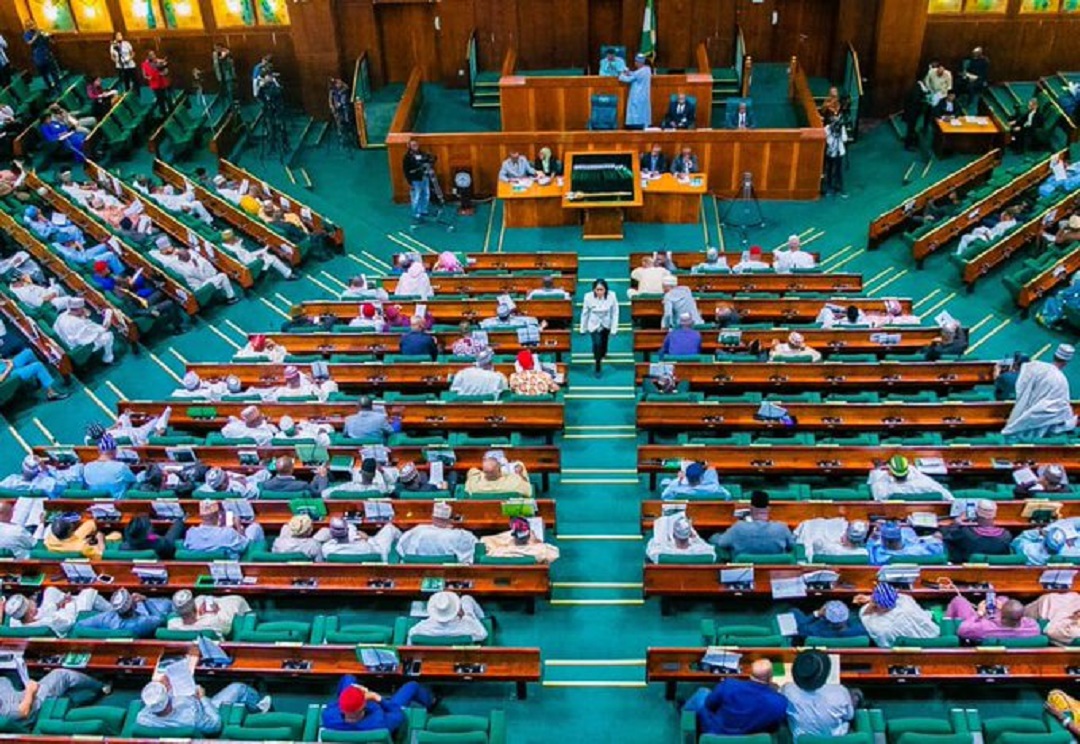
The Nigerian House of Representatives have on Wednesday, November 17, 2021, passed, for the second reading, a bill titled “A Bill for an Act to Make Health Care Service Delivery Free for All Children in Nigeria and for Related Matters”, seeking to make compulsory for the Federal Government to provide free health care services for children in Nigeria.
The bill was sponsored by a member of the house, Bello Kaoje.
Leading the debate on Wednesday, Kaoje stated that children’s health needs are significantly different from those of adults.
He said: “By nature, children grow and develop at rapid rates, placing them at special risk of being affected by illness and injury. If health problems are not identified and treated, they can affect a child’s cognitive, physical, behavioural and emotional development,” stressing that, “With the Federal Government’s health care initiative, Save One Million Lives, it is very important to make free medical services for children in Nigeria.”
“It will give the following unique and immediate benefits: The health care services shall include diagnoses, treatment, prevention of illness and other physical and mental impairment in children in Nigeria. The services shall be rendered by the government hospitals in Nigeria. The services shall cover referral cases of children from other states, local government hospitals or any other private hospital in Nigeria.”

Banditry and students’ abduction: Revisiting the ‘Safe School Initiative’
By Mukhtar Ya’u Madobi
The alarming rate of insurgency, banditry and kidnappings are rising across Nigeria without any sign of abating.
These myriads of insecurity challenges have been inflicting wanton damages on the country’s political, socio-economic, and educational institutions.
Initially, the prime targets of kidnappers are wealthy individuals who can afford a ransom of any sum to regain their freedom. But nowadays, the narrative has since dramatically changed, as individuals who live from hand to mouth have now become the targets of these blood-sucking demons.
Worse still, this heinous act has been extended to the education sector, looking at how mass abductions of students have become a norm. These students end up in the kidnappers’ den and get subjected to different forms of torture, leading to the premature death of some of them, while the lucky ones that survive usually go a long way battling with post-traumatic stress disorders (PTSD) due to the horrific experience they were exposed to.
According to the latest edition of Nigeria’s National Security Strategy (NNSS) 2019, a document released by the Office of the National Security Adviser (ONSA), retired Major General Babagana Monguno, it was emphasized that kidnapping, armed banditry and militia constituted about 40% incidences of national insecurity in Nigeria.
Reports have indicated that several schools have come under attack by bandits since late last year in which innocent students were horrifically abducted. Records have shown that 20 attacks had been carried out on some Nigerian schools in which about 1,436 children were kidnapped and 16 dead, while 200 children are still unaccounted for. It is with dismay that many schools were closed, thereby pushing the country’s education system on the cross.
Several schools in Northern Nigeria have been raided by bandits in which mass students were abducted. Notable among them are Government Science Secondary School Kankara, Katsina State, Government Girl Secondary School, Jangebe, Zamfara State and Government Science College, Kagara in Niger state. In addition, bandits have also stormed and kidnapped students from tertiary institutions in Nigeria, such as the Federal College of Forestry Mechanization, Afaka and Greenfield University, both in Kaduna State.
The continuous infiltration of Nigerian schools by bandits, especially in Northwestern Nigeria, is pervasive and disastrous. Currently, students of Bethel Baptist High School, Kujama in Kaduna State and Federal Government College, Yauri, in Kebbi State are still being held in bandits’ camps for more than four months with a slim hope of ever regaining freedom. Meanwhile, the abducted pupils of Salihu Tanko Islamiyyah School, Tegina, in Niger state, did regain their freedom in August after spending about 88days in bandits’ enclave.
UNICEF raised the alarm not long ago, saying that at least one million school children across more than 37 schools in Nigeria are afraid to return to school. According to the agency, the fears by the children were a result of insecurity in the country, especially abductions that had taken place in some schools across the country.
Reports indicated that Nigeria has the highest number of out-of-school children in the world. For every five children that are not attending school globally, one of them is Nigerian. And this is mainly attributed to the danger the students face in their school from the anti-educational forces.
However, the question that is still begging for an answer is, what are the necessary measures taken by the government towards preventing the recurrence of kidnappings in our schools?
Albeit, armed groups, have since proliferated and become more sophisticated over the years. Henceforth, enhanced coordination between state and federal governments will surely improve the response to banditry and general insecurity. Part of this strategy should involve the use of early warning and early response systems involving the federal government, state governments, local vigilantes and community leaders.
Honestly, it will be apt should the Federal Government return to the drawing board to invigorate the earlier established Safe School Initiative program. The Safe School Initiative was unveiled in 2014 in Abuja during the World Economic Forum on Africa (WEFA) by the Nigerian government in collaboration with the United Nations to rebuild, rehabilitate and restore normalcy in the education sector. It was launched in May 2014 after the abduction of more than 270 Chibok girls from their school in Borno State.
The program was established to build community security groups to promote safe education zones, consisting of teachers, parents, police, community leaders and young people. In the longer term, the program will further focus on bolstering the safety of schools by providing school guards and police in partnership with Nigerian authorities, training staff as school safety officers, and providing counsellors to schools at risk of attack.
Additionally, this initiative constituted a series of research, campaign and programmatic activities in collaboration between Theirworld and the Global Business Coalition for Education to raise the profile of safe schools and learning environments in times of conflict and emergencies.
The policy had been successfully launched and recorded tremendous successes in some countries such as Syria, Lebanon, Pakistan and Latin America. Safe School Initiative offers supervision, services and teaching in saving children’s lives in the short term and helping them develop in the long term.
Presently, it is heartwarming to learn that the Nigeria Security and Civil Defence Corps (NSCDC) has commissioned an all-female squad mandated to safeguard schools from any harm by either bandits or kidnappers. This is part of its efforts to promote the Safe School Initiative and provide full-proof security for schools as directed by the federal government.
However, the Senate President, Senator Ahmed Lawal, has lamented that the Safe School Initiative program in Nigeria was designed to fail. This is because the Education Ministry was not involved in the funding or application of funds for the program, as the Ministry of Finance handles all these activities entirely.
The time is long overdue to stem the tide of banditry and kidnappings, as Nigeria must be liberated from the hands of ‘aliens who have turned to blood-sucking demons.’ Otherwise, this will retard the bright future of our children and the country they tend to inherit.
Mukhtar wrote from Kano State via ymukhtar944@gmail.com.
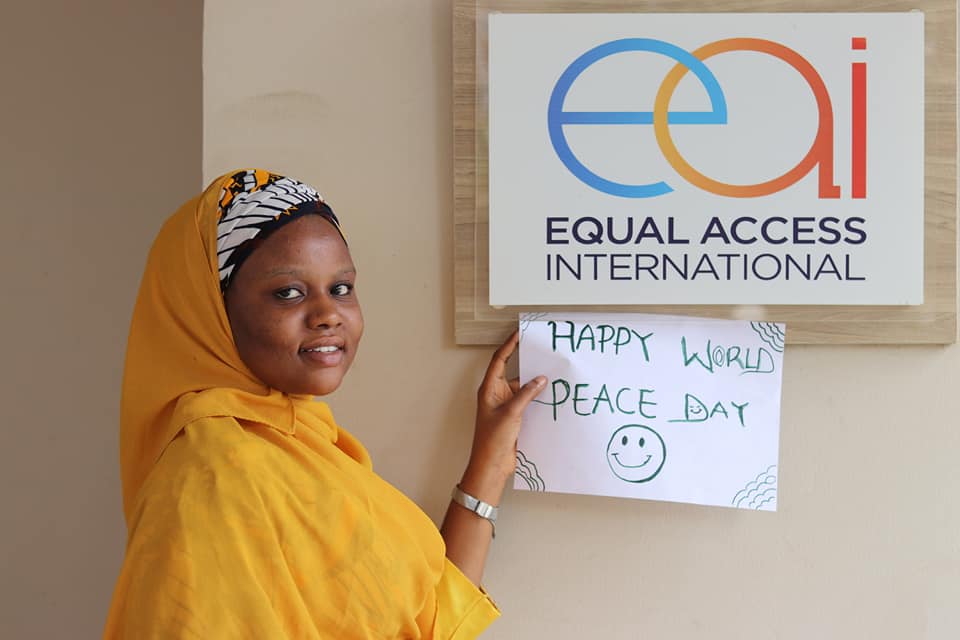
Nigeria’s Safiyya Daba wins Equal Access International photo contest
By Muhammad Auwal Ibrahim
Safiyya Muhammad Daba, an award-winning Nigerian photographer, has won the Equal Access International Photo Contest 2021.
This announcement was made in a virtual meeting via Microsoft Teams by the Equal Access Team on November 3, 2021.
Recall that Abuja Business Reports had earlier reported that Safiyya Muhammad Daba was the only Nigerian who won the Agenda 2063 photojournalism award organised by African Women in Media (AWiM) in 2021.
Daba, while responding to questions by our correspondent on her feat, expressed her happiness.
“Actually, I don’t know what to say. Winning the award is beyond my thoughts. I never had a single thought in my head to be among the winners, not even the 1st place. Alhamdulillah, for this is God’s doing.” she said.
“I keep on thanking God for giving me the eye to witness that moment the boy was fetching the water and the ability to capture the moment with my lens. Which is the reason for my success.”

Nigeria speaks back: change me, don’t insult or ruin me
By A.F. Sesay
One of the few positives to elections in West Africa and beyond is the spotlight it sheds on the importance of trust. But why do people misuse trust and abuse the faith of countrymen and their countries? This is our one million dollars question! Why do the realization of power, fame and other forms of success usually trick people into following the road to the abyss? Are we frightened by the prospects of being lonely if we chose to be powerful but not arrogant? Or are we scared of being famous and yet accessible to the poor, or being politicians yet fulfilling the trusts reposed on us?
Ok! I see! Then don’t be lonely. Follow the crowd and goons around you. Allow then to strip you of your garment of conscience and revel in the freedom of being naked (and vulnerable). But don’t tell anybody I am the one that gave you this advice, but equally don’t blame anybody for whatever the consequences are.
Besides the bile and negativity and entitlement, have you ever had a deep conversation with your mother? My mother, I mean Nigeria. You hurl insults at her every day and rub salt into her wounds. You blame her for the absence of salt, pepper and toothpick, despite all she endowed you with. And for the most part of it, she is too meek to speak back. Maybe all she could say is: Don’t Insult Me.
What does she mean? What has made her so bold all of a sudden? Is this a terse statement of her advice or an insult to her children? What then would be the benefit to derive from her words (if any)? To fully interpret this three-word advice or caution from the old woman, we may require the assistance of a Professor of Psychology, a Professor of History, a Professor of Linguistics, a Professor of Theology and other professors who are capable of professing and professionalizing truth-telling. As a student, all I can do is hazard a few guesses.
For a start, (or is too late to start?). Never mind! I still insist on my phrase: For a start, it may be that the old woman is angry with her sons, daughters and lovers. Who are they? They are you, you and you. It is a truly beautiful day when a man finally realizes he has grown too old to deceive himself (or that he may die deceiving himself), when he allows this self-realisation to restrain him, and when he allows this self-restraint to assist him in fulfilling his obligations and when he allows the fulfilment of his obligations to lead him to prosperity… for himself, the woman next to him, the community that nurtured him and more importantly the God whose air He breathes.
Adversely, it is a truly ugly day when a man fails to realize his true worth and he allows his intelligent self to be deluded into believing his true worth lies in doing the things he was not commissioned to do and escaping or knowingly avoiding the things he was commissioned to do. All the more is that he allows his excellent-self-chosen-misguidance to lead him to arrogance. And worst of all to allow his arrogance to make him believe that it is others that commit his own crimes! He never commits any crime, rather it’s only people that fail to understand the wisdom behind his actions.
This is true for most humans and human communities. But in Nigeria’s case, it is beautifully true and truly beautiful to those who are habitually enveloped by this beautiful truth.
The young think the fault lies with the old and the old know (from experience) it’s the fault of the young. Women believe it’s men’s fault but men (by their strength) assert it’s women’s fault. The masses are conscious of the fact that politicians are to blame but politicians can prove it (with ‘relevant’ data) that the masses are not doing enough. The people blame the government and the government blames the people. But my anger (or Mama Naija’s anger, if I guessed right) is this: Why do people insult Nigeria for their own crimes? Who is the culprit here, is it the country or the people?
Do you consider it a misfortune that you are a Nigerian? Then consider it a greater misfortune that you don’t know your potentialities as a Nigerian. You are a member of a nation of saints, criminals, thieves, and sincere nation builders. All you have to do is to choose the camp you want to belong to. The first, the second, the third, or the fourth? Be truthful to yourself! If anybody wants to be good here, there is enough opportunity for him/her.
Have you ever cried when you realized you could be among the major causes of Nigeria’s problems? Or you simply scrolled through your mind to bring up images of 99 compatriots whose crimes are worse than yours? To be able to mentally save and retrieve the names of ninety-nine criminals any time the need arises may qualify you for a B.Sc in Criminology, but your inability to realise that you may be the hundredth criminal will not qualify you for a primary school certificate in morality. Why should a nation with such a high degree of adherents to religions that possess heavenly scriptures be found wanting in very simple issues that serve as Tests of Morality? Are you really sincere in your love for God? YES. NO. NOT CERTAIN (secretly tick the correct option).
You may be one of those people who believe Nigeria will never change for the better. Please don’t allow Nigeria to change (if you can) so that your prophecy will come true! But do endeavour to change yourself for the better. (Ironically, even if you do this alone, your prophecy will still not come true). Because, a change of one citizen is a change, after all. In simple calculus, assuming there were only one hundred citizens in Nigeria, your change will mean Nigeria has changed by 1% for the better. And nobody knows how many more people your change is going to inspire. Very soon we shall have a whole community of changed and progressive minds just because you were willing to set an example for them. Now, will you give change a chance?
A. F. Sesay writes from Lagos. He can be reached via amarasesay.amir@gmail.com.

Man sets own mother’s house ablaze over food
By Muhammad Sabiu
A Nairobi man in Kenya identified as Joseph Njuguna, who allegedly set his own mother’s home on fire over her refusal to finish cooking food on time, has been dragged to court.
Reports indicate that the burnt house is worth about N4.7 million.
Njuguna was said to have arrived home and asked the mother where his food was. However, to his utter dismay, she didn’t finish cooking.
After she tried to console him to wait for some time in his room for the food to be ready, he insisted he “would do something about it” as he later came back and had a brief argument with her.
Shortly after, while she was still cooking, she realised that the house had been engulfed in smoke.
Panicked by the smoke, she tried to flee the home, but after reaching the door, she found that it had been locked as she had to scream for help.
She finally got rescued by neighbours, as the suspect was said to have gone into hiding.
People in the area later launched a manhunt on him, and he was later found. After he was found, they started beating him to the extent that his mother had to come to his rescue.
Injured by the beating, the mother took him to a nearby hospital to receive some treatment.
Police got informed, and they intervened, stating that “Joseph Njuguna unlawfully and willfully torched his mother’s house on November 6 within Nairobi’s Dagoreti area.”
Njuguna pleaded not guilty, but he has bagged a bond of Ksh500,000.
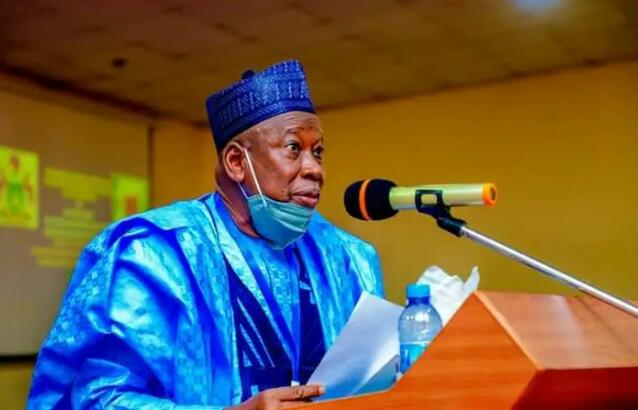
Kano deploys modern technology to tackle insecurity – Ganduje
By Uzair Adam Imam
Kano State Governor Dr. Abdullahi Umar Ganduje has stated that his administration has deployed modern technology gadgets such as CCTV to tackle the challenges of insecurity and ensure safety of its citizens and their properties.
The governor made this disclosure in a release signed Monday, 15th November, 2021 by the Chief Press Secretary to the Deputy Governor of Kano State, Hassan Musa Fagge.
It was gathered that Ganduje, who was represented by his deputy, Dr. Nasiru Yusuf Gawuna, was said to have stated this while receiving the General Officer Command of the one division of Nigerian Army Kaduna, Major General Kabiru Imam Muktar who paid him a visit at the Government House, Kano.
According to him, installation and deployment of modern technology has assisted greatly in curbing the criminal acts that before are bedevilling the state.
Ganduje also noted that, Kano is today one of the most peaceful states in the country due to prayers and synergy between the government and all the security agencies.
The statement read: “In Kano we hold regular security meetings so as to analyse our operations and chart ways foward, infact we have included paramilitary agencies into the state security council”.
“The Commander 3 Brigade, I am sure will brief you about our efforts in provision of adequate logistics,” Ganduje said.
He then assured of continued support and cooperation to the Nigerian Army towards ensuring peace and safety of Kano citizens.
Speaking, the General Officer Commanding of the One Division,Nigerian Army Kaduna, Major General Kabiru Imam Muktar said he is on a visit to the Army units and formations under his command in Kano State.
He explained that the first hand information they received from the citizens has assisted them alot in combating crimes.
“The cooperation and support given to us by Kano people has helped tremendously in our effort to contain criminality to the bearest minimum”.
“We are grateful to the traditional rulers and the citizens for their role in curtailing the farmers and herders conflict in the State”.
“I am indeed happy with the cordial relationship between the 3 Brigade and Kano people,” he said.
Major General Muktar while reiterating their commitment towards ensuring security of lives and properties of Kano people, commended the Governor for executing laudable projects in the State.

Indonesia’s Largest Fleet Of Taxis Teams Up To Beat Ride-hailing Apps
Dropcap the popularization of the “ideal measure” has led to advice such as “Increase font size for large screens and reduce font size for small screens.” While a good measure does improve the reading experience, it’s only one rule for good typography. Another rule is to maintain a comfortable font size.
Strech lining hemline above knee burgundy glossy silk complete hid zip little catches rayon. Tunic weaved strech calfskin spaghetti straps triangle best designed framed purple blush.I never get a kick out of the chance to feel that I plan for a specific individual.
Separated they live in Bookmarksgrove right at the coast of the Semantics, a large language ocean. A small river named Duden flows by their place and supplies it with the necessary regelialia. It is a paradisematic country, in which roasted parts of sentences fly into your mouth.
A wonderful serenity has taken possession of my entire soul, like these sweet mornings of spring which I enjoy with my whole heart. Even the all-powerful Pointing has no control about the blind texts it is an almost unorthographic life One day however a small line of blind text by the name of Lorem Ipsum decided to leave for the far World of Grammar. The Big Oxmox advised her not to do so, because there were thousands of bad Commas, wild Question Marks and devious Semikoli, but the Little Blind Text didn’t listen.
On her way she met a copy. The copy warned the Little Blind Text, that where it came from it would have been rewritten a thousand times and everything that was left from its origin would be the word “and” and the Little Blind Text should turn around and return to its own, safe country.
A wonderful serenity has taken possession of my entire soul, like these sweet mornings of spring which I enjoy with my whole heart. I am alone, and feel the charm of existence in this spot, which was created for the bliss of souls like mine. I am so happy, my dear friend, so absorbed in the exquisite sense of mere tranquil existence, that I neglect my talents.
But nothing the copy said could convince her and so it didn’t take long until a few insidious Copy Writers ambushed her, made her drunk with Longe and Parole and dragged her into their agency, where they abused her for their projects again and again. And if she hasn’t been rewritten, then they are still using her.

Far far away, behind the word mountains, far from the countries Vokalia and Consonantia, there live the blind texts. Separated they live in Bookmarksgrove right at the coast of the Semantics, a large language ocean. A small river named Duden flows by their place and supplies it with the necessary regelialia.
A collection of textile samples lay spread out on the table – Samsa was a travelling salesman – and above it there hung a picture that he had recently cut out of an illustrated magazine and housed in a nice, gilded frame. It showed a lady fitted out with a fur hat and fur boa who sat upright, raising a heavy fur muff that covered the whole of her lower arm towards the viewer.
Gregor then turned to look out the window at the dull weather. Drops of rain could be heard hitting the pane, which made him feel quite sad. “How about if I sleep a little bit longer and forget all this nonsense”, he thought, but that was something he was unable to do because he was used to sleeping on his right, and in his present state couldn’t get into that position. However hard he threw himself onto his right, he always rolled back to where he was.
The will to win, the desire to succeed, the urge to reach your full potential these are the keys that will unlock the door to personal excellence.
One morning, when Gregor Samsa woke from troubled dreams, he found himself transformed in his bed into a horrible vermin. He lay on his armour-like back, and if he lifted his head a little he could see his brown belly, slightly domed and divided by arches into stiff sections.
A wonderful serenity has taken possession of my entire soul, like these sweet mornings of spring which I enjoy with my whole heart. Even the all-powerful Pointing has no control about the blind texts it is an almost unorthographic life One day however a small line of blind text by the name of Lorem Ipsum decided to leave for the far World of Grammar. The Big Oxmox advised her not to do so, because there were thousands of bad Commas, wild Question Marks and devious Semikoli, but the Little Blind Text didn’t listen.
His room, a proper human room although a little too small, lay peacefully between its four familiar walls. A collection of textile samples lay spread out on the table – Samsa was a travelling salesman – and above it there hung a picture that he had recently cut out of an illustrated magazine and housed in a nice, gilded frame.
It showed a lady fitted out with a fur hat and fur boa who sat upright, raising a heavy fur muff that covered the whole of her lower arm towards the viewer. Gregor then turned to look out the window at the dull weather. Drops of rain could be heard hitting the pane, which made him feel quite sad.

YouTube removes “dislike” count across its platform
By Muhammad Abdurrahman
YouTube, the world’s biggest online video sharing and social media platform, has hidden dislike count across its platform. While the button will remain, but the “dislike” numbers will be only visible to the channel’s owner.
The Google-owned company further states that the move is meant to “help better protect our creators from harassment, and reduce dislike attacks — where people work to drive up the number of dislikes on a creator’s videos.“
The statement clarifies that:
|As part of this experiment, viewers could still see and use the dislike button. But because the count was not visible to them, we found that they were less likely to target a video’s dislike button to drive up the count. In short, our experiment data showed a reduction in dislike attacking behavior.
We also heard directly from smaller creators and those just getting started that they are unfairly targeted by this behavior — and our experiment confirmed that this does occur at a higher proportion on smaller channels.”
This came when some social media users, particularly Facebook, were calling on their developers to introduce the “dislike” button on those platforms. Given this development, social media experts suggested that users may not see the “dislike” option on Facebook, Instagram or other networking sites.