
Nigerian universities are unproductive – Prof. IBK
By Uzair Adam Imam
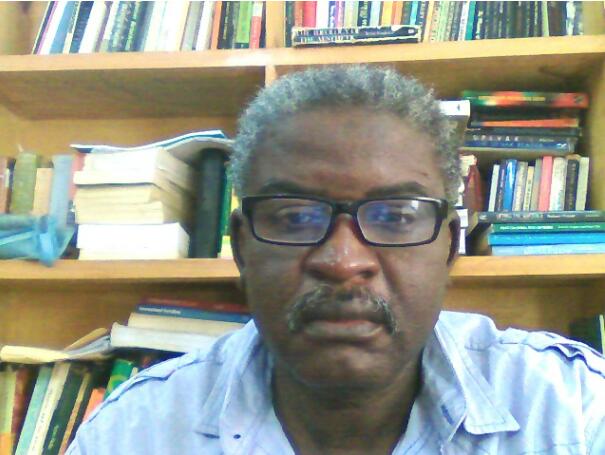
A lecturer with Bayero University, Kano, Prof. Ibrahim Bello Kano (aka IBK), has described the Nigerian universities as entirely unsuccessful and unproductive, adding that both the lecturers and students are good plagiarists who solely depend on online resources.
Prof. IBK raised this argument on November 25, 2021, at the 3rd Social Sciences Public Lecture organized by the Faculty of Social Sciences, Bayero University, Kano.
However, the lecture generated responses, which eventually led to a debate among the audience. While some of the audience members agreed with Prof. IBK, others disagreed with him.
In response to the debate, IBK lamented, “Some professors never bother to read new information in their declared research field of interest. Only very few among our colleagues keep their head above the stagnant academic pool.”
He added that in Nigerian universities, some lecturers give lectures to the students, who pretend to take down notes. “When it is time for class tests, the assignment or examination, the students migrate en mass to online searches for relevant information,” he stated.
IBK, who seemed to have been speaking from his heart, described how sad he feels seeing lecturers and students openly plagiarising online academic materials.
“Students openly plagiarized online academic materials and pass them off as their own hard, independent research. Some of the lecturers are in relatively the same situation.” He lamented.
The lecture had many influential personalities both within and outside the university in attendance. Some of them included: The Vice-Chancellor of Bayero University, Prof. Sagir Adamu Abbas, represented by Dr Musa Auyo; Prof. Abdullah Uba Adam, former Vice-Chancellor, National Open University, Prof Ahmad M. Tsauni, among many others.
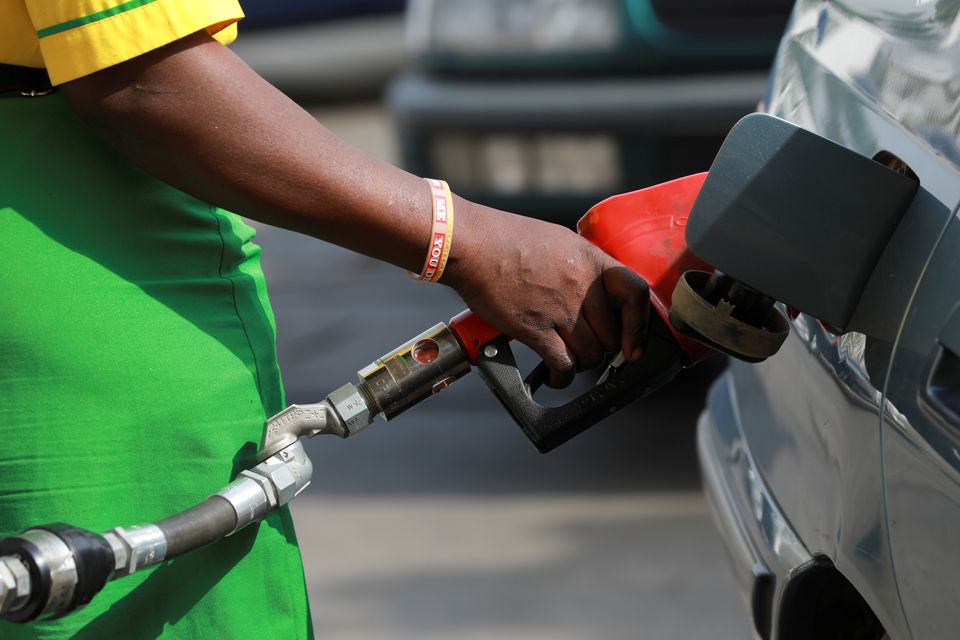
Remove this notorious subsidy but with conditions
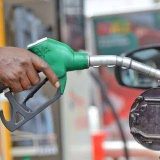
I support the removal of fuel subsidy with conditions attached for the government. I have known that fuel subsidy is giving corruption a legal garb. But IMF didn’t tell government the whole truth. For government that cares for its people, removing fuel subsidy should only be done after the following conditions are taken care of:
1- Repair the refineries. As long as the refineries are working, petrol will come at reasonable price to Nigerians. The transport, NPA, custom duty and throughput components of the price will be taken care of.
2- Stop importation of petrol- fuel subsidy is not the only way government wastes money. Fuel importation in the most corrupt and wasteful venture of the government. As at June 2021, Nigeria spent N1.09trn on fuel importation. It is the cause of the deteriorating value of the Naira and Nigeria’s biggest import, the cause of our balance of trade and current account deficits. In fact fuel importation is the major cause of Nigeria’s economic crisis. As long as Nigerians will buy fuel without subsidy, they will be subsidizing government corruption and inefficiency.
3- Address the macro-economic crisis facing the country especially exchange rate and food inflation. Life is unbearable for Nigerians and removing fuel subsidy that will increase price of petrol will add more hardship to Nigerians. Fuel price increase has negative multiplier effects on cost of rents, transportation, school fees and prices of goods and services. When Nigerians are down with excruciating economic problems why add more hardships on them by jerking up the price of fuel?
4- Provide effective transport system like rails, good roads and bus services. In Nigeria, only Lagos has public transport system, even at that Lagos does not have rail system. Abuja has no public bus system and the light rail only covers a small fraction of the town. You can live in Abuja for months without seeing the train because it covers few stops. Other Nigerian cities don’t have public transport system.
5- Improve salaries of workers. Even without fuel price increase inflation has made Nigerian workers paupers. Without commensurate increase in salaries people will be working for nothing.
6- Solve the deliberating security situation affecting the roads and villages. People have no livelihood because they can’t farm. People cannot connect with towns and do business because of insecurity. Bandits have overrun most states in the Northeast and Northwest and people can’t till their lands or rear livestock.
7- Reduce cost of bureaucracy. The minister of finance said government did not budget anything for fuel subsidy for year 2022. But ask her, how much does the government budget for maintaining political appointees and you will know that the government thinks of itself not the poor Nigerians. According to former CBN governor and former emir of Kano State, Malam Sanusi Lamido Sanusi, at least 70% government revenue is spent on officials.The money to be spent on the president, vice president, ministers and CEOs of parastatals and members of house of assembly is far more than the fuel subsidy they are talking about. That covers fat salaries, allowances, estacodes, new expensive cars and even planes. But they will not touch their welfare. It is the same at state levels.
If the government can address these it can go ahead and remove fuel subsidy, otherwise it will be punitive to make life unbearable for Nigerians. Even the rich are crying in today’s Nigeria.
Aliyu Nuhu: is a social analyst, he lives in Abuja.
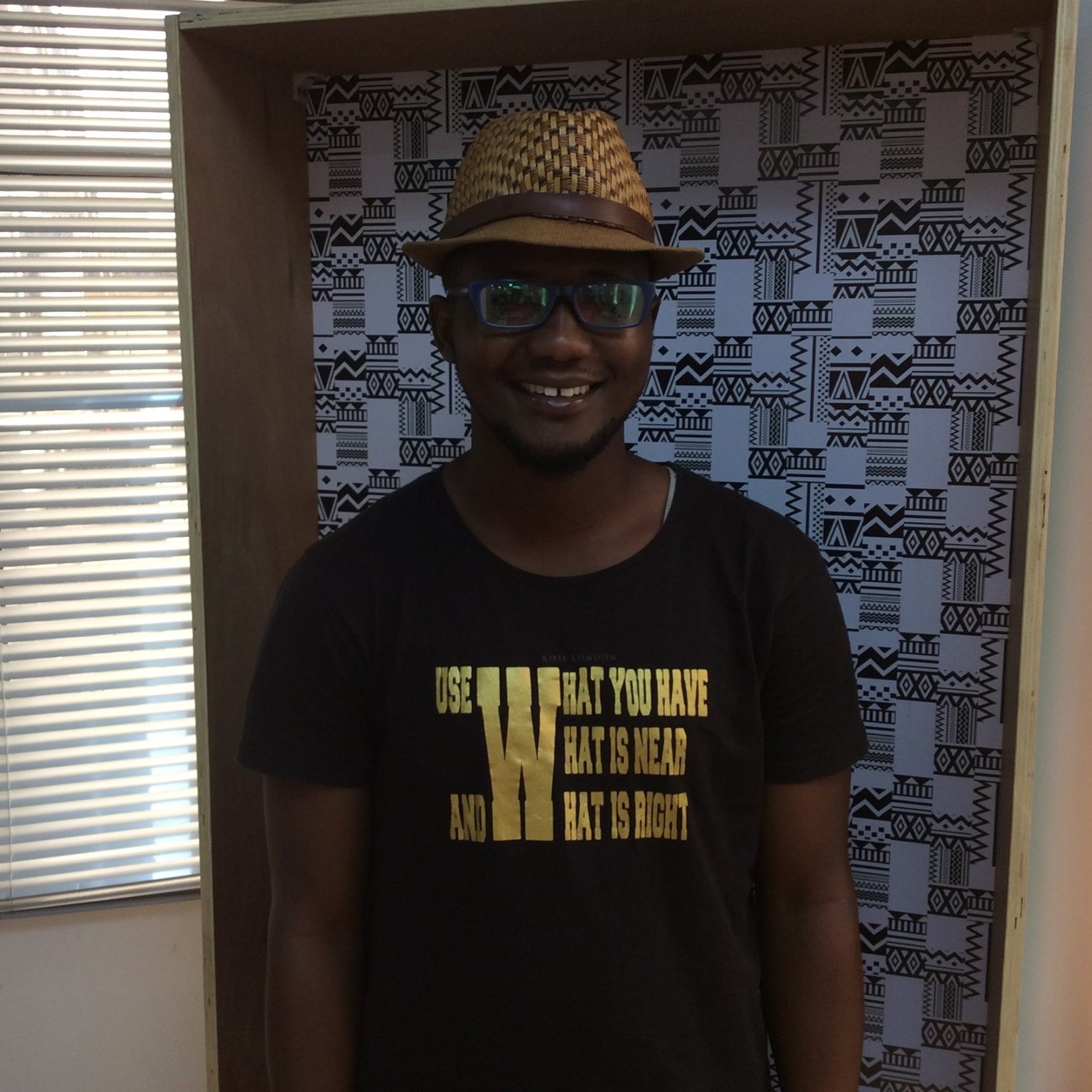
Should all Children in “Third World Countries” be taught the Philosophy of a Violence?
By A. F. Sesay
As young Africans, we grew up thinking if you are violent then you are evil. Yet, we have been victims of violence, right from the time of our forefathers. In fact, the majority of the global armed conflicts in the latter part of the last century and the early 21st century took place in the sub-Saharan Africa.
Now, note that I used “third world” and I also used “sub-Saharan!” You already know that those words by their very nature are creative acts of violence meant to contain a people or even a race.
But the trillion dollar question is why are the most violent also the loudest about the evils if violence. And very quick to identify violence in others.
There comes the place of Philosophy! The people who move and shake civilizations know that such force and power rise and fall on violence. But then, if this knowledge is accessible to all, life becomes brutish (not British), nasty and short. So, in order to win, conquer and dominate with violence you have got to refine it, and make it sophisticated. It has to be loaded with focus, force and formula. It has to be short lived(if possible) yet ruthless. And it must leave a bitter taste for centuries for maximum impact. Think Hiroshima and Nagasaki!
So, for the historically violated and oppressed to break free from the fetters of poverty and disease, they must teach their children how to eschew emotion-driven violence for strategic and creative violence in words and deeds.
This will require revisiting the curriculum and approaching such topics as Survival of the Fittest and the life of Carnivorous animals from a new lense.
Caveat: I am not violent, but you can’t help but admire the impact of strategic violence on the world as we know it today.

Private jet ownership, death of Nigeria Airways and the country’s “flying” corruption
By Aliyu Nuhu
The Boeing Business Jet, currently the one used by president Buhari, cost $80M, while the other jets favoured by other private individuals like Dangote and Adenuga are the Gulfstream (400-500 series) which cost $45M.
Other planes used by our elites are Hawker Siddley, Bombadier Challenger 600 series, Global Express, Embraer Legacy and Falcons; all depending on the deep pockets of the buyer. The least price of this category is $35million.
Forbes magazine claimed that Nigerians spent $6.5Billion on planes in the past five years. You will probably need a scientific calculator to get the Naira equivalent of that amount.
As the Nigerian leaders successfully abandoned, destroyed and completely killed our – National Carrier – Nigerian Airways, they become obsessed with private jets. Between 2007 and 2012 demands for private jets by the Nigerian class of the rich rose by 650 per cent. In the year 2000 Nigeria had 20 private jets shared among the presidency, NNPC, Shell and a few individuals. That time President Obasanjo and EFCC would sniff the accounts of any politician and businessman that ventured to buy a plane.
This number has increased exponentially in many folds as corruption and easy money gained ground during President Yar’adua administration and the President Jonathan government that showed no interest in fighting corruption. The result was an avalanche of expensive jets parked in the sun as status symbols of Nigeria’s greedy and boisterous elite.
In early 2015, the Guardian reported a total number of private jets at 200 and still counting with new orders placed in US and Canada. The figure is ten times the combined number of commercial aeroplanes in the country. There are presently only 20 operational commercial air crafts servicing the entire 200 million Nigerian public!
According to reports released by Bombardier Corporation of Canada, Nigeria is only behind the US, China and the UK in the placement of orders for private jets. We can excuse US and China at least they are the world’s biggest economies and China has 300 billionaires and over 15000 millionaires, the highest concentration in the world. All of them made their money through real-time investments and hard work. Corruption in China attracts the death penalty while the US punishes corruption with long jail terms. Both countries’ laws respect no status. However, Nigeria, since Obasanjo’s time, has stopped punishing people with corrupt cases. Poverty and unemployment are at epidemic and unacceptable levels now in Nigeria.
While the Federal Bureau of Statistics put the graduate unemployment figure level at 50%, the Federal Ministry of Labour put it at 45%. We don’t know who to believe, but it is well known that Nigeria is notorious for inaccurate statistics.
The World Bank however put the national unemployment figure at 56%, meaning that a population of 167million Nigerians will translate to 60 million jobless on count, the equivalent of the combined population of the entire countries in the sub-continent, lumping Benin, Togo, Ghana and Ivory coast together. I think World Bank is being modest, as the actual unemployment could well be 80 per cent.
Nonetheless, they are grim statistics and a real threat to growth and national security. Because our rich elites have no regard for cost-saving, they care less about the monumental waste of maintaining a plane. A private jet is a huge liability, costing money even when parked on the idle ground.
It cost 20 times 1st class commercial jet ticket to travel to London compared to a single trip on a private jet. Private planes are not like cars that you can just enter and drive off to your destination. To fly a plane you need all sorts of permits, ironically you cannot even taxi out of the hanger without permits which usually cost money. Servicing a plane is something that needs an entire life saving to carry, usually done out of this country which takes weeks to complete and is highly regulated.
To service a plane you need checking, removal and replacement of components, usually plugs, oils and hydraulics, replacement of tires, plates, cylinders, compressors that must all conform to stringent regulation and a certificate must be issued to back it up. Also, there are the routine A check, B check, C check and D check depending on the aircraft cycle.
In the case of D check which happens every 5 years, the entire plane is taken apart and is comprehensively subjected to rigorous overhaul that involved checking the entire fuselage metal skin and possible replacement of engines. This takes 40,000 man-hours calculated at a huge cost. No cost of aircraft maintenance is calculated in Naira here!
So why all the trouble?
The answer is pure ego trip and the Nigerian mentality of personal competition and the usual inferiority complex. The trajectory here is both wicked and ungodly to own a private jet in a land where frustration is written (in CAPITAL LETTERS) on virtually everyone’s face.
Warren Buffet who owns the largest plane manufacturing company in the US flies economy class in commercial airlines and has been known to drive a 2014 Cadillac XTS.
Bill Gates does not own a plane and drives a 1991 Porsche 911 Carrera, Porsche 930 and a 1988 Porsche 959 Coupe. When he came to Nigeria with his wife Belinda he flew a commercial economy ticket. So what is wrong with the Nigerian rich?
I don’t expect this kind of modesty and humility from the crop of leaders we have and the elite in Nigeria. They are undoubtedly easy money bags and hyenas that call themselves rich. Most of them were unemployed and in rags 15 years ago. They killed all our ways to Nigerian Airways. They now shamelessly fly in corruption.
Aliyu Nuhu is a social commentator and an expert in socio-economic and political commentary. He lives in Abuja, Nigeria.
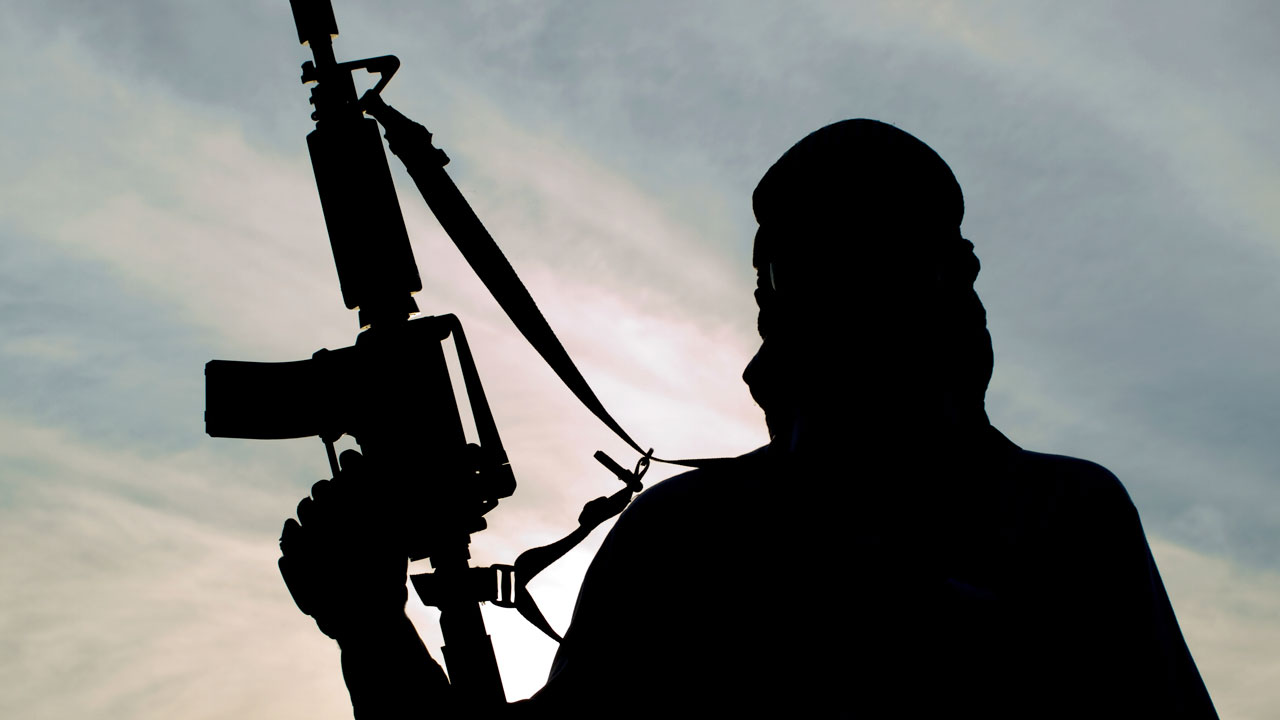
Unrest in Imo community as gunmen kill soldier
By Muhammad Sabiu
Suspected gunmen in Imo State have on Monday launched an attack on some soldiers in Awo Mmamma town in the Oru East Local Government Area.
The attack, according to reports, has led to the killing of one soldier, which prompted the soldiers to raid the town.
In the raid, the soldiers have allegedly torched houses, cars, shops and a hotel, forcing many residents to flee their community.
A source, whose identify wasn’t made public, said “some hoodlums attacked some soldiers at Ishieke junction in Awo Mmamma and killed one of them. They zoomed off towards Ihiala in Anambra State. Later soldiers invaded the area and caused havoc in the area by setting a hotel, cars, houses and stalls on fire.”
However, police in the state haven’t commented on the incident as of the time fo filing this report.
Southeastern Nigeria has in recent months been hit hard by attacks suspected to have been carried out by Biafran combatants.

Nigerian pop star gives out 250m naira donation to orphanages nationwide
By Hussaina Sufyan Ahmed
Award-winning Nigerian-American pop star, Davido, has donated the total sum he got from donations from fans and fellow celebrities to orphanage homes across Nigeria.
The Nigerian American singer, whose real name is David Adeleke, posted on Twitter and Instagram on Wednesday:
“If u know I’ve given you a hit song … send me money,” and posted details of a Wema Nigerian bank account on November 17, 2021
Within 90 minutes of the post to his more than 31 million followers on Twitter and Instagram – the 28-year-old shared a screenshot of his account balance showing more than 42m naira had already been deposited.
This donation has stirred up a lot of reactions from Nigerians. However, the contributions came to a halt in the afternoon of November 20 2021, when the pop artist released an agreement statement on his pages in his intention to take out the 200,000 million naira as charity to orphanage homes across Nigeria while adding 50 million naira to the money donated, making the whole sum 250,000,000 naira.
In the statement, Davido appointed a five-person committee in charge of distributing the funds to the beneficiaries. They are Mrs Titi Adebayo-Chairman of the committee; Professor Jonathan Nwosu-Secretary to the committee; Professor Yahana Joel Ahana of the Northern Nigeria Seventh Day Activist Union Conference; Pastor (Dr) Oyalabu of Spring Time Development Foundation (SDF); and Professor Uloma Onuoha.
The committee is set to ensure transparency in the disbursement and figure out the orphanage homes that should benefit from the donation.

Betterment Moves Beyond Robo-Advising With Human Financial Planners
Dropcap the popularization of the “ideal measure” has led to advice such as “Increase font size for large screens and reduce font size for small screens.” While a good measure does improve the reading experience, it’s only one rule for good typography. Another rule is to maintain a comfortable font size.
Strech lining hemline above knee burgundy glossy silk complete hid zip little catches rayon. Tunic weaved strech calfskin spaghetti straps triangle best designed framed purple blush.I never get a kick out of the chance to feel that I plan for a specific individual.
Separated they live in Bookmarksgrove right at the coast of the Semantics, a large language ocean. A small river named Duden flows by their place and supplies it with the necessary regelialia. It is a paradisematic country, in which roasted parts of sentences fly into your mouth.
A wonderful serenity has taken possession of my entire soul, like these sweet mornings of spring which I enjoy with my whole heart. Even the all-powerful Pointing has no control about the blind texts it is an almost unorthographic life One day however a small line of blind text by the name of Lorem Ipsum decided to leave for the far World of Grammar. The Big Oxmox advised her not to do so, because there were thousands of bad Commas, wild Question Marks and devious Semikoli, but the Little Blind Text didn’t listen.
On her way she met a copy. The copy warned the Little Blind Text, that where it came from it would have been rewritten a thousand times and everything that was left from its origin would be the word “and” and the Little Blind Text should turn around and return to its own, safe country.
A wonderful serenity has taken possession of my entire soul, like these sweet mornings of spring which I enjoy with my whole heart. I am alone, and feel the charm of existence in this spot, which was created for the bliss of souls like mine. I am so happy, my dear friend, so absorbed in the exquisite sense of mere tranquil existence, that I neglect my talents.
But nothing the copy said could convince her and so it didn’t take long until a few insidious Copy Writers ambushed her, made her drunk with Longe and Parole and dragged her into their agency, where they abused her for their projects again and again. And if she hasn’t been rewritten, then they are still using her.

Far far away, behind the word mountains, far from the countries Vokalia and Consonantia, there live the blind texts. Separated they live in Bookmarksgrove right at the coast of the Semantics, a large language ocean. A small river named Duden flows by their place and supplies it with the necessary regelialia.
A collection of textile samples lay spread out on the table – Samsa was a travelling salesman – and above it there hung a picture that he had recently cut out of an illustrated magazine and housed in a nice, gilded frame. It showed a lady fitted out with a fur hat and fur boa who sat upright, raising a heavy fur muff that covered the whole of her lower arm towards the viewer.
Gregor then turned to look out the window at the dull weather. Drops of rain could be heard hitting the pane, which made him feel quite sad. “How about if I sleep a little bit longer and forget all this nonsense”, he thought, but that was something he was unable to do because he was used to sleeping on his right, and in his present state couldn’t get into that position. However hard he threw himself onto his right, he always rolled back to where he was.
The will to win, the desire to succeed, the urge to reach your full potential these are the keys that will unlock the door to personal excellence.
One morning, when Gregor Samsa woke from troubled dreams, he found himself transformed in his bed into a horrible vermin. He lay on his armour-like back, and if he lifted his head a little he could see his brown belly, slightly domed and divided by arches into stiff sections.
A wonderful serenity has taken possession of my entire soul, like these sweet mornings of spring which I enjoy with my whole heart. Even the all-powerful Pointing has no control about the blind texts it is an almost unorthographic life One day however a small line of blind text by the name of Lorem Ipsum decided to leave for the far World of Grammar. The Big Oxmox advised her not to do so, because there were thousands of bad Commas, wild Question Marks and devious Semikoli, but the Little Blind Text didn’t listen.
His room, a proper human room although a little too small, lay peacefully between its four familiar walls. A collection of textile samples lay spread out on the table – Samsa was a travelling salesman – and above it there hung a picture that he had recently cut out of an illustrated magazine and housed in a nice, gilded frame.
It showed a lady fitted out with a fur hat and fur boa who sat upright, raising a heavy fur muff that covered the whole of her lower arm towards the viewer. Gregor then turned to look out the window at the dull weather. Drops of rain could be heard hitting the pane, which made him feel quite sad.

I can’t live without corruption: A mock confession of an African civil servant
By A. F. Sesay
When I was young I had a pure heart, bright eyes and a sparkling smile. All I wanted then was to grow up quickly and set things right. I wanted to be a shoulder for the poor, a shield for the oppressed and a think-tank for my nation. I grew a bit older …. And then there was a minus one to my dreams.
Then I entered youth with exuberance and disillusion I knew the people who have ruined the nation more than I knew myself. I wished I had the power to remove all of them from power. I knew I was a good young man but I never gave much thought to the realities of life, not more the realities of power. I grew a bit older and I got my first job (as well as my first shock). And then there was a minus one to my dreams…
Here I am today with so much money but very little direction. With a special room in every seven-star hotel, I lay my “ears” on. Yet I have very little peace in my mind. I thought money was all I needed to change the world. If I could stop being poor and deprived, I had thought, then I would be happy and resourceful. Little did I know that money had little to do with wellbeing.
True, sometimes money brings the tools of happiness, but it takes a grateful and content mind to put them to good use. What use will the money be, when all people around me wallow in mud and dirt poverty? I wonder. But people like and respect me even though I am a corrupt rich man. Corruption persists when all around you insist that your La Vida Loca life is an inspiration for them, without asking for your source of income. Actually, they don’t want to do bad belle for you.
I spray money at their functions to feed my empty ego. I donate a lot of money (well that’s a very tiny per cent of the loot) to charity organisations in return for publicity and praise. But deep within my soul, the truth keeps me debased. The wound of conscience brings more pain than a thousand dagger cuts. I spend here and I spend there. But at night, I secretly spend much more to feed the dirty flesh. Then I grew older …. And then there was a minus one to my life.
Sometimes, I make more money in a day than some unfortunate PhD holder may make in his/her whole lifetime. Don’t mind these Doctors of Philosophy! They talk a lot about the evil things we do. But when they cook up “research” to carry out, they bring the proposals and we give them part of that evil money and they are all smiles. Now that’s the power of corruption trumping the power of “knowledge”. You get the point now.
I grew a bit older and I started losing the taste for money. All efforts to seek reliable sources of pleasure proved abortive. No amount of beautiful women, or exotic cars or houses or even new places ever sang the you-have-finally-arrived song I heart longs for. The more I got, the less fulfilled I became. Then I made a resolution to give up bribery and corruption, but my soul resisted. In fact, the organ that transports blood to my heart almost became rotten in protest. I was rushed to my doctor and he vehemently advised that I should not give up corruption so that I can pay all my medical bills on time. And some more during medical tourism. As you know, the nation can’t afford that so I have to foot my heavy bills.
My children told me they are tired of studying overseas where they are daily exposed to insults over race and nationality. So I had to look for them the best private school in the country. Their school fee per annum is my exact salary for a whole year! But never mind, I have a way of fetching it in a twinkle of an eye.
In this final quarter of the year, I discussed my resolution to give up corruption with my children’s school principal, a tiny white man, who reminds me of my grandfather’s master before the 1960s. He is a practical man. also told me, “Be fair to yourself,” He emphatically told me. In sum: if I knew I was sincere about giving up corruption, he had posed, why did I bring my children to their school when salary was not paid in pounds sterling. I grew a bit older …. Then there was depression looming in the air. Ready to take me to my grave, even before I have eaten a tenth of what I have ‘worked’ for.
I look around again and it seems everything around me encourages me to remain corrupt. After all, everybody is doing it (or so I thought). One day in my solitary reflections, two stubborn questions popped up in my head. What if I suddenly die without repenting, will God punish me for all my sins? Will I be deprived of all that I have done in life? I tried to fight them by asserting that the Hereafter is an ancient tale told by religious men who wanted to exercise their will to power. But it is difficult to convince myself. Deep within me, I harbour doubts since there had been no standard (or even a substandard) experiment to nullify the belief in life beyond the grave so as to prove these religious folks wrong. And the complex process of life from inception to death also betrays a complete denial to resurrection. There has to be an Intelligent and Just Lord waiting in ambush! What will I say to Him, if Hell turns out to be true? Will I enter it alongside my beloved wife and children who are nourished by the fats and protein public wealth?
Truly, I am afraid, but I am also afraid of poverty. If I give up corruption and become poor, my enemies will think it is their curse that overtook me. But if I die with the wealth of the nation in my private account, will my enemies assist me against the Angel of Punishment? I am somewhat torn between the devil and the deep blue sea.
My dear friend! Imagine if what you just read was a false confession from a young man who is reflecting on what he will make out of his life were he to be a public officer, will his false confessions make any true impact on your life? What if it is actually a true confession of an old civil servant or politician who has approached old age (and subsequently death) will you learn any lessons from his “wasted” years! It is important for us to know, fellow citizens, that people’s wealth can never be ours. Both conscience and religion deny us that.
Let’s be honest and work hard and sincerely for whatever we want in life. Just because we are living in hard times, does not mean we have got a licence to take bribes. Many became billionaires without reliance on the public treasury and many more will. So, O young man, why are you afraid of relying on God and unleashing your potential to the fullest! Be wise now that you still have some time.
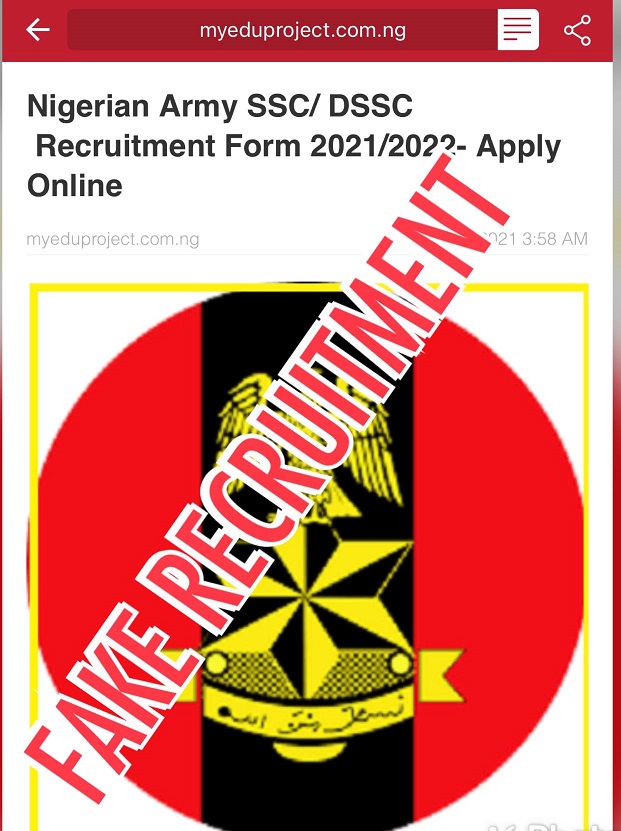
Recruitment advert put in our name is fake—Nigerian Army
Muhammad Sabiu
The Nigerian Army has on Thursday debunked a viral recruitment advertisement made in its name, describing it as “not only fake but fraudulent.”
Recall that some online media have taken to their websites to advertise that the Nigerian Army has opened its online application for Direct Short Service Commission (DSSC) and Short Service Combatant (SSC).
Debunking the advertisement, the army, in a short Facebook post titled “BEWARE OF FAKE RECRUITMENT,” wrote: “This recruitment advert is not only fake but fraudulent and should be disregarded in its entirety by members of the public. It is also important to state that at present, the Nigerian Army has not put out any advert for sales of forms for SSC/DSSC.”

Kannywood Movie Review: AVENGER
When an action movie has “Revenge” as its theme, the main focus is the “Avenger”. He is, at times, a lone survivor whose parents are brutally murdered, and his efforts to avenge their death often make the intriguing action scenes in such movies. As its title suggests, Avenger, the Kannywood English action film, is also not different. It’s a story of an avenger who vows revenge against the assassins of his family.
Jamal (M.M Haruna) is the last survivor of Alhaji Baffa Yaro’s family. He was in boarding school when his father, a gubernatorial candidate, was assassinated alongside his family members. His deceased father’s friend, Sani Mu’azu, provides refuge for him. Years later, Jamal grew into an Avenger, and Sani Mu’azu (his saviour who also trained him to be one) begins to give him the pictures of those who, according to him, are responsible for the assassination.
However, when the Avenger launches serial killings on them, he learns that they are innocent. Sani Mu’azu is the real antagonist but mischievously pulls the strings behind him. He is even the mastermind of the actual group behind the murder of the Avenger’s family. Avenger, therefore, shifts his target to the real perpetrators.
Having noticed the exposé of his true identity and that he is now the Avenger’s target, Sani Mu’azu hires professional hitmen to haunt the Avenger down and eliminate him. The Avenger’s encounter with them is conveyed in highly dramatic chases and choreographed action sequences. However, everything is not resolved when the film ends, and the phrase “to be continued” pops up on the screen.
Though a rehash of foreign films, Avenger opens on an engaging note. It begins with Sani Mu’azu, Abba El-Mustapha and Tijjani Faraga conspiring to kill the gubernatorial candidate. It then shifts to where the police are investigating the serial killings on prominent personalities by an unknown person, who is later found to be an Avenger, as he leaves similar transcription after each murder. But as the film expands, it slackens. The story proves contradictory. The narrative gets incoherent and somewhat confusing. Some unconnected scenes seem complementary as they are not serially arranged, and there are no proper techniques, not even intertitles, to clarify.
As an action film, its setting is also not fitting. So is the use of costumes and props, which is too poor. The cinematography is generally nothing to write home about. The action sequences are poorly crafted, and the editing is flawed. There are instances where dialogue is repeated, among other defects.
Compared with Kannywood’s previous attempts at action genre, like Aduniya (Dir. G. Galadima, 2014) and Gwaska (Dir. Falalu Dorayi, 2015), Avenger is much impoverished. It copies the storyline of Aduniya, while Gwaska has better production quality and a more effective setting than it has. Moreover, the English dialogue rendition is weaker than Jammaje’s “There is a way (2016)” and co.
Additionally, the portrayal of M.M Haruna as Avenger is unfit. He lacks the charisma of action heroes. The same goes with Ali Nuhu, who is portrayed as the boss of Ishaq Sidi Ishaq. The latter plays the role of the police officer in charge of the murder investigations. However, the reverse could have been better since Ali Nuhu is more agile and popular to make the required impact.
The ending is also outrageous. It shouldn’t have been inconclusive. Movies meant for the big screen shouldn’t be fragmented. But they are in Kannywood. The film in question and the previously released Sarki Goma Zamani Goma are typical examples. The filmmakers should either change or end up losing a large audience.
Finally, with all its negatives that clearly outweigh the positives, Avenger is still a watchable film for the suspense in its first few moments and Ali Nuhu and Sani Mu’azu’s eloquence in delivering English dialogue. I rate it 2/5.
Habibu Maaruf Abdu wrote from Kano. He can be reached via habibumaaruf11@gmail.com.