



On exploitations at marriages
By Alkasim Harisu Alkasim
The challenges of marriage are common knowledge within and outside Nigeria. To sensible people, marriage is a keystone of luxury life. Yet, although marriage sometimes falls short of happiness and peace, personal uprightness and esteem still accompany and embellish those in the industry.
The marriage industry is chaotic. It is now commonplace to see overaged women competing for the love of a single male person alongside younger ladies. This explains how choked the industry is. Marriage, as an institution, demands a lot from us. To excel in this business, one has to school himself in patience, courage and determination. Otherwise, one will do a lousy job, and things will go south.
In today’s materialistic world, what we call true love is lacking. Money buys love. A person can date a highborn woman even if he is lowborn. What allows him to do so is bucks. In cultures such as Indian, there is what they call a “caste system” that stratifies the society whereby one marries from within one’s caste. Interclass marriage is an abomination and, thus, a bad omen. Excessive expenses usher marriage.
In northern Nigeria today, to marry means a lot. One has to break the bank to afford marriage and multitask to afford to run a family. The trousseau he will gather robs him of too much money. If not loaded, one will feel like breathing his last while readying himself for this Sisyphean task.
Many a great family pressure prospective male spouses a lot to the extent they feel compelled to compensate their colossal expenditure by undertreating the girls they wed. The sight of the girls bores them; as a result, they start to mistreat them. This also purges them of the hate they hold for these exploitative families.
Poverty is raging, and the employment industry is becoming more competitive. Degree holders swarm places looking for well-paying jobs. As a result, some graduates are now resorting to low jobs that discredit scholarship and the status they are beginning to build. Some, willy nilly, accept works that break the back and pay low, thanks to the devastating nature of Nigeria’s economy.
Telling a greedy girlfriend that your wages or salary is not handsome implies losing her. It once happened to my friend whose name I won’t mention here, for I feel that should be private. This happened when his family went to the girlfriend’s place. His father honestly told them about the level of income of his son. This bitter truth opened for my friend Pandora’s box. The relationship had since then staggered. In short, the two lovebirds have parted ways.
What hardens the issue of marriage in the North is our belittling the effort of even the hardworking people. We neither accept what our sons-in-law present nor study the situation on the ground. We need to wise up on this. But, unfortunately, some circumstances press people to do only those things that top their priorities.
It is worrisome that many families capitalise on their children’s beauty to milk boys of all their money. Such homes allow their daughters to tryst (zance) with more than a person at a time. In some houses, queues are made every day for a single girl. Boys take turns. Sometimes, some inpatient boyfriends cut in on the conversations of their co-suitors. What a world! The girl is seen as a moneymaking machine. Likely, after cashing in on her suitors, the girl will go out of fashion. Her beauty and charisma will decrease. As she puts on age, her boyfriends vanish, and the likelihood to marry a dream husband reduces. Now it is her younger sisters’ time. When it salaams at their home, the sendee will mention the name of her younger sisters instead. It will take time before she gets dated by somebody. Indeed life is a roller coaster.
The social commerce between a girl and a boy worsens when the girl’s family pressure the boy for money. As he feels absolutely tired of lifting the girl’s responsibilities, he looks for a way to benefit from the dealing. The social intercourse between a girl and a boy does not stop at the former’s house as the duo rendezvous at their chosen spots. Now, the love glue between them starts to grow stronger. He will undeniably feel the urge to do the unlawful with her to the level he begins bedding her.
The groom has to pay dowry that a time costs him much. There is an amount which, if he pays below, he will have his money returned or hotly debated right at the place where the thing of the knot is occurring. In some instances, such disagreement plants in the groom’s family some disregard for the bride’s home. A bride needs to be lodged and fed. And if the groom doesn’t have his own house, he will have to find a place to sleep with his wife. Today’s brides come with vast furniture; the groom has to look for a house that sleeps like five people to contain his wife’s belongings.
Believe it or not, the complexion of our societies has changed; we are not aiming at uprightness. We are after money and money-related things. If you are monied, you are everything. You can marry who you want. One can be immoral and still have a choice wife. That is why the deep-pocketed hire people to fake it as their parents/relatives. A bastard, in the world of today, betters a son borne in wedlock. Therefore, to be virtuous is to be well-endowed.
Allah Ka gyara ma na. Amin.
Alkasim Harisu Alkasim wrote from Kano. He can be reached via alkasabba10@gmail.com.

Agony of underpaid workers and suggested reactions
By Ishaka Mohammed
Illusion. Yes, that’s what I see in many fellows who consider themselves optimists. Denying the existence of a sad situation doesn’t portray optimism; rather, it depicts a glaring loss of control in an ocean of illusion. However, believing that the situation will change for the better is optimism.
There’s no gainsaying that poor remuneration is an undeniable feature of a typical Nigeria’s workplace. Considering the conditions of service and state of the nation, one can irrevocably say that many employees are grossly underpaid in almost every organisation in Nigeria.
From media houses to fuel stations, schools and other organisations, you find journalists, pump attendants and teachers who work for no fewer than eight hours per day but go home at the end of the month with a paltry sum of N15,000 or something lower than that. In fact, I heard from a lecturer of mine who used to be a practising journalist (now a communication lecturer) that a certain publisher of a national newspaper told some of his employees that their identity cards were their meal tickets; he had nothing to pay them. This is one of the reasons why some journalists not only expect but also demand brown envelopes from organisers of events.
This underpayment issue is like asking a man to walk fast on an alley filled with banana rind. Considering the slippery nature of the rind, it’ll be a great achievement for such a person to avoid staggering, that’s if he doesn’t fall outright. As an employee, I feel your pains, but you need that achievement; you must stand tall. Avoid waiting for others to change things for you.
Many underpaid workers are forced into recording unsatisfactory performances. That’s one thing you must resist. Once you’re sure that your remuneration is poor, look for where you may attract more value to yourself; otherwise, consider upscaling your competence.
Martin Luther King’s speeches often inspire me. He insisted that we must be the best of whatever we are. As a classroom teacher, I become more critical of myself each time I read the following lines.
“If a man is called to be a street sweeper, he should sweep streets even as Michelangelo painted, or Beethoven composed music, or Shakespeare wrote poetry. He should sweep streets so well that all the hosts of heaven and earth will pause to say, ‘Here lived a great street sweeper that did his job well.'”
So, dear teachers, being underpaid must never turn you into cheats. Instead, research, teach and evaluate your students appropriately. Those kids under your tutelage don’t belong to your employer; they’re future leaders. Even if they don’t end up in public offices, they’ll at least lead their families. And, as we all know, it’s difficult for banditry and terrorism to thrive in a society where a significant percentage of members possess quality education.
Beware, o you health workers. In your dealings with your patients, avoid being influenced by the unfair treatment you receive from your employers or the government. If you fail to control yourself, you may murder innocent people or cause them lasting deformities.
My dear journalists, we’re aware of the meagre sums you take home as salaries. But such should never be your justification to feed your society with false stories. A mass communication lecturer at Ahmadu Bello University, Zaria, Dr Muhammad Hashim Suleiman, once said, “The deliberate mistakes of journalists…lead to mangled human bodies, orphaned children, burnt cities, poverty…and general societal retrogression.” I’m sure you wouldn’t want to be responsible for chaos in your society.
O fellow Nigerians, here’s a passionate appeal to you. Aim for excellence in whatever you do. Regardless of your workplace or salary value, make diligence and fulfilment your hallmarks and watchwords. If a thing is worth doing, it’s worth doing well. Be mindful of posterity; do your level best today so that the people of tomorrow will mention you for good.
And in case it becomes necessary to resign your position in an organisation, remember to quit honourably. Even after submitting your resignation, make your presence noticeable by offering your very best until your last day there; such might make your employer feel your absence. Due to the unpredictability of life, avoid burning your bridges.
On a final note, dear Nigerian workers, bear in mind that your actions and inactions have earthly and heavenly consequences. Being guided by professionalism will do you a great deal of goodness. So, strive always to be the best version of yourself. On the above premise, therefore, as an underpaid worker, you’re expected to solve your problem. You’re the best person to change your situation for the better.
Ishaka Mohammed wrote from Kaduna State. He can be reached via ishakamohammed39@gmail.com.
President Buhari mourns Bashir Tofa
By Ahmad Deedat Zakari
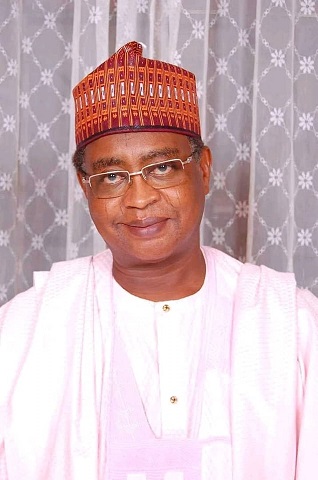
President Muhammadu Buhari on Monday joins the nation in mourning former presidential aspirant Bashir Othman Tofa, who passed on in the wee hours of Monday.
In an official statement credited to the presidential spokesperson, Malam Garba Shehu, the President paid glowing tributes to the deceased elder statesman.
In the words of the President, “[Tofa] was till the end, a patriot to the core. He envisaged a better Nigeria for all. We pray that this dream and collective aspiration and necessary commitment will not go with him, we owe to his memory and to the nation”.
The President also prayed to Allah to rest his soul and grant fortitude to the deceased family and friends, the Kano Emirate Council and the government and people of Kano State.
Garba Shehu also noted that the President had sent a delegation that comprised of the Ministers of Defence, Major-General Bashir Magashi (Rtd) and Water Resources, Engineer Sulaiman Adamu with Senior Special Assistant to the President (Media and Publicity) Garba Shehu and the Accountant General of the Federation, Ahmed Idris on a condolence visit to Kano State.
Ways to success in the 21st century
By Dr. Bello Shehu Abdullahi
Success in this life, be aware, is never accidental. You might have been told that you can’t succeed by your hard work. Of course, everything is fate-driven and all things are presupposed by the divine will of our creator. However, let me tell you that the requirements to succeed in whatever thing you do cannot be by accident. Even those born with silver spoons put a number of things into action, if not themselves, at least, their parents have. As such, one crucial thing to be warry of in relation to success attainment is the need to put in place the four inter-dependent entities below.
You might be curious to know these ways to success, or you have even been battling with a way to get yourself successful in your career with ease? While there may be no easy way to success in life, getting the below points borne in your mind could make you achieve it with super ease.
• Determine
Simply put, I’ll define determination as ‘the penchant to get something done.’ Your ability to get this attribute stuck into yourself or get yourself engulfed with a very high will to succeed in your endeavours is the very first step you need. Fate apart, if you have no determination to get something done, it is only in rare illogical and mysterious cases that something—whether good or otherwise—comes your way. With this awareness, then, you need to be determined in achieving that principal or minor goal of yours. Your ability to be determined will not only make you get prepared for the ups and downs of the process but would also—even at the very least—enrich your mental dexterity to be psychologically self-sufficient in your dealings.
Let’s say you’re a high school or college student and you’ve been informed of the complexities of your course of study and the extensive research rigour one needs to excel in it. These got you scared and stuck in self-doubt. ‘Can I really make this?’ you have asked yourself. One thing I’d tell you is to imbue a very strong determination to achieve that acclaimed unachievable feat while erasing the very first self-doubt in you. With this, you set a rigid way forward to success for yourself. Do you know what you need next?
• Dedicate
Determination to achieve a feat—perhaps a ground-breaking one—isn’t sufficient. While you determine to achieve a certain goal, you as well need to dedicate yourself to the very requirement to achieve such a goal. For a student, needless for me is to say you need to study hard and get acquainted with both the theoretical and practical aspects of your course of study. Your own case might not be for education, but business. You too need dedication. See, the very first time you start your business, highly probable it’s that you might experience some kinds of cons than pros. The ability to dedicate your time and identify the cause of this would eventually give you joy. Your feasibility study might be weak, or even the analysis of the strength, weaknesses, opportunities and threats of your business might be unstably inaccurate. If this happens, then, dedication sets you free from these ilks of economic worries. While you’re dedicated, you also need this.
• Persist
Persistence, the ability to bear every adventure and discovery you’re exposed to in the course of doing something, is what you need next. In pursuit of success, you find yourself at a level where no one else can convince you not to quit. Some even have committed suicide due to a lack of persistence. If your adventures and discoveries are life-threatening, the spirit to persist gives you a perpetual fruit you could never have imagined. In your experience as a student, tests, assignments, seminar and class presentations, sleepless nights, etc. are all that you battle with and make you result in quitting. See, if you quickly make that wrong decision, you don’t only waste your spent time and resources, but also ruin the very near success you have determined to have and have dedication for. So, while you’re determined and dedicated, make sure you persist with all the hurdles of your career. Don’t forget you want to achieve this.
• Succeed
Yes. This is exactly what you want to achieve. Success. You strive and tirelessly sacrifice to be determined in order to be successful. You don’t only get determined, you also dedicate everything you have for success. In fact, despite your experience of many trials and hurdles, you persist in that lane. And, now, this is SUCCESS. This is the end product of the tireless agitation. Largely, if you ever dream to be successful in life, one thing I’d want you to bear in mind is these things above. You determine, dedicate, persist and so you succeed.
Sultan calls on Muslims to look out for Jumada al-Thani moon
By Hussaina Sufyan Ahmed
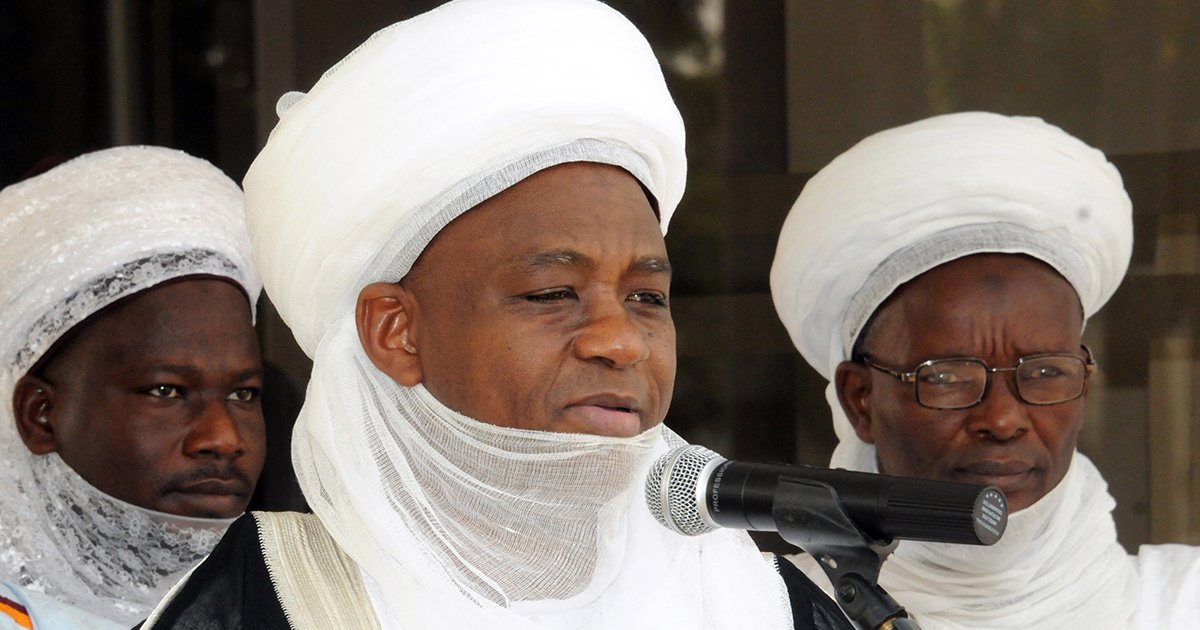
The President-General of the Nigeria Supreme Council for Islamic Affairs (NSCIA), Sultan of Sokoto, Sheikh Sa’ad Abubakar III, has called on Muslims all over Nigeria to watch out for the new moon of Jumada al-Thani 1443 AH on Sunday, January 02 2022.
He said in the press release:
“This is to inform the Muslim Ummah that Monday, January 03, 2022, which is equivalent to the 29th day of Jumada al-Awwal 1443AH, shall be the day to look out for the new moon of Jumada al-Thani 1443AH.
“Muslims are, therefore, requested to start looking for the new moon on Monday and report its sighting to the nearest district or village head for onward communication to the Sultan.”
This statement was signed by Sambo Junaidu, Chairman, Advisory Committee on Religious Affairs, Sultanate Council, Sokoto State.
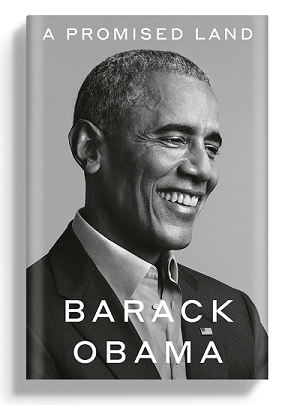
Book Review: ‘A Promised Land’ by Barack Obama
By Marzuq Ungogo
I have read Barack Obama’s A Promised Land for the past five months. I started with an E-book and bought the hard copy, hoping to speed up my reading. While I have read dozens of books this year, this 751-page book is the most impactful I have read.
Obama started with a summary of his life and his foray into politics while trying to avoid repeating details present in the Dreams from My Father and Audacity of Hope. After that, in an impressively comprehensive style, Obama described the chronology of events in the Democratic Party nomination.
One thing was clear that in addition to the fact that he was well prepared, Obama happened to be in the race just in time when there was a need for a fresh voice, a different perspective at the face of the failure of the familiar. His informed opinion about the Middle East and Afghan war, the American economy and the plight of ordinary citizens, have endeared Obama to many. Notably, Obama put forward an agenda for national unity using stories that revealed how much reality and fate Americans share beyond racial and demographic characteristics. The fact that he was running against a respected woman, Hillary Clinton, with a track record of excellence and dedication to family made the competition for the Democratic candidature very tough. However, it did not come as a surprise when Obama won the candidature, making history as the first black person to go that far.
However, the race even got hotter as Obama faced the Republican candidate John McCain and his running mate Sarah Palin. But he was ready! Obama was able to speak in a language young people, progressives, people of colour, minorities, anti-war, affordable healthcare advocates, and environmentalists could understand. Benefiting from a coordinated network of internet-savvy young volunteers, Obama’s message ‘Yes, We Can’ spread far and wide, growing number of supporters and currying more dollar donations. Knowing fully that many of his potential voters, the youth and minorities, were not registered to vote, a part of his campaign was dedicated to ensuring new voters were duly registered.
As Americans went to poll in November 2008, victory was well in sight for the 47-year-old contestant. Barrack Hussain Obama won the seat of the 44th President of the United States of America following a victory in both electoral college and popular votes.
Going forward, the book dedicated some chapters on how Obama assembled his cabinet and staff. There were two key priorities, economy and security. Unfortunately for Obama, he won the seat when a recession was ripe, arising from Wall Street and other financial malpractices. Sadly, the Bush administration underestimated the whole situation and its impact on average citizens who lost both their mortgages and jobs. Therefore, Obama and the new team started working on injecting and stimulating the economy before his inauguration. Given his promise to minimise America’s troops and funding in the Middle East and Afghan war, strategic appointments related to security were also carefully made to ensure that.
Obama was not economical with words on his proud The American Recovery and Reinvestment Act. This detail provides outsiders like me with a deepening explanation of the American senate and house politics in a straightforward language. Factors and concepts such as the filibuster, lobbying, the categories of republicans and democrats, and the arts of political compromises were alive throughout. The project involved injecting 800 billion dollars into the account through multiple sectors. This big money was hoped to halt the worsening of the recession, build consumer and investor confidence and at the same time drive some infrastructure development.
At last, the bill was passed to the relief of the economic team. As Obama would claim later in the book, the project has tremendously contributed to putting the US economy in shape. In addition, Obama worked towards a bill that protects consumers against future recklessness of the banks and other financial institutions. A similar level of detail was used to describe the politicking around Obamacare Act and decarbonisation agenda, and so on.
In a dedicated section of chapters ‘The World as it is’, Obama narrated his global political agenda, actions, visits, and collaborations. Obama generously educated his writer about the structure and place of Iraq and Iran in the scheme of Middle East geopolitics, of course, through the American lens. The writer did the same epistle on Russia, China and other world political players. He narrated his famous visits to Russia, China, Egypt, Japan and other countries in an attempt to promote world peace and extend a handshake with America’s perennial rivals. Although there were some futile attempts at balance, the writer didn’t hesitate to black paint Iran, Russia, and China in that typical American cliche. Nevertheless, ‘A promised land’ provides an interesting short course on global politics.
Another part, ‘In the barrel’, was dedicated to an exhaustive account of Obama’s life as the US President and other day-to-day internal affairs. Disasters, damage control, action, response, bills, acts, and politics all sandwiched in a maze that keeps the president of the USA exhausted. This was followed by the last part, ‘On the High Wire’ centred around the fight against terror and yet again the complex international politics. Notably, Obama proudly gave a detailed account of the Abbottabad raid that led to the successful neutralisation of Osama Bin Laden in 2011. The book was carefully terminated at that point, amplifying victory against evil and a sense of fulfilment for the families of victims of 9/11.
Obama tried not to go into details on the politicking process for the 2012 presidential election. This suggests that the stories were saved for another day, likely packaged currently in a different book.
The author’s mastery of language, the gift of oration, interesting sense of humour and occasional sarcasm have beautified the book in a manner that captures the imagination of the reader.
In summary, the writer successfully highlighted lessons in politics of principles, the audacity to dream the ‘impossible’, the perseverance to push against all odds and the smartness in utilising modern technology and the resource of young people. The book also extolled the virtue of intense preparation for aspiring leaders. In addition, this book highlighted the achievements of Obama’s first presidency, especially the control of economic recession and creation of jobs, better access to healthcare, decarbonisation efforts, international alliance and fight against terror.

Possible reasons for Hisbah’s declining public image
By Ahmad Deedat Zakari
Hisbah, particularly that of Kano State, has become a constant subject of controversies. All thanks to social media, which provide platforms for the proliferation of information channels, expression of dissents, scrutiny and analyses of actions of agencies of government and organizations. Sadly, Hisbah is at the receiving end of online trolls, and the relative goodwill it enjoys is plummeting downward. The irony of Hisbah’s dilemma is her complicity in her woes.
Generally, Hisbah is saddled with upholding community morals based on Qur’anic injunctions. However, in the case of Kano, it is a creation of the “Hisbah Board Law of 2003”. This became a child of necessity owing to the reluctance of the police to enforce the Sharia Penal Code.
In countries around the world where moral policing with the resemblance of what is obtainable in Hisbah is practised, like Pakistan and some Islamic countries, human rights violations are always prevalent. So, it is not surprising that people express their dismay when liquor bottles conveyed in trucks are confiscated. People believe their rights and the rights of others to do liquor business are being trampled on. For example, it’s alleged that the Kano State Hisbah Board recently invited Shatu Garko’s parents because she participated in the contest that led to her emergence as Miss Nigeria. Although Hisbah denied it, it did not sit well with liberal Muslims who argued that Miss Garko’s apparel aligns with Islamic teachings.
Another possible reason people are probably tired of Hisbah is how the organization dwells on trivialities amidst the many challenges that beleaguer today’s North and the country in general. This, no doubt, has reduced Hisbah to a comical sensation in some quarters. It is laughable that in a society where many of her youths are abusing drugs and coteries of substances, an organization for upholding moral values would focus its energy on the nudity of mannequins. In today’s North, many moral concerns of overwhelming importance are left unchecked.
A Hisbah’s top commander was reported to have been found under suspicious circumstances with a married woman in a hotel room. This was no doubt a clear case of a hunter being hunted. The organization did the needful by relieving him of his job. But the incident had doubtlessly left a dent on their image. I am not saying Hisbah members are angels that cannot violate the same ideas they seemingly defend and hold others accountable for. Still, just like how police in Nigeria are often viewed with suspicion, Hisbah would not be far from such if it keeps having corps with untamed libidinal desires.
Moreover, Hisbah has been selective in her moral crusade. The powerful and their children do not always answer for what Hisbah will term morally wrong if the ordinary man did it with no power. Not everyone can be summoned; the commoner with no voice is always the victim.
A Hisbah director recently tried to explain discrimination on who is invited for questioning and counselling. He opined that in Islam, leaders are not publicly chastised for their wrong actions. He is correct, however, does this rule extends to their children? With my modest understanding of Islam, it is not. It was rather a ridiculous excuse for what they can not do for obvious reasons. Although many see his excuse as hypocrisy, I do not see any difference either. Hisbah should not operate on the parlance of some animal farms where some animals are more equal than others. That way, it loses its credibility, goodwill and legitimacy.
Ahmad Deedat Zakari is an undergraduate at the Faculty of Law, Ahmadu Bello University, Zaria. He can be reached via ahmadzakari111@gmail.com.
Person of the year? Definitely more than that
By Abdulrazak Iliyasu Sansani
I begin this piece with what may strike the readers as a puzzling title. Perhaps it is. But I write this is in respect of the festive period and a matter closely associated with it. It is that time of the year where organisations, newspapers, magazines, groups, and even individuals sit to award, eulogise their heroes and heroines, or write about their persons of the year. A tradition that commenced in 1927 in the United States, Time magazine.
According to a Wikipedia entry, ‘The tradition of selecting a “Man of the Year” began in 1927, with Time editors contemplating the newsmakers of the year. The idea was also an attempt to remedy the editorial embarrassment earlier that year of not having aviator Charles Lindbergh on its cover following his historic trans-Atlantic flight. By the end of the year, it was decided that a cover story featuring Lindbergh as the Man of the Year would serve both purposes.
Since then, this has continued with different labels, such as Man of the Year, Woman of the year, until the current and apt denomination: Person of the Year. I write today in the euphoria of the moment. But not so engrossed with it, as I had never subscribed nor joined those who partake in awarding their persons of the year, which has become prominent on social media recently by this time of the year. I relish seeing people excel in life. Although, I had never felt the urge to engage in the voguish celebration by an avalanche of people who issue this award chiefly on social media.
But experts say to every rule; there is an exception. Although, I am not joining the trendy giving of awards or rather announcement of one’s person of the year. I have to acknowledge one of the most disciplined, rational, affable, and respectful Nigerians I have ever met. At this distressing hour of our history as a nation, I believe it is only fitting that patriotic people who have exhibited unique understanding in a multi-ethnic, multi-religious, sharply divided country like ours are honoured, encouraged, or at least merely mentioned as a mark of appreciation for their selfless contributions to our nation. Through the prism they behold our country, this country stands any chance of overcoming its insurmountable challenges. I am in awe of whoever has proven beyond any iota of doubt to be of a commendable grasp of the intricacies of our diverse society. Hence, I am writing this to recognise a man who has served this country meritoriously and honourably retired.
While I applaud all these, it is in the basics that hold our communities today that this distinguished Nigerian has been more actively involved and has magnetised me to him. The simplest things build our society. They hold the fibre of our communities closely knit. Even though this is lost on many, I comprehend the importance of nation-building, starting from the communities.
Nigeria as a whole has been sitting on a powder keg. This makes it extremely easy for disgruntled elements or even criminals to make capital out of it. So, whoever stops those from exploiting this deserves every reverence they can get. However, my person of the year, a man of impeccable character, has mastered the art of living in peace with others in a diverse country like Nigeria, especially the state he comes from: I am glad to hail from the same state as him. Yes, he comes from my state. He is Baba Augustine, commonly called Baban Ella in our neighbourhood, while we both refer to each other as Kawu, Baban Ella being a Jenjo man.
I will, for this reason, address him as we usually call each other. Kawu lives in our Sabon Gari neighbourhood in Jalingo. More people don’t profess the same faith with him in our street. Muslims mainly own houses. Kawu is a Christian. It is now a time Muslims and Christians find themselves jostling to relocate to neighbourhoods predominantly occupied by those who worship God the way they do in fulfilment of the polarised realities of our country majorly resided by adherents of the two faiths. But as I was reliably informed, Kawu has resisted countless times the pleas to transpose by those who have accepted the new order of doing things. They believe it is safer to live in places inhabited only by members of their faiths. However, there is only a semblance of security in some instances, even in these types of neighbourhoods.
The nitty-gritty of the matter is not that he has flagrantly refused to move into another place. But he has continued to relate with people from all social strata with unmatchable grace, sincerity, dignity, and esteem. Moreover, the way he attends to society’s problems is refreshing, laudable, and gratifying. Wedding ceremonies, naming ceremonies, burial ceremonies, community meetings; name them, he is there and participates fully with the families of those involved in any of these regardless of their faith.
While I don’t necessarily fancy awards, I get excited seeing worthy awardees being awarded or even merely celebrating people who have distinguished themselves by living exemplary lives irrespective of their pockets, which draws many awards to personalities rather than refined manners that help nation-building.
Nigerians must celebrate worthy people like Kawu. But, Nigerians should not only stop at that. They should go further to borrow a leaf from them and apply it in the arduous task of nation-building, which must begin with one being a better person before influencing the next person, the family, the next-door neighbour, friends, colleagues, and the country as a whole.
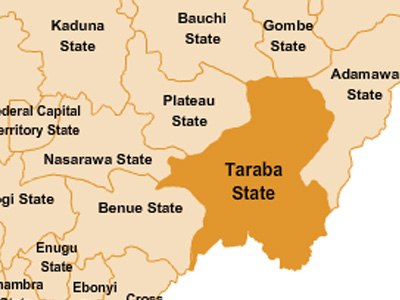
Abdulrazak Iliyasu Sansani wrote from Turaki B, Jalingo, Taraba State. He can be reached via abdulrazaksansani93@gmail.com.

ASUU to embark on a fresh strike soon
By Uzair Adam Imam
The Academic Staff Union of Universities (ASUU) has said that there is a possibility of going on a strike if the government does not address its demands.
The union said that the N52.5bn it received from the Federal Government would not be sufficient to deal with the challenges facing the university system in the country.
Prof Emmanuel Osodeke, the ASUU President, disclosed this in an interview with the journalists.
“There was a possibility that the union would still go on strike unless the government addressed its demands, including the 2009 agreement,” he said.
The Daily Reality gathered that the Federal Government had released N30bn Revitalisation Fund and N22.5bn Earned Academic Allowance totalling N52.5bn to the union.
Osodeke added that: “The Federal Government had said it paid lecturers N30bn Revitalisation Fund and N22.5bn Earned Academic Allowance.
“It noted that it had made some progress in implementing the Memorandum of Understanding the government reached with the union,” he stated.
However, Osodeke also described the fund released by the government as a token payment, reiterating that it was not enough for lecturers to change their minds on the suspended strike.
Governor Masari: Right decision, wrong approach
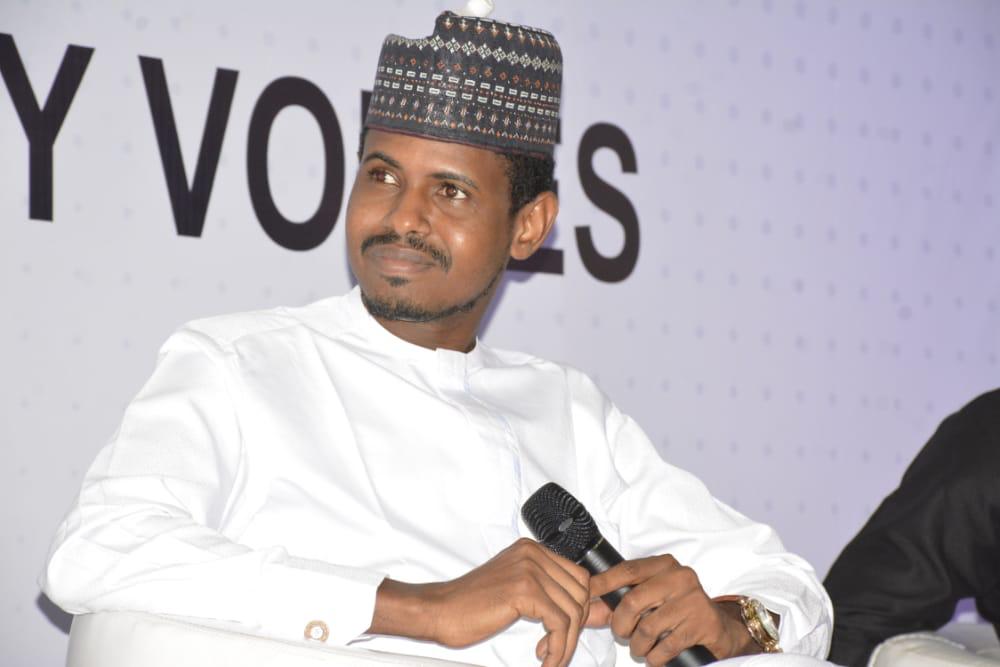
By Ahmadu Shehu, PhD.
The comments by the Governor of Katsina State, Rt. Hon. Aminu Bello Masari encouraging local populations to rise and defend themselves have mixed reactions. Governor Masari’s comments betray the frustration of state governments in curbing the incessant killings, kidnappings and wanton terrorism that has overtaken most parts of northern Nigeria, especially the northwest. This also portrays the disgustingly shameful inability of the current administration to secure the lives and properties of its citizens.
In my opinion, Masari’s call to self-defence is the only option left for defenceless citizens who their governments leave at the mercy of terrorists. After many years of terror and horror, it is now apparent that Nigerians can no longer rely on the government for security and protection. As a result, Nigerians are in constant fear and uncertainty at home, on the road, in hotels, awake or asleep.
For one, the Nigerian police are grossly understaffed, ill-equipped and unmotivated to deal with the least of crimes in our society. Secondly, our last line of defence, the Nigerian armed forces, are overwhelmed. Despite its historical doggedness and glory, the Nigerian army has fallen victim to the Nigerian endemic corruption, nepotism and malfunction.
This, coupled with the fact that the country has been continuously militarized for decades, has oversaturated and weakened the numerical, financial and material strength of the armed forces. From Baga to Yenagoa, Seme to Mubi, Port Harcourt to Sokoto, the Nigerian military struggles with one threat or another within our borders.
Facing serious national threats such as IPOB and Oduduwa separatists, terrorist organizations such as Boko Haram, ISWAP, Ansaru, etc., rampant and rampaging bandits and kidnappers, have disorganized, disoriented and crippled the efficiency and efficacy of the Nigerian armed forces. There is certainly a limit to strength and power.
The Nigerian judiciary, which should have been a deterrent to criminals and the last resort for the masses and the poor, has been an easy, cheap tool for the wealthy. The weak, vulnerable citizens have mostly been on their own. They have resigned to fate and forsaken the course of justice, hoping only to get justice in the hereafter.
While the above is an absolute truth, Gov. Masari’s call is misplaced, ill-timed and counterproductive. My disagreement is not in the principle of what he said but in the approach and implementation. Masari is simply calling for absolute anarchy.
Now that the nation cannot deal with a few unorganized armed zealots, how do we imagine a situation where citizens are armed to the teeth? America, the world superpower, is consumed by this law of necessity. How much more of a country which cannot prosecute the smallest of its criminals?
How would Gov. Masari deal with thousands of unemployed, illiterate, impoverished youth with arms and ammunition at their disposal? If all communities are armed as the Governor envisages, who will be the law in the state? Does Masari think that people with uncontrolled access to firepower equate to an organized police force? Does he understand that the only difference between the current bandits and yet-to-be-bandit youth is access to weapons and freedom from the law?
I do not know who is responsible for educating our political leaders about the relationship between poverty, illiteracy and poor governance with the current situation in the north. But, still, whoever it is, they must be doing an awful job.
The simple truth is that most of our youth populations are idle, uneducated and miserably poor. Another fact is that the alternatives to gainful employment, hope and prosperity is despair, criminality and social crises.
There is still Katsina government house where the Governor lives in peace because the majority have no access to lethal weaponry. That scarcity is because of the restraint ensured by the law and order that is still in place.
While I disagree with Masari’s approach to this solution, I still believe that this is our only option to ending this madness in the short term. But, to succeed in this, there must be a workable framework.
First, the federal government must decentralize our police force. Secondly, each community must be led by the officials of our security forces to establish a community-based security outfit responsible for securing the immediate and broader community. Finally, all weapons must be registered and deployed through the security personnel in each community.
All participating community members must be registered with biometrics accessible to all Nigerian security agencies. In addition, all participating individuals must be given a short training on the use of firearms. The local and state authorities must provide ammunition, and all participating individuals must be assessed and be accessible to security and local authorities.
When this collaborative network of locals and state security forms a cohesive, functional security outfit, these devils will doubtlessly be defeated in no time.
However, the essential requirement for this to happen is a national leadership capable of mobilizing the citizens to confront local and national threats. Until this is achieved, all solutions are hanging on the balance. The Fulani say “hoore nastii hooraare, Allah yidoo gite”.
Dr Ahmadu Shehu is a herdsman, a social commentator, and passionate about the Nigerian project. He can be reached via ahmadsheehu@gmail.com.