



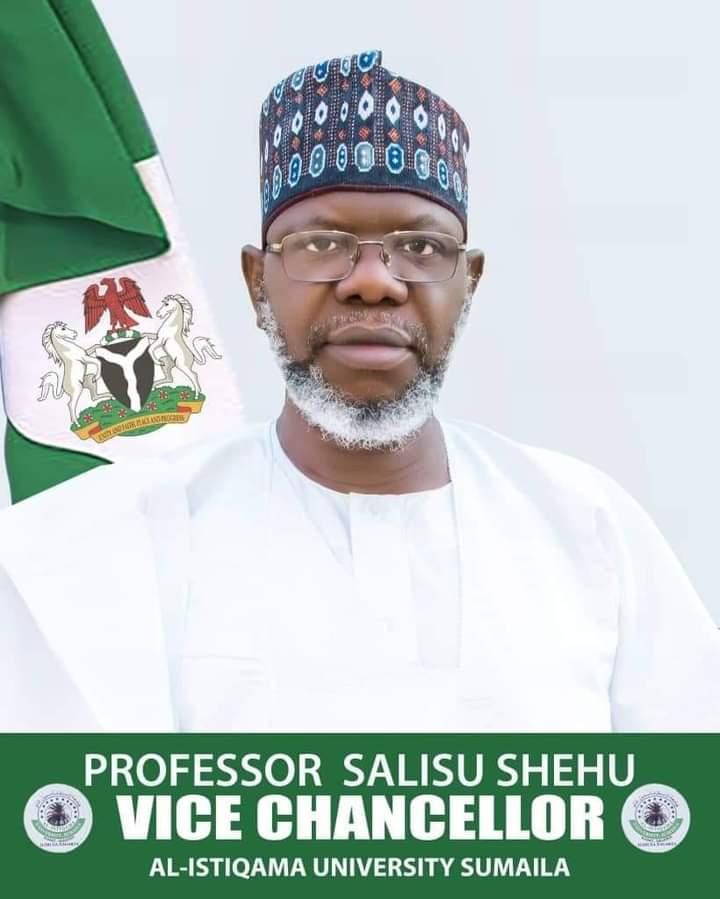
Reminiscences of Dr Ahmad Bamba BUK
Professor Salisu Shehu
حَدَّثَنَا إِسْمَاعِيلُ بْنُ أَبِي أُوَيْسٍ، قَالَ حَدَّثَنِي مَالِكٌ، عَنْ هِشَامِ بْنِ عُرْوَةَ، عَنْ أَبِيهِ، عَنْ عَبْدِ اللَّهِ بْنِ عَمْرِو بْنِ الْعَاصِ، قَالَ سَمِعْتُ رَسُولَ اللَّهِ صلى الله عليه وسلم يَقُولُ ” إِنَّ اللَّهَ لاَ يَقْبِضُ الْعِلْمَ انْتِزَاعًا، يَنْتَزِعُهُ مِنَ الْعِبَادِ، وَلَكِنْ يَقْبِضُ الْعِلْمَ بِقَبْضِ الْعُلَمَاءِ، حَتَّى إِذَا لَمْ يُبْقِ عَالِمًا، اتَّخَذَ النَّاسُ رُءُوسًا جُهَّالاً فَسُئِلُوا، فَأَفْتَوْا بِغَيْرِ عِلْمٍ، فَضَلُّوا وَأَضَلُّوا “. قَالَ الْفِرَبْرِيُّ حَدَّثَنَا عَبَّاسٌ قَالَ حَدَّثَنَا قُتَيْبَةُ حَدَّثَنَا جَرِيرٌ عَنْ هِشَامٍ نَحْوَهُ.
Narrated `Abdullah bin `Amr bin Al-`As:
“I heard Allah’s Apostle saying, “Allah does not take away the knowledge, by taking it away from (the hearts of) the people, but takes it away by the death of the religious learned men till when none of the (religious learned men) remains, people will take as their leaders ignorant persons who when consulted will give their verdict without knowledge. So they will go astray and will lead the people astray.”
My first sight of Dr. Ahmad Bamba was 37 years ago in 1984 in the UMMAH MOSQUE at the Old Campus, Bayero University, Kano where I just got registered as a pre-degree student and had begun to familiarize and acclimatize with the people, routines, events and the environment in the University. Although the Central Mosque in Bayero University, Kano would always be the first sight of any visitor or newly arriving student to the University, having been strategically located near the Main Gate, the Ummah Mosque may be the first place of worship for the new resident (on-campus) student because, in its own case, it is sandwiched between the hostels and the two major and oldest Faculties of the University- The Faculty of Arts and Islamic Studies ( FAIS) and the Faculty of Education. Because of its lively nature and vibrancy-series of nasihas, ta’alims, Qur’anic study circles and Tajweed, Arabic classes and even sometimes, very hot intra-faith dialogues and debates that may sometimes prolong from Isha to Fajr Prayer time, the Ummah Mosque, therefore, would always easily capture every newly arriving young Muslim student who might have arrived the University full of curiosity as well as, enthusiasm and zeal to learn. We, therefore, easily got hooked up to the Ummah Mosque. We would only be seen at the Central Mosque, most surely on Fridays for the Jumu’ah prayer.
It was quite rare to see non-students’ faces at the Ummah Mosque except during Zuhr and Asr prayers when some visitors and some lecturers might be around to join the congregation. There was, however, a non-student face that was very familiar in the Ummah Mosque most especially, during Zuhr prayer and seldom during Maghrib. That was Dr. Ahmad Muhammad Ibrahim Bamba. He would certainly be the first lecturer students that used to regularly attend congregational prayer in the Ummah Mosque would be familiar with because of his regular presence. Of course, another very regular face was Professor M. D.Sulaiman of the History Department. As it were, and as earlier stated, the Mosque was very close to the Faculty of Arts and Islamic Studies where Dr. Ahmad belonged. He would easily come down to join the students’ prayer congregation and there was never an instance that he made any attempt or overtures to lead the prayer or say a word. The nasihas, the ta’alims, and sometimes the debates would be taking place in his presence and to his hearing but he would not utter a word. The situation in the Mosque could actually sometimes be rancorous but it would never stop him from coming. He would, certainly, however, observe his nawafil, and would make his way out. I had a feeling but was unable to ask him, that perhaps his regularity in the Ummah Mosque was not just for the purpose of observing the regular prayer but also to keep close contact and relationship with the students for the purposes of Tarbiyyah h. It was later when I became an Imam in the mosque that I realized that he used to invite or approach imams/leaders in the Mosque to make corrections politely or offer some advice/suggestions, as the case may be.
My first countenance of Dr. Ahmad in the Ummah Mosque reminded me of my first IRK Teacher in the Teachers’ College -Sheikh Yahya Abdul’Azeez, a fully bearded Pakistani Sheikh who was to teach me again –Kitab al -Tauheed, Bulugh al-Maram and Al-Nahwu al-Wadhih in Gwallaga Mosque in Bauchi in 1984, after he transferred his services to Bauchi College of Arts and Science (BACAS). That was shortly before I got admission into Bayero University, Kano. The two were the two fully bearded Sheikhs I first met in life. On my first sight of Sheikh Dr. Ahmad in the Ummah Mosque, the memories of Sheikh Yahya Abdul’Azeez suddenly came back to my mind. At that time, Sheikh Dr. Ahmad was certainly in his late 40s while I was just beginning the third decade (early twenties) of my life as a young undergrad. More strikingly, however, the sights of the two gentlemen present to the heart a mien of piety that sometimes made you think of the countenances of the Sahaba, or so we used to think as young people that still had some elements of naivety in our thoughts.
Our admiration of Sheikh Dr. Ahmad was ceaseless whenever he came and prayed with us in the Ummah Mosque and left. But our interaction with him was no more than the Salam and typically, he would wave at you and made his way out or extend his hand for a shake when you happened to be very close to him. The first time I ever had a conversation with him or heard him spoke to me was when I was appointed as an Imam in the Mosque, which was later to become my class where I taught Tajweed for about three years up to graduation in 1988. I was certainly the youngest of the Imams, a second deputy after Sheikh Sani from Zaria. With the benefit of early background in Qur’anic learning from home, one’s mastery, so to say, of reading the Qur’an could easily be discovered. So, right from my first year I got appointed as one of the deputy Imams. The substantive Imam then, was the late Malam Usman Muhammad, the Chief Imam of Laranto, Jos, who was undergoing the Diploma in Arabic, Hausa and Islamic Studies.
Still, with the vestiges of adolescent exuberance and obsession for a fashionable and smart appearance, my wardrobe had more of the fashionable shirts and trousers of the time (TOBI shirts/jeans and HARA trousers) than kaftans. Invariably, therefore, the Imam in me would most of the time lead prayers in the said kinds of fashionable shirts and trousers in the Ummah Mosque. I led the Maghrib prayer one day. After the prayer, Sheikh Dr. Ahmad Bamba called me and held my hand to the outside of the Mosque. In his typical gentle manner and way he said, “Liman, yaya kokari”. I replied, “Alhamdulillah”, with a mix of exciting and nervous mien. He then said to me, “Toh liman ga karatu mai kyau, amma kuma kullum ana mana sallah kai babu hula?”. With a sigh of relief, I said , ” Na Gode Mallam, in sha Allah, za a gyara.”. It was both an awesome and joyful moment for me. But what was most instructive was the fact that that simple and gentle counsel not only made me appreciate that I was no longer just an ordinary student on campus but I was treading the path of spiritual leaders, it also changed my life in terms of personal dispositions and appearance on campus and beyond.
A second experience with Sheikh Dr. Ahmad Bamba made me a witness to his magnanimity. It was in the case of attending his Hadith class for students offering Islamic Studies as Special Honours. I was not one, so I could not register for that course. I offered Islamic Studies as a subsidiary course, but I was interested in attending his Special or rather advanced Hadith class. All my friends and classmates- Professor Salihu Lawal Malumfashi (present Dean of the School of Continuing Education and one of the Darul Hadith Imams), Alhaji Bashir Sheshe (now a Permanent Secretary, Ministry of the Federal Capital Territory, Abuja), Dr. Ahmad Maigari Dutisin -ma (Department of Islamic Studies, Usmanu Dan Fodiyo University, Sokoto), Professor Usman Sani Abbas (Department of Islamic Studies, BUK) to mention just a few were all encouraging me to just enter the class and that they were sure Malam would not send me out. On the second or third lecture day, I joined some of these mates while being very scary. I sat in the class with some bit of nervousness. Sheikh entered the class, conducted his lesson and alhamdulillah, he did not send me out. He definitely saw me, and he definitely knew that I was not duly registered for that course because it was a small class of fewer than 15 students. Later, I want to believe that one of those classmates of mine approached him and spoke to him about me, and Malam graciously permitted. By virtue of my Imamship in Ummah Mosque, I was already a familiar face to him. With a deep sense of appreciation, I must say that that opportunity was my first experience with not only some of the basic and essential rudiments of Ilm al-Hadith but was also the greatest inspiration for deeper and more advanced study of the field.
After graduation in 1988 and having left for the national youth service scheme to far away Bendel State (now Edo and Delta) I did not only cease to benefit from the Special Hadith class of Sheikh Dr. Ahmad but also lost sight of him for about a couple of years. I got intellectually and personally reconnected with him when I returned to Bayero University, Kano in 1991. I came back to pursue Masters in Educational Psychology. Graciously, that presented yet another opportunity for, in a way, to continue to drink from the fountain of the knowledge of Hadith that Sheikh Dr. Ahmad Bamba personified. That was the year Sheikh Dr. Ahmad Bamba started his very awesome, weekly/weekend Hadith Ta’alim Sessions, beginning with Sahih al-Bukhari in the BUK Central Mosque and subsequently Darul Hadith Mosque, a teaching cum admonishment exercise that he continued to conduct uninterruptedly with a great sense of passion, vigour, consistency and rare faith and commitment for THIRTY (30) SOLID YEARS up to the end of his life. Although I was not chanced to be present at the first and second sessions, I would want to remember that I was there in the third session.
In the Hadith Ta’alim Sessions, we did not only learn the texts of the Hadiths and elements of Mastalahul Hadith but we also learnt to be much more committed to Sunnah in terms of faith and practice. Quite instructively also, we learnt lots and lots and lots of the Aqwal ( wise or sayings) of the salafs, many aspects of Usul al-Fiqh (Islamic Jurisprudence), Qaw’id al-Fiqh (Jurisprudential principles and maxims) and many Islamic religious and Jahiliyyah poetries (Qasa’id and Shu’ara’ al-Jahiliyyah). I would not, therefore, end this paragraph without recalling one stanza of a poem that Sheikh Dr. Bamba used to quote very frequently, in his constant admonishment on the obligation to hold and cling tenaciously to the Sunnah of the Prophet (صلي الله عليه وسلم). That is: “دعوا كل قول عند قول محمد فما ءامن في دينه كمغامر
It would be pertinent to mention here, perhaps also to inform those who might not know that Sheikh Dr. Ahmad Bamba did not only contribute to the knowledge of Hadith through the Ta’alim Sessions. He also contributed to it through authorship. Within the first three years after the commencement of the Sahih al Bukhari lessons one of his very scholarly Hadith works was released. That was his Takhreej and Tahqeeq work on Imam al-Bukhari’s “Juz al-Qira’ah Khalf al-Imam. It was a book that I unhesitatingly bought a personal copy and ‘voraciously’ read cover to cover within a couple of days.
For Sheikh Dr. Ahmad Bamba, it was a life well spent. Thirty solid years of uninterrupted teaching the Hadiths of the Prophet (s.a.w) was not just a monumental intellectual and scholarly contribution but was evidence of true love of and for our Beloved Prophet Muhammad صلي الله عليه وسلم. This reminds me of the saying of one of the Hadith scholars, quoted by the late Sheikh Muhammad Nasiruddeen al–Albani in his Sifat Salat al-Nabiyy that: اهل الحديث هم اهل الرسول وان: لم يصحبوا نفسه أنفاسه صحبوا.
The death of our most honourable Sheikh Dr. Ahmad Muhammad Ibrahim Bamba is certainly a tragic loss to the world of knowledge and Da’awah as rightly and as clearly alluded to in the Hadith above, with which we opened this tribute. Our closing words would only be fervent and sincere and hearty prayers for him.
إنا لله وإنا إليه راجعون
إنَّ للهِ ما أخذ وله ما أعطى وكلُّ شيءٍ عنده بأجلٍ مسمًّى.
اللهم اغفر لدكتور احمد، وارفع درجتَه في المهديين، واخلفه في عقبه في الغابرين، واغفر لنا وله يا ربّ العالمين، وافسح له في قبره، ونوّر له فيه
وآخر دعوانا ان الحمد لله رب العالمين
All praise is due to Allah, Lord of the Worlds. May His Peace and Blessings be upon our Beloved Prophet Muhammad صلي الله عليه وسلم.
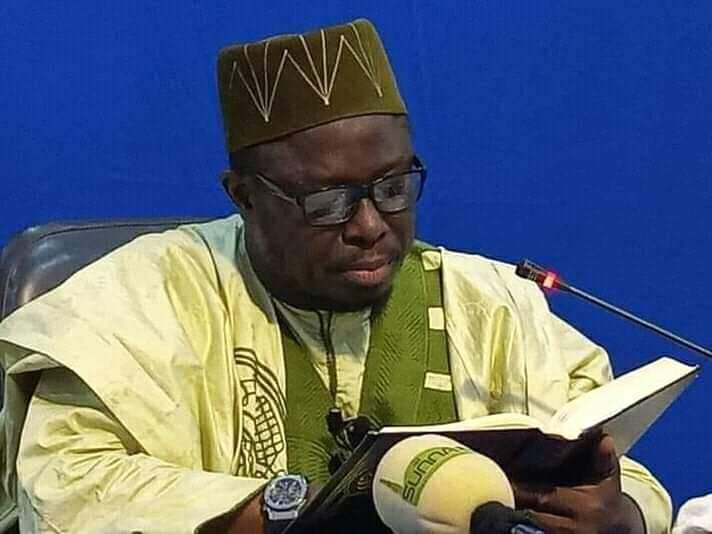
Sheikh Daurawa pays tribute to late Dr Ahmad BUK
By Aisar Fagge
A renowned Kano-based Islamic cleric, Chief Imam of Ansarisunnah Mosque, Sheikh Aminu Daurawa, has paid tribute to the late Dr. Ahmad Ibrahim Bamba (popularly known as Dr. Ahmad BUK) who passed on on Friday morning, 7-1-2022 after a brief illness.
The Daily Reality has reported how the funeral prayer of Dr. Ahmad saw thousands of attendees amidst tears and condolences that were rained both online and offline.
At his Adabul Mufrad lesson, Sheikh Daurawa said, “This is the day we should all pray for him and may God reward him for his service to Islam. People know his with “ƙala haddathana.” He spent all his life seeking and imparting knowledge. Those of us that have been with him know the kind of struggle he had—in Madinah while seeking for knowledge and his coming to BUK since 90s.”
Sheikh Daurawa added: “Allah blessed him (Dr. BUK) with the patience to impart knowledge. He was able to spend over 30 years teaching Sahih al-Bukhari, Sahih Muslim, Abu Dawud, Tirmidhi, Nisa’i and Ibn Majah—these are the books called Kutubu as-Sittah. He also taught Muwaɗɗa Malik, Sunan Darimi and died while teaching Sharhus-Sunnah of Imam Al- Bagawy. We, therefore, have nothing to give to the doctor except to pray to Allah to accept all his deeds. And may Allah grant him Jannah.”
“His passing on on Friday where thousands of people attended his funeral prayer were indicators that he was blessed.”
The cleric recalled how Dr Ahmad facilitated in buying him his first car [Toyota], Gombe tafsir and gave him several gifts.
“Dr likes to see me wearing a turban. He rounded my head with it several times. There was also a time I went to him without it. He asked Prof. Ahmad Murtala to wear it for me,” Daurawa concluded.
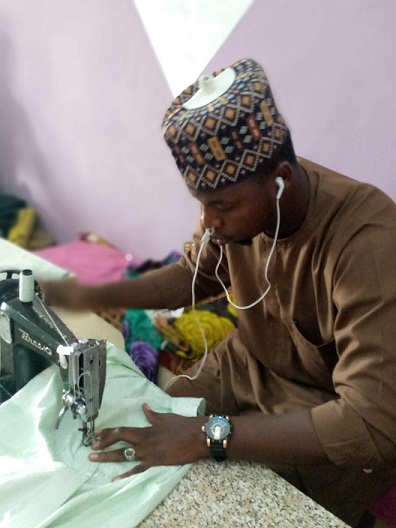
How tailoring saves my father
By Lawan Bukar Maigana
I learned tailoring before I finished secondary school. I can still remember when my patient father asked my mother to stop me from going to the tailoring shop. I begged her to beg him to allow me to continue going. Thus, she politely explained the importance of allowing me to be an entrepreneur. Luckily, she okayed everything she said and allowed me to continue learning.
I took myself to my boss Babakura Lawan. I was passing by and saw my friends working in his blessed shop. I stopped by, met him, and told him that, “You are my older brother’s friend. Thus, please, teach me how to tailor.”
I knew the way I talked to him wasn’t friendly at all. I was battling childhood at that time. He kindly responded, telling me that he agreed and would teach me if I genuinely wanted to learn it.
It was an unforgettable experience. Guess what! I started sewing in two weeks because of my commitment to learning it. It worked out for me. Tailoring has helped me a lot in both Polytechnic and the University. I would have disturbed my father with many monetary requests if I had been unskilled.
I can’t describe how much grateful I am to my boss. He helped me a lot. I can still remember the times I reported him to my father because he bombarded me with many works. He told me that he gives me more work than others in the shop because he trusts my work.
Graduates who are still unemployed and seeking jobs shouldn’t feel they are late to learn paying entrepreneurial skills such as tailoring and carpentry.
My brotherly advice to graduates is: do not allow arrogance to consume them. Whoever is arrogant may fail in life, especially if they are poor. It is not too late. Stop spending much time on social media. Learn some skills, hard or soft, online or offline.
Look for any learnable skills and learn. We all know that there are no available jobs for poor Nigerians. Only a few will have the opportunity to be employed. So kill the arrogance in you!
Babakura Lawan is a graduate of accountancy from the University of Maiduguri. He has trained more than 25 people in Bolori I, Maiduguri. I called on the federal and Borno State governments to please engage people like him to teach as many graduates as possible. We need many of his likes in Nigeria.
Lawan Bukar Maigana wrote from Maiduguri and can be reached via lawanbukarmaigana@gmail.com.
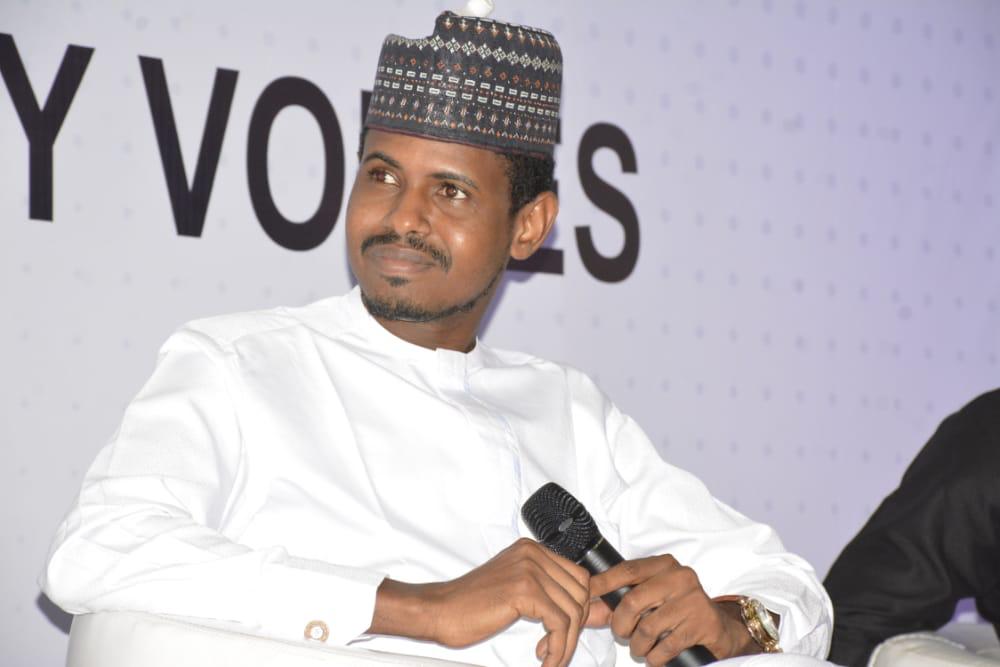
Girei: The First Wakilin Fulani Adamawa
By Ahmadu Shehu, PhD.
On Friday, December 17, 2021, HRH Laamiiɗo Fombina, Alh. Muhammadu Barkindo Aliyu Mustapha, PhD, the International Grand Patron of Tabital Pulaaku International, appointed Dr Abubakar Umar Girei as the first Wakilin Fulani Adamawa.
This appointment would have passed the waves without noise, just as other traditional appointments go unnoticed, had it not been put on the very head that fits it in all ramifications. The title itself is rare in a place like Adamawa, where the traditional council and the emirate are based on the Fulɓe culture and traditions.
The Lamiɗo of Adamawa is regarded as the global custodian of the Fulani race, Fulɓe cultural, linguistic, historical, economic and religious identity. Although the Fulani hold most of the major Islamic emirates in West Africa, and indeed within Nigeria, none of these traditional councils upholds the sanctity of the Fulani culture than Adamawa.
It was, therefore, highly unlikely that anyone could ever merit this office, nor could anyone be trusted with this critical responsibility by the Lamiɗo, who himself, is the first custodian of this special role. The traditional office of Wakili refers to “custodian”. In this case, Girei has become an ambassador between the Lamiɗo and all Fulɓe, the overseer of issues concerning Fulɓe and Pulaaku in the Emirate.
The new Wakili Fulani was born on May 25 1962, in Girei, a semi-urban town some ten kilometres away from Yola, the Adamawa State capital. He holds a PhD, M.A. and B.A. in Linguistics and Fulfulde studies from the University of Maiduguri, where he taught for fifteen years at the Department of Languages and Linguistics. His basic education started in Girei I Primary School, after which he proceeded to Arabic Teachers College, Gombe, where he completed his secondary education.
Having earned a First Class degree, Girei took off well and maintained an excellent academic career, rising through the ranks as a prolific writer, linguist and poet. His publications cut across the linguistic circle, publishing in competitive local and international journals on sociolinguistics, morphology, semantics and other fields of applied linguistics.
It is safe to state Girei is the most prominent modern Fulfulde poet with numerous titles that address diverse fields, uniquely analysing all aspects of human endeavours. His books on poetry, such as Duuniya e Fiiji maaru, are the most recent modern Fulfulde poetry that have become reference points for scholars and the general public.
The hope of an academic is to push back the horizon of ignorance on a global stage. In Fulfulde linguistics, where he specialises, Girei has become an undisputed authority, with scholarly and teaching experience in numerous European universities, including London, Bayreuth, Hamburg, and Vienna.
His sojourn into the humanitarian services of the Fulani people began early in his life when he joined the crusade to enlighten the nomadic Fulani to settle down for education. His passion for the education of the Fulɓe led him to pick an appointment as a nomadic teacher, for which he travelled far and wide with nomads to teach their children. For instance, despite being a headmaster in his hometown, Girei moved to Labbare nomadic primary school in Wukari over eight hundred kilometres from his home to teach nomadic kids.
His dedication to the service of the Fulɓe became more apparent when he rejected the admission to study Law and instead applied and studied Fulfulde in the university. His academic career revolved around teaching and researching Fulfulde, Fulɓe Literature and Culture, not only in the university but also in colleges of education where Fulfulde is taught. Those years have seen him produce and mentor future scholars and students of Fulfulde (including yours sincerely) who have become teachers in various prestigious universities worldwide.
Beyond the classroom, Dr Girei has led global projects on Fulfulde. For instance, he was the secretary of Lamido Aliyu’s committee on the translation of the glorious Qur’an into Fulfulde. He was my lead as the editor of the final version commissioned by Lamido Barkido Aliyu Mustapha in 2011. In addition, he serves on various linguistics and translation boards of organisations such as UNESCO, in which Fulfulde has been his primary language of interest.
Girei has served Fulɓe and Fulfulde in more capacities beyond academia. He was a founding member and the pioneer national secretary of Tabital Pulaaku International and is the founding and trustee member of other various Fulani socio-cultural organisations. The entire Fulani leadership understands his wit and dedication to the course, so the Sultan once appointed him to harmonise the Fulani socio-cultural groups.
By and large, in the almost 60 years of his life, Girei had one goal, one career and one success. These are the well-being of the Fulani people and their cultural heritage. Thus, if anyone deserves to be the ambassador and overseer of the Fulani people, Girei is the one. Therefore, it is highly commendable that the royal father, the grand custodian of our culture, has made the right choice when it is most needed.
Given the current socio-economic and political problems facing the Fulani people across the continent, this office couldn’t have been created at a better time, and Girei is the head that fits the cap. We ask Allah to guide him to success. Aameen.
Dr Ahmadu Shehu is Dr Girei’s academic son and can be reached at ahmadsheehu@gmail.com.
Rape: Who could be trusted?
By Safiyanu Ladan
The rape and subsequent murder of two female university students in 2020, one in Benin inside the church, and the other in Ogun at her father’s house, has generated tension and condemnation from Nigerians. Even President Muhammadu Buhari followed the story, condemned the brutal acts, and commiserated with the victims’ families.
In addition, the Inspector General of Police directed an investigation into the matter through the AIG in charge of the zone. He gave him a clear mandate of apprehending and prosecuting the culprits. It was later reported that the police made some arrests related to the incidents.
Given the current happenings and the rate at which such cases are being reported almost daily in our society and the lack of provision of a coherent and vibrant system that will deal ruthlessly with perpetrators to serve as a deterrent to others has aided its escalation. In a nutshell, it seems blatant criminal acts such as this have come to stay with us due to fragile security conditions.
The unprecedented rate of sexual molestation among males and females of low and high profiles, always targeting vulnerable children, is alarming. Unfortunately, the situation in Nigeria has been more problematic because numerous cases of incest have been reported recently. The majority of the victims are minors, mainly between a few months and 12 years old.
Recently, Kaduna State High Court sitting at Dogorawa Sabon Gari, Zaria, has convicted one Usman Shehu Bashir of Dogarawa area to death by hanging for raping two years, nine-months-old girl to death. Moreover, In Jigawa, 15 people have been arrested by the police for allegedly raping a 12-year-old girl for months.
Several cases of a father raping his daughter, uncle raping his niece, aunt raping her nephew, cousin raping his cousin and so on have been underreported out of the fear of stigma. However, the present reality is that children, most especially girls, are no longer safe around male folks no matter the relationship. The earlier we know this, the better.
It is time for parents/guardians to be more vigilant and watchful over their wards. However, if the father cannot be trusted, I don’t think anybody is left.
Safiyanu Ladan wrote from Zaria via uncledoctor24@gmail.com.
NDLEA Chairman, Marwa, loses first wife
By Ahmad Deedat Zakari
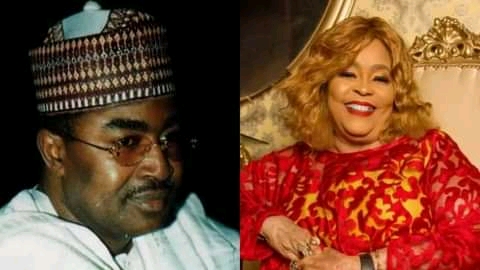
The Chairman of the National Drug Law Enforcement Agency, Brigadier General Mohammad Buba Marwa’s (retd) wife has passed on.
A statement at the instance of the family confirmed Hajia Zainab Marwa died at the early hours of Saturday after a brief brief illness at the age of 66.
The deceased, a native of Imo State, was known for championing the cause of women and the girl-child during her life time.
She left behind adult children : Abubakar, Mohammad Jr , Mariam, Zainab and 10 grandchildren, as well as her siblings and aged mother.
Reading Culture: A dying treasure in Nigeria.
By Musa Ummihani Onize
Nothing pushes the human mind faster into obscurity than hatred to reading. A society that’s losing hold on good reading culture can be on a fast-track to ruins for reading is an essential soft tool that helps the mind work at its best. To be fully aware of oneself, one’s surroundings, and the world at large, there’s a need for one to be passionate about acquiring knowledge through mindful reading.
There will be no better time than now that calls for the redevelopment of reading culture in the minds of Nigerians because the lack of information, understanding, and enlightenment on vital issues is a big threat to national development and security. And, in Nigeria, critical observations of many academicians have it that good reading habits are on a decline, especially from young adults.
Nigeria faces devastating social problems rooted in tribalism, religious intolerance, opposing political views, extremism on different grounds, etc. But, aside from these social problems that destabilize the public good, some underlying toxic behavioural traits are foundational and contribute to social problems. These behavioural traits vary in one person from another.
So, to curb and manage man’s excesses and toxic traits -the ones known and unknown to him, there’s a need for equipping his mind with beneficial information through reading so to enable him to have a sense of understanding and tolerance towards people from different tribes, religion and nationality, and also to have the mental ability to differentiate the good from the bad in his personal activities and choices.
A study has it that people who have decent habits towards reading are less likely abusive and violent.
The revival of the dying reading culture in Nigeria can only be possible when concerned citizens put in collective efforts to educate and enlighten their loved ones and close associates on the importance of reading. It’s said that a journey of a thousand miles begins with a step. Therefore, it will be helpful and productive to educate our circles about the peace-enabling effects of good reading habits.
To ensure their growth, encourage them to read books.
Musa Ummihani Onize writes from Okene, Kogi, State via musauumiize@gmail.com.

Poverty reduction as an economic agenda in Nigeria
By Maryam Abdullahi Jibrin
Undoubtedly, the Nigerian economy has taken a more definite path that leads to progress and prosperity for the vast majority of our people. However, our national aspirations — equity, justice, integrity etc. must leap off the pages of cold print and become realizable objectives. Foremost, poverty must be addressed and reduced to a minimal level.
The Millennium Development Goals (MDGs) first agenda is poverty reduction. UN viewed poverty as one of the greatest enemies of humanity.
One of the surest ways to fight poverty is to build a strong economy that emphasizes job creation, an ever-increasing private sector and a problem–solving public service.
Nigeria is blessed with potentials. Now almost a century after independence, those potentials have turned into vast opportunities for all.
The reality of our multicultural economy is no longer a point to mourn but one to turn to maximum advantage with which to build all the other sectors. Therefore, there is a need to formulate institutional, financial policy and macroeconomic support strategies to heal the economy.
Nigeria’s policy on poverty eradication must be unassailable if we are to get out of the economic predicament that stifles our initiatives. It means that our policy and decision-making processes must touch the heart of the problem. Only then can we have an effective solution — one that focuses on the needs of the most vulnerable segment of the polity and balances them with the growth imperatives of the economy.
Against the background of both the local and global requirements, it became necessary to review the structural, operational and regulatory frameworks of the nation’s Poverty Reduction Plan. Since 1999, a set of policy directions and reforms have been implemented under a national development policy.
According to the National Bureau of Statistics (2012) report, 112.519 million out of an estimated 163 million of Nigeria’s population live in relative poverty. Relative poverty is the comparison of the living standard of people living in a given society within a specified period. Apart from the relative poverty index, Nigeria failed all poverty tests using all poverty measurement standards.
The poverty measure puts the country’s poverty profile at 60.9 per cent, the dollar per day measure puts the poverty profile at 61.2 per cent, and the subjective measure puts the poverty profile at 93.9 per cent (NBS 2012). The Human Development Index (HDI) of 0.423 also ranks Nigeria 142 out of 169 countries in 2010 with an estimated GNI per capita of $2156, life expectancy at birth of 48.4 years, Multidimensional Poverty Index (MPI) of 0.368 (UNDP, 2010).
The average Nigerian is a poor man. Nigeria is a nation of riches and poverty, wealth in the hands of few and extreme/abject poverty at the doorsteps of many. The divergence between Nigeria’s economic indicators, macroeconomic variables and reality is a source of concern. The reality is that people die because they cannot afford three square meals a day and access primary public healthcare. These problems are traceable to the weak governance that the nation has experienced over the years due to a combination of inefficient service delivery and inconsistent policy settings.
As strange as this may sound, this goes on side-by-side with an ostentatious display of wealth by the privileged few.
In an attempt to proffer a solution to the foregoing problems, it is therefore imperative to determine the role of economic growth, agriculture and quality of governance in explaining the vast differences in poverty in Nigeria. Thus, the government should introduce initiatives to revamp education, infrastructure, fight corruption, end insecurity and ensure political instability nationwide.
Maryam Abdullahi Jibrin writes from Bauchi. She can be reached via jibrinabdullahimaryam5@gmail.com.
The biggest takeaway from Sheikh Ahmad’s death
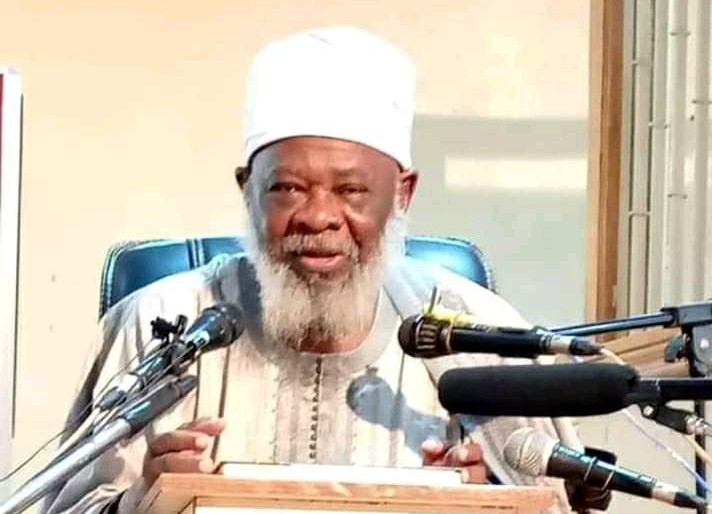
Yesterday, Kano state, in particular, was rocked with the untimely passing away of the revered Sheikh Dr. Ahmad BUK aka “Ƙala Haddasana”. Social media was awash with condolences and prayers for Allah’s mercy on the deceased. In all my years on this space, I have never seen a single event that generated as much unanimous positive reactions from all quarters as this one. Experience has taught me that Northern Nigerian cyberspace is one of the most polarised places on the social media. Religious/doctrinal and political differences easily blind us to reason. Yes, Islam encourages us to speak good about the dead. However, seeing how the social media mourned the late Sheikh almost in unison makes me realise that indeed there is a big lesson to learn from this death.
The late Sheikh was one of the earliest Salafi scholars in Nigeria. In his many lectures, he confessed to have earlier been a follower of Tijjaniyya, which is arguably the biggest Sufi sect in the world. Despite his doctrinal leaning, the Sheikh commanded respects from all and sundry. The secret behind this is the fact that he never created bad blood with his rivals. In other words, the Sheikh was steadfast in his Salafi ideology while at the same time maintaining a cordial relationship with others. This is a rare character trait that we all need to embrace fully.
You can be a Salafi or a Sufi, an APC or a PDP fan, a Buharist or a Kwankwasite and so on. But learn to never burn bridges with others. You can hold different religious or political opinions. You can always disagree with others on different issues. But always try to disagree politely and learn to respect others’ opinions. Most of the animosities and tensions that characterise our existence are borne out of our seeming intolerance and in-your-face attitudes towards others.
I have come to the realisation that the outpouring prayers for Allah’s mercy and forgiveness on the Sheikh are not only the results of his teaching and mentorship but are also the consequences of his tolerance and thoughtfulness. When you live a useful life, your death would leave even your detractors with a void impossible to fill in. When you make tolerance your guiding principle, even your enemies would be left with no choice than to admire you, even if grudgingly. The take-home lesson is: be respectful of others regardless of existing differences.
May Allah SWT forgive the Sheikh and all others who have passed away before him.
Aliyu Yakubu Yusuf

Kano Commissioner of Education, Kiru, debunks rumour for school resumption extension
By Uzair Adam Imam
Kano State Commissioner of Education, Muhammad Sanusi Sa’id Kiru, has debunked the wide circulated rumour for the extention of first term resumption date.
Kiru said that the remour is baseless, adding that the resumption dates for Boarding Primary and Secondary Schools remain Sunday 9th January 2022 while that for the Day schools is 10th January 2022. The dismiss was in a release signed Saturday by Aliyu Yusuf, the CPRO Ministry of Education Kano State.
However, the commissioner also called on parents/guardians and the general public to disregard the rumour going round about extension of resumption date.
He added that the ministry has its estsblished means of dessiminating information to members of the public, therefore, if there is any new development, such medium will be used to reach members of the public accordingly. He then called on parents/guardians to ensure that their children return to their respective schools on the scheduled dates as penalties awaits defaulters.