



Former Oyo State governor, Alao-Akala, is dead
By Ahmad Deedat Zakari
A former governor of Oyo State, Christopher Alao-Akala, is dead.
Alao-Akala died on Wednesday at the age of 71. The sad development was confirmed by the Publicity Secretary of the state chapter of the ruling party, the All Progressive Congress, APC, Dr Olatunde Abdulazeez.
Dr Olatunde, in affirming the news, said, “The news of his death is out. He did his best for the state, May his soul rest in peace.”
Mr Alao-Akala was the governor of Oyo State from January 12, 2006, to December 12, 2006. He was also elected on the platform of the Peoples Democratic Party, PDP, in 2007 as the Executive Governor of Oyo State, where he served till May 2011.

A Daidaita Sahu Strike: BUK suspends CAs
By Uzair Adam Imam
Following the strike embarked upon by the Commercial Tricycle Riders (alias A Daidaita Sahu or Keke Napep), the management of Bayero University, Kano, has directed the university lecturers to suspend all continuous assessments (CAs) that were to be conducted this week.
The directive was on a social media post which the Bayero University Spokesman, Malam Lamara Garba, has confirmed to The Daily Reality.
It said all planned continue assessments that were to be conducted by the lecturers this week had been suspended pending the strike’s outcome.
The A Daidaita Sahu Riders commenced a seven-day warning strike on Monday, January 10, 2021.
It was gathered that the riders are protesting against the Kano Road Traffic Agency (KAROTA) registration fee.
The agency is charging new registrants N18,000, while renewal is N8,000 annually.
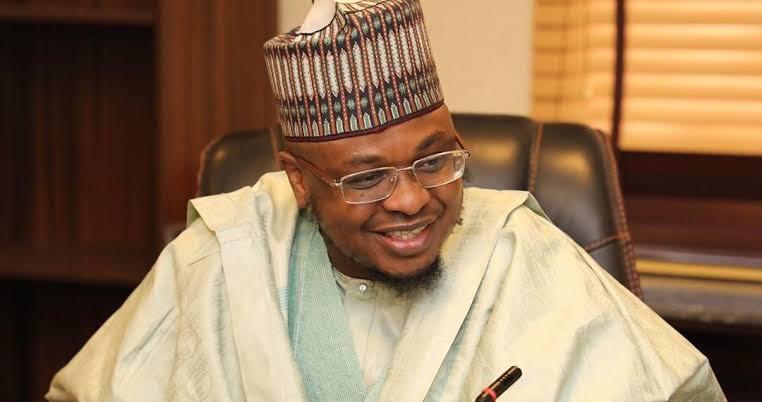
Pantami: ‘FG spends N152bn on ICT projects’
By Uzair Adam Imam
The Minister of Communications and Digital Economy, Isa Ali Pantami, said that the federal government had spent N152bn on digitization projects in 2021 across the country.
Pantami disclosed this in Abuja Tuesday at the closing of the 2021 Service Wide capacity building programme on e-Government at the e-Government Training Centre.
He said the amount constituted the total sum approved by the NITDA for the CBN, the NNPC, the CAC, the Immigration Service and Customs, among other agencies.
Meanwhile, the Minister also assured Nigerians that the government would migrate to a paperless government by 2030.
He said they have put in place all the necessary measures to achieve the objective through the National Policy on Digital Nigeria.
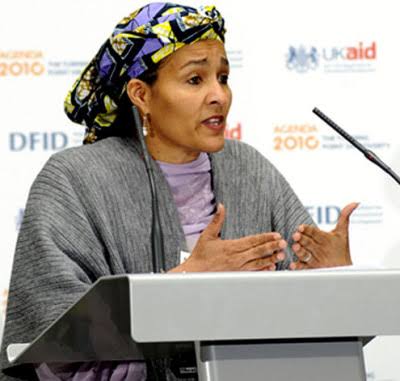
UN: Buhari commends Amina Mohammed on reappointment
By Uzair Adam Imam
President Muhammadu Buhari rejoiced with Amina Muhammed on her reappointment as United Nations Deputy Secretary-General for a second term.
Buhari stated that in a release signed Tuesday by his spokesman, Mr Femi Adesina.
He assured her of the prayers and support of Nigerians, especially the Federal Executive Council, where she served for some years.
He also commended the UN Secretary-General, Antonio Guterres, for his confidence in the former Minister of Environment by giving her another opportunity to serve the global body and humanity.
Moreover, Mr President has also commended Muhammed, saying: “She remained an inspiration to many women in Nigeria, Africa and the global community.”
Cultural heterogeneity: Where it comes from, how to confront it?
By Safwan Suhaib Ibrahim
Culture, just like science, is never static. As we read more, travel more and impinge more and more on one another through trade, schools, international and religious organizations, our culture and behaviour patterns become heterogeneous – more cosmopolitanised. As people who are committed to the acquirement of wealth and knowledge for the power and insight they give, we must accept the challenges (?) they come with, which is, “Cultural Dynamism”.
Culture, to put it in a mild way, does not only centre on customs and attitudes inherited from our predecessors or the circulation of folktales by word of mouth. It’s also a formal way of training the young in a body of knowledge or creed, borrowing techniques and fashions of others, adopting and selling new ideas or products. Thus, cultural homogeneity is our – everybody’s – way of life.
It’s often not realised, least of all by a layman, that culture is a step further from people’s traditional food, dress, language, music and ceremonies; rather, it’s the people themselves and the society they live in. The human being is an evolutionary animal who is always assimilating new changes brought about by the socioeconomic wind. As we live, we design our culture and we also get designed by it. The everyday flirtation of native dress, songs, dances and language, skin colour or faith are never what exactly our culture is; they only represent a wee portion of it. Our ideas, our ties, our standards and the logic we reflect on a specific problem that confronts us speak more about our culture.
We – Hausa – have perpetually claimed to be a unique breed of people who despise, or claim to despise, copying others, especially the Western world, though our current moral attitudes and ceremonies are in no way different from theirs. We’re now men of two worlds. So, It’s, of course, a sheer delusion for some of us to pretend to reject everything they’ve acquired from foreign culture simply because it’s “foreign”, but it’s not foolish to rescue one’s culture from total extinction. There’s a need for the revival of awareness of Hausa culture with its great philosophy and epos of music and poetry, dress and language and its ancient literature, but not a total rejection of foreign or alien culture; for that’s as illusive as self-defeating.
Lest I be misunderstood, I’m not denying that foreign culture or ideas cannot have a destabilising influence on us (of course they do), but I believe there are some that impart a new impulse that prods us to create a new method of organisation and new hope for development. Thus, before we start thinking of driving those alien cultures and ideologies away, we need to study our culture and our people well. We need to start from the basics. That’s, I think, there’s a wider conception of our culture which we give little or no particular emphasis that needs to be tapped now.
Our respect for elders, hospitality to strangers, our feeling of brotherhood and community, our mutual aid for the provision of support and development of services like health protection and education, our freedom of expression, our readiness to provide an economic surplus to neighbours which was so deep-rooted in us that none was allowed to starve, wander in the street or suffer when there’s anything could be done to help him out, and our democratic statecrafts are all but an adventure to us and our progeny. Don’t you think the fight should be on our abstract, not physical culture?
Safwan Suhaib Ibrahim sent this article via bagwaisafwan@gmail.com.

Finally, the Super Eagles joined the party
By Aliyu Yakubu Yusuf
Compared to its more illustrious continental equivalents, the African Cup of Nations (AFCON) receives far little media fanfare. With its scheduling in the winter when European football is well underway, the AFCON has been a pain in the ass for many a European club. And the actions on the pitch so far have elicited little excitement among watching fans. Goals have been at a premium, with just nine goals scored in the opening eight games in the tournament, making it a ratio of just over a goal a game.
The Super Eagles of Nigeria took on the Pharaohs of Egypt in a much-anticipated clash of African football titans. With Mohamed Salah at his mesmerizing best for his club, Liverpool and Nigeria having to play without two of its most in-form forwards, Victor Osimhen and Emmanuel Dennis, who are unavailable for various reasons, many pundits and bookmakers earmarked Egypt as the favourite. However, the Eagles didn’t read the script. As soon as the match kicked off, the Nigerians asserted themselves and dominated the early exchanges. However, they were made to wait until the 30th minute of the game before they got the deserved breakthrough.
Moses Simon, who was a menace for the Egyptian defence all first-half long, left the Egyptian full-back, Tawfik, for dead before putting in a teasing cross that Hegazy partly cleared. The ball fell nicely to Joe Aribo, who directed the ball to Kelechi Iheanacho, who fired an unstoppable missile into the Egyptian net to send thousand Nigerians who crossed the border to Garoua to watch the game into rapture. That was to prove the game’s only goal that turned into a topsy-turvy affair in the second half.
If the Super Eagles were great in the first half, they were effective in the second. The Pharaohs improved massively in the second half. However, the Nigerians fashioned many gilt-edged chances on the break. With a little more composure in front of the goal, the Super Eagles would have won by at least three clear goals. But, assisted by the evergreen Wilfred Ndidi and the silky Joe Aribo at the middle of the park, the Nigerian defence line comprised Ola Aina, Troos-Ekong, Kenneth Omeruo and Zaidu Sunusi successfully managed the unenviable task of keeping Mohamed Salah at bay.
Credit must go to the coach Agustin Eguavon who made his debut today. The Super Eagles had been a shamble for long stretches at the end of Gernot Rohr’s tenure. If this match is anything to go by, the future looks promising for the Super Eagles. Of course, as a traditional footballing powerhouse in the continent, Nigeria goes to any AFCON tournament as one of the favourites. However, it is still early days, and there are better teams in this tournament than the Pharaohs. So, I think Nigeria has an outside chance to go over the finish line.
Aliyu is a lecturer at the Department of English and Literary Studies, Bayero University, Kano. He can be reached via aliyuyy@gmail.com.
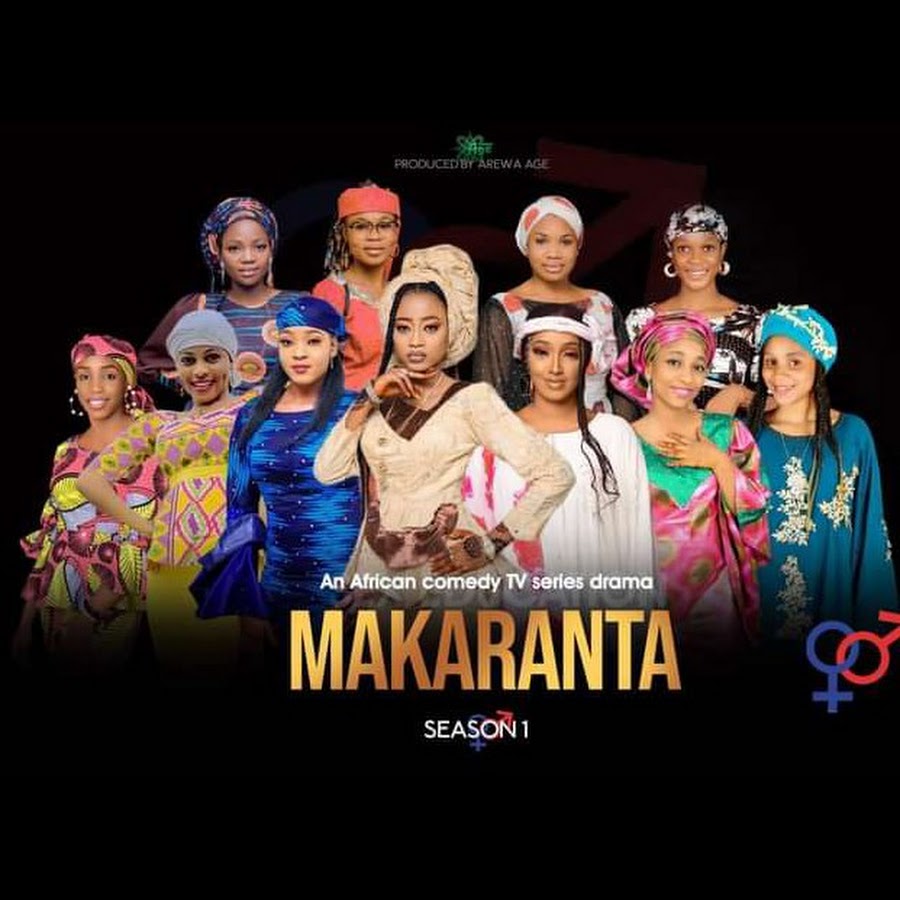
On the racy Hausa film, ‘Makaranta’
By Habibu Maaruf Abdu
Since the middle of the previous week, the trending news on Kannywood has been revolving around a racy film entitled Makaranta. The Kano censorship board declares the film’s director Aminu Nasara wanted for releasing the uncensored film trailer, which embodies obscene content.
The trailer starts with a school setting, and a female voice is heard talking about jima’i (‘sex’) crudely without euphemism. Two female students are then shown conversing in a classroom where one of them advises the other in a vulgar dialogue as follows:
“Banda tsabar sakaci da dolanci kawai kina zaune har ya buɗe jaka ya ɗauki bireziya baki sani ba. Idan kikai wasa da wannan dolancin kina sakin baki wataran sai ya cire miki pant…”
“If not for sheer foolishness, why would you just sit there while he opened a bag and took the bra without you knowing. Unless you are careful, he would, one day, take your panties off…”
The aforementioned are just a few of the many vulgarities in the trailer. So, if the two-minute-long trailer alone is this bad, how do you expect the complete film to be? Males and females are even shown touching one another and licentiously dancing in some scenes!
No doubt, such despicable movies are a threat to the well-being of our society. They can negatively influence viewers, especially the young generation, and dent our beautiful reputation as the Hausa Muslim populace. A film is a reflection of the society where it’s produced. I, therefore, strongly condemn the immoral movie. Making such a film is insolent, and all those involved should be brought to book.
Although the film director is trying to dissociate it from the mainstream Kannywood, his claims are unacceptable because the film is mainly in the Hausa language. Moreover, many of its characters are portrayed as Hausa Muslims (We hear names like Luba, Saudat and Suwaiba). Our society, therefore, has every right to follow it up since it’s something which, they think, could tarnish their image. The director is thus subject to both public outrage and censors punishment. The National Film and Video Censors Board should collaborate with their Kano counterpart to ban this film and impose a total ban on all films of its kind.
I will conclude by commending the efforts of the Kano censorship board in sanitizing Kannywood. Moreover, I call on them to devise more extreme punishment in dealing with the perpetrators of immorality in the industry. This would serve as a deterrent to others.
Habibu Maaruf Abdu wrote via habibumaaruf11@gmail.com.

Umahi meets Buhari, declares intention to run for president
By Ahmad Deedat Zakari
The Governor of Ebonyi State, Dave Umahi met President Muhammadu Buhari at the Presidential Villa, Abuja, Tuesday, where he indicates interest to contest for office of the President
Mr Umahi who defected to the ruling All Progressive Congress, APC, November, 2020, from the Peoples Democratic Party, PDP, made this Known while briefing newsmen shortly after the closed-door meeting.
In response to a question if he is not deterred by the interests of others seeking the party’s presidential ticket, he stated, “I am not in contest with anybody; I am in contest with myself.”
Mr Umahi’s declaration is coming a day after Tinubu’s declaration of interest also at the Presidential Villa on Monday.
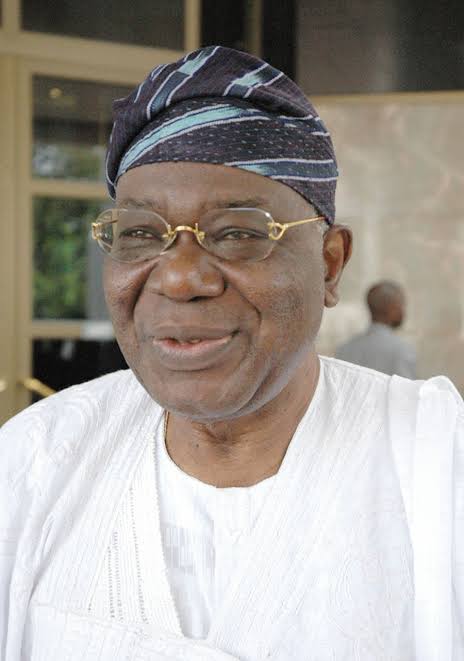
Buhari mourns former Head of Interim Government, national flag flown at half-mast
The former head of Nigeria’s Interim National Government, Chief Ernest Shonekan passes on today. The president of Nigeria, Muhammadu Buhari mourns his death through a condolence message posted on his Facebook page. The post reads: “I received with profound sadness the news of the death of a great statesman and former Head of the Interim National Government, Chief Ernest Shonekan.
On behalf of the Federal Government, I extend my deepest condolences to Chief Shonekan’s wife, Margaret, his loved ones, and the government and people of Ogun State.
With courageous wisdom, Chief Shonekan left his flourishing business career to become the Head of Government, at a delicate time when the country needed someone of his calm mien and pedigree to save the ship of state from sinking.
He demonstrated to all that the love for country and commitment to her development, peace and unity transcend the trappings of office and the transient nature of political power.
Nigeria owes a great debt to Chief Shonekan, the peacemaker, who even at the twilight of his lifetime never stopped believing and working for a prosperous and democratic country.
I pray that his memory will remain a blessing to Nigeria even as he finds perfect peace with Almighty God.”

Dear Governor Bala Mohammed, listen to Jama’are people
By Y. Z. Yaú
In 2018, the Jamaare Local Government Area of Bauchi State suffered a devastating flood that destroyed farms and houses and the central market. There was a Government in Bauchi State, but it did not respond to the crisis. Those who died due to the flood ended up as mere flood statistics. The descendants of Dilara took it calmly and in their strides. They consulted among themselves and prayed to God to answer their prayers. In his infinite mercies, God answered and wiped their tears: the federal government through the Ecological Fund responded with an intervention to mitigate the effect of the flood.
In a three-part initiative, the Ecological Fund financed a new drainage network in the town and promised to rebuild the market destroyed by the flood. The third aspect was the dredging of the river so that the flood could be reduced if not altogether eliminated. The state government was to contribute as counter funding. But, unfortunately, it did not, and the flood came back with more vengeance during the last raining season, and for the first time in over 50 years, the flood got into town, occupied and destroyed many houses. Several people, mainly farmers and their children, died while crops were damaged in the waves. The loss to the community was shuttering. Again, not a whimper of sympathy from the state government.
Over five years ago, as part of the ecological intervention, the Federal Government decided to upgrade the power sub-station, which serves more than four local governments, to improve the electricity supply in the area. A significant new sub-station was to be built on the understanding that the State Government would do the civil works while the Federal Government does the engineering component. The Federal Government delivered its part, and to date, the State Government has not delivered its component, so the project remains uncompleted.
What does the frequent flood tell? While flood in itself is destructive, it reveals that if the water can be controlled, agricultural production can be improved to raise the national food production capacity. After all, already along with the Hadejia wing of the Hadejia-Jamaare Rivers basin, this area is perhaps the largest rice production belt of the country. Stabilization of the flood plain of the Jama’are river is, therefore, a project not meant for the benefit of the Jamaare people only. It is to improve national food security and farming resilience in the country. It is thus in the national interest.
The flood plain of the Jama’are river is a fertile agricultural area and a ready-made natural laboratory for agricultural research that will improve farming systems and practices across the country. This consideration led the Faculty of Agriculture of the Bauchi State University in Jama’are to leverage this natural laboratory for research, experimentation and teaching. In addition, Jama’are people will benefit from agricultural extension services, agricultural advice from experts, improved skills and knowledge for the farmers, and uptake of research outcomes to address agricultural, livestock, and horticultural issues.
It will also benefit from the usual town-gown interaction that a university made possible. But above all, however, the state and the country stand to gain in enhanced agricultural production, livestock production and development of horticulture. The foresight of the Committee that searched and selected the site of the Faculty of Agriculture must be commended for their deep sense of patriotism and adherence to professional ethics.
The Faculty is already on the ground with hundreds of students and over 100 academic and non-academic staff engaged in academic activities in the college. Academic activities have stabilized, and a sense of synergy between the campus and the host community has taken shape.
Suddenly, there are rumours making rounds that the state government is planning to relocate the Faculty to another place for the Federal College of Education takeoff that the federal government recently decided to establish in the town. This move to relocate the Faculty that was sited based on clear reasons of functionality and leverage not only smacks of the politics of blockage but also totally lacking in appreciation of the considerations for the setting up of both the Faculty of Agriculture and the Federal College of Education in Jamaare. It certainly does not show concern for the deep patriotic thinking of sitting the Faculty. But this apart, the argument of justice and fairness has led to the establishment of the Federal College of Education.
Jama’are is one of the oldest local governments in the state, established in the country’s first wave of local government creation. Jamaáre Emirate is a foundational emirate, resulting from the Dan Fodio Jihad and not a recent political design of some politicians. Of the four emirates in the state, until 2014, it was the only one lacking in any institution of higher learning. Even when the Faculty of Agriculture was established, the Emirate was nowhere near the others in terms of the number of higher institutions. It was to promote equitable educational development and the spreading of educational opportunities across the state that reinforced the rationale for selecting the site of the Faculty of Agriculture and the establishment of the Federal College of Education in Jamaare.
It is difficult for the people of Jamaáre not to read the purported attempt to remove the Faculty as one more instance of deliberate discrimination against people known for their peaceful disposition. For all the deprivations, they have never taken to a protest. Not that they value their rights nor that they cannot fight for their right. They believe that what you do not get in peace will not necessarily come in violence. They live in the humble Fulbe spirit of not giving to showing pains or pleasure. Therefore, when last Monday they met from all corners of the Emirate at the Jamaare central mosque and led by the leadership of the scions of the Dilara dynasty, the community has taken this attempt to disinherit them calmly and resorted to prayers, in the hope that as usual, Allah will ensure that justice is done. As a peace-loving community, we take solace in our patience and trust our density.
It is still not late for the Bauchi State Governor, Bala Mohammed (Kauran Bauchi), to dispel these rumours and assure the people of Jamaáre, and indeed the whole country (which stands to lose from this move) that what is theirs shall remain theirs. They will embrace him with brotherly love and in that spirit. We hope that Kaura hears our humble request for his heart to take flight into the hearts of Jamaáre people who would warmly embrace him in eternal gratitude for acting as a true leader who treats all parts of his constituency equally. We are waiting and watching.
Ya’u is the executive director of the Center for Information Technology and Development.