
Niger Republic, Kano to strengthen students exchange programme
By Uzair Adam Imam
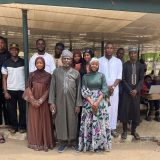
Niger Republic has sought greater cooperation through the strengthening of students’ exchange programmes and other related issues on collaborations with tertiary institutions between the country and Kano State.
The Niger Republic Minister of Vocational training, Kassoum Mamane Moctar and his counterpart of Education and Scientific research, Dr Mamadou Djibo from the same neighbouring West African country, made the proposal.
The Chief Press Secretary to the Deputy Governor of Kano State, Hassan Musa Fagge, in a statement signed Thursday, disclosed.
The minister said many years back, students from Niger Republic came to Nigeria, particularly Kano, to study in various tertiary institutions.
He said, “now we want that students exchange programme to be revived and sustained”.
“Through the partnership, we will promote quality of education and research in both our tertiary institutions, which will be of benefit to all of us,” he stated.
Responding on behalf of the Governor, his Deputy Dr Nasiru Yusuf Gawuna said Kano State is ready to collaborate with Niger Republic in areas of interest and benefit.
Gawuna thanked the delegation from Niger Republic for the visit and assured them of cooperation.
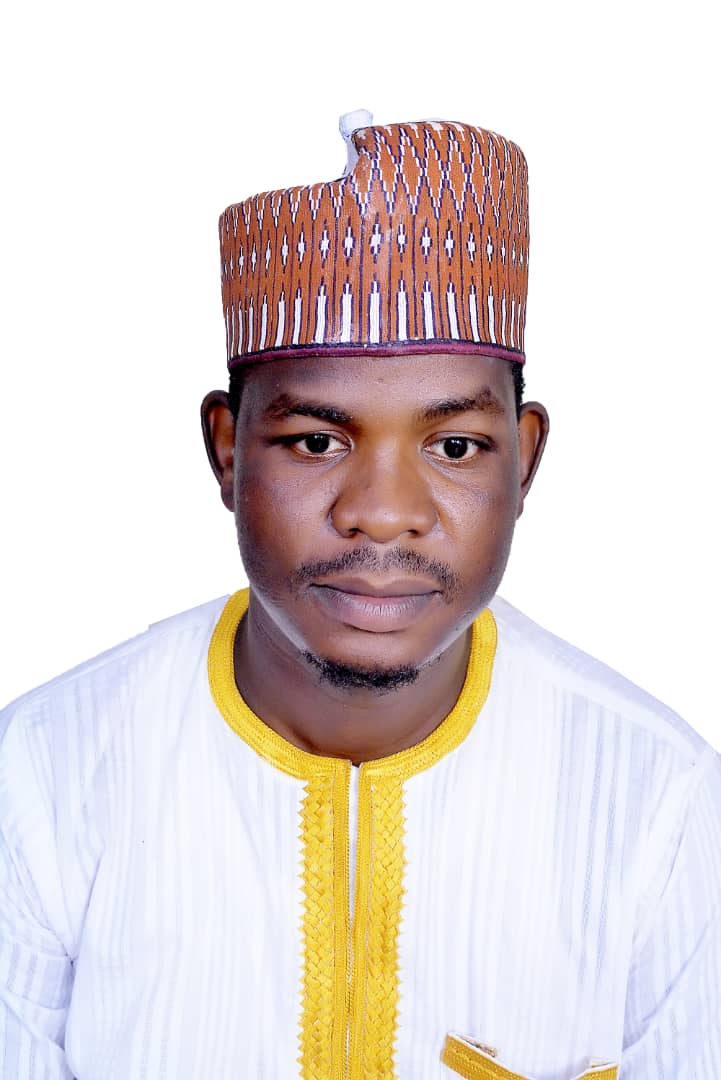
Hope, destiny and dilemma: letter to a former student
By A. A. Bukar
Dear Iroro,
It still touches my heart that you feel entrapped by frustration and desperation as a banker. And hope you will find solace in the fact that this is not your making. Life has an inexplicable way of fixing us where it pleases. That’s what we call destiny, isn’t it? A mysterious power beyond the freedom of our choices.
In the vicissitudes affecting your life and career, I am sure you’ve wondered: what on earth has Chemistry got to do with Banking? I have also thought about it when another mentee recently joined the apex bank of the country with a degree in Linguistics. But remember it wasn’t either your dream to be a chemist, nor of your teachers and mentors. Here’s an exposè on the initial agenda:
Fresh from College, we were entrusted with your intellectual upbringing as freshers in that private secondary school. Unbeknownst to you and our teachers that brought us there, we were equally at a point of self-discovery; with youthful exuberance, spurred by desire and desperation to make impact on our immediate society. Our immediate concern was the state of the general hospital, dearth of health personnel and what to do about it – big as it was and the multitude it supposed to serve, the hospital could not boast of having 3 medical officers whether resident or itinerant then. We were worried by how, for example, when a family member fell sick, we had to rely on a chemist or a ‘family doctor’ who probably had only a certificate in Community Health. For all type of ailments – from malaria, typhoid to child delivery.
So what to do? We started brainstorming with your other teacher – Audu Bulama. Initially we agreed to abandon our NCE certificates and return to a science secondary school, obtain another SSCE and gun for Medicine. This was in spite of my numero-phobia. Upon further discussions, we decided to maintain our charted course but encourage you to pick up the battle on our behalf; on behalf of all. This largely motivated the extraordinary devotion given to your generation. You’d no Saturdays of your weekends. Extracurricular activities, lab practicals and whatnot. The teachers, on the other hand, made the school their second home, passing the night when duty forced. We were gladdened when, after the career talks in which late Dr Gishiwa was involved, many of the finest brains opted for science class. But in no time destiny began to take toll.
First, your headgirl and her friend got married. That was the end. Travails of UME transposed you and the other boys to B.Eds. Now, one of the two Bashirs that graduated with first class in Mathematics is in airforce. You’re in a bank instead of laboratory. Your close friend, Tijjani, a thoroughbred from art class wanted to study Law but ended up with B. A. in Hausa Language. You can always feel how he struggles to suppress his dissatisfaction ever after. Zarah, your overall best in the first session, found her “destiny” in the kitchen! Only your headboy went nearer to fulfilling the dream with a degree in Pharmacy. My sisters, who I similarly encouraged thus, followed the same pattern of career trajectory – Mathematics, Pharmacy, Medical Imaging Technology and so on.
Dear Iroro, you’re not alone. We were all at this crossroads of dilemma and indecision in the process of evolution. Sometimes due to lack of choice or due to multiplicity of choices. In 2007 I got two admission offers to study B. Sc Mass Communication (100 level) or B. Ed English (200 level) at Bayero University. For obvious reasons I registered for Mass Communication. But before lectures could start, my friend Musa Lawan Kaku , who was doing his double honors in English and Islamic Studies, began to take me to the exciting classes of Prof. Saleh Abdu, IBK and Mustapha Muhammad. I instantly found home and wanted to switch over. We even went to the admin. block with Usman Abdullahi making inquiries on how my registration in Mass Communication could be converted to English. When they said the ink had dried, we, in desperation, asked further whether new registration was possible – that meant a forfeiture of the former. When, along the way, I placed a call on your proprietor (who was my teacher and mentor), Dr AbdulRahman, with regards to this I found consolation and wisdom in his advice. His argument was our community had teachers in excess, dividend of the CoE in the locality but not so journalists. Thus I remained. Happy thereafter, grateful for ever.
Enthused by my editorship of our departmental newspapers and magazines, I kept an eye on practice after graduation. But destiny took me elsewhere. NYSC posting took me closer home – where I was to teach Hausa (another irony) in a Jigawa state village school. Dissatisfied; without any prodding from anyone; without knowing anyone, I ventured into a nearby College of Legal/Islamic Studies requesting to be given a part time job in Mass Communication to kill the idleness precipitated by my posting. After brief perusal of my CV, the provost, Sheikh (now Dr.) Muhammad Al-khamis looked up and said: “Abubakar, we will give you a full time job. We are looking for people like you…” In the voice of Wajahat Ali, “That’s how they (read: destiny) pulled me back to classroom”. Grateful for ever.
But let me be very blunt here. Nurtured to be one, I know I will remain a teacher. But a decade or more in my life was intended for journalism practice before reverting to the classroom. That reminds one of Peter Nazareth or some other literary critics who said Ngugi wa Thion’go, the Kenyan writer, was a village writer. By that he meant Ngugi’s setting has always been village. Even if he starts his story in the city, rest assured he will end up in a village. That’s me with teaching. My friend, Barr. Maidugu Abubakar, once said teaching is just like cultism – obsessing. Axiomatic.
In May 2018, just few months after my Master’s degree, I met with the bureau chief of a leading national daily at a function. We struck a discussion wherein I revealed to him my itching for practice and even told him that I was currently earning a little above hundred thousand in my lecturing job; if they could give me the equivalent I would join them. He looked up in suprise, telling me how he’s on the other hand eager and lobbying to be a lecturer. Note: months earlier than this ABU Zaria had began beckoning. Details some other day. Such an irony.
More ironic about journalism is that while those who have university degrees in it often find themselves elsewhere, those who studied other things find themselves in it. When we reflected over this with my final year students recently, one of them retorted that “It’s because there is no money in practice. That’s why we prefer marketing aspect of it – Advertising or Public Relations”. In recent times Political PR, probably, to be singing “Napoleon is always right.” Remembered Squealer? This in itself is the end target of many veterans in the field; which affects the overall quality of journalistic output currently, sadly.
Now back to you once again. Was your inability to study Medicine an intransmutable destiny? I doubt. Increasingly I see things more from the prism of political economy nowadays. Suppose we liased with a sympathetic powerful politician or a certain influential rich man in the community – since it’s said with anything from 500k such admission offers could be obtained. This is Nigeria! Achebe’s aphorism in “A Man of the People is starker than ever!” The issue is that most of us brought up in this tradition (of knowledge generation and dissemination) were conditioned to see politicians as dirty filthy selfish do-no-gooders. Again, don’t ask me whether it’s right or wrong to bribe for admission offers in this regard. It is a matter of intense debate and disagreement between teleologists and deontologists in Ethics philosophy.
It might have stunned you either that my generation in the community can boast of only a medical laboratory scientist – the cerebral Alwali. Well, ours was largely a victim of educational policy somersaults that excised Sciences during our days and left the Arts students with no option but be boarders once interested in it. And with apathetic parents that were like “just go to this your Boko school and come back to write receipts in the shop”, the outcome is apparent. They were partly so for you will be shocked if you’re told what the take home of a graduate civil servant (read: teacher) was in the ’90s. It was a point in time also when the whole locality had no a single private school that could provide the alternative. You think Boko Haram found ground for nothing? Much a commingle of cultural, economic and doctrinal factors. In the Jigawa village school where I did my “service”, pupils disappeared to farm and never returned for after-break-fast classes. Reason? Parental inducement and priority. So much to talk about which makes this a roller coaster of some sort.
I have intended intimating you on the WHEN question on marriage at this stage. A character in Leo Tolstoy’s War & Peace would tell you after accomplishing all goals – an AOB in the agenda of your life. How reasonable and practicable this is, we discuss later inter alia.
With the proliferation of degree awarding institutions in the locality, we will soon start grappling with how to contend with graduates bulge. I hope one day someone will fish out your likes with strong science background and place them on scholarship for a second first degree in where the community has the most pressing need. Meanwhile keep your eye on a foreign one – especially for a post graduate degrees. That opens windows for unimaginable opportunities. Sorry for writing you this: So Long a Letter. It is coming while completing Anne Frank’s Diary on transit, and made open perchance your type herein will stumble, benefit, or relate. At least.
A. A. Bukar writes from ABU Zaria, Department of Mass Communication.
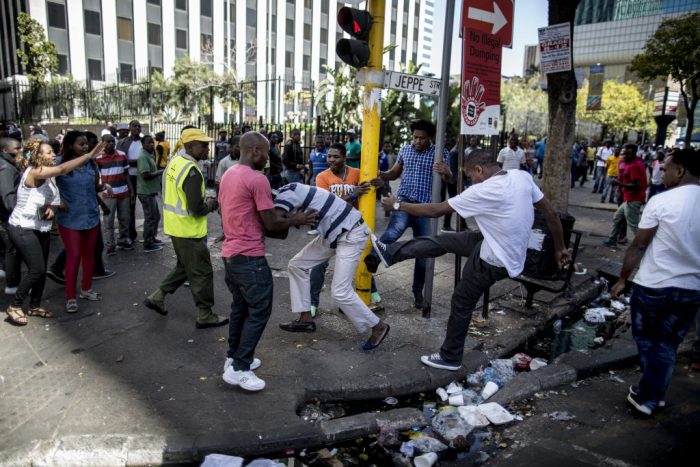
Again, Nigerian man murdered in South Africa
By Muhammad Sabiu
Following a horrific attack on foreigners by criminals, the Nigeria Union South Africa (NUSA) confirmed the death of another Nigerian, Nicholas John, in South Africa on Thursday.
Mr. Collins Mgbo, the President of NUSA, disclosed John’s death in a statement to NAN on Thursday.
On February 12, a mob allegedly attacked John, an Ogun State native, at his shop in Kimberly, Northern Cape, South Africa.
Many young Nigerians who immigrated to South Africa to find work have continued to perish.
According to NAN, at least 128 Nigerians have been slain in the erstwhile Rainbow Nation since the beginning of 2019.
On December 12, 2021, a man named Olusola Solarin died after hoodlums attacked him and stole his money.
Mgbo revealed that John’s South African wife had just been married for three months.
On the circumstances surrounding Nicholas’ death on Tuesday, the NUSA president stated that a South African gang assaulted him on February 11 for allegedly purchasing a stolen laptop.

Ganduje calls G-7 faction for unity after declared victorious in court
By Uzair Adam Imam
Governor Abdullahi Umar Ganduje of Kano State has called on his rivals, Senator Ibrahim Shekarau and others, for reconciliation in order to enhance the unity and stability of the APC in Kano state.
Ganduje made the call a few moments after being declared victorious at the Court of Appeal in Abuja this morning. The governor, who said he was pleased with the judgment, has extended a hand of unity to Shekarau and the G-7 faction of the APC in the state.
The Daily Reality reports that the court of Appeal in Abuja has invalidated the ward and local government congress by the APC faction led by Senator Ibrahim Shekarau in Kano. The court has rejected the judgment of an FCT High Court, which declared the Shekarau faction victorious.
In an interview with the Daily Trust, while reacting to the court judgment, the governor said, “his confidence in the judiciary had been strong since the beginning of the case, and as such he is very happy with the judgment.”
Ganduje, who spoke through Malam Muhammad Garba, the state’s Commissioner of Information, said the judgment would further enhance the unity and stability of the APC in Kano state.
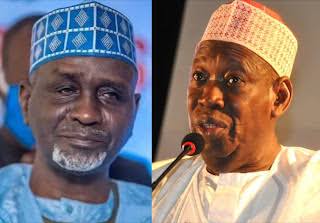
BREAKING: Ganduje defeats Shekarau faction in court of appeal
By Uzair Adam Imam
The Court of Appeal in Abuja has invalidated the ward and local government congress by the APC faction led by Senator Ibrahim Shekarau in Kano.
The court has rejected the judgment of an FCT High Court, which declared the Shekarau faction victorious.
The courts’ decisions were delivered on Thursday morning by Justices Haruna Tsammani, B. I. Gafai and J. Amadi.
APC crisis is one of the issues that has been raising dust between the factions long since Shekarau was declared to have defeated Ganduje.
The court has also described the crisis as an internal matter, not a pre-election matter.
Attorney General and Commissioner of Justice for Kano State, Barrister Lawan Musa, said that the judgment of the lower court had been set aside.
Barrister Lawan Musa, “The judgment of the lower court has been set aside for lack of territorial jurisdiction and also because it is an intraparty affair.
The third ground is that even the originating process used to file the case was wrongly done, as such, even the originating process was set aside. All the decisions are unanimous,” he added.
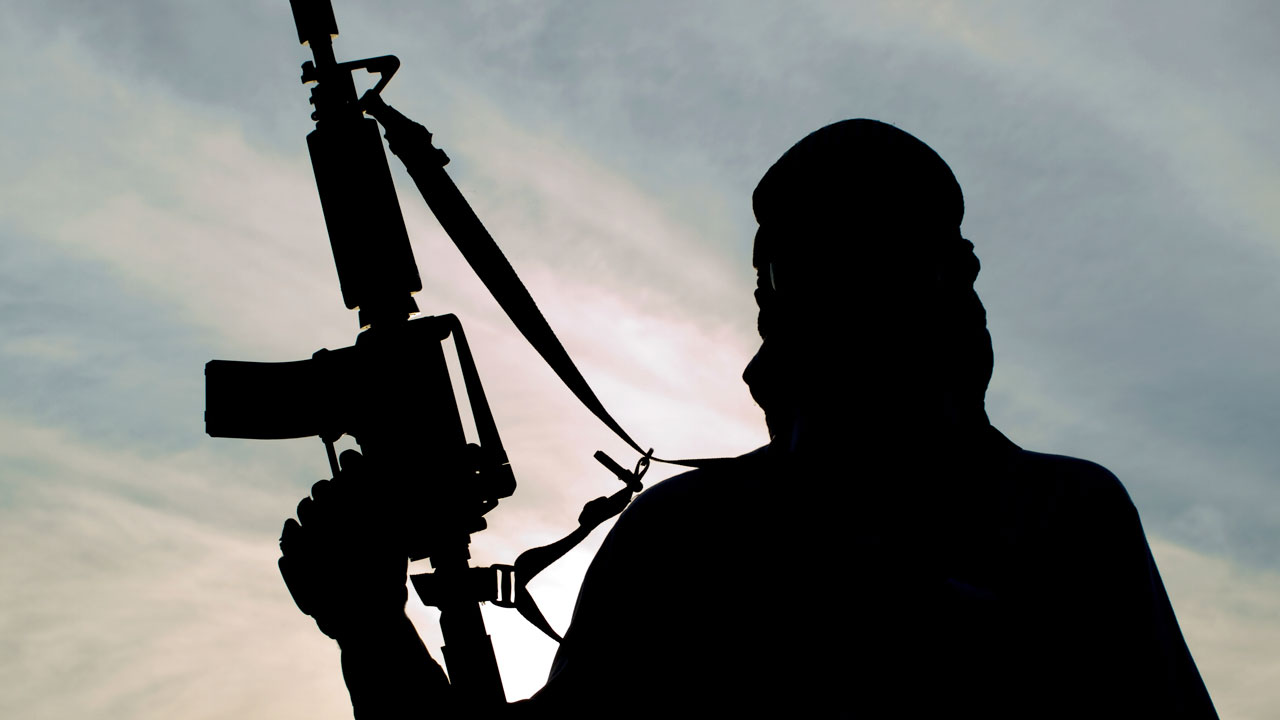
Kaduna: 22 persons abducted, 4 others injured in fresh violence
By Muhammad Sabiu
On Wednesday, shooters suspected of being kidnappers abducted 22 people and injured four others in Idon, Kajuru Local Government Area, Kaduna State.
Mr. Aboki Danjuma, a resident of the Idon community, said the criminals arrived around 12:30 a.m. on Wednesday and started shooting sporadically.
Justina Joseph, Mary Joseph, Rejoice Joseph, Stephen Joseph, Samson Ladan, Christiana David, Boniface David, Helen Aminu, Mirabel Aminu, Precious Philemon, Nelson Philemon, and Christian Philemon were among those taken away by the bandits, according to a councillor in the Kajuru Local Government Area of the State, Bala Jonathan.
Yosi Gabriel, Stephen Clement, Jinkai Musa, Derrick Obadiah, Daniel David, Paul David, Istifanus Peter, Miracle Matthew, Jesse Charles, and Favour Daniel are among the other names on the list.
According to him, David Maigaya, Micah Musa, Josephine Matthew, and Marshall Musa were the four injured people.
Since the time of posting this story, ASP Mohammed Jalige, the Kaduna Police Public Relations Officer, has yet to confirm the killings.
Delta teacher who flogged 19-month-old baby to death denies allegation
By Uzair Adam Imam
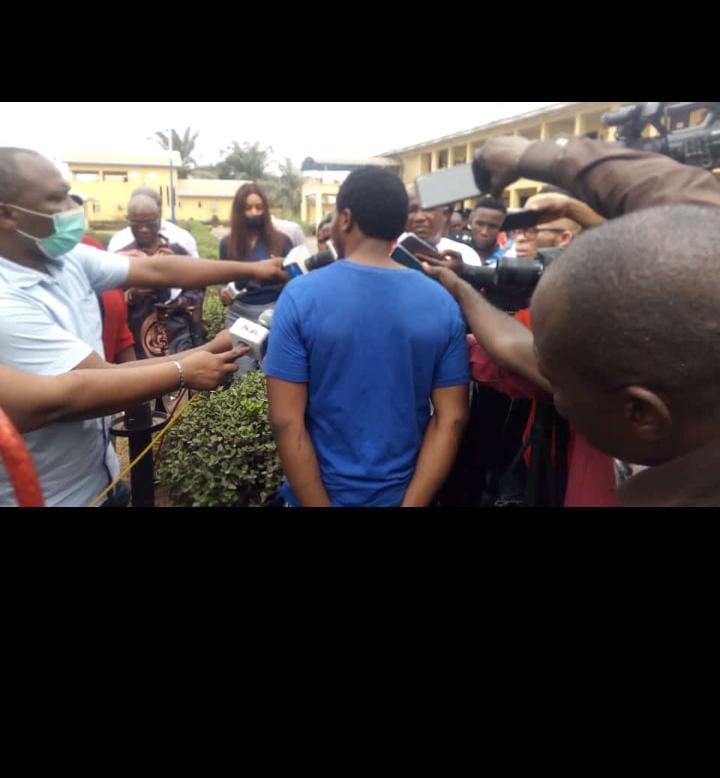
Emeka Nwogbo, a teacher at Arise and Shine Nursery and Primary School Asaba, apprehended over allegations of beating his 19-month-old pupil, Obinna Udeze, to death, has debunked the allegation.
Nwogbo argued that there must be other underlying issues that killed Udeze as he claimed the child didn’t die while he was punishing him.
He stated that he flogged the late Udeze as he had to whip ’a baby’ and that the child was punished because he pushed another child.
The teacher said, “I did not cane the child to death; I flogged him as I’m supposed to flog a child. I flogged him as little as I could; I did not kill the child.
“I am not responsible for his death. They should go and check this thing very well. I flogged the child because he pushed another child and hit the other child’s head,” he added.
The 19-month-old pupil breathed her last after allegedly being given 31 strokes of the cane by the school owner on Monday, February 7, 2022.
The baby had fallen into a coma after he was beaten while the beating left several marks on his body, and died five days later at the Federal Medical Centre, Asaba, the state capital.
While addressing the journalists, the state police commissioner, Ari Muhammed Ali, said a” post mortem examination will be carried out to ascertain at least the cause of death.”

FG is ready to meet with ASUU on all issues they’ve raised – Education Minister
By Uzair Adam Imam
The Minister of Education, Malam Adamu Adamu, has said that the federal government is ready to meet with the Academic Staff Union of Universities (ASUU) on all issues they have raised.
Adamu said that he was surprised by the decision of the union to embark on a four-week strike.
He added that the decision of the university lecturers came abruptly amidst ongoing meetings that aimed at resolving the menace.
The minister stated this on Wednesday while fielding questions from State House reporters after the Federal Executive Council (FEC) meeting in Abuja.
However, despite several negotiations, the minister also cleared the government of any fault over failure to reach an agreement with ASUU.
According to him, “ASUU, unfortunately, they have gone on strike, and I am looking for them because all the issues are being addressed. The last thing that happened was that our committee looked at their demands, but there are renegotiations going on. They submitted a draft agreement which the ministry is looking at.”
Speaking on ASUU’s draft agreement, Adamu said, “A committee is looking at it. Immediately it finishes, the government is meant to announce what it had accepted. Then suddenly, I heard them going on strike.”
Clearing his name over allegations from ASUU about his absence from meetings, the minister said, “ASUU will never say that. I always call the meeting myself. The meetings I didn’t attend were those that happened when I was in hospital in Germany.
“We want a peaceful resolution. The federal government is ready to meet them on all issues they have raised, and if there are so many meetings and the gap is not closing, then I think it’s not the fault of the government.
Asked about the possibilities of reconciliation between the FG and ASUU before the end of the 30-day strike, he said, “I can’t give you time. I am ready to reach an agreement with ASUU now, but since I’m not the only one, I can’t give you time, but certainly, we are going to reach an agreement very soon.”
How to make the month-long ASUU strike a win-win situation – Don
By Uzair Adam Imam
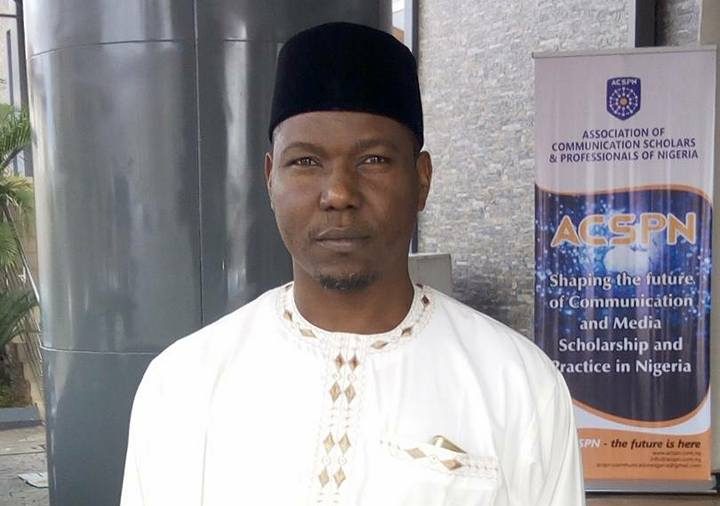
A senior lecturer with the Department of Mass Communication, Bayero University, Kano (BUK), Dr Ibrahim Siraj, has described the four-week strike of the Academic Staff Union of Universities (ASUU) as a necessary evil Nigerians must learn to live with.
Siraj said that as we could not stop the strike, we could do whatever we could to minimize the ‘losses’ that come with it while anticipating the benefit.
The academic who disclosed this on his social media platform stated that if only we could use some formulas, we are all winners – driving many benefits from the strike.
The writing he titled, “How to Make the Month-Long ASUU Strike a Win-Win Situation”, provided some formulas which he married them up with the benefits worth driving if put into practice.
Dr Siraj wrote, “Federal Government is given an ample opportunity to study ASUU demands, engage in serious and sincere negotiation and finally seal a deal. This will save the system from further disruption and damage.
“And with the countdown to 2023 general elections just starting and political activities expected to reach their peak later in the year, no better time than now to do it. They can resolve this one and concentrate on their politicking. Win.”
He added that “for lecturers, this is a time to sort out all issues relating to continuous assessment (CA), have some rest, finish writing that paper, gain some renewed energy and hope for the best from the struggle. In-sha-Allah it will usher into a better university system: better teaching and learning conditions, better remuneration, and more productive scholarship. Win.”
Moreover, Siraj stated that this is also an opportunity for the students to prepare for the coming exams “eat up the notes, ‘cram’ the handouts and do additional reading and consultation on the topics. This could translate into better performance and ultimately higher grades. Win”.
“Final year students could use the window to invest more time in writing their projects. So, in addition to aiding timely completion, it could also enhance the quality of the output. Win,” he stated.
The lecturer stated that the adjustment in the calendar means that BUK students will spend a better part of the blessed month of Ramadan at home. Thus, he said, “this means students and teachers will have more time to devote to seeking Allah’s pleasure in the holy month. Win.”

Dr Ibrahim Hassan: Tribute to an altruist ideologue
By Umar Haruna Tami
I am still jealous of his passion for knowledge in his life. From Literature-in-English to entrepreneurship, you can spend several hours discussing the trends in these fields with him without losing interest in the discussion. And what strengthens my jealousy is his ability to put the knowledge into practice for the benefit of himself and the development of society as a whole. This, I understand, is the reason why he has been teaching for over two decades.
Rising from primary and secondary school teacher to the assistant director of education in the Local Education Authority and as communication officer at NBAIS, these years of experience have prepared him to teach at various higher learning institutions. He has taught in various colleges of education and the Al-Qalam University, Katsina.
Dr Ibrahim Hassan teaches in the department of Islamic Studies, Umaru Musa Yar’adua University, Katsina. There, he devotes his intellect to imparting knowledge to the younger ones who, I believe, are lucky to have a dedicated lecturer who is versed in Qur’an education, Hadiths and Islamic Shari’ah. Given that he is blessed with the ability to dissect complex issues found in Islamic Shari’ah, where he specialised at the PhD level, it is understandable that his journey into academia is the best way to impact society.
In this struggle, he becomes the first coordinator of the institute of Qur’anic Studies in Funtua. The institution is affiliated with the Institute of Education, A.B.U Zaria. This makes him the first person to establish an institution of learning in the whole Katsina State that is affiliated to A.B.U Zaria.
Again, he pioneered Abdullahi Aminchi College of Advanced Studies in 2012 with a budget of less than three hundred thousand naira. The school has now graduated over three thousand students, with many furthering their education to degrees and master degrees. In addition, he has co-founded other diploma programs such as Justice Mamman Nasir College of Legal Studies and a diploma program in Cherish Dual Mode University.
I marvel a lot at his commitments and achievements in education. It’s believed that giving education to people is equal to giving them hope for living a better life. However, in a selfish society, such as the one we live in today, people like this are blessed with the courage to work hard to see that education becomes the reason people succeed. Understanding this, Dr Ibrahim has been going to the length of sponsoring the people that lack the resources to get an education. In fact, he has sponsored a large part of my undergraduate education, to which I am forever grateful.
In my interactions with him, I have realised that living one’s life with purpose is the surest way to greatness. And it is for this purpose one can make extraordinary impacts in the society in which he lives. Observing him, I have also come to understand that altruism keeps a society’s wheels of development in motion and that once we learn that our salvation from the threats of failure depends solely on the salvation of the other members of the society. Therefore, we have to build a solid foundation that would allow us to live in peace and harmony.
He has good ways of motivating people to take responsibility for their lives and look at the world from different angles. While he believes that every graduate can succeed through decent education, he motivates people to pursue entrepreneurship. My last encounter with him has changed the way I see the world in many ways by simply asking me what struggle to make my ends meet I am into. The question had instantly sent ripples in my mind, and I began to reflect deeply on what purpose my existence in the family of eleven children suppose to serve.
Our society struggles to find its bearing in this disrupted economy and social order. And what’s left for us if we are genuinely aiming to restore the sense that our society used to have? It is to work hard and effectively to ensure that we open doors of opportunity to the younger ones to get a good education which will give the other parts of the society the chance to work accordingly for brighter social health. Dr Ibrahim Hassan is a model for teachers to work with this purpose.
Umar Haruna Tami writes from Funtua, Katsina State, and can be reached through umartami1996@gmail.com.