
Group threaten to occupy NNPC zonal offices over fuel scarcity
By Uzair Adam Imam
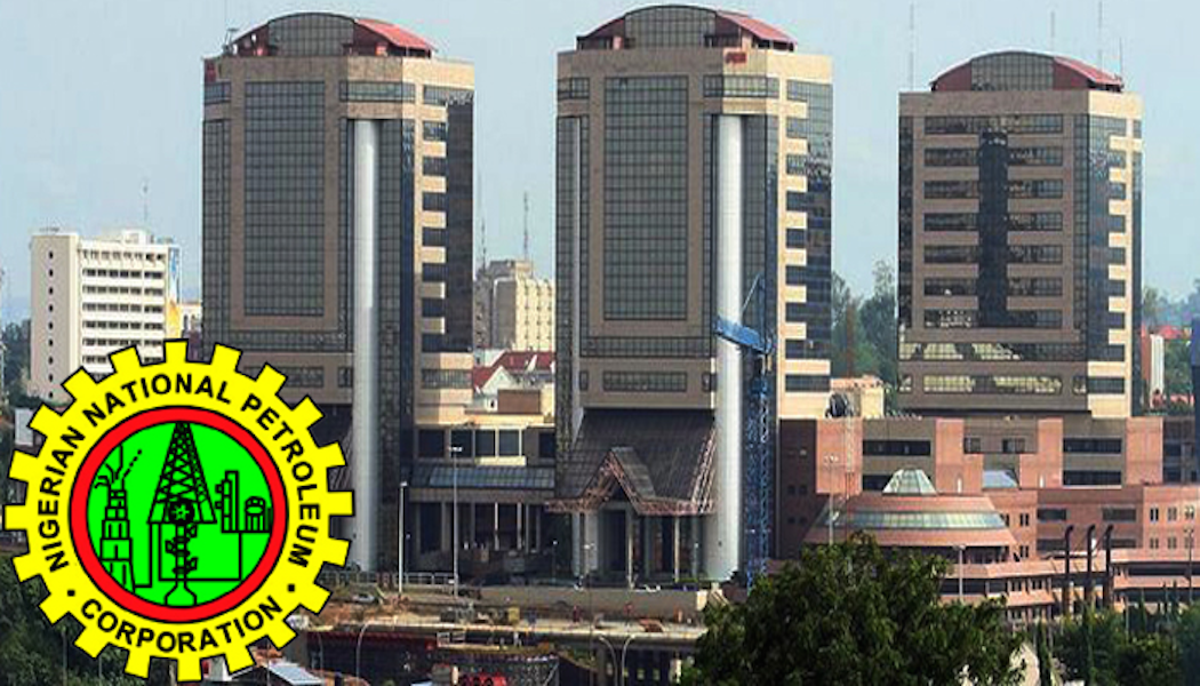
The Coalition of Concerned Northern Forum (CCNF) has threatened to occupy all NNPC zonal offices and its subsidiaries if the current persistent issue of fuel scarcity is not being solved.
The group has also called on the NNPC’s Group Managing Director, Mele Kolo Kyari and Engr. Farouk Ahmed, the Chief Executive Officer of Nigeria Midstream and Downstream Petroleum Regulatory Authority (MDPRA), to resign.
They added that these people should tender their resignation within 72 hours over the persistent fuel scarcity in the country and their inability to solve the issue.
A statement jointly signed by the group’s chairman and the spokesman, Mallam Ibrahim Bature and Comrade Abdulsalam Moh’d Kazeem, respectively, disclosed.
The group also demanded that the NNPC management should make public genuine and comprehensive names of those involved in the current scarcity of petroleum products all over the country.
The statement reads: “if our demands are not met in the next three (3) working days, we shall occupy all NNPC zonal offices and its subsidiaries across our region and the Federal Capital Territory (FCT).
“The mistake made by NNPC under the current management has caused us a lot as a nation; for instance, they claimed it will cost our nation over N200 billion to mop up and sanitize the adulterated fuel, and at the same time, we don’t have enough facilities, so they will have to evacuate the bad products first before we can have access to the new products.
“As at today, the said products have already damaged many automobiles, generators, machines and other sundry equipment of citizenry nationwide.”
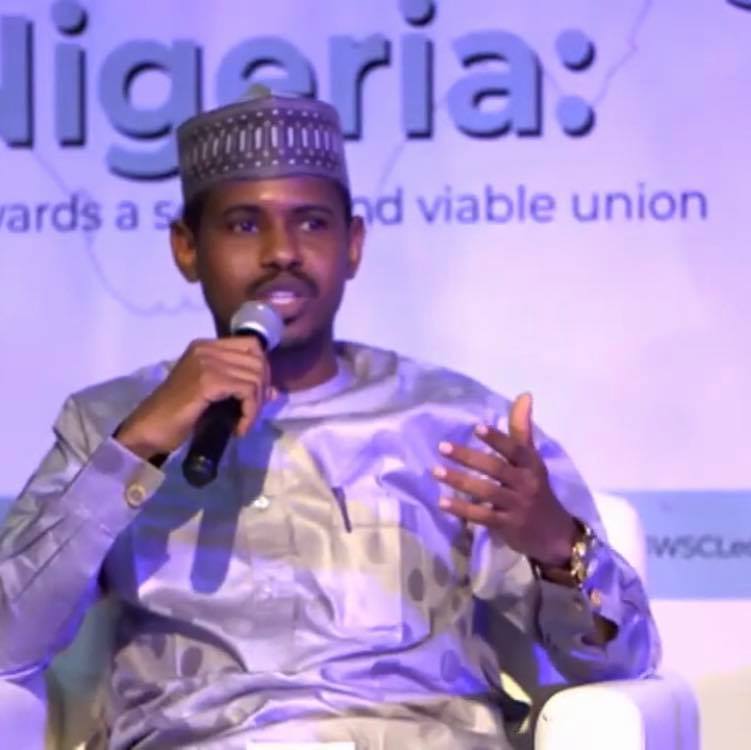
Musings on the solution to university education in Nigeria
By Ahmadu Shehu, PhD
Once again, there is a total blackout in Nigerian public universities. Last week, the Academic Staff Union of Universities (ASUU), the umbrella Union of academics working in Nigerian public universities, declared a one-month warning strike to remind the government of their promises signed just a year or two ago.
It has been decades since the rift between ASUU and the Federal Government of Nigeria took the lives and progress of Nigerian students to ransom without a foreseeable end to the debacle.
ASUU was a child of necessity born out of the precarious situation Nigerian lecturers found themselves in the 70s under the various military juntas bent on killing the tertiary education in Nigeria as they did basic education.
Thanks to radical scholars and the rise of socialism as an alternative economic and political ideology to capitalism the government prefers, ASUU got a deep ideological rooting. It also gets a wide acceptance among diverse social domains of the Nigerian society, who, like ASUU, were disenfranchised by and dissatisfied with the tyranny of successive regimes.
The confrontations between ASUU and the military junta of Ibrahim Babangida and Sani Abacha made the association a front-wheel of social activism in Africa and gave it a legitimate voice that is believed to stand for the masses not just on education but also human rights and socioeconomic advancement.
Over the decades, ASUU became very wealthy and stubbornly anti-establishment, which had assisted in its success against the government and lost popularity among Nigerians. But, these are topics for another day.
While there are physical successes credited to ASUU struggles, the incessant strikes have killed many, delayed millions and subverted trillions of aspirations, destinies and successes of millions of Nigerians. Thus, one of the emergencies facing Nigerian university education today is this endless and worthless rift between ASUU and the Federal Government.
A serious-minded government in Nigeria should have education as a priority. Any education policy that does not consider the solution to this rift is not comprehensive enough and may not solve the quagmire of education in Nigeria.
How do we end this decades-old problem that has defied most solutions? Some people have advocated for the privatisation of Nigerian universities to have a purely money-driven university system reminiscent of the US-style, where citizens have to pay through their noses to acquire tertiary education.
An opposite idea is one the one ASUU pursues. It is a totally free, accessible, and one hundred per cent public university education where all willing and qualified citizens can enrol and acquire tertiary education in fields of their choices and mental capabilities.
ASUU’s idea is noble and ideal of a functional socialist society where education is an inalienable right of citizens. However, the situation in Nigeria and our economic ideology doesn’t allow for either of these ideas to work. It is why ASUU and the government have been going around the same hole of self-deceit and conscious pretence.
To provide a lasting solution to this endless crisis that have killed our education and our economy, I believe that privatisation is not the right solution, just as a costless education is not. We’re not America that the insensitive capitalists admire without reason nor the defunct Soviet Union that ASUU loves to imitate. These approaches do not fit our realities.
The alternative is for the government to collect and allocate special taxes to fund education. Again, we can see the models in Western and Central Europe, even in Asia, where citizens pay special taxes to fund education. In this regime, a specific percentage of all taxations will be allocated to education, and citizens will access this service which has been paid for in a different way, supposedly free of charge.
Then, all federal universities shall submit and defend their budgets at the national assembly, effectively giving universities financial autonomy and removing them from the shackles of the ministry of education and, by extension, the cumbersome nature of mainstream Nigerian civil service.
That means that each university will be an independent government entity responsible for 100% of its affairs without recourse to other government agencies. This equally requires that we abolish bottlenecks such as Tetfund or limit their capacity to specific funds. The ministry of education will only be a regulatory body in collaboration with the National Universities Commission (NUC).
That way, the university management can be charged with the responsibilities of funds generation and management to the extent that lecturers no longer need ASUU as an association as all employees of a given university are totally within the purview of the university that employs them. The Federal Government doesn’t need to deal with the basic needs of university academics, such as salary and allowances.
In this model, academics take up their jobs knowing that their remuneration and social welfare are subject to their immediate employers, which is the university management. In turn, they submit their budgets yearly to the national budget and planning office, which will be debated and approved by the national assembly. Whatever they get is their own cup of tea.
That effectively means that ASUU as an association will cease to exist because each of its members will be totally and absolutely under the purview of their immediate employers – their home universities. There won’t be the federal government to fight. The common enemy will be gone, and there won’t be the basis for a national strike because each is on their own.
This, as simple as it is in words, is a herculean task that cannot be easy to achieve. It requires a huge political will, legislative and administrative changes.
No matter how long it takes, making universities entirely independent and autonomous while subjecting them to the same accountability measures prevalent on other government agencies is the surest, if not the only way to achieve a stable, qualitative and functional university system.
That way, there won’t be ASUU talk more of strikes, and the quality and quantity of education will be solely a responsibility of the universities and, therefore, the academics.
Dr Ahmadu Shehu writes from Kaduna and can be reached via ahmadsheehu@gmail.com.
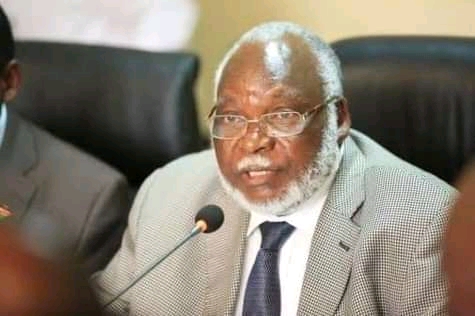
Kenya High Commissioner to Nigeria is dead
By Ahmad Deedat Zakari
Kenya High Commissioner to Nigeria, Mr Wilfred Gisuka Machage died in an Abuja hospital on Saturday, February 19 at the age of 65. Machage’s twin brother, Sopester Magitar who was a Kenya Ambassador to Russia told newsmen of the sad development.
“It is a very sad moment that I have today lost my best friend and confidant” he reportedly said.
It was also gathered from sources close to the deceased that he fell ill and was rushed to the hospital where he died around 1pm.

Cops apprehend fake police inspector in Ogun
By Muhammad Sabiu
Police in Ogun State have detained a man named Akinyemi Thomas for impersonating a Nigerian Police Force Inspector.
The 38-year-old Thomas was apprehended on Wednesday while police officers from Sagamu divisional headquarters and the Divisional Police Officer, CSP Godwin Idehai, were on routine patrol in their area.
Under the bridge on the Lagos-Ibadan highway, cops spotted the guy in full police camouflage clothing.
On Saturday, Abimbola Oyeyemi, the spokesperson for the Ogun State Police, claimed that the suspect’s actions piqued the patrol team’s interest, and they stopped to question him.
Oyeyemi was quoted as saying, “Immediately the patrol vehicle stopped, the suspect took to his heels. He was then chased and apprehended.
“On interrogation, he confessed being a dismissed policeman, but using the uniform to extort unsuspecting members of the public.”
On APC LG primary election crises in Daura
By Ahmad Ganga
The constituted consensus committee was headed by the former head of service, Muhammad Aliyu, Commissioner for women affairs, Hajiya Rabiya Muhammad, three former Members house of state assembly namely; Lawal Alfaki, Kabir Ado and Yusuf Shehu, two former LG Chairmen; Abba Mato and Kabir Akka.
Hon Fatuhu, Member House of Representatives, and Ahmad El-Marzuq, Commissioner for Justice and Attorney General, opted out of the consensus Committee because both have candidates in the race. HoR’s candidate is Hon Shehu Abdu, whereas Hon Commissioner for Justice and Attorney General’s candidates are Bala Musa and Laminu Gidado.
Laminu Gidado, one of the candidates the Attorney General has an interest in, was asked to step down for Bala Musa so as they form a formidable alliance. Bala Musa is a younger brother to former DG DSS, Lawal Musa.
Commissioner for Justice and Attorney General wanted to impose his candidate by fire or by force, but other parties opted for elections. Finally, an election was conducted on the 10th of February, and Hon Shehu Abdu emerged victorious with 177, Bala Musa 113 and Yawale Adamu 11.
Attorney General and Commissioner for Justice, Former DG DSS, were not happy with the outcome. The Attorney General then pledged to indict the victorious candidate, Shehu Abdu, charge him to court and send him to prison. The aim is to disqualify him, leaving their favourite candidate as a potential candidate.
He (AG) then cooked up a conspiracy with the bit of fact of a scenario that happened four years ago when Shehu Abdu was an aide to Late Senator Mustafa Bukar, which even the people can’t vividly remember. He facilitated many jobs to constituents. Some of them gave him tokens in appreciation of what he did. Few didn’t get the job, and they had already moved on since Senator Bukar’s death.
Before the election, AG pledged if not his candidate, whoever emerges victorious would face a serious legal battle. And it happened.
On the 15th of this month, security personnel from State CID came to Daura to arrest that victorious candidate, Shehu Abdu, because he collected money from four people from Madobi (A)Ward four years ago. Unfortunately, two out of the four petitions presented for his arrest were unaware of their name and signature used in the papers. That means someone acted on his own.
As I write this, the victorious candidate who’s loved by the majority in Daura is still in detention. Hon Fatuhu, Member House of Representatives, chipped in and secured his release. However, in connivance with some people from the DG DSS side, the Attorney General called State CID and ordered them not to dare release the detainee. On the 16th of this month, he was arraigned to court, and his crime was winning an election in an open contest.
Ahmad Ganga can be contacted via ahmadganga66@gmail.com.

Light Rail: A panacea for Abuja traffic jam
By Tajuddeen Ahmad Tijjani
The increasing traffic gridlock in Abuja is simply nerve-wracking. A journey that, in normal circumstances, would have taken 30 minutes takes more than an hour now. This has not only caused daily waste of precious man-hours but has also inflicted enormous pain on commuters who have to contend with extra costs at this challenging time of a shrinking economy. It’s not a changing time for Nigeria to borrow a leaf from the developed world. We should not continue suffering since there are long-term and short-term solutions.
To be specific, here are some notable spots where heavy traffic snarls are a constant feature, which unfortunately affects the well-being of the people. They include Mararaba-Nyanya Bus Stop; AYA Roundabout along the Abuja-Keffi corridor; Madala-Zuba-Kubwa-Gwarinpa-Aso Radio Junction, along the Abuja-Kaduna corridor; and Girri Junction-Alaita-City Gate, along the Abuja-Gwagwalada corridor. Indeed, a lot of concern was raised about these notorious traffic hubs. And I can’t believe it if someone tells me the FCT administration is not aware of this development.
To be fair to the FCT minister, he’s trying, though his best is not enough. It’s gruesomely inadequate. We must come to terms with the fact that we’re in the 21st century and that new technology should be put in place to reduce the long-suffering of commuters. The axes mentioned above need to be expanded to accommodate the daily traffic volume.
I’d be willing to bet my bottom dollar that if the FCT administration built “railroad tracks” from end to end of the city, beyond a shadow of a doubt, this unbearable traffic jam would disappear in no time. Both the income and the revenue generation will increase. An uncountable number of commuters will drop their vehicles.
The transportation system will give cheerful colour, beautify the city, and compete with global best practices. Can’t we do these for the benefit of all? But, someone might decide to ask, where should we get the funds? Yes, there it is. Invite investors and strike a Public-Private Partnership. I believe we can do it. Building, operating, and transferring is one of the surest ways of getting it done.
I urge the FCT administration to look inward and try railway tracks in the city. For instance, the same should be in place in other axes from Zuba to Dey Dey, Kubwa, Dutsen Alhaji Junction, Gwarimpa, Maitama to Mararraba, etc. It would be a life-changing event for both the government and the people. Indeed, this will enhance internally generated revenue and increase work productivity. It will be a win-win for the country.
Tajuddeen Ahmad Tijjani writes from Abuja. And can also be reached via sen.taju@gmail.com.
Fellow youth, patience solves all problems
By Sadiq Aliyu Waziri
“Education is the key to success” is the cliché that filled our ears to the extent that we got hypnotised and went to school. We have listened and done what was demanded, but success remains a de luxe ethereal dream. Thanks to the system for bringing such a motivational saying down to nothing. Who said it first deserves pity while those that believed should wait for succour. The system’s failure to prove that education is indeed the key has doomed our society with the presence of unemployment, the begetter of revolt.
The way I see it, the unemployment problem should not be last or penultimate, but the first in the other direction. Every government should tackle its course to building a sound society or salvaging a community endangered by their predecessors, as they will prefer to say it. This and how bad the system is are no longer alluring headlines. Calls and cries have been on the air for a long time. However, the system has turned a deaf ear and refused to act for the absence of patriotism or of acumen or perhaps the two put together.
The number of unemployed youth is alarming, ranging from secondary school certificate holders to second-degree graduates. Everyone’s desperate to secure a good job for survival. But, like it or not, this desperation is putting both the youth and the country at stake, endangering the youth morality and the country’s peace.
My advice to the unemployed youth is, don’t allow your love for a lucrative job to destroy you by leading you to do heinous things or following every fool that promises you a job. What you need is patience. Then, ready yourself for every challenge that is to come. Money and power are not everything. Don’t steal or terrorise anybody or become a ‘pimp’ for not having a job. Unless it is a dream to build a political career, don’t go into it because you think it is the only place to get a job.
I don’t know how or when, but you will secure a job that you crave with or without the help of anyone. As a matter of fact, you do not need to kowtow to anyone to help you get a job so that you won’t be forever in anyone’s debt. So be patient now until the time comes.
Sadiq Aliyu Waziri sent this article via sawaziry@yahoo.com.
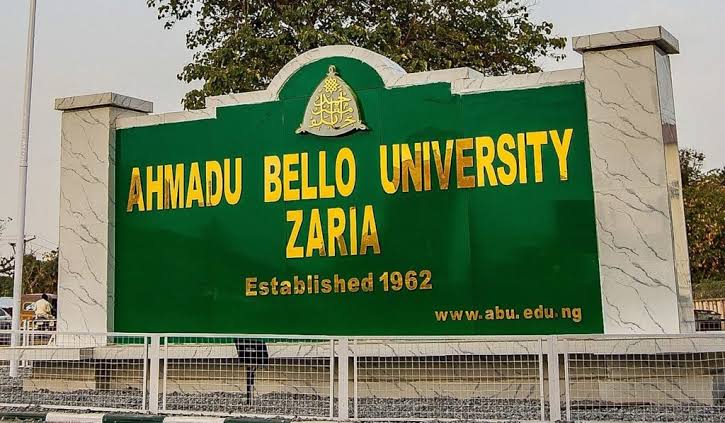
Fire guts ABU SRC secretariat, destroys student leaders properties
By Ahmad Deedat Zakari
The Secretariat of the Students Representatives Council (SRC) of the Institute of Administration, Kongo, Ahmadu Bello University, Zaria, was gutted by fire on Friday, February 18.
The secretariat, which served as an office and accommodation for SRC executives, was gutted by fire that reportedly started from a neighbouring shop at about 5:50 pm.
After speaking with the Director of Welfare of the ABU SRC, Comrade Usman Tukur Babangida, the Daily Reality gathered that the fire razed about two rooms down and personal properties of the students’ executives occupying those rooms were destroyed entirely. He also said other rooms of the SRC executives were partially affected.
Mr Tukur noted that if not for the timely intervention of the institution’s fire service, the fire would have razed down the entire secretariat and nearby buildings.
The Daily Reality also gathered from sources who witnessed the accident that no loss of life or injury was recorded.
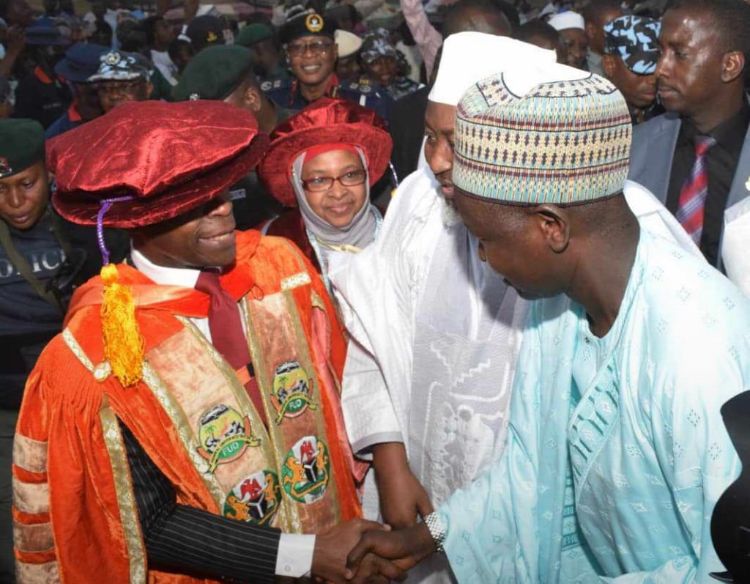
Alhaji Musa, Khadija University Majia founder, and philanthropy per excellence
By Salihu Sulaiman
Hard work and appreciation are part of human existence at the individual or government level. Appreciations for deeds that are more than worthy of commendation is a form of motivation to spur the individual that is so much appreciated to do even more. And as I will demonstrate it today in this little tribute, I will celebrate this epitome of hope with this accolade. He’s someone whose humanity transcends his friends, families, community members, and even adversaries.
Alhaji Musa Majia is the subject of my glowing tribute. A seasoned-cum philanthropist born in poverty in the slums of Majia town of Taura local government in Jigawa state but strived and succeeded in business by venturing into his productive money-making schemes. Alhaji Musa, while transiting into that rigorous walks of life and reaching his Eldorado, he has since become a renowned public philanthropist in his unmatched quest to help children born with wooden spoons with whom he shares the same circumstances.
He’s the modest wealthiest man I know. He lives a simple life and completely loathes ostentation. Yet, he’s warm around people and always wears his heart on his sleeve. The most self-effacing, in words and action. Someone who always stands through thick and thin, always well-meaning that it always takes him long to lose in anybody.
Alhaji Musa’s footprints will forever remain in the sand of time and indelible in his hometown of Majia and Jigawa state at large. A man not known to have acquired any conventional tertiary education in any chosen endeavours, by providence, he established the first conventional, integrated, subsidised, well-equipped, highly strategised private University in Jigawa. He named it Khadija University Majia, after his beloved mother. This is a deliberate philanthropic gesture worth commendation.
However, Alhaji Musa Majia demonstrated the potency of his patriotic favour when he offered automatic scholarships to indigenous Majia candidates who obtained the minimum requirements to gain admission to the university. 50% waiver to Jigawa state indigenous students and 30% waiver to others from Kano state. This commendable initiative will surely encourage and pave the way for willing and determined students who have a passion for furthering their studies but couldn’t afford the tuition due to their various financial constraints.
Alhaji Musa’s clean-hearted, grass rooted, and inexhaustible philanthropic gestures are too numerous to enumerate extensively. However, he has distinguished life of service to God and humanity in the cause of his life. He continues to reverberate this, especially in his impeccable character, thoroughbred humanity records, and enviable stature.
In all this heroic precedence he has set, he has proved that character, generosity and purpose are the ingredients he needs to deploy in helping back and lending his helping hands to his community. Thus, he provides them with a first-class private institution at their doorsteps to assist the masses in furthering their education and achieving their full potentials in their various life endeavours. Moreover, he displays courage and integrity in contrast to the willingness and opportunism that other equally wealthy people haven’t shown given the similar circumstance.
An instructive insight on some of his inexhaustible philanthropic gestures would reveal a man who has a consistent and unmatched commitment towards improving the life and well-being of the members of his community. Little wonder how he has distantly distinguished himself from the general culture of the wealthy. On different occasions, he kept his word on the transitions of helping the needy and carried out with utmost transparency with complete blindness to any family lineage or any discrimination.
Alhaji Musa Majia has overseen the construction and distribution of over 120 houses to people in his community who have no shelter and have sponsored over 40 students to further their studies abroad from 2011 to date. Alhaji Musa has also facilitated the construction of arguably one of Jigawa’s best secondary schools with the tahfiz section known as Adams Science and Tahfizul Quran academy Majia in 2020. It is situated in his hometown of Majia to also aid in realising the full potentials of the willing and talented students of Majia town.
In job creation, he has facilitated the employment of indigenous youths of Majia town in various professions, especially the bureau de change professions. Many young graduates and non-graduates who have benefitted from his benevolence have excelled in that endeavour and created manpower for other equal contemporaries to curb unemployment in the community. Alhaji Musa has also facilitated the situation of the FRSC division and police division in Majia town to curb the menace of security in the community.
Additionally, in his generosity, Alhaji Musa has also provided white-collar jobs to numerous Majia youths in the Central Bank of Nigeria (CBN). Over a hundred youths were provided with police offers, FRSC civil defence, and other para-military agencies across the country. With also a large farm settlement and a multi-millionaire plaza that employs over 500 workforces.
This exceptional gesture of establishing a world-class private institution in his hometown of Jigawa earned the commendation of Vice-President Yemi Osinbajo and the Minister of Education, Mallam Adamu Adamu. They both describe his efforts as motive born out of patriotism and commend his potency of inherent Ingenuity, which will be invaluable to the people of Majia, Jigawa and Nigeria.
From the ongoing and his burgeoning philanthropic trajectories, it is evidently clear that Alhaji Musa Adamu Majia is a man of history. He has left a permanent mark in the annals of his community. He is also a worthy role model and inspiration for many aspiring philanthropists.
Salihu Sulaiman wrote from Dutse. He can be reached via salihusulaiman6540@gmail.com.
Kano APC Crisis: G-7 proceeds to Supreme Court
By Uzair Adam Imam
The G-7 faction of All Progressive Congress (APC), under the leadership of Senator Ibrahim Shekarau, sweared to have proceeded to the Supreme Court.
The faction said they will proceed to the supreme court over the crisis rocking the party in the state.
Ahmadu Haruna Zago revealed to BBC Hausa Service that their lawyers were studying the court’s ruling for a possible appeal. Zago said, “We will appeal. Abiding by the ruling is quite different from filing an appeal. Our lawyers are studying the court’s ruling.”
The Court of Appeal, Thursday in Abuja, has invalidated the ward and local government congress by the APC faction led by Senator Ibrahim Shekarau in Kano.
The court has rejected the judgment of an FCT High Court, which declared the Shekarau faction victorious.