
Blasphemy: Tilde replies Peoples Gazette, says he has no regret
By Muhammad Sabiu
Bauchi State Commissioner for Education, Dr Aliyu U. Tilde, has replied to Peoples Gazette newspaper over his condemnation of Deborah Samuel, who made derogatory remarks against Prophet Muhammad (SAW) in a WhatsApp voice note.
Recall that Deborah was killed and set ablaze by an angry mob over the insult she rained on the Prophet, which caused outrage at the Shehu Shagari College of Education Sokoto, where she was a student. Protests erupted in parts of the northwestern state over the arrest of those suspected to be part of the mob action.
In a post on his Facebook page, the Bauchi commissioner condemned Deborah’s remarks, noting that “baki shi ke yanka wuya”, which can roughly mean “what you say lands you in trouble.”
However, a report by Peoples Gazette, a newspaper many people accused of being involved in gonzo journalism, claims that “Bauchi commissioner for education Aliyu Tilde endorses murder of Deborah Samuel, tells Christians to undergo psychiatric test.”
In a short rejoinder he posted on Facebook, Dr Tilde said, “No Regret
“Anyone that is not touched by that high degree of provocation is insensitive. Children must be taught to respect others. If Jesus (May peace be upon him) is insulted will say the same.
“You are free to fabricate lies and attach to my statement. That is your business. But don’t deceive yourself by thinking you’re a good Christian. You are a bad one.
“I have watched and read many Christians condemn what Deborah said.”
Prophet Muhammad (SAW) is the most respected, loved, and obeyed human being to the Muslim faithful. According to Islam, he was the last Messenger of Allah, who is the greatest among all other Prophets and Messengers.
Let’s talk about empowering Arewa women
By Aminu Mohammed
It is no longer a secret that we have many single ladies and divorcees in search of elusive husbands to marry in the North. This has become worrisome not only to the women but their parents, who are tired of seeing them at home. The increasing incidence of poverty and idleness among our women may not be unconnected to a lack of skills and capital to embark on a meaningful trade or vocational training. Most women in the North are further impoverished following the death of a husband or incapacitation due to the loss of a job. In some instances, the family suffers if the breadwinner becomes sick over a long time.
Although appreciable progress has been made in increasing female enrollment in secondary schools and tertiary institutions across Northern states, even at that, the region is lagging in terms of education. We still have a highly marginalised segment of the society peopled by an armada of illiterate and disempowered women.
Have we bothered to question the rationale behind the increase in social vices, especially sexual immorality, in our society? Have we pondered the root cause of poverty and inequality in our midst? Do we still think that poverty is spiritual and caused by our actions and misdeeds? The fact is that we have marginalised our women and do not see the need for them to excel and go after their passion and dreams. Instead, we believe that women should just stay at home and take care of the kids while the man goes out to look for means of sustenance.
It is pertinent to note that parents spend a lot of money preparing for their daughters’ marriage ceremonies by buying all sorts of assorted kitchen wares and household items without prioritising the education and empowerment of their daughters. Many parents do not see the need for their daughters to have the requisite training or education to become self-reliant. That is why most women in the North become a burden to society in the case of divorce or the death of a spouse.
Have we asked ourselves why we have so many idle women living in squalor and deprivation due to divorce or the death of a spouse? What can we do to empower our women so that they can live meaningful lives and achieve their dreams? Most of these idle women have goals, dreams and innate talents that could be harnessed for societal progress. Of course, cynics and chauvinists may argue that women are fickle-minded and should not be allowed to chart the path to self-reliance. This is due to fear that they may not be submissive to their husbands. However, that is not always the case in concrete terms.
Of course, I believe in female empowerment for societal development, even though I am sceptical about the feminist utopia. However, I am indeed aware that an empowered girl-child through education and vocational training is a pride to her parents and the community. Thus, an empowered woman will ensure an excellent educational upbringing for her children.
I believe that parents should focus on allowing their female children to acquire vocational training and practical skills before marriage to support their families in one way or the other. The focus should not be only on marriage rites and traditional practices, to the detriment of her future wellbeing. The clothing materials, especially “lefe” and many boxes of clothing materials that we dissipate energy in gathering for the wedding activities, will never translate into wealth in concrete terms.
Parents should realise that marriage is not a poverty alleviation scheme and that giving away their daughter to a rich person does not guarantee her happiness. Some families even go to the extent of incurring colossal debt to procure the needed wedding materials to impress relatives, friends, and society, which leads to anguish and regret.
I must reiterate that disempowered women are a burden to society. Therefore, I believe that skill acquisition programmes should be inculcated in our women, especially those who are not fortunate to acquire tertiary education. Of course, those with tertiary education should also learn entrepreneurship to fend for themselves due to the limited job opportunities in the country.
Islam does not prohibit women from education, mercantilism and trade. Even the prophet’s wife, Khadija (RA), was an independent woman and a merchant. So, there is no basis for the argument that women should be locked at home without any meaningful enterprise only to serve as a tool for satisfying their husbands’ sexual needs.
It is not enough to marry off your daughter to a man without adequate skills for survival. Parents who do not see the need to educate their female children should make sure that they acquire a vocational skill or trade before marriage. This ensures their economic survival in case of a spouse’s death or loss of job. We cannot run a society where a large segment is marginalised and lack the wherewithal to participate in any meaningful economic activity. That will not augur well for the progress and development of the Northern region.
Aminu Mohammed is at the school of Sustainability, Christian- Albrechts- Universität zu Kiel, Schleswig Holstein, Germany. He can be reached via stu219013@mail.uni-kiel.de or gravity23n@gmail.com.

Blasphemy: Police gun down one, injure others in Sokoto
By Uzair Adam Imam
Police in Sokoto have gunned down one protester and left many others injured as the angry youths demanded the release of two suspects connected with the killing of Deborah Samuel, who was accused of blasphemy.
The Daily Reality reported how Samuel, a Student of Shehu Shagari College of Education, faced the wrath of death by her fellow students following her blasphemous utterances against Prophet Muhammad (SAW) Friday, 13 May 2022.
The protesters took to the major streets of Sokoto state metropolis on Saturday morning, demanding the release of the two suspects arrested.
The Daily Reality gathered that the protest was initially peaceful and was started at the Zabirah Mall roundabout.
The incident that took place around 9 am on Saturday had many youths in attendance holding placards that read “Release our Muslim Brothers,” “Muslims Are Not Terrorists”, among others.
Our reporters learned that the protesters headed to the palace of Sultan Muhammadu Sa’ad Abubakar III.
However, they were blocked by a team of joint security operatives who used tear gas canisters to disperse them.
As for now, Governor Aminu Waziri Tambuwal of the state has imposed a curfew to mitigate violence trying to emerge.
EFCC probes political parties’ finances, seeks INEC’s assistance
By Muhammad Sabiu
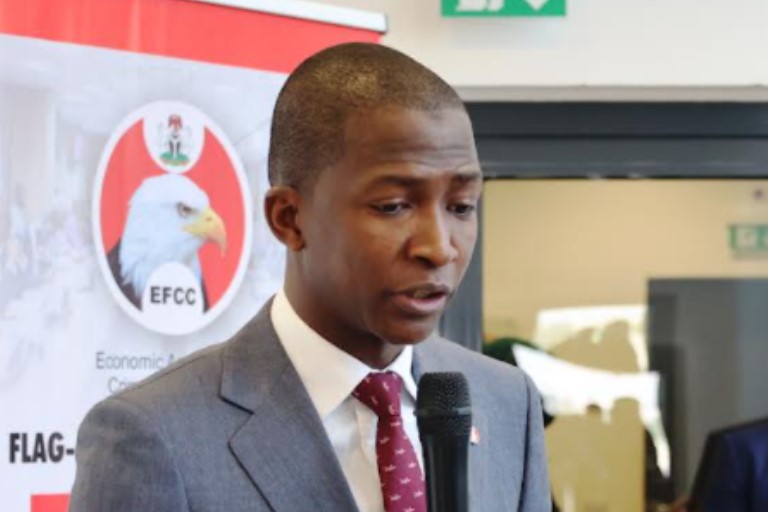
The Economic and Financial Crimes Commission (EFCC) has begun a quiet probe into the finances of the country’s 18 political parties and presidential candidates.
This came after applicants vying for various political posts in the parties paid exorbitant fees for expressions of interest and nomination papers.
As a result, in a letter, with reference number CB.3383/EFCC/HOPS/HQ/VOL.1/28, titled, ‘Investigation activities’, the anti-corruption organization has requested that the Independent National Electoral Commission provide it with the bank accounts and other financial information of political parties.
It also demanded that the managing directors of Access Bank and Polaris Bank disclose information on the 14 accounts held by the All Progressives Congress, the Peoples Democratic Party, and another group suspected of being linked to the opposition party.
The ruling APC sold presidential forms for N100 million, while the main opposition party sold them for N40 million. In addition, APC governorship candidates paid N50 million, while those declaring for the Senate, House of Representatives, and state legislatures paid N20 million, N10 million, and N2 million, respectively, for their nomination and declaration of interest forms.
The PDP, on the other hand, sold gubernatorial forms for N21 million, Senate forms for N3.5 million, House of Representatives forms for N2.5 million, and state Houses of Assembly forms for N600,000.
While the minor parties paid lower rates for their forms, many Nigerians were outraged by the hefty nomination fees required by the two leading parties, which Transparency International described as a kind of money laundering.
Last week, on Channels Television’s Politics Today, EFCC Chairman Abdulrasheed Bawa hinted that the agency will monitor campaign finances, particularly the authenticity of monies used to acquire nomination forms ahead of the 2023 general elections.
Sokoto: Tambuwal imposes 24-Hour curfew on state metropolis
By Uzair Adam Imam
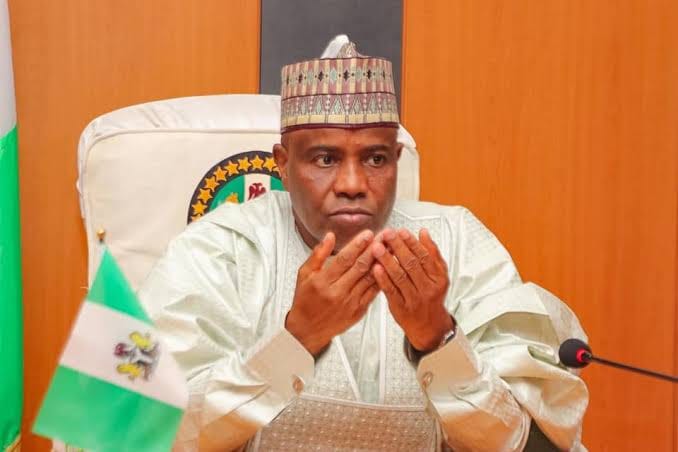
Governor Aminu Waziri Tambuwal of Sokoto state has imposed curfew on the state to mitigate violence, as protesters demanding the release of the two suspected youth over the killing of Deborah Emmanuel roamed the state’s streets.
Emmanuel, a student of the Shehu Shagari College of Education, has allegedly blasphemed the prophet of Islam, Muhammad peace be upon him, the development that led to her killing Friday, May 13th, 2022.
Tambuwal said in a statement, “Following the sad incident that happened at the Shehu Shagari College of Education on Thursday and sequel to the developments within (Sokoto) metropolis this morning till afternoon, by the powers conferred on me by Section 176 (2) of the Constitution of the Federal Republic of Nigeria; and Sections 1 and 4 of the Public Order Act; and, also Section 15 of Sokoto State Peace Preservation Law, I hereby declare, with immediate effect, a curfew within (Sokoto) metropolis of Sokoto township for the next 24 hours.
“I appeal to the good people of Sokoto State to kindly continue to observe law and order and calm down (on the) restiveness currently pervading in the metropolis.
“Everyone should, please, in the interest of peace go back home and observe this measure, with a view to reestablishing peace, law and order in the state.
“It is not in the interest of anyone for us to have a breakdown of law and order. I, therefore, appeal for restraint; and for people to observe and respect the rule of law. Thank you very much,” he stated.
Kaduna bans religious protests
By Ahmad Deedat Zakari
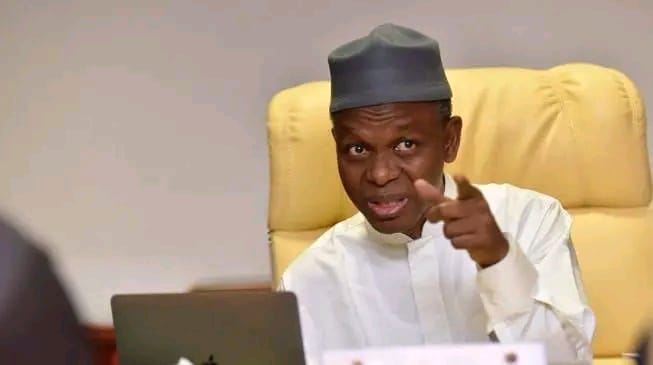
The Kaduna State Government has banned all forms of religious protests in the state.
The State Commissioner of Internal Security and Home Affairs, Samuel Aruwan, made this known on Saturday, May 14, 2022.
According to the Press Statement signed by the Commissioner, violators of the ban will be prosecuted.
“The Kaduna State Government, in consultation with security agencies under the umbrella of the Kaduna State Security Council, has placed a ban on protests related to religious activity throughout the State with immediate effect,” part of the statement reads.
Mr Aruwan argued that the ban becomes imperative owing to security reports that some unpatriotic elements want to thwart the peace of Kaduna State by organising a series of protests in support of and against a recent happening in one of the Northern Nigerian States.
The ban is coming after a protest organised in Sokoto State for the release of the alleged murderers of one Deborah Yakubu turned violent.
The terse statement further warns that the security agencies in the state will not condone any protest wearing the garb of religion.
“Security agencies have thus resolved that any attempt by individuals or groups to disrupt the peace and stability of the State, by way of religious protests, will not be condoned. Such protests will be promptly halted and conveners prosecuted.”
Vanguard of Falsehood: In defence of Prof. Maqari
By Ibrahiym A. El-Caleel
By the special grace of God, nothing shall befall the Imām of National Mosque, Professor Ibrahim Ahmad Maqari, for the calculated report published by Vanguard Newspapers. The media house submitted a report on the Sokoto incidence wherein they sandwiched truths, half-truths and micro-truths.
The Imām didn’t justify mob action anywhere in his tweets and Facebook posts. He only maintained that Muslims have redlines. Circumferential lines that shouldn’t be approached, lines that must not be crossed to disrespect their faiths. And this is both factual and non-negotiable. So, the Imām was very much on point. No amount of deliberate media intimidation can change this hard fact.
You may say the Imām was not making a personal statement. He was stating what is obtainable in the thoughts of every Muslim with some adequate knowledge of Islamic law. It is in the books of Islamic law.
Unfortunately, we are not seemingly ready to make progress on this recurrent problem. People are reiterating the measures that can be taken to avert future episodes of this issue, but no one is ready to listen. Instead, the suggestions are mischievously twisted to mean tacit justification for mob lynching. What sort of regressive society have we become? We prefer to dwell on polemical exchanges rather than orienting ourselves towards some mutual understanding. Between polemics and societal orientation, which paves the way for harmony in a plural society?
Muslims are saying blasphemy isn’t tolerated in Islam. When genuinely committed to the rights of Prophet Muhammad (Peace Be Upon Him), the provision by Islamic law is execution. And in Qur’an Chapter 6, verse 108, Muslims are categorically prohibited from blaspheming anyone’s religion – be they Christians, Jews or Traditional Worshippers. It is not allowed in Islam. The Qur’an has warned about it. This prohibition was made so that no one blasphemes Islam out of revenge. By this, Islam respects the boundaries or redlines of every religion.
Are Christians saying that their religion encourages them to blaspheme Islam? Where was that stated in the Bible? I believe nowhere! This means it is purely an act of mischief for anyone to choose to make a living from ridiculing or blaspheming a Muslim’s faith since the instruction isn’t Biblical.
These are honest discussions that will promote harmony and give us some sanity. It will also give us a civil society. This is what a national mosque Imām, Professor Ibrahīm Maqari, says. He was not justifying mob action by any implication. So do not put words into his mouth, please. Vanguard Newspapers lied as usual. Barefaced. And this is not the first time they have submitted such a mischievous report whose jeopardizing tendencies they are underestimating.
But it is understandable since yellow journalists would always take pleasure in misfortunes like this. It gives them the advantage of selling volumes of papers and gathering traffic. Woe onto he who follows unethical methods to garner influence and gain income. Woe onto him!
Ibrahiym A. El-Caleel writes from Zaria and can be reached via caleel2009@gmail.com.

Kano APC Crisis: Presidency summons Ganduje, Shekarau
Ibrahim Nasidi Saal
The Presidency has stepped into the ongoing crisis in the Kano chapter of All Progressives Congress (APC) between Governor Abdullahi Umar Ganduje and Senator Ibrahim Shekarau, The Daily Reality reliably gathered.
A source familiar with the development said the Presidency dispatched a jet Friday night from Abuja to Kano to convey Ganduje and Shekarau for an emergency meeting towards resolving the crisis.
The meeting is said to be a major part of the plan to forestall the planned decamping of Shekarau to the new but fast-growing New Nigeria People’s Party (NNPP).
The NNPP is led by another former governor of Kano and leader of the Kwankwasiyya Movement, Dr Rabiu Musa Kwankwaso.
Many bigwigs of the APC and the opposition People’s Democratic Party (PDP) have been joining the party. Shekarau was expected to formally announce his decamping to the party on Saturday.
However, late Friday evening, Governor Ganduje visited the former governor at his Mudunbawa Kano residence in what sources said was a last-minute attempt to stop the planned decamping.
Sources said it was after the closed-door meeting that they started making arrangements to jet off to Abuja.
People in Kano State are keenly observing all the political moves of the giant political gladiators and are desperately waiting for the 2023 elections.

Jungle justice is ugly, but blasphemy is not exactly pretty
By Ishaq Habeeb
I know emotions are tense at the moment, and people are understandably choosing their words carefully not to appear fanatical or “un-woke”, but as we condemn the lynch mob that murdered Deborah in cold blood, let us also condemn her recklessness to save the next Deborah from other such murderous lynch mobs abound.
Deborah was only right to caution people to stop posting irrelevant, least of all, religious messages to a school platform, comprising people of varying faiths, formed solely for sharing academic updates, but dead wrong and at once suicidal, to speak blasphemously about a man whom she – should – know (since she spoke the Hausa language, a tribe, about 80/90% of whose natives are Muslims) majority of the group members, hold in the highest esteem.
Sadly, in Nigeria, you only need to become an Admin of a WhatsApp Group – with a clear cut mission – to know how practically impossible is it to govern Nigerians and have them obey simple rules.
I understand that it is hard to blame the dead in moments like these, but there are young people here who are reading our takes on topical issues, and our takes to shape their ideas and actions.
So, condemning only the lynch mob while ignoring the victim’s manifest, brash and unbridled lack of respect for other people’s revered personalities is, to say the least, lynching the stark truth to appease our emotions, and that is both shortsighted and dangerous.
We must do well to avoid living in half-truth denial and speak the whole truth from both sides so that young observers will not go around believing it is okay to do what Deborah did and that the only person to blame squarely is the lawless lynch mob.
Obviously, we can’t reason lynch mobs out of jungle justice(s). Still, we can reason with our living sister Deborahs to study their environments and always be mindful of their utterances, and this isn’t limited to people’s belief systems. It cuts across all strata of people’s lives endeavours. A stitch in time, as they say, saves nine.
Conclusively, as the regional coordinator of a Pan African movement, I’ve had to, on several occasions, scold/remove members for posting Friday/Sunday messages to the movement’s WhatsApp platform, even though it has a self-defined purpose and a strict rule against posting ANY irrelevant and PARTICULARLY religious messages.
As an admin, I’ve been called many atheistic names privately by those shambolic recalcitrants for simply doing my job, as clearly spelt. I fear if they could have their way, perhaps, I may as well face Deborah’s fate.
Ishaq can be reached via: simplyishaqhabeeb@gmail.com.
Slavery and Islam: Some notes
By Prof. Abdussamad Umar Jibia
The trending topic that every Nigerian is talking about is the execution of a young woman who insulted the personality of the Prophet of Islam (May peace be upon him). There is not too much I have to say on it. It is clear that Nigerian Muslims have spoken. We have a redline; no one would insult the Holy Prophet of Islam and get away with it. If democracy is all about what pleases the majority and protects the right of all, then there should be a law criminalizing any attack on the personality of our Holy Prophet with the appropriate punishment; unless some people feel it is part of their right to insult him. If, on the other hand, democracy is about being anti-Islam and crossing its redlines, then our problem has just begun.
The discussion on the Sokoto incident as I followed it on social media has revealed the level of hypocrisy in many of those who claim to be Muslims. Many commentators were not worried about the magnitude of the evil the woman committed but the way she was executed. Others would say, “She should be taken to a court of law”, etc., as if they are not the same people who would condemn any law that applies execution as the punishment for blasphemy.
Specifically, in a Whatsapp group I belong a particular person was so deep into his attack of the “perpetrators of the murder” that he went out of his way to be making other unsavory comments about Islam. The particular point I took him on was his association of slavery to Islam. To him it was the British who liberated slaves relying on a colonial document written by Lugard.
But he is not alone. A Northern writer with large followership among Northern elites once accused the Arabs of killing slaves because we don’t have African Arabs like we have African Americans. That, to the best of his imagination was because Arabs killed their slaves.
The danger is not about these people but the unsuspecting followers they can influence. Unfortunately, most social media followers are fascinated by beautiful grammar even if it is bereft of facts. In particular, I have always wanted to respond to the claim on the killing of African slaves by the Arabs. With my discussion with another Northerner I decided to write a few lines on this.
It is well known that it is not Islam that came with slavery. Islam came and met the practice of enslaving fellow humans well established not only in Arabia but in all other societies. The methods of acquiring slaves and the way they were treated were devoid of sanity in most societies. These methods were practiced before Islam came and continued to be practiced after the coming of Islam in societies where the impact of Islam was yet to be felt. Sadly, even in some Muslim societies where ignorance or selfish desires prevailed some of these methods were practiced.
One way slaves were acquired was through war. In war, the victor could treat the vanquished enemy the way he liked. They could simply kill them, torture them to death, put them under their control as soldiers or otherwise make them slaves.
Another way slaves were made was through guardianship. A father or grandfather had absolute authority over his offspring. He could sell or gift them away as slaves; could lend him or her to someone else, or exchange him or her with another’s son or daughter. A community chief could sell out one or more of his subjects as slaves.
Invasion was another method. In many cases, strong communities invaded weaker ones, enslaved all men, women and children and sold them. This is chiefly how many Africans found their way to other continents as slaves.
Other methods include pawning, tribute, etc. depending on the geographical location and time in history.
Islam restricted the means of enslavement to only one method. Jihad. The Qur’anic meaning of the word is maximum struggle in spreading and defending the message of Islam. As long as falsehood is confronting the truth and evil is opposing good and mischief and its doers are standing in the way of reform, Islam does not allow Muslims to seclude themselves with rituals and look the other way. Just like a Muslim is enjoined to give Zakah that symbolizes kindness, he is enjoined to perform another form of worship that symbolizes opposing evil. That is Jihad. Of course this write-up is not about Jihad.
When Jihad becomes an armed struggle and prisoners are taken, a favour is done to them. Instead of being killed they are taken to Muslim community as slaves to serve as house helps, on the farm and help in other activities not beyond their ability.
Of course, it is not a rule in Islam that war captives must be enslaved. Captives can be released freely by the leader or after payment of ransom (Q47:4). Both of these happened during the lifetime of the Prophet (Salllahu alaihi wa sallam). Peculiarities of situation would always guide the leader. Islam also prohibits torturing the enemy or mutilating their body as practiced in other climes.
The rules of treating slaves are summarized in the following Hadith, quoted in parts, “They are your brothers and servants. Allah Has put them under you. Whosoever has his brother under him, he should feed him from what he eats and clothe him from the type of cloth he uses. Do not assign them to do any work that is too much for them. When you assign them, help them.” (Bukhari and Muslim reported it).
In addition to this golden rule of treating slaves, Islam introduced incentives for freeing slaves. For example, freeing a Muslim slave would emancipate the freer from hell fire on the Day of Judgment, according the Holy Prophet (May peace be upon him) himself. Kaffara (expiation) for incorrect breaking of fast, abrogation of oath, killing by mistake, zihar, etc. can be done by freeing of slaves, sometimes as the first option.
The claim that Arabs killed their slaves stems from ignorance of the above and the fact that intermarriage took place between Arabs and freed slaves. Even in modern day America or Europe, how many whites marry blacks? The former still look at the latter as slaves. The fact is that even among themselves, enslaved people in America were not legally allowed to marry until recently. One woman was allocated to several slaves to share, so she gave birth to another slave whose father did not matter. This beastly practice was unheard of in what our ‘liberals’ condemn as “puritan” Islamic societies.
The Shiite-brainwashed “intellectuals” probably forgot that in Islam a master can have intercourse with his female slave subject to laid down conditions and when she gives birth to any child she qualifies for her freedom and her child has full rights of a child. Some of the famous early generations of Muslim rulers were children of such slaves. A handy example is Abdurrahman bn Muawiya of Spain. The only maid slave the Holy Prophet had, Maria, was an African and she gave birth to his son Ibrahim. This is unheard of in western societies.
I challenge any believer in western civilization to cite an example where a white master married a slave.
Thus, slaves were integrated into the Arab/Muslim society. Not only were they integrated but many of them learned Islam and excelled in Islamic scholarship. The list is long but a few would suffice. Nafiu m. Abdullahi bn Umar, Ata’ bn Abi Rabah, Tawoos bn Kaisan, Yazid bn Abi Habeeb, Makhul, Maimoon, Addhahhak, Ibrahim Annakha’iy are some of the famous scholars of early Muslim generation who were originally slaves.
Coming down to recent history of West Africa, what confused many who get their knowledge of Islam from secondary sources is the conduct of some West African kings. For example, Kano and Zaria were Muslim states and war between them was far from being Jihad. People enslaved as a result of that war were enslaved unjustly and Allah will judge between them and those responsible for their enslavement.
Another wrong pre-colonial enslavement method was raiding of minor tribes by major tribes for the purpose of generating slaves. Such slaves were kept in the palaces of traditional rulers or sold out to foreigners. This is clearly outside what Islam permits, regardless of whether or not such major tribes are predominantly Muslim.
Sheikh Abubakar Gummi had very tough times trying to educate some traditional rulers who still kept such slaves in their palaces that such practice was unIslamic.
Most western-educated people in Muslim societies are misled by Shiite propaganda. It is well known that Shiites have deep animosity towards Arabs and Islam.
Prof Abdussamad Umar Jibia