


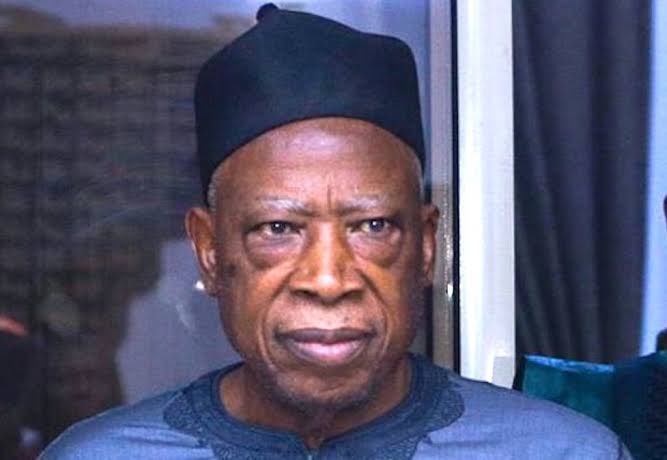
Senator Abdullahi Adamu defends support for northern candidate
By Sabiu Abdullahi
Former APC National Chairman and ex-governor of Nasarawa State, Senator Abdullahi Adamu, staunchly defended his preference for a northern presidential candidate, stating, “I am a northerner, and I would go for a northerner; and no apologies for that. I have never hidden this.”
When asked about his role in the party’s decision-making, Adamu emphasised the necessity of a comprehensive party process and dismissed claims of unilateral decision-making.
He expressed his pride in his northern roots and criticised the lack of similar pride in some other regions of the country. Reflecting on his tenure as the APC National Chairman, Adamu acknowledged his significant contributions to the party’s success.
He highlighted his role in supporting President Bola Ahmed Tinubu and his admiration for Tinubu’s leadership. Despite his positive relationship with Tinubu, Adamu decided to step down from his position as APC National Chairman, citing the dynamic nature of politics and the need to adapt to changing circumstances.
Adamu’s remarks shed light on the complexities of party politics and regional affiliations within the APC.
As the political landscape continues to evolve, Adamu’s insights provide a glimpse into the challenges and convictions that shape the decisions of prominent political figures in Nigeria.

BUA slashes price of cement to ₦3,500 per bag
By Sabiu Abdullahi
BUA Cement Plc has taken a bold step to reduce cement prices, effective October 2, 2023, ahead of their initial schedule.
The company, in its commitment to boost the building materials and infrastructure sectors, has lowered the ex-factory price to 3,500 Naira per bag.
This move is expected to allow Nigerians to enjoy the benefits of reduced prices earlier than anticipated.
The company said in a statement Sunday that all pending and paid orders will be adjusted to the new rate.
BUA Cement emphasises its dedication to ensuring end-users benefit from this reduction, with vigilant monitoring of field sales for compliance.
This proactive initiative by BUA Cement Plc demonstrates their commitment to supporting development initiatives in Nigeria and making essential building materials more accessible to the public.

FG’s delegation meets labour behind closed doors to prevent nationwide strike
By Uzair Adam Imam
The Federal Government and the leadership of the Organised Labour are currently holding a crucial meeting behind closed doors at the Presidential Villa, Abuja.
The meeting could be seen as a last-minute effort by the federal government to prevent the planned nationwide strike called by the Nigerian Labour Congress and the Trade Union Congress of Nigeria, slated for Tuesday.
It was gathered that the labour delegation led by the President of the Nigeria Labour Congress, NLC, Joe Ajaero, arrived at the Conference Hall of the Permanent Secretary, State House, at 3:15 p.m.
Among the labour delegation are the Secretary of the Trade Union Congress of Nigeria, TUC, Nuhu Toro, and his counterpart from the NLC, Emma Ugbaja.
The government team, on the other hand, is led by the Chief of Staff to the President, Femi Gbajabiamila.
Other members of the government team include the Head of Service of the Federation, Dr. Folasade Yemi-Esan; the National Security Adviser, NSA, Mallam Nuhu Ribadu; the Minister of Labour and Employment, Simon Lalong; the Minister of State, Nkeiruka Onyejecha; the Minister of Finance, Wale Edun; the Minister of Budget and Economic Planning, Atiku Bagudu; and the Minister of Humanitarian Affairs and Poverty Alleviation, Beta Edu.
Also present are some directors from the Ministry of Labour and Employment.
The Daily Reality will report the result of the emergency meeting to the public.

How a good network and communication skills enhance career development
By Muhammad Ado Musa
Having a very good network (otherwise known as ‘connection’) and communication skills is a major asset to success, particularly in this modern world. No matter how hard you work, how smart you are, or how talented you are, if you don’t have good and efficient skills in communication and connecting with other people, you’re less likely to become successful.
To stand out against your counterparts, whether it is in leadership, business, or any organisation, you must have an effective way of cooperating with people. It is certainly true that you can’t be smarter than everybody, and even if you are smart enough, you can never be smarter than people who connect themselves, share ideas, and come up with sufficient solutions.
Lack of ability to connect with desired people is among the major barriers to success. Many people have a repressed brainiac capability, but due to the absence of effective connection, they remain stagnant.
According to the definition coined by John C. Maxwell, connection is the ability to identify with people and relate to them in a way that increases your influence with them.
Connection and communication are crucial to having good leadership. For you to be constructive in your leadership role, you must have very good communication with your coworkers. The power of connecting with others cannot be overemphasised.
The starting point for gaining connection skills is to first keep aside your biases, such as religious, cultural, or ethnic differences. Learning how to connect with people is key to success, no matter your goals. It is good to know you can’t do everything by yourself; your smarts and hard work are not enough to lift you to where you want to be; you must engage with society members who share the same ideology to influence each other. “If smart A connects with smart B, they arrive at having double ideas instead of one”.
Several studies have shown that high achievers are those who listen to others, consider other people, and, interestingly, solicit ideas from people who are inferior to them.
In his book titled “Everyone Communicates, Few Connect”, John C. Maxwell classified different ways of connecting at every level, such as: Connecting one-on-one is the most important aspect of connection. At this level, you must know the concerns of other people, listen to them attentively, and share your values with their ideas. In the end, you will both gain valuable information.
The second way is to connect in a group. At this level, recognise every person’s potential, acknowledge it, and be open to new ideas, especially in the area of their potential.
The third is connecting with an audience. In this case, you need to convey your appreciation to the audience, do something exceptional for them, and, at the end, inform them how much you enjoyed engaging with them.The major key to success is the ability to communicate and establish a good connection with people.
Apparently, without connecting and communicating, Mark Zuckerberg would not have built Facebook, and Steve Jobs would not have established Apple. For us to have better socioeconomic growth, we must connect. Our business moguls, especially in northern Nigeria, should come up with an effective way of communication that would lead to immaculate partnerships to build industries and markets that would employ thousands of people, rather than being stagnant with one idea that won’t go anywhere.
Connections are not only about leadership or business but across all aspects of life, whether you are in academia, institutions, or with your coworkers. Once you have any idea, try to identify people who share the same ideology. You can connect with every person, such as professors, doctors, friends, or colleagues. One of the best ways to connect with your mentors is via email, social media, or face-to-face.
Know how to craft an attractive email address because a poorly written email may disqualify you. That will lead you to become successful, you must cooperate with people, no matter how smart you are. As it’s said, two heads are better than one.
Muhammad Ado Musa writes from Kano, Nigeria.
Kano government empowers 45,000 female students with N20k stipend
By Sabiu Abdullahi
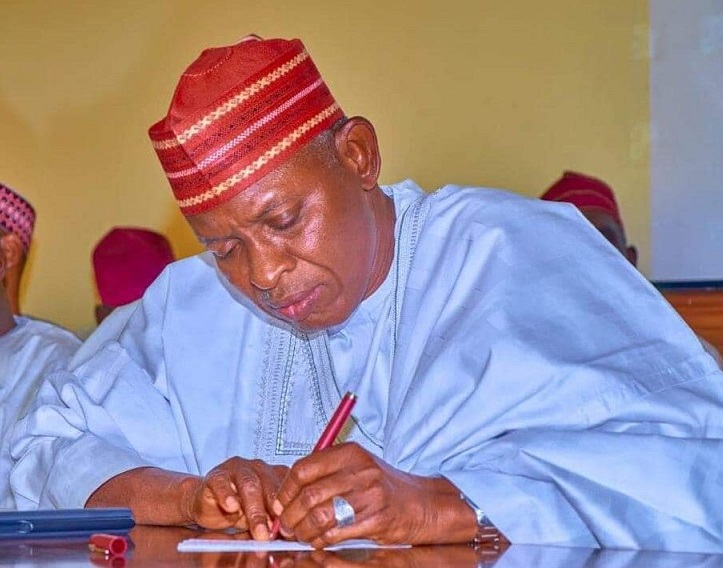
The Kano State Government has launched an innovative initiative to empower 45,000 girls through a groundbreaking N20,000 stipend programme.
Governor Abba Kabir Yusuf unveiled this initiative during a speech at Nigeria’s 63rd Independence Anniversary celebration held at the prestigious Sani Abacha Stadium in Kano.
Governor Yusuf stated, “To support the girl-child education and encourage parents to send their daughters to school, we are issuing a stipend of 20,000 Naira to over 45,000 girl-child as a pilot scheme to support them to continue schooling.
“We are also re-introducing the girl child school buses to transport them to and from schools.”
This initiative represents a significant leap towards achieving gender equality in education within the state.
By providing financial assistance directly to families, the government aims to remove economic hurdles that often prevent girls from attending school.
The stipend not only promotes education but also empowers young girls to dream big and aspire for a better future.
Furthermore, Governor Yusuf reiterated his administration’s commitment to nurturing academic excellence.
As a testament to this commitment, the government will sponsor 1001 first-class graduates for master’s degrees at renowned international universities.
This initiative not only supports high-level manpower development within the state but also strengthens Kano’s global presence in the academic arena.

President Tinubu, please listen to labour demands
By Dr. Ibrahim Siraj
I don’t know whether to pity President Tinubu or not. The man has asked not to be pitied because he asked for the job and got it. But looking at the enormity of the challenges and how he became almost overwhelmed few months into his four-year term, I feel like going against his “don’t pity me” admonition. The President really deserves pity whether he likes it or not.
On the day of his inauguration, barely an hour after taking oath, Mr. President announced his decision to end the fuel subsidy regime to the delight and applause of anti-subsidy elements in the West and their Nigerian cohort. From that point, he started moving around with some chest-beating gusto claiming credit for this massive decision. He did everything to prove wrong many anti-Buhari elements who wanted to wrongly “credit” the former President with the bold move. He owned up to it firmly in words and actions. He told an audience in France that though his speech writers did not include the announcement of subsidy removal in his inaugural speech, that didn’t stop him from making that emphatic yet infamous proclamation: “fuel subsidy is gone!” He was possessed by courage, he boasted.
In July, The Economist penned a beautiful piece hailing the impressive first moves of “Baba Go Fast” which include bringing to an end the age-old fuel subsidy and floating the Naira, among other things, something all past presidents, his predecessors, have failed to do over the years. According to the magazine, the subsidy has “for decades drained the treasury of revenues from the country’s most valuable natural resource”, a line of argument most often regurgitated by all pro-subsidy removal propagandists. What these subsidy removal protagonists have refused to acknowledge, however, was how it helped to keep prices of essential commodities and services relatively low and affordable to the poorly remunerated Nigerians whose purchasing capacity had been seriously weakened following years of unchecked inflation.
Now, the subsidy is gone or so they say. One would expect the President to be as swift in rolling out relief measures aimed at mitigating its negative effect as he was in removing it. The Labour has ever since been engaging the Federal Government on this critical issue considering how the new fuel price has worsened an already bad situation. Nigerian workers and the masses are suffering greatly. In Abuja as well as in many other states, workers could only go to office two or three times a week. There are reports of workers who sleep in their offices or inside their cars in order to save fuel cost. The resultant high transport fares have pushed food prices to the roof thereby rendering many families hungry due to inability to buy food.
The situation is getting worse by the day and NLC and TUC (the two major Labour organizations in the country) are demanding for action which seems not to be forthcoming. The Labour leaders deserve commendation for their doggedness and attachment to peaceful resolution of the problem.Their kind gesture as well as positive disposition towards negotiation have not been graciously reciprocated by the Federal Government team resulting in several deadlocked meetings. The world is witness to how the government has been footdragging and merely making promises. It keeps asking for time to make pronouncement on the new minimum wage and other issues. Neither the series of meetings held nor the warning strike has been able to yield any positive outcome. It’s safe to assume that the government is taking Nigerians for granted and the Labour for a ride by constantly paying lip service to their demands and playing them around.
Things have reached a tipping point and the situation is no longer sustainable. If the Federal Government is carefully analysing current trends and could rightly predict their consequences, it should be able to know that the struggle is not only in Labour’s interest but in the government’s interest too. Nigerians have been pushed to the wall and the time to pull the brakes to stop their further descent into the penury is now. Let them not allow Nigerians push back because no one knows what will happen.
President Tinubu must expedite action on his plans for the citizens post-fuel subsidy removal. As a mark of goodwill, he should be able to match words with actions especially regarding short-term programmes and policies. Let him make known the new minimum wage and its effective date. Let him convince the Labour unions and, by the extension Nigerians, about how he’s going to meet their demands and tackle a cost of living crisis that appears to be the worst in Nigeria’s recent history. He must do everything to avert the upcoming shutdown so as not further hurt the economy or worsen the hardship.
Strike or no strike, the time to act is now!
Dr. Siraj is a Senior Lecturer in the Department of Mass Communication, Bayero University, Kano.
Nigeria at 63: A country of possibilities that is suffering
By Muhammad Umar Shehu & Usman Muhammad Salihu
Nigeria, located in West Africa, is often considered a land of immense possibilities. It is home to over 200 million people, making it the most populous country in Africa and the seventh-most populous country in the world. The country is blessed with vast natural resources, including oil, gas, coal, iron ore, limestone, and many others, which have the potential to power a thriving economy.
Despite these abundant resources, Nigeria faces many challenges that have hampered its growth and development. One of the most significant challenges is poverty. The country has one of the highest poverty rates in the world, with over 40% of the population living below the poverty line. This is mainly due to a lack of job opportunities, inadequate infrastructure, and an uneven distribution of wealth.
Nigeria is grappling with various socio-economic issues, including poverty, unemployment, inadequate infrastructure, and insecurity. These challenges directly impact the well-being of its citizens, hindering their access to basic necessities and opportunities for growth. Acknowledging the gravity of these challenges and the urgent need for solutions is essential.
Another challenge that Nigeria is facing is corruption. Corruption is a pervasive problem in the country, affecting all sectors of society. It has led to a lack of transparency and accountability, which has hindered the country’s growth and development. Corruption has also contributed to the widening gap between the rich and poor, as the wealthy use their influence to gain unfair advantages over others.
In addition to poverty and corruption, Nigeria is also grappling with insecurity. The country has been plagued by various forms of violence, including terrorism, banditry, and ethnic conflicts. This has resulted in the loss of many lives and the displacement of millions of people. The insecurity has also had a significant impact on the country’s economy, as businesses and investors are hesitant to invest in an environment that is not stable.
The educational sector in Nigeria is also facing several challenges. A lack of funding, inadequate infrastructure, and a shortage of qualified teachers characterise the country’s educational system. This has resulted in poor quality education, which has limited the potential of the country’s human resources.
Education plays a vital role in empowering individuals and communities. By supporting initiatives that promote access to quality education, vocational training, and skill development, we can equip Nigerians with the tools they need to thrive. Empowered individuals can contribute to the growth and development of the nation.
Some potent unions have been fighting for quality education in Nigeria. However, our successive governments have not accorded priority to the sector, resulting in the country’s education system suffering from many deformities and deliberate neglect.
Despite these challenges, Nigeria has enormous potential to become a prosperous nation. The country has a vibrant and resilient population known for its entrepreneurial spirit. With the right policies and investments, Nigeria can harness its vast resources to create a thriving economy that benefits all its citizens.
The Nigerian government must take bold and decisive actions to address these challenges. It must prioritise the fight against corruption, invest in critical infrastructure, create job opportunities, and promote good governance. The government must also prioritise security and ensure all Nigerians feel safe and secure in their communities.
Nigeria deserves a brighter future, and it is up to us to make it a reality. By standing together, raising awareness, supporting organisations, advocating for change, and promoting education and empowerment, we can inspire positive transformations in Nigeria. Let us remember that every successful person was once in a similar position, and through personal growth and collective action,
What is here to celebrate at 63?
To conclude the assertion, Nigeria is a country of immense possibilities that is currently facing significant challenges. However, with the right policies and investments, Nigeria can overcome these challenges and become a prosperous nation. The government, private sector, and civil society must address these challenges and create a bright future for Nigeria and its people.
The above, if considered, Nigeria’s challenges will not only end but will forever be a thing of the past.
Muhammad Umar Shehu and Usman Muhammad Salihu write from Gombe and can be reached via umarshehu887@gmail.com.
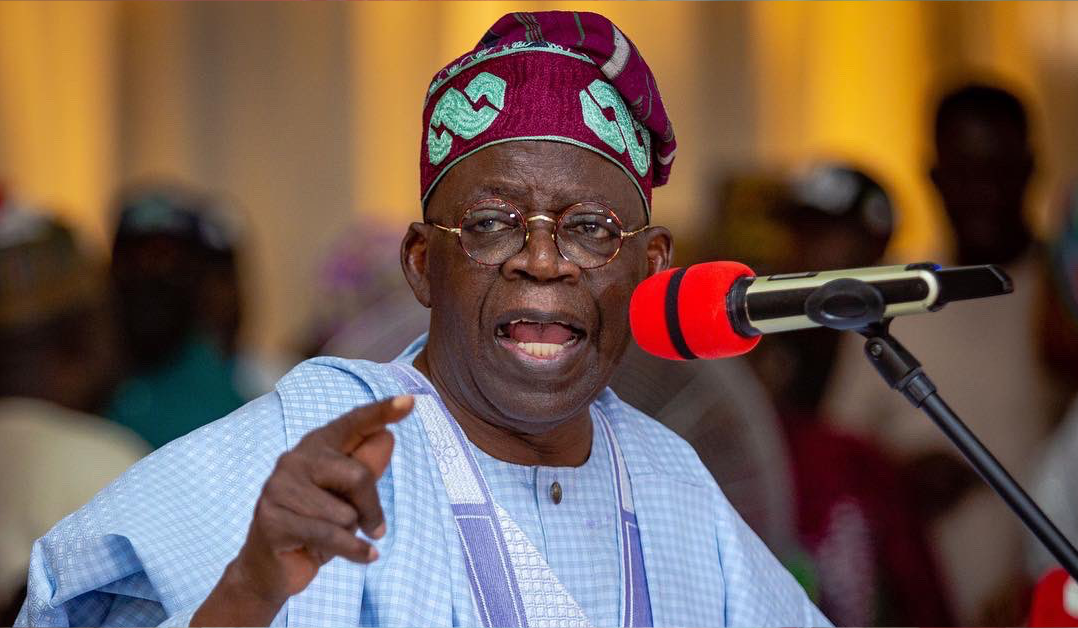
FULL TEXT: President Tinubu’s Independence anniversary speech
ADDRESS BY HIS EXCELLENCY, PRESIDENT BOLA AHMED TINUBU, GCFR, PRESIDENT AND COMMANDER-IN-CHIEF, FEDERAL REPUBLIC OF NIGERIA IN COMMEMORATION OF THE 63RD INDEPENDENCE ANNIVERSARY OF NIGERIA ON SUNDAY, 1ST OCTOBER, 2023
Dear Compatriots,
It is my unique honour to address you on this day, the 63rd anniversary of our nation’s independence, both as the President of our dear country and, simply, as a fellow Nigerian.
On this solemn yet hopeful day, let us commend our founding fathers and mothers. Without them, there would be no modern Nigeria. From the fading embers of colonialism, their activism, dedication and leadership gave life to the belief in Nigeria as a sovereign and independent nation.
Let us, at this very moment, affirm that as Nigerians, we are all endowed with the sacred rights and individual gifts that God has bestowed on us as a nation and as human beings. No one is greater or lesser than the other. The triumphs that Nigeria has achieved shall define us. The travails we have endured shall strengthen us. And no other nation or power on this earth shall keep us from our rightful place and destiny. This nation belongs to you, dear people. Love and cherish it as your very own.
Nigeria is remarkable in its formation and essential character. We are a broad and dynamic blend of ethnic groups, religions, traditions and cultures. Yet, our bonds are intangible yet strong, invisible yet universal. We are joined by a common thirst for peace and progress, by the common dream of prosperity and harmony and by the unifying ideals of tolerance and justice.
Forging a nation based on the fair application of these noble principles to a diverse population has been a task of significant blessing but also a serial challenge. Some people have said an independent Nigeria should never have come into existence. Some have said that our country would be torn apart. They are forever mistaken. Here, our nation stands and here we shall remain.
This year, we passed a significant milestone in our journey to a better Nigeria. By democratically electing a 7th consecutive civilian government, Nigeria has proven that commitment to democracy and the rule of law remains our guiding light.
At my inauguration, I made important promises about how I would govern this great nation. Among those promises, were pledges to reshape and modernize our economy and to secure the lives, liberty and property of the people.
I said that bold reforms were necessary to place our nation on the path of prosperity and growth. On that occasion, I announced the end of the fuel subsidy.
I am attuned to the hardships that have come. I have a heart that feels and eyes that see. I wish to explain to you why we must endure this trying moment. Those who sought to perpetuate the fuel subsidy and broken foreign exchange policies are people who would build their family mansion in the middle of a swamp. I am different. I am not a man to erect our national home on a foundation of mud. To endure, our home must be constructed on safe and pleasant ground.
Reform may be painful, but it is what greatness and the future require, We now carry the costs of reaching a future Nigeria where the abundance and fruits of the nation are fairly shared among all, not hoarded by a select and greedy few. A Nigeria where hunger, poverty and hardship are pushed into the shadows of a never-fading past.
There is no joy in seeing the people of this nation shoulder burdens that should have been shed years ago. I wish today’s difficulties did not exist. But we must endure if we are to reach the good side of our future.
My government is doing all that it can to ease the load. I will now outline the path we are taking to relieve the stress on our families and households.
We have embarked on several public sector reforms to stabilize the economy, direct fiscal and monetary policy to fight inflation, encourage production, ensure the security of lives and property and lend more support to the poor and the vulnerable.
Based on our talks with labour, business and other stakeholders, we are introducing a provisional wage increment to enhance the federal minimum wage without causing undue inflation. For the next six months, the average low-grade worker shall receive an additional Twenty-Five Thousand naira per month.
To ensure better grassroots development, we set up an Infrastructure Support Fund for states to invest in critical areas. States have already received funds to provide relief packages against the impact of rising food and other prices.
Making the economy more robust by lowering transport costs will be key. In this regard, we have opened a new chapter in public transportation through the deployment of cheaper, safer Compressed Natural Gas (CNG) buses across the nation. These buses will operate at a fraction of current fuel prices, positively affecting transport fares.
New CNG conversion kits will start coming in very soon as all hands are on deck to fast-track the usually lengthy procurement process. We are also setting up training facilities and workshops across the nation to train and provide new opportunities for transport operators and entrepreneurs. This is a groundbreaking moment where, as a nation, we embrace more efficient means to power our economy. In making this change, we also make history.
I pledged a thorough housecleaning of the den of malfeasance the CBN had become. That housecleaning is well underway. A new leadership for the Central Bank has been constituted. Also, my special investigator will soon present his findings on past lapses and how to prevent similar reoccurrences. Henceforth, monetary policy shall be for the benefit of all and not the exclusive province of the powerful and wealthy.
Wise tax policy is essential to economic fairness and development. I have inaugurated a Committee on Tax Reforms to improve the efficiency of tax administration in the country and address fiscal policies that are unfair or hinder the business environment and slow our growth.
To boost employment and urban incomes, we are providing investment funding for enterprises with great potential. Similarly, we are increasing investment in micro, small and medium-sized enterprises.
Commencing this month, the social safety net is being extended through the expansion of cash transfer programs to an additional 15 million vulnerable households.
My administration shall always accord the highest priority to the safety of the people. Inter-Service collaboration and intelligence sharing have been enhanced. Our Service Chiefs have been tasked with the vital responsibility of rebuilding the capacities of our security services.
Here, I salute and commend our gallant security forces for keeping us safe and securing our territorial integrity. Many have paid the ultimate sacrifice. We remember them today and their families. We shall equip our forces with the ways and means needed to perform their urgent task on behalf of the people.
We shall continue to make key appointments in line with the provisions of the Constitution and with fairness toward all. Women, Youth and the physically challenged shall continue to be given due regard in these appointments.
May I take this opportunity to congratulate the National Assembly for its role in the quick take-off of this administration through the performance of its constitutional duties of confirmation and oversight.
I similarly congratulate the judiciary as a pillar of democracy and fairness.
I also thank members of our dynamic civil society organizations and labour unions for their dedication to Nigerian democracy. We may not always agree but I value your advice and recommendations. You are my brothers and sisters and you have my due respect.
Fellow compatriots, the journey ahead will not be navigated by fear or hatred. We can only achieve our better Nigeria through courage, compassion and commitment as one indivisible unit.
I promise that I shall remain committed and serve faithfully. I also invite all to join this enterprise to remake our beloved nation into its better self. We can do it, We must do it. We shall do it.!!!
I wish you all a happy 63rd Independence Anniversary.
Thank you for listening.
May God bless the Federal Republic of Nigeria.
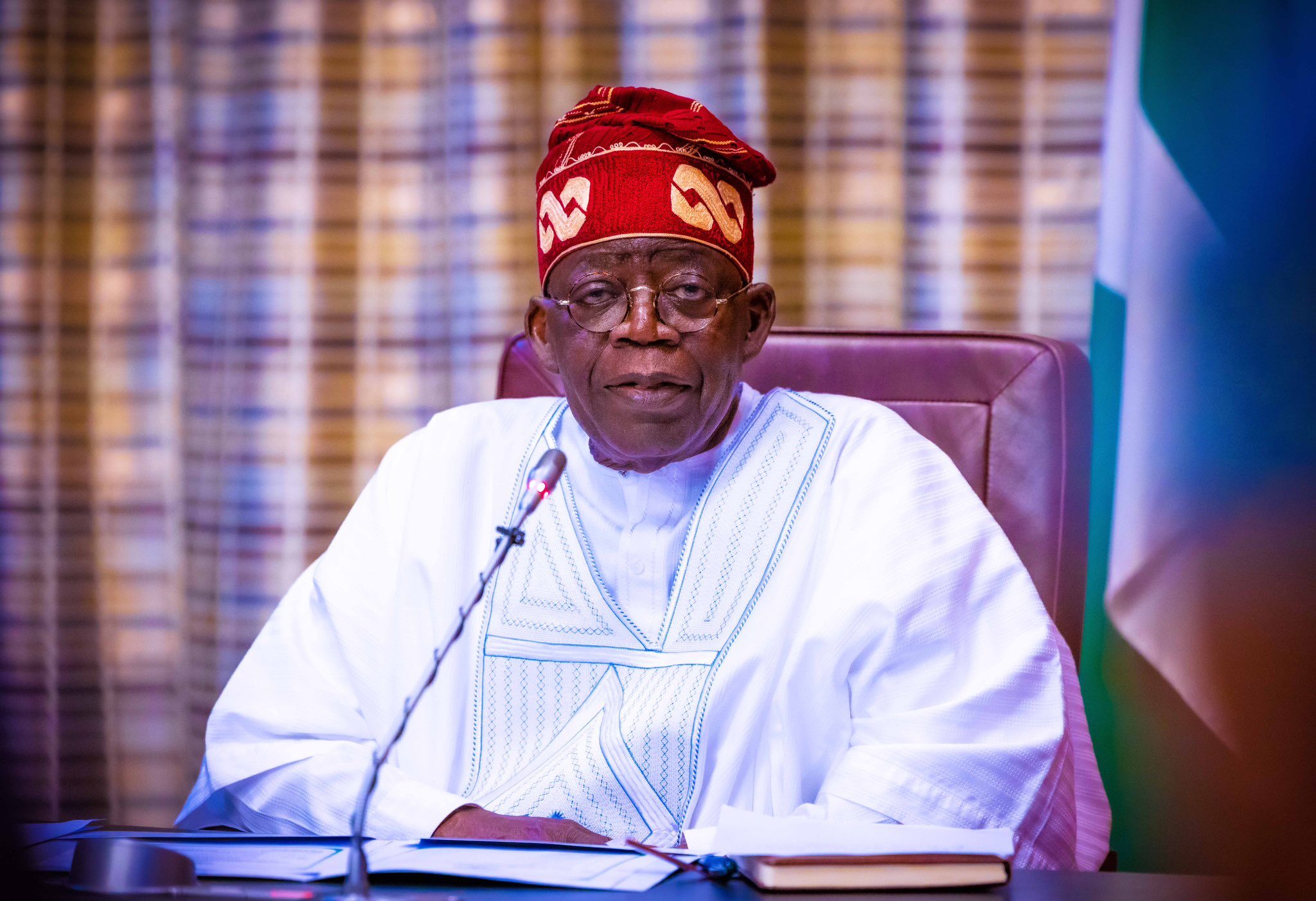
Tinubu unveils temporary N25k salary increase amidst economic hardship
By Sabiu Abdullahi
President Bola Tinubu has announced a crucial step to ease the financial strain on workers following the recent removal of the fuel subsidy.
In his Independence Day speech on Sunday, President Tinubu revealed a temporary wage increase designed to counterbalance the surge in living costs resulting from the policy change.
The President stated, “For the next six months, the average low-grade worker shall receive an additional Twenty-Five Thousand naira per month,” emphasising the government’s commitment to supporting vulnerable income groups during this transition.
As the nation adjusts to these economic shifts, the temporary wage boost is expected to provide immediate relief, enabling workers to manage their finances more effectively amidst the changing economic landscape.
Ongoing dialogues between the government, labour representatives, and business leaders will continue to shape future policies, ensuring a balanced and sustainable approach to economic reforms.

Nigerian nurses, midwives begin indefinite nationwide strike
By Sabiu Abdullahi
The Nigerian healthcare system faces a severe blow as the National Association of Nigeria Nurses and Midwives (NANNM) will officially commence their indefinite nationwide strike today, in solidarity with the Nigerian Labour Congress (NLC) and Trade Union Congress (TUC).
The strike, initiated to protest the removal of fuel subsidies and the government’s anti-labour policies, has left the nation’s hospitals in a state of uncertainty.
NANNM President Nnachi Michael Ekuma emphasised the necessity of the strike, citing the government’s failure to address issues crucial to healthcare workers, such as stagnant salaries, staff shortages, and subpar working conditions.
Ekuma’s letter to association members outlined the dire situation created by the removal of the fuel subsidy, leading to increased living costs for Nigerians without corresponding wage hikes for workers.
Despite the government’s attempt to mitigate the situation by deploying military personnel to hospitals and clinics, the adequacy of these measures remains uncertain.
Patients are advised to proactively liaise with their healthcare providers to determine the status of their appointments and procedures.
Where possible, rescheduling appointments after the strike concludes is recommended to minimise disruptions to their healthcare services.
The unity of the Nigerian labour movement underscores the depth of dissatisfaction with the government’s economic policies, creating a challenging environment for negotiations and resolution.