




Harrowing tales of people who deny God
By Uzair Adam Imam
In a stark reminder of the omnipotent power of God, a collection of tales compiled by Ghanaian system engineer, Kuame Oliver, have revealed the devastating consequences faced by individuals who arrogantly mocked the Almighty.
These accounts, shared by The Daily Reality, serve as a warning to those who would dare challenge God’s authority.
The list of tragic figures includes renowned physicist Stephen Hawking, legendary musician John Lennon, former Brazilian President Tancredo Neves, and iconic actress Marilyn Monroe.
Other include: Cazuza, a bi-sexual Brazilian composer, singer, and poet, earned the title “The Poet Who Defied God” for his brazen stance against the Almighty. Bon Scott, the lead singer of AC/DC, became known as “The Rockstar Who Challenged God” for his defiant lyrics and lifestyle. Christine Hewitt, a Jamaican journalist and entertainer, was dubbed “The Journalist Who Mocked God” for her outspoken disdain towards religion.
The list went on to include: a group of friends in Campinas, Brazil, tragically learned the consequences of defiance, earning the somber title “The Fatal Car Ride: A Tale of Defiance”.
Lastly, the people of Brazil, who mocked God during the Rio Carnival Parade, suffered a devastating flood, a calamity that became known as “The Devastating Flood: A Consequence of Mock
Each story recounts how these individuals openly disparaged God, only to meet with calamitous ends shortly thereafter.
While skeptics may dismiss these incidents as mere coincidences, Oliver’s compilation serves as a testament to the enduring power of faith and the importance of humility in the face of the divine.
These tales urge us to recognize God’s sovereignty and seek His guidance, lest we suffer a similar fate.
As the debate surrounding these accounts intensifies, one message resonates clearly: acknowledge and honor God, and live a life filled with purpose, blessings, and divine protection.
Court adjourns hearing on Kano emirship tussle
By Uzair Adam Imam
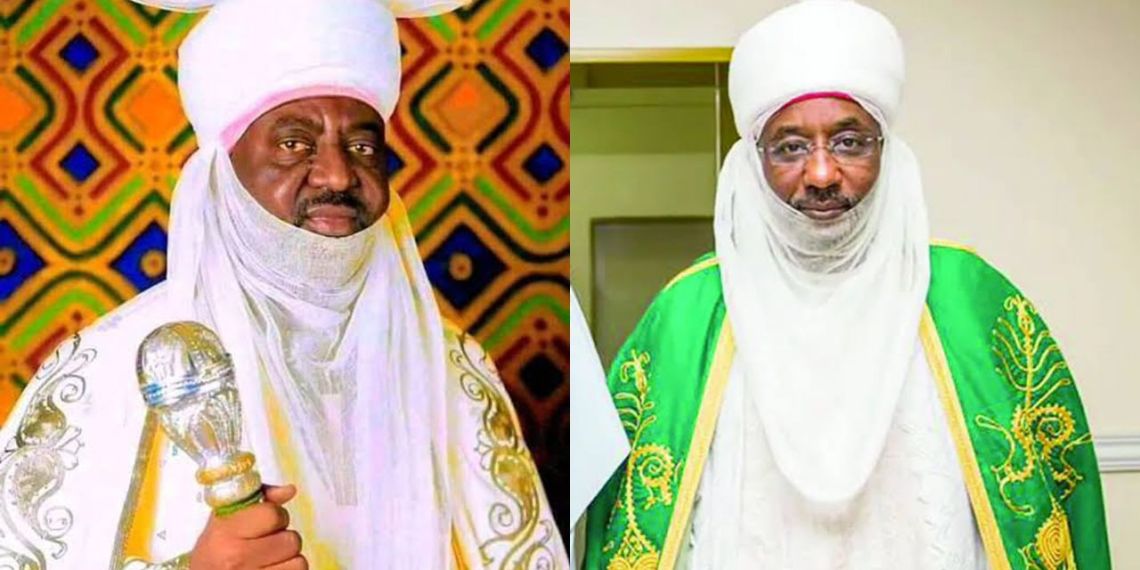
The Federal High Court sitting in Kano has adjourned the hearing regarding the removal of Kano Emir Aminu Ado Bayero to June 13, 2024.
The lawsuit, filed by Aminu Babba Dan’agundi, a title holder and senior counsellor in the Kano emirate, challenges the repeal of the 2019 Emirate Council Law by the Kano State House of Assembly.
Presided over by Justice Abdullahi M. Liman, the court has set the case for ruling on June 13, 2024. Aminu Babba Dan’agundi, represented by Barrister M. S. Waziri, argues that the repeal of the 2019 law unlawfully stripped both the Emirate Council and the plaintiff of their powers.
Counsel to the 1st and 4th respondents, Mahmoud Abubakar Magaji SAN, urged the court to decline jurisdiction to entertain the matter, citing that the law has gone through legislative processes and the order was made after the action was done.
Ibrahim Isah Wangida, counsel to the 2nd and 3rd respondents, aligned himself with Magaji’s submission, stating that the applicant’s rights were not breached as the 2024 law was repealed and accented to before the applicant filed the action.
Sunday Ekwe, counsel to the 5th and 6th respondents, stated that they did not file any issue on jurisdiction, as the duty of the police is to maintain peace and wait to carry out the court’s order.
The court requested written submissions from both sides and will review them before rendering a decision on June 13.The respondents in the suit include the Kano State Government, Kano State House of Assembly, Speaker of Kano State House of Assembly, Attorney General of Kano State, Kano Commissioner of Police, Inspector General of Police, NSCDC, and DSS.
This legal battle is part of a larger crisis revolving around the emirship in Kano, following the dethronement of Aminu Ado Bayero and the reinstatement of Muhammadu Sanusi II by the Kano State government, creating tensions in the ancient city.
Currently, both emirs are holding court from separate palaces, with Sanusi operating from the main emir’s palace and Bayero presiding from the Nasarawa GRA mini palace.
Governor Uba Sani on a scale: The other side of the celebrated 365 days in office
By Mubarak Usman
“The sign of a good Friday can be determined by a promising Wednesday.” – Hausa adage
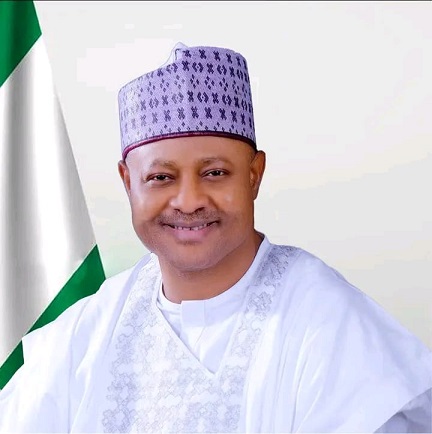
It has been over one year since Senator Uba Sani was sworn in as the governor of Kaduna State. The honeymoon days are over, and it is time to start interrogating Governor Uba Sani’s policies, decisions, actions or inactions.
Spin doctors, sycophants, party members, and admirers are all at work trying to outdo one another in celebrating Governor Sani, which is the best thing to have happened to Kaduna state since the invention of sliced bread. Strategic locations within the Kaduna metropolis are not left behind, with erected billboards showcasing real and ‘audio’ projects or achievements.
In his acceptance speech after being declared as the winner of the 2023 gubernatorial election of Kaduna state, Senator Uba Sani thanked the people of Kaduna for voting him into power and promised to “get straight to work on sustaining and strengthening the development path that our beloved leader Malam Nasir El-Rufai has so brilliantly opened for Kaduna State. I thank Malam Nasir El-Rufai and his executive team for their collective efforts since 2015 to build the foundations for a new Kaduna State. Power is sweet, but it comes with responsibilities!
When people expect Governor Uba Sani to hit the ground running, his lacklustre approach to governance begins to manifest. He is just absent. He could not just sit to spearhead the State Executive Council meetings regularly. In his defence, his spin doctors claimed that the government does not revolve around him alone. Bello Galadanchi, the skit creator, made a witty skit about this absentism.
The governor called for a stakeholders’ engagement meeting to explain the state of affairs. He complained about the debt profile left behind by the previous administration and how it has been hindering his progress or performance. This is a ruse!
Governor Uba Sani did not explain how he contributed to the state’s massive debt profile. Politicians like him would think the populace is suffering from amnesia, so the collective intelligence of the good people of Kaduna state can be insulted.
First, the former governor of Kaduna state, Nasir el-Rufai, sought foreign loans to finance projects in the state. The loan was denied courtesy of the three (3) senators from Kaduna state during the 8th National Assembly. El-Rufai deployed all his arsenals to ensure none of the three senators returned to the 9th Assembly. And only Senator Danjuma Laah survived El-Rufai’s political onslaught.
Senator Uba Sani was drafted into the 9th Assembly to secure the now problematic loan. Responding to questions thrown at him during an interview, he said: “I am extremely happy and proud of the role some of us played in securing this loan for Kaduna State.” He did not stop there!
He said, “I, Senator Uba Sani, be held liable if the Governor [El-Rufai] fails or disappoints.” Will he now claim he did not know who El-Rufai was when entrusted with public funds? What is his share of the blame in the quagmire Kaduna? When Governors were praising the floating of the Naira by President Tinubu, did Governor Sani realise the implications of such a policy on the loans he helped secure? It is a classic case of shooting oneself on foot, double standards and hypocrisy characterised by politicians.
Secondly, a government complaining about a huge debt profile should not be seen engaging in non-priority projects like building a banquet hall in Sir Kashim Ibrahim House. The Government House has a council chamber for its functions, and so does the deputy governor’s office. Where the chamber isn’t enough for a state function due to population, the Umaru Musa Yar’adua Hall in Murtala Mohammed Square can serve the purpose in whatever capacity. This is not to mention the hall domiciled in General Hassan Usman Katsina House.
This new banquet hall is being built while many abandoned road projects in Zaria and Kaduna metropolis yearn for serious attention. These roads have caused untoward discomfort, accidents, and health hazards to commuters. Keen observers are still in the dark regarding the bidding or procurement processes leading to the award of such a misplaced project. Where is the transparency and accountability? Are we now experiencing the birth of another version of the now scandalous Ronchess and CCECC?
Despite the many mistakes of the previous administration, the Kaduna State Geographical Information Services (KADGIS) was more effective and efficient in handling customers’ queries or problems. Receiving certificates of occupancy (CofO) wasn’t a difficult task. Under the current administration in one year, people are becoming hopeless as hushed and loud voices or conversations within and without the agency have it that the governor is globetrotting and doesn’t have enough time to append his signature on certificates. One shudder to think how a government crying about debt profiles will take the affairs of such a revenue-generating agency lightly. There is more.
When appointing the head of the agency, KADGIS, the governor bucked the KADGIS Law and employed someone who did not meet the requirements as provided by the Law. This cluelessness was also exhibited in the appointment of other agencies. One would wonder where the state House of Assembly members are in all these. Are they the typical rubber stamp legislators? Your guess is as good as mine.
Loans upon loans. The Kaduna state government targets loans of about N150 billion in the 2024 state budget. I hope the State House of Assembly will diligently carry out its oversight functions as the governor moves to the rural areas. We have been witnessing groundbreaking ceremonies here and there, but the procurement processes, from advertisement to contract awarding, are unclear. The State House of Assembly should save the state, the next legislature, and the Kaduna people the stress of probing this current administration some years from now by carrying out their oversight functions. Can they? Time will tell.
Furthermore, running tap water is still a luxury in the state. Many in the metropolis now roam the streets searching for water to drink or bath, not to mention more people living outside the metropolis. Clairvoyant analysts suggest that some of these monies expended in the name of palliative should have been channelled to Kaduna State Water Corporation to make tap water available in people’s homes. Therefore, the House of Assembly should also shed light on these issues and the N11.4 billion disbursed in the name of palliative interventions. Who were the beneficiaries? What are the expected outcomes? How many people were lifted out of poverty caused by inflation and the APC-led government policies?
Again, Kaduna state has the lowest-paid medical doctors and health practitioners and a difficult and depressing working environment. These conditions have made these professionals quit their jobs for better offers in neighbouring states. Junketing out of the state at the slightest opportunity and under the guise of wooing foreign and local investors will not change these stark realities. This media show should end with the governor’s predecessor and now estranged boss.
The problems highlighted above are just a dot in the circle of nagging issues disturbing the good people of Kaduna state. Obviously, the governor only gets to meet praise singers, so he is not popular beyond sycophants, his appointees, and hungry rented crowds. There are more reasons why discerning citizens should write more articles about Kaduna state to remind them of the public perception of his government.
Finally, Governor Sani has the opportunity to sit up, evaluate his current team, and make adjustments before he and his team find themselves in a web of scandals after his administration. The good people of Kaduna need responsible and purpose-driven leadership, not excuses and the hazy governance that has characterised his 365 days in office.
Mubarak Usman writes from Unguwar Muazu, Kaduna.

Customs hand over seized cannabis worth N96 million to NDLEA
By Sabiu Abdullahi
The Nigeria Customs Service, Western Marine Command (WMC), has handed over 17 sacks of seized Cannabis Sativa worth over N96 million to the National Drug Law Enforcement Agency (NDLEA).
According to the Customs Area Controller, Comptroller Paul Bamisaiye, the seizures were made by a patrol team at the Bar Beach station in Lagos, following credible intelligence on the movement of a boat carrying suspected offending items.
The team intercepted a fibre boat carrying the suspected items, which, upon examination, revealed 1,257 loaves of Cannabis sativa weighing 720 kg.
In a related development, Officers also intercepted a wooden boat carrying 505 bags of foreign parboiled rice with a Duty Paid Value of N59,185,000.
The Customs Area Controller appreciated the Comptroller General of Customs and Management for their motivation and appealed to the trading public not to engage in illicit trade.
Receiving the items, Assistant Commander of Narcotics, Marine Operation, NDLEA, Bashir Magaji, commended the service for the fight against smuggling and assured thorough investigations and further actions.
Kano govt to recover public parks, gardens
By Uzair Adam Imam
The Kano State Government has served quit notices to occupants of public parks and gardens in the state, with plans to recover these areas and restore them to their original purpose.
According to the State Commissioner for Environment, Alhaji Nasir Sule Garo, the government aims to improve air quality and mitigate climate change challenges.
He added that the goal is to create a befitting public space for relaxation and ecosystem balance.
The state has also launched a tree planting campaign, targeting 3 million seedlings in collaboration with stakeholders.
In related efforts, the government is working with the ACReSAL project and the Food and Agriculture Organization to restore degraded lands and promote agricultural development.
The state has also established a soil and water laboratory and supported drainage clearance to prevent flooding.
Other environmental achievements mentioned by the commissioner include partnerships with the National Great Green Wall project, sustenance of drainage clearance and sanitation exercises, and erosion control measures.

Zamfara police arrest lawmaker, district head, ex-LG chairman over banditry
By Uzair Adam Imam
The Zamfara State Police Command has arrested a member of the State House of Assembly, a district head, and a former local government chairman in connection with ongoing banditry in the state.
Commissioner of Police Muhammad Dalijan disclosed this during a meeting with Thomas Parker, the officer in charge of the Counterterrorism Unit under the United Nations Office on Drugs and Crime (UNODC).
While the names of the arrested individuals were not disclosed, CP Dalijan emphasized the importance of international support in combating crime in the region.
He appealed to the United Nations to help establish a forensic laboratory in Zamfara to eliminate the need for traveling to Lagos for forensic analyses.
The meeting at the command headquarters in Gusau also discussed the need for training on investigations and the establishment of forensic laboratories to speed up the investigation and prosecution of suspected criminals.
Despite challenges, Dalijan noted a reduction in crime rates in Zamfara due to the concerted efforts of security agencies and Community Protection Guards (CPGs).
The UNODC team has embarked on a three-day stakeholders’ engagement in the state to understand the scope, challenges, and drivers of the insecurity and determine the best methods for addressing the threats.

El-Rufai rejects Kaduna assembly probe as witch hunt
By Uzair Adam Imam
Former Kaduna State Governor, Nasir El-Rufai, has responded to the Kaduna State House of Assembly’s recommendation to probe his 8-year tenure as governor.
El-Rufai’s Special Adviser on Media, Muyiwa Adekeye, issued a statement expressing disgust at the “show of shame” exhibited by the State House of Assembly during the sitting of the ad-hoc committee.
El-Rufai is confident in his records, assures integrity and competence during his tenure, and dismisses the probe as a politically motivated witch hunt.
According to the statement, El-Rufai led a government of integrity and competent governance, and he is immensely proud of his record of governance and the legacy he left in Kaduna State.
The statement also mentions that many officials who served in the El-Rufai government appeared before the ad-hoc committee, confident in the quality of their service and the rectitude with which they served Kaduna State.
The statement concludes by assuring discerning Nigerians that El-Rufai has served Kaduna State with integrity and to the best of his capacity, assisted by a hardworking and patriotic team, and that he complied with all extant laws in all his activities while he was governor.

Sultan of Sokoto directs muslims to search for Dhul-Hijjah crescent
By Uzair Adam Imam
The Sultan of Sokoto, Alhaji Muhammad Sa’ad Abubakar III, has directed Muslims to look out for the crescent of Dhul-Hijjah 1445 AH on Thursday, June 6.
This is equivalent to the 29th day of Dhul-Qidah 1445 AH.
In a statement signed by Prof. Sambo Janaidu, the Chairman of the Advisory Committee on Religious Affairs of the Sultanate Council, Sokoto, the Sultan requested Muslims to report any sighting of the new moon to the nearest District or Village Head, who will then communicate it to the Sultan.
The Sultan prayed for Allah’s continued support for Muslims in their religious duties.Dhul-Hijjah is the 12th month in the Islamic calendar and one of the four sacred months in Islam.
During this month, Muslims perform the Hajj pilgrimage and celebrate Eid-El-Kabir.
The month begins with the sighting of the new moon, and Muslims gather in Mecca for Hajj from the 8th to the 13th of Dhul-Hijjah, celebrating Eid-El-Kabir on the 10th to 13th.

El-Rufai faces prosecution over alleged corruption
By Uzair Adam Imam
The Kaduna State House of Assembly has recommended that former Governor Nasir el-Rufai be prosecuted for alleged abuse of office and money laundering during his administration.
An ad-hoc committee led by Henry Zacharia investigated and found that loans obtained under el-Rufai’s administration were not used for their intended purposes, and in some cases, due process was not followed.
According to the report submitted by Zacharia on Wednesday, the committee discovered that most of the loans obtained were not used for their intended purposes, and in some cases, due process was not followed in securing the loans.
The committee, therefore, recommended the investigation and prosecution of the ex-governor and some other indicted members of his cabinet by security and anti-corruption agencies for abuse of office through the award of contracts without due process, diversion of public funds, and money laundering.
This recommendation follows an investigation by the ad-hoc committee set up by the House to investigate the activities of the previous administration.
The committee’s report has been submitted to the House, and the recommendation for prosecution has been made.

Senate approves 300% pay raise for judicial officers
By Sabiu Abdullahi
The Nigerian Senate has given the green light to a bill that would substantially increase the salaries of judicial officers across the country.
The proposed legislation, which was forwarded by President Bola Tinubu, aims to improve the remuneration of judges and other judicial personnel at both federal and state levels.
The Senate’s approval of the bill is a major boost for the judiciary, recognizing the critical role that judicial officers play in upholding justice and the rule of law.
The proposed pay increase is expected to enhance the attractiveness of careers in the judiciary, enabling the sector to retain and attract top talent.
The Attorney General of the Federation (AGF) has thrown his weight behind the president’s proposal, urging the Senate to pass the bill.
The move is seen as a significant step towards recognizing the valuable contributions of judicial officers to the country’s justice system.
The approval of the bill is a positive development that is expected to have a positive impact on the judiciary and the country as a whole.