
INEC didn’t postpone 2003 elections despite Catholic bishops’ protest — TheCable newspaper apologises
By Sabiu Abdullahi
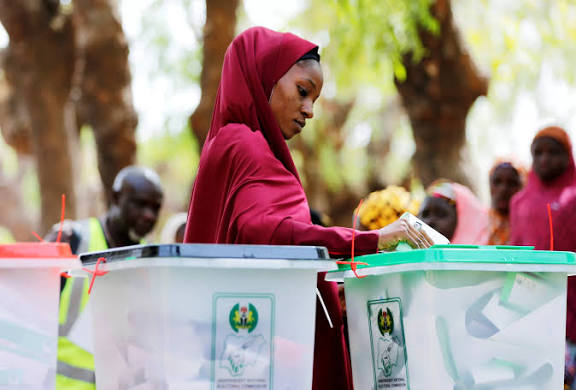
TheCable newspaper has issued a correction to its earlier report on the 2003 general elections, clarifying that the Independent National Electoral Commission (INEC) did not shift the poll dates despite protests by Catholic bishops over a clash with Easter.
The Daily Reality had earlier followed the report, citing TheCable as its source.
According to the updated clarification, INEC fixed the National Assembly elections for April 12, presidential and governorship polls for April 19, and state assembly elections for May 3, 2003.
The April 19 date coincided with Holy Saturday, prompting objections from the Catholic Bishops’ Conference of Nigeria, which described the schedule as “unacceptable” and called for a review.
However, despite the concerns raised and the public debate that followed, INEC retained its original timetable and conducted the elections as planned.
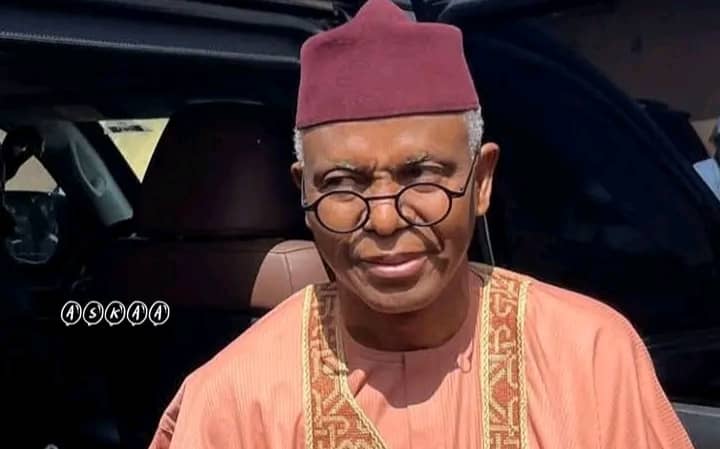
DSS confirms seizure of El-Rufai’s passport, says ex-governor under investigation
By Abdullahi Mukhtar Algasgaini
The Department of State Services (DSS) has officially confirmed that it seized the international passport of former Kaduna State Governor, Malam Nasir El-Rufai, as part of an active investigation into the 2019 disappearance of Abubakar Idris, a lecturer popularly known as Dadiyata.
A top security source disclosed to the press on Monday that the former governor is being probed for his alleged involvement in the kidnap and disappearance of Idris. According to the source, the security agency moved to prevent El-Rufai from leaving the country after he briefly returned to Nigeria, allegedly to orchestrate a swift exit.
“El-Rufai is fully aware that the DSS is investigating him for Dadiyata’s kidnap,” the source stated. He explained that the former governor had planned to visit the Economic and Financial Crimes Commission (EFCC) and the Independent Corrupt Practices Commission (ICPC) this week before “flying back to Cairo. Seizing his passport has shattered his plans.”
The investigation into the case has been reopened following months of intelligence gathering. The security source alleged that El-Rufai, who was the sitting governor of Kaduna State when Idris was abducted from his home in August 2019, may have had prior knowledge of the incident. The lecturer’s whereabouts remain unknown to date.
The probe has intensified following El-Rufai’s recent appearance on Arise Television, where he claimed that a “remorseful policeman” had confessed to being part of a team sent from Kano State to carry out the abduction. The former governor attempted to shift responsibility to former Kano State Governor, Dr. Abdullahi Ganduje, stating, “If anybody is to be asked about the disappearance of Dadiyata, it is the Kano state government.”
Security agencies, however, view this explanation with skepticism. “It would be interesting to know what a man who had been a minister and governor did with such key information,” the source said, questioning why El-Rufai failed to report the alleged confession to law enforcement at the time.
In a significant expansion of the probe, the DSS also stated that El-Rufai’s sons, Bello and Bashir, would be invited for questioning. Investigators pointed to old social media posts from 2019 and 2020 that suggest the family was aware of Dadiyata. In one post, Bashir El-Rufai criticized those asking “#WhereisDadiyata,” while Bello El-Rufai posted a cryptic message stating, “The things that we’ve done to protect the name are unsettling… Death to a coward and a traitor.”
The DSS clarified that its investigation is focused specifically on the alleged kidnapping, separate from financial corruption probes being conducted by the EFCC and ICPC regarding El-Rufai’s tenure as governor. An ICPC source noted that the former governor’s allies have been avoiding questioning regarding a separate probe into alleged misappropriation of funds during his administration.
The development has sparked widespread reactions, with human rights activists, including Omoyele Sowore and Prof. Chidi Odinkalu, as well as former Senator Shehu Sani, calling for a thorough investigation and possible prosecution.
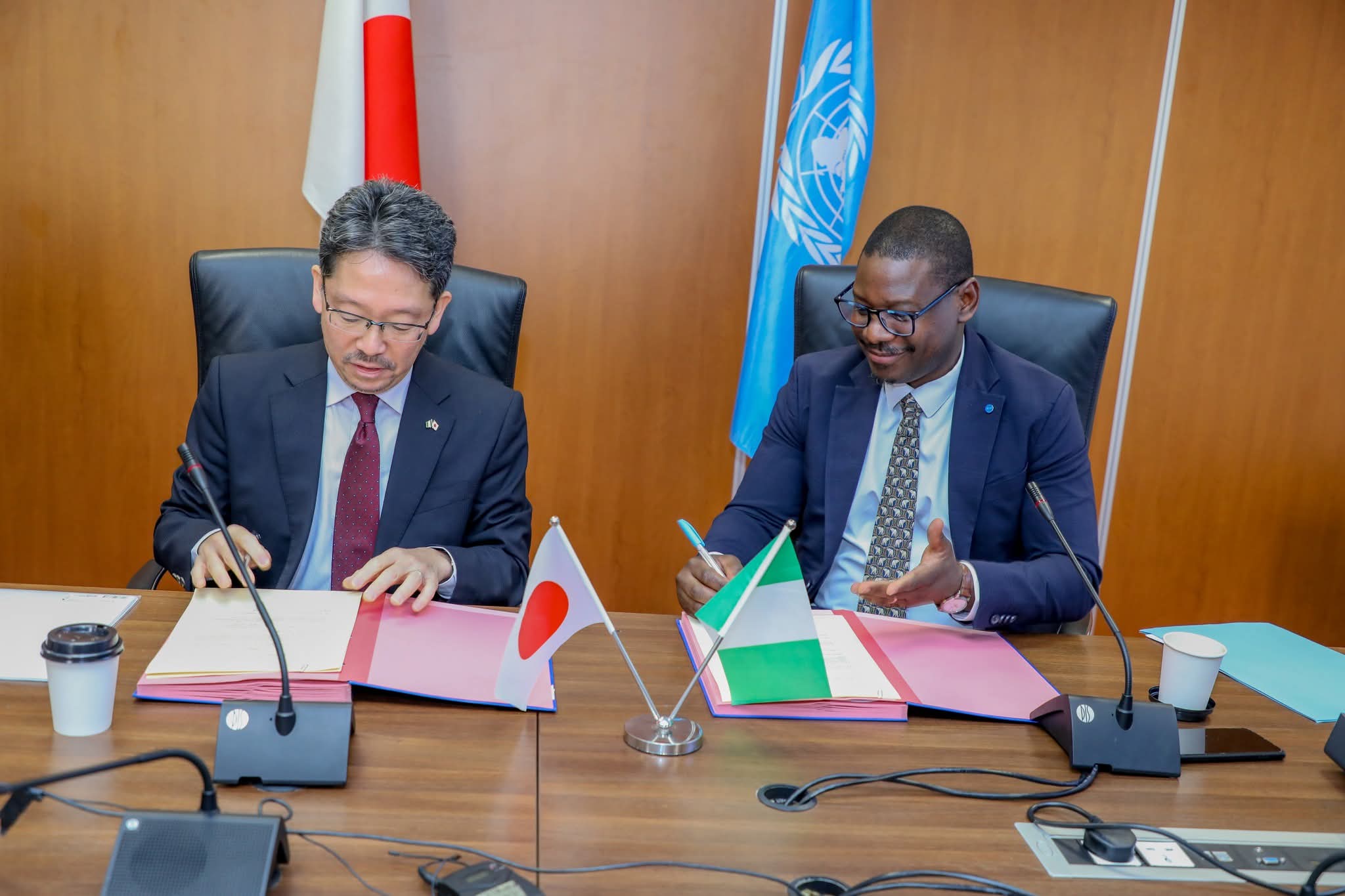
Japan supports flood resilience initiatives in Nigeria
By Sabiu Abdullahi
The Government of Japan has reaffirmed its commitment to enhancing flood resilience in Nigeria, with a particular focus on Niger State, through a new supplementary budget project implemented by UNESCO.
The Embassy of Japan in Nigeria shared the development on its Facebook page, underlining its commitment to long-term societal stability and climate resilience in the country.
On 28 January 2026, Ambassador SUZUKI Hideo participated in the Arrangement Letter Signing Ceremony for the project, titled “Strengthening Flood Resilience in Nigeria to Foster Long-Term Societal Stability – Focus on Niger State,” at the UN House in Abuja.
The event drew several dignitaries, including Dr. Hajo Sani, Permanent Delegate of Nigeria to UNESCO; Dr. Aishetu Gogo Ndayako, Permanent Secretary of the Ecological Project Office; Dr. Latif Olagunju, Secretary General of the National Commission for UNESCO; and Dr. Jean-Paul Ngome Abiaga, Acting Head of the UNESCO Abuja Office.
The initiative, funded by the Japanese government with a contribution of approximately USD 53,000, is designed to shift Nigeria’s approach from reactive disaster response to proactive, climate-resilient development strategies. Implementation will be carried out by the UNESCO Abuja Office.
In his remarks, Ambassador SUZUKI emphasized that “the project contributes to fostering South-South and triangular cooperation through UNESCO’s networks and Japan’s expertise in disaster risk management via the International Centre for Water Hazard and Risk Management (ICHARM).”
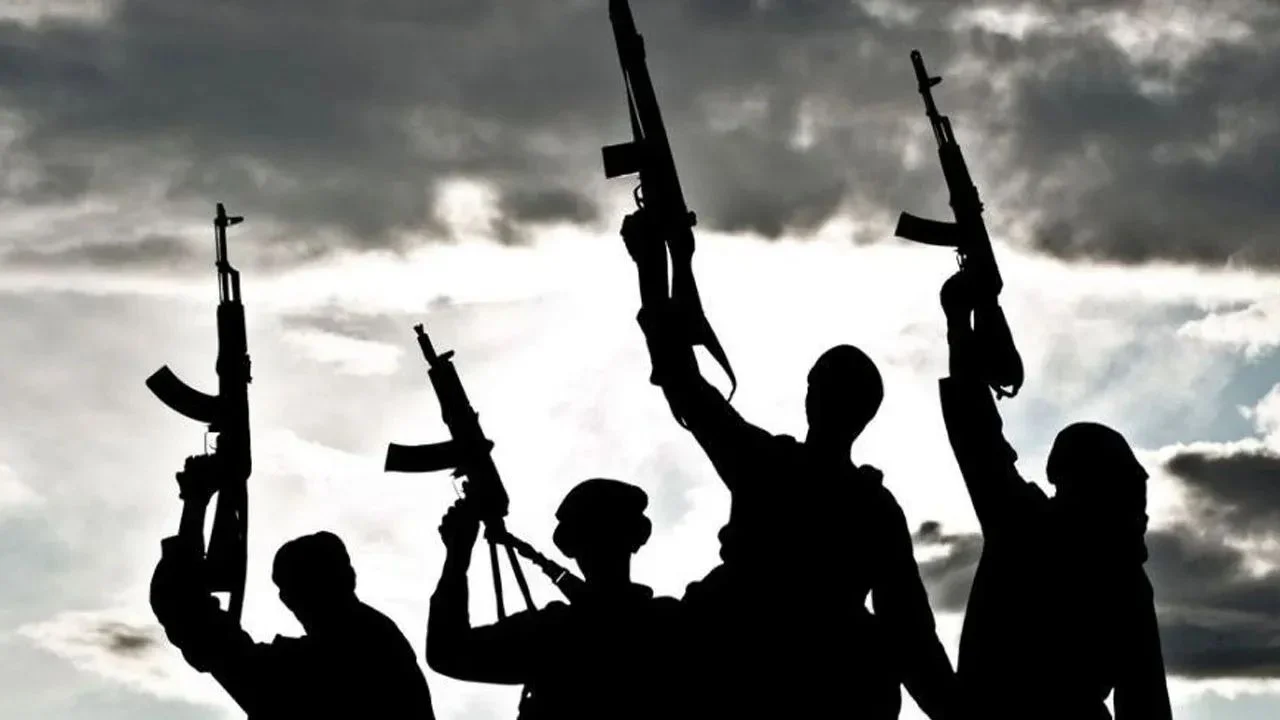
Bandits issue threat letter, plot attacks on three Kwara communities
By Sabiu Abdullahi
Tension has gripped parts of Kwara State after suspected bandits issued a notice of planned attacks on three communities in Oyun Local Government Area.
The communities listed in the threat message are Ira, Inaja and Aho. All are located within the same local government area. The warning was contained in a letter reportedly dropped at the Ira market square and later discovered by residents.
Sources said the message was signed by a group that identified itself as the Nigeria Terrorists Association (NTA). The development has sparked fear across the affected communities. Security agencies have also stepped up readiness in response to the threat.
According to details contained in the letter, members of the group claimed they had moved from Kaiama in Kwara North Senatorial District to Oyun Local Government Area in the southern part of the state. The message warned that “they shall be coming to attack Ira town, Inaja and Aho village anytime soon.”
A security source disclosed that troops stationed at the Nigerian Army Forward Operation Base in Ilemona have intensified patrol activities across the vulnerable areas. Other security formations have also increased surveillance.
The latest alert followed a recent confrontation between security operatives and armed bandits in Share, headquarters of Ifelodun Local Government Area. The incident occurred on Sunday.
Security forces repelled the assault after about one hour of gunfire exchange. No casualty or abduction was recorded in the encounter.
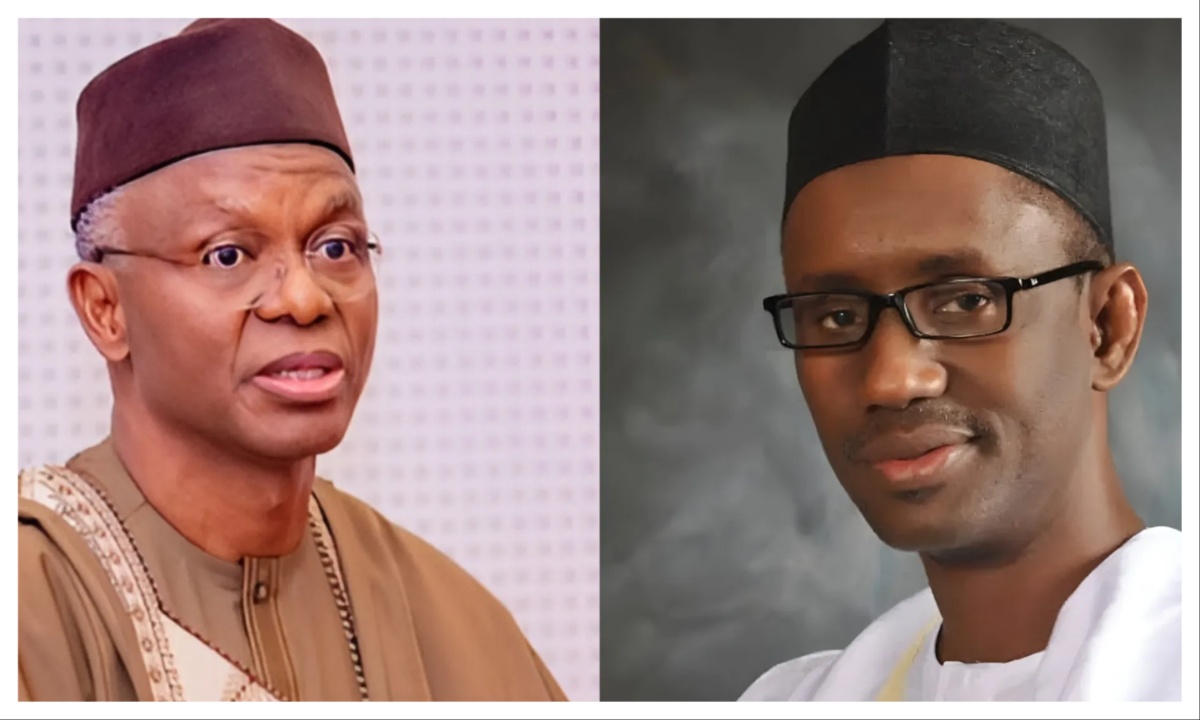
NSA Ribadu challenges El-Rufai to submit evidence of alleged toxic chemical procurement
By Sabiu Abdullahi
The Office of the National Security Adviser (ONSA) has called on former Kaduna State governor, Nasir El-Rufai, to forward proof of his allegation concerning the purchase of a poisonous substance to the Department of State Services (DSS) for investigation.
The reaction followed claims by El-Rufai that the National Security Adviser’s office, led by Nuhu Ribadu, procured thallium sulphate, a toxic chemical compound. He had also alleged that the substance was sourced from a supplier in Poland and demanded clarification over the reported transaction.
Thallium sulphate is known to be a highly poisonous, colourless and odourless substance capable of causing death even in small quantities.
In its response, ONSA dismissed the allegation. The office urged the former governor to provide any evidence in his possession to the DSS to enable a detailed probe.
A formal reply to El-Rufai was issued in a letter signed by Brigadier-General OM Adesuyi on behalf of the National Security Adviser. The correspondence was dated February 13, 2026, and acknowledged an earlier message from the former governor.
“I have the honour to present the compliments of the National Security Adviser and to acknowledge receipt of Your Excellency’s correspondence received on 11 February 2026 requesting clarification regarding the alleged procurement of approximately 10 kilograms of Thallium Sulphate by the Office of the National Security Adviser (ONSA).
“The correspondence further indicated that information concerning the purported procurement is reportedly available to the political opposition leadership. In this regard, I am directed to respectfully convey that ONSA has neither procured nor initiated any process for the purchase of such material, and has no intention of doing so.
“However, I am further directed to state that the allegation has been formally referred to the Department of State Services for a comprehensive investigation. Your Excellency and other parties involved, who may possess relevant information relating to this claim will be duly invited by the Service to provide any evidence that may assist in an in-depth investigation, establishing the facts and ensuring due diligence.
“Please accept the assurances of the esteemed regards of the National Security Adviser.”
Sources indicated that an initial attempt to deliver the letter to El-Rufai’s Abuja residence was unsuccessful. Security personnel on duty reportedly declined to receive the document. They said the chief security officer was absent and could not confirm when the former governor would be available.
The correspondence was later delivered on Sunday. It was received and signed by the head of security on behalf of El-Rufai.
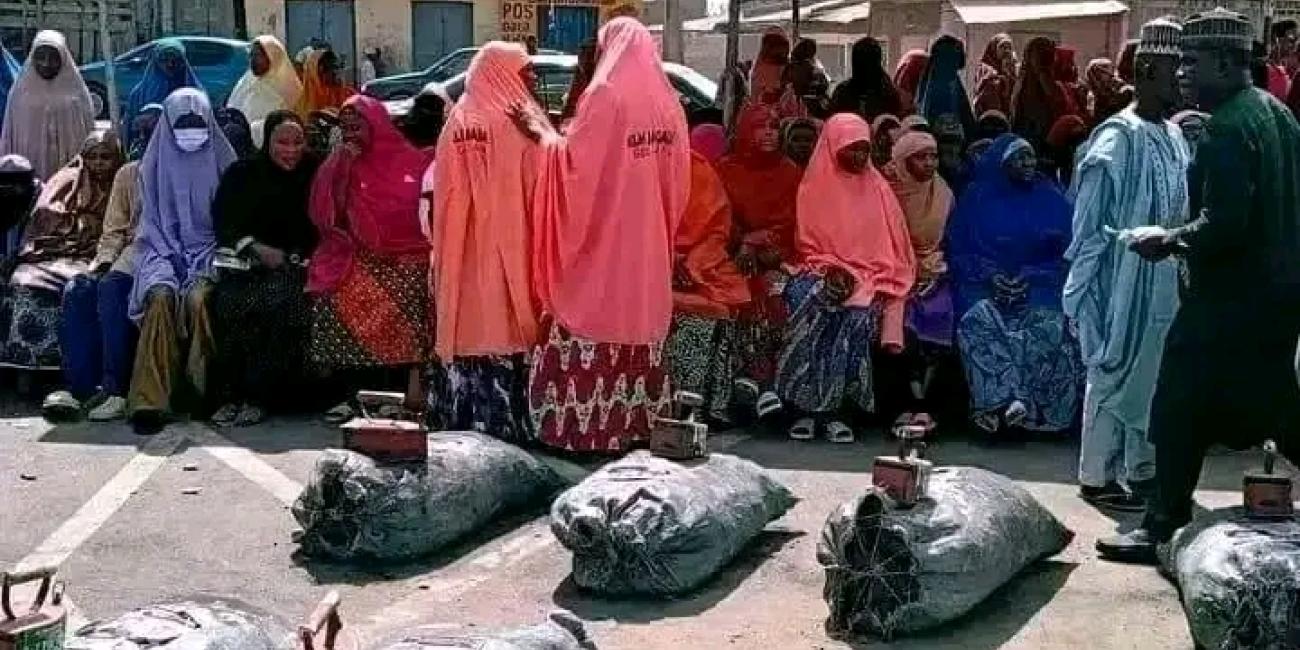
Councillor in Zamfara distributes charcoal, pressing irons to constituents as empowerment support
By Sabiu Abdullahi
A councillor in Zamfara State, Abubakar Muhammad Tahir, who represents Mayana Ward in Gusau, has shared bags of charcoal and charcoal-fired pressing irons with residents of his constituency as part of what he described as an empowerment effort.
Findings show that the items were provided to members of the community to assist them in small income-generating activities. Reports indicate that the outreach targeted residents of Mayana Ward and formed part of the councillor’s engagement with constituents at the grassroots level.
Information published by Nasarawa Daily News stated that the materials were intended to help beneficiaries venture into petty businesses and other trades that depend on charcoal and pressing irons for daily operations.
The development has again drawn attention to the pattern of modest empowerment packages often rolled out by political office holders across the country. Such initiatives, in many cases, have attracted public criticism, with some observers arguing that they offer limited long-term economic value.
In May 2024, the senator representing Kano Central Senatorial District, Rufai Hanga, reportedly distributed 5,000 white garments and clay pots to constituents for burial purposes. The lawmaker’s aide, Dawuud Auwal, later shared a report of the exercise on Facebook and commended the gesture, writing, “Alhamdulillah Alhamdulillah Alhamdulillah Alhamdulillah A Newspaper Named Newsveo Revealed The Good Things That Senator Rufai Hanga Has Brought To His Region In 2024, After I See You On My Facebook Page I See The Contentment Of What They Did And The Truth Of The Conversation Is Why They Did It.”
Earlier in March 2024, Alex Mascot Ikwechegh, a member of the House of Representatives for Aba North/Aba South Federal Constituency, handed out cooking stoves and other items to constituents in Abia State under an empowerment scheme.
Records also show that on April 29, 2022, Senator Aliyu Wamakko donated wrappers and cash assistance to less-privileged women in Sokoto North Senatorial District to ease financial pressure during the Eid-el-Fitr celebrations. His media aide, Bashar Abubakar, said the former governor personally presented the packages, which went to young girls, women and the elderly.
In February 2022, a councillor in Sokoto donated two plastic mats to residents of Sadada community in Kebbe Local Government Area and posed for photographs during the presentation.
Other examples have surfaced over the years. In 2020, Abdullahi Mamudu, who represented Rijau/Magama Federal Constituency in Niger State, distributed wheelbarrows to youths as part of an employment drive. In 2018, Alhassan Ado Doguwa shared cutlasses and hoes with constituents in Kano State under a youth support initiative.
Media reports in 2021 also highlighted how a local government chairman in Ilesa East, Osun State, presented hairdryers and sewing machines to selected beneficiaries to encourage small businesses.
Across different states, empowerment items have ranged from tricycles and motorcycles to grinding machines, sachet water packs and shoe-shining kits. There have also been instances where donkeys and cassava stems were shared as livelihood support.
One such case involved wheelbarrows branded “Gov Ortom for You,” which were distributed by an aide to former Benue State governor Samuel Ortom. Beneficiaries were expected to use them for errands and street hawking.
A similar programme later appeared in Taraba State, where a lawmaker, Maigari Bello-Kasimu, distributed wheelbarrows to constituents. His spokesperson, Saidu Na-Anabi, explained the rationale, stating, “All of them used to hire wheelbarrows and push to earn their living, but now they have the opportunity of owning their wheelbarrows.”
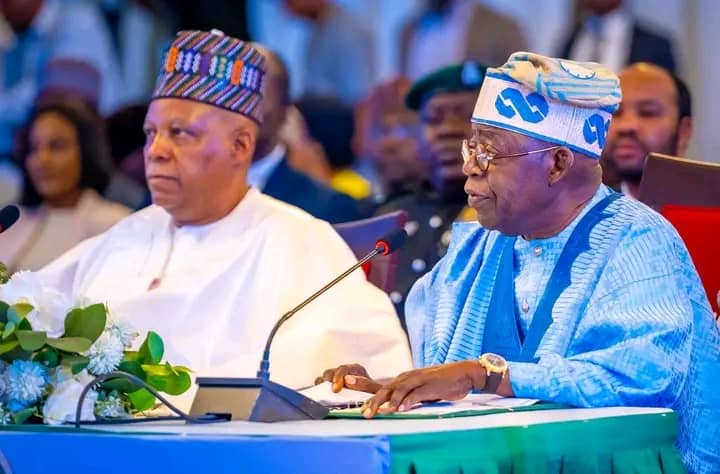
Kano fire outbreak: Tinubu dispatches Shettima to Kano with financial relief for victims
By Abdullahi Mukhtar Algasgaini
In the wake of a devastating fire that ravaged Singer Market in Kano, President Bola Ahmed Tinubu has directed Vice President Kashim Shettima to lead a high-powered Federal Government delegation to the state to commiserate with affected traders and pledge immediate financial support.
The delegation is scheduled to depart Abuja on Monday to assess the situation firsthand. The visit aims to convey the President’s condolences over the weekend blaze that consumed billions of Naira in goods and property at one of Nigeria’s largest food markets.
According to a statement from the State House, the Vice President will pledge federal financial assistance to help alleviate the suffering of the victims and collaborate with the Kano State Government to facilitate the swift reopening of the market.
The high-level team comprises key figures from the legislature and emergency services. Members include the Speaker of the House of Representatives, Tajudeen Abbas; Deputy Senate President, Senator Barau Jibrin; Senator Kawu Ismaila; and Rep. Abubakar Kabir Bichi, Chairman of the House Committee on Appropriations. The Minister of Humanitarian Affairs, Dr. Bernard M. Doro, and the Director-General of the National Emergency Management Agency (NEMA), Mrs. Zubaida Umar, are also part of the entourage.
The fire, which ignited on Saturday evening and persisted into Sunday morning, caused widespread destruction. President Tinubu, who had previously spoken via telephone with Kano State Governor Abba Kabir Yusuf, expressed deep concern over the incident, noting his alarm that this marked the second fire at the same market in less than two weeks.
In response to the recurring incidents, the President has ordered a comprehensive investigation to determine the root causes of the frequent market fires that continue to plunge traders into despair.
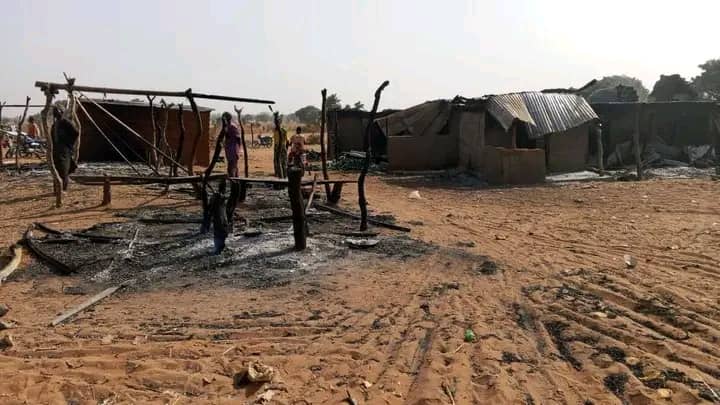
36 killed as bandits raze Niger communities in 3-hour attack
By Abdullahi Mukhtar Algasgaini
Gunmen suspected to be Boko Haram terrorists have killed 36 people and destroyed over 50 houses in a three-hour rampage on two communities in Borgu Local Government Area of Niger State.
The attack, which targeted Tungan Makeri and Nkpaso villages in Konkoso Ward, has left the communities deserted as all women and children have fled for safety.
According to local sources, the death toll rose from 26 on Saturday to 36 by Sunday morning as more bodies were recovered from surrounding bushes. Several residents remain unaccounted for.
“As of this morning, we have recovered 36 bodies, some of them from the nearby bushes. Many people are still missing, and we don’t know whether they were taken away by the terrorists or not,” said Musa, a community source from Tungan Makeri.
The attackers, who operated freely for over three hours, slaughtered residents and set buildings ablaze without encountering any resistance. Tungan Makeri bore the brunt of the assault, with more than 50 houses either destroyed or burnt down.
“We have been burying our dead since yesterday. All the women and children have left. No security agent has visited the communities since the attack began,” Musa lamented.
As of Sunday afternoon, neither the state government nor the police had issued any statement regarding the massacre. Multiple attempts to reach the Chairman of Borgu Local Government Area, Mallam Nasiru Mohammed, proved unsuccessful.
The Borgu kingdom, encompassing Borgu and Agwara Local Government Areas, has witnessed escalating terrorist violence in recent months. The region has seen scores killed, many abducted, and properties worth millions of naira destroyed.
Notable previous incidents include the abduction of over 300 students from Papiri Missionary School in Agwara Local Government last November. Unconfirmed reports suggest over ₦1 billion in ransom was paid for their release after one month in captivity.
In January, terrorists also razed a cattle market in Kasunwa Deji, killing seven people and stealing numerous cattle.
Concerned political and traditional leaders in the kingdom have urgently appealed to the Federal Government to deploy security agents and establish a military base in the area.
Speaking to journalists, the leaders described the situation as “not only worrisome but scary,” noting that the entire Borgu kingdom has been under siege for the past three months.
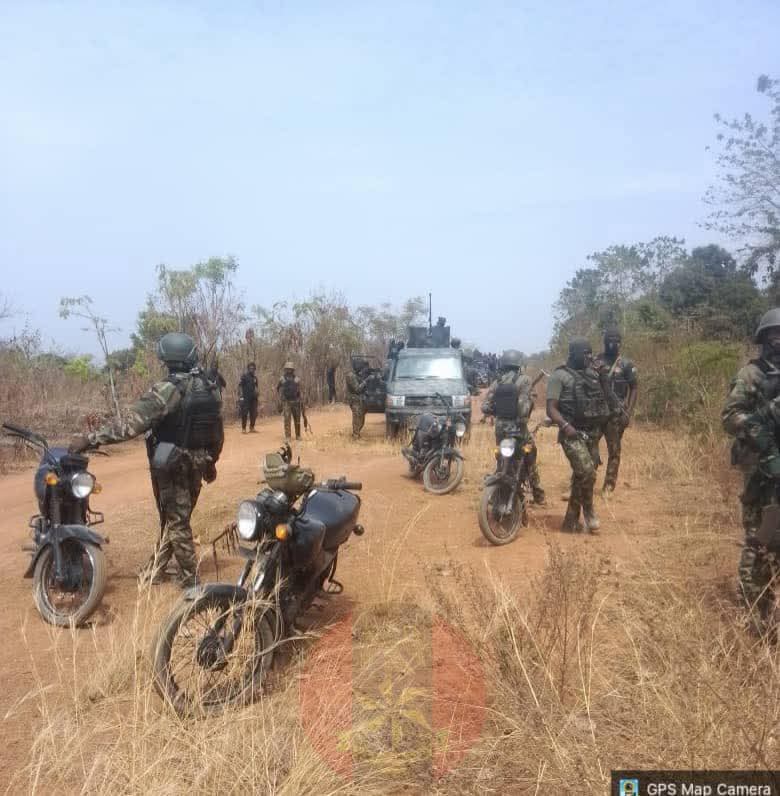
Nigerian military neutralise armed syndicate, recover ammunition in Benue raid
By Sabiu Abdullahi
Troops under the Joint Task Force Operation WHIRL STROKE have dismantled a suspected terrorist syndicate during an offensive operation in Katsina-Ala Local Government Area, recording the recovery of arms, ammunition and other operational items.
The operation followed credible intelligence on the activities of a wanted bandit leader and his network. Security sources revealed that the group operated from a hideout located in Mtan Village, Utange Council Ward, within the local government area.
Troops deployed from Sector 1 moved to the identified location after receiving the intelligence. They encountered armed fighters at the hideout. A gun battle broke out during the advance. The suspects later fled the area under pressure from the troops.
Security forces searched the enclave after gaining control. Items recovered included two motorcycles believed to belong to the bandit leader, eight magazines, 162 rounds of 7.62 x 39mm special ammunition, 10 rounds of 7.62 x 54mm ammunition, and 44 rounds of 9mm ammunition. Troops also recovered links of 7.62mm NATO ammunition and seven empty 7.62mm NATO cartridge casings. A red Toyota vehicle found at the scene was disabled to stop its use for further criminal operations.
The Force Commander of the Joint Task Force, Moses Gara, applauded the intelligence unit for what he described as consistent and timely information that made the mission successful. He also praised the troops for their professionalism, resilience and tactical conduct during the raid.
He stressed the need for continued cooperation between security agencies and residents. He called on members of the public to sustain the flow of useful information to authorities, noting that intelligence sharing remains vital in the fight against terrorism and other crimes across Benue State.
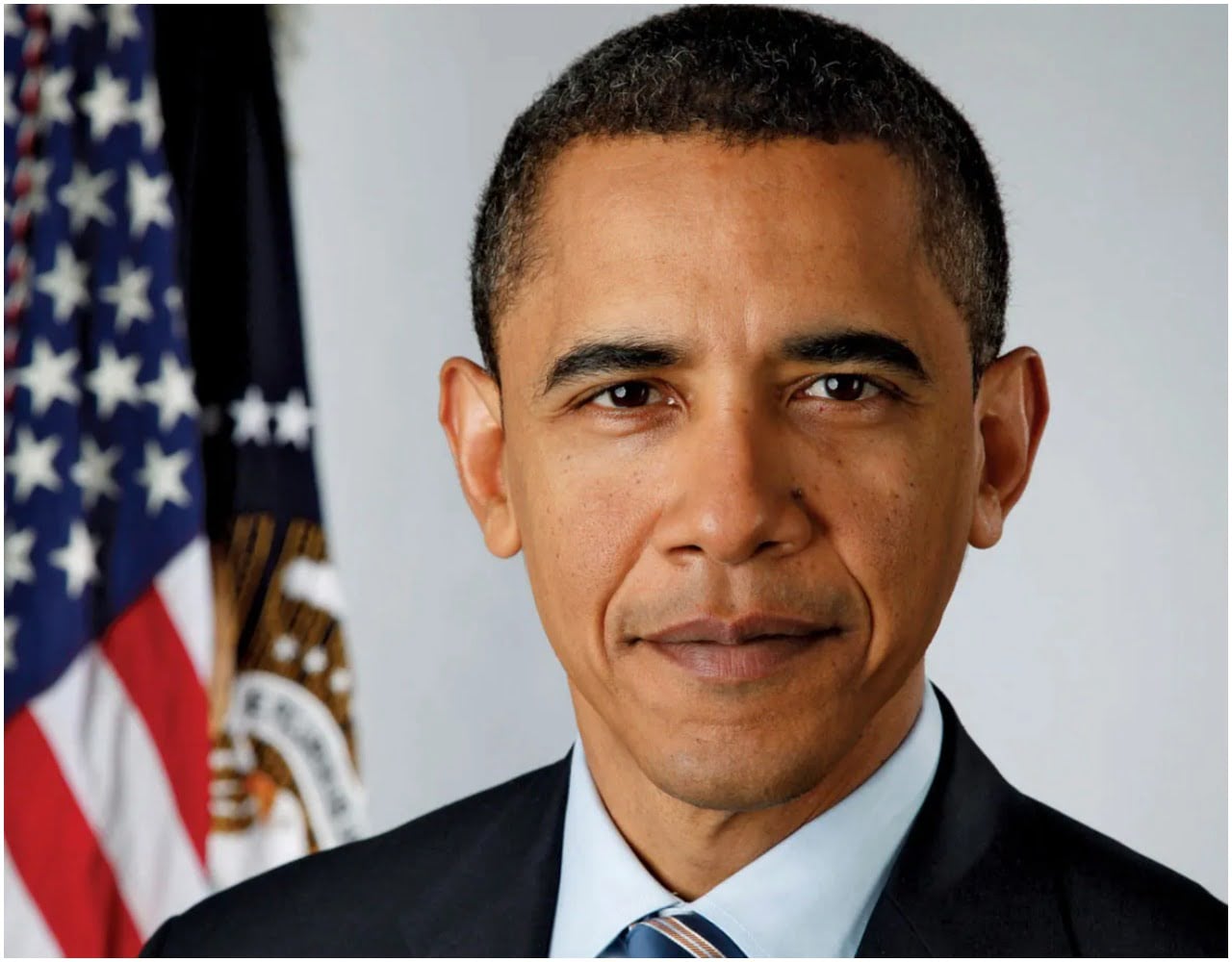
Obama slams Trump over racist monkey video, says US political discourse has become ‘clown show’
By Sabiu Abdullahi
Former United States President Barack Obama has criticised the state of political communication in the country after a controversial video shared on the social media account of President Donald Trump portrayed him and his wife, Michelle Obama, as monkeys.
Obama spoke during a podcast interview with political commentator Brian Tyler Cohen. The discussion marked his first public remarks since the video surfaced online. He condemned the tone of modern political exchanges and described it as degrading.
“[What] is true is that there doesn’t seem to be any shame about this among people who used to feel like you had to have some sort of decorum and a sense of propriety and respect for the office, right? That’s been lost,” Obama said.
The one-minute video was posted on Trump’s Truth Social account on February 5. It promoted conspiracy theories surrounding the 2020 presidential election. Near the end of the clip, the Obamas’ faces were placed on monkey bodies for a brief moment. The post triggered criticism from across the American political landscape.
During the interview, Cohen referenced the development in political rhetoric.
“The discourse has devolved into a level of cruelty that we haven’t seen before … Just days ago, Donald Trump put a picture of you, your face on an ape’s body,” Cohen said.
“And so again, we’ve seen the devolution of the discourse. How do we come back from a place that we have fallen into?” he added.
Obama did not mention Trump directly in his response. He, however, noted that many citizens were disturbed by such conduct. He suggested the situation could negatively affect Republicans in forthcoming midterm elections. Trump later told reporters he supported the main claims in the video about election fraud. He said he did not see the offensive segment at the end of the clip.
The video, believed to be AI-generated, used the song The Lion Sleeps Tonight, popularised by Disney’s The Lion King. It appeared during Black History Month, a period set aside to celebrate the achievements and history of Black Americans.
Obama also addressed immigration enforcement operations in Minnesota. He compared the conduct of federal agents to practices seen under authoritarian systems. He cited two fatal shootings linked to the crackdown.
He described the actions as the kind “in the past we’ve seen in authoritarian countries and we’ve seen in dictatorships”.
Thousands of federal officers, including personnel from Immigration and Customs Enforcement, participated in raids and arrests. Authorities said the missions targeted criminals.
“The rogue behaviour of agents of the federal government is deeply concerning and dangerous,” Obama said.
He nevertheless expressed optimism about civic resistance.
“Not just randomly, but in a systematic, organised way, citizens saying, ‘this is not the America we believe in, and we’re going to fight back, and we’re going to push back with the truth and with cameras and with peaceful protests,” Obama said.
The operations sparked protests in Minnesota and drew criticism nationwide. Disputes over immigration enforcement funding also led to a partial shutdown involving the Department of Homeland Security, as lawmakers debated oversight and reforms.