


Iran Allows French Vessel Through Strait Of Hormuz Amid Ongoing Conflict
By Sabiu Abdullahi
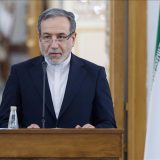
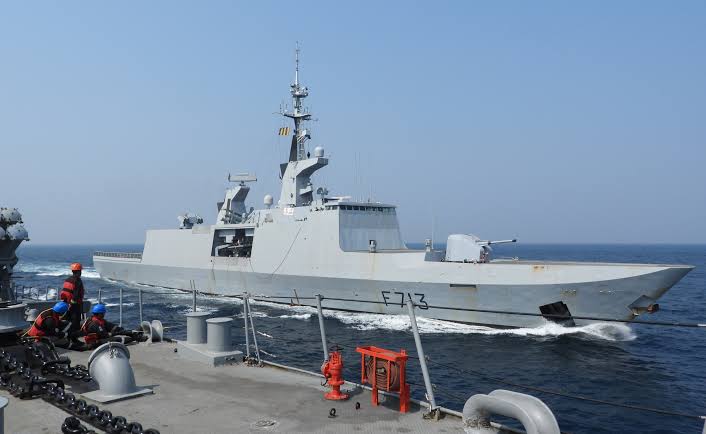
Iran has permitted a French-linked vessel to pass through the Strait of Hormuz, despite the continuing conflict in the region.
The ship, identified as Kribi, sails under the Maltese flag and is owned by French shipping company CMA CGM. It is the first Western vessel to exit the Persian Gulf since hostilities involving Iran began.
Reports indicate that ships from countries such as China, Pakistan and the Philippines have successfully navigated the strait in recent days.
However, Iran’s military has maintained that the strategic waterway will remain closed to vessels linked to the United States and Israel for the foreseeable future.
There are also claims that Iran has introduced charges for ships seeking passage through the strait, with fees said to be as high as $2 million. It remains unclear whether the Kribi paid any such fee.
Tracking data suggests the vessel travelled close to Iran’s coastline while passing through the strait.
Meanwhile, attention remains on the fate of a United States fighter jet crew after their aircraft was downed in Iran. One crew member has been rescued, while the other is still missing.
A geopolitical analyst, Mona Yacoubian, said: “It could be that the US finds whoever this is, and the Iranians don’t have control over this person, but if they do, I think that that is a further escalation of the war. That’s going to present a new challenge for President Trump.
“If there are images that are broadcast of a US fighter pilot taken hostage, captured as a prisoner, that’s going to elevate the challenges in the US domestically, because now you’re going to have this conflict brought home even more personally, into people’s living rooms, on their computer screens… I think it will then increase the pressure further on the administration to do something.”
In a separate reaction, Iran’s parliamentary speaker, Mohammad Bagher Ghalibaf, criticised the United States over the situation, stating: “After defeating Iran 37 times in a row, this brilliant no-strategy war they started has now been downgraded from ‘regime change’ to ‘Hey! Can anyone find our pilots? Please?’.
“Wow. What incredible progress. Absolute geniuses.”
The developments highlight rising tensions in the region, with the Strait of Hormuz remaining a critical route for global oil shipments and a focal point in the ongoing crisis.
US Fighter Jet Knocked Down Over Iranian Territory
By Sabiu Abdullahi
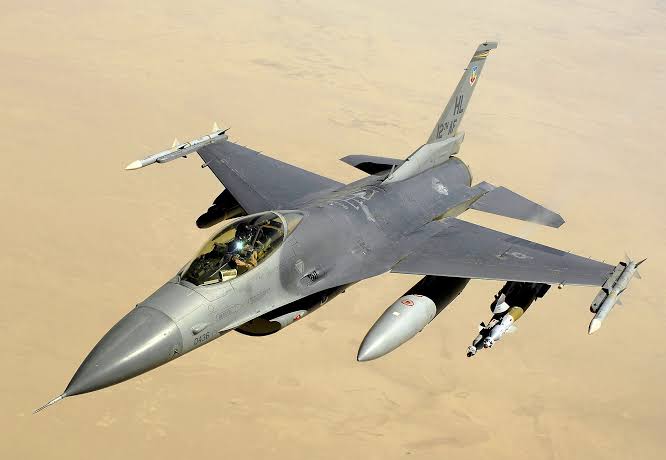
A United States fighter jet has been shot down inside Iran, in what officials describe as the first confirmed loss of an American aircraft to Iranian air defences since the conflict escalated.
American officials and Iranian state media both acknowledged the incident. Several US sources also confirmed the development to CNN, backing earlier reports from Iranian outlets that the jet was intercepted and destroyed by local air defence systems.
Reports indicate that the aircraft was an F-15E Strike Eagle. It reportedly went down in or near Khuzestan Province in southwestern Iran, about 470 kilometres from Tehran.
Videos traced to the area near a bridge over the Karoon River showed military aircraft flying at low altitude. The activity is believed to be linked to rescue or support operations after the crash.
US forces have reportedly launched a combat search and rescue mission to find the crew. The aircraft is believed to have carried two pilots.
Iranian state media, including Fars News and Tasnim News Agency, said early efforts to locate any crew members who may have ejected did not produce results.
A report by Fars News also stated that a reward had been offered for information that could lead to the capture of any “enemy pilot or pilots,” which has raised fears about the safety of the missing crew.
Iranian authorities credited the incident to “advanced and newly developed” air defence systems operated by the Islamic Revolutionary Guard Corps (IRGC).
Images and videos shared by Iranian platforms appeared to show wreckage from the crash, including what looked like an ejection seat. However, independent confirmation of the materials remains limited.
Initial claims from Iranian sources suggested the aircraft was an F-35, but later assessments and US-based reports identified it as an F-15E.
As of Friday afternoon, there was no official statement from the Pentagon, the United States Central Command (CENTCOM), or the White House on the incident or the status of the crew.
Analysts say such silence is common during ongoing combat search and rescue operations in hostile environments.

ADC Defies INEC, Fixes Dates For Congresses, National Convention
By Sabiu Abdullahi
The African Democratic Congress (ADC) has said it will proceed with its planned congresses and national convention, despite the Independent National Electoral Commission (INEC) withdrawing recognition of its leadership.
In a statement issued on Friday by the party’s spokesperson, Bolaji Abdullahi, the ADC outlined a timetable for the exercise, which is scheduled to run from April 7 to April 14, 2026.
According to the party, activities will begin with the screening of aspirants and conclude with a national convention at the end of the exercise.
“This is to notify all party members that, despite INEC’s illegal actions, the African Democratic Congress will continue with its congresses as scheduled, having duly notified INEC by our letters dated 27th February 2026 and 28th March 2026.
“Screening of Aspirants—7th April 2026; Appeals on Screening Exercise—8th April 2026; Polling Unit, Ward, and Local Government Congresses – 9th April 2026; Appeals on the Congresses-10th April 2026; State Congresses-11th April 2026; Appeals on the State Congresses-12th April 2026 and Convention-14th2026; April 2026,” the notice reads.
The development follows INEC’s recent decision to delist the party’s leadership under former Senate President, David Mark.
The ADC has criticised the move and called for the resignation of the commission’s chairman, Professor Joash Ojo Amupitan.
In response, Amupitan explained that INEC acted due to an ongoing court case. He warned that if the party goes ahead with the exercise in violation of judicial directives, any electoral victory recorded by the ADC could be nullified.
SHOCKING: Gunmen Kidnap Over 150 People in Zamfara
By Sabiu Abdullahi
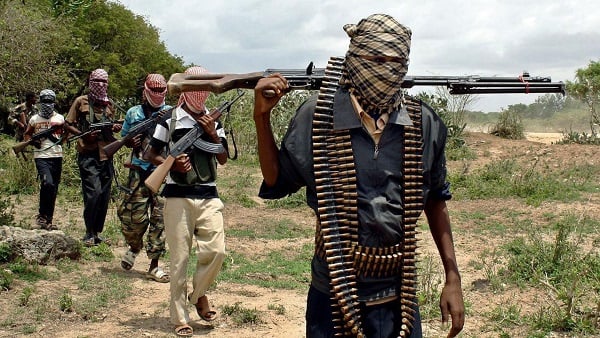
Residents of Bukkuyum in Zamfara State have reported that gunmen kidnapped over 150 people during a nighttime raid.
According to locals, several villages were attacked, forcing hundreds to flee their homes.
Hon. Sulaiman Abubakar Gumi, a federal lawmaker representing Gumi and Bukkuyum, confirmed the incident to the BBC. He stated that residents of Kurfa Ɗanya and Kurfan Magaji spent the night in fear, and that all inhabitants have now left their villages, seeking refuge in Bukkuyum town.
Hon. Gumi added that the Bukkuyum, Gumi, and Anka areas have long suffered from armed attacks and kidnappings for ransom.
He called on the federal government to prioritize security in Zamfara State.
“We see that the government is now focused on Borno due to the threat of Boko Haram’s resurgence, but we urge it to remember that Zamfara is also facing serious security challenges,” he said.
INEC Threatens ADC Against Holding Convention
By Sabiu Abdullahi
The Independent National Electoral Commission (INEC) has cautioned the African Democratic Congress (ADC) against proceeding with its planned congress and convention in violation of a subsisting court order.
The commission warned that any action taken in disregard of the court directive could attract serious legal consequences, including possible disqualification from future elections.
INEC Chairman, Professor Joash Amupitan (SAN), made this known during an interview on Arise News on Friday. He stated that the commission is already involved in the legal dispute affecting the party, as it has been joined as a defendant in the case.
“As far as we are concerned, INEC is a party in the case and INEC was sued as a defendant by a member of the ADC.
“Secondly, the court is very clear that parties, including David Mark himself, should refrain from doing anything that will fuel the situation of inter-complaints in the court.”
He stressed that the party must consider the implications of its decision in relation to the existing court ruling.
“If they are going ahead with their congress, with their convention, it is left for them to look at it, whether it is in contravention of the Court of Appeal.
“INEC did not just take a decision. We didn’t just wake up one day and take the decision. There was something that led to it.
“There was an order of court not to do anything or take any step that would render any proceeding in court negatory, and also put the trial court in a situation of helplessness of inter-complainants.”
Amupitan explained that the matter of the congress and convention is already before the court. He warned that taking steps before the court reaches a decision could affect the judicial process.
“So, if already they asked not to do any congress and convention, it is a relief that is being claimed, essentially the file in motion for that purpose which has not been determined,” he said.
He also referred to past cases in Zamfara and Plateau states, where political parties suffered setbacks after failing to obey court orders.
“If they decide to go ahead with their congress and convention, let me tell you what happened in Zamfara,” he said.
“It has happened in the past, and we don’t want to conduct an election without this early warning, and at the end of the day, after you have won, the court will again declare your election invalid.
“The implication is that the person with the second highest number of votes will be declared a winner. It happened in Plateau State during the last election where the question of primaries was an issue.
“Congresses were not held in some parts of Plateau state. The court said, go and do those primaries.
“Unfortunately, they did not obey the court order. Failure to obey the court order has consequences.”
The INEC chairman added that while the ADC is free to make its own decisions, the commission will not take any step that could violate a court order or interfere with the case.
“They are at liberty to do whatever they want to do but INEC will not want to go into a situation where there is an order of don’t do anything, don’t take any step,” he said.
“The judgment is very definite. If I proceed to monitor their convention, it means I’m taking steps that will affect the subject matter pending before the court.”
Earlier in the week, INEC announced that it had suspended recognition of the faction of the ADC led by former Senate President, Senator David Mark, based on a court ruling. The commission also removed the names of the party’s leaders from its portal and replaced them with the note, “By court order.”
In response, the ADC called for the immediate resignation of the INEC chairman. The party accused the commission of bias and alleged that it was undermining Nigeria’s democracy ahead of the 2027 general elections.
Speaking in Abuja, Senator David Mark criticised the decision to withdraw recognition from the party’s leadership. He said the ADC no longer has confidence in the commission.
He insisted that the party would continue its internal activities in line with the law. He also called on the international community to monitor developments within Nigeria’s electoral system, warning that recent actions by INEC could threaten democratic stability.
Nigerian Presidency Defends Amupitan, Dismisses ADC Leaders’ Call For INEC Chairman’s Resignation
By Sabiu Abdullahi
The Presidency has rejected calls from the African Democratic Congress (ADC) leaders for the resignation of the Chairman of the Independent National Electoral Commission (INEC), Joash Amupitan.
Senior Special Assistant to President Bola Tinubu on Media and Publicity, Temitope Ajayi, said ADC chieftains, including Interim National Chairman David Mark, National Secretary Rauf Aregbesola, and spokesman Bolaji Abdullahi, cannot instruct Amupitan on his duties.
This statement follows a press conference held by ADC leaders in Abuja on Wednesday, where they urged President Tinubu to remove Amupitan, alleging he is incapable of conducting credible elections in Nigeria.
Ajayi, responding on X, said, “We all can at least agree that the INEC chairman is at the top of his career academically and professionally – a teacher of law, Professor of law and a Senior Advocate of Nigeria.
“What this means is he sure knows what ‘status quo ante bellum’ means. Senator David Mark, Mr. Peter Obi, Ogbeni Rauf Aregbesola and Mr. Bolaji Abdullahi, certainly, can’t teach him what that Latin legal maxim means.
“It is bad politics for ADC people to make their own internal crisis of choice a problem of Professor Amupitan, that of President Tinubu and APC.”
The Presidency’s response underscores its position that Amupitan’s professional qualifications and experience place him beyond political pressures from opposition party disputes.
Apex Sharia Council Condemns Plateau Attack, Urges Authorities to Act Swiftly
By Uzair Adam
The Supreme Council for Shariah in Nigeria (SCSN) has condemned the killing of residents in Angwan Rukuba area of Jos, Plateau State, describing the incident as tragic and unacceptable.
In a statement issued on Thursday, the council’s Secretary General, Nafiu Baba Ahmad, expressed outrage over the attack and urged authorities to go beyond routine condemnations by taking concrete steps to end the violence.
The council said the recurring cycle of attacks followed by official statements of condemnation has become inadequate, stressing that safeguarding the lives and property of citizens remains the primary responsibility of government at all levels.
SCSN also noted that Islam places great value on the sanctity of human life irrespective of religious or ethnic identity, warning that the unlawful killing of any individual is a grave offence both morally and spiritually.
The council described the Angwan Rukuba attack as a likely premeditated and coordinated act aimed at provoking wider religious and communal tensions in an already fragile environment.
It also raised concerns about the possible involvement of well-funded groups, including foreign elements, in fueling violence through the proliferation of arms and support for violent networks.
According to the council, such actors exploit Nigeria’s socio-religious differences to weaken national unity and sustain instability for ulterior motives.
The council therefore called on the government to identify and decisively deal with both external sponsors and local collaborators through intelligence-driven operations and regional cooperation.
SCSN also expressed concern over the worsening security situation in parts of northern Nigeria, particularly in the North-East and North-West, where communities continue to face insurgency, banditry and mass killings.
It paid tribute to security personnel who have lost their lives in the line of duty, noting that their sacrifices should not be in vain.
The council extended condolences to the government and people of Plateau State, as well as the families of the victims, praying that they find strength and comfort in their time of grief.
It also urged religious leaders across all faiths to promote peace, restraint and mutual understanding among their followers, while encouraging citizens to speak out against individuals or groups that incite violence.
The council further called for a thorough and impartial investigation into the incident, stressing that security agencies must act professionally to ensure justice is served.
SCSN urged Nigerians to remain law-abiding, vigilant and united against forces seeking to divide the country, warning that the nation cannot continue on the current path of violence.
“The time for decisive action is now,” the statement said.
BREAKING: ADC Declares INEC Untrustworthy, Calls for Amupitan’s Removal
By Sabiu Abdullahi
The African Democratic Congress (ADC) has demanded the immediate removal of Joash Amupitan, chairman of the Independent National Electoral Commission (INEC), accusing him of deliberately misinterpreting a court order related to the party’s leadership dispute.
Speaking at a press briefing on Thursday, David Mark, national chairman of the ADC, said the electoral body “can no longer be trusted,” describing its actions as unlawful and partisan.
Mark explained that the controversy arose after a March 12 Court of Appeal judgment directed all parties, including INEC, to maintain the status quo while the case continued in the Federal High Court.
He added that his legal team challenged the Federal High Court’s jurisdiction, but the appeal was dismissed, leaving the directive to preserve the existing ADC leadership intact.
“After the judgment, lawyers associated with Nafiu Bala sought recognition from INEC in a manner that distorts the meaning of status quo ante bellum,” Mark said, claiming that these actions were supported by the ruling All Progressives Congress (APC), which he accused of attempting to weaken opposition parties.
“It is not the ADC that is under attack. This is a direct assault on Nigeria’s democracy and the right of Nigerians to choose, participate, and exercise their rights as free citizens,” he added.
Mark further said, “We have witnessed how the APC-led Federal Government has undermined, compromised, and coerced other opposition political parties. The ADC has risen as the last bastion between Nigeria’s democracy and full-blown dictatorship. And this is what worries them.”
He expressed shock at INEC’s April 1 announcement withdrawing recognition for both his leadership and Bala’s faction, creating what he described as a “false equivalence” between the parties.
Mark insisted that Bala had already resigned from party leadership and could not be legally recognised as a factional leader.
“The crux of the matter is the interpretation of status quo ante bellum. There is no legal precedent that supports INEC’s conclusion,” he said, criticizing the commission for failing to seek judicial clarification and accusing it of bias.
He added that INEC has effectively left the ADC without a recognised leadership, noting that the commission “lacks the constitutional authority to determine or impose leadership on political parties.”
“At no time was the ADC without a duly constituted leadership. INEC has invented a status quo that never existed,” Mark said.
“The commission cannot decide who leads a political party. That power does not belong to INEC.”
He concluded that the electoral body’s actions amount to contempt of court and undermine the rule of law. “There is only one conclusion: the electoral umpire has taken sides. It can no longer be trusted,” Mark said.

‘What A Shame’ – Peter Obi Criticises Tinubu Government For Complicity In Masterminding ADC Crisis
By Sabiu Abdullahi
Former presidential candidate of the Labour Party, Peter Obi, has faulted the administration of President Bola Tinubu over the crisis rocking the African Democratic Congress (ADC), describing the situation as a setback for democratic values.
Obi made his position known in a post shared on X on Thursday. He expressed concern over what he described as a contradiction involving individuals who once championed democracy and human rights during the era of General Sani Abacha.
He stated that many of those figures, who were active under the National Democratic Coalition (NADECO), now appear to act in ways that contradict the ideals they once promoted. He added that recent developments suggest a decline in respect for democratic principles.
He wrote: “Yesterday defenders of democracy, today’s destroyers. What a shame.
“What an irony of history, that the acclaimed defenders of democracy and human rights who claimed to have fought for democracy during the era of General Sani Abacha now find themselves worse than the man they opposed.
“today, General Sani Abacha, once presumed face of oppression, will be remembered as seemingly more democratic and more respectful of human rights than the so-called champions of activism from the NADECO days. Power indeed reveals character.”
Obi’s remarks followed the decision of the Independent National Electoral Commission (INEC) to delete the names of former Senate President David Mark and former Osun State governor Rauf Aregbesola from its portal as national chairman and national secretary of the ADC.
INEC also stated that it would not recognise Nafiu Bala Gombe, who is pursuing recognition as national chairman through the courts.
The commission further announced that it has suspended recognition of all factions within the party. It added that it would not monitor any congresses or conventions organised by the rival groups until the Federal High Court delivers a final judgment on the matter.
APC Backs INEC Decision To Withdraw Recognition From ADC Factions
By Sabiu Abdullahi
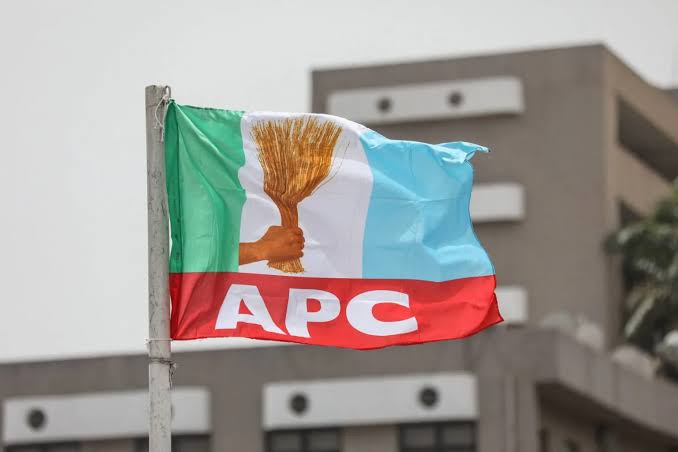
The All Progressives Congress (APC) has expressed support for the Independent National Electoral Commission (INEC) over its decision to withdraw recognition from the rival factions of the African Democratic Congress (ADC).
INEC had earlier stated that it would no longer recognise or relate with the two opposing groups within the ADC led by former Senate President David Mark and Nafiu Bala Gombe. The commission explained that its action followed a review of a recent Court of Appeal judgment. It added that it would maintain the status quo until the Federal High Court gives a final ruling on the matter.
As part of the decision, INEC also removed the names of executives loyal to Mark from its official portal. The move sparked criticism from members of that faction.
Reacting to the development, APC spokesperson Felix Morka said the crisis within the ADC was caused by the party’s internal actions. He dismissed claims that the ruling party played any role in the situation.
“INEC decision to de-recognise the David Mark executive was utterly self-inflicted. APC didn’t do that. You orchestrate the hijack of the ADC by that executive. We didn’t. They did,” Morka said.
He also accused the Mark-led group of failing to follow due process in taking control of the party.
“You come in with your parachutes; you take over the party without reference to the constitutional stipulation about succession and how leadership is ordered in that party. This is the consequence,” he added.
However, the ADC faction loyal to Mark has rejected INEC’s stance. The group alleged that the electoral body acted under external influence in taking the decision.