




Businesses you can start with less than 10K capital
By Aisha M Auyo
Introduction
With the rise in the cost of living, the removal of fuel subsidies, and other factors affecting the average Nigerian, I thought about how we could do something to augment our income. A business or service that will bring more into our account, known as a side hustle, depends on our skills and capital.
In this write-up, I will start with a business idea that requires ₦10,000 or less, and I plan to progress to a more complex skill and larger capital investment.
So, what’s a side hustle? A side hustle is an additional employment opportunity unrelated to a person’s full-time job that provides supplemental income. In other words, a side hustle is a way to earn extra income in addition to a full-time job. With the extra money, it may be easier to pay bills, contribute to savings, or assist with other expenses.
The additional income could also help turn your side hustle into a growing business. Unlike a part-time job, a side hustle usually offers more freedom and more control over what a person does, when they do it, and how many hours they devote to it.
Individuals can usually pursue a side hustle that involves their passions and talents, and some may eventually make their side hustle their primary career. If you’re interested in making extra money outside of your full-time job or want to explore a new career, consider starting a side hustle.
To pursue one successfully, it is helpful to choose the type that matches your interests, skills, and professional goals. Learning more about side hustles might allow you to earn money while doing something that engages you and gaining professional experience in a new field.
Benefits of having a side hustle
1. Gaining flexibility: Individuals typically manage the time they dedicate to their side hustle, making it easier to integrate into their existing schedule as full-time employees. By controlling their schedule, they can make their side hustle accommodate other events or commitments they have while still earning additional income. This may help them gain flexibility and maintain employment in their existing role while also pursuing their passion.
2. Improving your finances: A side hustle is a way to earn additional income in addition to a full-time job. With the extra money, it may be easier to pay bills, contribute to savings, or assist with other expenses. The additional income could also help turn your side hustle into a growing business.
3. Exploring Your Passions: One advantage of a side hustle is the opportunity to pursue a career you’re passionate about. Pursuing your passions as part of a side hustle may allow you to develop your side hustle into a career. You can also develop specific skills that may help make your side hustle successful.
In this article, I’ll discuss 16 ideas for side hustles you can try with a capital of ₦10,000 or less. They are as follows:
1. Tutor/Lesson Teacher: Many families seek extra help with their children’s schoolwork. Offering tutoring services can be a successful side hustle, and helping students can be rewarding. This side hustle may accommodate a full-time job since many tutors only work before or after school hours. I advise you to find students near your area so you can walk or commute for less than 500.
2. Babysitting: With many nursing mothers going to work or other engagements daily, the need for a babysitter has risen. Also, the lack of relatives and extended family households has given rise to mothers depending on others to help with their children. You can stay at the person’s home and look after their children, or the baby could be brought to you if you live in a baby-friendly environment.
3. Cleaner: This side hustle offers a variety of options, including cleaning residential homes and commercial businesses. Additional service options could include cleaning the interior, exterior, or both aspects of buildings. You may offer as many or as few of these services as you wish, and you could charge different prices depending on the service.
4. Car wash: Offer to wash cars in your neighborhood or find a local car wash where you can assist the owners when they’re overwhelmed.
5. Technology repairer: If you have an affinity for technology, a potential side hustle could be repairing technology. This could include fixing computers, laptops, smartphones, or tablets. These devices are a big part of many people’s lives for work and leisure, and some pay for repairs on these devices. You may have the option to control how these repairs come to you, such as having them sent through the mail, having clients bring them to you, or picking them up yourself.
6. Rental property manager: If you own a residential or commercial space, renting it out could be a successful side hustle. Whether you rent it out short-term or long-term, and for businesses or vacations, there are many options and potential clients. You can either advertise on your own or use real estate sites or companies that can help you reach potential renters.
7. Personal trainer: Helping others reach their fitness goals can be a very rewarding side hustle. You can maintain a schedule of clients around your availability, and you could work at a public gym or park your facility if you have one. There are certifications and licenses you may be interested in earning as you enter this job field.
8. Tailoring: If you have experience in tailoring and sewing, another side hustle could be doing alterations. This is when a customer visits a tailor to have their garments altered to fit their bodies. A common example is wedding dresses, as many brides order dresses and have tailors alter the dresses to their exact measurements.
9. Plaiting hair: If you have the skill of plaiting hair, you can do this in your free time. If customers aren’t coming, you can offer to do home service in your neighborhood or places not far from your area. Home service also allows you to meet others who might want their hair done.
10. Henna design: In this era of women wanting to look their best, henna design has come to stay. Women want to adorn themselves with this natural product. If you have the skill of either red henna, dye, Rani, or Sajem design, offer to do it at your place or provide home services. These things sell and don’t cost a lot.
11. Manicure and pedicure: Working-class women and men want to pamper themselves and look their best. So, getting their nails, feet, and toes done is something they will need. The tools for this service may not cost up to 5k. Also, home service will work just as well if one doesn’t have space.
12. Roasting corn/plantain/yam: This business is ubiquitous, yet we can’t get enough of it. Try roasting on the roadside along a busy route in your area when you are free. Buying corn, plantain, or yam for a start-up won’t cost more than 2k, then add coal and a rack for roasting.
13. Making snacks: Making small chops or snacks for events or daily for schoolchildren and workers is another way to get a steady income. Parties and social functions are always coming up. You can even offer a home service where the client buys all the ingredients, and you make the snacks for them to refrigerate.
14. Selling drinks/Zobo/kunun aya: Depending on the weather, cold drinks always sell. But with the advent of health awareness and the vices of carbonated drinks, people are opting for natural drinks. Nonetheless, one can combine natural and carbonated drinks in a bucket with ice. This will cost less than 10k.
15. Selling fruits and vegetables: Fruits and vegetables are always needed, and not everyone has the luxury of going to the market or store every day. So, bringing these to their location will always be welcome, from cucumbers, bananas, plantains, peppers, carrots, or onions. One can always get a customer needing one of these.
16. Online advertisements: If you are an internet user, you can help with social media posting or managing business accounts. You can take videos or pictures of items and advertise them, then get paid for your efforts. If you have many contacts on WhatsApp, you can advertise products and services on your status and get paid for doing so.
Which of the above businesses sounds appealing or doable to you? Is this feature helpful? In what ways? Please share your thoughts with us.
Aisha Musa Auyo is a doctoral researcher in educational psychology, a wife, a mother of three, a homemaker, a chef, and a parenting/relationship coach. She can be reached via aishamuauyo@live.co.uk.
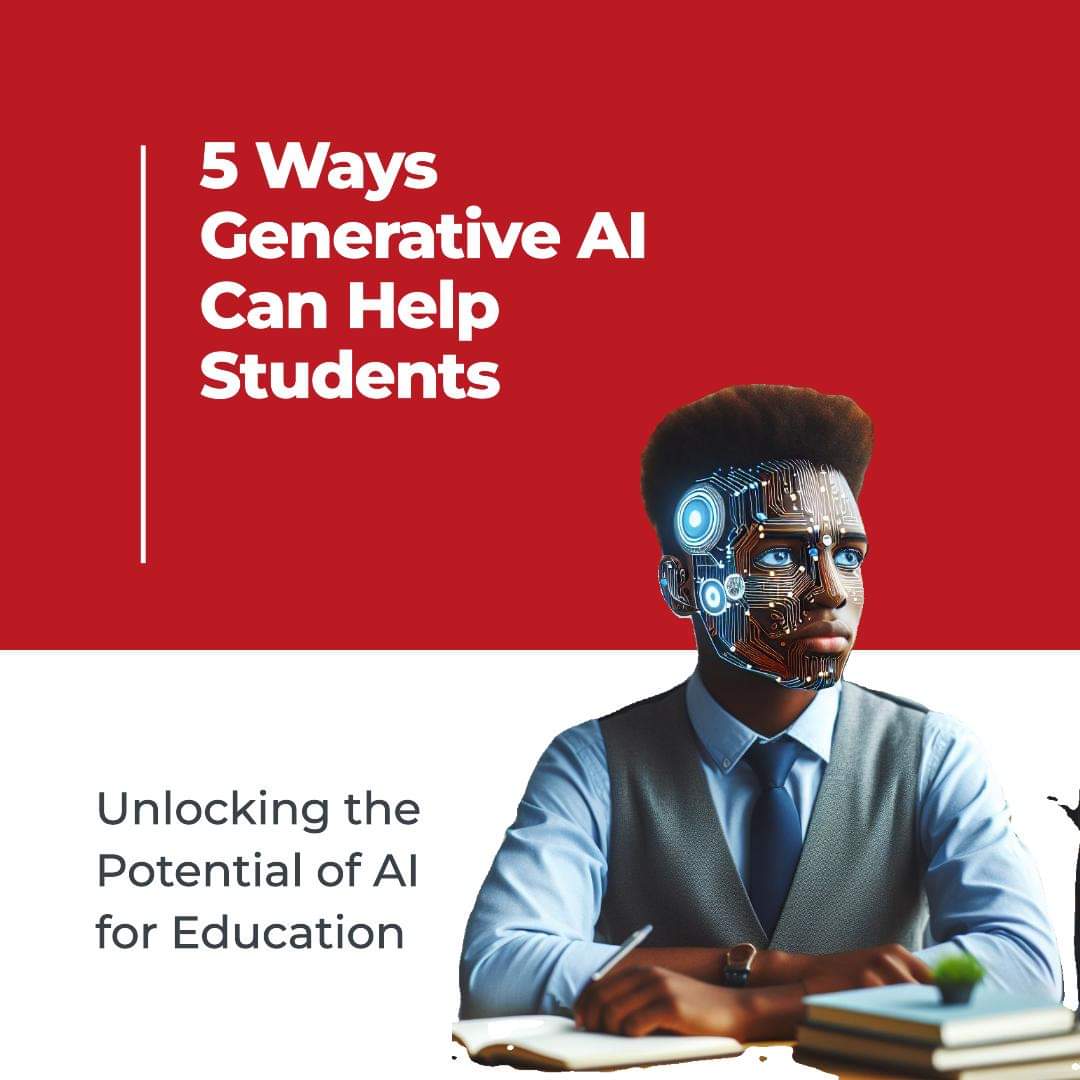
5 ways students can leverage generative AI to improve their academic performance and career prospects
By Najeeb G. Abdulhamid, PhD
I was recently working on a document about the ethical and responsible use of generative AI in academic research. It struck me that I hadn’t explored the potential of this technology for students themselves. So, I’ve compiled 5 potential uses cases for generative AI that can enhance learning while promoting responsible and ethical practices.
1. Leveraging Generative AI for Peer Feedback
One of the benefits of generative AI is that it can provide feedback on your work. Whether you are writing an essay, preparing a presentation, or working on a project, you can use tools like Bing Copilot, ChatGPT, Google Gemini, and Claude.AI to get comments on your draft. These tools can identify your strengths and weaknesses, suggest improvements, and ask insightful questions. This can help you polish your work and learn from your mistakes.
However, you should always verify and cite the feedback generated by these tools. Do not blindly accept or copy their suggestions without checking their accuracy and relevance.
2. Using Generative AI as a Personal Tutor
Another way to use generative AI is to get personalized tutoring. You can use these tools to review course materials, prepare for exams, and explore new topics. For example, you can use these tools to generate summaries, outlines, or flashcards from textbooks, lectures, or slides. You can also request practice questions, hints, and solutions tailored to your specific course and difficulty level. Additionally, you can use these tools to generate summaries, analyses, and insights based on your research questions and sources, allowing you to explore new areas of your field.
However, you should not use these tools as a substitute for your instructor, textbook, or classmate. You should still attend classes, do your readings, and participate in discussions.
3. Using Generative AI as a Source of Inspiration
Generative AI can also spark your creativity and self-discovery. You can use these tools to generate new ideas or content related to your interests, like stories, poems, music, images, recipes, or travel guides. This can help you discover hidden talents and passions, broaden your perspectives, and uncover new possibilities.
However, you should not use these tools to plagiarize or copy the work of others. You should always give credit to the original sources and the generative AI tools you used.
4. Using Generative AI as a Copilot to Conduct Research
Generative AI can also assist you in conducting research. You can use these tools for brainstorming and ideation, summarizing relevant literature, and exploring research questions, methods, findings, limitations, and recommendations.
Additionally, these tools can help you refine your language and address potential grammar or clarity issues in your draft papers. This can help you conduct research more efficiently, communicate your findings with greater clarity, and effectively convey the significance of your work.
However, you should not use these tools to fabricate or falsify data, code, or results, or to misrepresent or exaggerate your findings and implications. Always follow the ethical and responsible principles and practices of research, such as transparency, accountability, fairness, and privacy.
5. Leveraging Generative AI to Build Stronger Teams
With the rise of project-based learning, fostering effective teamwork is crucial. Generative AI tools can help you generate suggestions and tips for successful collaboration, such as strategies for setting roles and responsibilities, managing conflict, and resolving issues. These tools can also generate project plans outlining tasks, deadlines, and deliverables.
Additionally, they can create templates that prompt you to define roles, goals, communication methods, and feedback mechanisms. This can help you develop interpersonal, leadership, and problem-solving skills, ultimately improving team productivity and satisfaction.
However, you should not use these tools to replace or undermine the human element and the social aspect of teamwork and collaboration.
A Word of Caution: Responsible Use is Key!
While these applications hold great promise, it’s crucial for students to check with their faculty and consult their academic integrity handbook first. If specific policy guidelines aren’t established, here are some golden rules for responsible and ethical use of generative AI tools:
• Verify all information: As the user, you are ultimately responsible for ensuring the accuracy, relevance, and appropriateness of your work. Do not blindly accept AI-generated content without thorough verification.
• Cite your sources accurately: This includes both the original sources you used in your work and the generative AI tools you employed.
• Beware of fabricated information: Generative AI tools can sometimes invent references and information. Always verify any suspicious content before including it in your work.
By employing these tools thoughtfully and ethically, students can enhance their learning experience, boost creativity, and cultivate essential skills for academic and professional success. P.S:
To make this article more useful, I created some sample prompts for each of the five use cases I discussed above. You can use them to try out generative AI tools for yourself. Just follow this link t.ly/R5gPT to access the prompt library!
Image and poster credit: #generatedwithbingcopilot

On dyscalculia – the difficulty in learning mathematics
By Fauziyya Muallim
Mathematics is one of the core subjects all students must learn from pre-school to a certain level. Therefore, there is much effort for students to understand it by all means possible. However, many students consider it to be the most challenging subject that is difficult to understand. Several factors lead to difficulty in learning mathematics.
Dyscalculia is a term used to describe specific learning disabilities that affect a child’s ability to understand, learn, and perform math and number-based operations. It usually begins to show as soon as children start to learn Mathematics in school, but adults may have dyscalculia without knowing.
The good news here is: Dyscalculia can be treated in children because their brains haven’t finished developing, making it possible for them to learn skills and develop abilities they need to adapt to this condition. Moreover, not all difficulties in math are caused by dyscalculia.
Dyslexia disrupts areas of the brain related to reading. External factors include overcrowded classes, fear and anxiety, weak foundation, instructors and instructional materials.
For young children struggling longer and harder with the most elementary of numeracy rules and facts, you may assess the child for dyscalculia. It is important to understand the symptoms of dyscalculia at all ages so that struggling students can be identified and supported.
Young children (pre-school pupils): For young children, the most common symptoms include trouble with:
- Counting upward
- Matching numbers with objects
- Recognising numbers
- Arranging numbers in order
Primary school pupils: The symptoms for kids around the age of 6 include trouble with:
- Counting on fingers with small numbers
- Loose track when counting backwards
- Memorisation of multiplication tables
- Confusing operations signs or performing them in the wrong way
- Doing simple calculations from memory
- Understanding the concept of word problems
- Basic math functions like addition, subtraction, multiplication and division
- Forgetting what they are doing in the middle of a math problem
- Having difficulty reading the clock and telling time
Secondary school (Teenagers) and adults: The symptoms in teenagers and adults may include;
- Trouble with Solving word problems
- Unable to recall basic math facts, steps, rules and formulas
- Forgetting what they are doing in the middle of a math problem
- Confused when learning multi-step procedures
- Measuring items or quantities
- Understanding and converting fractions
- Struggling with money matters such as making change, counting bills, or estimating how much something will cost
- Easily get frustrated by games that require consistent scorekeeping, number strategies or counting.
There’s no specific test for dyscalculia, but you can help your child through the following processes:
Please consult your child’s teacher: Ask your child’s math teacher the areas they struggle to understand the most and the child’s complete learning to help you understand where to focus.
Visit a doctor: check out your child’s hearing and vision impairment that could impact learning. Your healthcare provider can tell you more about their treatment options for your case. Treatment should start as soon as possible; the sooner treatment begins, the better chances for a child to adapt to this condition and limit the impacts.
Consult a specialist: seek professional help to evaluate your child and give advice, which usually takes the form of a one-on-one learning program to focus on what the child struggles with most.
A child with dyscalculia may do well in other subjects and still struggle in math and math-based classes. Moreover, dyscalculia doesn’t affect intelligence directly. It’s common for people with dyscalculia to have an above-average score on IQ tests. People with dyscalculia are also often gifted in other areas, especially creative skills (arts).
Fauziyya Muallim is a mathematics teacher and wrote from Kano.
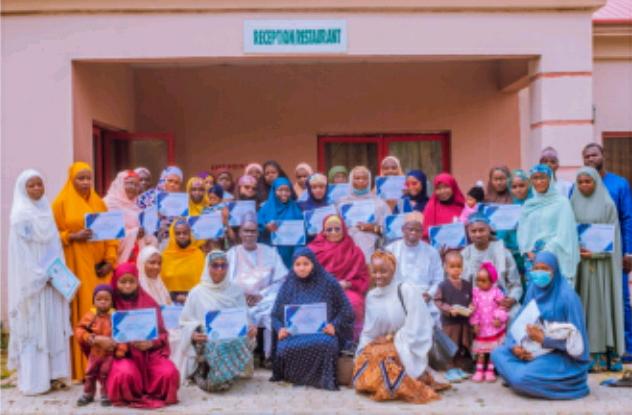
30 women graduate from entrepreneurship training in Jigawa
By Uzair Adam Imam
The program, which was designed to foster economic empowerment and gender equality, was launched on Wednesday in Jigawa State by Blue Sapphire Hub in collaboration with the US Embassy in Abuja as part of its transformative Women on Wednesday (WOW) initiative.
The initiative had made significant strides in Kano and Sokoto states.
It aims to equip women entrepreneurs with essential entrepreneurial and digital skills and also alleviate poverty.
The inaugural cohort in Jigawa State comprised 30 women-led small businesses with limited entrepreneurial and digital skills.
Through a series of workshops, mentoring sessions, and networking opportunities, participants were immersed in a supportive environment designed to enhance their business acumen and market reach.
However, key institutions such as the Small and Medium Enterprises Development Agency of Nigeria (SMEDAN), Corporate Affairs Commission (CAC), Federal Inland Revenue Service (FIRS), National Agency for Food and Drug Administration and Control (NAFDAC), and Jaiz Bank collaborated closely with Blue Sapphire Hub to ensure the success of the program.
The participants report increased sales, improved financial management practices, and expanded market opportunities.
The graduation ceremony for the first cohort of WOW 2024 was held on January 25, 2024, with notable dignitaries in attendance, including the Honorable Commissioner of Women’s Affairs, Hajiya Hadiza Abdulwahab, and the Principal Private Secretary to the Jigawa State Governor, Alhaji Adamu Muhammad Garun Gabas.
A highlight of the ceremony was the generous pledge of N1.5 million made by Hajiya Hadiza Abdulwahab on behalf of her ministry and the Jigawa State Government to support the businesses of the WOW participants.
The Jigawa State Government has demonstrated unwavering support for the initiative, actively engaging in its implementation and expansion.
The WOW program is not merely a one-time initiative but rather a year-long commitment comprising four cohorts.
This sustained approach promises continued empowerment and growth for women entrepreneurs throughout Jigawa State.

CBN considers significant increase in minimum capital requirements for BDC operators
By Sabiu Abdullahi
The Central Bank of Nigeria (CBN) is contemplating raising the minimum capital requirements for Bureau De Change (BDC) operators, with proposed figures set at N2 billion for Tier 1 licences and N500 million for Tier 2 licences.
This potential adjustment marks a substantial increase from the previous requirement of N35 million for a general licence.
The proposed updates encompass a series of modifications to the regulatory framework governing BDC operations across the nation.
Once ratified, these revised guidelines will be implemented on a date determined by the CBN.
Under the proposed Tier 1 classification, operators must maintain a minimum share capital of N2 billion and furnish a mandatory caution deposit of N200 million.
Furthermore, the application fee is set at N1 million, with an additional licence fee of N5 million.
For Tier 2 operators, the proposed minimum share capital stands at N500 million, accompanied by a mandatory caution deposit of N50 million.
The application fee for Tier 2 operators is proposed at N250,000, while the licence fee amounts to N2 million.
The CBN stated the importance of these revised minimum capital requirements in enhancing the stability and integrity of the BDC sector.
These measures are intended to strengthen the operational capacity of BDC operators, promote transparency, and mitigate risks associated with currency exchange activities.
This prospective adjustment underscores the CBN’s commitment to fostering a robust regulatory environment conducive to the sustainable growth and development of Nigeria’s financial sector.

Gaza War: Might is Right
By Dr Raji Bello
I have no intention of aggravating anyone’s feelings over the war in Gaza. I also feel bad about it, even though I don’t write much on the subject. The main reason for this is that nothing surprises me about what is happening. I have completely anticipated what Israel would do as well as the reaction of the Western countries to Israel’s conduct. No UN vetoes or abstentions by the Western countries is a surprise or a shock to me.
My interest in history and current affairs for over 40 years has taught me two uncomfortable truths, which I have written about a few times:
1. Might is right. Powerful civilisations, kingdoms or countries have always done as they wished and will continue to do so until the end. Most other countries would either accept or at least not confront what the powerful countries do.
2. Relations between human societies or countries have never been based on moral considerations and will never be. They have always, and will always be, based on interests. Morality only becomes a consideration when there are no compelling interests to pursue.
When these two truths have been understood, two conclusions can be made:
1. no level of horror of human suffering would make powerful countries stop pursuing their interests. This is why the US and the UK behave like they do at the UN.
2. While it is incumbent upon the less powerful countries to also pursue their interests, they should never get in the way of a powerful country’s pursuit of its interests.
Human beings are not as mentally sophisticated as we might think. We are technically and materially advanced, but the ancient rules still apply. For less powerful countries to survive and flourish, tact is essential. They could get what they wanted through tact but would risk being crushed if they stood in the way of a powerful country.
The only feasible way to take on a powerful country directly is by acquiring more power than them. Until a less powerful country acquires more power, its strategy should be tact, and tact only.

Haba Bauchi North Senator
By Mallam Musbahu Magayaki
I write to draw the attention of the senator representing Bauchi North, Alh. Dr Sama’ila Dahuwa Kaila, about several lamentations over his leadership failures, coming from all angles in Bauchi North to the worst extent that the constituents in question have started giving up on your leadership. This is quite sad, I must say.
Almost everyone in Bauchi North has been confused, saying, “Is there any senator in Bauchi North?” Because nearly all the dividends of democracy are being brought to them by the members of the House of Assembly and the House of Representatives—their senator seems to have disappeared.
Sen. Sama’ila, we had high expectations before we voted you into power. Or could you tell us that it is too early to start judging you? If yes, why did your counterparts support their constituents with several programmes aimed at improving their living standards?
Meanwhile, your counterparts in Bauchi South and Bauchi Central, who, since you assumed office, have been empowering their constituents with skill acquisition materials and others with cash to start businesses of any kind,
One should remind you that Bauchi North needs your activities to sound very effective! However, the rate of people roaming the street without doing anything employable is alarming, as are the domestic terrorists, who are often framed as “yan sara-suka.” But having your supporting hands very extended to them will reduce their number in our midst, if not totally eradicated.
Sir, could you tell us that you don’t know the number of graduates Bauchi State produces yearly without having them employed by both state and federal government agencies? Kindly find the number; maybe you will instantly wake up from your chamber of slumber and start acting.
Since your swearing-in, nothing in the form of empowerment has been brought to Bauchi North by your name. Sadly, even with the palliative that was given by the Federal Government to the senators and House of Representatives members, you hoarded them and failed to distribute them to your constituents with all the starvation and economic hardship people experienced.
It’s time you woke up and lived up to your responsibilities. This is because you’re running out of time and don’t have time to waste.
Mallam Musbahu Magayaki writes from Sabon Fegi, Azare, Bauchi State.

Customs launches nationwide sale of seized food items
By Sabiu Abdullahi
Nigeria Customs Service (NCS), in a bid to bolster food security and ensure accessibility to essential food items across the nation, has inaugurated a nationwide sale of seized items, with a bag of rice being auctioned at the price of N10,000.
During a press briefing held yesterday in Lagos to inaugurate the sale of the food items, Comptroller-General of the NCS, Bashir Adeniyi, underscored the service’s unwavering commitment to safeguarding food security and facilitating the availability of crucial food commodities in the country.
Adeniyi highlighted that the NCS had obtained government approval to distribute confiscated food items to deserving Nigerians at discounted rates.
The targeted beneficiaries include artisans, teachers, nurses, religious bodies, and other members of the populace.
“In recent months, the government has been addressing the challenges confronting our economy, particularly the lingering effects of insecurity and prevailing exchange rate issues,” Adeniyi remarked.
He expressed concern over the surge in the outflow of food items to neighboring countries, attributing this trend to the exacerbation of food security concerns.
Adeniyi noted that such practices strain Nigeria’s productive capacity and jeopardize its food security.
The seized items up for sale comprise over 20,000 bags of assorted grains including rice, beans, maize, guinea corn, millet, and soya beans, alongside 2,500 cartons and 963 bags of dried fish.
Additionally, other items such as dried pepper, tomatoes, cooking oil, maggi, macaroni, salt, sugar, and garri are included in the sale.
Adeniyi reiterated the NCS’s commitment to overseeing the supply chain diligently to prevent any misuse or diversion of the food items.
He assured that stringent guidelines and eligibility criteria have been implemented to ensure that the items are allocated solely to individuals in genuine need.
The launch of this initiative signals the NCS’s proactive stance in addressing food security challenges and underscores its role in promoting the welfare of Nigerians amidst prevailing economic conditions.

Is there a silver bullet solution to Nigeria’s problems?
By Mukhtar Sani Yusuf
Nigeria grapples with a multitude of complex challenges that defy easy solutions. While there is no single panacea, I firmly believe that by addressing two crucial elements, the nation can transcend its current predicaments and ascend to greater heights.
The pivotal factors that can propel Nigeria toward progress are effective leadership and a collective shift in the attitudes of its citizens. It is imperative that we harmonize these two aspects to achieve the transformative outcomes we aspire to see.
One prevalent tendency is to attribute Nigeria’s woes solely to its leaders, given their authority and access to resources for nation-building, economic development, law enforcement, and governance. Regrettably, instances abound where leaders have misappropriated resources or allowed wrongdoers to evade accountability, further exacerbating our challenges.
However, it is imperative to recognize that even with competent leaders at the helm, the onus lies on us to cultivate a positive mindset that complements leadership efforts in nation building. While poor governance accounts for a significant portion of our struggles, the remaining share of responsibility rests on our collective attitudes toward various facets of society.
Consider this: whether you are a laborer, teacher, banker, or any other professional, are you genuinely fulfilling the expectations set by your employers or clients?
Acknowledging our fallibility as humans, it is crucial to introspect and ascertain whether the majority of our actions align with ethical standards. If not, we must acknowledge our role in perpetuating challenges and recognize that transformative change begins with personal responsibility.
When juxtaposed with developed nations, the disparity is not due to any inherent superiority but rather the dedication of their citizens to national progress. Rome was not built in a day; it required a relentless commitment and a patriotic work ethic from its inhabitants. Similarly, Nigeria holds immense potential, with its vast population and abundant resources, waiting to be harnessed for prosperity.
To witness the transformation we yearn for, each of us must instigate a change in attitude within our spheres of influence. We must combat corruption, reject impunity, uphold honesty, punctuality, and dedication in our endeavors, make informed electoral choices, and embody patriotism that prioritizes the national interest. Without these shifts in mindset, the utopia we envision for Nigeria remains elusive.
In essence, the solution to Nigeria’s challenges lies not in a singular solution but in the collective evolution of our attitudes. The nation’s reservoir of human capital and natural resources presents boundless opportunities for progress, awaiting judicious utilization.
May Nigeria and its people be blessed on this journey towards a brighter tomorrow, amin.
Mukhtar Sani Yusuf wrote from Kano.

Zamfara CP pledges to quell insurgency within 3 months
By Sabiu Abdullahi
Amid mounting concerns over insurgency in Zamfara State, Commissioner of Police, Kolo Yusuf, has made a bold declaration to eradicate the menace within three months.
Speaking during a meeting with various stakeholders including organised labour unions, religious leaders, civil society organisations, and journalists, Yusuf outlined the government’s commitment to tackling insurgency head-on.
In a bid to dissuade the proposed nationwide protest by the Nigerian Labour Congress and the Trade Union Congress scheduled for February 27 and 28, the Commissioner of Police highlighted the root cause of the unrest, attributing it to the removal of fuel subsidies by the administration.
He urged patience from the populace, noting that efforts were underway by both federal and state governments to address the underlying issues.
Yusuf stressed the urgency of the situation, acknowledging the adverse impact of insurgency on the state’s economy and livelihoods.
He reiterated the government’s determination to restore peace and security, urging collective support from all sectors of society.
However, amidst the call for restraint, tensions simmered as the Trade Union Congress expressed its determination to proceed with the planned protest, citing a lack of directive from its national leadership to suspend the action.
The local chairman of TUC, Saidu Mudi, affirmed their commitment to the cause, highlighting the need for a unified approach to addressing the prevailing socioeconomic challenges.
As the dialogue between stakeholders continues, the fate of the proposed protest hangs in the balance, displaying the complex dynamics at play in Zamfara State’s quest for peace and stability.
With the assurance from the Commissioner of Police and the unwavering resolve of labour unions, the path forward remains uncertain yet fraught with hope for a resolution to the pressing issues facing the state.