
Call for Accountability: Reallocating priorities in Gombe State budget allocation
By Muhammad Umar Shehu
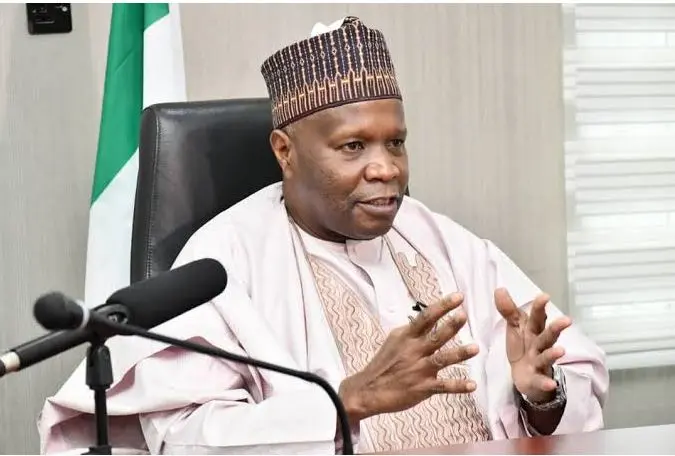
The recent budget allocation by Governor Inuwa Yahaya of Gombe State has sparked concerns among citizens, particularly regarding the disproportionate allocation of funds. While a significant portion of ₦43.130 billion is earmarked for constructing a new governor’s residence, high court, and house of assembly complex, only ₦10 billion is allocated for road construction. This disparity raises questions about the state’s priorities and resource allocation strategy.
It is disheartening to witness such a large sum allocated to luxurious infrastructure projects while essential infrastructure like roads receives comparatively meagre funding. This allocation pattern reflects a misplaced sense of priorities and neglect of critical needs in the state.
As responsible citizens, it is imperative that we hold our leaders accountable and challenge decisions that do not align with the people’s best interests. We cannot afford to stand by idly while our state resources are mismanaged and squandered on unnecessary projects.
The people of Gombe deserve transparency and accountability in governance. We must demand greater scrutiny of budgetary allocations and ensure that public funds are effectively used to better our communities.
There is an urgent need to reallocate priorities to address pressing needs such as infrastructure development, healthcare, education, and poverty alleviation. Our leaders must be reminded of their duty to serve the people and prioritise projects that have a tangible impact on the lives of ordinary citizens.
As concerned citizens, we must unite and advocate for a more equitable distribution of resources to meet the needs of all residents of Gombe State. Together, we can hold our leaders accountable and work towards a brighter future for our state.
May Gombe State and Nigeria as a whole prosper and thrive. Amin.
Muhammad Umar Shehu wrote from Gombe via umarmuhammadshehu2@gmail.com
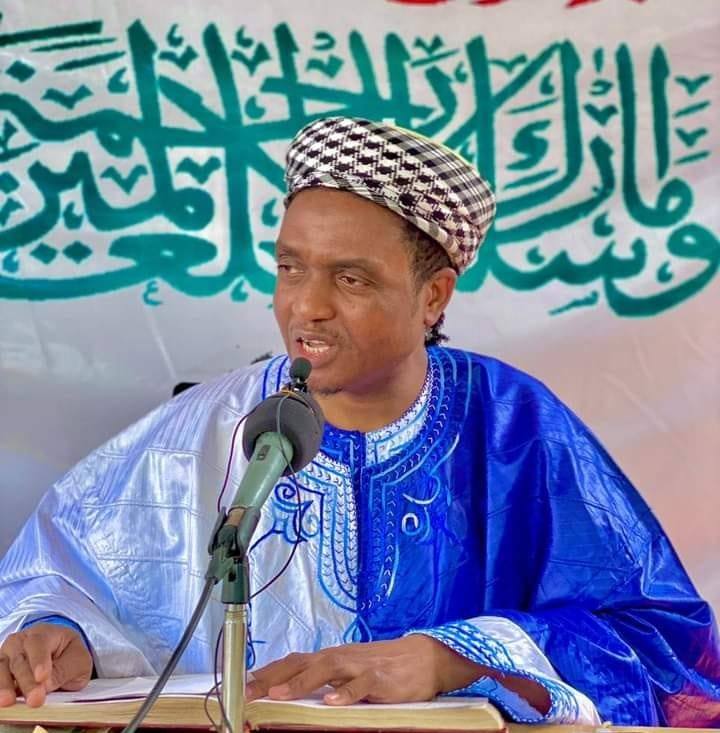
Prominent clerics who made my days during 1445 A.H Ramadan (III)
By Isma’il Hashim Abubakar
Shaykh Musal Qasiyuni was the third among the scholars whose lessons I listened to throughout Ramadan. I was attracted to his lessons almost two decades ago, much by the accent and the tone of the hymns with which he and his audience opened and closed the lessons, and they were, to me, at the start, more of an esoteric language.
Qasiyuni’s zeal for the preservation of norms and values, the eradication of vices and immoral ventures, and his expression of concern toward the plight of the masses are evident in his lamentation of how things have turned in Muslim societies, which portrays him in the same reformist and activist light that Salafis are often depicted.
Malam Qasiyuni condemned the attempt to incorporate medical tests among legal requirements that must be presented before marriages are contracted. However, he acknowledged that the tests are essential, safer, and more sustaining for the marital union and the future of the couple’s family. The scholar’s point is if leaders are encouraged to pad new legislations into injunctions of marriages, which are already comprehensively sanctioned by Islam, a time would come when leaders would smuggle harmful laws which would only strangle legitimate marriages and pave the way as well as promote promiscuous associations between men and women as it has been normalised in not only western but also many Muslim countries.
In this year’s Ramadan, like the previous years, Qasiyuni had painstakingly treated sensitive themes that have remained the bonds of sectarian contention among the major Sunni Muslims, particularly between Sufi brotherhoods to which he belongs and their Salafi counterparts. These include the concept of bid’a and the central thematic components that revolve around it, such as litanies, liturgical actions, and performances like maulud anniversary and awrad. Qasiyuni offered an extremely polemical and revisionist interpretation of these themes while seeking to legitimise them in line with his Sufi conception and practice.
The hallmark and motive of all these elucidations are an attempt to arrive at a conclusion on which among the many strands of Sunni Islam is on the right path and, hence, most deserving of salvation. In this case, Qasiyuni was more flexible and accommodating as he expanded on the prophetic report, foretelling and warning about the sectarian fragmentation that Muslims would experience. He argued the report has all it takes to be exploited by each of the strands of Sunni Muslims, and going by the letter and spirit of the Hadith, which points to the vast majority as one of the yardsticks for identifying the most authentic and righteous group which merits salvation, according to Qasiyuni, Sufis would have more legitimate claims that conform with what obtains in reality.
Interestingly, however, Qasiyuni dismissed this sectarian conclusion favourable to his theological understanding of Islam and appraised that rather than interpret the Hadith from a creedal point of view, which of course has been the dominant method of scholars for centuries, the Hadith should better be seen from the viewpoint of meritorious virtues, conducts and manners such as kindness, truth, selflessness, humility, resilience, which the Prophet (SAW) and his companions had exhibited throughout their lifetimes. In this way, members of each sect and Islamic societies, including not only the Salafi competitors but peripheral and marginal sects like Shia, can be regarded as a salvaged group in Qasiyuni’s opinion.
Although this view sounds too malleable and points to the degree of Qasiyuni’s broad-mindedness and tolerance, it shall remain problematic and challenging to accept for several reasons, one of which is the consensus among Muslims that creed and beliefs take precedence over all actions and since even non-Muslims could exhibit the virtues outlined by Qasiyuni, downplaying the creedal substances and theological aspects as prime barometers for assuming the status of righteousness and uprightness as far as Islam is concerned, is unacceptable.
The love and affection of Muslims toward the Prophet SAW are meeting points which, according to Qasiyuni, should be the basis for Muslim unity and common solidarity, but also the mirror which shall reflect in the relations among Muslims and have common solidarities irrespective of their sectarian differences. Moreover, Qasiyuni stressed that Muslims must respect and love anyone or anything that connects to the Prophet, no matter to what small degree and anyone who hates it is condemned and wretched.
One point that shall remain problematic in Qasiyuni’s unification theory is the Shiite doctrine of hatred toward the Prophet’s companions would automatically disqualify them and remove them from the umbrella of unity which the great Qadiri Shaykh is advocating.
Like Dr Rijiyar Lemo, Qasiyuni also vehemently challenged those who cast doubt on Hadith and accused some of the Prophet’s companions and famous collectors of Prophetic traditions. Qasiyuni’s reaction to this issue seems to be a rejoinder against his brother Abduljabbar, who is still languishing in jail for stirring loud controversy about this issue. Interestingly, Qasiyuni himself mentioned Mustafa al-Sibā’ī’s masterpiece, al-Sunnah wa Makānatuhā fī al-Tashrī’ al-Islāmī as a concerted response and healing answers to all those who nurture any scepticism around the Sunnah or the process of its compilation and transmission.
Although still having a few issues to disagree with the Ahlussunnah proper, like the fate of the Prophet’s uncle, Abū Tālib, the Kabara cleric used this year’s Ramadan season to repeatedly stress his loyalty to Sunni Islam and refute Shiism, which then debunks the widespread rumour that the man had gravitated to the Shiite camps.
Even if on sectarian grounds one disagrees or even refuses to listen to Qasiyuni, one cannot deny that the text he teaches during Ramadan, which is unanimously accepted by the Sunni Muslim world, is a robust inspirational source of reverence to Prophet Muhammad (SAW).
Northern Nigeria is indeed blessed with so many scholars; the ones highlighted in this article (parts 1, 2 & 3) are just a drop from the ocean. They offer a significant representation of how the Ramadan season is made distinct and unique through disseminating Islamic knowledge. I highly regret not getting the opportunity to closely and regularly listen to more scholars such as Shaykh Umar Sani Fagge, Shaykh Isa Ali Pantami, Shaykh Ibrahim Maqary, Shaykh Muhammad bin Usman, Professor Salisu Shehu, and above all, my teacher Professor Muhammad Kabiru Yunus. But while I was too lethargic to listen to them all, I still wished Professor M.K Yunus’s tafsir recordings were available for public consumption.
May Allah reward these scholars abundantly and elongate their lives to keep benefitting the Ummah.
Isma’il writes from Rabat and is reachable via ismailiiit18@gmail.com.

Adam A. Zango and matters arising in Kannywood
By Usman Abdullahi Koli, ANIPR
Adamu Abdullahi Zango, also known as Prince Zango, is a famous Kannywood figure. Adam has been acting in Hausa films for over 20 years. Zango is a multi-skilled individual who acts, sings, produces, and directs films while introducing new faces to the screens. However, despite his immense contributions, he has been a victim of accusations, controversies, and rumours, but they all turned out to be a bunch of false claims in the end.
One of the major problems dragging the Hausa film industry back is enmity. No matter how talented an actor is, if he is not in the circle of those who consider themselves owners of the industry or if his stardom is at its peak, he is always regarded as worthless. An adage states that “united we stand, divided we fall.” The level of unity and support for one another in Kannywood is below expectations.
Perhaps only in Kannywood do actors receive financial support when they come out crying in videos, exposing what they are going through. Such behaviour is contrary to other entertainment industries, where actors and actresses frequently check on colleagues and offer helping hands without disseminating the act on social media.
Some years ago, in his philanthropic effort to give back to society, Zango promised to give out millions of Nairas to orphans in Kaduna. People from the industry and outside started saying he could only make promises without implementing them. This, among other factors, contributed immensely to the current reality Zango is facing in the industry. People don’t usually appreciate him or keep quiet about issues that affect him directly, turning his life into a topic of discussion every single time.
Adam did not have the opportunity to attend higher education, but his zeal to actualise the ambitions of young people inspired him to sponsor a high number in Kaduna, Jos, and Kano States. The possession of assets, valuables, and material things by all those who work in WhiteHouse Family, an entertainment venture owned by Zango, is a testimony that he is full of kindness, selflessness, open-mindedness, and what he has never made him proud.
What Zango is currently going through I don’t see it as depression, as claimed by many. There are people he wholeheartedly helped and trusted but turned against him. Additionally, he is facing a lot of trouble on social media from those who dislike him and are always fabricating lies about him. Yes, silence is not gold. He is supposed to speak up in his defence since no one is willing to stand up for him. The best one could do for the woman he loves is to marry and confide in her. What kills faster than a bullet is a betrayal from a life partner, and the bond of trust ends without a second thought.
Many accused Zango of frequent marriages and serving his wives with hot breakfast (divorce) in short periods. As revealed by him, the truth of the matter is that most times, the failure of wives to be submissive, respectful, and faithful is glorified by our religion. Zango has been hiding the facts about what led him to divorce his wives from public space, but the ranting from near and far is unbecoming and unbearable. He has decided to let the hen out of the cage. Keeping some issues hidden is better, as exposing them is like adding salt to an injury.
Furthermore, most of the films produced by Zango were created by local writers, not copies of Bollywood or Hollywood stories. The movie contributed to portraying real Hausa norms and values, cultures and traditions, dressings and foods, shelters and festivals while maintaining the religious injunctions. The languages used are authentic Hausa, along withidioms, styles, and proverbs, making it easier for children to learn.
Despite dressing in Western attire in some movies, Zango still maintains the moral compass of Hausa and Islam. Factually, nobody can boldly point out where Adam is seen in a fantasy scene with women in films. Other characters have done worse than Zango in movies and feel that doing so is normal, without minding the repercussions on their families or people who took them as role models. By the way, who is morally upright in Kannywood?
In summary, I have been an advocate for Kannywood, as I have written about misunderstandings between Rarara and former Governor Ganduje and the decision of MOPPAN to dismiss Rahama Sadau, among other topics in the Hausa entertainment industry. It should be noted that stakeholders and characters in Kannywood should see themselves as one family because commendation to one affects the rest and vice versa. People need to reciprocate kindness with kindness. Fans and mentees of artists should learn to respect each other by supporting themselves and resolving issues through dialogue.
Adam Zango needs to control himself, especially in moments of anger, and stop making decisions at those times. He has faced worse situations before and stood firm. He can do it again. Let him consult relatives and trusted friends before taking any bold steps in his life. Finally, as a celebrity and a mirror to a limitless number of people, Adam Zango should ignore the negative comments, criticisms, and disrespectful and abusive words of followers on social media platforms. If he gives them no time to reply, they will have no choice but to stop.
Kannywood has never had a gifted actor like Adam Zango in its history. He should cherish his God-given talent, be more focused and optimistic, and keep pouring out the best in him in both acting and music. Anything related to his personal life should be private, as antagonists always look for weak points or where he does wrong to attack him. He should remember that he is a son, father, and someone others admire. His words and actions, whether good or bad, would be replicated by them.
Usman Abdullahi Koli wrote via mernoukoli@gmail.com.
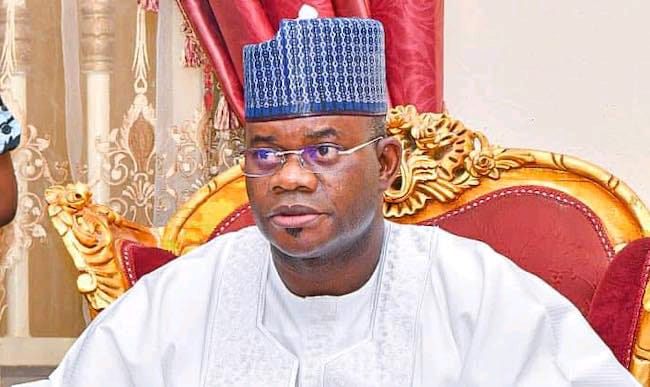
Court restrains EFCC from arresting Yahaya Bello
By Uzair Adam Imam
The High Court in Lokoja, Kogi State, has issued a restraining order against the Economic and Financial Crimes Commission (EFCC), preventing them from violating the fundamental human rights of Alhaji Yahaya Bello, former Governor of Kogi State.
During a two-hour session at High Court 4, presided over by Hon. Justice I.A Jamil, in suit no HCL/68/M/2020, the court delivered a verdict on Wednesday.
The judgment prohibits the EFCC from engaging in actions such as arresting, detaining, or prosecuting Bello without explicit authorization from the court.
This definitive order builds upon an earlier interim injunction.The legal proceedings stemmed from a lawsuit initiated by Alhaji Yahaya Bello, who sought to protect his fundamental rights against the EFCC.
The court also mandated the respondents to cease any ongoing persecution of the applicant.
Addressing jurisdictional challenges raised by the EFCC, the court dismissed them in its judgment.Counsel for Alhaji Yahaya Bello, SA Abbas and MS Yusuf, hailed the judgment as a landmark decision.
Similarly, the defense counsel, T.U Odima and Patrick O. Jibril, expressed their alignment with the judgment, praising its thoroughness.
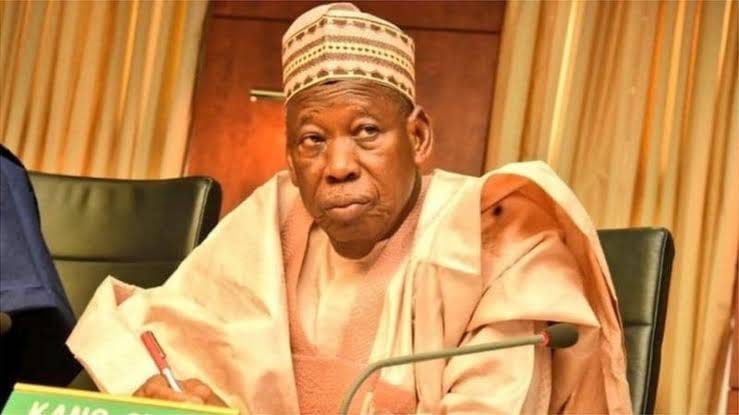
Kano High Court upholds suspension of APC N/Chairman
By Uzair Adam Imam
The High Court of Kano State has upheld the suspension of Dr. Abdullahi Umar Ganduje, the National Chairman of the All Progressives Congress (APC), as a member of the party.
Presided over by Justice Usman Malam Na’abba, the court affirmed the suspension on Tuesday, responding to an ex parte motion filed by Dr. Ibrahim Sa’ad, Esq.
The motion was brought on behalf of two executive members of APC Ganduje ward in Dawakin-Tofa local government area: assistant secretary Laminu Sani and legal adviser Haladu Gwanjo, who were among the nine ward executives that initiated Ganduje’s suspension two days prior.
The court’s decision followed an ex parte motion filed by Haladu Gwanjo and Laminu Sani through their counsel, Ibrahim Sa’ad.
Gwanjo, identifying himself as the party’s ward legal adviser, had announced Ganduje’s suspension earlier.
Consequently, the court ordered Ganduje to refrain from presiding over any affairs of the National Working Committee (NWC) of the APC.
This ruling came after the State Working Committee of the APC in Kano suspended ward party leaders who had initially announced Ganduje’s suspension.
Previously, the leadership of the APC at Ganduje ward in Dawkin Tofa Local Government area had announced Ganduje’s suspension, citing corruption charges filed against him by the government.
However, Inusa Suleiman Dawanau, the APC Chairman in Dawakin Tofa Local Government, revealed that those behind the suspension were engaged in anti-party activities and had been exposed for their meetings with the ruling opposition.
In addition to the suspension, the State Working Committee (SWC) sanctioned them for six months and established a panel to investigate various allegations against them.
Following these developments, the ruling party petitioned the Inspector-General of Police (IGP), Kayode Egbetokun, urging the force to investigate those responsible for Ganduje’s purported suspension.
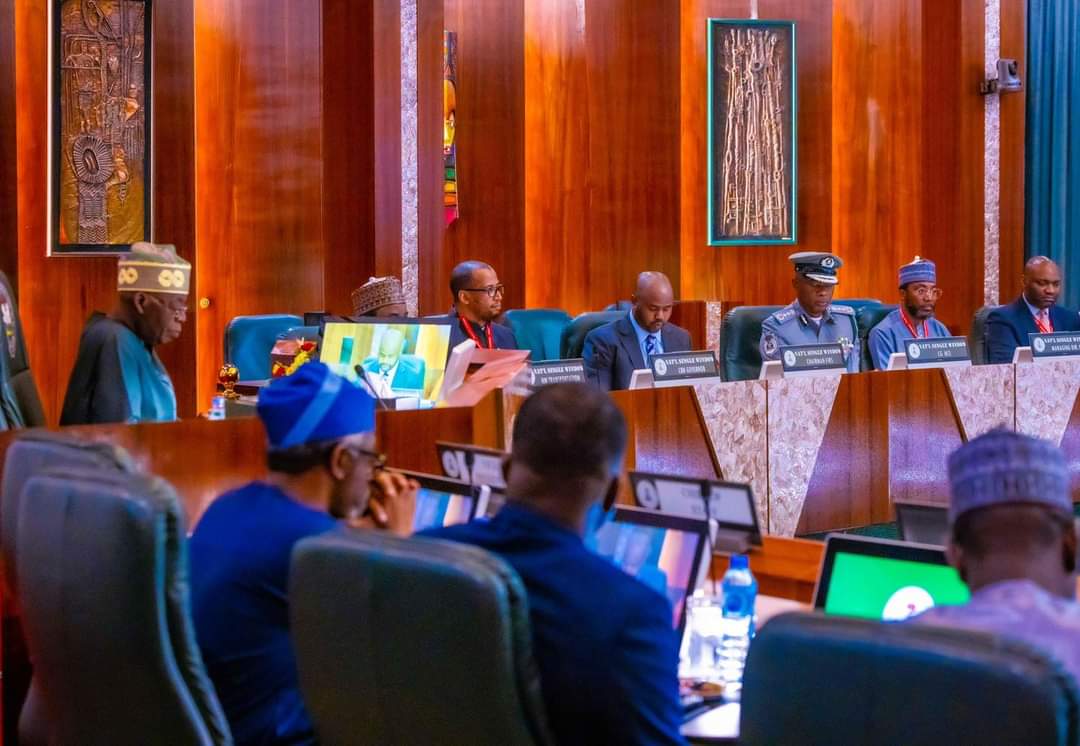
FG inaugurates national committee to boost trade efficiency
By Sabiu Abdullahi
The Federal Government has launched the National Single Window Steering Committee to bolster trade facilitation and streamline the nation’s import and export processes.
The inauguration ceremony was held at the Presidential Villa in Abuja on Tuesday, with President Bola Tinubu presiding.
The Committee comprises representatives from pivotal federal ministries and agencies.
These include the Ministry of Finance, Marine and Blue Economy, Transportation, Trade and Investment, Federal Inland Revenue Service, Nigeria Sovereign Investment Authority (NSIA), Central Bank of Nigeria, National Agency for Food and Drug Administration and Control (NAFDAC), Standards Organization of Nigeria, and the Nigerian Maritime Administration and Safety Agency (NIMASA).
Highlighting the significance of the Nigeria Customs Service’s (NCS) involvement, President Tinubu stated, “Nigeria cannot afford to lose an estimated $4 billion annually due to bureaucratic delays, red tape, and corruption at the nation’s ports.
“By embracing the single window system, Nigeria hopes to join countries like Singapore, Korea, Kenya, and Saudi Arabia that have already experienced significant improvements in trade efficiency.”
The National Single Window project aims to introduce a real-time digital trade compliance system, revolutionizing trade processes.
This initiative is anticipated to enable paperless trade, providing an estimated annual economic benefit of around $2.7 billion.
It is projected to bolster national revenue and enhance port efficiency. With the NCS’s pivotal role in trade facilitation and border security, its involvement in the initiative is deemed crucial.
The service is aligned with the initiative’s goals, aiming to expedite cargo movement and bolster inter-African trade.
The launch of the National Single Window Steering Committee is viewed as a testament to the government’s unwavering commitment to progress, prosperity, and the welfare of Nigerians.
Prominent clerics who made my days during 1445 A.H Ramadan (II)
By Isma’il Hashim Abubakar
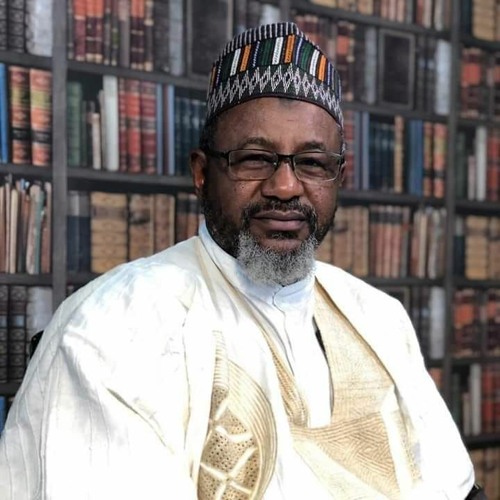
Dr. Bashir Aliyu Umar was the second teacher whose tafsir I did not miss not only this year’s Ramadan but also many years ago. I had the privilege of attending the tafsir personally several times, which was conducted at Al-Furqān Mosque at GRA, Kano before I left Nigeria five years ago. Dr. Bashir’s erudition and dexterity in addressing contemporary issues that were paraded to him while using sophisticated jurisprudential techniques are enough credentials to attract listeners and students like me.
Additionally, I personally cherished the tafsir session because whenever I heard Malam Sa’idu Harun, the recitation assistant (mai jan baki), it reminded me of Shaykh Ja’far’s tafsir which always proved unique with the recitation of Malam Sa’idu. Dr Bashir’s tafsir would appeal to intellectuals and listeners with a background in Western education.
Dr Bashir explained verses which mention scientific and universal phenomena excellently and more lucidly. Atheists would find the correct answers to many of their questions and clear up many misconceptions through the exegetical exercises undertaken by Dr Bashir. Drawing on a view of the late Shaykh Isa Waziri on a similar issue, Dr. Bashir, in one of his tafsir sessions, argued that Nigerians are likely robbed of divine bounties similar to what befell the inhabitants of Saba’.
Dr Bashir is an extraordinarily easygoing and calm person, so much so that at times, he allowed his recitation assistant to decide which question he would respond to either due to its substance or when there was no time and the recitation assistant was eager to fill the venue with his sonorous voice.
I was surprised, however, when during the closing session of this year’s tafsir on the 28th day of Ramadan, Dr Bashir refused to answer a question about the legal status of bleaching in Islam, which, according to the questioner, has been said to be lawful by some scholars. Dr Bashir’s refusal to respond to the question elicited the interest of the audience to unanimously thundered “Allahu Akbar”, which left a suggestion that the answer to the question was well known to everyone and it might have just been posed to trigger needless, belated controversy. Unlike many scholars, Dr Bashir does not bother to ask new converts if they were forced or they willingly chose and decided to embrace Islam.
One of the unique episodes with which Dr Bashir’s final tafsir has been characterised for some years is the courtesy visit of his nonagenarian father to bless the occasion and, at times, make sobering reflections on some of the clerical trajectories of his scholar-son. To my knowledge, only Dr Bashir is continuously lucky to have his aged and royal figure father appear during his tafsir and publicly endorse his son’s venture.
Isma’il writes from Rabat and is reachable via ismailiiit18@gmail.com.
New corruption allegations surface against Ganduje
By Uzair Adam Imam
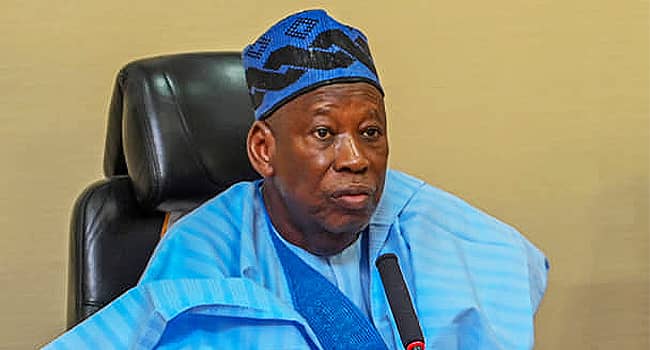
The Kano State Anti-Corruption and Public Complaints Commission has unveiled fresh allegations of corruption and maladministration against former Governor Abdullahi Ganduje.
The chairman of the commission, Muhuyi Magaji, disclosed that investigations have exposed the diversion of N51.3 billion from local government funds to unauthorised individuals during Ganduje’s tenure.
Speaking on Tuesday’s edition of Channels Television’s Sunrise Daily programme, Magaji claimed that the administration withdrew N1 billion monthly from state coffers before its conclusion in May 2023.
Allegedly earmarked for road renovation, these funds were redirected to Bureau de Change operators. Magaji further highlighted a case involving N4 billion transferred from Kano’s consolidated revenue account to an agricultural company.
He asserted that these revelations merely scratch the surface of broader corruption probes, indicating ongoing investigations into various financial irregularities.
Magaji stated that, “We have filed a series of cases. We have a case whereby N1 billion was diverted from government coffers under the guise of renovating 30 roads in the metropolis, only to be sent to Bureau de Change.
“We have another case involving N4 billion transferred from the state’s revenue account to an agricultural company. All these cases are currently before the court,” he added.
In response to these allegations, the state government has announced its intention to arraign Ganduje, along with his wife and son, for money laundering later this week.
The unfolding saga adds another chapter to the ongoing scrutiny of political figures and financial mismanagement in Nigeria.
NAF decimates terrorist leaders, 28 fighters in Borno airstrikes
By Uzair Adam Imam
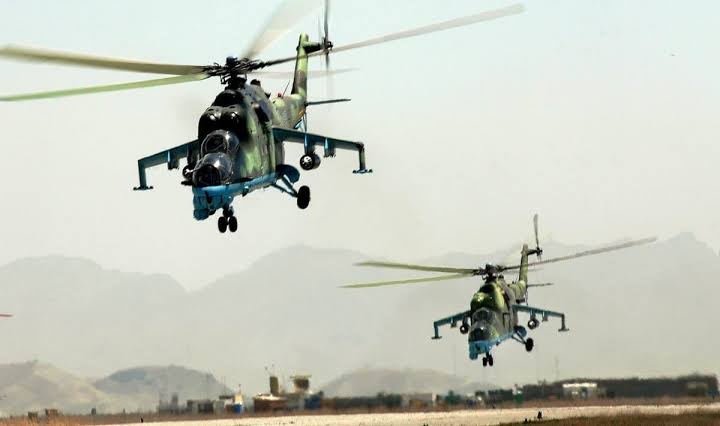
The Nigerian Air Force announced on Tuesday that its air component of Operation Hadin Kai (OPHK) had successfully neutralised over 30 militants, including two high-profile leaders, Ali Dawud and Bakurah Fallujah im Borno State.
Air Vice Marshal Edward Gabkwet, Director of NAF Public Relations and Information, disclosed that the airstrikes, carried out over the weekend, targeted the hideouts of ISWAP terrorists nestled within Kolleram village along Lake Chad’s shores.
The precision strikes, executed on April 13, 2024, resulted in the destruction of numerous vehicles, motorcycles, and logistical assets, severely disrupting the terrorists’ operational capabilities.
Gabkwet reported that the Battle Damage Assessment (BDA) post-strike revealed the elimination of key figures such as Ali Dawud, Bakurah Fallujah, and Mallam Ari.
Additionally, intelligence gathered indicated the effective obliteration of a vital facility within the Kolleram enclave, disrupting the terrorists’ food processing activities.
The success of these airstrikes shows the NAF’s unwavering commitment to eradicating terrorism and safeguarding Nigerian citizens.
By neutralising top terrorist operatives and dismantling their logistical infrastructure, the operation has significantly weakened ISWAP’s presence in the region.
The airstrikes, complementing ground forces’ ongoing efforts on the Lake Chad flank, mark a crucial advancement in Nigeria’s counterterrorism endeavours, signalling a resolute stance against extremist threats.

Grieving Umuahia residents demand justice for cadet’s death
By Uzair Adam Imam
Umuahia, the capital of Abia State, witnessed a fervent protest on Tuesday as residents of Okwuta Ibeku rallied to demand justice for Air Force cadet Emmanuel Onyemereche.
Onyemereche had tragically drowned in the swimming pool of Damgrete Hotel the week prior, leaving his community in mourning.
Clad in sombre black attire, the demonstrators filled the streets, their mournful chants echoing through the air.
Holding placards emblazoned with calls for justice, they urged Governor Alex Otti to intervene.
The diverse crowd, comprising youths, men, and women, marched towards Government House Umuahia, determined to make their voices heard.
The protesters, represented by figures like Public Relations Officer Mr. Chibuzor Onwukamuche, family Head Prince James Onyeomereneche, and woman leader Mrs. Happiness Ebere, expressed disbelief in the circumstances surrounding Onyemereche’s death.
They voiced suspicions about the conflicting accounts and demanded a comprehensive investigation into the incident.
Questioning how a trained Naval Officer could drown in a seemingly ordinary swimming pool, they pointed fingers at Onyemereche’s friend, Valentine Okpechi, and the hotel management.
In response, Governor Otti, conveyed through Special Adviser Navy Commander Macdonald Uba (Rtd.), conveyed his condolences and assured the grieving community that the State Government would pursue a thorough investigation, promising not to let the matter fade into obscurity.