



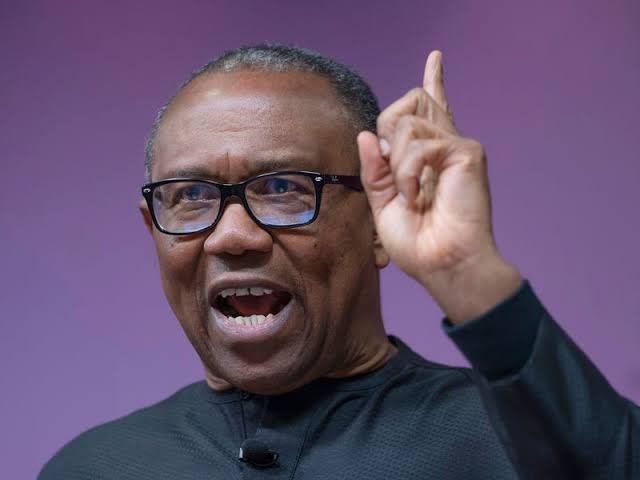
‘What A Shame’ – Peter Obi Criticises Tinubu Government For Complicity In Masterminding ADC Crisis
By Sabiu Abdullahi
Former presidential candidate of the Labour Party, Peter Obi, has faulted the administration of President Bola Tinubu over the crisis rocking the African Democratic Congress (ADC), describing the situation as a setback for democratic values.
Obi made his position known in a post shared on X on Thursday. He expressed concern over what he described as a contradiction involving individuals who once championed democracy and human rights during the era of General Sani Abacha.
He stated that many of those figures, who were active under the National Democratic Coalition (NADECO), now appear to act in ways that contradict the ideals they once promoted. He added that recent developments suggest a decline in respect for democratic principles.
He wrote: “Yesterday defenders of democracy, today’s destroyers. What a shame.
“What an irony of history, that the acclaimed defenders of democracy and human rights who claimed to have fought for democracy during the era of General Sani Abacha now find themselves worse than the man they opposed.
“today, General Sani Abacha, once presumed face of oppression, will be remembered as seemingly more democratic and more respectful of human rights than the so-called champions of activism from the NADECO days. Power indeed reveals character.”
Obi’s remarks followed the decision of the Independent National Electoral Commission (INEC) to delete the names of former Senate President David Mark and former Osun State governor Rauf Aregbesola from its portal as national chairman and national secretary of the ADC.
INEC also stated that it would not recognise Nafiu Bala Gombe, who is pursuing recognition as national chairman through the courts.
The commission further announced that it has suspended recognition of all factions within the party. It added that it would not monitor any congresses or conventions organised by the rival groups until the Federal High Court delivers a final judgment on the matter.
APC Backs INEC Decision To Withdraw Recognition From ADC Factions
By Sabiu Abdullahi
The All Progressives Congress (APC) has expressed support for the Independent National Electoral Commission (INEC) over its decision to withdraw recognition from the rival factions of the African Democratic Congress (ADC).
INEC had earlier stated that it would no longer recognise or relate with the two opposing groups within the ADC led by former Senate President David Mark and Nafiu Bala Gombe. The commission explained that its action followed a review of a recent Court of Appeal judgment. It added that it would maintain the status quo until the Federal High Court gives a final ruling on the matter.
As part of the decision, INEC also removed the names of executives loyal to Mark from its official portal. The move sparked criticism from members of that faction.
Reacting to the development, APC spokesperson Felix Morka said the crisis within the ADC was caused by the party’s internal actions. He dismissed claims that the ruling party played any role in the situation.
“INEC decision to de-recognise the David Mark executive was utterly self-inflicted. APC didn’t do that. You orchestrate the hijack of the ADC by that executive. We didn’t. They did,” Morka said.
He also accused the Mark-led group of failing to follow due process in taking control of the party.
“You come in with your parachutes; you take over the party without reference to the constitutional stipulation about succession and how leadership is ordered in that party. This is the consequence,” he added.
However, the ADC faction loyal to Mark has rejected INEC’s stance. The group alleged that the electoral body acted under external influence in taking the decision.
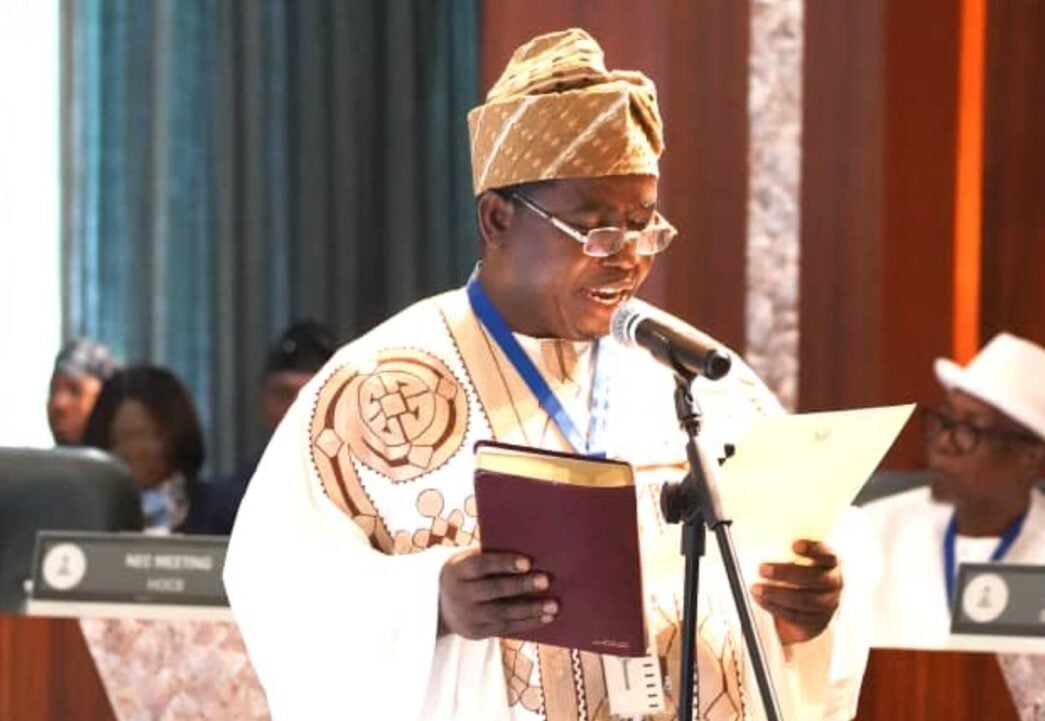
Obidient Movement Demands Amupitan’s Resignation, Announces Nationwide Protest Over ADC Leadership Crisis Allegedly Masterminded By INEC
By Sabiu Abdullahi
The Obidient Movement has asked the chairman of the Independent National Electoral Commission (INEC), Joash Amupitan, to step down. The group also announced plans for a nationwide protest following the removal of the David Mark-led leadership of the African Democratic Congress (ADC) from INEC’s records.
The dispute comes after a prolonged leadership crisis within the ADC. The conflict involves two factions led by David Mark and Nafiu Bala Gombe. The disagreement has resulted in several court cases.
INEC stated on Wednesday that it would no longer recognise correspondence from either faction. The commission based its position on a March 12 ruling by the court of appeal. According to INEC, the judgment directed all parties to maintain the status quo until a lower court delivers a final decision.
In a statement, Mohammed Kudu Haruna, INEC commissioner for information and voter education, said the commission would avoid dealings with both groups. He added that INEC would not monitor their meetings, congresses, or conventions until the federal high court resolves the matter.
INEC also removed the names of the Mark-led executives from its official portal. It said the action followed the appellate court’s directive.
The development has drawn criticism, especially from the Mark-led faction of the ADC. Bolaji Abdullahi, the party’s national publicity secretary, accused the electoral body of acting under pressure from “a government panicked by the opposition momentum despite its efforts to destroy all opposition parties and foist a one-party rule on Nigeria”.
Reacting on Thursday, Yunusa Tanko, national coordinator of the Obidient Movement, said the group would begin a protest tagged #OccupyINEC across the country.
“There are moments in the life of a nation when silence becomes dangerous and inaction becomes complicity. Nigeria has arrived at such a moment,” the statement reads.
The movement claimed that INEC, “which should stand as an impartial guardian of the people’s will, is increasingly perceived as compromised under the present administration,” adding that “when institutions lose credibility, the will of the people is endangered”.
It called for “the resignation of the INEC Chairman for gross abuse of office, loss of public trust, and failure to uphold the neutrality required of that office,” and demanded an end to “political persecution” and actions that weaken opposition parties.
“In defence of these principles, we are commencing a nationwide peaceful protest, #OccupyINEC, starting immediately across all states and the Federal Capital Territory,” the group said.
The movement said protesters in Abuja would gather at the ADC national headquarters before moving in a peaceful march to the INEC headquarters. It urged Nigerians to “organise, mobilise, and participate in a coordinated and disciplined manner”.
“This moment goes beyond party lines. It is about the survival of democratic values and the protection of the Nigerian state itself,” the statement reads.
“We will remain peaceful, we will remain lawful, but we will not stand by while our democracy is weakened. Nigeria must not become a one-party state.”

Is WWE Losing Its Identity or Adapting for Gen Z?
By Hadiza Abdulkadir
A recent viral moment featuring a popular online personality inside a WWE setting has reignited debate about the future of professional wrestling. The clip, widely shared across platforms like TikTok and Instagram, drew millions of views within hours and prompted criticism from longtime fans who questioned whether WWE is drifting away from its roots.
The discussion reflects a broader issue facing World Wrestling Entertainment (WWE): how to remain relevant in an era increasingly dominated by short-form digital content and younger audiences with changing viewing habits.
For decades, WWE built its success on long-form storytelling. Weekly television programs developed narratives over time, leading to major live events. However, audience behaviour has shifted significantly, particularly among Gen Z viewers.
Younger audiences are more likely to consume highlights rather than full broadcasts, favouring short, engaging clips over multi-hour programming. This trend has affected not only wrestling but also traditional sports and entertainment formats.
Industry observers note that this shift has forced companies like WWE to rethink how content is delivered and consumed.
In response, WWE has expanded its digital presence, focusing heavily on platforms such as YouTube, TikTok, and Instagram. The company now generates substantial engagement through clips, behind-the-scenes content, and shareable moments designed for online audiences.
Part of this strategy includes collaborations with influencers and internet personalities to attract viewers who may not traditionally follow wrestling. These appearances often generate significant online traction, helping WWE reach new demographics.
Despite the increased visibility, some fans argue that WWE’s current approach prioritises virality over storytelling. Critics suggest that certain segments appear designed for social media engagement rather than long-term narrative development.
There are also concerns about authenticity. The inclusion of non-wrestling personalities in prominent roles has led some to question whether the company is diluting its core identity.
Others, however, see the shift as part of WWE’s long history of adaptation. The company has undergone multiple transformations, from the edgier “Attitude Era” of the late 1990s to the more family-oriented programming of later years.
Media analysts point out that WWE’s current strategy reflects broader industry trends, where digital reach and online engagement are increasingly important metrics of success.
As WWE continues to expand its presence across digital platforms and explore new partnerships, the debate over its direction is likely to continue.
The central question remains: is WWE moving too far from its traditional identity, or is it successfully redefining itself for a new generation of viewers?
For now, one thing is clear: professional wrestling is no longer confined to the ring. It is part of a larger, rapidly evolving digital entertainment landscape.
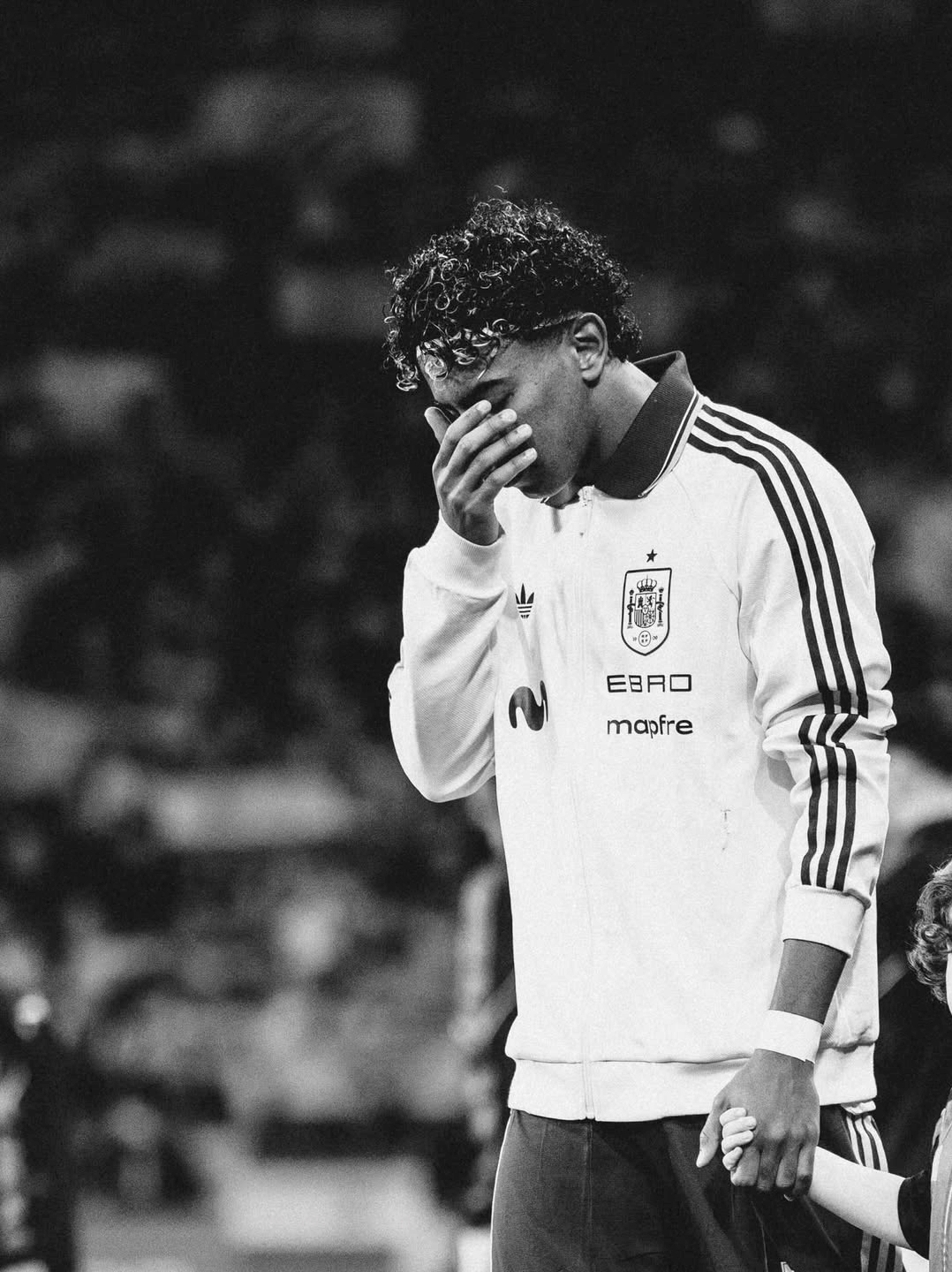
Yamal Slams “Racist” Chant After Spain–Egypt Stalemate
By Muhammad Abubakar
Lamine Yamal has condemned what he described as a “racist” and “intolerable” chant heard during a 0–0 draw between Spain and Egypt, warning that discrimination remains entrenched in football culture.
The teenager took to social media shortly after the match, identifying himself as a Muslim and criticising supporters who chanted “the one who doesn’t boo is Muslim” inside the stadium. While noting the chant may have been aimed at opposing fans, Yamal said intent did not lessen its impact.
“As a Muslim, it doesn’t stop being a lack of respect and something intolerable,” he wrote, adding that using religion as a joke “makes you look ignorant and racist.”
The remarks quickly drew attention across the football world, with anti-discrimination advocates pointing to the incident as further evidence of the persistence of abuse in the game. Despite repeated campaigns led by FIFA and UEFA, discriminatory chanting—whether based on race, religion, or nationality—continues to surface in stadiums.
Analysts say religion-based taunts are often trivialised as fan rivalry but can reinforce exclusion and hostility, particularly toward minority players. Yamal’s intervention reflects a growing willingness among high-profile footballers to publicly challenge such behaviour.
He ended his message by thanking fans who supported the team and looking ahead to future competitions, including the FIFA World Cup.
The incident adds to mounting pressure on football authorities to strengthen enforcement measures and ensure stadiums are safe and respectful spaces for all players and supporters.
PTDF Gets New Executive Secretary as Tinubu Renews TCN Boss’ Tenure
By Abdullahi Mukhtar Algasgaini
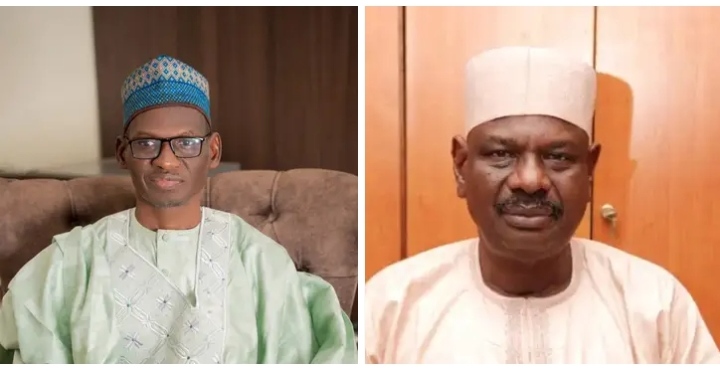
President Bola Ahmed Tinubu has appointed Professor Shu’aibu Shehu Aliyu as the new Executive Secretary of the Petroleum Technology Development Fund (PTDF), replacing Ahmed Galadima Aminu, who resigned to contest the 2027 governorship election in Adamawa State.
In a separate decision, the President renewed the appointment of Engineer Sule Ahmed Abdulaziz as Managing Director and Chief Executive Officer of the Transmission Company of Nigeria (TCN) for a second and final term.
Both appointments take immediate effect.
Professor Aliyu, until his new role, served as Executive Secretary of the National Commission for Mass Literacy, Adult and Non-Formal Education. Described as a distinguished academic and seasoned administrator, he brings extensive experience in research, education, and institutional leadership.
The President expects him to leverage his background to reposition the PTDF for greater impact in human capital development, innovation, and strategic support for Nigeria’s oil and gas sector.
Engineer Abdulaziz’s reappointment followed a comprehensive assessment of his performance, during which the TCN recorded notable improvements in grid stability, transmission capacity expansion, and system modernisation. With over three decades of experience in the power sector, he has also strengthened regional electricity integration through his leadership role in the West African Power Pool (WAPP).
President Tinubu urged both appointees to discharge their duties with diligence, integrity, and a strong sense of national service, in line with the Renewed Hope Agenda.
UNIJOS Shuts Down Campus, Orders Mass Evacuation as Jos Security Crisis Worsens
By Abdullahi Mukhtar Algasgaini
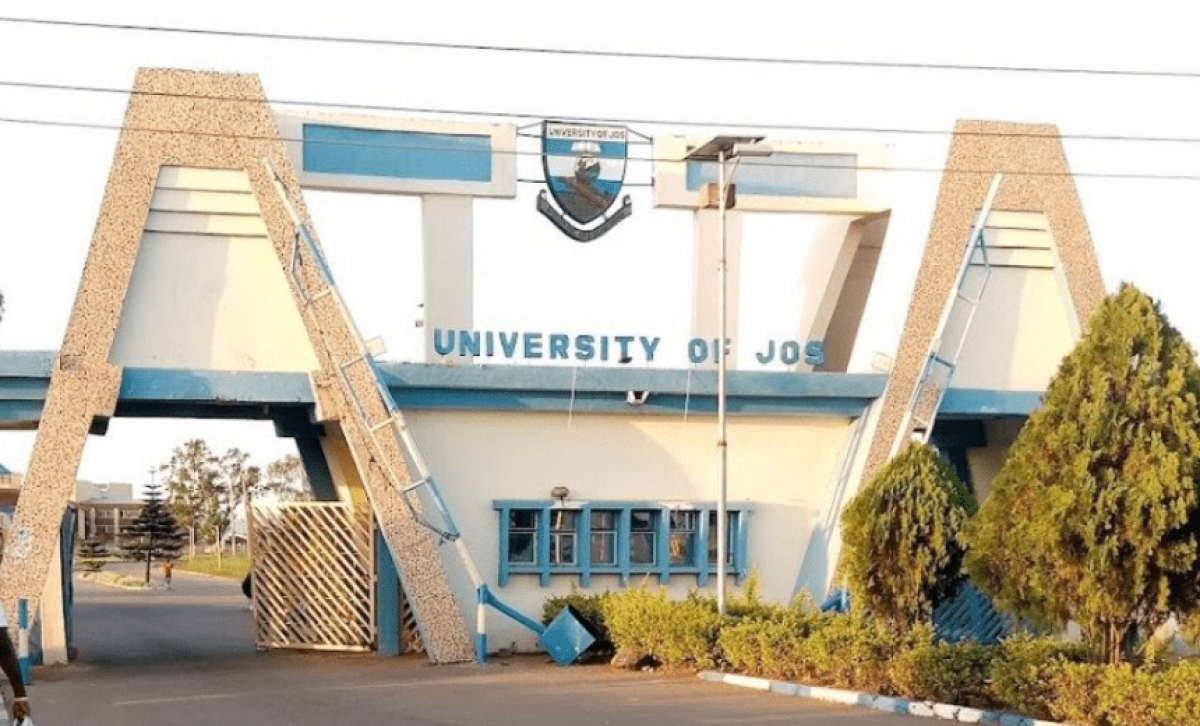
The University of Jos (UNIJOS) has ordered an immediate evacuation of all students from its hostels following a sharp escalation in security tensions across the city, authorities confirmed Wednesday.
Vice-Chancellor Prof. Tanko Ishaya announced the directive after what he described as “near chaotic scenarios” unfolded close to the campus earlier in the day. While the statement did not specify the exact nature of the threat, the move reflects growing concerns over violence in and around the Plateau State capital.
In response, Governor Caleb Mutfwang has stepped in to provide state-owned transport for the evacuation, granting special permission for the vehicles to operate despite ongoing curfew restrictions.
The evacuation will roll out in two phases:
1· Wednesday, 3:00 pm: Students with parents or guardians within Jos and its environs are to vacate immediately.
2· Thursday: Students from outside Jos will be evacuated.
University management has assured both students and the broader community that adequate security measures are now in place to safeguard hostels and other campus facilities during the operation.

25-Year-Old Woman Arrested for Supplying Ammunition to Bandits, Makes ₦5 Million in Two Months
By Abdullahi Mukhtar Algasgaini
Operatives of the Department of State Services (DSS) have arrested a 25-year-old woman, Nafisa Usman, for allegedly supplying ammunition to bandits operating in Katsina State.
The suspect was apprehended at a major motor park in Kano after purchasing a fresh batch of ammunition from Nasarawa State, intended for delivery to Kankara in Katsina State.
According to DSS sources, Usman, a native of Zango village in Kankara Local Government Area, was intercepted with 200 rounds of newly manufactured ammunition cleverly concealed inside bags of garri and rice.
During interrogation, the suspect confessed that she sourced the ammunition from Lafia, Nasarawa State, and transported it to Unguwa Uku Motor Park in Kano before arranging onward delivery to Katsina. She admitted that the ammunition was destined for bandits hiding in the Kankara forest.
Usman disclosed that she had been active in the illegal trade for only two months. She named an individual identified as “Teso,” who allegedly works with a soldier in Lafia, as her supplier.
She further revealed that she delivered ammunition to a bandit leader known as Mallam Haruna, operating within the Kankara forest. According to her, Haruna was introduced to her by a livestock trader named Sulaiman, based in Kano.
The suspect claimed to have conducted transactions worth approximately ₦5 million within two months, supplying ammunition not only to Haruna but also to other bandits identified as Buba and Abu, who are believed to be active in the same forest.
Expressing deep regret, Usman said her illicit activities had now been exposed. She is currently in DSS custody as investigations continue.
INEC Pulls David Mark’s ADC Leadership from Portal, Cites Court Order
By Abdullahi Mukhtar Algasgaini
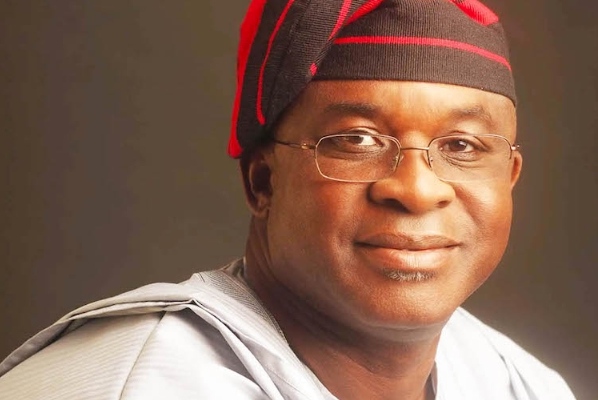
The Independent National Electoral Commission (INEC) has officially removed the National Working Committee (NWC) of the African Democratic Congress (ADC) led by David Mark from its official portal, following a detailed review of a recent Court of Appeal ruling.
The Commission disclosed that its decision, reached at a meeting on March 31, 2026, was necessitated by conflicting legal communications from two factions within the party—one supporting Nafiu Bala Gombe and the other backing the Mark-led leadership.
According to INEC, the crisis stems from the resignation of the ADC’s former leadership in July 2025, which led to the emergence of a new executive committee under Mark. Gombe, a former vice-national chairman, has challenged this development, insisting on his right to assume leadership based on the party’s constitution.
In a ruling delivered on March 12, 2026, the Court of Appeal dismissed an interlocutory appeal filed by Mark and ordered all parties to maintain the status quo ante bellum pending the determination of a substantive suit before the Federal High Court in Abuja. The appellate court also directed an accelerated hearing of the case.
INEC stated that in strict compliance with the court’s directive, it declined to recognize Gombe as acting national chairman and suspended all dealings with any faction of the party, including monitoring meetings, congresses, or conventions, until the legal dispute is resolved.
The Commission noted that the removal of the Mark-led NWC from its portal was necessary to preserve the status quo, as the leadership had been uploaded after the suit was already instituted.
Reaffirming its commitment to neutrality and adherence to judicial orders, INEC urged political actors to avoid actions that could jeopardize preparations for the 2027 general elections. The leadership tussle within the ADC remains before the Federal High Court in Abuja, where a final determination is expected in due course.
Why Religious Inclusion Matters in Plateau Governance
By Malam Aminu Wase
There is something quietly noble about Plateau State, its hills, its history, and above all, its diversity. It is a state woven together by the threads of ethnicity, language, and religion. And yet, that same diversity, which should be our strength, has too often been ignored in political leadership.
For too long, the highest office in Plateau State has been shaped by one-sided considerations. The repeated emergence of Christian Christian governorship tickets, while strategically convenient to some, continues to erode the principle of inclusive governance. It sends a subtle but loud message to a large portion of the population: you are seen, but not enough to be counted.
Muslims in Plateau have consistently shown political maturity. They have supported Christian-led tickets, participated in state-building efforts, and invested their trust in shared progress. From Wase to Kanam, Jos North to Shendam, Mangu, Quanfaan, and beyond, Muslim communities have not withheld their votes, their voices, or their commitment. But politics, like any meaningful relationship, cannot survive on one-sided loyalty. Reciprocity matters.
This is not just about religion; it is about equity. About the right of every community to see itself reflected in the leadership that governs it. Muslims make up a significant segment of Plateau’s population. Their persistent absence from the governorship, or even from serious consideration for the deputyship, is more than a political oversight; it is a moral failure.
What would it cost the political class to offer a Muslim-Christian ticket or vice versa? What would it say to the next generation if Plateau finally decides to lead by example, to choose unity over uniformity, and inclusion over imbalance?
My reflections are not theoretical. I grew up in a Plateau that taught me the value of coexistence. My closest friends in school, from Pilot Central Primary School, Wase, to Government Science College, Wase, through Federal College of Education (Technical), Bichi, in Kano State, and later Ahmadu Bello University, Zaria, were Christians. We laughed together, studied together, and dreamed together. That spirit never left me. It shaped my worldview, grounded in mutual respect and shared humanity. If we could sit side by side in class, why can’t we serve side by side in leadership?
In Wase Local Government, where Christians are a minority, they have not been pushed aside. They have held positions of responsibility, including Deputy Chairman, and benefited from federal appointments, many of which came under the leadership of Rt Hon Ahmed Idris Wase. This is not charity. It is simply fairness in practice.
That example should guide the rest of the state. Leadership is not a reward for numbers alone, but a test of vision. A government that sees only one side of its people cannot fully represent them. And a society that silences its own diversity risks becoming deaf to its own future.
Plateau State belongs to all of us. Let us end the quiet exclusion. Let us begin a new chapter, one in which faith is no longer a political disadvantage and unity is no longer a slogan but a living reality.
It is not too late to do the right thing. But it is urgent.
Malam Aminu Wase is a Political Analyst and Advocate for Good Governance and Youth Inclusion.