

Kano State Govt Debunks Reports of Snubbing Kano Emir After Public Uproar
By Ibrahim Yunusa
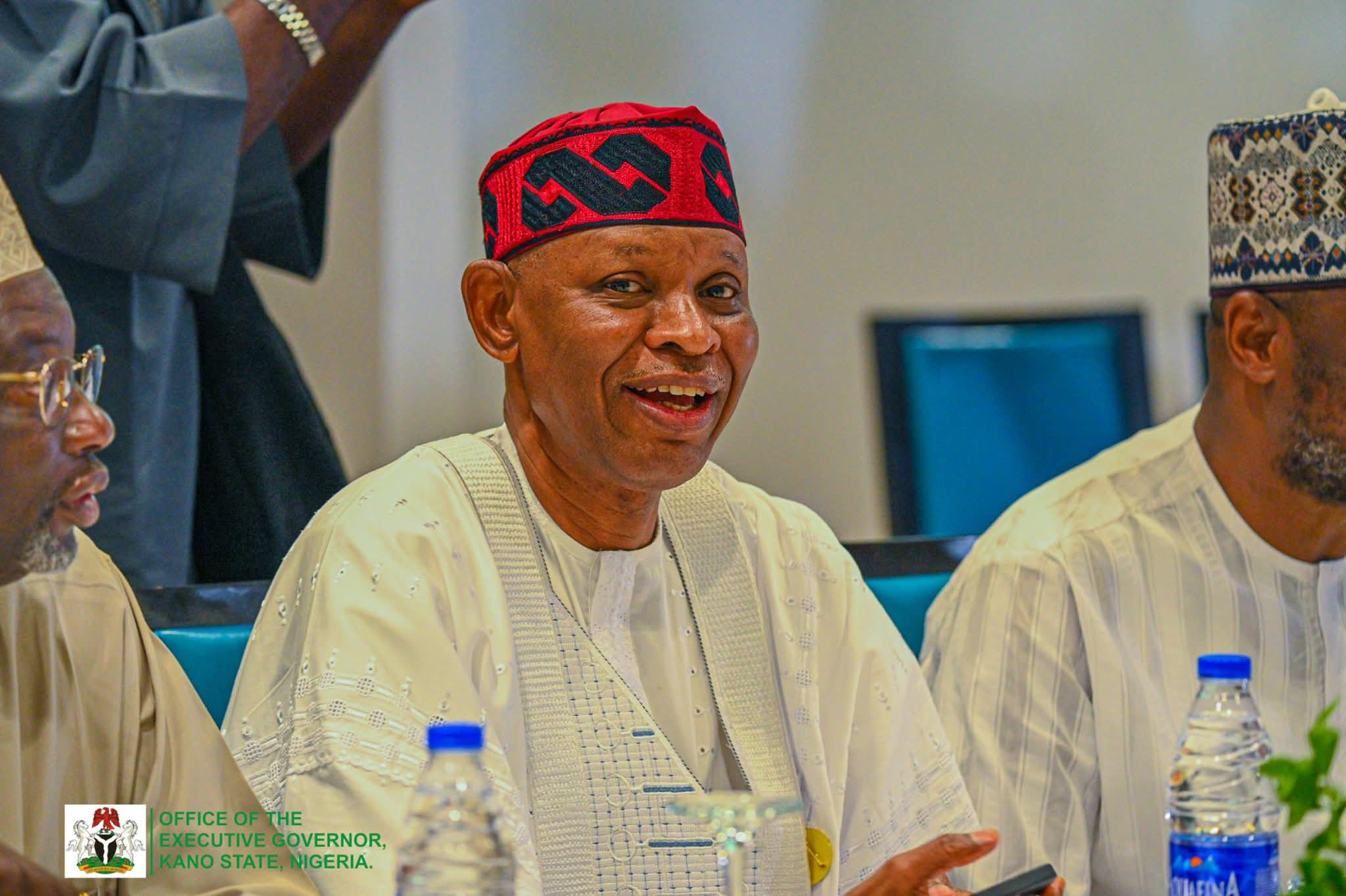
The Kano State Government has dismissed reports alleging that Governor Abba Kabir Yusuf snubbed the Emir of Kano, Muhammadu Sanusi II, during the Hawan Nasarawa celebration at Government House.
In a statement issued by the governor’s spokesperson, Sunusi Bature Dawakin Tofa, the government described the claims as false, misleading, and lacking any factual basis.
According to the statement, the report was deliberately fabricated to misinform the public and create unnecessary tension.
The government clarified that there was no breach of protocol, noting that it is a longstanding tradition for governors to pay homage to the President during the Sallah period.
The government explained that this year’s Hawan Nasarawa coincided with a strategic meeting of Nigerian governors, requiring Governor Yusuf’s presence outside Kano.
It added that the governor had duly informed the Emir and delegated the Speaker of the Kano State House of Assembly and other senior officials to receive the Emir on his behalf at the Government House.
Despite the scheduling conflict, the statement noted that Governor Yusuf participated in other Sallah activities, including attending the Eid prayer led by the Emir and making arrangements to receive other traditional rulers.
The government reaffirmed that relations between the state government and the Kano Emirate Council remain cordial, urging the public to disregard the report and rely on credible sources for information.
Gusau Airport Records First-Ever Test Flight After Three Decades
By Uzair Adam
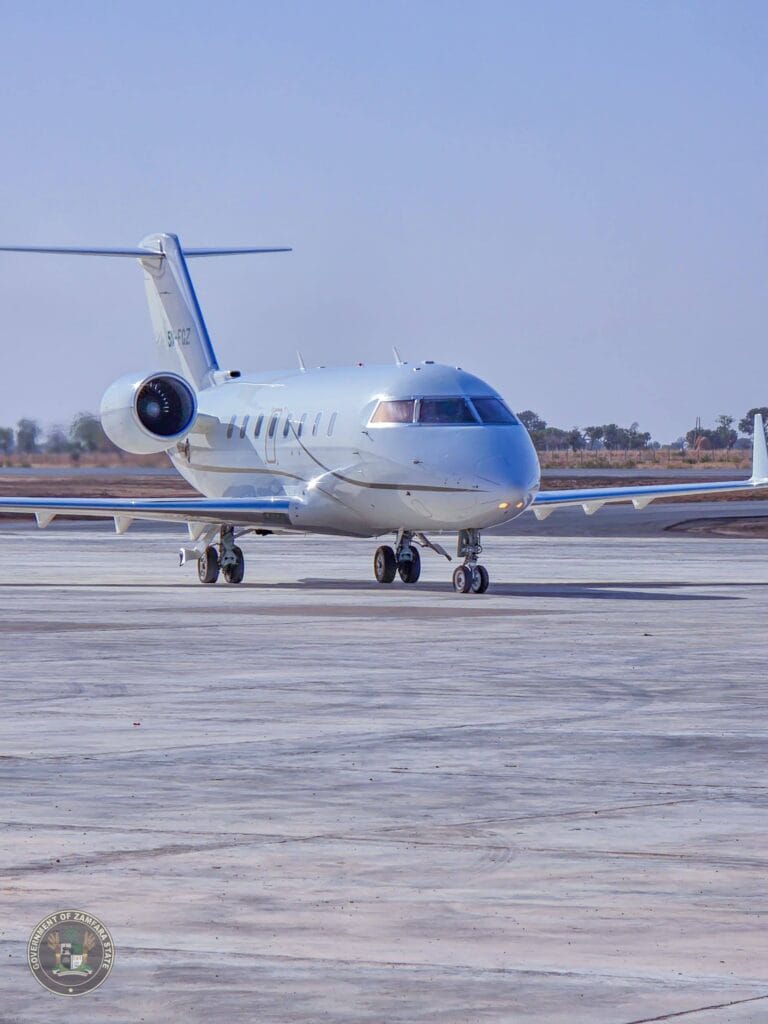
Governor Dauda Lawal of Zamfara State on Sunday witnessed the maiden landing of an aircraft at the Gusau International Airport, marking a significant milestone more than 30 years after the state’s creation without an operational airport.
According to a statement issued by the governor’s spokesperson, Sulaiman Bala Idris, the test flight was operated by the Federal Government of Nigeria and touched down at exactly 4:30 p.m.
The aircraft, identified as a Bombardier Challenger 605, carried out a one-off assessment flight aimed at evaluating the airport’s preparedness for upcoming VIP movements scheduled for next week.
Governor Lawal described the development as historic, noting that the successful landing represents a major step forward for the state’s aviation infrastructure.
He said the event would remain a memorable moment in Zamfara’s history, as it signals the beginning of airport operations in the state.

Reflections on Prof. Pate’s Tenure as Third Vice-Chancellor of FUK
By Muhammad Nasiru Yaya
Leadership in academia is often measured not only by policies and projects, but by stability, service, and the enduring footprints left behind. For Prof. Umaru A. Pate, the outgoing 3rd Vice-Chancellor of the Federal University of Kashere (FUK), the end of his tenure marks not just a transition but the close of a chapter defined by commitment, resilience, and purposeful leadership. As he bows out with the words, “I have served, I am happy to leave”, he does so as a fulfilled and happy man—having delivered on the responsibilities entrusted to him.
On the 18th December, 2020, Professor Pate was appointed the 3rd substantive Vice Chancellor of the University of Kashere by the Governing Council of the institution, under the leadership of Barrister Yakubu A.H Buba (SAN), in a seamless and transparent exercise. On Wednesday, 10th February, 2021, he took over the mantle of the Federal University of Kashere as the 3rd Vice Chancellor, with a solemn pledge to transform the University into one of the great fortresses of learning not only in Nigeria but also in Africa.
In his first impression as VC he fully praises the Almighty Allah for choosing him to occupy the exalted seat- promised to make his dream of transforming the University a reality by adoption of six-points agenda which involves, physical and academic development, maintenance of standards and quality assurance in the system, provision of an excellent town and grown relationship, improved staff and students warfare as well as making investment on Information and Communication Technology. He believed these are essential for any serious institution yearning for academic excellence and development, to ensure global visibility and to reach out within and beyond for resource mobilisation. He promised to work with relevant stakeholders to ensure the institution has sufficient resources to execute and achieve its goals.
On the day of his arrival, he declared that he would do his utmost best to ensure that he didn’t disappoint the confidence reposed in him. He said, and I quote, “Mine will be to consolidate and further build on what the first and second Vice Chancellors were able to lay. This is the system that will outlive us. It never occurred to me that one day, I would also be part of the process. And today I am here, in Sha Allah, we shall do our best to make Federal University of Kashere a great institution.”
He further added that “what you sow today may germinate in many, many years to come. If you sow evil, you will harvest evil. If you sow good, you will never tell the extent of the fruit you are going to benefit from; therefore, we are going to sow a seed that will be counting in us long after we must have left this place.” However, these are not just statements; they are a declaration of commitment, resilience, and purposeful leadership.
Within just a year, the institution started to see changes across various faculties and research centres, as well as academic and non-academic standards. Within a short time, he visually transformed the institution for the better in all aspects. Two years down the line, the Federal University of Kashere had become a hub of academic excellence. He also sponsored more than 45 people for International workshops, and proposal writing on Grand Menard and Management, and promoted multiple stand academic staff to professorial careers.
In 2024, more than three years into his stewardship, the University had maintained its standards through innovative research and a conducive learning environment, which had garnered national recognition. Under his leadership, in the 2024 National University rankings in Nigeria, the institution secured the 29th spot among the country’s best universities, alongside Covenant University, the University of Ibadan, and the Federal University of Technology, Akure. In 2025, the University was placed as 28th overall in the country.
In the same way, during his tenure, Pate upgraded the SIWES and General Studies Unit to a Directorate and its own, and he also granted approval for the commencement of part-time undergraduate degree programmes at the university. In the same vein, he also established the IJMB programme at the University. He also established a college of Medical Sciences. He is fully accredited for about ten undergraduate programs from the National University Commission (NUC), including Mass Communication. He also established three academic centres of excellence for Sugar Research and Development, Peace and Security Studies, and Environmental and Climate Studies.
In addition, the Federal University of Kashere has consistently recorded commendable achievements and projects under the leadership of Prof. U.A. Pate. The University, in collaboration with the United Nations International Children’s Emergency Fund (UNICEF), signed a Memorandum of Understanding (MoU) to promote the study of communication for social and behavioural change.
However, Under the administration of Prof. Pate, Federal University, Kashere has become a beehive of construction activities, notable among these projects are, completion of Lectures Theater 3, 350 Capacity, completion of 30 number of professorial offices, completion of Lecture Room C, completion of the Other wing of the 250 Twin Lecture Theater, LT2, as well as completion of Prof. Jibrin Aminu College of Medical Sciences, he also secured multi-million FUK Guest house in Asokoro Abuja, the groundbreaking of FUK Christian Chapel, the ongoing new University Senate building and new 500 capacity Lecture Theater.
On 12 December, 2022, Prof. Pate established the Broadcasting Complex, which contains both TV and Radio Studios, with the aim of supporting student learning. Within the last five years, Prof. Pate has signed a number of MoUs and collaborated with notable organisations and institutions, both locally, nationally, and globally, to reach out to prominent personalities in the state and beyond and attract funds to execute more projects on Campus.
Throughout his tenure as Vice Chancellor, Prof. Pate has maintained a cordial relationship with staff and students of the University; to say that, Prof. Pate has more than justified his appointment as leader of this great fortress of learning. Now that he leaves, FUK has been further repositioned as a great institution for higher learning.
As Prof. Umaru A. Pate steps away from office, he leaves behind more than records and reports—he leaves a university steadier than he met it, a community shaped by service, and a legacy anchored in duty fulfilled. His tenure as the 3rd Vice-Chancellor of the Federal University of Kashere will be remembered not for noise, but for substance; not for length, but for impact. Indeed, he came, he served, he delivered—and he left a happy man.
Muhammad Nasiru Yaya, a graduate of Mass Communication, writes from home.
Mohammadnasiryaya@gmail.com.
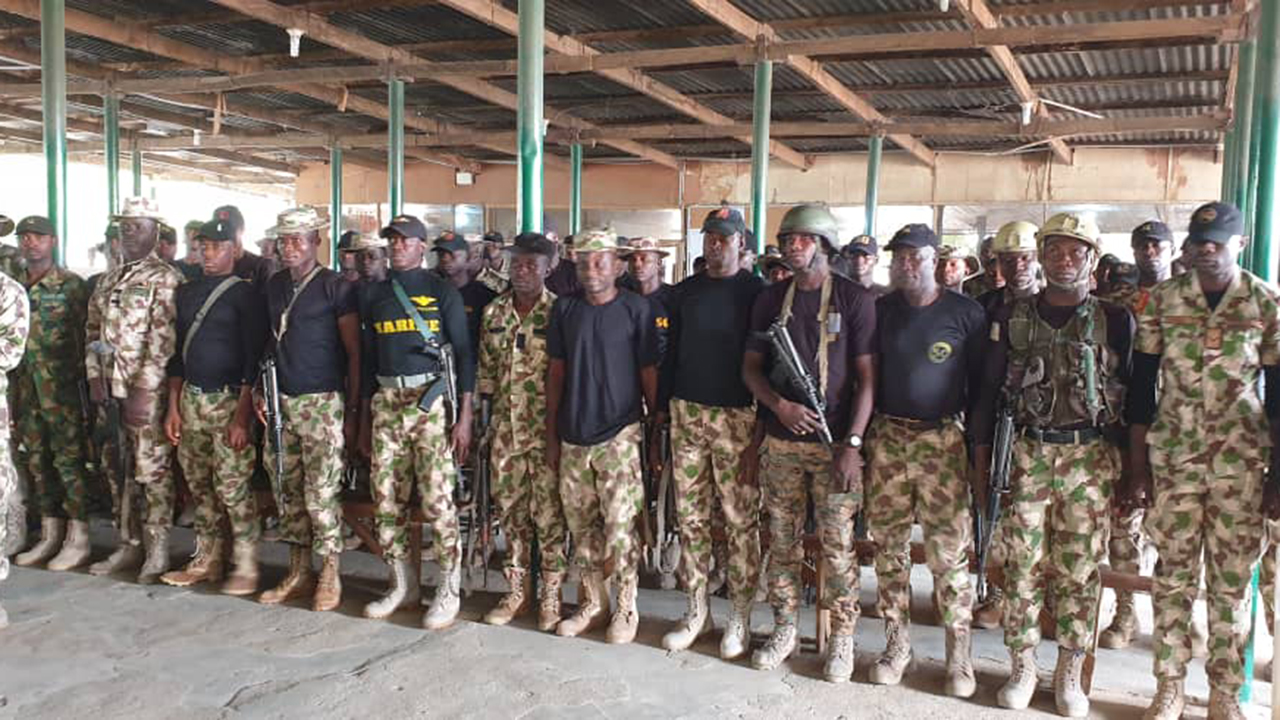
Nigerian Army Opens Portal For 91st Regular Recruits Intake
The Nigerian Army has announced the start of online registration for its 91st Regular Recruits Intake (RRI), targeting both trade and non-trade applicants.
In a notice shared on its official Facebook page, the Army stated that the exercise will begin on 30 March and close on 17 May. It said the opportunity is open to eligible Nigerian citizens and stressed that the process is free of charge. It also cautioned applicants to stay away from fraudsters.
According to the guidelines, applicants must be Nigerians by birth and must be single. They are required to present a valid National Identity Number (NIN) and Bank Verification Number (BVN). The Army added that candidates must be medically, physically, and psychologically fit, and must not have any criminal record.
For educational qualifications, applicants are expected to have at least four credits, including English Language, obtained in not more than two sittings. Accepted examinations include WASSCE, GCE, NECO, and NABTEB.
The Army further explained that those applying as tradesmen or women must possess relevant trade or guild certificates.
On age limits, non-trades applicants must be between 18 and 22 years old. Trades applicants must not be older than 26 years as of 30 June. The minimum height requirement is 1.68 metres for men and 1.65 metres for women.
Shortlisted candidates will take part in a screening exercise in their states of origin from 9 June to 23 June.
Applicants were advised to complete their registration through the official recruitment portal and print necessary documents, including guarantor forms. The Army warned that anyone who submits fake documents will face prosecution.
It also highlighted benefits of joining the service. These include career growth, competitive salary, access to education and training, healthcare services, and pension after retirement.
The Army urged interested candidates to apply early and follow all instructions carefully. It added that there are no special recruitment centres and no pre-selection computer-based tests for the exercise.
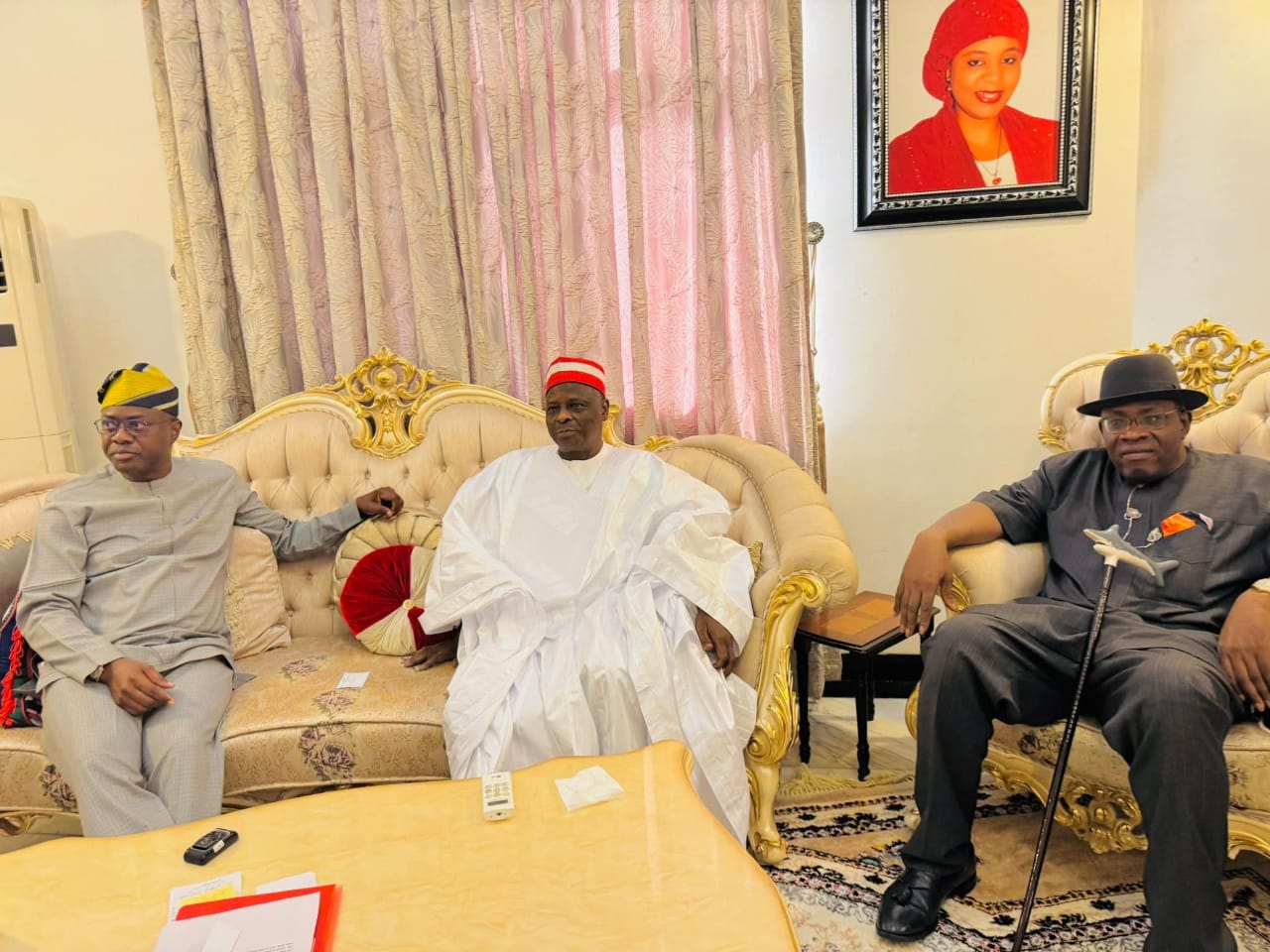
PHOTOS: How Nigeria’s Opposition Leaders Visit Kwankwaso for Sallah Amid Political Realignments
By Uzair Adam
Prominent opposition figures in Nigeria have paid a visit to the residence of Kwankwasiyya leader, Rabiu Musa Kwankwaso.
Those present at the visit included former Labour Party presidential candidate Peter Obi, Oyo State Governor Seyi Makinde, and Senator Seriake Dickson, among other political stakeholders.
In a post shared on his Facebook page, Kwankwaso stated that the politicians were at his residence on a Sallah homage.
Kwankwaso, a leading figure in the opposition New Nigeria Peoples Party, is widely speculated to be considering a move to another political party.
This follows the recent defection of Kano State Governor, Abba Kabir Yusuf, from the NNPP to the ruling All Progressives Congress.
Meanwhile, Peter Obi recently confirmed his official move to the African Democratic Congress, while Governor Makinde remains one of the few governors still in the Peoples Democratic Party, alongside his Bauchi State counterpart.

Examining the Sanity of Saner Climes
By Amir Abdulazeez
Several decades into the global modern era, Africans, Asians and Latin Americans continue to be held hostage by their colonially indoctrinated inferior mindsets engineered by the blackmail and mythology of Western moral supremacy. This error is not in observing Western virtues, many of which are real. The error is in the uncritical veneration that renders their vices invisible and their judgements unchallengeable. It is evident from the events of the last three decades alone that the so-called saner climes of Europe and North America are the primary architects of global chaos and instability of nations, all in the name of injecting sanity into ‘less sane’ societies.
The ongoing US-Israel war on Iran, launched in the midst of Ramadan, is a typical doctrine of the saner climes, exhibited in its most naked form. Iran’s Foreign Minister had said three days before the war was declared that a nuclear agreement was ‘within reach’ after a third round of indirect talks in Geneva.
The IAEA itself confirmed there was no evidence of a structured Iranian nuclear weapons programme at the time of the attack. Yet, the surprise assault assassinated Supreme Leader Ali Khamenei, killed his family members and damaged schools, hospitals and even UNESCO-recognised cultural heritage sites. This is a typical catalogue of barbaric war crimes for which the West has condemned others across generations.
The Donald Trump administration, whose seemingly rude, dishonest and arrogant officials, has offered a menu of rationalisations and a handful of conflicting justifications for the war. However, when Amnesty International confirmed that the United States was responsible for a strike that killed at least 160 primary school girls, the US officials chose arrogance through denials instead of remorse.
In fact, the Head of the Federal Communications Commission simultaneously intimidated his own press, threatening the withdrawal of broadcast licenses of American news outlets whose war coverage he deemed unfavourable. Another trademark saner-climes mythology, muzzled in a way only a few non-saner climes can imagine.
Meanwhile, in all these, it is the ‘lunatic’ Iran that is supposed to apologise and do nothing while it is attacked. The Iranian Regime, branded as autocratic on the premise that it compels women to cover their hair in public, is being lectured by leaders of societies whose women go out naked in the name of civilisation and whose governments topple, kill and abduct Heads of state of other countries for recklessly greedy reasons.
Now imagine if the erratically behaving Donald Trump were the leader of any African Country, the West would have since declared him incoherent and unstable to deal with or labelled his citizens stupid for voting for him. Worse still, imagine if the Epstein scandal happened in Asia or Latin America. All these contradictions reveal with crystal clarity that Western principles are instruments of convenience.
To understand the foundations of all these, let us revisit some history. Britain’s Industrial Revolution was fertilised by the profits of the transatlantic slave trade and the systematic plunder of India, a country whose share of global GDP fell from about 25% at the onset of colonial rule to barely 4% at independence.
France financed much of its republican grandeur on the forced labour of West Africa and the Caribbean. Belgium’s King Leopold II transformed the Congo into a private abattoir, severing the hands of Africans who failed to meet rubber quotas, leaving behind a traumatised country that still bleeds today.
To speak of the sanity of those climes without acknowledging that they were partly built from organised insanity inflicted elsewhere is to ignore the background to what we are witnessing today.
In the last fifty years alone, the so-called saner climes have unleashed a level of violence and destabilisation that would shame any regime they have ever deemed fit to condemn. The United States, the self-acclaimed sentinel of the free world, has engineered irrational regime changes in Chile (1973), Iran (1953 and subsequently), Guatemala (1954), Nicaragua, Panama, Libya, Iraq, Afghanistan and Syria, among others. The 1973 CIA-backed coup against a democratically elected socialist president of Chile, Salvador Allende, installed Augusto Pinochet, under whose reign thousands were tortured, disappeared, or executed. Henry Kissinger, the American architect of that atrocity, received the Nobel Peace Prize from his fellow saner clime comrades.
The French Government, through its notorious Françafrique policy, maintained a neocolonial empire across West and Central Africa long after the 1960s, propping up murderous dictators and conducting military interventions to protect economic interests, with a consistency that made a mockery of every democratic principle France professed to uphold.
The invasion of Iraq in 2003 by Western Governments is perhaps the most consequential act of manufactured catastrophe of the modern era. The war resulted in the deaths of an estimated 200,000 to one million Iraqi civilians, the obliteration of the country’s infrastructure, the rise of ISIS from the ashes of a disbanded Iraqi army and the triggering of a refugee crisis that continues to destabilise the Middle East. No one was held accountable. George W. Bush and Tony Blair are living happy lives in their saner countries. The International Criminal Court, which has indicted multiple African heads of state on much lesser crimes with considerable alacrity, found no jurisdiction to examine any of them. Meanwhile, the people of Iraq, Syria and Libya who were dismantled in the name of liberation still live in the ruins and pains of what the saner climes call democracy.
While the West was busy bombing the Middle East, Africa, the so-called backward continent, was largely attending to its own affairs of conflict resolution with a remarkable degree of maturity. The African Union mediated crises in Burundi, the Gambia and Lesotho without firing a single bullet. ECOWAS brokered peace agreements in Sierra Leone and Liberia and deployed peacekeeping forces with genuine multilateral mandates, without the casual trigger-happiness of Western powers.
Western attitude towards violence is shamelessly selective. When Russia invaded Ukraine in 2022, the Saner Clime’s response was swift, comprehensive and morally unambiguous: sanctions, weapons, diplomatic isolation and a media chorus of civilizational solidarity. This response was appropriate anyway. But the problem is its stark contrast with the Western posture toward other invasions. When Saudi Arabia launched its war on Yemen in 2015, the United States and the United Kingdom did not merely decline to intervene; they allegedly supplied the bombs, refuelled the warplanes and provided intelligence for strikes that killed thousands of Yemeni civilians and engineered one of the worst humanitarian crises on earth.
Many argue that the actions of Western governments do not accurately reflect what their citizens stand for. This is debatable, especially when one examines certain incidents. During the Obama presidency, Edward Snowden revealed that the US National Security Agency was conducting mass, warrantless surveillance of American citizens and foreign governments, including the personal telephone of former German Chancellor Angela Merkel, in flagrant violation of constitutional protections and international diplomatic norms. The response was not accountability but exile for Snowden and a classification of his revelations as treason.
The United States has the largest prison population on earth, both in absolute numbers and per capita, administered under a system in which Black Americans are incarcerated at five times the rate of their white counterparts, in conditions that the United Nations has described as cruel. Since 1968, gun violence has claimed more American lives than all of America’s foreign wars combined. One might be inclined to believe that these controversies are ones ordinary Western citizens may not approve of.
Climate change is another damning indictment of Western moral authority in the twenty-first century. The Industrial activities enriching Europe and North America still depend on burning carbon at a scale the planet has never experienced. The United States, historically the world’s largest cumulative emitter of greenhouse gases, withdrew from the Paris Climate Agreement under Donald Trump.
Australia, another clime reputed to be considerably saner than most, has built its prosperity on coal exports and resisted meaningful emissions reduction. Some Pacific Island nations face sea submersions within this century as a consequence of decisions made in saner capitals. When these nations’ leaders speak at the United Nations with tears in their voices, the saner climes offer symbolic but empty sympathy before later returning to preserving their industrial prerogatives.
The Western Media’s tactical twisting of narratives regarding other climes is another issue. For example, CNN may not run primetime documentaries on the Swiss banking system’s complicity in laundering the proceeds of African kleptocracy, but will rather concentrate on the primary kleptocrats. The BBC does not lead with investigations into the role of British arms dealers in sustaining African conflicts. The New York Times does not dedicate its front page to the tax avoidance schemes through which Western corporations drain billions of dollars annually from African economies (more than the continent receives in foreign aid).
In addition to all this, there is something more worrisome. The bulk of support received by these saner climes comes from their victims in the third world. In Nigeria, for instance, the blind sympathy for religious affiliations drives people to support the brazen oppression and cruel injustices perpetrated by the West. Our solidarity should be among ourselves, not with those who see and treat us as worthless humans and more like animals because of their superior moral hypocrisy.
Additionally, our bootlicking governments, which are considered close to valueless in the International arena or even insane just like us, must stop intimidating their own citizens who decide to speak up against Western double standards. Let’s remember, the phrase “saner climes” is a moral verdict and a devastating condemnation of everywhere else except Europe and North America. Africans and all peoples of the marginalised world are owed the intellectual inheritance of critical discernment.
The world does not need more or fewer saner climes; it needs a more honest accounting of what sanity actually requires. It requires consistency: the same rules applied to the powerful and the powerless alike. It requires humility: the acknowledgement that no civilisation holds a monopoly on wisdom.
And it requires accountability: not the selective justice of indicting the weak and glorifying the mighty, but the universal application of standards that do not bend before a Security Council veto or the impulse of a self-serving superpower. Until that accounting arrives, the presumption of Western moral authority deserves not deference, but fearless interrogation; the kind that the so-called saner climes have always claimed to celebrate and so rarely been prepared to receive.

One Year After Promise, Kano Foreign Scholars Still Await Jobs
By Uzair Adam
One year after Kano State Governor Abba Kabir Yusuf announced automatic employment for 54 postgraduate students trained in India, the beneficiaries say the promise remains unfulfilled, raising concerns about accountability and policy follow-through.
The graduates, who studied at Symbiosis International University under the Kano State Government’s foreign scholarship programme, returned to the state on March 22, 2025.
The Daily Reality recalls that during an official reception and Iftar held in their honour, the governor declared that the students would be absorbed into the state civil service.
“I was pleased to have Iftar with another set of our students who returned from India after completion of their studies,” the governor said at the time, adding that the 54 beneficiaries would be given automatic employment.
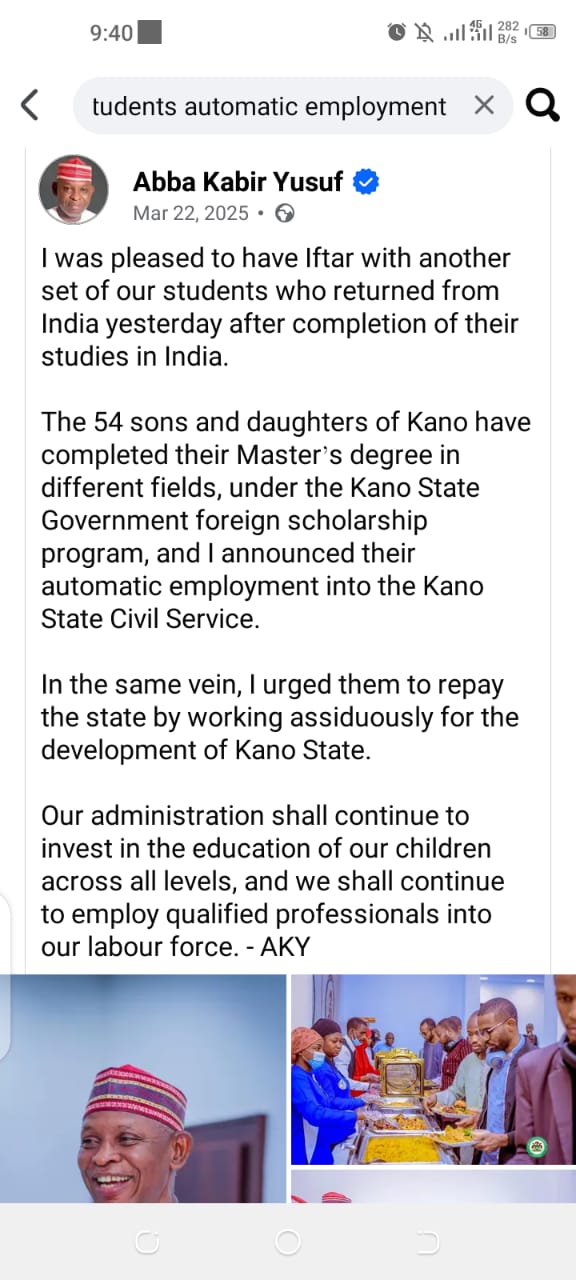
He also urged them to justify the investment made in them by contributing meaningfully to the development of the state, stressing that they should “repay the state by working assiduously.”
However, despite the governor’s public promise of automatic employment, the graduates remain without jobs one year later.
The delay has created uncertainty and hardship for the scholars, who had planned their careers around the assurance, while no formal communication or timeline has been provided by the authorities.
Speaking on behalf of the affected graduates, a student’s representative who pledged anonymity said the commitment has not been implemented despite repeated follow-ups through appropriate channels.
“During the reception, His Excellency publicly announced automatic employment for all 54 returning scholars,” he said.
He explained that many of the graduates had structured their professional plans around the governor’s promise, but the delay has left them facing uncertainty and hardship.
According to him, there has been no formal communication or clear timeline from the authorities regarding when the employment will take effect.
He said the situation has persisted for a year despite the group’s efforts to seek clarification.
“We believe this is a matter of public accountability and policy follow-through,” he added, calling for attention to the issue.
The Director General, Media and Publicity to the governor, Sunusi Bature Dawakin Tofa, did not respond to several calls seeking comment.
Efforts to reach the governor’s Chief Press Secretary, Mustapha Muhammad, were also unsuccessful due to network constraints at his location.
The development comes amid ongoing state government investments in foreign education programmes to build skilled manpower, particularly in critical sectors such as health and education.
Many people believe that delays in implementing such commitments could weaken public confidence in government policies and affect future beneficiaries of similar programmes, even as the affected scholars remain hopeful that the promise will eventually be fulfilled.
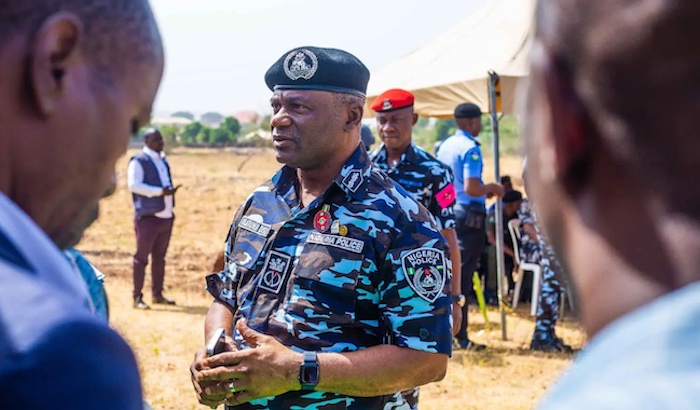
IGP Disu Disbands All Police Tactical Units, Orders Immediate Restructuring Nationwide
By Sabiu Abdullahi
There is growing unrest within the Nigeria Police Force following a directive from Inspector-General of Police (IGP) Tunji Disu, ordering the immediate dissolution of multiple tactical units across the country.
Units reportedly affected include the Rapid Response Squad (RRS), Anti-Cultism, Anti-Kidnapping, Scorpion Squad, Tactical Intelligence Response Squad (TIRS), Special Weapons and Tactics (SWAT), Monitoring Units, Tiger Squad, Gender Units, and Anti-Robbery squads, among others.
The directive, obtained from an internal wireless message by SaharaReporters, followed a recent virtual meeting between the IGP and senior police officers. According to the message, “all existing tactical teams at commands are being reformed into two, with operational names to be provided by the Deputy Inspector-General of Police in charge of Operations.”
The signal further specified that units such as “Lion, Tiger, Scorpion squads and others by whatever names called” will no longer operate in their current form. Under the new arrangement, only area commands and divisional surveillance units are allowed to function temporarily, pending further instructions.
Personnel from the disbanded units are to be redeployed into conventional policing structures, including patrol and guard duties, the Divisional Crime Branch (DCB), Juvenile and Women Centre (JWC), and general beat assignments. “The dissolved teams are to be subsumed into patrol and guard, DCB, JWC and beat with immediate effect,” the directive added.
Further details on the restructuring are expected to be revealed during the Officers’ Conference scheduled for March 26, 2026. While the rationale for the sweeping reforms was not explicitly stated, the move comes amid longstanding public concerns over misconduct by some tactical units, many of which have faced accusations of human rights abuses, extortion, and extrajudicial operations.
The restructuring follows closely on the heels of a special resit promotion examination for senior officers reportedly overlooked in previous cycles. A confidential police message dated March 16, 2026, shows that the Police Service Commission (PSC) has rescheduled the exercise for Deputy Commissioners of Police (DCPs), Assistant Commissioners of Police (ACPs), Chief Superintendents of Police (CSPs), and Superintendents of Police (SPs) who were “not successful” in the December 2025 and March 2026 promotion cycles.
Sources say that some officers were allegedly sidelined by a bribery scheme orchestrated during former IGP Kayode Egbetokun’s tenure. The current IGP is reportedly moving to “reconsider and rectify” these injustices by providing a transparent opportunity for affected officers to earn their next ranks.
The wireless signal directs all commands to release the affected officers to attend the interviews as scheduled and advises them to refresh their knowledge in professional studies, law, and local acts. Security arrangements include twelve armed men provided by AIGPOL MOPOL and two Hilux vans from the transport wing (TRANSFOR), to be ready at the FHQ Parade Ground by 06:00 HRS.
This move marks one of the most significant structural overhauls in the Nigeria Police Force in recent years.
Over 150 Suspected Bandits Reportedly Drown After Boat Accident in Sokoto
By Sabiu Abdullahi
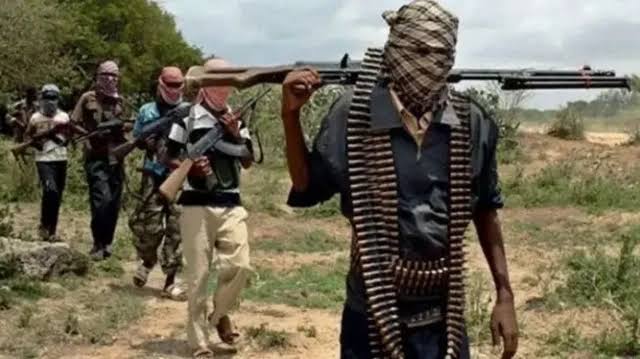
At least 150 suspected bandits reportedly drowned after a boat carrying them capsized in Sabon Gida, Sokoto State.
Zagazola Makama, a counter-insurgency and security expert in the Lake Chad region, revealed the incident in a post on X. He said the tragedy occurred on Saturday evening when the vessel, loaded with a large number of armed men, overturned while crossing a water body in the area.
According to Makama, the bandits were traveling in large numbers when the boat suddenly capsized, throwing everyone on board into the water.
“Preliminary information suggests that many of them could not swim, leading to heavy casualties,” he said.
He added that early reports indicate that none of the occupants survived the incident.
As of the time of this report, security agencies have not issued an official statement confirming the event.
The incident has caused alarm in the area as authorities continue to monitor the situation closely.
Putin Wants a Long War – Zelenskyy Highlights How Iran Conflict Benefits Russia
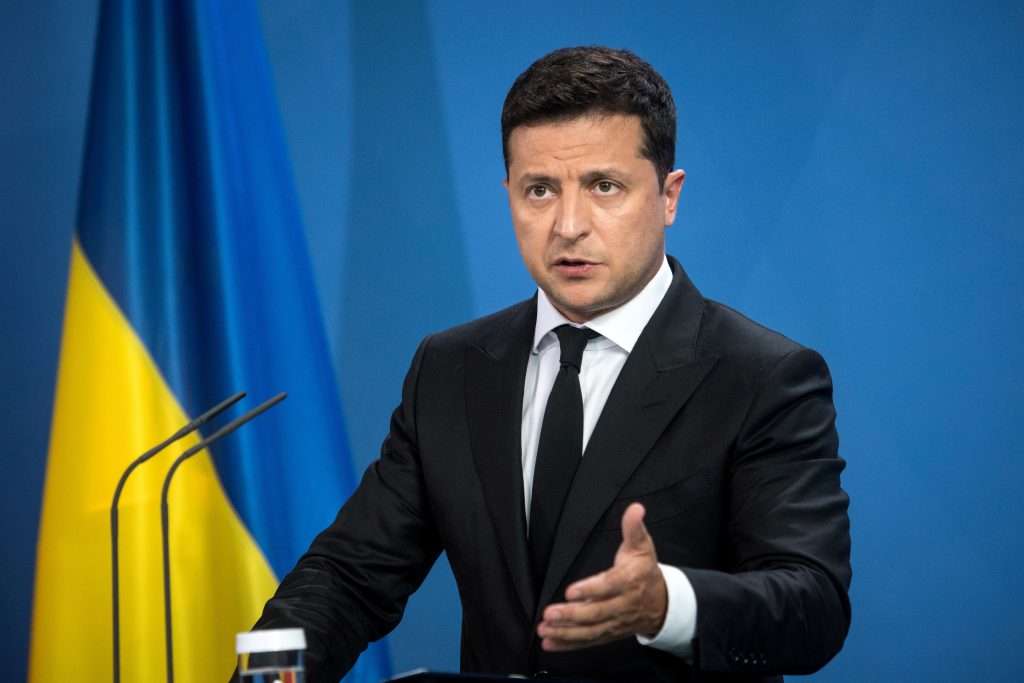
Ukrainian President Volodymyr Zelenskyy has said that Russia is the main beneficiary of the ongoing conflict between the United States, Israel, and Iran.
Reports say the Donald Trump administration recently gave countries a 30-day window to purchase Russian oil and petroleum products that had been stuck at sea due to sanctions. This move aimed to help reduce rising oil prices caused by the ongoing Middle East conflict.
Since Russia launched its full-scale invasion of Ukraine in February 2022, it has faced sanctions from the US and European nations. Analysts, however, have said that easing these sanctions could provide Moscow with significant funds, which it could use to continue its war in Ukraine.
When asked whether Russian President Vladimir Putin is benefiting from the sanctions relief, which has drawn criticism from many European countries, Zelenskyy told the BBC:
“Putin wants a long war. For Putin, the Iranian campaign is a plus. Besides high energy prices, it also means the US is running out of resources and the companies that make air defence systems are also facing shortages – so there’s a lack of resources overall.
“So, it’s good for Putin that the resources aren’t being used against Ukraine, which is where he’s sending his army and fighting. He needs to weaken US and this is a long process. One way to do that is the Middle East.”
Zelenskyy added that the situation shows how the Middle East conflict diverts US attention and resources away from the war in Ukraine, giving Russia a chance to prolong the conflict.