

Trump says he was not asleep during cabinet meeting, calls session “boring”
By Sabiu Abdullahi
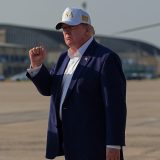
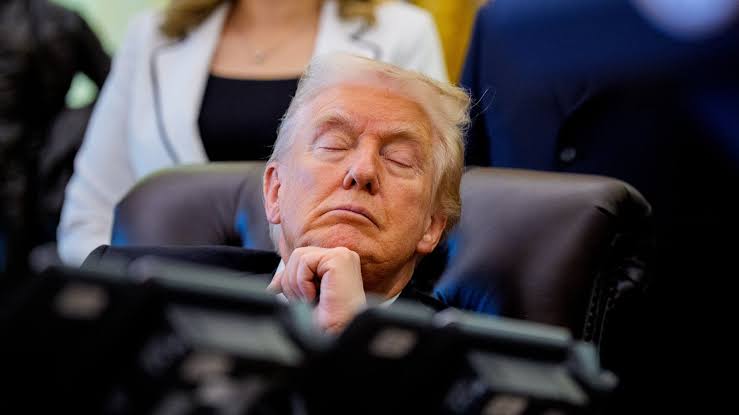
US President Donald Trump has dismissed claims that he fell asleep during a cabinet meeting, saying he only closed his eyes because the session was dull.
The 79-year-old leader faced renewed scrutiny over his health after video footage from a December cabinet meeting appeared to show him dozing off. The incident sparked online debate, especially because such meetings are often broadcast live and tend to last for hours.
Cabinet meetings under Mr Trump are known for their length. One session in August reportedly ran for more than three hours. The meeting held on Thursday, however, ended after one hour and 20 minutes.
During the gathering, Mr Trump departed from the usual practice where cabinet members take turns praising the president and outlining progress in their ministries. After delivering an opening speech that lasted about 25 minutes, he limited the number of officials allowed to speak.
“We are going to ask a couple of people to say a few words, and we’re not going to go through the whole table,” he said.
He referred to criticism from a previous press conference, stating: “Because the last time we had a press conference, it lasted for three hours, and some people said ‘he closed his eyes.’”
Mr Trump then explained his action, saying: “Look, it got pretty boring. I love these people, but there’s a lot of people.” He added: “But I didn’t sleep. I just closed them because I wanted to get the hell out of here.”
The president has repeatedly rejected suggestions that his age affects his performance. In an interview with New York Magazine published on Monday, he again defended his health, blaming what he described as “boring as hell” cabinet meetings for appearing sleepy.
In the interview, Mr Trump said he is in “perfect health” and feels “the same as [he] did 40 years ago”. A senior staff member quoted in the report claimed that the president’s decision to stop dyeing his hair was his “only concession to age”.
Attention also turned to those who were not invited to speak during Thursday’s meeting. Mr Trump did not call on Kristi Noem, the US homeland security secretary, despite her presence in the room.
Ms Noem is facing heavy criticism over the conduct of Immigration and Customs Enforcement officers following recent deadly incidents in Minneapolis. Alex Pretti, a 37-year-old intensive care nurse, was killed during a protest on Saturday. Renee Nicole Good, a mother of three, was killed on January 7 during a confrontation with officers carrying out immigration raids.
Amid rising tension, Mr Trump has reshuffled his immigration leadership. He sidelined Ms Noem and dismissed Gregory Bovino, the head of border control.
Other senior officials also did not speak during the session, including Secretary of State Marco Rubio and Interior Secretary Doug Burgum, although the president praised both men.
In a move that surprised reporters, Mr Trump declined to take questions at the end of the meeting. As a result, he avoided direct queries about his confidence in Ms Noem and the ongoing controversy surrounding immigration enforcement.
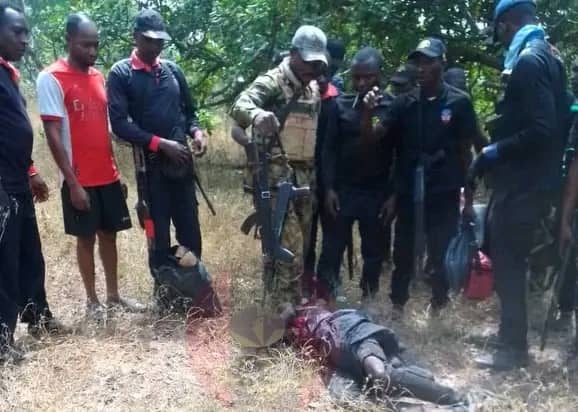
Clergyman rescued, kidnapper killed in Enugu gun battle
By Abdullahi Mukhtar Algasgaini
Security forces have rescued a kidnapped reverend after a gunfight in Enugu State, leaving one of his abductors dead.
Reverend Johnson Anayo Onugwu was taken from his home in Ezimo community, Udenu Local Government Area, around 1:00 am on Thursday, January 29, 2026.
Troops from the 82 Division Garrison, part of the Joint Task Force South East (Operation UDO KA), acted on intelligence and tracked the kidnappers to the Okpakeke community following a trail through the Itabolo area.
A fierce firefight ensued, resulting in the neutralization of one criminal and the safe recovery of Reverend Onugwu.
The operation also led to the recovery of an AK-47 rifle, two magazines, and 20 rounds of ammunition.
The Nigerian Army, in a statement, affirmed its continued collaboration with sister agencies to safeguard lives and property and deny criminals freedom of action in the region.
BUK moves to curb unauthorised use of own name, identity on social media
By Abdullahi Mukhtar Algasgaini
Bayero University Kano (BUK) has officially prohibited the unauthorized use of its name, acronym, or official logo on all social media platforms. The ban is aimed at protecting the institution’s reputation and ensuring the accuracy of information associated with it.
The directive was contained in a public notice issued on Thursday, 29th January 2026, by the University’s Director of Public Affairs, Malam Lamara Garba, acting on behalf of the Registrar.
The statement expressed the University’s concern over the increasing unauthorised use of its identity by individuals and groups on social media. It noted that such practices have the potential to mislead prospective students, applicants, and the general public who may mistakenly associate the content with the official university.
Consequently, the university has banned any person or group from using “Bayero University Kano,” its acronym “BUK,” or its official logo on any social media page or account without prior written authorization from the university management.
The notice further ordered all those currently using the university’s name or insignia without permission to remove them immediately. It warned that anyone found violating this directive would face appropriate sanctions.
The move is seen as part of broader efforts by the institution to safeguard its brand integrity and combat the spread of misinformation.
BUK moves to curb unauthorised use of own name, identity on social media
By Abdullahi Mukhtar Algasgaini
Bayero University Kano (BUK) has officially prohibited the unauthorized use of its name, acronym, or official logo on all social media platforms. The ban is aimed at protecting the institution’s reputation and ensuring the accuracy of information associated with it.
The directive was contained in a public notice issued on Thursday, 29th January 2026, by the University’s Director of Public Affairs, Malam Lamara Garba, acting on behalf of the Registrar.
The statement expressed the University’s concern over the increasing unauthorised use of its identity by individuals and groups on social media. It noted that such practices have the potential to mislead prospective students, applicants, and the general public who may mistakenly associate the content with the official university.
Consequently, the university has banned any person or group from using “Bayero University Kano,” its acronym “BUK,” or its official logo on any social media page or account without prior written authorization from the university management.
The notice further ordered all those currently using the university’s name or insignia without permission to remove them immediately. It warned that anyone found violating this directive would face appropriate sanctions.
The move is seen as part of broader efforts by the institution to safeguard its brand integrity and combat the spread of misinformation.
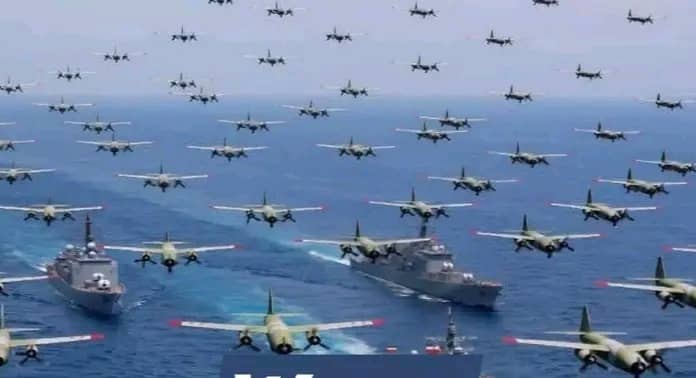
Iran bolsters naval forces in Strait of Hormuz amid rising tensions
By Abdullahi Mukhtar Algasgaini
In a significant military mobilization, Iran has deployed over 2,500 military aircraft to operate alongside its naval forces in the strategic Strait of Hormuz. The move, reported tonight, centers on the area of Hormuz Zaldmoon.
Regional analysts view the large-scale deployment as a major security preparation and strategic exercise. It is widely interpreted as a show of force and a direct response to escalating regional tensions and recent threats of conflict.
A senior Iranian military official stated the operations have a “special focus on marine security,” underscoring Tehran’s declaration of readiness to defend vital waterways. The Strait of Hormuz is a critical global chokepoint for oil shipments.
The rapid military buildup has drawn intense international scrutiny, with world leaders and defense observers closely monitoring the speedy activities. The deployment raises concerns over potential miscalculations or confrontations in an already volatile region.
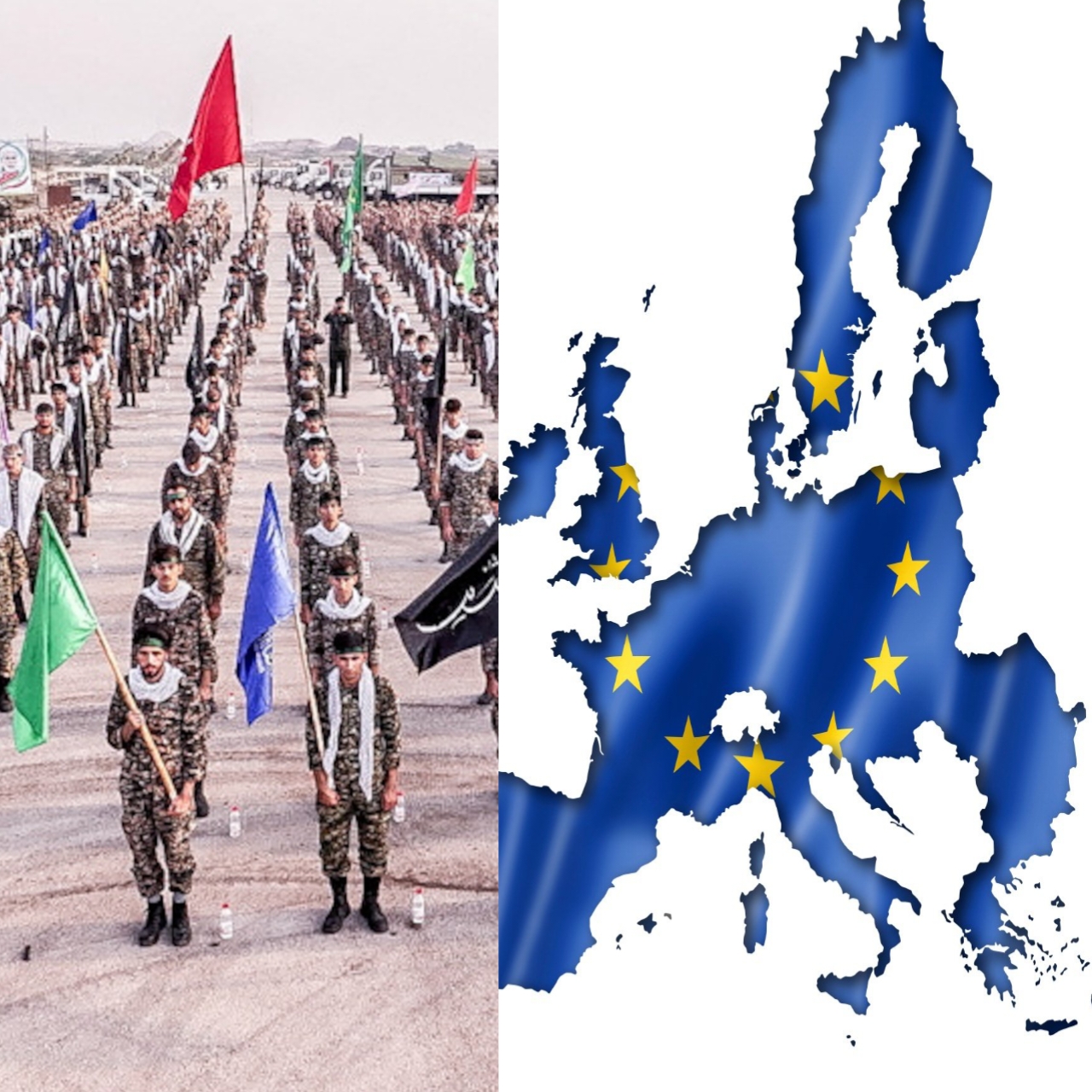
EU labels Iran’s revolutionary guards as terror group amid escalating US-Iran tensions
By Sabiu Abdullahi
The European Union has officially designated Iran’s Islamic Revolutionary Guard Corps (IRGC) as a “terrorist organisation”, a move that further deepens tensions between Tehran and Western powers amid rising military threats from the United States.
The decision followed a meeting of EU foreign ministers and was announced by the bloc’s top diplomat, Kaja Kallas. The designation came as US President Donald Trump renewed warnings of possible military action against Iran.
Iran’s Foreign Minister, Abbas Araghchi, responded with a sharp warning, saying the country’s armed forces were ready to respond “immediately and powerfully” to any attack by the United States. His remarks came hours after Trump said Washington was prepared to act with “speed and violence”.
In recent days, the US has strengthened its military presence in the region. Among the assets deployed to the Arabian Sea is the USS Abraham Lincoln, a nuclear-powered aircraft carrier.
Alongside the terror designation, EU foreign ministers approved fresh sanctions against Iran. The measures include travel bans and asset freezes targeting Iranian officials accused of involvement in the killing of thousands of antigovernment protesters since late December last year.
From Tehran, the General Staff of Iran’s Armed Forces condemned the EU’s decision. In a statement, it described the move as “illogical, irresponsible and spiteful”, and accused the bloc of acting in line with US and Israeli policies. The statement warned that “the dangerous consequences of this hostile and provocative decision will be directly borne by European policymakers”.
Iranian officials noted that the United States had already taken a similar step in 2019, when it designated the IRGC as a foreign “terrorist organisation”.
International reactions quickly followed the EU’s announcement. United Nations Secretary-General Antonio Guterres urged restraint and called for diplomacy to prevent further escalation.
“We believe that it’s important that there is a dialogue allowing for an agreement in relation, namely, to the nuclear question and that we can avoid a crisis that could have devastating consequences in the region,” Guterres told reporters.
In Washington, US Defence Secretary Pete Hegseth said Iran still had an opportunity to reach an agreement with the United States, but warned that the Pentagon stood ready to act if talks failed.
“They have all the options to make a deal,” Hegseth said. “They should not pursue nuclear capabilities.”
He added: “We will be prepared to deliver whatever this president expects from the war department, just like we did this month [in Venezuela].”
Iranian President Masoud Pezeshkian also engaged regional leaders as tensions rose. According to a statement from the Iranian presidency, Pezeshkian spoke with the emir of Qatar and the prime minister of Pakistan, stressing “the importance of strengthening unity among Islamic countries” and the need for continued diplomatic efforts to reduce regional tensions.
The statement added that Iran had chosen “the path of dialogue and dignified diplomacy”, while warning that the country “will not hesitate to defend itself if necessary”.
Germany welcomed the EU’s decision, with its Foreign Office calling the move “overdue”.
“The decision taken today sends a strong political message,” the ministry said. “We as the EU are thus showing that we see what is happening in Iran. We stand side by side with the Iranian people. We stand up for humanity and we oppose repression.”
Germany also confirmed that new individual sanctions had been imposed on officials accused of responsibility for what it described as the “brutal suppression of the protests”.
European Commission President Ursula von der Leyen echoed that position, calling the designation “long overdue”.
“‘Terrorist’ is indeed how you call a regime that crushes its own people’s protests in blood,” she said. “Europe stands with the people of Iran in their brave fight for freedom.”
Israel also praised the EU action. Israeli Foreign Minister Gideon Saar described it as an “important and historic decision”, claiming it would deal a “powerful blow” to the legitimacy of Iran’s government.
Meanwhile, Tehran summoned Germany’s ambassador after Chancellor Friedrich Merz said the Iranian government’s “days are numbered”.
“It could be a matter of weeks, but this regime has no legitimacy to govern the country,” Merz said.
Iran has also issued warnings of upcoming military drills in the Strait of Hormuz, a critical waterway through which about 20 percent of global oil supplies pass, raising further concerns over regional stability.
The IRGC, established after Iran’s 1979 revolution, operates alongside the regular army and reports directly to Supreme Leader Ayatollah Ali Khamenei. It plays a central role in Iran’s defence strategy and regional influence and remains deeply embedded in the country’s political and economic structures.
As diplomatic pressure mounts and military posturing continues, analysts warn that the situation carries high risks, with the potential for serious consequences across the Middle East if tensions spiral further.
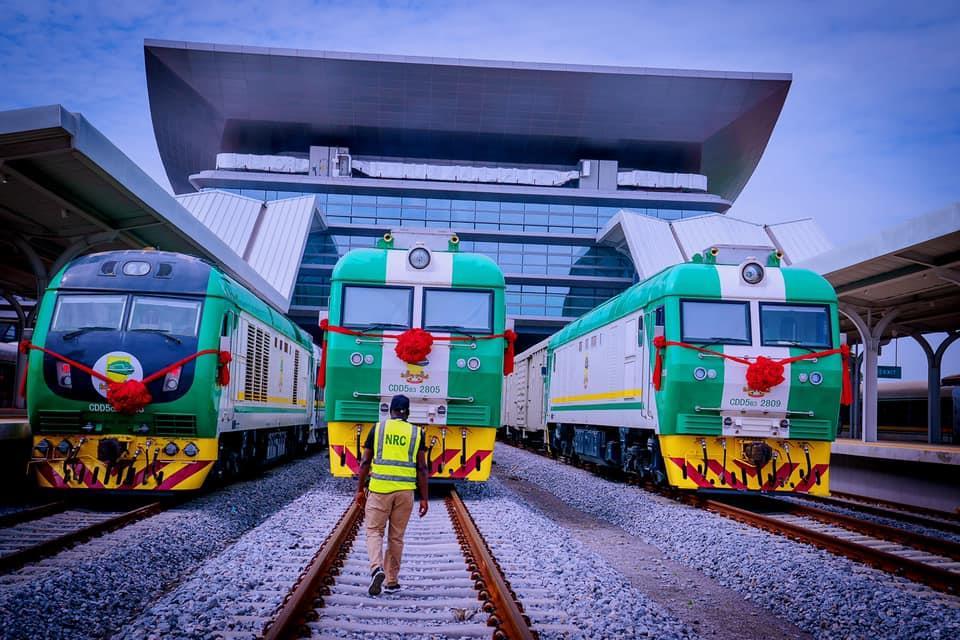
FG approves N1trn Kano metropolitan rail project
By Uzair Adam.
The Federal Government has approved a N1 trillion Metropolitan Rail Service for Kano State, a move expected to modernise urban transportation, ease traffic congestion and stimulate economic activities across the metropolis.
The approval was disclosed in a statement issued on Wednesday by the governor’s spokesperson, Sunusi Bature Dawakin Tofa.
According to the statement, Governor Abba Kabir Yusuf announced the development while addressing members of the Kano State contingent that participated in the 2025 National Qur’anic Recitation Competition held in Borno State.
Governor Yusuf said the decision of his administration to realign with the Federal Government under the All Progressives Congress (APC) was informed by the need to attract critical development projects capable of accelerating growth in the state.
He explained that the Kano Metropolitan Rail Service would provide a modern, efficient and affordable mass transit system linking key districts within the metropolitan area, thereby improving mobility for residents and encouraging trade and investment.
Describing the project as a landmark intervention, the governor said it would significantly enhance the quality of life of the people and reposition Kano as a major transportation hub in Northern Nigeria.
He assured that the state government would collaborate closely with relevant federal agencies to ensure smooth implementation of the project, transparency in execution and maximum benefits for residents.
The governor also expressed appreciation to the Federal Government for approving the project and reaffirmed his administration’s commitment to complement federal efforts through supportive policies and infrastructure development.

Kano First: Why governor Yusuf’s homecoming to APC is a strategic masterstroke for progress
By Dr. Saifullahi Shehu Imam
The political landscape of Kano, ever dynamic, influential and consequential has entered a defining moment. Governor Abba Kabir Yusuf’s decision to align with the All Progressives Congress (APC), anchored on the powerful declaration “Putting Kano First for the Good of All,” is far more than a political realignment. It is a bold statement of priorities, a calculated act of leadership, and a clear signal that governance, not partisan rigidity, will guide the future of Kano State. Critics will be quick to cry foul, branding it as opportunism. But leadership demands that we look beyond labels and emotions, and instead interrogate outcomes.
Kano, as the economic nerve centre of northern Nigeria, stands at a crossroads. The challenges are real and urgent: revitalizing commerce and industry, tackling youth unemployment, rebuilding critical infrastructure, improving security and expanding access to quality education and healthcare. These challenges cannot be met by isolation or political friction; they require cooperation, access, and influence at the highest levels of national decision making.
Governor Yusuf’s resolve to put Kano first reflects a practical understanding of Nigeria’s federal structure. In such a system, meaningful development thrives where state and federal governments work in harmony. When alignment exists, projects move faster, funding flows more smoothly, and policy coordination becomes effective. By choosing synergy over strain, the governor has removed an avoidable bottleneck to progress. This is not capitulation, it is strategic foresight that ensures that Kano’s voice is amplified in the corridors of power, not muffled by political dissonance.
Equally important is the governor’s emphasis on “the Good of All.” This phrase must not be overlooked. It speaks directly to the everyday realities of Kano’s people: the traders in our markets seeking a stable economy, the teacher grappling with overcrowded classrooms, the healthcare worker striving with limited resources, and the graduate searching for dignified employment. Governance must ultimately be measured by its impact on these lives, not by party posturing.
Political energy spent on constant confrontation is energy diverted from solving real problems. It is understandable that some citizens may initially struggle with the shift. Change, especially in politics, often provokes uncertainty. But history consistently rewards leaders who take difficult decisions in the interest of the greater good. The ultimate loyalty of any governor is not to party structures, but to the people who entrusted him with their mandate.
If this decision accelerates the delivery of roads, schools, hospitals, security, and jobs, then it stands justified by its results. In essence, Governor Yusuf has not abandoned his principle; he has elevated it. He has chosen the principle of effective governance over comfortable stagnation, cooperation over confrontation, and results over rhetoric. Putting Kano First is a declaration that development will no longer wait for perfect political conditions, it will be pursued through intelligent alignment and purposeful action. The responsibility now shifts to execution.
The governor must translate this political capital into visible, measurable progress. Likewise, the APC must ensure that this homecoming yields tangible federal presence and support in Kano. If both sides rise to the occasion, this moment will be remembered not as a political switch, but as a decisive turning point in Kano’s development trajectory. For the people of Kano, this is not a time for cynicism but for constructive expectation. This move represents a bold gamble on efficiency, inclusion, and progress. And if rightly harnessed, it could usher in a new era where governance truly serves the many, not the few. That ambition alone deserves our support and our keen expectation of the results to come.
Kano First. For the Good of All. Dr. Saifullahi Shehu Imam can be reached via: saifaz2005@gmail.com
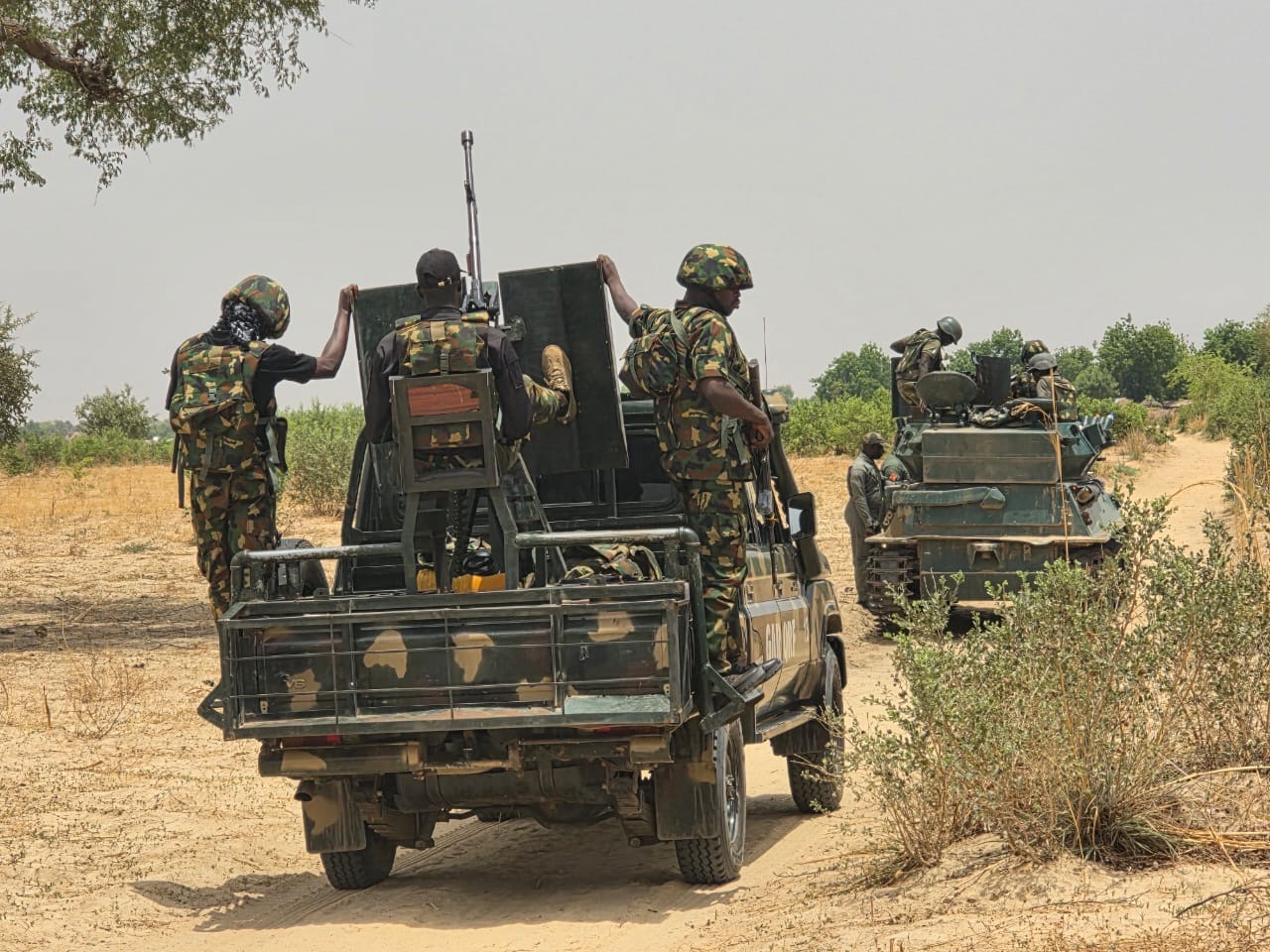
Troops neutralise ISWAP terrorists in Borno
By Anas Abbas
Troops of the Nigerian Armed Forces have dealt a significant blow to fighters of the Islamic State West Africa Province (ISWAP) during offensive operations in Borno State, military sources confirmed on Thursday.
According to a statement issued by the theatre command of Operation Hadin Kai, soldiers engaged ISWAP elements in coordinated actions across insurgent-held terrain in the early hours of the day. The engagements resulted in several militants being killed, with additional insurgent positions disrupted.
Military officials said the operations are part of an ongoing campaign to suppress extremist activity in the northeast and degrade the capabilities of ISWAP and allied groups.
In recent weeks, troops have maintained pressure on insurgent lines, repelling attacks and seizing weapons and logistics materials during clearance patrols.
The Defence Headquarters reiterated its commitment to sustaining momentum in counter-terrorism efforts until lasting stability returns to affected communities in Borno and neighbouring states.
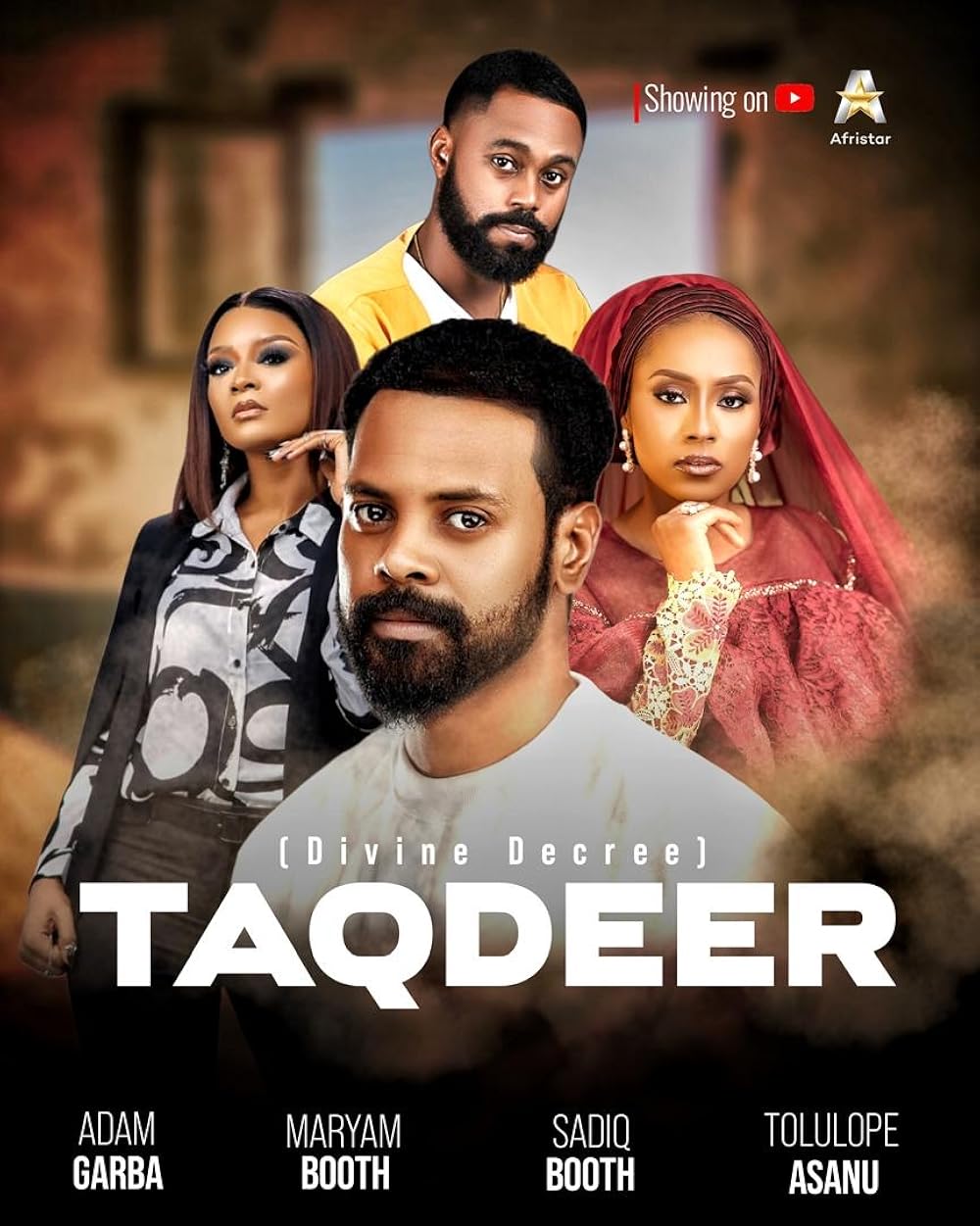
Film Review: TAQDEER
Taqdeer (Divine Decree), a 2025 Nigerian Islamic film directed by Ruben Reng, is a captivating tale of love, fate, and cultural heritage. Starring Ibrahim, Sakina, Mustapha, and Zainab as leading characters, this film weaves a narrative that explores the intricacies of human relationships against the backdrop of Nigerian and Hausa traditions.
The film’s plot revolves around themes of destiny, faith, and choices, unfolding a story that keeps viewers engaged. The narrative delves into the lives of its characters, exploring their struggles and triumphs in a way that resonates deeply.
Watching Taqdeer is a visually immersive experience. The cinematography captures the vibrant essence of Abuja, blending traditional and modern elements harmoniously. The film’s use of Hausa language and Islamic cultural references adds authenticity, making the story feel both personal and universal. The performances by the cast are compelling, bringing depth to their characters.
Taqdeer’s formal techniques, such as its cinematography and sound design, effectively enhance the narrative’s emotional impact. The film’s portrayal of Islamic moral themes and traditions provides a rich context for the story, making it relatable and thought-provoking. The blend of music and story-based sound adds to the film’s atmosphere, drawing viewers into the world it creates.
Analytically, while Taqdeer is strong in many areas, certain scenes linger longer than necessary, which can detract from the story’s overall momentum. Nevertheless, these moments are outweighed by the film’s strength, particularly its moral richness.
In conclusion, Taqdeer is worth watching for its engaging narrative, moral richness, and strong performances. It offers a glimpse into Nigerian Muslim culture and explores universal themes of love and fate, making it a compelling watch for audiences interested in diverse storytelling.
Reviewed by
Rexford Asamoah Adu
radu@smail.uni-koeln.de