



Reps propose quota seats for women, PWDs in constitution review
By Abdullahi Mukhtar Algasgaini
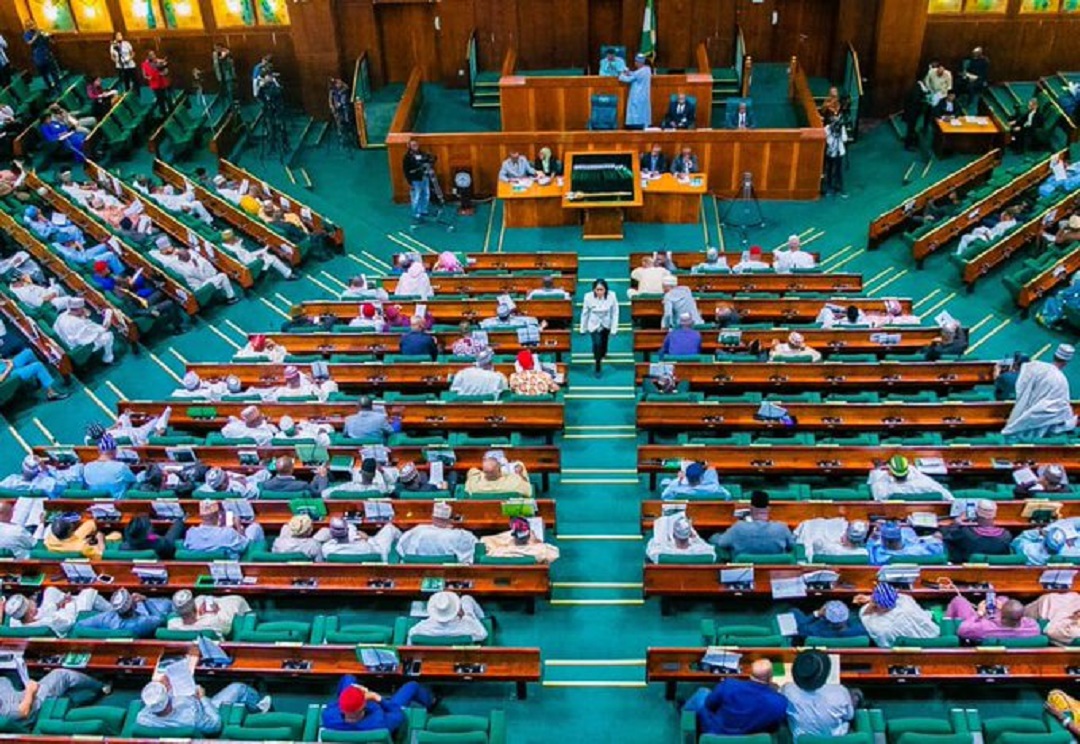
In a significant move towards inclusive governance, the House of Representatives is proposing the creation of 82 reserved seats in the National Assembly specifically for women and Persons with Disabilities (PWDs) as part of the ongoing constitutional amendment process.
Speaker of the House, Rt. Hon. Tajudeen Abbas, announced the proposal on Tuesday during the 2nd Legislative Open Week in Abuja.
The plan allocates 55 reserved seats within the House of Representatives and 27 in the Senate.
Under the proposal, 10% of National Assembly seats would be reserved for women and 5% for PWDs.
Abbas stated that the reserved seats for women would be filled through direct elections on separate ballots.
Seats reserved for PWDs would be filled via nominations from accredited advocacy organisations, also through direct elections.
He framed the reform as essential to correct “decades of gender imbalance,” highlighting the stark underrepresentation of women since independence.
“At independence, women held less than 1% of seats. Today, it has barely moved,” Abbas noted, pointing to countries like Rwanda and Senegal as examples where quotas have significantly boosted women’s representation.
The proposal is among 109 constitutional amendment bills currently under consideration by the House.
Other key areas of reform include elections, judicial processes, and fiscal accountability.
Speaker Abbas also provided an overview of the 10th Assembly’s legislative output, revealing that 2,263 bills have been introduced so far, with 55 already signed into law.
Notable enacted legislation includes the Student Loan Act and the amended Electricity Act.
On public engagement, Abbas reported that the House has received 621 citizen petitions.
Of these, 24 have been resolved, 30 dismissed, and 567 remain under consideration.
Senate President Godswill Akpabio, who also addressed the Open Week, commended the House’s legislative strides and pledged the Senate’s support for collaborative efforts.
He announced plans for a joint National Assembly Open Week and expressed concern over the high turnover rate of legislators, which he said negatively impacts institutional memory.
Former Speakers Yakubu Dogara and Patricia Ette urged current lawmakers to deepen public engagement and uphold accountability.
Speaker Abbas concluded by assuring that the 10th House remains committed to “inclusive and responsive lawmaking” and strengthening collaboration with the executive branch to deliver results for Nigerians.

OPINION: Sexual recession and its deeper implications
By Muhammad Ubale Kiru
A quiet but growing crisis is taking shape across societies, especially among young adults. It’s not about inflation, unemployment, or politics; though all of these play a role. It’s called the sexual recession; a noticeable and measurable decline in sexual activity among people, particularly those under 35. And while it may sound like a trivial or even humorous phenomenon to some, the consequences run far deeper than the surface suggests.
What Is a Sexual Recession?
A sexual recession refers to a consistent and significant drop in sexual activity within a population. In recent studies from countries like the United States, United Kingdom, Japan, and even parts of Africa, researchers have noticed that young adults are having less sex than previous generations. Not just slightly less, but in some cases, drastically so. But sex, in this context, is not merely about physical intimacy, it’s tied to deeper themes of connection, intimacy, identity, mental health, and even national population stability.
Why Is It Happening?
Several interwoven factors explain this modern-day phenomenon:
1. Digital Distractions and Virtual Living
Smartphones, social media, online gaming, and streaming platforms now consume a major chunk of young people’s time. We are more “connected” than ever, yet lonelier than any generation before. Many now prefer screens over real-life interactions, and as a result, dating, emotional bonding, and physical intimacy have taken a back seat.
2. Economic Pressures
The global economic situation is squeezing young people. Unemployment, underemployment, and the rising cost of living mean that many are postponing marriage or serious relationships. Some even avoid dating entirely due to financial insecurities. How can one think about love and intimacy when they are burdened with survival?
3. Pornography and Unrealistic Expectations
The proliferation of free, high-definition pornography has created skewed views of sexuality, leading to performance anxiety, addiction, and emotional detachment. For some, the convenience of porn replaces the effort of real relationships, leading to a drop in desire for real-world intimacy.
4. Mental Health and Social Anxiety
Depression, anxiety, and other mental health challenges have skyrocketed, especially in the post-COVID world. These conditions directly reduce libido, motivation, and the ability to form or sustain intimate bonds.
5. Cultural Shifts and Delayed Adulthood
More people are delaying traditional milestones like marriage, childbearing, or long-term commitments. In some societies, casual sex has also become emotionally draining and less fulfilling, leaving many opting for celibacy, not out of religious devotion but out of fatigue or disillusionment.
6. Hyper-Individualism
Modern culture promotes extreme self-focus: “me first, my goals, my space, my needs.” While self-development is essential, intimacy requires self-sacrifice, compromise, and shared vulnerability. Hyper-individualism often undermines those values.
Why It Matters
Some might argue: “So what? It’s their choice.” But this trend has ripple effects across society.
1. Lower birth rates: Several countries now face demographic crises due to declining fertility.
2. Weakened family structures: Relationships suffer, and social cohesion weakens when people lose touch with intimacy and emotional bonding.
3. Mental health decline: Healthy sexual relationships are closely linked to emotional wellness, self-esteem, and a sense of belonging.
4. Rise in transactional relationships: A vacuum in meaningful intimacy often leads to exploitative or shallow alternatives.
The Way Out: Rebuilding Intimacy in a Fractured World
The solution is not one-size-fits-all, but here are some pathways forward:
1. Teach Healthy Relationship Skills Early
Schools and parents must go beyond basic sex education to include emotional intelligence, communication, boundaries, and empathy. Healthy relationships don’t come naturally – they’re learned.
2. Reduce Digital Dependence
We must encourage digital detox and revive real-world connections. Host physical meetups, foster community spaces, and create tech-free zones to rebuild social skills and real interactions.
3. Address Economic Insecurity
Governments and institutions must tackle the youth unemployment crisis, offer affordable housing, and create environments that make long-term relationships more feasible.
4. Reframe Masculinity and Femininity
Many young men and women are confused about gender roles in today’s world. Society must create balanced narratives that honor emotional vulnerability in men and ambition in women, without turning either into enemies.
5. Prioritize Mental Health
We must normalize therapy, create accessible mental health services, and integrate emotional wellness into everyday life. A healthy mind is a prerequisite for healthy intimacy.
6. Faith and Values
Religious institutions also have a role to play in guiding people toward meaningful love, purposeful relationships, and sacred sexuality. Not through shame, but through compassion, mentorship, and support.
In conclusion, the sexual recession is not about libido; it’s about loneliness, disconnection, and a society drifting away from human intimacy. If we ignore it, we will wake up to a colder, lonelier, and more fractured generation. But if we confront it with wisdom, compassion, and courage, we can rebuild the bonds that make us truly human. It will be naive to wait for more statistics to confirm what we already feel. Let’s act before love becomes extinct.
Muhammad Ubale Kiru wrote in from Kano and can be reached via muhdjkiru@gmail.com
Nigerian Professor Salary: The re-ignited debate
By Prof. Abdelghaffar Amoka
A Hausa interview by a professor from ABU, lamenting academics’ poor pay, is trending and has re-ignited the debate on the salaries of Nigerian academics on social media. The discussion is championed by my brothers from the region, which is considered by the country as educationally less developed. I didn’t know what to say that I hadn’t said before. It will be like repeating myself.
Professors in Nigeria are now blamed for their financial status. They are expected to stop lamenting and get a side hustle to augment their salaries. A professor whose salary was ₦450,000 in 2009, when the exchange rate was ₦140 per dollar, is blamed for his economic state in 2025, with a salary of about ₦500,000, when the exchange rate is ₦1,600 per dollar.
Some people are referring to professors abroad as if some of us have not had the experience. A number of us have studied and worked there, and we know how their university system works. I got two grants in the UK during my PhD. They said a professor earns more abroad from their research grants. The primary beneficiaries of research grants are postgraduate students and postdoctoral researchers. Professors are not paid from their grants.
Grants have a budget, and personnel costs are not included. They are paid to the university account and managed by the university. The university pays professors to encourage them to think critically and attract grants for the institution. A university lecturer around the world is paid enough to give him the comfort to think and do his job as it should. Any extra cash from stuff like consultancy is for additional comfort.
The Executive Secretary of TETfund, Sunny Echono, in July 2024, said: “On salary to lecturer, I feel ashamed because I have the privilege to represent Nigeria at a global conference where former presidents and prime ministers were in attendance. I was asked if it was true that a professor, after 20 years, still earns less than $1,000 a month. I couldn’t answer that question; I only said that we are doing something about it.” I think we should be proud of the salaries of our professors and boldly tell anyone around the world their actual salaries.
Before you, in your narrow-minded state, blame professors for their financial status, ask yourself why the Nigerian government will pay the same professors about two thousand dollars per month under the Technical Aid Corp (TAC) to go help teach in universities in some African countries? The same professors who are given approximately $ 2,000 to teach in Ugandan universities under TAC are receiving an equivalent of $ 320 per month at home.
You know what? Everyone is right—those for and against. The argument won’t change anything, and it will likely end within a day or two. The new reality is that younger academics have learned from the impact of senior colleagues’ commitment to the academic job. The commitment you considered as “our stupidity”. The younger academics are planning for themselves.
A colleague, after the 8-month strike and the withholding of our 8-month salaries, said the university does not deserve his full-time commitment. That he is going to give the university the time it deserves and use a large chunk of his time for a side hustle to pay his bills, I thought, was unreasonable. I later realised I was the unreasonable one. And he is not doing badly from the side hustle.
Around this time last year, I was passing and met some of my students in the class without the lecturer. In my usual chat with the students, I asked whose lecture it was. I decided to call a younger colleague, as students were waiting for his class in case he forgot. He picked up the call and said he had forgotten he had a class, but that he was on his farm planting, and that he would see them next week. He was at the farm during work hours and forgot he had a class because the farming hustle is paying the bills. He is actually doing quite well with his side hustle.
Farming during work hours becomes more important. I reflected on that for several days. There are several examples of young academics who won’t be seen on campus, except when they have a lecture or are on campus for something they consider essential.
People sometimes question why a whole professor would accept being an adviser or assistant to a political office holder. A trip with the political officeholder boss could get him his one-year gross salary as a professor. Since it’s his fault that he is poor, why shouldn’t he accept such an offer or even lobby for it?
As a consequence of defeat, we have accepted one awkward thing as a part of us. Because we can’t do anything about our tormentors and needed someone to blame, we blamed ourselves, the victims. It’s our fault that we’ve been on the same salary for 16 years, from 2009 to date. It’s our fault that successive governments refused to renegotiate the 2009 agreed salary with ASUU. It is our fault that the government of President Tinubu has kept Yayale Ahmed’s 2009 Renegotiation Committee report since November 2024 without speaking about it. They are still studying it, possibly till May 2027 or beyond.
Universities are designed to attract the best minds from around the world. Universities, including those in Africa, such as those in Ethiopia, Uganda, Kenya, and Chad, are attracting the best brains. At the same time, we justify the poor pay for academics and still blame them for their inability to compete with their colleagues in the UK, the US, and Iran. We’ll continue to breed our best brains for these countries.
Meanwhile, as we take all the blame for our economic status as professors, younger academics are devising ways to survive. They don’t want to he like their senior colleagues who bury themselves in their books thinking they are serving the country. They are given more time for their side hustle to pay the bills, and leave the students hanging. They’ll attend to them when we can. The system will bear the consequences of neglect, and our survival plans will be affected.
From a reality check, you can’t think when you are hungry. So, what are your expectations when your thinkers are hungry and you are unfortunately justifying it? We may be on a journey of illusion if you expect a man to look for food to eat and think for you. The future will tell who gains and who loses.
Best wishes to all of us!
©Amoka
APC dismisses ADC claims of government interference as imaginary
By Abdullahi Mukhtar Algasgaini
The All Progressives Congress (APC) has strongly rejected allegations made by the African Democratic Congress (ADC) that the federal government is plotting to destabilize the opposition party.
In a press statement issued on Tuesday by its National Publicity Secretary, Felix Morka, the APC described the ADC’s claims as baseless and a product of “warped imagination.”
The ADC had alleged in a statement on Monday that it possessed “credible intelligence” indicating federal government officials summoned its state chairmen from the North East and North West to a “secret meeting” aimed at intimidation and coercion.
The APC statement countered that the ADC provided no substantiation for its claims, calling them “wild” and “poorly imagined.”
It criticized the ADC’s vague reference to “officials of the federal government” as evidence of a “mischievous intent” to manipulate public opinion.
“There was no such meeting, and certainly, no one could have been coerced or intimidated at a meeting that never was,” Morka asserted.
The APC further argued that the Tinubu administration and the ruling party have no reason to interfere with the ADC, which it characterized as “mortally wounded by confusion” stemming from internal conflicts.
Morka claimed the ADC is an “agglomeration” of politicians plagued by “internal dissonance, contradictions and discord” following a “gestapo-like takeover.
“The statement portrayed the ADC as a coalition of “inept politicians,” “architects of misrule,” and “failed and restless presidential contenders” incapable of offering Nigeria a viable alternative vision.
It dismissed the ADC’s strategy as focused solely on vilifying the APC and attacking President Tinubu’s record.The APC contrasted the opposition’s “self-inflicted confusion” with its own focus on “build[ing] a virile and vibrant country.”
Morka concluded by questioning the credibility and track records of several prominent figures associated with the ADC coalition.
The APC urged Nigerians to disregard the ADC’s allegations, framing them as a “calculated preemptive excuse” for the party’s anticipated failure.

APC official says North solidly backs Tinubu ahead of 2027
By Abdullahi Mukhtar Algasgaini
The All Progressives Congress (APC) has dismissed rumors of northern opposition to President Bola Tinubu’s potential 2027 re-election bid, asserting instead that the region offers “unwavering” support.
Senator Ajibola Bashiru, APC National Secretary, made the declaration on Monday at a media roundtable organised by the Nigeria Union of Journalists (NUJ) Zone B (South-West) in Ibadan.
Bashiru vehemently rejected claims of a northern conspiracy against Tinubu, labelling them “a lie from the pit of hell.”
He stated his position was based on firsthand knowledge and adherence to principled truth-telling.
“The North is firmly behind President Tinubu,” Bashiru asserted. “It’s a lie from the pit of hell to claim the North is ganging up against Tinubu. I say this from a position of knowledge. I guide myself by Amilcar Cabral’s words: ‘Tell no lies, claim no easy victories’.”
He cited visible public enthusiasm as evidence, claiming Tinubu receives warm receptions in northern cities like Katsina, Kaduna, Kano, and Gombe, with street celebrations occurring.
Bashiru also noted that a song by popular northern musician Dauda Kahutu Rarara, ‘Omo Ologo’, dedicated to Tinubu, has become an anthem in the region.
Dismissing opposition efforts, Bashiru characterized the ADC coalition as a “mushroom party” and “contraption” filled with self-serving individuals lacking political relevance.
He insisted the northern APC structures in states like Sokoto, Bauchi, Kebbi, and Zamfara remain solidly behind Tinubu, with influential leaders rallying support.”There is no vacancy in Aso Rock until 2031,” Bashiru declared, suggesting opposition hopefuls wait their turn.
He pointed to the APC’s success in recent elections, claiming a win rate above 75%, as proof of the party’s national acceptance.Bashiru also praised Tinubu’s inclusive leadership and infrastructure progress, claiming growing support throughout the North.
He downplayed the significance of former National Chairman Abdullahi Ganduje’s resignation, stating it posed no crisis for the party.
On a personal note, Bashiru, who has declared interest in the Osun 2026 governorship race, expressed confidence in his prospects, stating his chances are “very bright.”

Malam Garba Umar Saleh: A teacher with a difference
By Sani Surajo Abubakar
“Gurubi”, as he was fondly called by his colleagues, the teaching and non-teaching staff of Army Day Secondary School, Bukavu Barracks, Kano, remains a name that resonates in the ears of many who studied in the school in the late 80s, 90s, and years after.
Malam Garba Umar Saleh embodied the spirit of a true teacher. His commitment to education and passion for nurturing young minds were evident in every aspect of his work.
It is with profound sadness that we reflect on the life and legacy of the late Malam Garba Umar Saleh, a dedicated teacher at Army Day Secondary School and other secondary schools. His passing left an indelible void in the lives of those who knew him, particularly his students, colleagues, and the broader community.
He approached his role with diligence, patience, and kindness, making him a beloved figure in schools. His dedication to his students went beyond the classroom, as he often took extra time to mentor and guide them, both academically and morally.
The impact of Malam Garba Umar Saleh on his students cannot be overstated. He had a unique ability to make complex concepts accessible and engaging, inspiring a love for learning in countless young minds. His unwavering support and encouragement helped many students overcome challenges and achieve their full potential. His legacy lives on through the countless lives he touched, and his influence will continue to shape the futures of those he taught.
His colleagues at the Army Day Secondary School and other Schools also held him in high regard. His collaborative spirit, professionalism, and positive attitude made him a valued member of the school community. He made significant contributions to the school’s mission, consistently striving for excellence and innovation in education.
While Malam Garba Umar Saleh is no longer with us, his legacy endures. The lessons he imparted, the values he instilled, and the love he showed to his students and colleagues will forever be remembered. His life serves as a powerful reminder of the profound impact one individual can have on the lives of others.
As we remember Malam Garba Umar Saleh, we honour his memory by upholding the values he cherished: dedication, compassion, and a commitment to making a difference in the lives of others. His story is a testament to the enduring power of education and the profound impact one teacher can have.
This tribute serves as a heartfelt acknowledgement of the remarkable life and contributions of Malam Garba Umar Saleh. May it inspire others to follow in his footsteps, dedicating themselves to the noble cause of education and service to humanity.
A 1982 NCE graduate of the Advanced Teachers College Gumel, the deceased was employed as Master III by the then Kano State Ministry of Education and posted to Government Girls College (GGC) Dala as his first port of service.
In his quest for knowledge, the late Garba Umar Saleh enrolled in a degree programme at Bayero University Kano and graduated with a Bachelor of Arts (BA) in Education/English in 1989.
He spent most of his teaching years, spanning more than three decades, at GGC Dala, Army Day Secondary School (Boys), Bukavu Barracks, and Muhammad Vice Adamu Government Secondary School Kuka (MVAGSS), serving as a classroom teacher, Senior Master, and Vice Principal, respectively.
Towards the tail end of his service period, he was redeployed to the headquarters of the Kano State Senior Secondary Schools Management Board (KSSSSMB) as Deputy Director, Training and Recruitment, a position he held until his last breath, some weeks before his exit from the service.
May Almighty Allah, the most Exalted, grant his gentle and innocent soul rest in peace, and Jannatul Fiirdausi be his final abode, the fortitude and solace for all of us to bear the irreplaceable loss. May his legacy continue to inspire future generations?
Sani was a student at Army Day Secondary School, Bukavu Barracks, Kano, and is currently on the Staff of the Kano State Ministry of Information and Internal Affairs.

NiMet issues fresh flood alert as 20 states remain at risk despite N620bn intervention
By Sabiu Abdullahi
The Nigerian Meteorological Agency (NiMet) has warned that 20 states, including Lagos, Benue, Edo, and Sokoto, are likely to face flash floods in July despite the disbursement of over N620 billion in ecological funds across the country since 2012.
In its latest alert issued on Monday, NiMet listed the states facing high to moderate flood risks.
These include Sokoto, Kaduna, Zamfara, Yobe, Bauchi, Bayelsa, Jigawa, Adamawa, Taraba, Niger, Nasarawa, Benue, Ogun, Ondo, Lagos, Delta, Edo, Cross River, Rivers, and Akwa Ibom.
NiMet urged residents in these states to take precautions such as relocating from flood-prone areas, clearing drainages, and preparing emergency kits.
The agency also advised communities to switch off gas and electricity during floods and to intensify public awareness campaigns.
This comes as residents of several Ondo communities affected by last week’s heavy rains appealed to the state government for help.
The floods, which followed days of downpour, destroyed property worth millions of naira in areas like Owo, Okitipupa, Ilaje, and Ese-Odo.In Okitipupa, a resident, Mr. Joshua Jemiloni, explained that “the flooding was caused by erosion flowing down from Igodan,” noting that over 10 buildings were affected.
A community leader, Lawrence Awanebi, called for urgent government assistance for displaced persons. The chairman of Owo Local Government, Tope Omolayo, also appealed to both the federal and state governments to intervene.
Governor Lucky Aiyedatiwa assured that the state has begun efforts to reduce flooding by dredging waterways and enforcing environmental laws.
“As a government, we shall continue with initiatives that will reduce the effects of floods and other natural disasters,” he said.Despite these efforts, critics have questioned how ecological funds have been used over the years.
Findings show that between 2012 and February 2025, Nigeria’s 36 states shared over N622 billion from the ecological fund.
However, many communities remain vulnerable.
Environmental experts have voiced concerns about the lack of transparency and accountability in managing the funds.
Afolabi Abiodun, President of the Africa Environmental Health Organisation, said: “The government claims to be trying, but frankly, we don’t see the impact on society. These funds are supposed to build resilience… But what we see is merely a response to an ongoing crisis.”
Former President of the Nigerian Institute of Town Planners, Nathaniel Atebije, blamed repeated flooding on the government’s failure to honour an agreement with Cameroon to construct a buffer dam on the River Benue. “These medium-level dams are not done. And so, whenever water is released, the downstream people suffer greatly,” he said.
Hakeem Mukhtar, an environmental sustainability expert, pointed to poor urban planning, weak enforcement, and inadequate drainage as major factors.
He stressed that “the issue is not necessarily the lack of funds, but the lack of a structured, data-driven, and community-involved approach to flood mitigation.”
A climate researcher, Abeeb Ajagbe, also lamented the lack of monitoring and tracking mechanisms. “There have been several media reports highlighting corruption and mismanagement in how the ecological funds are being handled,” he said.
According to a June 2025 report by SBM Intelligence, floods have affected 31 of Nigeria’s 36 states since July 2024, impacting 1.2 million people and destroying 180,000 hectares of farmland.
Food insecurity has worsened, with inflation hitting over 35% in January 2024.
In May 2025 alone, flooding displaced 116,711 people across 12 states. Zamfara recorded the highest number, with over 58,000 affected.
Lagos, Kwara, Enugu, Bayelsa, and Sokoto also recorded significant figures.
As flood threats continue to rise, calls for urgent reform in the use of ecological funds grow louder.
Experts are demanding stricter oversight, independent audits, and more proactive, long-term strategies to tackle the worsening flood crisis across the country.

Still on El-Rufa’i and Yar’Adua
By Saifullahi Attahir
In his article, titled “Yar’adua: Great Expectation, Disappointing Outcome,” Mallam Nasir El-Rufa’i wrote that the late Umaru Musa Yar’adua graduated from ABU in 1975 and did his youth service (NYSC) at Holy Child College in Lagos as a chemistry teacher.
After the service year, Yar’adua took a government job at the College of Arts, Science and Technology (CAST), Zaria, as a chemistry lecturer. He later obtained his MSc in 1978, while continuing his teaching career at the same CAST until 1983, when he joined his brother’s business after the latter resigned from the National Service as second-in-command to General Olusegun Obasanjo during the handover to civilian rule in 1979.
The above narrative can attest to the clear moral right Yar’adua has over Mallam Nasir, despite the latter’s constant attacks. I’m sure that in the years between 1976 and 1983, the late Umaru could have accessed all the privileges a graduate could have as a brother to a senior military officer and son of the establishment. His service year in the grammar school and his continued lecturing job at CAST Zaria can testify to a great deal about the individual Yar’adua, his brother Shehu, and the regime.
As a young and well-connected chemistry graduate, Umaru Yar’adua could have access to serve in the newly established NNPC, top agricultural firms, top Lagos banks, or even become a legislative aide in the green or red chamber.
Securing a job through connections is a common and sometimes effective method. Networking, which involves leveraging personal and professional relationships, can significantly increase your chances of finding a job. Indeed, many talented and industrious individuals can be harnessed through this process, although it may be perceived as nepotistic. Hadiza Bala Usman got her start at BPE by El Rufa’i through a similar path.
Of course, time has changed; it’s now normal that specific places, such as CBN, FIRS, NPA, BPE, top private firms, and Federal MDAs, are not accessible to ordinary corps members. We can still recall a time when a brother of Nigeria’s second-in-command opted to attend a grammar school and later took a teaching job at a college in Zaria. But still, that doesn’t prevent him from becoming Nigeria’s president.
While the 5th May remembrance has been immortalised in the hearts of Nigerians despite Yar’adua’s short stint as president, Mallam El-Rufa’i was still battling and settling past scores and fights.
Saifullahi Attahir wrote from Federal University Dutse via saifullahiattahir93@gmail.com

Nigeria Customs engages international airlines on currency declaration compliance
By Sabiu Abdullahi
In an effort to bolster the fight against money laundering and improve border control measures, the Nigeria Customs Service (NCS), in partnership with relevant security and regulatory agencies, has conducted a sensitisation programme for international airline operators at the Nnamdi Azikiwe International Airport in Abuja.
The exercise, which took place on 5 July 2025, focused on educating airline staff about Nigeria’s currency declaration policies and their role in supporting compliance efforts.
Participants were reminded of the need to inform passengers—both arriving and departing—about existing regulations concerning cash movement across borders.
Authorities reiterated that individuals carrying more than $10,000 or its equivalent must declare the funds to customs officials.
They warned that failing to do so could lead to the confiscation of the money, followed by investigation and possible prosecution under the nation’s anti-money laundering laws.
The session also outlined the requirement for airlines to submit electronic manifests (e-Manifests) ahead of landing. These manifests must include comprehensive passenger details such as full names, flight numbers, and countries of origin and destination.
Officials said this data enables customs personnel and intelligence units to conduct targeted risk assessments and enhance overall border monitoring.
Leading the session was Salihu Mas’ud, Assistant Comptroller of Customs and head of the Anti-Money Laundering and Countering the Financing of Terrorism Unit.
He noted the progress already made by the Service in improving compliance mechanisms and expressed satisfaction with the level of cooperation from airline operators.
“What we have achieved so far is to be able to sensitise them. We’ve gone round to check all the points. We have dedicated search rooms for secondary searches. There are dedicated posts for currency declarations, and they are in place. Announcements are also being made on the Public Address System. We have also gotten the commitment of the airline operators to ensure that these announcements are also being made on board their flights,” he said.
He further added, “We expect higher compliance, and it will strengthen our enforcement mechanism. It also ensures that defaulters and violators of currency declarations are detected promptly and forwarded for necessary investigation and prosecution.”
The Nigeria Customs Service described the initiative as a crucial step toward preventing illicit financial flows, including terrorism financing and the smuggling of undeclared funds.
It also noteed that continuous collaboration among airlines, airport managers, and enforcement agencies will be vital to sustaining the gains recorded so far.

Nigeria backs BRICS vision for global restructuring, youth inclusion — Tinubu
By Muhammad Abubakar
President Bola Ahmed Tinubu has reaffirmed Nigeria’s commitment to the ideals of the BRICS bloc, emphasising the need for financial restructuring and a reimagined global order that reflects the aspirations of emerging economies.
Speaking at the ongoing BRICS summit in Rio, Tinubu stated that the group must evolve beyond its economic identity to become a “beacon for emerging solutions” based on solidarity, self-reliance, sustainability, and shared prosperity.
Talking about Nigeria’s youth-driven demographic, the President emphasised the importance of shaping global policies that address the specific concerns of young people, who comprise 70% of Nigeria’s population.
“Nigeria is not a passive participant in global affairs,” Tinubu declared. “We are taking bold, homegrown steps to accelerate renewable energy, mainstream climate action, strengthen urban resilience, and expand healthcare access.”
He concluded with a strong message of determination: “The world is changing. Nigeria will not be left behind. We will help lead the way.”