
At Least 34 Killed In Colombia Military Plane Crash
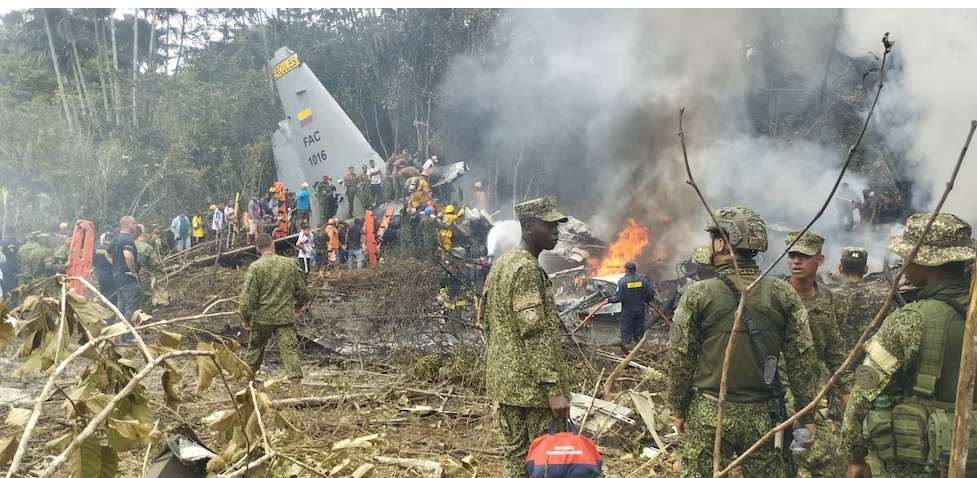
At least 34 people have died after a Colombian Air Force plane crashed shortly after takeoff in the country’s southern region, authorities said.
The incident occurred on Monday in Putumayo department. The aircraft was carrying 125 people at the time of the crash.
The governor of Putumayo confirmed the casualty figure and said the plane went down moments after leaving the runway.
Emergency responders and military personnel were deployed to the crash site as rescue efforts continued. The full details surrounding the cause of the accident are yet to be made public.
Officials have not released further information about survivors or the identities of those on board.
The crash has raised concerns about aviation safety, as investigations are expected to begin to determine what led to the incident.
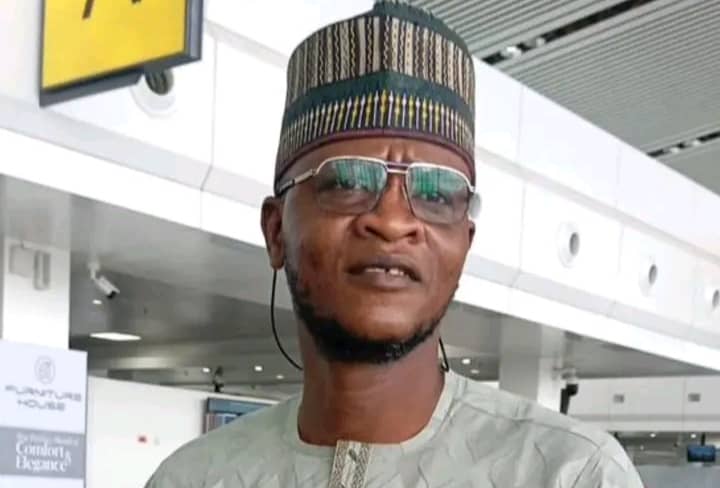
Army Accused of Unlawful Killing of Civilian in Maiduguri During Sallah Festivities
By Abdullahi Mukhtar Algasgaini
Tensions are mounting in Borno State following the alleged killing of Abdulrahman Mustapha, widely known as “Abchin,” by soldiers of the Nigerian Army on March 22, 2026. Witnesses report the victim was shot dead near the Federal High Court along the Polo Axis in the Karshen Kolta area of Maiduguri while returning from a Sallah visit to his siblings.
According to multiple eyewitness accounts, Mr. Mustapha was unarmed and posed no threat to the military personnel at the time of the incident. The shooting occurred during the festive period when residents were moving between family gatherings.
In a development that has further fueled public outrage, sources indicate that military personnel conveyed the deceased’s lifeless body along with his vehicle to the GRA Police Station. From there, his remains were transported to the University of Maiduguri Teaching Hospital, where he was formally confirmed dead.
Civil society groups and residents have condemned the act, describing it as a grim example of the military’s alleged disregard for the sanctity of human life and the rule of law. Critics argue that such incidents undermine public trust in security institutions and foster a climate of impunity.
Human rights advocates are now calling on the Nigerian government to intervene. They insist that the authorities must uphold constitutional and international human rights obligations by launching an immediate investigation and ensuring that any soldiers found culpable face a prompt and fair trial.
As of press time, the Nigerian Army has not issued an official statement regarding the incident, and calls for accountability continue to mount from local communities demanding justice for Abdulrahman Mustapha.
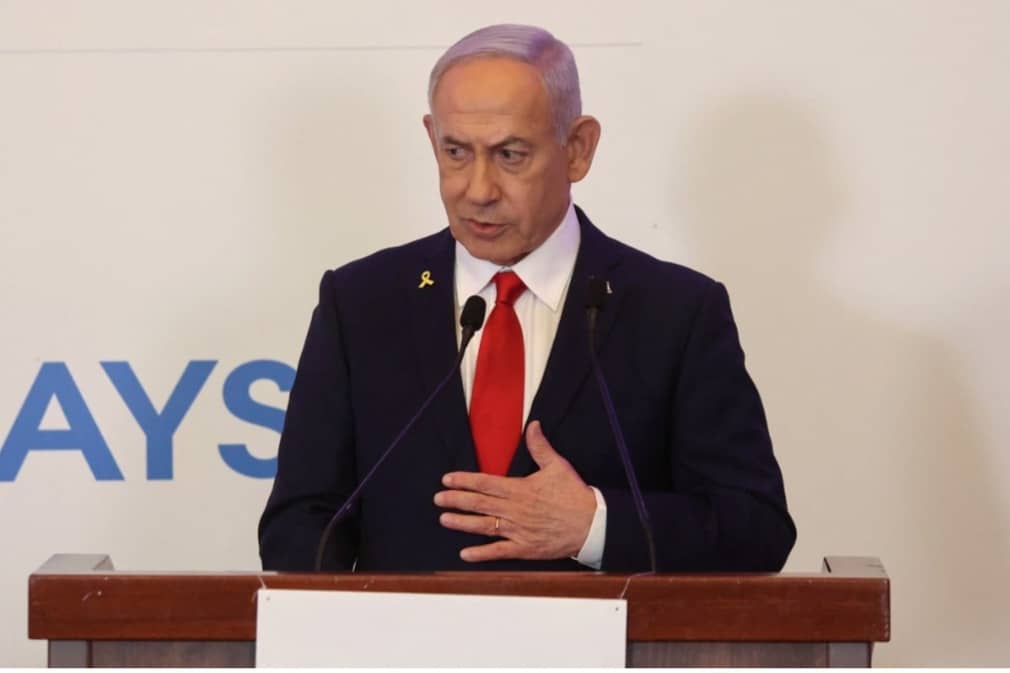
Netanyahu Pledges Continued Strikes on Iran as Tehran Rejects Negotiations
By Anwar Usman
The President of the United States on Monday held “very good” talks with an unidentified Iranian official after abruptly shelving plans for fresh attacks, even as Washington’s ally Israel vowed to keep up strikes on the Islamic republic.
The surprise disclosure denied by Tehran, which accused Trump of manipulating energy markets came ahead of a Monday night deadline imposed by Trump for Iran to reopen the Strait of Hormuz shipping lane or see the US “obliterate” its power plants.
Ghalibaf said on X that “no negotiations” were underway, insisting Trump was seeking “to manipulate the financial and oil markets and escape the quagmire in which the US and Israel are trapped.”
Oil prices fell and stock markets jumped as observers scrambled to interpret Trump’s statements despite the Iranian denial.
AFP reports that, the Iranian foreign ministry spokesman Esmaeil Baqaei said messages were received from “some friendly countries indicating a US request for negotiations aimed at ending the war”, but denied any such talks had taken place, Iran’s official IRNA agency reported.
In response, the Israeli Prime Minister Benjamin Netanyahu said he had spoken to Trump and acknowledged the US thought a deal was possible, but vowed to continue striking Iran and Lebanon to protect Israel.
“Trump believes there is a chance to leverage the tremendous achievements of the IDF and the US military in order to realize the war’s objectives in an agreement — an agreement that will safeguard our vital interests,” he said.
“At the same time, we continue to strike both in Iran and in Lebanon.”
Although Oman mediated indirect US-Iran talks prior to the US and Israel launching the war, Egypt, Qatar and Pakistan have been suggested as alternative go-betweens.
On a day of whiplash developments, Iran’s neighbors breathed a sigh of relief after Trump stepped back from his threat to target Iranian power infrastructure.
Tehran had vowed to deploy naval mines and target power and water infrastructure across the region in retaliation, threatening to escalate an energy crisis of already historic proportions.
“Trump blinked first — out of a clear understanding that striking Iran’s energy infrastructure would trigger a direct and significant retaliation,” Danny Citrinowicz, a security analyst and former Israeli intelligence Iran expert, wrote on X.
Trump said his administration was holding talks with an unidentified “top person,” but not the country’s supreme leader, Mojtaba Khamenei, who is believed to be injured.
“We’ve wiped out the leadership phase one, phase two, and largely phase three. But we’re dealing with the man who I believe is the most respected and the leader,” Trump said.
He described the individual as “very reasonable,” while warning if talks failed in the next five days, “we’ll just keep bombing our little hearts out.”
Thousands of US Marines are headed to the Middle East, reinforcing America’s presence amid weekend speculation Trump was mulling ground operations either to seize Iranian oil assets or to forcibly reopen the Strait of Hormuz.
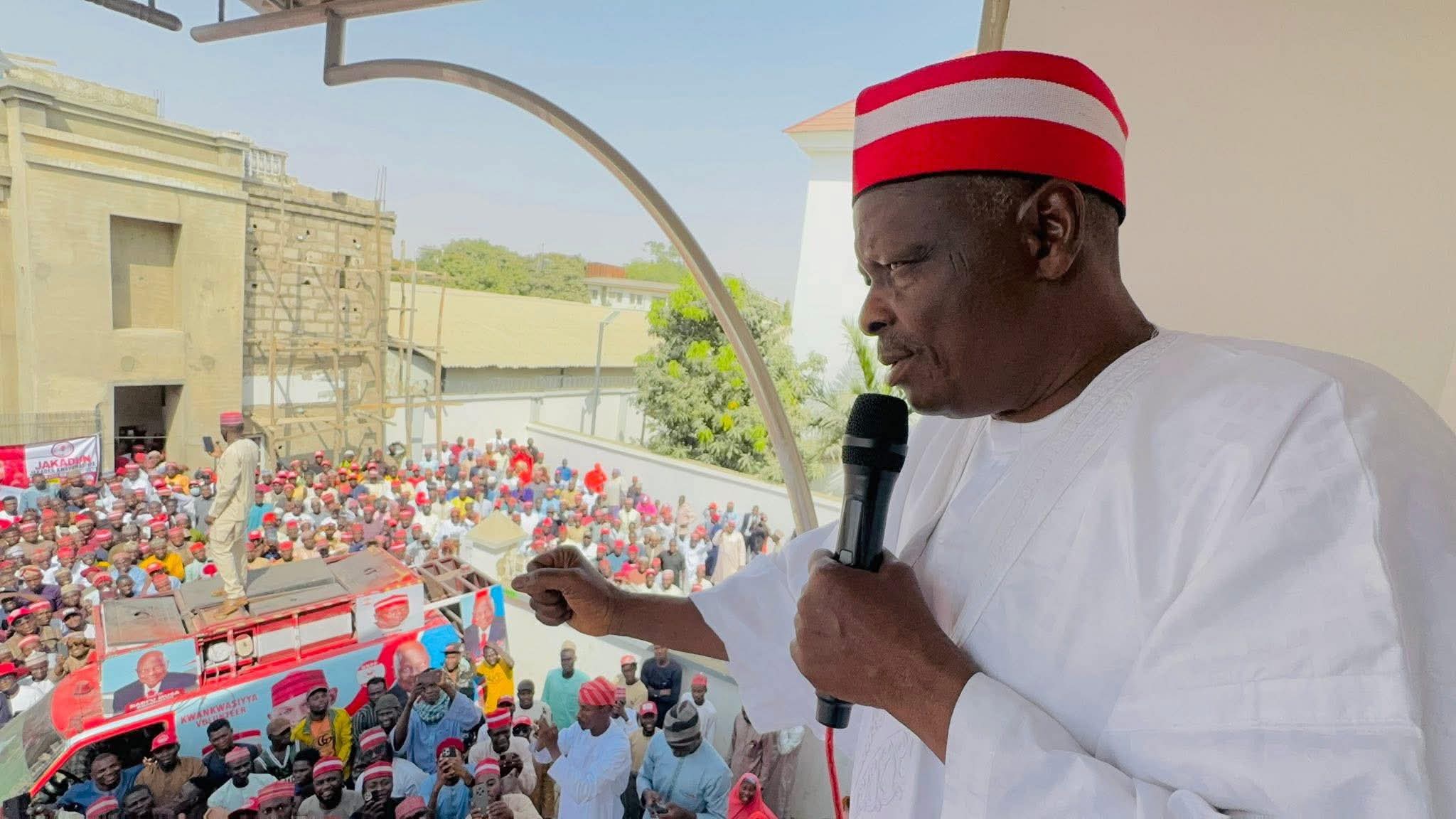
Kwankwaso, America, and the Risks of External Political Labelling
By Abdulhamid Abdullahi Aliyu
Recent signals from Washington suggest a growing impatience with Nigeria’s internal complexities, especially as they relate to religion, security, and political leadership. At the centre of this emerging posture is a troubling tendency to compress Nigeria’s layered crises into externally convenient labels—labels that risk doing more harm than good.
One of the clearest flashpoints in this evolving narrative is the renewed attention to former Kano State governor Rabiu Musa Kwankwaso. His name, along with those of Fulani-affiliated organisations and, by implication, Nigeria’s Muslim political class, has begun to feature in American policy conversations framed around religious freedom and accountability. What appears, at first glance, as principled concern deserves closer scrutiny.
Nigeria’s security breakdown is undeniable. Insurgency, banditry, farmer–herder violence, and organised criminal networks have torn through communities across the country. But these tragedies have never respected religious boundaries. Muslims and Christians, northerners and southerners, rural farmers and urban traders have all paid the price. To reframe this national trauma primarily as a story of religious persecution is to flatten reality into something politically useful but analytically false.
This framing did not emerge organically. It has been cultivated through persistent lobbying, selective reporting, and advocacy-driven briefs circulated within Western policy and faith-based circles. Many of these narratives rely on contested data sets and ideologically motivated interpretations that have been challenged by journalists and security analysts familiar with Nigeria’s terrain. Yet repetition has given them traction.
Under Donald Trump, the United States has shown a greater willingness to convert these narratives into policy instruments. Nigeria’s earlier designation as a “Country of Particular Concern” over alleged religious persecution, and the signals accompanying its reconsideration, reinforced the impression that Washington had settled on a moral script that leaves little room for nuance.
What is especially alarming is how this posture now intersects with Nigeria’s domestic political timeline. The proposal of punitive measures against figures like Kwankwaso—who has no public record of religious extremism—raises uncomfortable questions about motive and timing. Sanctions, visa restrictions, or terror designations do not occur in a vacuum; they shape reputations, constrain political options, and influence electoral perceptions.
Even more dangerous is the elastic use of terms such as “Fulani militia.” The Fulani are not a monolith, nor are they a security organisation. They are a vast, diverse population spread across West and Central Africa, encompassing professionals, farmers, scholars, politicians, and pastoralists. To collapse this diversity into a security label is not accountability—it is ethnic profiling with far-reaching consequences.
Those who defend this approach often argue that allowing clerics or religiously identified politicians into democratic space risks sanctifying power. That concern is not without merit. In plural societies, when political authority borrows the language of divine legitimacy, dissent can be recast as moral deviance. But that argument cuts both ways. External actors who cloak geopolitical interests in moral absolutism risk exporting the very instability they claim to oppose.
Nigeria’s democracy, imperfect as it is, rests on pluralism, negotiation, and the acceptance of politics as a human—rather than sacred—enterprise. When foreign policy instruments treat Nigerian political actors as symbols in a global religious drama, they undermine this fragile equilibrium. Worse still, they embolden local extremists who thrive on polarisation and grievance.
None of this is to argue against international engagement or concern for human rights. On the contrary, Nigeria benefits from cooperation with partners such as the United States in intelligence sharing, capacity building, and counterterrorism. But partnership must be grounded in evidence, context, and restraint—not in sweeping classifications shaped by advocacy pressure or domestic American politics.
If Washington’s objective is stability in West Africa, then the path forward lies in engagement rather than labelling, dialogue rather than designation. Nigeria’s challenges are internal, complex, and deeply rooted. They cannot be solved by reducing political figures to caricatures or entire communities to security threats.
Kwankwaso’s politics, like that of any public figure, should be judged by Nigerians through debate, scrutiny, and the ballot. External political labelling, however well-intentioned, risks distorting that process and deepening divisions within an already strained federation.
In the end, what Nigeria requires from its partners is not moral theatre but sober cooperation. Fairness, evidence, and respect for internal democratic processes remain the only sustainable foundations for international engagement.
Abdulhamid Abdullahi Aliyu is a journalist and syndicate writer based in Abuja.
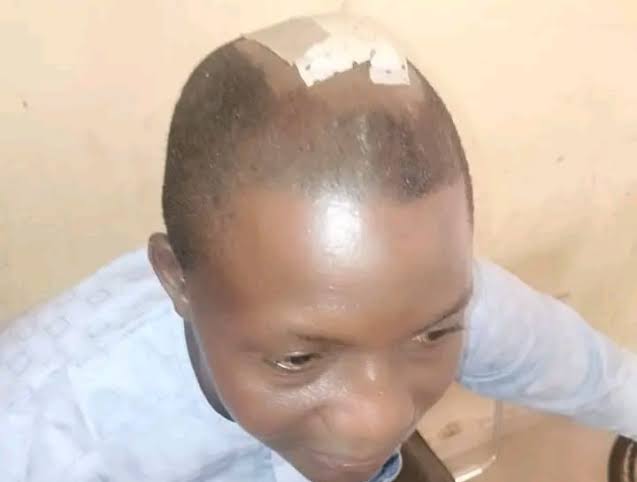
CITAD Condemns Alleged Police Assault On Journalist In Bauchi
The Centre for Information Technology and Development (CITAD) has denounced the alleged assault on Albarka Radio reporter, Mohammed Adamu, by police officers during the Eid Durbar celebration in Bununu, located in Tafawa Balewa Local Government Area of Bauchi State.
According to the organisation, in a statement signed by the Executive Director of CITAD, YZ Ya’u, the incident occurred while the journalist was on assignment to cover the event.
He was reportedly stopped by police officers led by the Divisional Police Officer, Jamilu Kabir. Although he identified himself and made efforts to reach the designated media section, officers allegedly attacked him.
The assault left him with head injuries and compelled him to seek medical care.
CITAD described the development as “a grave violation of press freedom and a direct attack on the fundamental rights of journalists in Nigeria.”
The group stressed that journalists remain vital to public awareness and accountability. It added that any form of intimidation or harm against media professionals weakens democratic governance and undermines the rule of law.
The organisation also noted that the incident reflects a broader concern. It stated that cases of harassment and violence against journalists by security personnel have become frequent.
According to CITAD, such actions create fear and hinder the ability of the media to function independently.
“We therefore call for:
1. An immediate, thorough, and transparent investigation into the incident.
2. The identification and prosecution of all officers involved in the assault.
3. Adequate compensation and protection for the assaulted journalist.
4. Clear directives and training for security agencies to respect and protect journalists in the course of their duties.”
CITAD further urged the Inspector-General of Police and other relevant authorities to act decisively to address what it described as a growing pattern of attacks on journalists and to ensure those responsible are held accountable.
The organisation emphasized that Nigeria must remain a country where journalists can perform their duties without fear.
It maintained that protecting press freedom is essential for the preservation of democracy and the rights of citizens.
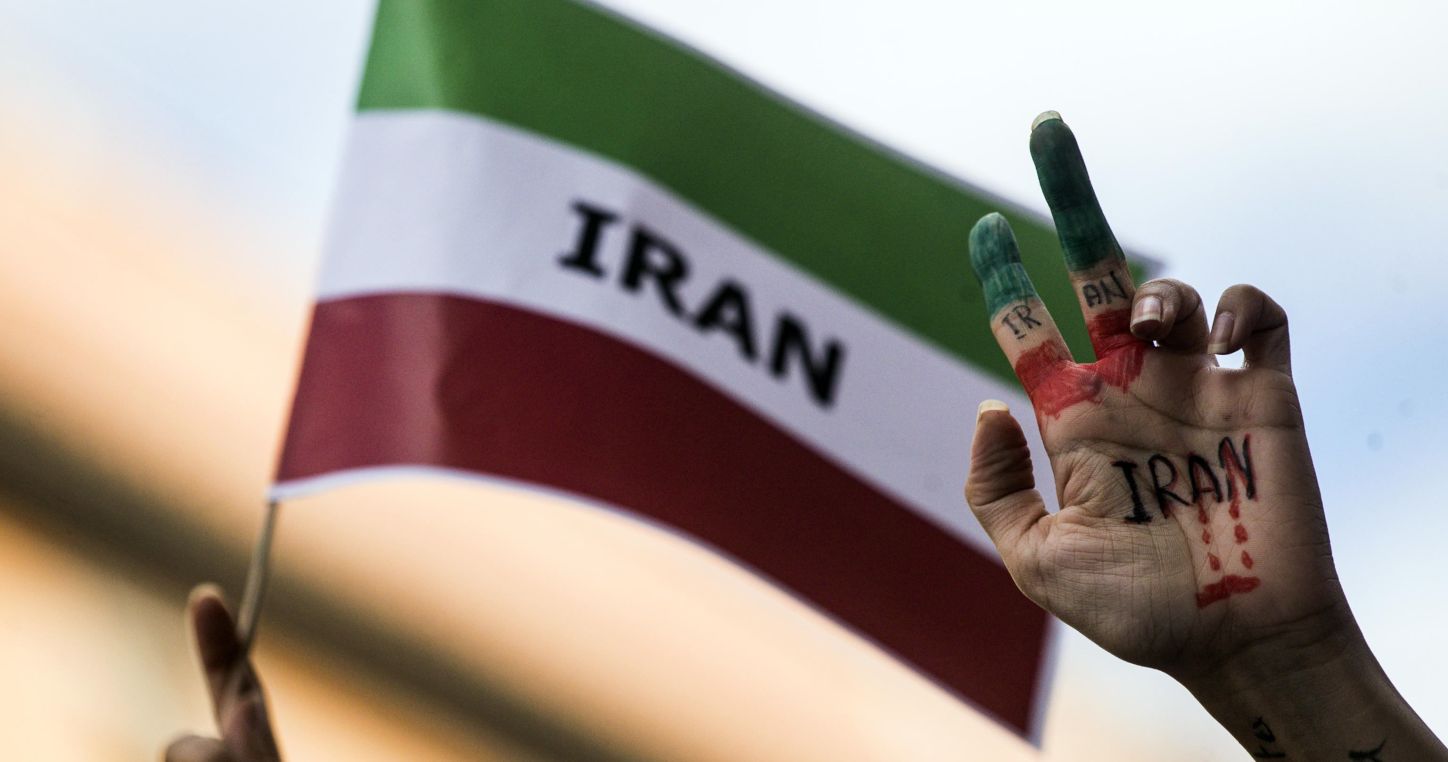
Iran Accuses Trump of Manipulating Oil Prices After US Pauses Strikes on Energy Infrastructure
By Sabiu Abdullahi
Iran’s foreign ministry has dismissed US President Donald Trump’s claim of “productive” talks to end hostilities, suggesting the remarks aim to calm energy markets and gain time for military planning.
On Monday, Trump announced that Washington and Tehran had held “VERY GOOD AND PRODUCTIVE” conversations over the past two days about a “COMPLETE AND TOTAL RESOLUTION OF HOSTILITIES IN THE MIDDLE EAST”. He added that he had instructed the US Department of War to postpone all strikes on Iranian power plants and energy infrastructure for a five-day period. This announcement came just hours before the deadline of his ultimatum demanding that Iran reopen the Strait of Hormuz, warning that failure to comply would result in Tehran being “obliterated.”
Iran’s foreign ministry rejected the notion of direct negotiations with the US. It stated that while regional countries had initiated efforts to reduce tensions, “all requests should be directed towards the US as we did not initiate the war.”
Citing an unnamed source, Iran’s Fars news agency reported that Trump delayed military action after learning that Iran would respond by targeting all power plants in the region. The source also indicated that Tehran could lay mines across the Persian Gulf if the US proceeded with attacks on the country’s coast or islands.
The closure of the Strait of Hormuz has intensified pressure on Trump. The vital waterway is a major conduit for oil, and its disruption has caused energy prices to surge since hostilities escalated in late February.
In London, Prime Minister Sir Keir Starmer welcomed Trump’s announcement to delay strikes. His official spokesman said: “Any reports of productive talks are welcome. We have always said that a swift resolution to the war is in global interests and the Strait of Hormuz specifically needs to be reopened.”
The spokesman added that the UK was in contact with the US about the situation and had discussed safeguarding international shipping. “It has been something the prime minister has talked about since the beginning of this conflict, that we want to work with the US and international partners to develop a viable plan to safeguard international shipping and see an end to this crisis,” he said.
Financial markets responded to Trump’s announcement with modest optimism. Analysts warn, however, that prolonged closure of the Strait of Hormuz will continue to drive energy prices upward, potentially prompting multiple interest rate increases in the UK. Rising costs are expected to affect transport, fuel, and production, increasing inflationary pressures.
Meanwhile, Israel’s military confirmed fresh strikes on “Iranian terror regime targets” in Tehran, and Iranian sources stressed that the country would continue to respond and defend its territory. According to Iran’s semi-official Tasnim news agency, “the Strait of Hormuz will not return to pre-war conditions and energy markets will remain unsettled,” and no direct negotiations with the US are underway.
Trump’s announcement of a temporary pause came as he described ongoing discussions with Iran as “very good and productive,” aimed at achieving a “complete and total resolution of our hostilities in the Middle East.”
“Based on the tenor and tone of these in depth, detailed, and constructive conversations, witch [sic] will continue throughout the week, I have instructed the Department of War to postpone any and all military strikes against Iranian power plants and energy infrastructure for a five day period, subject to the success of the ongoing meetings and discussions,” Trump wrote on Truth Social.
“Thank you for your attention to this matter! President Donald J. Trump”
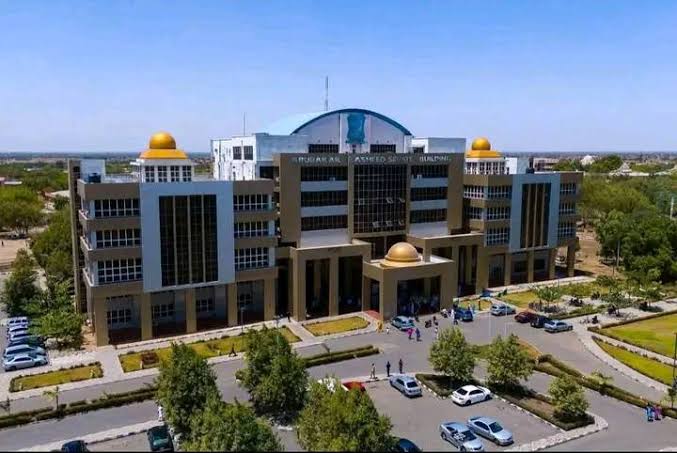
BUK Senate Expels 171 Students for Falsified Entry Qualifications
By Uzair Adam
The Senate of Bayero University Kano has approved the expulsion of 171 students for falsifying their admission entry qualifications, following deliberations at its 433rd meeting held on March 4, 2026.
The Daily Reality reports that the decision, according to an official bulletin issued by the university, came after the Senate considered and adopted the report of its Committee on Entry Qualification Irregularities.
The committee had investigated multiple cases involving discrepancies in admission credentials and found the affected students culpable.
The bulletin stated that the students were discovered to have presented forged or altered qualifications to secure admission into the institution.
It noted that such actions constitute a serious breach of the university’s regulations, specifically Section 20.7, Category A (vii) of the General Examinations and Academic Regulations (GEAR), which prescribes expulsion for offenders.
University authorities emphasized that the measure was necessary to preserve academic standards.
The institution reiterated that it “will continue to uphold the highest standards of academic integrity and discipline,” warning that any violation of its rules would attract strict sanctions in line with established regulations.
In a separate development, the Senate also approved the expulsion of a Civil Engineering student, Yusuf Muhammad Sani (ENG/18/CIV/00065), for engaging in physical violence against invigilators during an examination.
The incident reportedly disrupted the conduct of the examination and was similarly deemed a violation of the university’s disciplinary code.
While the university did not provide detailed comments on individual cases, it stressed that all decisions were reached after due process.
An official familiar with the proceedings said the Senate acted “based on clear evidence presented by the investigative committee,” adding that the institution remains committed to fairness and accountability.
The affected students cut across several faculties, including Arts and Islamic Studies, Law, Engineering, Education, and Management Sciences.
The university released a comprehensive list of the expelled students as part of the bulletin.
The development highlights the institution’s renewed stance against academic misconduct, as authorities insist that maintaining credibility in its admission process remains a top priority.
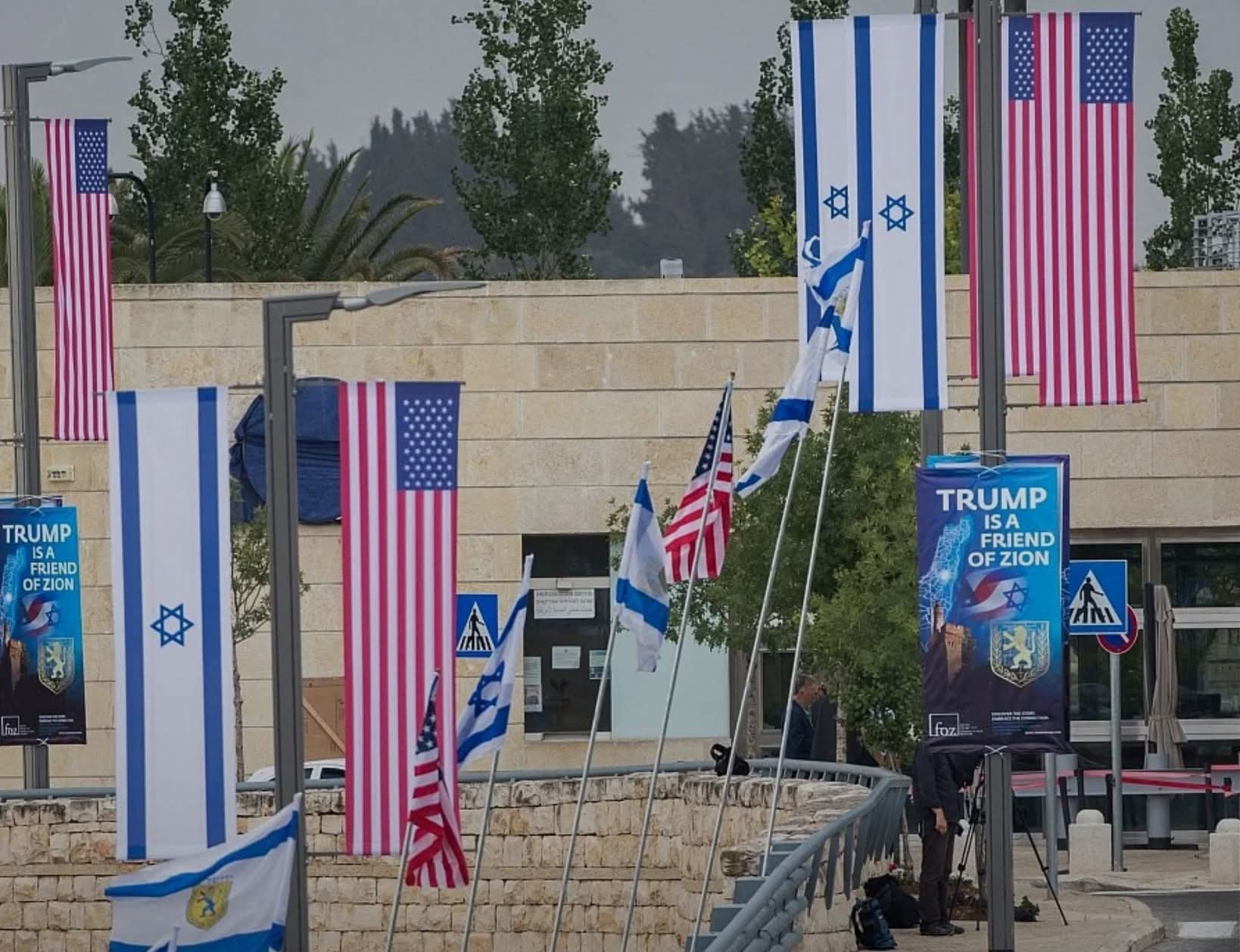
U.S. Embassy Tells Americans To Vacate ‘Israel’ Via Land Routes, Organizes Buses To Jordan
By Sabiu Abdullahi
The United States Embassy in Jerusalem has advised its citizens in ‘Israel’ to consider leaving the country through land borders due to ongoing travel difficulties and limited immediate options.
In a message posted on its official Instagram page, the embassy explained that overland routes currently offer the quickest way out. It pointed to border crossings into neighboring countries such as Egypt and Jordan as the most viable options for departure.
According to the advisory, commercial flights are still operating from airports in Egypt, including Sharm el-Sheikh and Cairo, as well as from Jordan’s capital, Amman.
To support those seeking to leave, the U.S. Department of State has begun arranging bus transportation for American citizens. The service is scheduled to start on March 23 and will move passengers from ‘Israel’ to Queen Alia International Airport in Amman.
As part of the “departure by land” plan, assisted transport will be available through the northern crossing known as the Jordan River/Sheikh Hussein border point. The embassy said this option is intended for citizens who require help exiting the country.
Americans interested in using the service must first complete an online registration form. After that, they will receive information on departure schedules and designated meeting locations. Current arrangements cover departures from both Jerusalem and Tel Aviv.
Officials stressed that travelers will still need to handle their onward journeys themselves, including securing flights from Amman.
The embassy added that it will continue to provide updates to U.S. citizens in ‘Israel’ as the situation develops.
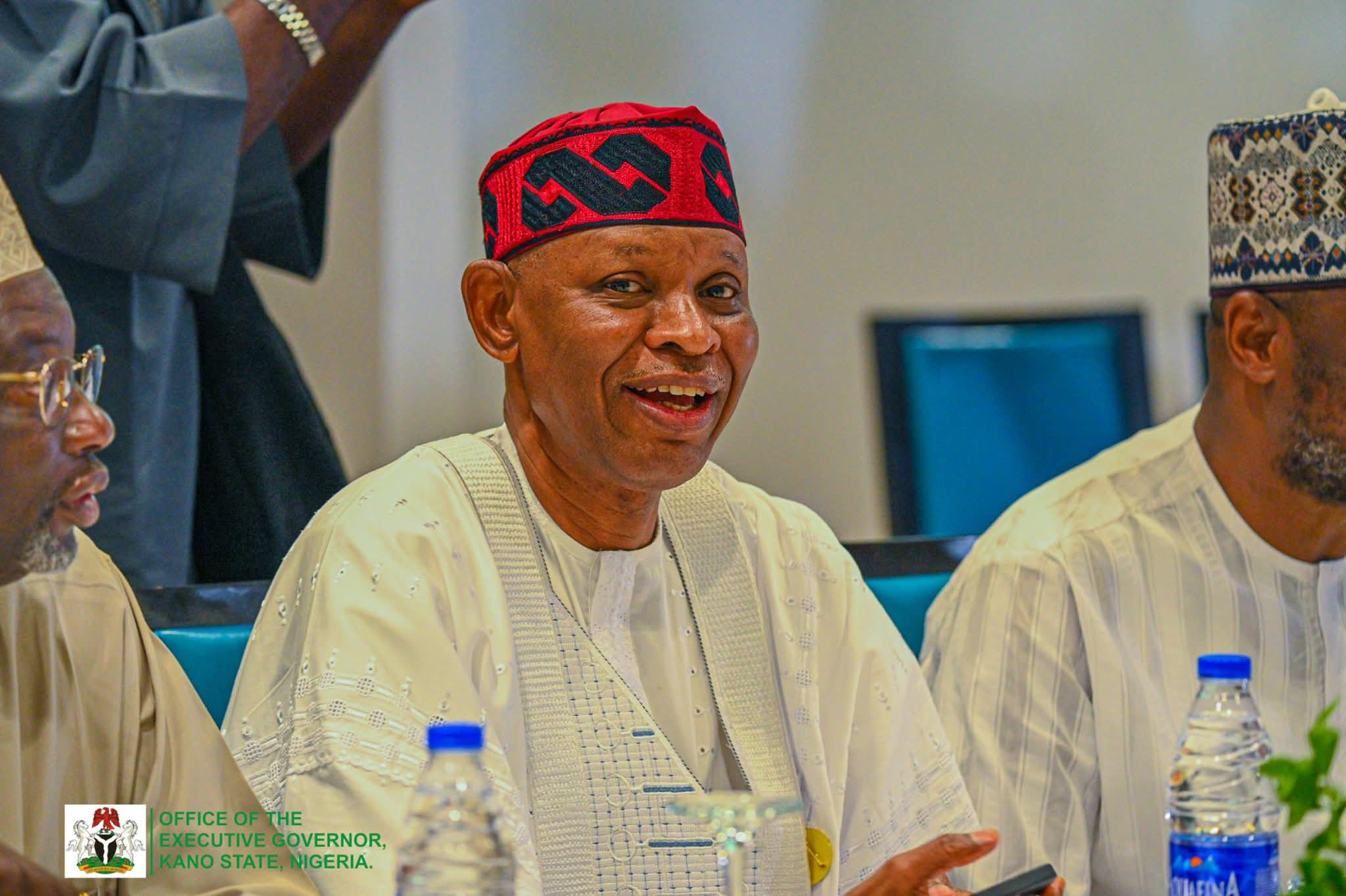
Kano State Govt Debunks Reports of Snubbing Kano Emir After Public Uproar
By Ibrahim Yunusa
The Kano State Government has dismissed reports alleging that Governor Abba Kabir Yusuf snubbed the Emir of Kano, Muhammadu Sanusi II, during the Hawan Nasarawa celebration at Government House.
In a statement issued by the governor’s spokesperson, Sunusi Bature Dawakin Tofa, the government described the claims as false, misleading, and lacking any factual basis.
According to the statement, the report was deliberately fabricated to misinform the public and create unnecessary tension.
The government clarified that there was no breach of protocol, noting that it is a longstanding tradition for governors to pay homage to the President during the Sallah period.
The government explained that this year’s Hawan Nasarawa coincided with a strategic meeting of Nigerian governors, requiring Governor Yusuf’s presence outside Kano.
It added that the governor had duly informed the Emir and delegated the Speaker of the Kano State House of Assembly and other senior officials to receive the Emir on his behalf at the Government House.
Despite the scheduling conflict, the statement noted that Governor Yusuf participated in other Sallah activities, including attending the Eid prayer led by the Emir and making arrangements to receive other traditional rulers.
The government reaffirmed that relations between the state government and the Kano Emirate Council remain cordial, urging the public to disregard the report and rely on credible sources for information.
Gusau Airport Records First-Ever Test Flight After Three Decades
By Uzair Adam
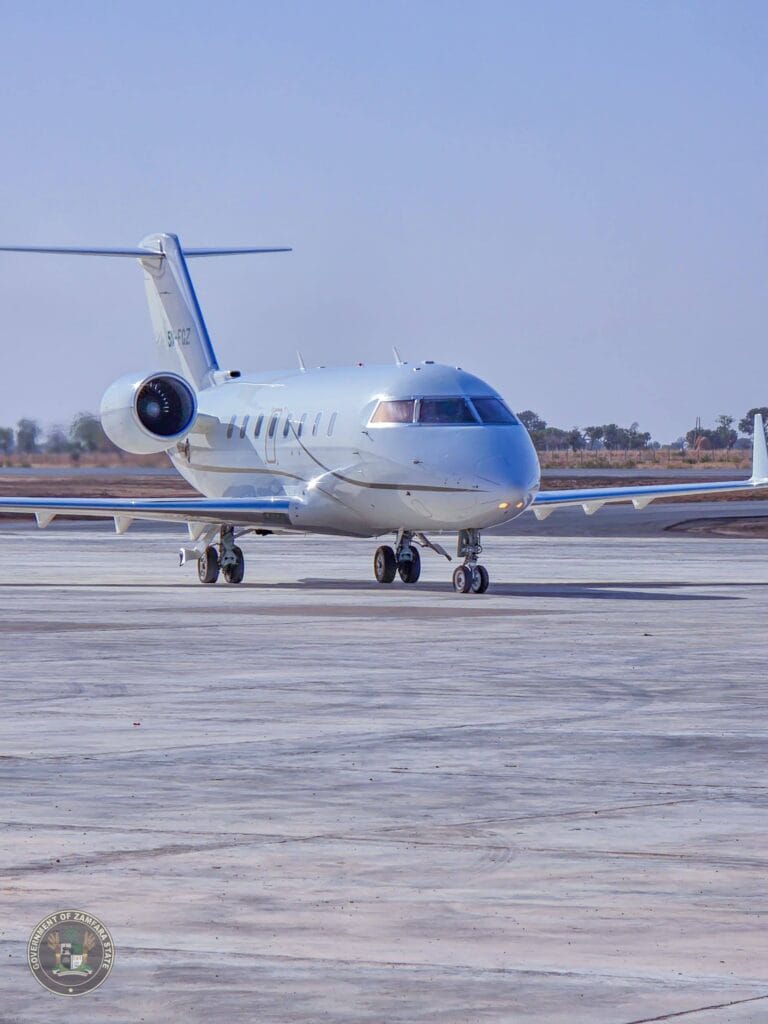
Governor Dauda Lawal of Zamfara State on Sunday witnessed the maiden landing of an aircraft at the Gusau International Airport, marking a significant milestone more than 30 years after the state’s creation without an operational airport.
According to a statement issued by the governor’s spokesperson, Sulaiman Bala Idris, the test flight was operated by the Federal Government of Nigeria and touched down at exactly 4:30 p.m.
The aircraft, identified as a Bombardier Challenger 605, carried out a one-off assessment flight aimed at evaluating the airport’s preparedness for upcoming VIP movements scheduled for next week.
Governor Lawal described the development as historic, noting that the successful landing represents a major step forward for the state’s aviation infrastructure.
He said the event would remain a memorable moment in Zamfara’s history, as it signals the beginning of airport operations in the state.