
Rigasa Youths In Kaduna Storm Streets With Anti Vote-Buying Message
By Sabiu Abdullahi
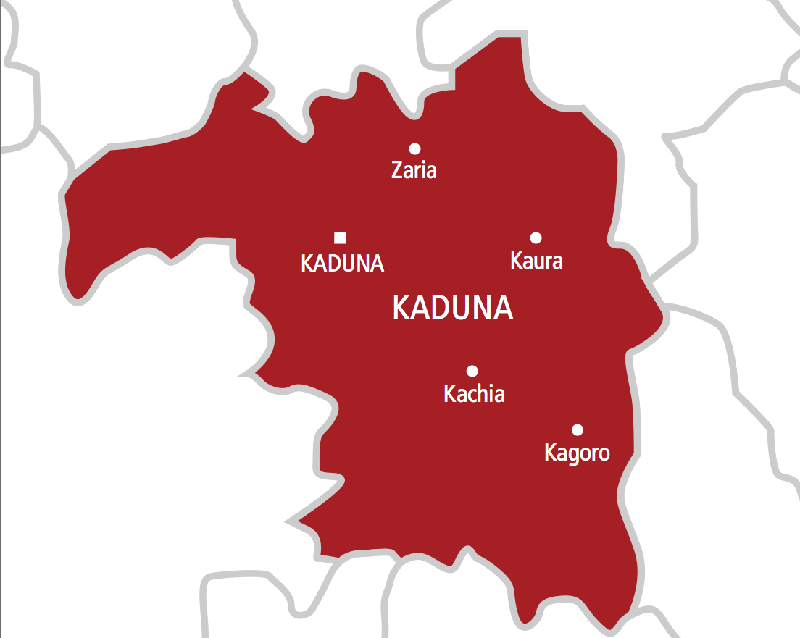
Youths in Rigasa took to the streets in groups, moving from one area to another with MP3 speakers, delivering messages similar to those of local medicine advertisers.
They called on women in the community to reject any form of inducement ahead of the election, especially money or food items such as spaghetti.
The youths warned against selling votes, stressing that such actions weaken the democratic process and the future of the community.
Residents watched as the groups passed through different parts of the area, repeating their message and urging people to make independent choices on election day.

El-Rufai Family Announces Janazah for Hajiya Umma El-Rufai
By Abdullahi Mukhtar Algasgaini
The family of former Kaduna State Governor, Mallam Nasir El-Rufai, has announced the passing of their matriarch, Hajiya Umma El-Rufai, who died on Friday, March 27, 2026.
In a statement released on Saturday, Hon. Mohammed Bello El-Rufai, representing Kaduna North Federal Constituency, confirmed that the funeral (Janazah) prayer will be held today at the National Mosque in Central Area, Abuja, commencing at 1:00 pm. The burial is scheduled to follow immediately at Gudu Cemetery in Apo.
The announcement described the deceased as a beloved grandmother, requesting prayers from the public. The family expressed gratitude for the visits, well-wishes, and condolences received during their time of grief.
Hon. Bello El-Rufai, who also serves as the Chairman of the House Committee on Banking Regulations, signed the statement on behalf of the family elders, praying for Allah’s mercy upon the departed.
“May Allah SWT bless her soul and grant her the highest level of Aljannatul Firdausi,” the statement read.
Israel Kills Journalists, Paramedics In Southern Lebanon Deadly Strike
By Sabiu Abdullahi
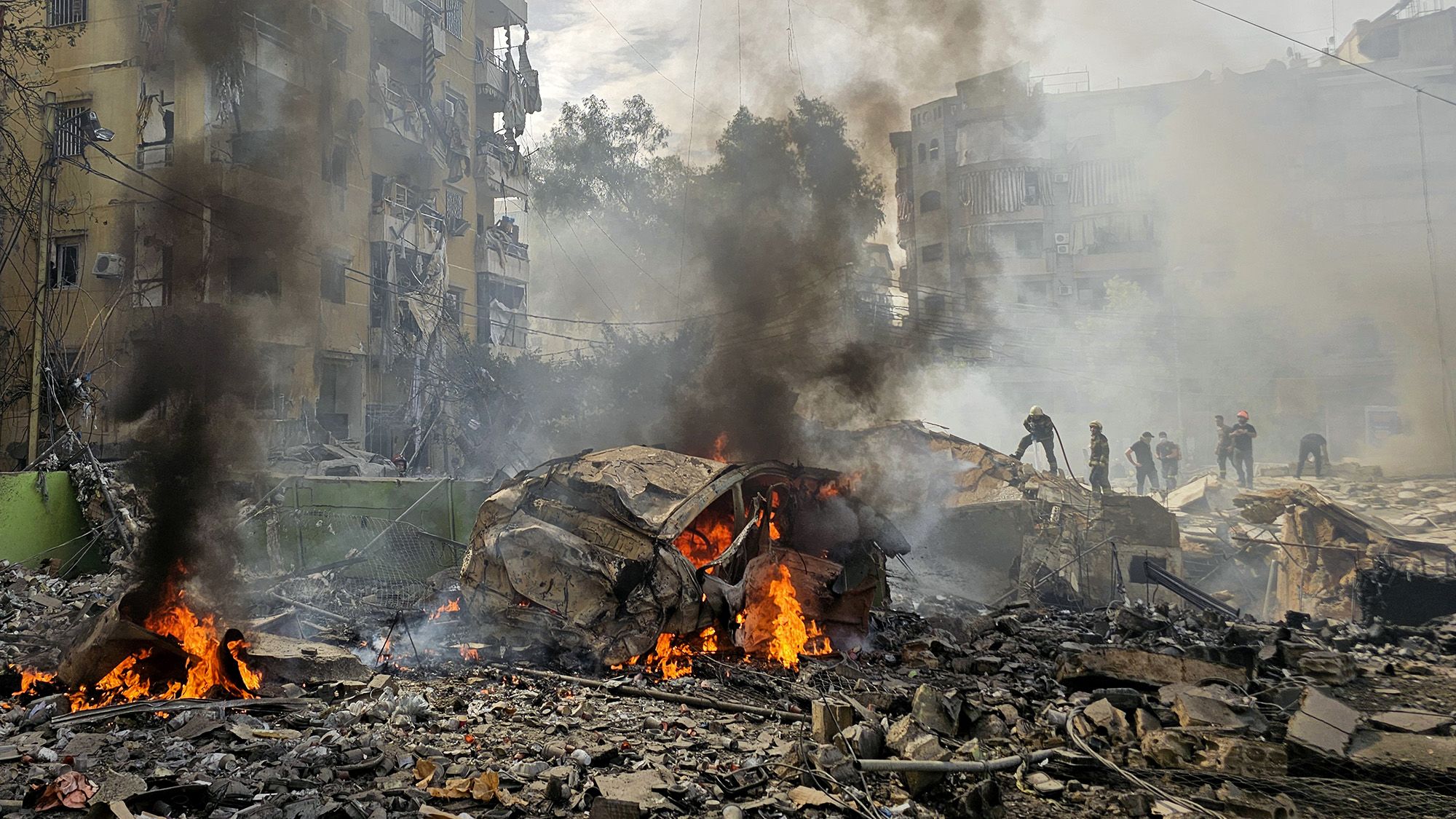
At least three journalists and nine paramedics have lost their lives following a series of Israeli airstrikes in southern Lebanon, as tensions continue to rise in the broader regional conflict linked to the ongoing U.S.-Israel-Iran war.
The deceased journalists were identified as Fatima Ftouni and her brother, Mohammed Ftouni, who both worked with Al Mayadeen, as well as Ali Shuaib of Al-Manar.
Reports indicate that the journalists were travelling in a clearly marked press vehicle along Jezzine Road when it was struck by multiple precision missiles. The vehicle was reportedly hit four times within a short span, leaving no survivors. Other journalists sustained injuries in the attack.
Emergency responders who arrived at the scene were also targeted. In separate incidents across southern Lebanon, ambulances and medical teams came under fire, raising concerns among humanitarian organisations and health authorities.
The World Health Organisation confirmed that several healthcare workers were affected in five different attacks on medical operations. According to the agency, eight paramedics were killed while seven others were injured.
Although the Israeli military acknowledged carrying out the strike that killed the journalists, it alleged that Ali Shuaib had been working alongside a Hezbollah intelligence unit and was monitoring troop movements. It also accused him of spreading propaganda.
Al-Manar dismissed the claim. The organisation described Shuaib as a seasoned war correspondent with decades of experience covering Israeli military activities in Lebanon. Both Al-Manar and Al Mayadeen rejected Israel’s explanation. They insisted that those killed were civilians carrying out their professional duties.
Israel has faced repeated criticism over strikes involving journalists, especially in Gaza, where hundreds of media workers have reportedly died. In many cases, authorities have alleged links between victims and armed groups but have not presented clear public evidence.
Lebanese President Joseph Aoun condemned the attack. He described it as “a blatant crime that violates all norms and treaties under which journalists are granted international protection during armed conflicts.”
Prime Minister Nawaf Salam also criticised the incident. He called it “a flagrant violation of international humanitarian law.”
A journalist reporting from the southern city of Tyre said media workers in the area remain determined despite the dangers. “All the journalists that I’m speaking to here today say that they were just doing their job, and that the journalists that are still here are going to continue to carry out their work despite the obvious dangers,” he said.
The WHO Director-General confirmed the scale of the attacks on healthcare workers and facilities. He detailed multiple incidents across different المناطق, saying:
“In Zoutar al-Sharqiya, five health workers were killed in a strike, and two were injured, one critically.
“Two more health workers were killed and three wounded in Kfar Tibnit; one paramedic died in an attack at a health facility in Ghandouriyeh, while another was killed in a strike in Jezzine. Two were wounded in an attack on Kfar Dajjal,” Ghebreyesus said.
He warned that repeated attacks on medical personnel and infrastructure have severely disrupted healthcare delivery in the region. Several hospitals and dozens of primary healthcare centres have been forced to shut down, while others struggle to operate.
Fatima Ftouni had earlier reported on an Israeli strike that killed her uncle and his entire family earlier in the month. Her death brings the number of Al Mayadeen journalists killed since the conflict began to six.
Figures from Lebanon’s Ministry of Health show that more than 1,100 people have been killed and over 3,300 injured since early March as the conflict intensifies.
Meanwhile, Israeli ground troops are said to have advanced further into southern Lebanon, approaching the Litani River. Hezbollah claims it has carried out multiple retaliatory attacks against Israeli forces within the past day.
In a separate incident, an Israeli airstrike in Deir al-Zahrani reportedly killed a Lebanese soldier, according to official sources.
Describing conditions in the region, a correspondent noted that explosions could still be heard across the الجنوب as bombardments continued. He referred to areas south of the Litani River as effectively a “no-go zone,” adding that while many residents have fled, about 20 per cent remain.
He said those who stayed were taking what he described as a “very deadly gamble.”
Press freedom organisations have expressed concern over the rising number of journalist deaths worldwide. A recent report recorded 129 journalist fatalities in 2025, the highest in more than three decades, with Israel accounting for a significant portion of the cases.
Earlier in the month, another Israeli strike in central Beirut killed Mohammad Sherri, a senior official at Al-Manar, highlighting the increasing risks faced by media professionals in the region.
US Marines Arrive Middle East As Houthis Join US/Israel War With Iran
By Sabiu Abdullahi
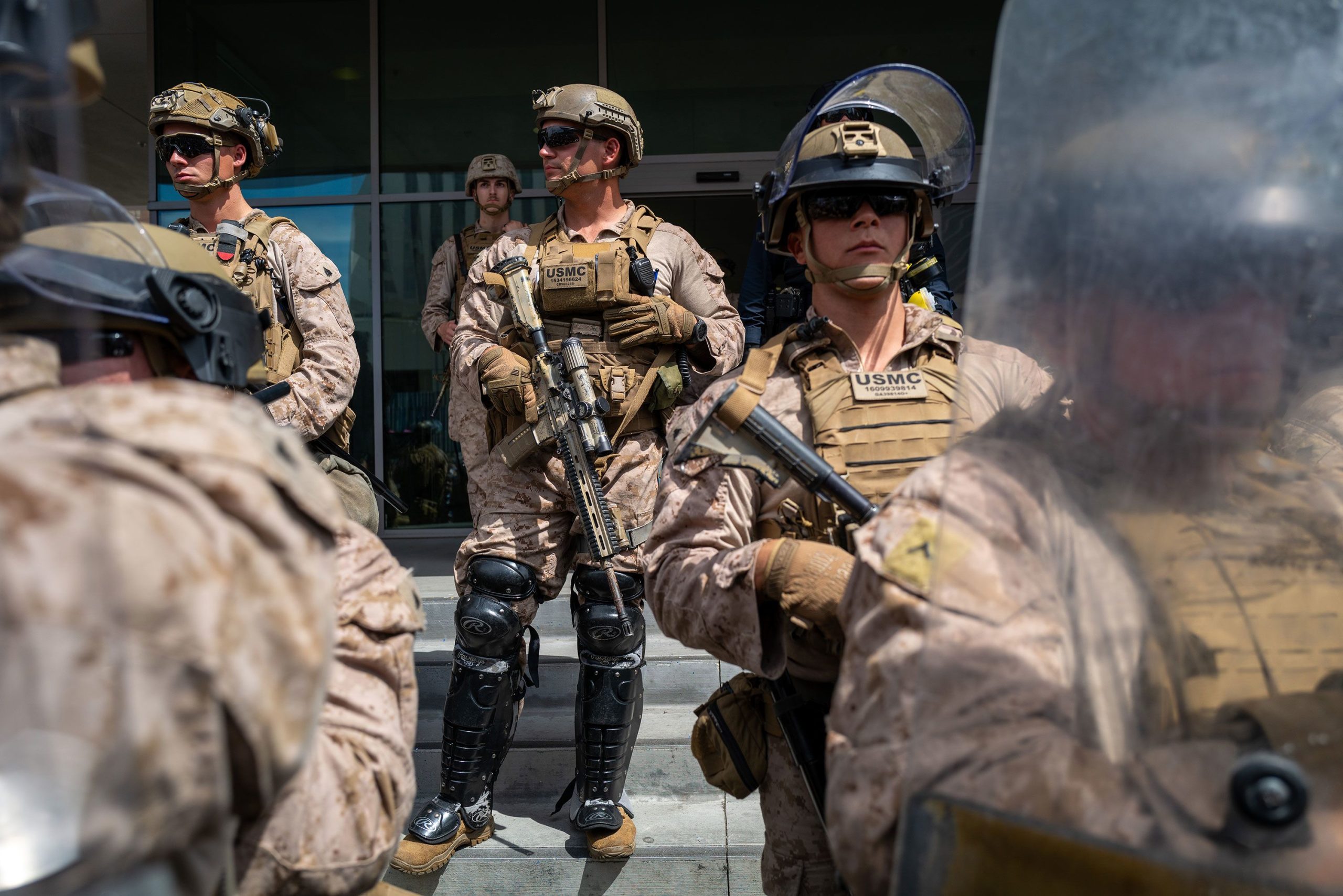
United States naval personnel and marines aboard the amphibious assault ship USS Tripoli have reached the Middle East, according to an announcement by the Central Command on Saturday.
The vessel serves as the flagship of the Tripoli Amphibious Ready Group/31st Marine Expeditionary Unit. It carries about 3,500 troops along with transport and fighter aircraft.
The deployment is expected to strengthen the U.S. military presence in the region. Washington is reportedly weighing the possibility of launching a ground operation around Iran’s key oil export hub and the Hormuz Strait.
Reports indicate that the U.S. is considering steps to secure Iran’s nuclear materials. Other options under review include a possible seizure of Kharg Island, an invasion of Larak Island near Hormuz, and control of Abu Musa and nearby islands. Additional strikes on nuclear and energy facilities are also being considered.
At the same time, Yemen’s Houthi forces have declared their involvement in the conflict. The group said it carried out its first operation using ballistic missiles against Israeli military targets.
“Our operations will continue until the declared goals are achieved,” a spokesperson vowed on Saturday. “We will continue until the aggression stops on all fronts.”
Meanwhile, Iran continued retaliatory actions against Gulf countries over the weekend. Two drones struck Oman’s Port of Salalah. The incident left one worker injured and damaged a crane.
Authorities in Kuwait reported that multiple drones hit the country’s international airport, affecting its radar systems. Emirates Global Aluminium also confirmed that Iranian strikes impacted its Al Taweelah facility in Abu Dhabi.
Iranian President Masoud Pezeshkian criticized the situation. He said it was unfortunate that “the territories of some Muslim countries” are being used to attack Iran. He accused Israel of attempting to widen the conflict across the region.
The president also stated that Iran has been “attacked twice during negotiations,” adding that the “bombing infrastructure and assassinating Iranian figures show that the aggressors cannot be trusted.”
His remarks came after Israel launched fresh strikes on two nuclear-related facilities in Iran. The targets included a heavy-water production plant in Khondab and a yellowcake production site in Ardakan.
Russia also reacted to the developments on Saturday. Moscow accused Iran’s opponents of escalating the conflict “despite related risks, including a threat of large-scale radioactive contamination.”
The country called on the International Atomic Energy Agency (IAEA) to address what it described as a “grave threat.” It added that the attacks breached international law and should attract strong condemnation from the global community.
Nigerian Soldiers Kill 38 Terrorists As Military Repels Attack In Borno
By Sabiu Abdullahi
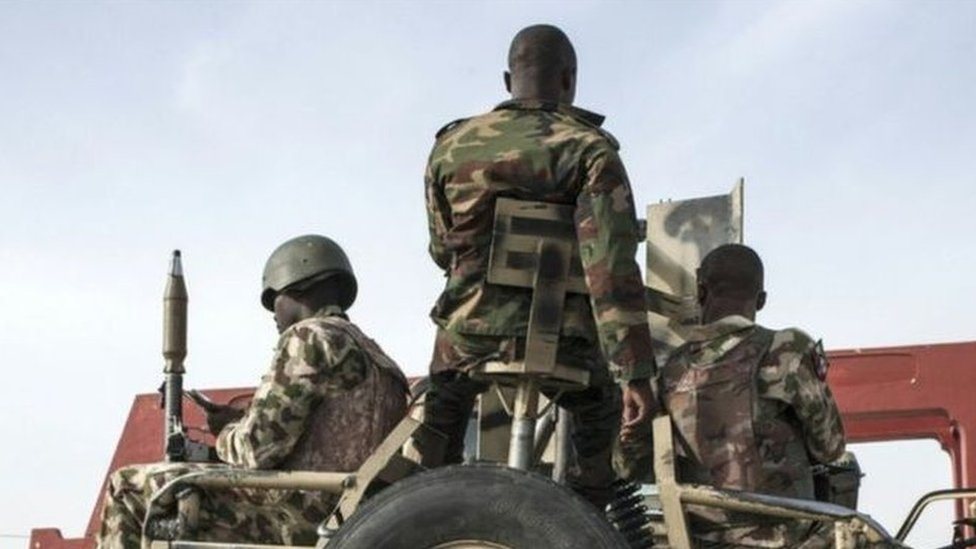
Troops under the Joint Task Force, North East, Operation HADIN KAI (OPHK), have eliminated 38 ISWAP fighters during a military operation in Borno State.
The development was confirmed in a statement issued by the Media Information Officer of the Joint Task Force, Lieutenant Colonel Sani Uba. He said the incident occurred on Saturday morning.
According to the statement, the insurgents launched an attack on the Forward Operating Base (FOB) in Mandaragirau, located in Sector 2 of the state. However, the troops resisted the assault and gained the upper hand.
The military explained that its personnel responded with coordinated ambushes and a combined offensive and defensive strategy. This forced the attackers to retreat in disarray.
Air support also played a role in the operation. The Air Component of Operation HADIN KAI provided close assistance, which improved the precision of strikes against the fleeing insurgents.
“Subsequent exploitation along the terrorists’ withdrawal routes inflicted further heavy losses.
“A total of about 38 terrorists were neutralized with 8 bodies recovered so far within the immediate engagement area and human intelligence from locals confirming over 30 additional terrorists’ bodies and weapons strewn along Garin Mallum–Garin Gajere axis into the Timbuktu Triangle.
“This was evidenced by blood trails and abandoned equipment. Troops also recovered 7 AK-47 rifles, 8 magazines, 4 RPG bombs and assorted ammunition, while recording no fatalities; one MRAP was hit by RPG fire, with injured personnel promptly stabilized.
“The scale of enemy losses has triggered widespread jubilation among local communities and highlights the sustained dominance of OPHK troops in denying terrorists freedom of action,” the statement added.
The military noted that the operation has boosted morale among residents in the affected communities, as troops continue efforts to restrict the activities of insurgents in the region.
Kwankwaso Set To Join ADC Monday
By Anwar Usman
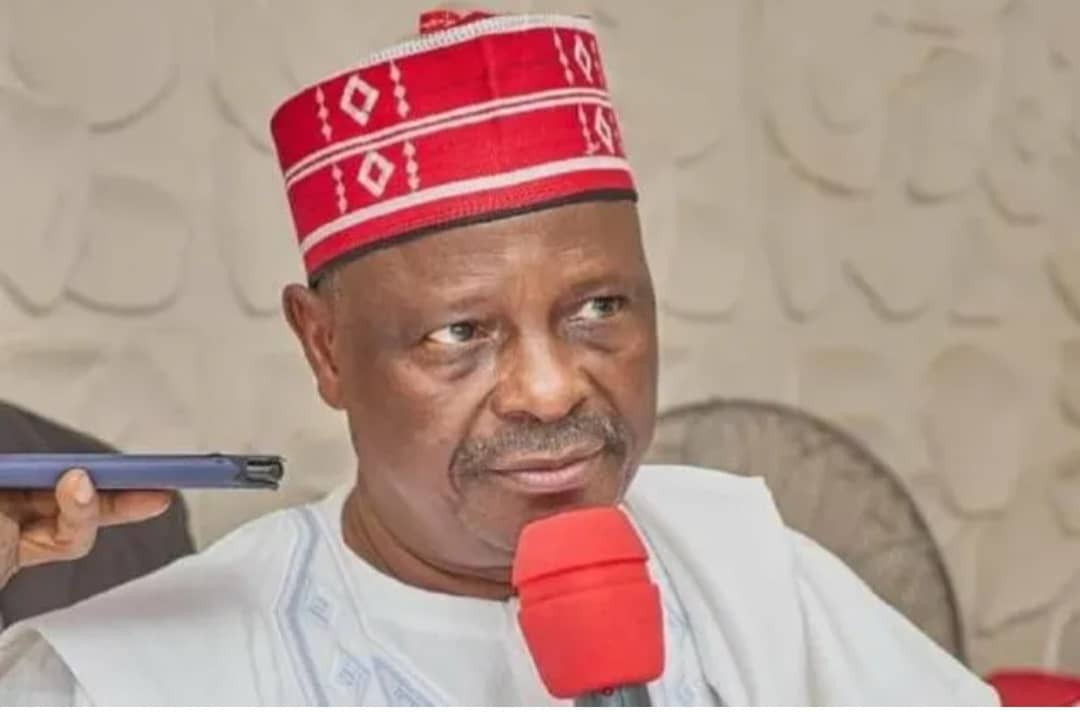
The former Kano State governor and leader of the Kwankwasiyya movement, Rabiu Musa Kwankwaso, is set to join the African Democratic Congress, ADC, on Monday.
The Daily Reality reports that the planned defection follows series of consultations between Engr. Rabiu Kwankwaso, his Kwankwasiyya movement, and leaders of the ADC.
Recalled that, Kwankwaso had, in recent weeks, held a series of high-level engagements with ADC stakeholders and other opposition figures.
Last week, he met with party leaders and stakeholders in Kano State as part of the ongoing consultations.
It is evident that, he also held talks with key political figures, such as Naja’atu Muhammad, the ADC National Secretary, Rauf Aregbesola; the Labour Party’s 2023 presidential candidate, Peter Obi; Oyo State Governor, Seyi Makinde; and the senator representing Bayelsa West, Seriake Dickson.
Reports has it that, the move is part of broader opposition realignments ahead of the 2027 general elections, aimed at unseating the ruling All Progressives Congress, APC.
The development comes after Dr. Rabiu Kwankwaso and his political protégé, Kano State governor, Abba Yusuf parted ways.
Engr. Abba Yusuf, widely regarded as Kwankwaso’s political godson and a major beneficiary of the Kwankwasiyya movement, recently defected from the NNPP to the APC alongside several lawmakers and political appointees.
However, Kwankwaso, opposed the move and distanced himself from it, describing it as a betrayal.
Iran Launches Missiles At UAE As Middle-East Tensions Deepen
By Sabiu Abdullahi
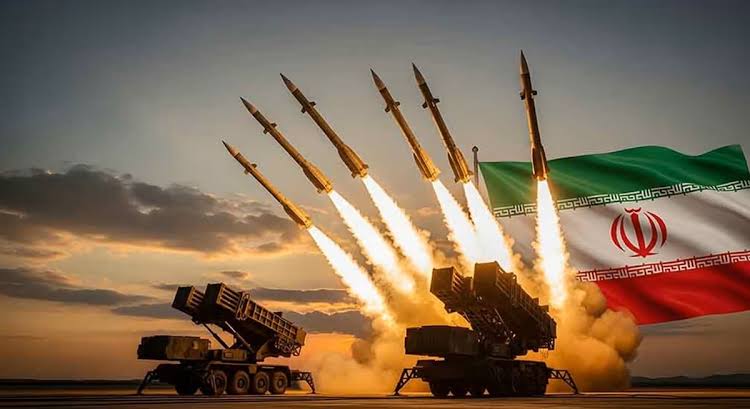
Tension has intensified in the Middle East after Iran launched a series of missiles and drones targeting the United Arab Emirates, in what signals a major escalation in the ongoing regional crisis.
Authorities in the UAE confirmed that air defence systems were deployed to intercept the incoming threats. Explosions and fires were reported in several locations across the country.
Officials disclosed that fragments from intercepted ballistic missiles landed in an industrial zone in Abu Dhabi. The incident triggered fires and left several people injured.
Security sources said the operation involved both missiles and drones. Analysts believe this reflects a more coordinated and sophisticated strategy by Tehran.
The latest strikes are linked to a broader confrontation involving Iran, the United States, and Israel. In recent weeks, Iran has stepped up retaliatory attacks after joint U.S. and Israeli operations targeted its military and nuclear facilities.
Iran has made its position known. Its foreign minister warned that Israel and the United States would pay a “heavy price” for continued strikes, signaling that attacks across the Gulf could persist or intensify.
The UAE is not the only country affected. Similar missile and drone incidents have been recorded in Saudi Arabia, Bahrain, and Kuwait. This has raised concerns about a wider regional conflict.
In response, Gulf states issued a joint statement condemning Iran and allied groups. They warned that such actions threaten regional stability and could lead to a broader war.
Officials also raised alarm over the growing use of proxy groups and cross-border strikes. They noted that both civilian and strategic locations are increasingly at risk.
Despite the scale of the attack, UAE authorities said most of the incoming threats were intercepted. This helped reduce the level of damage and casualties.
However, the crisis is already affecting the global economy. Shipping routes have been disrupted, while oil prices have surged. There are growing fears that the conflict could drag on in one of the world’s most critical energy regions.
The situation remains tense, with each new development increasing the risk of further escalation beyond current battle lines.
Report Shows How Hundreds Of Pupils Study In ‘Death Trap School’ In Jigawa Amid Prolonged Neglect
By Sabiu Abdullahi
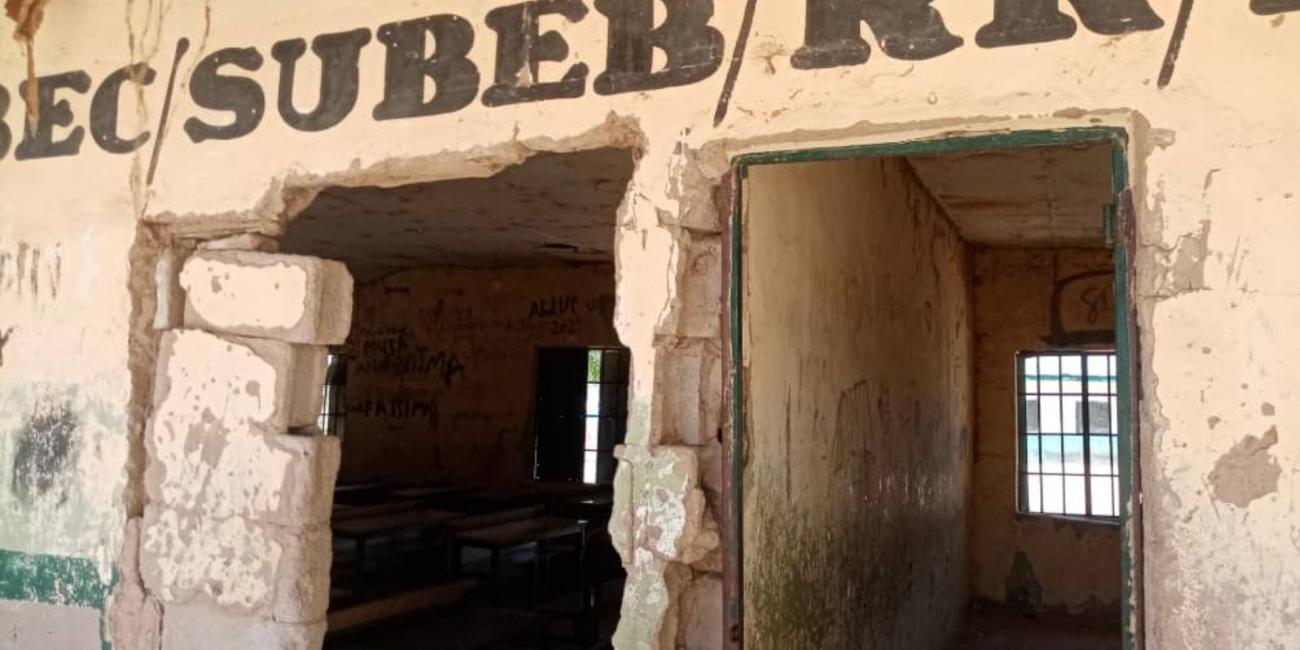
More than 300 pupils at Community Primary School in Ayama, located in Auyo Local Government Area of Jigawa State, are reportedly learning under hazardous conditions due to years of neglect.
The situation came to light after a recent inspection by Tracka, a civic accountability organisation, which described the state of the school as alarming and unsafe for both pupils and teachers.
The report highlighted the poor condition of the school facilities. It blamed the situation on prolonged neglect and what it described as a failure of the education system under the administration of Governor Umar Namadi, despite repeated appeals from the host community.
“During a recent field visit by the Tracka team to Community Primary School in Ayama, Auyo LGA of Jigawa State, the reality on ground was both shocking and heartbreaking,” the report read.
Further details in the report painted a grim picture of the learning environment.
“This single primary school, which serves more than 300 pupils from the community, is in a deplorable and dangerous condition that should never be associated with a place of learning.
“Many of the classrooms are severely dilapidated, with cracked walls, weak and damaged floors, and roofs that have partially collapsed.
“Ventilation is extremely poor, and some structures are so unsafe that they can only be described as death traps.
“Yet, these are the spaces where innocent children are expected to sit every day in pursuit of an education and a better future.”
Findings from the visit showed that several classroom structures have lost their strength. This has exposed both pupils and teachers to danger, especially during periods of harsh weather.
The report stated that the condition of the school has remained unchanged for years. It added that government response has been minimal despite several appeals.
“For more than three years, the community and school authorities have made repeated appeals for help.
“With little or no government response, residents have tried to carry out minor repairs using their limited resources just to keep the school functioning.
“Unfortunately, these temporary efforts have not been enough to address the scale of the problem,” the report added.
Residents of Ayama community have attempted to fix parts of the school by contributing what they can. They repaired leaking roofs and supported weak structures. However, these efforts have not solved the larger problem of decay.
The report also pointed to overcrowding as a major concern. It noted that the shortage of desks and chairs has forced many pupils to sit on bare floors during lessons.
“Overcrowding has also become a major challenge. With very few desks and chairs available, many pupils are forced to sit directly on the bare floor during lessons,” the report noted.
Education stakeholders have warned that such conditions can harm pupils physically and also affect their learning ability over time.
The situation has raised fresh concerns about the state of public education infrastructure, especially in rural communities across Nigeria.
Reacting to the findings, civic technology group MonITNG expressed worry over the development. The organisation linked the poor learning conditions to declining school attendance and increasing dropout rates in the state.
“Unsurprisingly, this terrible learning environment has contributed to declining attendance, with some children eventually dropping out of school altogether,” the organisation said.
It also questioned the gap between government spending on education and the reality in schools like the one in Ayama.
“This situation is particularly troubling considering that billions of naira are allocated to education annually.
“The contrast between budget figures and the conditions seen in schools like this raises serious concerns that must be addressed.”
MonITNG called for urgent intervention to address the situation. It urged authorities to rebuild damaged classrooms and provide essential facilities.
“We call on the relevant authorities to urgently intervene by reconstructing the damaged classrooms, providing adequate furniture, and ensuring access to clean water and proper sanitation facilities.
“Every child deserves a safe and dignified place to learn.
“Our children’s education should never be a gamble with their lives. It is time to fix our schools and secure their future.”
The situation in Ayama reflects wider challenges facing many public schools in rural parts of the country. Poor infrastructure, inadequate funding, and weak oversight continue to affect the quality of education, leaving many children at risk.
Nigerian Soldiers Foil Diesel Theft
By Sabiu Abdullahi
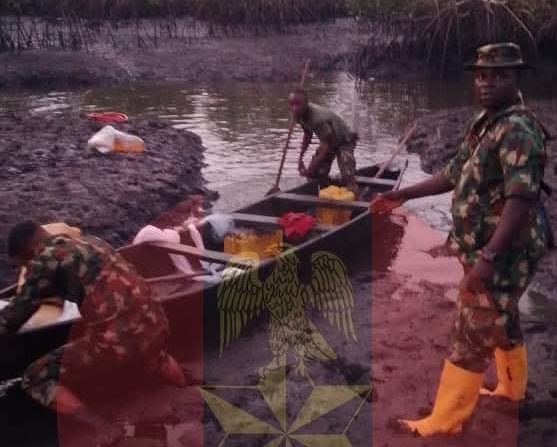
Troops of the 2 Brigade of the Nigerian Army have disrupted an attempt by suspected criminals to siphon diesel from equipment belonging to Sterling Petroleum and Fertilizer Limited in Akwa Ibom State.
This is contained in a statement signed by Lawal Bala Muhammad, a Captain and Assistant Director of Army Public Relations at the Headquarters of 2 Brigade in Akwa Ibom, on March 27, 2026.
The incident occurred at Ukpe Ete in Ikot Abasi Local Government Area after soldiers acted on intelligence about illegal activities around the company’s facility. The troops moved to the location and carried out an operation that led to the arrest of a driver who was transporting the stolen products.
Sources said the situation took a dramatic turn when the troops attempted to return the suspect and recovered items to the company for further questioning. Some youths in the area blocked the road in a bid to free the suspect. They attacked the soldiers with stones and bottles despite efforts by the troops to maintain calm.
The army personnel fired warning shots to disperse the crowd. The action did not bring the situation under control. The confrontation intensified and forced the troops to identify and neutralise the ringleader, who was shot in the leg. He was later taken to a hospital for treatment.
The unrest escalated as the youths reportedly vandalised vehicles, harassed commuters, and attacked trucks belonging to the company along the route.
Reinforcements were later deployed from the Brigade to restore order. After the crowd was dispersed, troops carried out further checks in the area. During the operation, they discovered an unidentified corpse placed beside a coffin. Security personnel moved the body to a mortuary with support from the Nigeria Police Force.
The army said troops have remained in the area to secure the company’s assets and prevent further breakdown of law and order.
In the statement, the military authorities appreciated members of the public for their cooperation. They also assured residents of their resolve to protect lives and property across the state. The public was urged to share useful information with security agencies as investigations continue.

Yilwatda Leads as APC Releases Full National Executive Committee List
By Abdullahi Mukhtar Algasgaini
The All Progressives Congress (APC) has officially released the full list of its National Executive Committee members, with Prof. Nentawe Goshwe Yilwatda confirmed as the National Chairman. The detailed roster, which outlines the party’s leadership structure across various offices, was made public in a recent announcement.
Yilwatda heads a comprehensive team of national officers, supported by Ali Bukar Dalori as Deputy National Chairman (North) and Dr. Benjamin Obi Nwoye as Deputy National Chairman (South). Senator Surajudeen Ajibola Basiru serves as the National Secretary, while Prof. AbdulKarim Abubakar Kana takes on the role of Deputy National Secretary.
The list also includes key appointments across critical portfolios: Murtala Aliyu Kankia as National Legal Adviser, Uguru Mathew Ofoke as National Treasurer, and Amb. Haruna Ginsau as National Financial Secretary. Muhammad Sulaiman Argunu OFR was named National Organising Secretary, while Donatus Enyinnah Nwankpa was appointed National Welfare Secretary.
Felix Morka will continue as National Publicity Secretary, with Sen. Abubakar Maikafi as National Auditor. The party’s demographic representation is led by Dr. Mary A. Idele (National Women Leader), Dayo Isreal Abdulai (National Youth Leader), and Aare Durotolu Oyebode Bankole as National Leader for Persons with Disabilities.
The party also announced deputies for several positions, including Hamman Adamu Ali Kumoo (Deputy National Financial Secretary), Barr. Emeka Okafor (Deputy National Organising Secretary), and Zainab Abubakar Ibrahim (Deputy National Women Leader). Other deputy roles were filled by Hon. Meseko Durosinni Josiah (Publicity), Dr. Christopher Michael Akpan (Welfare), Mr. Olugbenga Olayemi (Auditor), Barr. Ibrahim Salawu (Legal Adviser), Engr. Ben Akak (Treasurer), and Jamaludeen Kabiru (Youth Leader).
Rounding out the executive committee are six National Ex-officio members representing the geopolitical zones: Dr. Opawoye Oluwatoyin Bunmi (North Central), Adamu Jallah (North East), KanoMuhammed Jamu Yusuf (North West), Hon. Ikechukwu Umeh (South East), Mr. Francis Kolokolo (South South), and Hon. Bunmi Orinowo (South West).
The announcement underscores the party’s efforts to solidify its leadership structure ahead of upcoming political activities.