Nigeria’s health sector and the need to review
By Abdullahi Adamu
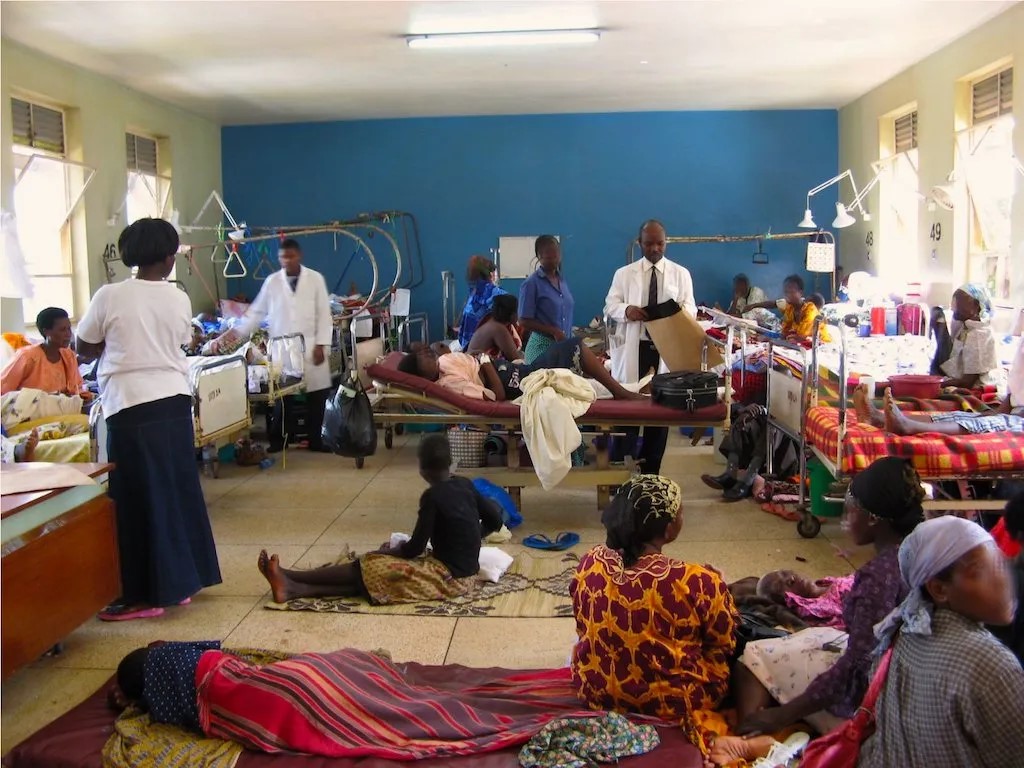
Poor health facilities in Nigeria stem from severe underfunding, causing inadequate infrastructure, outdated equipment, drug shortages, and breakdowns in essential services like electricity and clean water. This affects rural and primary healthcare centres most, where facilities are dilapidated and staff insufficient. A shortage of medical professionals and brain drain overloads the system, leading to increased medical tourism and poor outcomes. Healthcare access is severely limited due to various systemic factors.
Misconceptions about primary health care and poor leadership have hindered the health system, which hasn’t aligned its structures to achieve universal health access. Improving financial access alone won’t suffice without comprehensive primary health care reform to fix system flaws, deliver quality, efficient, acceptable care, and ensure sustainability and growth for the health system and country. A primary health care movement of government health professionals, the diaspora, and stakeholders is needed to drive this change and overcome political inertia.
In 2014, the National Health Act established the Basic Health Care Provision Fund (BHCPF) to address funding gaps hampering effective primary healthcare delivery across the country. The BHCPF comprises 1% of the federal government Consolidated Revenue Fund (CRF) and additional contributions from other funding sources. It is designed to support the effective delivery of Primary Healthcare services, provision of a Basic Minimum Package of Health Services (BMPHS), and Emergency Medical Treatment (EMT) to all Nigerians.
Despite the provisions of the BHCPF, the report’s findings expose the precarious state of healthcare in Nigeria, where access to and utilisation of health services remain marred by systemic challenges across states.
Public health facilities in all 36 states and the FCT are deficient, and the experiences of community members seeking care at these facilities are consistently awful.
Primary Health Care (PHC) is the foundation of the healthcare system in Nigeria and serves as the level at which non-emergency, preventive health issues are addressed. But sadly, many PHC centres in the FCT are poorly equipped and lack well-trained personnel.
Kulo PHC was built with solid infrastructure and equipped with solar panels as part of a 2019 federal initiative aimed at strengthening primary care in hard-to-reach areas. Today, that promise lies in ruins. The solar panels are now dysfunctional—some stolen, others damaged by harsh weather and lack of maintenance. At night, the clinic plunges into darkness, leaving staff to work by torchlight or with dying cell phone batteries.
Three patients on life support at Aminu Kano Teaching Hospital were reported dead following an interruption to the hospital’s electricity supply by Kano Electricity Distribution Company.
The basic causes of Nigeria’s deteriorating health care system are the country’s weak governance structures and operational inefficiencies.
In 2014, the National Health Act established the Basic Health Care Provision Fund (BHCPF) to address funding gaps hampering effective primary healthcare delivery across the country. The BHCPF comprises 1% of the federal government Consolidated Revenue Fund (CRF) and additional contributions from other funding sources. It is designed to support the effective delivery of Primary Healthcare services, provision of a Basic Minimum Package of Health Services (BMPHS), and Emergency Medical Treatment (EMT) to all Nigerians.
Despite the provisions of the BHCPF, the report’s findings expose the precarious state of healthcare in Nigeria, where access to and utilisation of health services remain marred by systemic challenges across states.
Public health facilities in all 36 states and the FCT are deficient, and the experiences of community members seeking care at these facilities are consistently awful.
The Basic Health Care Provision Fund (BHCPF) was poorly implemented in 13 states.
The basic causes of Nigeria’s deteriorating health care system are the country’s weak governance structures and operational inefficiencies
Abdullahi Adamu wrote via nasabooyoyo@gmail.com.

Dikko Radda reshuffles cabinet, appoints new heads of key agencies
By Anas Abbas
Governor Dikko Umaru Radda of Katsina State has approved a major cabinet reshuffle and announced new appointments across key government agencies to enhance efficiency and service delivery.
The development, which takes immediate effect, was contained in statements issued on Thursday by the Chief Press Secretary to the Governor, Ibrahim Kaula Mohammed.
The move involves redeployment of some commissioners and the appointment of two new special advisers.Under the reshuffle, Hon. Adnan Nahabu becomes Commissioner for Higher, Vocational and Technical Education, while Prof. Ahmad Muhammad Bakori, who previously led Agriculture and Livestock Development, now heads the newly created Ministry of Livestock Development.
Additionally, Hon. Aliyu Lawal Zakari moves from Youth and Sports to Agriculture, and Hajiya Zainab Musa Musawa shifts from Basic and Secondary Education to Special Duties.
Also, Hon. Yusuf Suleiman Jibia now oversees the Ministry of Basic and Secondary Education, while Engr. Surajo Yazid Abukur takes charge of Youth and Sports Development. Hajiya Aisha Aminu, former Director-General of the Katsina State Enterprise Development Agency, becomes Commissioner for Women Affairs.
Governor Radda further appointed Hajiya Hadiza Abubakar Yar’adua as Special Adviser on Nutrition and Welfare Services, and Isa Muhammad Musa as Special Adviser on Cultural Orientation.
He urged all appointees to align with his administration’s Building Your Future agenda focused on accountability, innovation, and improved governance.
However, the governor appointed Engr. Abba Junaidu, MNSE, as Chairman of the Katsina State Road Maintenance Agency (KASROMA).
He also appointed Dr. Babangida Ruma as Director-General of the Katsina State Enterprise Development Agency (KASEDA), describing him as a technologist and youth advocate previously recognised by UNESCO as the “Father of Technology and Innovation.”
Former Head of Service, Idris Usman Tune, was appointed Chairman of the Katsina State Civil Service Commission.
The Katsina State Pension Bureau was reconstituted with Ibrahim Boyi Dutsinma as Part-Time Chairman, Musa Rabiu Mahuta as Executive Director of Finance and Administration, Abbati Ibrahim Masanawa as Executive Director of Operations, and Usman Shehu as Executive Director of ICT and Database Management. Dr. Faruk Aminu will serve as Independent Observer.
Similarly, for the Katsina State and Local Government Pension Transition Board, Hon. Muntari Dan Ammani was appointed Executive Secretary, while Garba Sanda Mani, MNI, will serve as Part-Time Chairman.
Governor Radda expressed optimism that the changes will strengthen coordination and improve policy execution across ministries and agencies, reaffirming his administration’s commitment to transparency, accountability, and people-centered governance.

Ghana adopts local languages as medium of instruction in schools
By Muhammad Sulaiman
The Government of Ghana has introduced a new education policy mandating the use of local languages as the primary medium of instruction in all schools across the country.
Announcing the policy, Minister of Education, Haruna Iddrisu, said the decision marks a major step toward resetting Ghana’s education system to better reflect the nation’s linguistic and cultural realities. He emphasised that children learn best in their mother tongue, which enhances understanding and cognitive development.
“The use of our local languages in classrooms will not only improve learning outcomes but also help preserve Ghana’s rich linguistic heritage,” Iddrisu stated.
The Ghana Education Service (GES) has been directed to oversee the nationwide implementation of the policy. The move is expected to significantly reduce the dominance of English in the country’s early education system and promote inclusivity through indigenous languages.

Is fighting His Excellency Namadi like fighting the Hadejia Emirate?
By Garba Sidi
The strategy used to support His Excellency, the Governor of Jigawa State, Malam Umar Namadi, made his emergence seem like a golden opportunity, especially for the people of Hadejia. That’s why people from this region, regardless of political affiliation, united in full support behind him.
In fact, it got to the point where anyone who didn’t support him was branded as someone who didn’t care about Hadejia’s interests. Youths and other residents were mobilised in large numbers to vote overwhelmingly for him, resulting in a decisive defeat for his opponent. All this was done with the hope that having “their son” in power would finally bring the kind of development other governors had brought to their own regions.
BUT DID IT BRING GOOD RRSUL?
The general assumption is that if a governor comes from a certain area, that area should naturally receive more projects, opportunities, and attention than others. Unfortunately, in the case of Malam Umar Namadi, this has not been the reality.
Right from the appointment of commissioners, things started to take a different turn. Prominent politicians from Hadejia—those who invested their money, time, and energy into mobilising support—were sidelined. Instead, individuals who contributed nothing to the campaign were brought in and handed key positions. These new appointees now operate as they please, whether their actions are right or wrong.
This understandably caused frustration among the loyal politicians, many of whom withdrew, allowing their protégés to take to social media to criticise the government openly. Their anger is rooted in the fact that they were abandoned, while others who made no sacrifices are now enjoying the fruits of power.
Even in terms of developmental projects, Hadejia has not seen any significant attention that reflects the governor’s origins. For instance, the Specialist Hospital that the former governor and the Current Minister of Defence, Badaru Abubakar, initiated has been abandoned under the current administration, despite the region’s urgent need for it, particularly due to the high incidence of kidney-related diseases. Patients are frequently referred to Federal Medical Centre Nguru, Rasheed Shekoni Specialist Hospital, Dutse and Aminu Kano Teaching Hospital.
So far, the government has no tangible project it can point to as a benefit for the people of Hadejia, despite their overwhelming support. Ironically, the previous governor—who isn’t even from Hadejia—executed more meaningful projects there. Clearly, “Kwalliya ba ta biya kuɗin Sabulu ba”.
WHO IS CRITICIZING MALAM UMAR NAMADI’S GOVERNMENT?
Some supporters of Governor Malam Umar Danmodi claim there is a grand conspiracy to sabotage his government, supposedly because it originates from Hadejia. They even suggest that people from other regions, aided by unpatriotic elements within Hadejia, are driving the opposition. But that narrative is misleading. And the critics of this government can be broadly categorised into three groups:
THE POLITICIANS.
These are politicians who worked tirelessly and spent their resources to bring this administration to power. After the victory, they were cast aside. Their disappointment and frustration have led them to form alliances and challenge the government.
LOYALISTS OF THE FORMER GOVERNOR.
While not necessarily politicians, these individuals are close to the former governor. They took offense when Malam Umar began probing the previous administration and took actions perceived as targeting their benefactor. In retaliation, they began opposing the current government, criticizing its every move and encouraging others to do the same.
THE COMMON PEOPLE.
These are ordinary citizens who feel betrayed. Despite numerous announcements of new projects and the release of funds, they see little to no work on the ground. They witness government officials living lavishly while their schools lack teachers, hospitals lack doctors and medicines, and basic infrastructure is crumbling. These are the same citizens whose votes made this government possible, and now they are rightfully speaking out. So, is it a crime for the people of Hadejia to fall into any of these groups?
Some people are trying to twist the narrative, making it seem like the government is being attacked simply because it’s from Hadejia. But the reality is this: it’s the government being critized, not the region.
WHAT’S THE SOLUTION?
There is still time for reflection and correction. The administration should reach out to the neglected politicians from Hadejia who worked hard for its victory. Offer them a sincere apology and reintegrate them into the fold. Once that happens, their supporters will follow suit, and the political tension will ease.
Likewise, the faction loyal to the former governor and now Minister of Defense, Badaru Abubakar, should be approached with humility. Apologize where necessary, stop discriminating against his allies, and rebuild that bridge. Doing so will reduce hostility from that quarter.
Lastly, address the real issues affecting the people: poor healthcare, teacher shortages, and neglected infrastructure. Let the people see and feel the benefit of the support they gave. Prove to them that they made the right choice.
CONCLUSION
No one fights their own child. The people of Hadejia do not hate Malam Umar Namadi. They are simply disappointed by the neglect and lack of attention he has shown them—despite the overwhelming support they gave him when he needed it most.
Once he wakes up to this reality and takes action—not just words—to correct his course, the people will forgive and support him again.
May Allah guide us to do what is right.
I wrote the Article in Hausa, and I used ChatGPT to translate it into English.

Tinubu sacks service chiefs, names new military heads
By Abdullahi Mukhtar Algasgaini
President Bola Tinubu has replaced the country’s service chiefs.The changes, which take immediate effect, were announced in a press release from the State House on Thursday.
The outgoing Chief of Defence Staff, General Christopher Musa, has been replaced by General Olufemi Oluyede. Other new appointments include Major-General W. Shaibu as Chief of Army Staff, Air Vice Marshall S.K Aneke as Chief of Air Staff, and Rear Admiral I. Abbas as Chief of Naval Staff.However, the Chief of Defence Intelligence, Major-General E.A.P Undiendeye, will retain his position.
President Tinubu expressed his “most profound appreciation” to the outgoing service chiefs for their “patriotic service, and dedicated leadership.”
The President charged the newly appointed officers to justify the confidence reposed in them and to further enhance the “professionalism, vigilance and comradeship” of the Armed Forces of Nigeria.
This restructuring is part of the Federal Government’s ongoing efforts to strengthen the national security architecture amidst ongoing security challenges across the country.

Swiss government rejects nationwide Hijab ban for schoolgirls
By Hadiza Abdulkadir
The Swiss Federal Council has ruled out introducing a nationwide ban on schoolgirls wearing the hijab in public schools, stating that existing laws sufficiently regulate issues of participation and equality in education.
In a statement issued this week, the Council emphasized that current legal frameworks already ensure that all students, regardless of religion or cultural background, take part fully in lessons, sports, and swimming classes. It added that individual cantons retain authority over education policies, including dress codes in schools.
The decision follows ongoing debates in several European countries over the wearing of religious symbols in public institutions. Swiss authorities reaffirmed their commitment to freedom of religion and expression while maintaining that integration and participation remain key priorities in the education system.
CBN, diaspora dollars and Nigeria’s economic lifeline
By Abdulrasheed Musa Kofa,
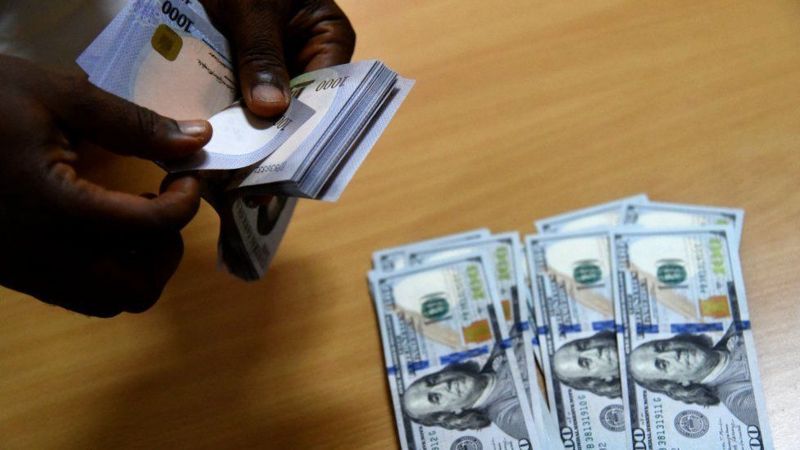
For years, Nigeria has leaned on its diaspora as a hidden anchor of survival. Beyond emotional ties and cultural nostalgia, Nigerians abroad have sent home billions of dollars, cushioning households and helping many weather difficult times.
Yet the story of remittances has largely been one of consumption, not sustainable growth. Much of the money vanished into daily survival, often through informal routes, while the vast potential of structured diaspora capital for national development remained untapped.
The Central Bank of Nigeria (CBN) now seems determined to rewrite that story. In recent months, it has introduced policies aimed not only at boosting inflows but at transforming remittances into a formal, investment-driven engine of stability.
With tools such as the Non-Resident Nigerian Ordinary and Investment Accounts (NRNOA/NRNIA), the Non-Resident Bank Verification Number (NRBVN), and tighter International Money Transfer Operator (IMTO) guidelines, the apex bank is signaling a bold shift—from remittances as household lifelines to remittances as capital for growth.
Its ambition of attracting $1 billion in monthly diaspora remittances is more than a target; it is an audacious declaration that Nigeria seeks to become a global hub for diaspora investment.
At the heart of this strategy are the NRNOA and NRNIA. The former provides a regulated, convenient channel for everyday remittances in naira and foreign currencies, cutting out the costly informal networks that once dominated.
The latter, the NRNIA, goes even further by creating structured pathways for diaspora investments in mortgages, pensions, insurance, and Nigeria’s financial markets. By guaranteeing full repatriation of proceeds under existing rules, the CBN is deliberately courting trust.
And in a global financial system where trust is the ultimate currency, such assurances matter greatly. The challenge of access has also been tackled. For years, the requirement of physical presence made securing a BVN impossible for many Nigerians abroad.
The new digital Non-Resident BVN finally removes that barrier, even though it comes at a cost of about $50. While some may balk at the fee, the opportunity far outweighs the price of exclusion. For a diaspora community long fenced out, this is a long-awaited doorway in.
The IMTO reforms reflect similar pragmatism. By restricting services to inbound transfers and ensuring payouts in naira, the CBN is protecting liquidity while keeping inflows within the formal economy.
Allowing operators to quote exchange rates on a willing seller–willing buyer basis introduces transparency and competitiveness, drawing more Nigerians away from shadowy parallel markets. The exclusion of fintechs from IMTO licensing has sparked debate, but the regulator may be betting on stability over experimentation in a sector that demands strict oversight.
Early signs suggest the measures are bearing fruit. Official reports showed a $553 million inflow in July 2024—the highest on record—representing a 130 percent year-on-year surge. Confidence is shifting gradually towards formal systems.
Sustained, such inflows could strengthen Nigeria’s fragile foreign exchange reserves, deepen liquidity in capital markets, and lower the high cost of remittances that continues to exceed the global average. Yet the most profound shift is not numerical but philosophical.
These reforms are about more than chasing dollars; they are about redefining the relationship between Nigeria and its diaspora. Rather than treating remittances as acts of charity or family duty, the CBN is positioning them as instruments of nation-building.
Nigerians abroad are being asked to see themselves not merely as senders of money, but as strategic investors in the country’s future. The stakes could not be higher. With more than 15 million citizens abroad, Nigeria sits at the heart of Sub-Saharan Africa’s remittance economy.
In some years, diaspora inflows have even surpassed oil revenues. If only a fraction of this wealth is converted into productive, long-term capital, Nigeria’s financial landscape could be reshaped. But success will depend on more than policy design.
It will require political stability, investor protection, and unwavering consistency in government signals. The diaspora will not risk hard-earned savings in a system that shifts with every gust of political wind.
CBN’s reforms are bold and timely. But their success now rests on trust and execution. If they work, the narrative of remittances will shift—from consumption to capital, from emergency relief to structural development.
The target of $1 billion monthly may well be achieved, but more importantly, it represents a shared vision where remittances become investments in Nigeria’s prosperity. The choice before the diaspora is stark: to keep sending money informally and watch it disappear into short-term survival, or to embrace formal channels and help lay the foundations of a stronger, more resilient Nigeria.
The government has laid down the rails. It is now for Nigerians abroad to decide whether their remittances will remain fleeting lifelines or become the enduring engine of a nation’s growth.
Abdulrasheed Musa Kofa is a PRNigeria Fellow. He can be reached via: musaabdulrasheed83@gmail.com.

Army arrests wanted terror leader Babawo Badoo, 37 others
By Uzair Adam
The Nigerian Army has achieved a significant breakthrough with the arrest of a notorious terrorist and violent extremist leader, Idris Idris, popularly known as Babawo Badoo.
The operation, which also led to the capture of 37 other criminal suspects, was part of a series of coordinated raids across different parts of the country.
According to a source at the Army Headquarters, the operations also resulted in the rescue of 15 kidnapped victims.
The source added that two terrorists were neutralised during the encounters, while troops recovered assorted weapons, ammunition, and logistics materials from multiple theatres of operation.
Babawo Badoo, believed to be behind several deadly attacks and abductions in the North-Central region, was arrested on October 20 by troops of Operation Enduring Peace at Lugere Village, Barkin Ladi Local Government Area of Plateau State.
He was apprehended following credible intelligence that led to the recovery of an AK-47 rifle, a magazine loaded with 10 rounds of 7.62mm special ammunition, a mobile phone, and N12,000 cash.
In another operation, troops of Sector 1, Operation Enduring Peace, working with the Nigeria Police and the Civilian Joint Task Force, raided a criminal hideout at Saya Village in Bassa Local Government Area, arresting 19 suspects who are now under investigation.
Meanwhile, troops of the 3 Division of the Nigerian Army and the Joint Task Force, Operation Enduring Peace, have killed two suspected kidnappers and rescued two abducted victims in Kanam Local Government Area of Plateau State.
The operation, carried out on Wednesday, covered Kukawa, Shuwaka, Ganjuwa, and Tunga villages after the abduction of two individuals, Muhammadu Sani and Ibrahim Manman, along the Wanka–Dengi road.
Acting on intelligence, troops cordoned off the area and engaged the suspects on the outskirts of Tunga village.
According to a statement by Major Samson Zhakom, Media Information Officer of the JTF Operation Enduring Peace, the criminals opened fire on the troops, who responded with superior firepower, killing two of the suspects while others fled with gunshot wounds.
A search of the hideout led to the recovery of one pump-action gun, a locally fabricated rifle, eight cartridges, and other items used for their operations.
The rescued victims have since been reunited with their families after undergoing standard security checks.
Major Zhakom reaffirmed the Joint Task Force’s commitment to intensifying operations to dismantle criminal networks and safeguard lives and property across the region.

Sheikh Lawan Makama: A legacy Qur’an and community service
By Kamal Alkasim
As I embark on writing about the history of our community, I am compelled to share the remarkable story of Sheikh Lawan Makama. His life’s work has had a profound impact on thousands of students, including myself, through his tireless dedication to teaching the Qur’an and founding a prestigious Islamic college.
We affectionately called him ‘Baban Makaranta’ (Father of the School) because of his unwavering presence and guidance. He would often be seen at the school, writing on the Allo (wooden slate) for students, mentoring teachers, and caring for us like a father.
When I spoke to one of my teachers and his son, Shehu Lawan Makama, about his father’s legacy, he shared a profound insight: ‘In our family tradition, every child is expected to teach in school before pursuing any business venture.’ This legacy lives on through the Ma’ahad Sheikh Lawan Makama, a renowned college for Qur’anic studies in our community, Kofar-Ruwa.
The college offers a comprehensive curriculum, with morning and afternoon sessions focused on Qur’anic studies, followed by evening classes on Hadith and Islamic theology. The quality of education in our community is a testament to the excellence of his school. Sheikh Lawan Makama’s impact extends beyond the classroom, as his commitment to community service has left an indelible mark on our society.
Sheikh Lawan Makama’s contributions to community services were multifaceted. His children would often lead Islamic events, including Ramadan prayers in various mosques. As students, we would attend school during the day and participate in community services in the evenings.
Growing up in a family that values the Qur’an, I had the privilege of attending many of these events. Sheikh Lawan Makama instilled in us strong moral values and good habits, emphasizing the importance of integrity and character. His reputation was such that if someone from his school misbehaved, the community would say, “This isn’t the habit of Sheikh Lawan Makama’s students.” His legacy is built on the principles of good character, and those who know him can attest to this.
Sheikh Lawan Makama’s family reflects his commitment to the Qur’an. All 16 of his children are Qur’an reciters, and thousands of students have memorized the Qur’an through his school. The students who lived in his house were treated like family members, receiving food, clothing, and care. One of my classmates shared that they felt no difference between themselves and Sheikh Lawan Makama’s biological children.
As someone who values documenting history, I aim to preserve Sheikh Lawan Makama’s legacy accurately, ensuring that future generations can learn from his remarkable life and contributions. May God bless him with knowledge, wisdom, and eternal peace.
Kamal Alkasim wrote from Kano, via kamalalkasim17@gmail.com.
House committee pushes factoring, BOFIA amendment bills to strengthen SME financing, bank accountability
By Anas Abbas
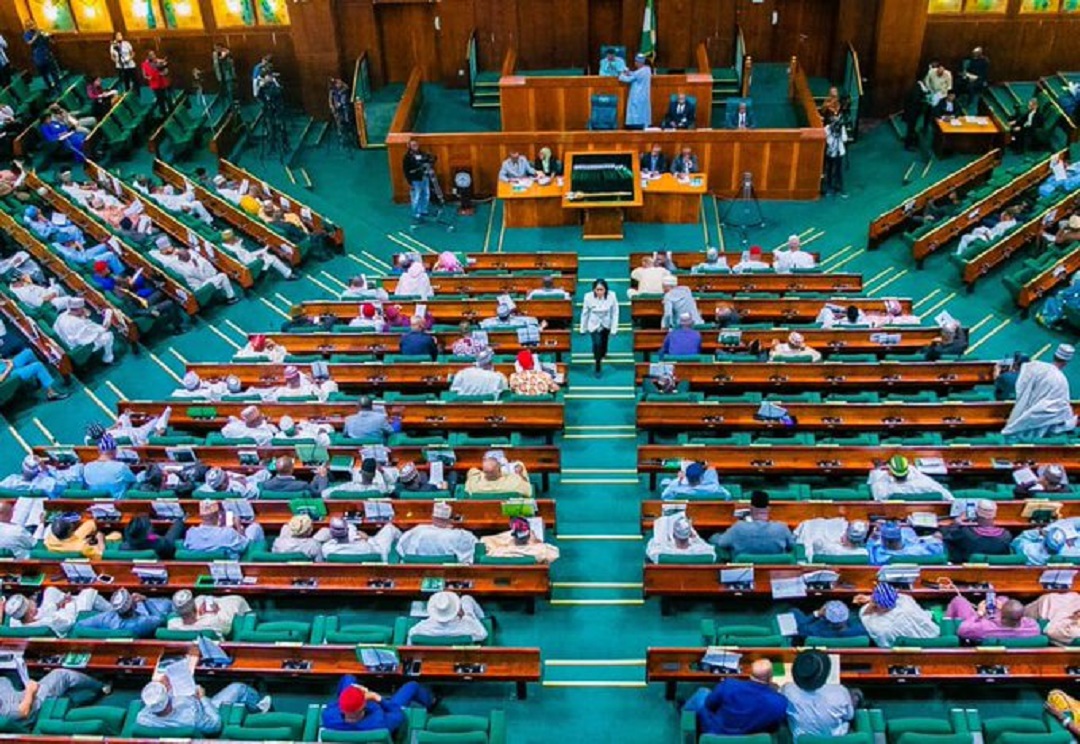
The House of Representatives Committee on Banking Regulations has held a public hearing on two significant financial reform bills that are meant to strengthen Nigeria’s banking sector and improve access to finance for small and medium enterprises (SMEs).
The bills are the Factoring Regulation Bill (HB. 516) which seeks to enable small businesses to access quick and reliable cash by selling their unpaid invoices and the Banks and Other Financial Institutions Act (BOFIA) Amendment Bill (HB. 1168), sponsored by Hon. Moses Oluwatoyin Fayinka, representing Mushin II Federal Constituency of Lagos State.
The latter aims to protect bank customers from fraudulent withdrawals and enforce greater accountability within the banking system.
The public hearing, described as “very productive” by the Chairman of the Committee and Member representing Kaduna North Federal Constituency, Hon. Mohammed Bello El-Rufai, drew wide participation from key financial and business institutions including the Central Bank of Nigeria (CBN), NEXIM Bank, Afreximbank, NACCIMA, NASSI, and several development partners and private sector stakeholders.
Hon. El-Rufai also acknowledged the presence of Mr. Fabian Okoye, Special Adviser on Research, Documentation, and Communication to Governor Uba Sani of Kaduna State, who represented the Governor at the event.
Reflecting on his earlier legislative experience, El-Rufai recalled observing the Factoring Bill during his tenure as Senior Legislative Aide and Chief of Staff to Governor Uba Sani, when the latter chaired the Senate Committee on Banking and Other Financial Institutions in the 9th Senate.
According to him, despite the Central Bank’s progress in managing what he called its “policy trilemma” the exchange rate, inflation, and interest rate Nigeria’s economic realities underscore the urgency of passing the bills.
He noted that inflation as of September 2025 stands at 18.02%, interest rate (MPR) at 27%, unemployment at 4.3%, and poverty at 46% affecting over 139 million people.
A bag of rice now costs ₦70,000. These figures, he said, show why reforms like the Factoring Bill cannot wait.Bello explained that factoring would provide a much-needed financial lifeline for everyday Nigerians.
For traders, artisans, and shop owners, factoring means faster access to cash to restock and stay in business. For small manufacturers and exporters, it improves cash flow to expand production and create jobs.
He emphasized that the BOFIA Amendment Bill complements these efforts by ensuring stronger consumer protection and holding banks accountable for fraud and misconduct.
Across Africa, factoring has been recognized as a powerful tool to unlock working capital and sustain small businesses.
Experts estimate that if properly implemented in Nigeria, it could release over ₦2.7 trillion into the economy, directly boosting communities and livelihoods.
Reaffirming the committee’s commitment to financial reforms that protect consumers and empower SMEs, El-Rufai expressed gratitude to all participants and lauded the support of the Speaker of the House, Rt. Hon. Abbas Tajudeen, GCON, for his leadership.
He concluded that the House Committee on Banking Regulations remains steadfast in its mission to drive reforms that protect consumers, empower SMEs, and grow the economy for everyone.