Religion

MURIC condemns blasphemy killing in Sokoto, other killings in Nigeria

  • News Desk

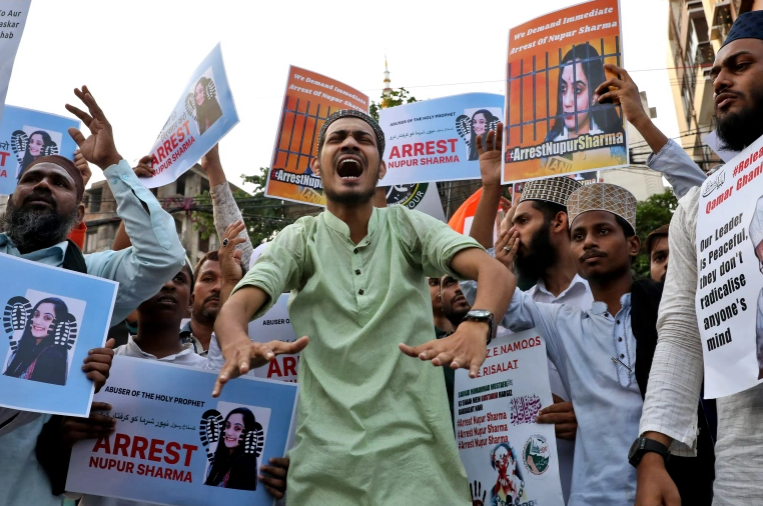
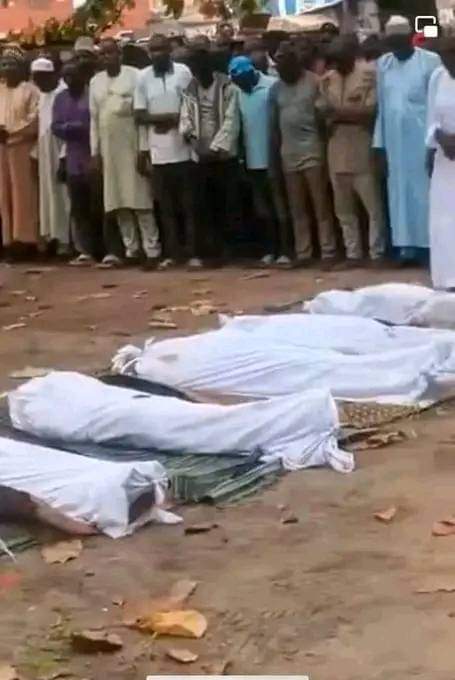
The Muslim Rights Concern (MURIC) has condemned the killing in Sokoto of a student, Deborah Samuel, over an allegation of blasphemy.

In a statement released by its director, Professor Ishaq Akintola, on Friday, 13th May 2022, MURIC described the killing as outrageous, illegal and unlawful.

The full statement reads :

“A female student of the Shehu Shagari College of Education, Sokoto, Deborah Samuel, was on Thursday killed for allegedly blaspheming against the Prophet Muhammad (Peace and blessings of Allah be upon him). The blaspheme statement was reportedly posted on a WhatsApp group. She was asked to withdraw the statement but she allegedly refused to do so. The school’s security unit and police were overwhelmed by the crowd when they tried to rescue her.

“MURIC strongly condemns this killing and all others that have been happening in Nigeria in recent times. Those aggrieved by the student’s post should have reported her to the security agencies or to the Shariah police, the Hizbah. Mob killing is archaic and bohemian. It belongs to the Stone Age. Nobody has the right to take the law into his hands.

“The Glorious Qur’an compares the killing of a single person to the killing of the whole of humanity just as it compares the saving of life to the rescue of all homo sapiens (Qur’an 5:32) In like manner, Prophet Muhammad (SAW) himself condemned all acts of violence and advocated peaceful conduct at all times.

“But this incident should not be condemned in isolation. The recent trend whereby Nigerians now freely shed their brother’s blood should be condemned by all patriots. In this regard, we also strongly denounce the killing of several Northern Muslims in the South East in the past few months.

“We frown at the recent burning last week of a truck fully loaded with cows in the South East as well as the killing of many Muslims of South-East origin by their Igbo brothers in the same South East. We note with keen interest that Muslims in the North did not retaliate when these killings were taking place.

“MURIC calls on the Sokoto Police Command to do everything within its power to get to the bottom of yesterday’s killing of the female student over alleged blasphemy. We appeal to members of the public to remain calm and law-abiding. Nigerians should allow the police to carry out their investigations on the case. The Sokoto Police Command has started well as it already has two suspects in detention for the killing.

“Meanwhile we remind Nigerians to always exercise restraint on matters of religion. Free speech is no longer free if it amounts to religious provocation. Even the European Court has ruled that the utterance of derisive statements against the prophet of any religion is a crime.

“We affirm clearly, categorically and unequivocally that there is a symbiotic relationship between provocation, violence and extremism. While MURIC will not condone extremism and violence, the anatomy of terrorism is becoming clearer day by day. We must all ponder over the causal-effect theory. Violence and terrorism are mere symptoms. The real disease is a provocation. Violence and terrorism are mere smoke. Provocation is the fire and we all know that there is no smoke without fire.

“We, therefore, appeal to Nigerians to desist from insulting, deriding or abusing the prophets of other religions. Muslims should continue to respect Jesus (peace be upon him) whom the Christians hold very dear. In the same vein, Christians should avoid casting aspersion on the person of Prophet Muhammad (SAW). We have experienced enough religious crises in the land.

Intra-religious dialogue: Let’s begin from here

By Sheikh Prof. Muhammad Babangida Muhammad

The growing trend of conflicting religious verdicts being issued these days by the Ulama in Nigeria is alarming. That they differ and argue on issues is not in itself the problem. In fact, they should differ in order to provide the people with a variety of acceptable perspectives of the secondary teachings of Islam. At the same time, there should be no cause for Muslims to differ on the fundamentals of Islam.

The problem lies in how the Ulama express the differences in their understanding and interpretation of texts. Some Ulama resort to launching abusive missiles and questioning the integrity and sincerity of the other scholar who differs from them, which is out of tune with the ethics of differences (adab al khilaf). They create an unnecessary atmosphere of distrust, tension and ill-feeling, accompanied by intolerance, lack of moderation and self-centredness.

The institution of scholarship in Nigeria is gradually being abused by intruders who lack the basic prerequisites of scholarship. Some vacuum seems to exist somewhere as people fail to recognise who genuinely is a Malam and who is ‘ pro-Malan’ – for wealth or worldly-inspired. An era of Ulamisation (crowning the ignorant as Ulama) of the ordinary uninformed people seems to be taking over as religious verdicts are issued by ‘Awaam al nas’, disrespecting the precise position of qualified Ulama.

We are in a state of ‘Kowa Malam’- everyone claiming Islamic knowledge. There are the ‘social media Malams’ and the ‘Market and roadside Malams’. We have the ‘Amulet-vendor Malams’, ‘political-opportunists Malams’ and all sets of quasi-Malams who wriggle in themselves and slug it out with the real Malams in the religious and socio-political space. They corrupt the religious environment, promote confusion and chaos and ultimately cause societal decay. Something needs to be done to stop these people and keep them away altogether.

We all recall that Maitatsine and later Boko Haram emerged out of such a situation and, fuelled with ignorance, developed into a monstrous extremist ideology. The current race by the uninformed to take over the religious garb and platform might be a fallout from the wrong perception of freedom provided by democracy or societal disequilibrium and failure or the incapability of the real Ulama to provide the needed leadership and guidance in response to emerging contemporary issues. In any case, it is an unacceptable trend that must be arrested.

In most Islamic countries, an established Central Committee of Leading Ulama (Hai’at Kibar al Ulama) or a Fatwa Council collectively deliberates on any issue requiring a verdict. Uncertified people who issue fatwa are sanctioned. Within the Fatwa Council, the majority opinion is upheld, while the minority view of any scholar is respectfully appended, but the majority view remains the official position. It is probably high time we considered instituting such a body in Nigeria, which will consist of capable and qualified Ulama who would be saddled with the responsibility of issuing fatwa based on well-informed opinion.

The Fatwa Committee of the National Supreme Council for Islamic Affairs could be expanded to include various religious tendencies within Sunni Islam. Alternatively, a university-based Islamic research Centre may constitute a broad-based non-sectarian Fatwa body (Majma’u al Buhuth wal Fatawy al Ilmiyyah). Only the most qualified (not necessarily certificate holders) would be admitted into the body. This will go a long way in arresting the seemingly uncontrollable trend of ‘Ulamitism’ or false claim to Islamic knowledge.

Only recently, during this blessed month of Ramadan, an unnecessary controversy on Inter-religious Dialogue (IRD) was blown out of proportion. Before you know it, accusations and counter-accusations were flying all around. Some ‘Ulama’ issued fatwa literally declaring those involved in IRD and any form of a committee consisting of people of other religions as apostates. Fatwa without strings or borders. A dangerous trend indeed. Something is definitely wrong somewhere, and we need to trace our steps back to do the right things in order to right the wrongs.

Let’s begin from here. First, establish an Intra- Religious Dialogue Committee, which would promote mutual respect, understanding and tolerance amongst the Ulama and, by extension, a broader atmosphere of peace and unity amongst the Muslims. It should not be an assembly of the argumentative elements who strive in controversies. If we fail to appreciate the value and significance of intra-religious dialogue and positive engagement with one another, Inter-religious dialogue will indeed appear out of order.

In a multi-religious society like Nigeria, engagement with people of other faiths for some common good is essential. Therefore, we should use sound knowledge, wisdom, sincerity and consideration of the general good of the Muslims (al Maslahah al ‘ammah) to determine any engagement of Muslims with other faiths. Ulama who are well-grounded in knowledge should be given a chance to guide how to pursue such engagement.

At the intrafaith level, the example of the Coalition of Ulama in Kano is a commendable initiative. Ulama belonging to various inclinations, came together under a Forum to pursue and tackle shared problems related to insecurity, drug abuse, child theft and trafficking, issues of IDPs and disaster-stricken communities, orphans and related problems. The Coalition established an NGO, NUSAID Humanitarian Initiative, which since 2016 has been extending assistance and community services to the needy members of the community, including the IDPs in Borno. The Kano initiative may serve as a model for Ulama in other states to adopt to promote Muslim unity, peace and mutual assistance.

May this piece not be a source of yet another controversy. Ameen, Ya Allah.

Sheikh Prof. Muhammad Babangida Muhammad is the Director Center for Quranic Studies BUK & National Amir, National Islamic Center (Ummah Movement).

Zakat-ul-Fitr: when, how it should be given

By Uzair Adam Imam

Zakat-ul-Fitr, referred to as Zakkar Fidda Kai in Hausa, as reported in Bukhari and Muslim, is a means of forgiveness to a Muslim for his minor sins during Ramadan, Sheikh Abubakar Ayuba Tangimi said.

Zakat-ul-Fitr, also Zakatur Riqab or Zakatul Abdan, is an obligatory charity for the break of the fast at the end of the month of Ramadan.

Sheikh Tangimi, who explained this to our reporter in an interview, said that woe awaits anyone who deliberately refuses to give this alms.

He said, “Zakat-ul-Fitr is an obligatory alms to any Muslim, man, woman, boy or girl. However, in the case of small kids and slaves, the responsibility of giving the alms is on their parents or masters. 

Zakatul Fitr, when and how to be given 

“Many traditional hadiths, as reported by Abdullahi Bin Umar, Abu Sa’idul Khudri and many of the Prophet’s companions in Bukhari and Muslim, disclosed that the alms is given in the morning before the Eid.

“Some Islamic scholars posited that it could also be given two days before the Eid day. The wisdom behind this is for the poor to have what to eat before going for the Eid prayer, the act that believes to put a smile on the face of the person who lacks.

“Abdullahi Bin Umar said the Prophet (peace be upon him) taught them to give one mud of date, wheat, cikwi, a food made with milk, as their alms. 

The Sheikh also called on the general public to give the alms from the kind of food they consume, adding that “it is entirely wrong to give maize whereas you cook rice.”

Woe betide anyone who deliberately refused to give the arm

Tangimi reiterated that the alms are meant to seek forgiveness for our shortcoming deeds during Ramadan. 

He said, “those people will be punished on the day of judgement for their refusal to give the alms.”

Does Sheikh Dahiru Bauchi contradict the Sultan?

By Malam Hassan Mohammed

You see, I have a lot of issues with Mallam Dahiru Bauchi when it comes to the sighting of the moon for the commencement and ending of Ramadan. The man has been, in the past, a deliberate source of unnecessary controversy and in the process dividing the Muslim Ummah. But we have to be fair to him this time. He did not ask anyone to break his fast, eat today and also observe Eid-el-Fitr. He did not contradict the Sultan or anyone in the position of authority to make the pronouncement of the termination of Ramadan whether locally or internationally.

In fact, listening to the conversation (the audio is almost everywhere) you’ll hear that even after serious pressure from some unscrupulous dudes who were discussing with him, the man was careful to refer to the Sultan. He was clear. He initially said that though it can be accepted that the moon may have been sighted in Doma (Nasarawa) and Abuja if as they claimed there are witnesses. But he could not tell people not to end Ramadan or that they could not if they chose to. Or call them people who knowingly violate injunctions.

However, he (1) specifically asked them if the Sultan is aware or had announced, which took the dubious guys aback because they didn’t expect that push back from him. And (2) when he got tired of their pressure he pushed back by saying just wait till next tomorrow, regardless of the claims that the moon has been sighted in Doma, Abuja and Niger Republic. If you can’t listen to the all 3:42 minutes, you may fast-forward to minute 1:33 where and when he asked if the Sultan has been informed and instructed that he must be informed so he will announce. And also 3:38 where he said he will not lead Eid, so they should wait.

The man simply ceded the right to announce the ending of the fasting to the constituted authority by saying, “If you are in Nigeria, you have no justification for breaking your fast unless you have not heard (the instruction of the Sultan). For that, we will not observe Eid. We are going to wait till next tomorrow. They should wait”.

These guys that were with the revered Sheikh and many others are used to the usual rebellion that they thought the Sheikh will simply agree and announce that the fasting should end and Eid to be observed today. To be fair to him, especially this time around, he didn’t. This is because one of our major problems with respect to moon sighting is that there are people who consider not accepting to commence the Ramadan fasting or ending it with the rest of Ummah/everyone, this is an act of rebellion. It is to them, a continuation of the denominational war. So, irrespective of the religious injunction and obligations, and also irrespective of their own beliefs as at the time of moon sighting, they must reject whatever the authorities say.

That this year’s Ramadan, the commencement and ending of the fasting, is not controversial as it usually is, is a serious letdown for them. If you pay serious mind to the nearly 4 minutes discussion, you’ll hear that Sheikh Bauchi was probing as he was also careful not to reject the idea that those who said they have sighted the moon completely have done so, but to also tell them that while he is not saying they lied, he emphasized that he desperately tried to avoid that, but he will not end his own Ramadan. That’s the wisdom of elders and of the learned, not the exuberance of young people who rebel in unnecessary and unhelpful controversy.

This shows that Sheikh is always at loggerheads with authorities over when to commence the Ramadan fasting because of his philosophical conviction and not because of ideological differences. So, if you end your Ramadan fasting just chest it. Don’t lie against the old man. Don’t use him. Just say that you just feel like it. It’s just about you and you, and nothing else. Try using another excuse for why you endured 29 days of fasting but cannot take just one more day. It is you, and you. Not Sheikh Dahiru!

Hassan Mohammed is a social analyst. He writes from Kaduna, Nigeria.

Moon not sighted: Eid Al Fitr is Monday – Saudi Arabia

By Ahmad Deedat Zakari

Haramain Sharifain reports on Saturday, April 30, that the crescent, which marks the end of the Holy Month of Ramadhan, was not sighted in Saudi Arabia and, consequently, the Eid Al Fitri celebration in the Kingdom of Saudi Arabia is Monday, May 2, 2022.

“The Crescent of Shawwal 1443 was NOT SEEN today. Subsequently, the month of Ramadhan will complete 30 days tomorrow and Monday, 2nd May 2022 will be the day of Eid Al Fitri”. They reported.

The astronomers of the Kingdom have reportedly been on the search for the crescent since the early hours of today before concluding.

The Preface of Nigeria

By Abdullahi D. Hassan

Nigeria is a nation with Hydra lineament. For a long time, its narratives became a phenomenon in scholarship and startle those that are not abreast of Nigeria’s convoluted history, ethnic chauvinism, election rigging, religious intolerance, cankerworm corruption and heartless politicians with megalomaniac habits, driving pleasure in shady governance to submerge their citizens into gross poverty.

The sarcastic ‘Giant of Africa’ falls into a harrowing moment. Nearly all of the architecture of Nigeria is profoundly rotten, and its stench is sprinkled with endemic corruption, lack of patriotism, decay in moral values, transparent nepotism, and killing is crossbones across the regions. From the fanatic massacres, notably by Boko Haram and bandits.

After three decades of military tyrants and juntas, 1999 turned new dawn for Nigeria. The nation shifted from military dictatorship to civilian government. Policymakers, political pundits, and intelligentsia ascertain Nigeria’s prospect is on the trajectory of advancement. Albeit, the ultra development in multifaceted sectors. Within a decade of pseudo-civilian government, the country’s destiny is trapped in quicksand. Due to ingrained corruption by the three arms of government: executive, legislature and judiciary.

Nonetheless, the dominant ethnic groups, Hausa from the North, a Muslim enclave and fraction of Christian, Igbo from the South, a rife of Christian and Yoruba from the West, shared hybridity of Islam and Christianity. Those ethnic cleavages race for Tour de France in tribal wars, hegemonic politics, religious politics and domineering politics according to the dictum of language, faith and region. Amid the wanton rascality done by the “Zombie”, like Fela, the Afrobeat legend branded soldiers.

Thus, the failure of the so-called democratic government unbridled the ‘darkest History of Nigeria’. A typical Hausa accuses Igbo of the putsch and eliminating Northern leaders, Sir Abubakar Tafawa Balewa, Prime Minister and Sir Ahmadu Bello, a remarkable figure to Northerners. In 1966 a bloody coup was orchestrated by Igbo officers. Igbo talk of persecution and pogrom against their race in the North. Among the factors that emanate the unfortunate Nigerian-Biafran war spanned between July 6, 1967, to January 15, 1970.

Furthermore, from the 1999 political dispensation to the current predicament, the country challenges twig onto gloom-ridden forms; politicians turned into confidence tricksters, parliament became the ‘House of Deception’, religious institutions metamorphosed into a commercial enterprise, journalists supplanted into puppets controlled by the connected few and higher learning academic reposition to woman’s assault domain. The former American ambassador, John Campbell, from 2004 to 2007, described politicians in his book Nigeria Dancing On The Brink “the civilian political class behaved as badly and in much the same way as its military predecessor”.

The most populous black nation on earth is about to be a Banana Republic. In the Northern part of the country, hardly a day passes, from sunrise to sunset, without disheartening news breaking in mainstream media. Boko Haram, ISWAP insurgents or bandits kidnap and maim innocent people. The terrorist marauders hold certain villages in the North-West. Similarly, hundreds of public schools are shut down for fear of abduction.

The most recurring questions preoccupying my faculty: Who will lead Nigeria to the Promised Land? When will Nigeria be exempt from being a nepotistic state to an excellent land, with leaders handling the nation based on the principles of democracy? What are the required features to alter the awful chronicles of Nigeria? Why are we divided in a discourse of religious sentiment, ethnic oblique and regional dominance rather than championing the furtherance of Nigeria?

Surreally, Nigeria is the most religious nation on earth! But in reality, it is the most irreligious in the world. The proliferation of mosques and churches crisscross the length and breadth of Nigeria. The anointed citizens were sponsored to Mecca and Jerusalem for pilgrimage from the government treasury. Despite public schools turning into rubble, pupils sat on ruined floors. Pregnant women wallowed in a dearth of medical personnel and drugs to survive early death in rural areas. Another outstanding hypocrisy of the Abrahamic faith’s leadership in Nigeria, the schools were built with the alms of followers. Such schools are barricades for the common man to enrol his children. Their subtle aim was to propagate adulterate gospel and split the masses based on emblems of Christianity and Islam.

As Chinua Achebe says in one of his pieces of literature, The Trouble with Nigeria, “There is nothing basically wrong with the Nigerian land or climate or water or air or anything else. The Nigerian problem is the unwillingness or inability of its leader to the rise to the responsibility, to challenge of personal example which is the hallmark of true leadership”. The book was written 38 years ago. The quote portrayed the decay of systematic dwindling in leadership style patterns. Although there was relative peace in the country at the time, we could travel thousands of miles from Lagos to Borno with confidence. In the absence of the highwaymen and any other obstruction.

Nevertheless, the dethroned Emir of Kano, erstwhile Governor of Nigeria’s Central Bank, Khalifah Mahammed Sanusi II. He mentioned in his impressive Tedx speech entitled Overcoming The Fear of Vested Interest, “the world’s largest producers of crude oil that do not refine its own petroleum products”. In addition, the reverend Economist, Ngozi Okonjo-Iweala, former minister of Finance and Director General of World Trade Organization. As stated in her book Fighting Corruption is Dangerous. She recounts how billions of dollars were siphoned in a fraud called oil subsidy intervention. Mrs Iweala’s doggedness toward deceitful oil cartels and markets led to the kidnapping of her aged mother. Those two paradigm exegeses gave a sinister view of modern-day Nigeria from the spectrum of the clandestine elite.

The absurdities mentioned above triggered the Igbo to quest for a breakaway from Nigeria and rekindle the Republic of Biafra under the tutelage of Nnamdi Kanu, the ringleader of the proscribed Indigenous Peoples of Biafra (IPOB). The Yoruba seek Oduduwa nation, as some Northerners dream of an Islamic state to govern their affairs based on Shari’a. Those juxtapositions defined the nationhood of Nigeria as a conduit of dissolution.

Why the Almajiri debate will never end

By Shafi’i Sheikh Jr.

Reading through posts, articles, and comments, I think I now know why our debates on almajiri/bara will never end in Northern Nigeria. And as long as it remains a debate, it will continue to ravage every fabric of our society. 

Despite being the very foundation of today’s society, a debate is no longer a discourse among people with contrasting arguments using facts, logic, and evidence to exchange views and/or ideas. 

I have realised that once a debate revolves around  Almajiri and begging, people of certain sects see it as an opportunity to bash another sect. In defence, the others also find a way to come back. In doing so, the purpose of debate suffers the consequences, and debating parties end up being more determined and confused than they were before it began.

Until debating parties start arming themselves with facts, figures, logic, and most importantly, open minds to accept or exchange ideas, the problem will always win. Parties will always return confused, and the solution to the menace of “Bara” will never be found. 

At this juncture, I will like to point out that there is a fine distinction between Almajiri, which has its roots in the Arabic word “Al-Muhajirun” and loosely translates to “Migrators”, and “Bara”, which means begging for alms from people (often done as a means of sustenance). And until our people can differentiate between the two, ours will be a confused and misguided society. 

Perhaps, further clarification will disabuse the minds of debaters on the wrong usage of the two concepts. 

The former is a term that was first used in Islamic history to refer to those who migrated with the Prophet (S.A.W) from Makkah to Medina (Ogunkan and David Victor, 2011). The term was later ‘Hausanized’ to Almajirai, which today refers to seekers of knowledge who migrate from their comfort zones to concentrate only on acquiring Islamic knowledge. 

Now, some greedy Mallams (Islamic teachers) laid a fertile ground for this misconception to thrive by taking away small children who can not shoulder the bulk of their responsibilities to major towns and cities to acquire Islamic knowledge. And because neither the mallams nor the children can shoulder their responsibilities, especially in cities where life itself is expensive, the children engage in begging and other menial jobs, the proceeds of which the mallams extort from them hence, ditching the primary reason they left home. 

This gave birth to “Bara” (begging), which many non-Muslims and even some Muslims alike erroneously ascribe to Islam. To people with such minds, they believe Islam is associated with begging and encourages its practice by declaring almsgiving (Zakat) to be so weighty that it is a pillar of the religion. Also, it is believed that the five pillars of Islam are dependent on each other. Therefore, neglecting the pillar of Zakat (almsgiving) will render the others fall and ruin a person’s faith. 

This they justify by quoting, among other things, chapter 76, verse 9 of the Holy Qur’an, which says:

“And who give food – however great be their own want of it – unto the needy; and the orphan, and the captive (saying in their hearts) “We feed you for the sake of God alone: we desire no recompense from you, nor thanks.”

Yes, Islam encourages the giving of alms. There is no doubt about that. However, it also frowns on taking begging (Bara) to be a means of livelihood. Qabisah ibn Mukhariq reported: I was under debt, so I came to the Messenger of Allah, peace, and blessings be upon him, and I asked him about it. The Prophet said, 

“Wait until we receive charity, then we will order it to be given to you.” Then the Prophet said, “O Qabisah, begging is not lawful except for one of three cases: a man who is in heavy debt, so asking others is permissible for him until he pays it, after which he must stop; a man whose property is destroyed by a calamity, so asking is permissible for him until he can support himself; and a man who is afflicted by poverty attested to by three astute members of his people, so asking is permissible for him until he can support himself. O Qabisah, besides these three, begging is forbidden, and the beggar consumes what is forbidden.” (Sahih Muslim 1044)

Hakim Ibn Hizam, a poor companion of the Prophet, also went to beg the Prophet three times. The Prophet on each occasion granted his request, but on a subsequent occasion, the Prophet discouraged him from begging, telling him that “the upper hand is better than the lower hand”. The Prophet admonished his followers, saying:

“I swear by Allah that it is better for one of you to take his rope and gather firewood on his back than to come to a man and beg him whether he gives or refuses to give.”

To sum it all up, one may be right to opine that “Almajiranci” in its truest form is a system of Islamic education that should be practised and encouraged while “Bara is not only unIslamic but also a menace that should be eradicated.

The above suggests that no relationship exists between Islam and begging. Therefore, the menace can only be attributed to socio-cultural and socio-economic realities in the region and, to a larger extent, the country. Consequently, it is now left to Islamic scholars, religious leaders, and stakeholders to embark on an enlightenment campaign to raise awareness and educate the general populace on the difference between the two practices. 

May Allah guide us, amin.

Shafi’i Sheikh Jr. writes from Jos and can reach via talk2sheikh.esq@gmail.com.

Nigerian Ulama Forum calls for justice as Muslims see wave of attacks, hate speech in India

By Uzair Adam Imam

A Nigerian based Islamic organisation, Ulama Forum, has called on the Prime Minister Narendra Modi of India to rescind his Neo-Nazi ideology and embrace democracy as envisioned by India’s founding fathers.

The forum urged Modi and other stakeholders in the country to take concrete action to mitigate violence against Muslims to promote peaceful coexistence.

This was contained in a release jointly signed and issued Tuesday by the forum secretary, Engineer Basheer Adamu Aliyu, and its convener, Aminu Inuwa Muhammad.

The Daily Reality gathered that Muslims in several Indian states had been terrorised as mobs came out in processions, making hate speeches and attacking their properties during the Hindu festival of Ram Navmi.

The escalation of violence against the minority communities, particularly Muslims, has recently seen a steep increment, making it hard for the Ulama Forum to believe India is a democratic secular country.

The statement also called on the Indian Muslims to hold on to their faith and avail the rest of the Indian population of the benefits of Islamic justice.

The statement reads: “They should hold on to their faith and avail the rest of the Indian population with the benefits of Islamic justice, which restrains Muslims from overreacting against all provocations.”

“Indian Muslims should use every constitutional window available to them to seek redress on the excesses committed against them by Hindu extremists.”

“Indian press, especially those who believe in democracy and universal human values and who are immune to sectarian tendencies, should continue with the good works of fair and truthful reportage, which will promote justice and fairness to all,” the statement added.

Muslims at knifepoint in India

The statement also lamented that India has been witnessing sporadic violence targeted at its large number of Muslims promoted by the Neo-Nazi BJP Government for the past decade.

It stated that “The most recent of which is during a Hindu religious ceremony which was marked by thousands of youth marching into Muslim dominated areas, brandishing guns and swords, using public address system to prevent Muslims from concentrating in worship inside their mosques.”

“Whenever Muslims react in any way, a combined disproportionate force is used on them with Hindu citizens using guns and the India Police arresting mostly Muslims who are the victims of the violence.”

You cannot eliminate Islam

The statement taunted that it is unwise for any Indian to think of eliminating Muslims in the country, let alone Islam.

India has over 200 million Muslims, ranking the country as having the second-largest number of Muslims globally.

“It is, therefore, perplexing how anyone can think of eliminating such,” the statement concluded.

Too many people at Umrah this year: why?

By Ibrahim El-Caleel

I can’t understand this obsession with the population at Umrah this year. Some people are taking it too far. Asking why should people be going for Umrah when poverty is biting harder.

The Haramain have been under restricted access since the global Covid-19 blues in 2020. Extremely few people accessed the Haramain throughout the year 2020; just a little above that accessed it in 2021.

In 2022, the Haramain have resumed operations in full swing. The world has moved on Covid, becoming more attentive to Putin’s war.

If the Haramain has remained under restricted access for two consecutive years, commonsense should tell you that a lot of people will troop in immediately everything is back to normal. You have a ‘merger’ sort of attendees from three years – 2020, 2021 and 2022. Also, it is something of joy and divine praises that finally, we can visit the sacred sites to their fullest capacities.

This is only a fair idea on why it is this full. It could have even been fuller than this had it been its affordable.

You come across writings that “recommend” or “advise” Umrah attendees on a ‘better use’ of their money, towards feeding than lesser pilgrimage. We do so with all dictatorial might as if going to the Ramadan Umrah is a misplacement of priority. Social media has helped show how some of us can be more dictatorial than Hitler himself.

Why do we feel this sense of always telling rich people what to do with their money, especially in religious matters? The entitlement is beyond me.

Umrah is not a mere tourism. It is an act of worship. Umrah in Ramadan is even a more serious act of worship, lucratively rewarding with the sincere intentions.

In a hadith, Prophet Muhammad (Peace Be Upon Him) said, “an Umrah made in Ramadan is equivalent (in reward) with performing Hajj with me (the Prophet)”. This hadith is authentic, and has been transmitted by both Imamul Bukhari and Imām Muslim. At least.

This is why apart from Dhul Hijjah, Ramadan is the next month you see Muslims traveling to the Haramain Al-Shareefain. It is with purpose. They have the money to go after a specific huge reward, that’s why. In most cases those of us who don’t have money don’t even pay attention to ahādith like these. I remember the late Shaikh Albaniy Zaria in his Saheehul Bukhari lessons in Kitabuz Zakah. The Shaikh saw a lot of people sleepy, dozing off. So he said, one of the reasons why some people sleep off during Zakah lessons is because they don’t even have the wealth which qualifies for Zakah. They are not rich. This is why they find it hard to pay attention to understand the topic. Rahimahullah.

Therefore, Umrah and Umrah in Ramadan are not tourisms please. Rich people have their reasons for embarking on them. Good, valid reasons. Do not be talking as if they are misplacing priorities. Saying they should use the wealth to feed the poor, instead of doing Umrah. Do you know whether they are already doing so? Or since when did you become the divine regulatory directorate where people must come and confess their acts of deeds so that you are aware?

I think it is important we get down from this moral horse. You have an iPhone, a Redmi Note, an expensive Versace shoe, a Toyota Corolla. You buy 10gb mobile data monthly. Have you ever considered down-tiering from these things to cheaper things so as to use the differentials to feed the poor? Why don’t you sell off your Toyota and buy a Lifan motorbike, and use the balance to feed the needy in this Ramadan? After all, all you need is a transporting automobile. It doesn’t have to be a car, talk less of being a Toyota!

If you haven’t been doing this, do not get obsessed with ‘advising’ people on how to rank their Nawafil acts of deeds based on your perceived scale and degree of importance. It ain’t your place. It ain’t my place either.

Islamiyya System: A perfect replacement for the archaic Almajiri system

By Muhammad Dattijo Kabir

Islamiyya system has been proven to be an alternative to the Almajiri system. In the Islamiyya system, it is easier to commit the Qur’an to memory within the shortest period with decency. And it also allows the children to seek other knowledge that will aid them in confronting the present challenges. Almajiri system can only be insisted to be reformed when it is proven that that is the only way to learn the Qur’an. The system poses a lot of danger to the children, such as health challenges, inferiority and, of course, most of them become morally debased in the end.

Reforming this system alternatively means rewarding irresponsible parents for their irresponsibility, creating unsustainable programs which cannot see the light of the day. Instead, the government should ban and criminalise the system and absorb all the already enrolled Almajiri into formal schools. Then any other parent that wants his child to learn the Qur’an by traditional means must first provide shelter, food, and health facilities for the welfare of the child and must ensure that the child goes to school to at least get primary education.

No one is saying karatun allo should be banned. Karatun allo differs in content and operation from the Almajiri system. While the former entails learning Qur’an by the traditional design by all and sundry, the latter entails recruiting young persons to learn Qur’an by traditional means without provision for food, shelter and medical facility for children recruited. The said recruited army of children relies only on begging leftover food and tattered clothes for subsistence.

It requires no second thought to believe that this system of taking young children away from their parents at the ages they need their parents the most should be stopped and criminalised. No child under the age of 12 should be taken away from his parents’ house in whatever guise. There is nothing good in the Almajiri system as practised today. The system has served and outlived its usefulness. It became archaic and, to some extent, barbaric considering the conditions of the children involved in the system.

There are more decent systems which are alternatives to the already abused system. The system indirectly supports irresponsible parents to breed bundles of children they know they cannot cater for. The parents use the system to abdicate their parental responsibility of feeding, clothing, educating and sheltering their children.

Also, the half-baked Malllams use the system as a means of income. The activists are using it to get themselves employment from international NGOs. The nagging question is, can Qur’an be learned through a more decent system than this child molesting system? The answer is yes. Thousands of children have committed the entire Qur’an to memory through the modern Islamiyya system.

Let’s move on; the system is not viable in the present era. The era of dogma has passed. Let every child be supported by his father and take Quranic education before his parents while attending school. Any system that encourages parents to take their children to the street is barbaric and should not be encouraged.

Muhammad Dattijo Kabir. Muhammad is a lawyer, a human rights activist and a public affairs commentator. He lives in Kaduna and can be reached via jibrilmuhammad27@gmail.com.