Politics

You can add some category description here.

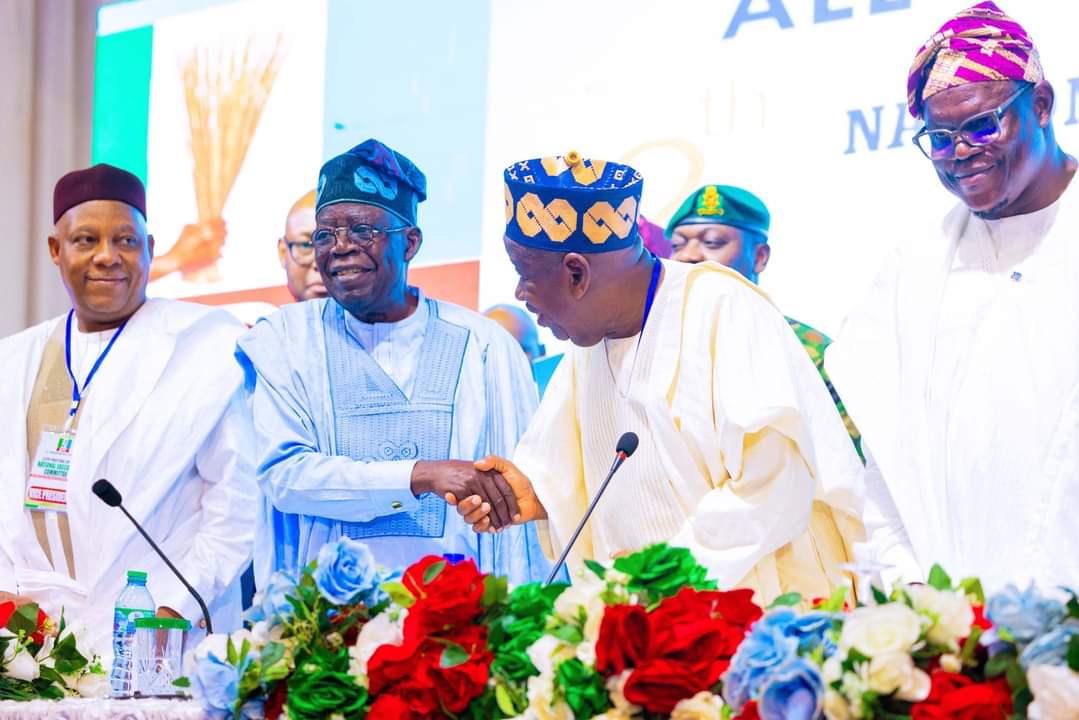
Badaru: APC’s silent achiever

By Ghali Tade

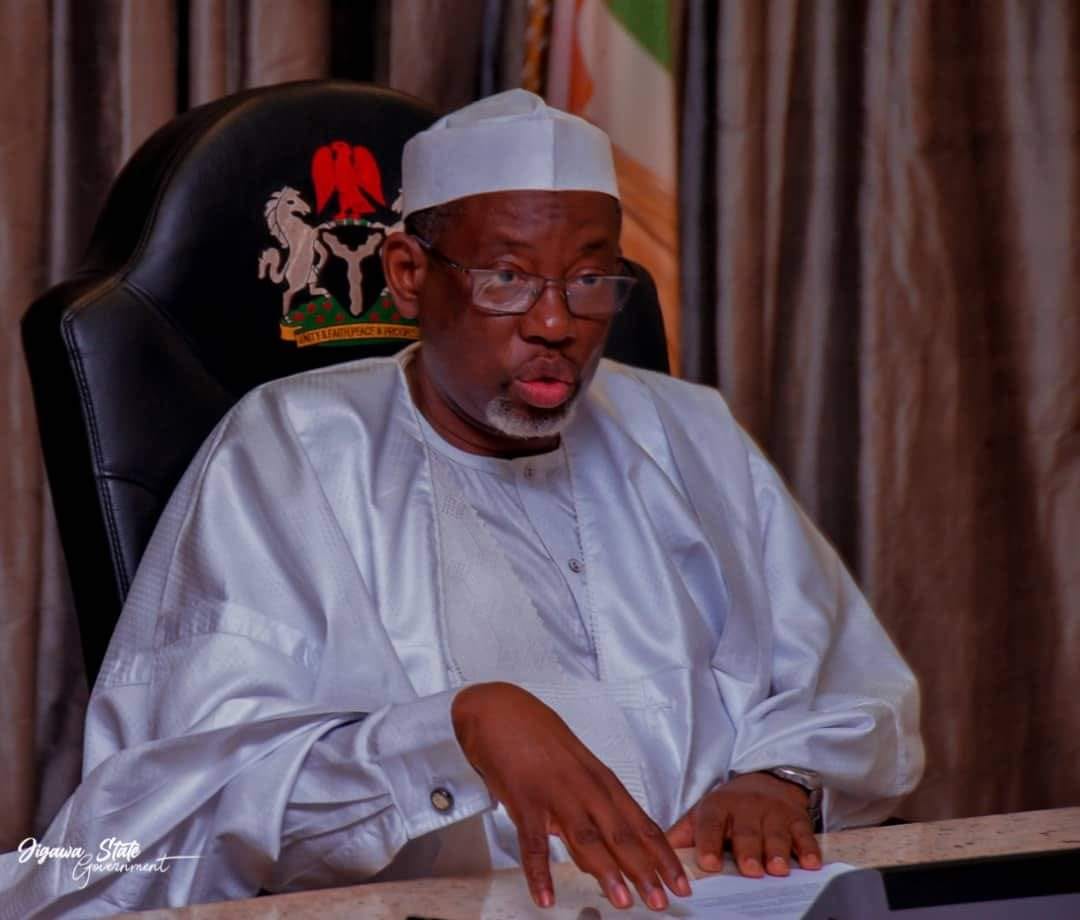
The Former Governor of Jigawa state, Mallam Muhammad Badaru Abubakar, is a distinguished politician in Nigeria’s political space. He is an accountant who applies the knowledge and training of his field of study to politics, which earned him respect that could not be bought. Mallam Badaru, Mai Nasara, as he was addressed by our fathers or Baba Mai Calculator as he is called in Jigawa state, is a personality who understands the need to be God-fearing, honest, transparent, accountable, focused, determined, dedicated, and committed.

How he managed to be what he is today may be surprising to those who do not know him, but we see it as a reflection of the Hausa sayings, “Kyan ɗa ya gaji mahaifinsa & barewa ba ta gudu ɗanta ya yi rarrafe“. I loosely mean he inherited most if not all of his qualities from his parent, a renowned Islamic scholar in his time. These backgrounds have made him see himself as a public servant, not a ruler. A governor who led Jigawa state to a new world with a heart full of passion, compassion, and patriotism.

When I learned that Mai Calculator was leaving office as our governor this year, I worried about who would be like or better than him. Luckily enough, Baba Badaru has handed over power to another copy of Badaru with a workaholic Deputy Governor, Engineer Aminu Usman Gumel.

The present governor of Jigawa state, Mallam Umar Namadi, who served as finance commissioner and deputy governor to Baba Badaru’s administration, is an engine that played a vital role in ensuring that their campaign promises were fulfilled and Badaru succeeded in all sectors. Both Mallam Badaru and Mallam Namadi shared certain things in common. Apart from being the sons of renowned Islamic scholars in the state, they are chartered accountants who performed excellently. They are problem solvers and people concerned about the populace and the best way to sustain the reputation of their families.

Mallam Namadi’s loyalty and zeal to stand firm on justice, fairness, and truthfulness earned him respect and made him the choice of Mallam Badaru and the good people of Jigawa state. The bond between the two state leaders is unbreakable, considering the cement of truth used in building it. I think this is why Mai Calculator’s men are in the new administration serving as commissioners and other roles.

The political twin brothers achieved more than expected of them when they were governor and deputy of Jigawa state. I could vividly recall that in the speech he delivered at a farewell reception in his honour held at Banquet Hall Government House Dutse on Sunday, the 28 May 2023, His Excellency, the Former Governor, Muhammad Badaru Abubakar listed numerous achievements of theirs in different sectors.

Despite inheriting Jigawa State with contractual liabilities of 114 billion naira and all the economic hardships while in power, Mai Calculator left the state with only 711 million naira in debt to pay. Unlike other governors who abandoned the projects of their predecessors, Baba Badaru distinguished himself by completing all inherited projects and focusing on transparency and accountability programmes to ensure the safety of investments.

Recall that ICAN had awarded Jigawa State as the best in Nigeria in Public resources accountability in 2021 and 2022 and the same in Budget transparency. In health, 18 more general hospitals were built to address the needs of the citizens in healthcare services. When he came on board, there were only 12, but he amplified them to 30. Also, three specialist hospitals and one orthopaedic hospital were established. Still on health, the people’s governor provided one comprehensive Health centre in every electoral ward of the state.

The number of hospitals on 24 hrs services increased, addressing the infant mortality rate.

In infrastructure, all the ongoing 700 kilometres of rural roads inherited were completed. Five thousand two hundred seventy-eight hand pumps have been repaired in water resources, 7792 solar water schemes were constructed, and 3500 PHC latrines were built, making Jigawa  State open defecation free. These efforts earned Jigawa number four in safe drinking water in Nigeria and number one in the entire Northern region.

On the other hand, Baba Mai Calculator’s administration witnessed massive federal government projects in the state. Beginning with the power sector, first time in 20 years, the Gagarawa power station project was completed and commissioned under the administration of Former President Muhammadu Buhari. Buhari also awarded four substations in Gwaram, Kazaure, Babura, and Birnin Kudu.

It could be recalled that 164,000 families enjoyed #5,000 monthly stipends from the federal government. This is in addition to feeding a million pupils, which created jobs for 9,200 vendors. My state benefited from Trader Monie, GEEP, Npower, Anchor Borrowers, and other human capital development projects.

On FG’s road projects, the Dutse to Kano, Kano – Danbatta – Kazaure – Gwiwa – Daura – Katsina to Niger Republic roads are practical and visible development. Another road that I will never forget is Kwanar Dimawa- Kanya Babba- Ɓaɓura-Baban mutum road.

I vividly remember Former President Muhammadu Buhari was in Jigawa in 2018 to flag off Hadejia Valley Irrigation Scheme. Joyfully, he returned to the state to commission the same project after completing its rehabilitation and expansion. The project, an irrigational land of 5,700 hectares, currently provides jobs, food, and economic diversification.

Let me openly state that these are just a few blessings Jigawa state got from Baba Mai Calculator and Baba Buhari’s administrations.

What are Badaru’s contributions to APC and the emergence of President Tinubu?

Alhaji Muhammad Badaru Abubakar was the first governor to win from an opposition despite the PDP having control of Jigawa and Nigeria in 2015. His emergence as Jigawa’s governor laid a solid foundation for APC, attracting thousands of loyalists of other parties to APC.

As an APC Leader in governors’ primaries and general elections in some states like  Ondo, Ekiti, Imo, and Bayelsa, Baba Badaru performed wonderfully well. This has made APC stronger in these states; many votes were pulled from them in the last three elections.

Under his watch as Northern Nigeria’s coordinator for Tinubu’s campaign organisation, higher votes were got from his zone -North West with over two million and six hundred thousand in presidential elections. The dedication and determination of Mai Calculator and other APC stalwarts gave President Tinubu more votes from the north-west than the south-west.

Baba Badaru has dedicated his time, energy, and resources to fighting all the propaganda by negative minds on President Bola Ahmed Tinubu. As someone who comes from the same discipline as the President, Badaru is well-informed about the leadership qualities of Jagaban. These qualities were unknown by some people in the North. Hence enemies tried to paint him black but to no avail.

There was a time when the Former Jigawa State Governor, Muhammad Badaru Abubakar, refuted insinuations that the APC Presidential candidate, Ahmad Bola Tinubu, would be a Southern President if he won the election. He assured the presidential candidate’s antecedents indicate he is not a betrayer.

Abubakar, who spoke in Kano during an APC Presidential Candidate meeting with the Muslim Ullamas from Northwestern Nigeria, said all Bola antecedents vindicate him as a non-ethnic and religious bigot”. He even added that everything Bola Tinubu has done in his presidential aspiration, he has done it with the full participation of Badaru, Ganduje, and Nuhu Ribadu, people who are known for their nationalistic outlook.

He stressed that every stakeholder in the Nigerian project chose Bola Tinubu. Talking about his mental health and his fitness, our recent visits to Mecca on Ummara, where Tinubu walked miles without joining a car and his performance of Rituals of Tawaf and Saai shows that he is not only healthy but mentally alert on issues”, Mai Calculator explained.

In summary, Mallam Muhammad Badaru Abubakar is a blessing to Jigawa state, APC, and Nigeria at large. Jigawa is lucky to have an accountant as a President of the Federal Republic of Nigeria, an accountant as a Governor, and an accountant hoping to be a minister representing the state at the Federal Executive Council. 

Badaru is indeed an APC’s Silent Achiever!

Ghali Tade writes from Ɓaɓura, Jigawa state. He can be reached via tadebusinessr@gmail.com.

Hon. Ismail Dabo swears in 76 aides

By Ukasha Rabiu Magama

To ensure inclusive administration, the member representing the Toro federal constituency of Bauchi State, Hon. Ismail Haruna Dabo, has sworn in 76 aides across the 17 local government wards.

Delivering their oath at the Musa Salma Event Centre Magama, the lawmaker tasked the appointees to work harmoniously with him to move Toro to a greater height.

Admonishing the appointees, Hon. Dabo challenges them to take their duty with a sense of seriousness, adding that they shouldn’t hesitate to inform the problem facing the grassroots populace as his door will always be open for that. He further stated that his core agenda is to transform the lives of Toro citizens. 

“In line with my core agenda of transforming Toro, I want all of us to work harmoniously and closely with one another without hesitation to move Toro to greater heights by feeding me with the necessary information that can add value to the grassroots populace”, said Hon. Ismail Haruna Dabo.

Out of the 76 aides sworn in by the lawmaker, who are mainly youths, include nine legislative aids, six Personal Assistants, 25 Project Monitoring Assistants, ten media aids and 25 Special Assistants. 

Similarly, the event marks the closing ceremony of the first phase of the Haske Care Fertiliser, which was distributed to over 3000 farmers across the local government. The gesture was done to cushion the hardship experienced by the farmers amidst the fuel subsidy and the soaring cost of living.

In their separate remarks, the new appointees promise to work tirelessly and to the best of their ability by positively contributing to formulating policies that would improve the quality of life and standard of living of Toro citizens and Nigeria.

Official: President Tinubu releases ministerial list

By Abdurrahman Muhammad

President Tinubu has submitted a list of 28 individuals to the Senate for screening and confirmation as ministerial nominees. These are:

ABUBAKAR MOMOH

YUSUF MAITAMA

Umar Dangiwa

Hannatu MUSAWA

UCHE NNAJI

BETA EDU

DORIS ANIETE UZOAKA

DAVID UMAHI

EZENWO WIKE

MOHAMMED BADARU ABUBAKAR

NASIL EL RUFAI

EKPERIKPE EKPO

NKIRU ONYEJEOCHA

OLUBUNMI TUNJI OJO

STELLA OKOTETE UJU

KENNEDY OHANEYE

BELLO MOHAMMED GORONYO

DELE ALAKE

LATEEF FAGBEMI

MOHAMMED IDRIS

OLAWALE EDUN

WAHEED ADEBAYO ADELABU

IMAAN SULEIMAN IBRAHIM

PROF ALI PATE

JOSEPH OTSEN

SEN. ABUBAKAR KYARI

SEN JOHN ENO

SEN SANI ABUBAKAR

The list was submitted Thursday afternoon by Femi GBajabiamila, the Chief of Staff, to President Bola Tinubu.

Tinubu nominates Kwankwaso, Elrufa’i and others as ministers

By Ahmad Deedat Zakari

Nigerian President, Bola Ahmad Tinubu, has reportedly disclosed the names of nominees for the Federal Executive Council, FEC.

In a report credited to Senate Leader Opeyemi Bamidele, the list of Tinubu’s ministers would be ready by Thursday, and it includes notable former governors and other distinguished Nigerians.

According to the report, immediate-past governors of Rivers, Kaduna, Osun, and Cross River States have been shortlisted as ministerial nominees. The nominees include Nyesom Wike, Nasir El-Rufai, Gboyega Oyetola, Ben Ayade, and Senator Rabi’u Musa Kwankwaso from Kano, who is also the NNPP national leader.

Also in addition to the list of nominees to be presented on the floor of the Senate this Thursday morning are prominent individuals such as President Tinubu’s top aide, Dele Alake; Lateef Fagbemi, SAN; APC national woman leader, Dr Betty Edu; former Lagos State Commissioner for Budget Planning, Wale Edun; ex-Minister of State for Health, Prof. Ali Pate, and former Deputy Governor of CBN, Adebayo Adelabu from Oyo State.

Tinubu warns Niger soldiers over alleged coup

By Uzair Adam Imam

There is growing tension in Niger Republic as soldiers reportedly detain the Nigerien President, Mohamed Bazoum, and deny access to his palace on Wednesday.

President Bola Ahmed Tinubu, who is the of Economic Community of West African States (ECOWAS) Chairman, warned the soldiers that ECOWAS would not tolerate a coup.

Tinubu disclosed this in a statement on Wednesday, saying that ECOWAS would not tolerate actions that incapacitate democratically-elected government in the sub-region.

The statement read: “I wish to say that we are closely monitoring the situation and developments in Niger and we will do everything within our powers to ensure democracy is firmly planted, nurtured, well rooted and thrives in our region.

“I am in close consultation with other leaders in our region, and we shall protect our hard-earned democracy in line with the universally acceptable principle of constitutionalism.

“As the Chairperson of ECOWAS Authority of Heads of State and Government, I state without equivocation that Nigeria stands firmly with the elected government in Niger and equally conveys the absolute resolve of leaders in our sub-region that we shall not waiver or flinch on our stand to defend and preserve constitutional order.”

Tension as Saudi, Iran summon Swedish diplomats over Qur’an protests

By Uzair Adam Imam

Saudi Arabia, often described as the Middle East powerhouse, and Iran have summoned Swedish diplomats to denounce the Stockholm’s permission for protests that meant to desecrate Qur’an, the Muslims holy book, on free speech grounds.

The calls by the two majority-Muslim countries, which came separately, were in statements made available late Thursday.

This is coming amid heightened tensions between Sweden and Iraq over a Sweden-based Iraqi refugee, who last month burnt pages of Qur’an outside Stockholm’s main mosque.

The Daily Reality learned that, in the latest such incident on Thursday, the refugee, Salwan Momika, stepped on the Qur’an but did not burn it.

Monika’s action was considered to be the reason that triggered the renewed condemnations and calls for protest across the Muslim world.

According to a foreign ministry statement, Saudi Arabia, it would hand the Swedish charge d’affaires “a protest note that includes the kingdom’s request to the Swedish authorities to take all immediate and necessary measures to stop these disgraceful acts”

Nasser Kanani, the Iranian Foreign Ministry Spokesman, said Sweden’s ambassador to Tehran had been called in to censure the permit granted to Momika’s protest and to warn Stockholm of the consequences of such actions.

“We strongly condemn the repeated desecration of the holy Koran and Islamic sanctities in Sweden and hold the Swedish government fully responsible for the consequences of inciting the feelings of Muslims around the world,” Kanani said.

APC’s ineptitude, Nigerians’ suffering: Who is to blame?

By Salisu Uba Kofar Wambai

Atiku Abubakar made campaign promises about tackling border closure which seriously ushered hardships, especially in the North. He equally rolled out plans to liberate Nigeria from the shackles of foreign loans President Muhammadu Buhari immersed it into.

PDP is the party that has formidable and unnerving politicians who fought tooth and nail for democracy to thrive in this country. The party people know the long walk to freedom they walked, and their 16-year dispensation spoke for them. 

PDP mastered campaigns for the creditors to give us waivers, which prevented the country from such loan spells. They ensured Nigeria hadn’t been submitted to total external control like we see today with APC’s inexperienced and heartless dispensation.

PDP has think tanks that guide their foreign relations which made sure we did not accept in toto any development strategy which could undermine the welfare of citizens in the long run. Thanks to their inclusion of technocrats both from home and outside in their socioeconomic and political decision makings 

Atiku was an integral part of all these goodies mentioned; that’s why we suggested northern voters vote for him during the 2023 presidential campaigns. As a northerner who willingly gave power to the South from 1999 to 2015, I thought it was economically stagnant due to the selfish allocation of federal government projects under OBJ and GEJ. The North had expected Buhari to compensate the region for even development of the country.

However, Buhari seemed to have failed and was ignorant of why power was being rotated at the centre. He favoured the South in many aspects of development project allocations like railways, good roads, bridges and electricity. 

Most of the projects Northerners have been clamouring for, like Mumbila Power Plants, Baro Port, Ajakuota Steel Company, KKK gas pipeline projects, and roads linking states of the region, have not seen the lights of the day. And how could North continue to support power-sharing and shift these injustices, shabbiness and iniquity?

The southern PDP governors under Nyesom Wike led a mischievous campaign against their party candidate PDP to work for the southern presidency. They were not a bunch of idiots like some undesirable elements of the northern politicians who selfishly sold out the region for their egocentric notions.

Now that Nigerians are paying the price of what they had bought by bringing APC to power again, we must remind our people how to become politically smart next election season. And many folks from this part of the country cannot still see things as they are. Sad.

Salisu Uba Kofar Wambai writes from Kano State and can be reached via salisunews@gmail.com.

₦8000 palliative: who sold this wretched idea to President Tinubu?

By Aliyu Nuhu

Can ₦8000 given over a period of 4 months solve poverty or alleviate the sufferings of people imposed by withdrawal of petrol subsidy?

If 12million people are getting the money, what of the remaining 168 million poor Nigerians? What will be the selection criteria. Sometimes you wonder at the quality of the thinking of our leaders.

Who sold this idea to president Tinubu?

To solve poverty you have to create business opportunities and provide loans. That was how China created wealth among its people. Loans were given with defaults in mind on self recognition only. No penalty for delinquency or business failure. Definitely some businesses will fail but many will succeed. China gave tax holidays to business startups and subsidized electricity and wages.

Brazil reduced poverty by reduction of inequality through equitable wealth redistribution programs. It did not only focus on economic growth, but accompanied this growth with active social policies for redistribution. The end results, economic growth led to better living standards for much of the population, through better wages and social transfers. Brazil gave family scholarship, business loans and huge minimum wages.

Egypt has long had a cash transfer/social assistance programme (maash al-daman al-igtimai), a program of the Ministry of Social Solidarity that reaches approximately 1.5 million households unable to work and uncovered by any other social insurance scheme. This mainly includes widows raising children, the elderly and the disabled.

In addition, two new cash transfer programs were launched in 2015. Karama (dignity) which provides an individual monthly allowance of LE320 for the elderly and those with severe disabilities. Takaful (solidarity), a conditional cash transfer program disbursed quarterly, which offers poor families with children who are younger than 18 a monthly allowance of LE325 and additional sums of LE60, LE80 and LE100 per child in primary, secondary or high school respectively, on condition of regular attendance. These programs, launched in early 2015 in some of the poorest villages in Upper Egypt, now reach almost 160,000 beneficiaries, with plans for geographic and quantitative expansion. Unlike Nigeria, the monies were not diverted and it surely reached the intended targets because of government sincerity of purpose.

It is not just about announcing unimplementable programs with no results in sight. Government must think deep and look at what other countries are doing. We cannot reduce poverty while at the same time imposing 7.5% tax on petrol and increasing price of electricity. We cannot end hunger, the bigger factor in poverty while banning importation of food that we don’t produce enough or closing borders. We cannot address inflation when we unleash extortion gangs on the highways collecting bribes from trucks that distribute goods to our cities.

It is as if Tinubu did not understand Nigeria and did not prefer or intend to govern it.

Reasons why Dr. Ali Pate should be a Minister

By Isma’il Ahmad Misau

The APC-led administration of President Asiwaju Bola Ahmad has a plan of action (prioritized set of goals/agendum) that it determines to accomplish. It was in broad daylight that the President has blended and marketed his manifestos for the election under the banner of ‘Renewed Hope.’ During his campaign, President Tinubu outlined his strategies for building the finer Nigeria of our aspirations in an effort to win over the Nigerian voters. Yes, Nigerians voted for him massively and he won the election because they were supposedly pleased and convinced with his promises to make Nigeria a better place on earth. What follows is history. One month has passed since the reign of the Renewed Hope. What next? I guest, the formation of cabinet.

Nigerians are anxiously awaiting for President Tinubu’s cabinet one month after his inauguration. Nigerians are making predictions about the Ministers from all sides and aspects while taking various factors into account. Top politicians, including past Governors and Senators who are still in office, are vying for ministerial positions. 

Dr. Ali Pate is not on the list of top candidates for the ministerial position in Bauchi State, and no one is counting him. Unexpectedly, Nigerians learned of his resignation from GAVI, where he had been acting as the organization’s Chief Executive Officer until his resignation. He resigned to accept the ministerial office at President Tinubu’s request, which is an interesting aspect of the event. The occurrence that sparked various responses around the world. 

Dr. Ali Pate is a well-known physician, to those who are familiar with him as a stakeholder of global healthcare, his appointment as a Minister is not deserving of media attention. Even if the World Health Assembly, the top body for the world’s healthcare system, were to announce his appointment as it’s Director General or to be the CEO of the World Health Organization, the news would not come as even the slightest surprise because he is already qualified to hold any position that exist in the health sector due to his capacity, ability, capability, and competence.

It is true that whomever understands the way goes first. Dr. Ali Pate has held a variety of government posts throughout his career as a skilled healthcare professional, including Chief Executive Director of the National Primary Healthcare Development Agency and state Minister of Health in Nigeria. Prior to his voyage, the National Population Health Care Development Agency (NPHCDA) was utterly devoid of leadership and the laughing stock of Nigeria’s health industry. The National Programme on Immunization (NPI), which it amalgamated after being founded by Her Excellency, Haj. Maryam Abacha, was in charge of overseeing vaccination campaigns in Nigeria. Nigeria was alone in endangering billions of dollar worth of global polio eradication efforts. He grabbed the opportunity when President Umaru Musa Ƴar’adua (of blessed memory) named him to lead the agency. 

He invited the traditional rulers and integrated them as stakeholders since he is a versed leader. They are closed to the populace and adept at instructing them in a relaxed manner. That was how polio patients were identified and effectively treated. There was not a single index case of polio in Nigeria prior to his resignation.

He completely reinvigorated NPHCDA. It realigned it’s priorities and focus on the tasks it was truly created to complete. In order to combat the threat of unfathomably high maternal mortality rates in Nigeria, the National Population Health Care Development Agency (NPHCDA) introduced the innovative Midwifery Service Scheme by recruiting retired midwives from all over the nation to support underperforming antenatal clinics nationwide.

He expanded the system’s horizon past the bounds of preexisting structures. New approaches were created and the polio eradication mission was revived. “Nurturing Nigeria to be a nation of healthy people with equitable and affordable access to primary health care through a system that delivers quality, integrated services with the participation of all stakeholders,” was Dr. Ali Pate’s stated objective at the time.

Then-President Goodluck E. Jonathan appointed him as Minister of Health due to his outstanding abilities as a healthcare administrator, visionary, goal-setter, servant leader, and revivalist. He used his wealth and extensive knowledge to influence the system. 

In his capacity as the Minister of Health at the time, Dr. Ali Pate set the following core goals for himself to pursue: enhancing the provision of essential services at the front lines; focusing on the prevention agenda through immunization; health education; concentrating on clinical governance and raising the standard of care in the Nigerian health sector; and, finally, maximizing the potential of market forces to encourage innovation and advancements in the health sector. He started a new project after establishing the aforementioned goals, which was to save one million Nigerian lives by 2015.

For the second time in Nigerian history, Dr. Ali Pate resigned from his position as Minister with honor because he is a man of real values. The decision was due to some inconsistencies. He took the job of Professor of Public Health at Duke University.

Dr. Ali Pate worked for many international organizations at numerous capacities, including Senior Health Specialist and Human Development Sector Coordinator for the East Asia/Pacific Region, Senior Health Specialist for the African Region. He simultaneously held two distinct Executive Director positions of;  Director for Health, Nutrition, and Population, and Director of the Global Financing Facility for Women, Children, and Adolescents (GFF) at the World Bank Group. He also oversaw the distribution of USD 18 million in financial assistance across the globe to mitigate the effects of Covid-19. 

There were 304 applicants for the position of CEO of GAVI from multifarious and terrestrial breedings. Only three of them advanced to the last round. Fortunately, Dr. Ali Pate prevailed over the two other candidates. He was the only individual in the world who was black, African and from Nigeria, who remained from the start of the exercise to it’s conclusion. All preparations were done for his formal inauguration on 3rd August 2023.

Now that the Nigerian healthcare system has failed as a result of weak governance, lack of coordination, subpar health facilities, lack of human resources, inadequate finance and corruption, the President must appoint someone with foresight and focus who has knowledge of the Nigerian and international healthcare systems in order to reconstruct the system by addressing all these pressing artificial challenges.

Dr. Ali Pate is the only black person with overall features, virtues and reputations that would match the assignment of the Renewed Hope healthcare agenda, which focused on human resources, brain drain, health tourism, infrastructure, universal health care and health financing. This is true not only in Nigeria or Africa, but also globally.

Dr. Ali Pate, an astute visionary administrator and experienced physician who changed the global narratives of healthcare and made his marks as an administrative paterfamilias with uncommon zeal, will be in charge of managing Nigeria’s healthcare. Additionally, Nigeria is governed by President Bola Ahmad Tinubu, a full-fledged democrat whose actions were strategic and always calculated to produce results. Renewed Hope is doable if Dr. Ali Pate’s preferences are shared. 

President Bola Tinubu’s expression of interest to collaborate with individuals like Dr. Ali Pate demonstrated his willingness to address the problems plaguing Nigeria.

In conclusion, Dr. Ali Pate will do us a huge favor if he gives up his next position, the CEO of GAVI where he will bring home the groceries of $700,000, or 525 million Nigerian naira, to take a political seat with a salary of 2m, including allowances and everything, 60 million annually. This singular act demonstrates his patriotism and willingness to die for his nation. Behold, Dr. Ali Pate is among the greatest assets to Nigeria.

May Bola Ahmad Tinubu be successful. May Allah, the Almighty grant us Dr. Ali Pate as the Nigerian Health Minister, may He lead, strengthen, assist and uphold him to effectively implement the Renewed Hope agenda.

Isma’il Ahmad Misau: writes from Misau College of Health Science and Technology (MICOHEST).

Muslim domination of Nigerian politics, El-Rufai’s remarks and the quest for a just social order!

By Ibraheem A. Waziri

1. As against the postulations of some, who think Nigeria to be a fantastic, British-contrived social experiment. Many believe it to be purely a product of inevitable historical processes that ordinary mortals should only play along with. So, it is said that statesmen and cultural priests cum social philosophers must – by the spirit of the time, fair universal human values and exigencies of frequent unassailable moments – always create and promote a narrative of a reasonable sociocultural balance for the country to continue to thrive.

2. In this, since religion is adjudged, by scholars of identity in history, to be the strongest factor in social mobilisation. It is safe to assume that the crème de la crème of the Nigerian military, who ruled the nation between 1983-1998, although mostly Northerners and Muslims, had good intentions; to have worked hard to ensure the provision of religious balance, between mainly Muslims and Christians, in the general administration of the national and sub-national units of the country.

The Justification

3. A casual review of both the 1st and 2nd Republic is enough to show tendencies to Muslims’ domination of the Nigerian political space. Also, since Islam is consistently found to be deeply expressive in the discourses and practices of its adherents daily, especially in Northern Nigeria, non-Muslims may not help but feel threatened – even if only imagined, not real – with marginalisation when individual Muslims are in power. This, regardless of whether their predilections do not suggest inclinations to any assumed extremist tendencies. Because often politics and politicians ride on only prevailing narratives and popular sentiments as major currencies during elections and subsequently in forming finer details of general governance policy direction!

4. This may have been why people like the late Capt. Ben Gbulie would maintain this in his book, Nigeria’s Five Majors, and much later when he responded to questions by late Barrister Yahaya Mahmood SAN during a session at the Oputa Panel. That one of their reasons for staging the January 1966 coup d’état that killed mostly Northerners Muslims in power was intel, they got and rigorously verified to confirm, by some standard, that the then Nigerian government, led by mainly Northern People’s Congress (NPC), was clandestinely planning a Jihad with the hope of Islamising the country.

5. The measures of balancing taken by the military may not be favourably viewed by modern reviewers, depending on the angle of vision one takes. But it is unmistakably clear that had the prevailing rhetoric of the Nigerian Muslim communities of the late 80s and 90s – that were even celebrating as heroes on various pulpits, figures and ideals of contemporary Islamist movements in Egypt, Iran, Algeria, Afghanistan and Sudan – met with a popular narrative of Muslim majority populated Nigerian state, the results would have been better imagined now. 

6. Thus, during both the two aborted electioneering processes of 1992 and 1993, to usher in a democratic government, General Ibrahim Babangida (IBB), the Head of the Nigerian state, deliberately tried to ensure political parties presented bi-religious tickets for elections into offices of governors, everywhere there is a significant population of people of differing faith, and ultimately that of the Presidency.

7. Many scholars and pundits alike have concluded that it was the failure of the southern Muslim, Moshood Abioĺa, Social Democratic Party’s candidate, who is said to have won the election, to respect IBB’s wish to select Paschal Bapyau, a northern Christian, as Vice Presidential candidate that led to the annulment of June 12 1993 elections! The Quest for such religious balance was that important to IBB, as we can conveniently presume it to be part of his insight and blessed wisdom clinging to higher moral flanks, advancing the standard of a fair, indivisible Nigerian nation.

8. Fast forward to the events preparatory to ushering in the fourth republic in 1999. It was the same cream of former Northern Nigerian top military generals who insisted on a power shift to the South, particularly to a Christian president, who would, in turn, have a Muslim running mate from the North. Thus, Northerners or Muslims from the South were cajoled to stand down their ambitions in the name of peaceful, regional and religious balance!

To Every Action…

9. Yet, as the timeless law of physics stipulates, there is an equal and opposite reaction to every action taken. So also the decision to premise all the sociocultural discourses on Nigeria on the narrative of religious balancing. Religion as a determinant of who gets what, in the string of the political equation, and ultimately down the line on the food chain of the country’s rentier economy, also became the cheap tool providing the impetus for persistent conflicts and unending violence, particularly in some subnational units in Northern Nigeria.

10. In Kaduna, my state, there has been a wave of religiously motivated crises, coupled with agitation for territorialism and territorial expansion, more resource allocation and political representation, since 1987. After the ushering in of the fourth republic in 1999, it continued assuming an alarming direction, characterising every aspect of the policy discussion in the state. Every single appointment, political or otherwise, must factor in religion. Yet the wave of the crisis did not show any sign of going away. It kept consuming many lives and properties, casting a blight on every possible future of progress and development. Refugee camps became a distinct feature of satellite towns in the state.

11. Government, civil society and faith-based organisations became very busy and active daily on the issues of conflict resolution and rehabilitation and resettling of refugees more than any other thing. From 2013 to 2014, Reverend Joseph Hayeb, the present Kaduna State Christian Association of Nigeria’s Chairman and a Muslim cleric, Shaykh Haliru Maraya, served as Special Advisers to the then Kaduna State governor, Mal. Mukhtar Yero on Christianity and Islam, respectively. They partnered with an international peace promotion non-governmental organisation, Global Peace Foundation, in a state-wide campaign for peace and conflict resolution in the state. Malam Samuel Aruwan, who was to become the first Commissioner of Internal Security and Home Affairs in Kaduna 2019 – 2023, and I joined them on the invitation. We wrote essays and appeared with them at conferences, engaging in the discourses of why Muslims and Christians must find ways to live in peace!

2015!

12. the deployment of superior vigilance technology, by the Independent National Electoral Commission, in the conduct of the 2015 elections exposed the fallacy of the premise ascribed to the religious balancing narrative that has lasted for 30 years in Kaduna. Instead of the entrenched assumption that the religious demographic spread in the state is almost 50-50 between Christians and Muslims, it was realised that it was at most 30 – 70 in favour of Muslims!

13. This, unfailingly, was to give room to so much reflection, on the utility of the religious balancing narrative, in providing the needed peace and stability for the general administration of the state. In that, a fair and dispassionate assessment could be said that over the years, it has proven to be a burden to the state and is threatening the overall peace and stability of the Nigerian Nation! Even if it has once been useful in keeping peace and maintaining justice, providing stability and strengthening the foundation of the Nigerian Nation.

14. More so, the assumed justifiable reasons that made the northern military elite deploy it then can be said to be no longer there now. As Samuel Huntington projected in his 1993 seminal work, The Clash of Civilisations and the Remaking of World Order, the appeal of the universal call to Jihad among Muslims would lose its popularity in about 25-30 years. That Muslims world over would gradually appreciate and align with the values of democracy and its prescriptions in the rule of law and freedom of expression.

15. Global war on terror and the experience of the Muslims here, home to Boko Haram, has helped make Huntington’s prophecy real. It significantly changed the perspectives and disposition of the Muslim elites in the country. Many scholars and clerics have stopped identifying with Jihadi rhetoric and, in many cases, withdrawn or dissociated themselves from the earlier ones they once made. There has been a wide-ranging consensus among a larger section of them to work with the present multi-religious composition of Nigeria and support its established institutions!

16. Also, the era now is not a military era, where the earlier conceived balancing narrative can be sustained by fiat nationally and sub-nationally. Democracy is here, and its promises, based on the premise of popular participation and will, are bound to force the hands of society in a particular direction.

17 In 2019, the Pew Research Centre, an independent American think tank that specialises in social sciences, demographic research and analysis, published that, in 2015, Muslims in Nigeria constituted 50% of the population as against Christians who are less. And by 2050, Muslims will constitute about 60% of the people, while Christians will be less than 40%. 

18. When I wrote about this on the 11th of July 2022, in a message wishing fellow Muslims well during Sallah celebrations, I also called them out to reflect on what Nigeria they would want. Many experienced pundits and senior citizens in my list submitted that the 60% per cent figure is most likely the population of Nigerian Muslims now. We are only hindered from knowing that for a fact because the past Nigerian military leaders had struck out religion as a variable in all official national headcounts. They believe that by 2015, Nigeria’s Muslim population will likely be 70 – 75%. 

19. All these should point to the reality of the futility of struggle, for a just social order, in Nigeria while clinging to the religious balancing narrative. 

The El-Rufai Example of 2019!

20. Malam Nasiru El-Rufai was elected into the leadership of Kaduna State on top of events significant to unravelling the wave of fallacies that made operational in the state, the religious balancing narrative. He was equally confronted with the reality of the non-viability or even risks associated with any attempt to perpetuate it.

21. In 2019, he won the election after confronting the operational, religious balancing narrative and crushing it. Amid cheers by the Muslim community, who are excitedly displaying an air of triumphalism, some of us must have assumed that the winner takes all maxim will be deployed. Yet Malam Nasiru went ahead in his acceptance speech on the 11th March 2019 to state: _“Let us all see and value each other as human beings descended from Adam and Eve. Let us end the misuse, abuse and manipulation of religion for personal gains. Religion should be a private matter. Our identities should not become barriers to common humanity. Our doors are open to a new chapter of concord.”

22. Subsequently, appointments and responsibilities were allocated based on merit, trust, commitment, party loyalty, and clearly outlined cause. Thus, many so-called sensitive positions, like the Accountant General, Commissioner of Internal Security and Home Affairs, and many others, go to non-Muslims!

23. In this, as an independent observer not speaking for Mal. Nasiru, I will say that one can see that if the Muslim-Muslim ticket has any purpose, it is only for burying the religious balancing narrative, which has proven to be cancer, in the body of our journey of development, into a just and prosperous society. It is also to serve as a teachable moment, to Muslim leaders, politicians, and the teaming youthful population, on operationalising the new narrative of the Muslim majority Kaduna and Nigeria, which is soon to be the new order of the day.

The Controversial Speech of 28th May 2023!

24. Nigeria’s 2023 elections, which saw the much-maligned success of a Muslim-Muslim ticket at the national level, had reasons to give Nigerian Muslims a feeling of triumphalism again. It has confirmed their numerical superiority and harbours the tendency of permanently killing the religious balancing narrative in our national politics. It also came with the risk of making some elements among Muslim politicians, clerics, and scholars alike start using it, in future, in a manner that would be inimical to the interest of their fellow Muslims, non-Muslims and the idea of the Nigerian nation.

25. The farewell dinner, Imams, clerics and Islamic scholars organised for Mal. Nasiru Elrufai, the 28th of May, 2019, in my opinion, was the best place for him to kick start the conversation about what the victory of the Muslim‐Muslim ticket should mean to the Muslims and the country in general. Both mark the end of the religious balancing narrative, religious politics and what future clear Muslim dominance or leadership should mean. 

26. From the clips of the recordings circulating in social media and the translation of the entire speech by various news outlets. It is clear that though Elrufai spoke appealing to his audience’s sentiments and good feelings, he was also unequivocal that the Muslim leadership across history and his, in Kaduna, did not and shall not try to discriminate against non-Muslims. This is a call and a subtle cautionary appeal to those who may think otherwise to reflect and reconsider as an exemplary guide in future.

The Ways Forward

27. Nigeria has moved into a new era in its history and evolution. Not that it has only seen the futility and, ultimately, the end of the religious balancing narrative; it has also come to the era where the influence and wisdom of its retired military generals in its democracy is about to cease altogether. All hands must be on deck to help chart a new cause and craft a fresh narrative for its sustenance and maintenance on a just and equitable pedigree.

 28. The country’s new reality of a sociocultural composition needs the attention of scholars, pundits and policymakers to ensure that the nation moves with reasonable speed on the lane of development. And this is what that speech by El-Rufai on that day should be seen to have helped to transit the national conversation quickly!

Ibraheem A. Waziri wrote from Zaria, Kaduna State. He can be reached via iawaziri@gmail.com.