Politics

You can add some category description here.

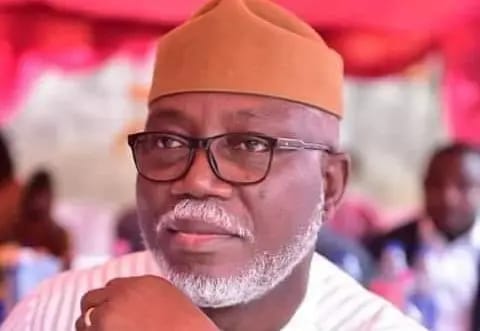
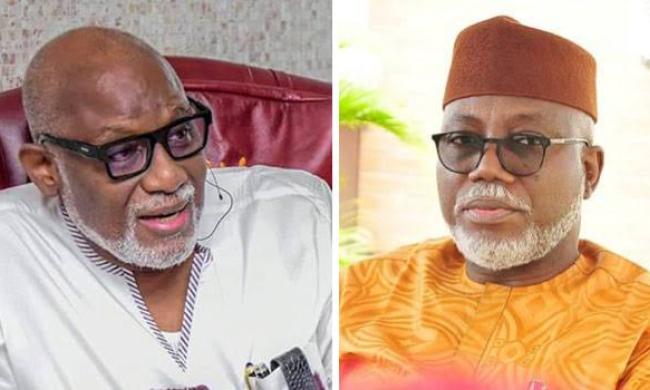
Ondo State swears in new governor after death of Rotimi Akeredolu

By Uzair Adam Imam

Today, Ondo State acting governor, Lucky Aiyedatiwa, will officially be sworn in as the new governor of Ondo State.

A reliable source at the state House of Assembly said that “it’s true that the acting governor would be sworn in today by 4 p.m.

The swearing-in ceremony for Ondo State’s new governor, Lucky Aiyedatiwa, comes after the recent passing of the previous governor, Rotimi Akeredolu.

He added that, “He is presently out of the state. As soon as he’s back, the Chief Judge of the state, Justice Olusegun Odusola, will swear him in as the governor.”

Recall that the state Information and Orientation Commissioner, Mrs Bamidele Ademola-Olateju, announced the death of the governor via a statement in Akure.

The statement read: “With a heavy heart, the Ondo State Government announces the tragic passing of our beloved Governor, Arakunrin Oluwarotimi Akeredolu (SAN).

“Mr. Governor peacefully departed from this world in the early hours of today, Wednesday, December 27, 2023.

“This tragedy has left behind a profound void in our hearts. Governor Akeredolu answered the eternal call while receiving medical treatment in Germany.

“He succumbed to complications arising from protracted prostate cancer.

“A letter has been sent to President Bola Tinubu to officially inform him of this devastating news.

“The Family and the Ondo State Government appreciate Mr. President for his support for Governor Akeredolu during his illness.

“The family and the state government will release further details regarding the funeral arrangements.

“Governor Akeredolu was an extraordinary leader whose unwavering dedication to the state and its people was both commendable and unparalleled.

“He not only served as the Governor of Ondo State but also emerged as a prominent advocate for the entire Southwest region and the nation.

“Governor Akeredolu was a courageous leader and an exemplar of integrity. The weight of this loss is truly unbearable.

“However, we find solace in the knowledge that Arakunrin Oluwarotimi Akeredolu lived a purposeful life, devoted to the service of God Almighty,” the statement added.

Sheikh Dahiru Bauchi’s letter: I am surprised by those who are surprised

By Dr. Dikko Muhammad

I’m surprised that some people find the said letter of Sheikh Dahiru Bauchi surprising. The fact is that many Nigerians see the courts as departments for the pursuance of politicians’ interest and more often, as stalls for the sale of “justice” to the highest bidder. And they have reasons to believe so. Why?

Senator Bulkachuwa told the Senate, on camera, that his wife, a former President of the Nigerian Court of Appeal, “extended her help to his colleagues” while in office.

A recently retired justice of the Supreme Court complained a lot of its workings. Not to mention the complaints against the top Oga of the Supreme Court who once led other justices to complain against the former top Oga of the Supreme Court.

Series of conflicting judgments are becoming a defining feature of ours courts.

The idea of the court as an umpire is fast becoming extinct. If any unknown backbencher politician wants me lock up tomorrow, being Sunday, don’t be surprised for the lines of judges ready to grant his request.

Where justice is delayed and denied, fears and favours determining verdicts, faith in the court is eroded. This is why our country has become a planet of jungle justice. People think that the courts are haven for criminals. The densely populated prisons in Nigeria are a repulsive testimony to the putrid stench of our entire judicial system.

So, it’s now left for our courts to either redeem their battered image or continue to sink into the abys. They’re designed to be the last refuge for the oppressed, not a refuse for the oppressor. If writing a letter would make it deliver justice, we should all be letter writers to the Supreme Court.

Dikko writes from Katsina State, Nigeria.

Governor Abba Kabir Yusuf extends compassion, sponsors Umrah for parents of late Asma’u Sani

By Uzair Adam Imam

The Kano State Governor, Abba Kabir Yusuf, has exhibited profound compassion by sponsoring the lesser Hajj (Umrah) pilgrimage for the parents of Asma’u Sani, a young girl he had initially sponsored for a surgical operation in India.

Tragically, Asma’u passed away before the scheduled departure to the Indian hospital, prompting the governor’s empathetic response.

In a poignant gesture of condolence, Governor Abba Kabir Yusuf, accompanied by his deputy, Comrade Aminu Abdussalam, visited the grieving family at Alkalawa Quarters in Gwarzo local government area.

During the visit, the governor directed that the funds earmarked for Asma’u’s surgery be redirected to sponsor her parents for the Umrah pilgrimage in Saudi Arabia, symbolizing a compassionate response to the family’s loss.

Moreover, Governor Abba Kabir Yusuf pledged to immortalize the memory of the late Asma’u. He instructed the local Imam to secure a plot of land for the construction of either a hospital or an Islamiyya school, to be named in honor of the departed soul.

This commitment underscores the governor’s dedication to preserving the legacy of individuals who have made a positive impact on their communities.

Expressing his deep sorrow over the untimely death of young Asma’u, Governor Abba Kabir Yusuf described the event as shocking and deeply pathetic.

The governor’s words reflected the genuine empathy he holds for the family in their moment of grief.

Malam Sani, the father of the deceased, moved by the governor’s honorable gesture, offered prayers for the success of Governor Abba Kabir Yusuf’s electoral affirmation at the Supreme Court.

This acknowledgment highlights the reciprocal respect and admiration between the governor and the bereaved family during this challenging time.

Governor Abba Kabir Yusuf’s compassionate response to the tragedy exemplifies leadership that extends beyond governance, embracing a heartfelt connection with the people.

The sponsorship of the Umrah pilgrimage and the commitment to immortalize Asma’u Sani through community development initiatives stand as enduring symbols of empathy and solidarity in the face of loss.
 

Honorary doctorate and Isa Yuguda’s enduring legacies in education

By Mukhtar Jarmajo

Great leaders not only have vision, they also share it with others and inspire many others to create their own. Leadership is simply about understanding present problems as they affect the future and taking concrete steps to solve the problems in such a way that the future will be better and brighter. And in the annals of Nigeria, many visionary leaders, who Nigerians are still enjoying from the fruits of their visionary leadership, have come and gone. Talk about Sir Abubakar Tafawa Balewa, Nnamdi Azikwe, Ahmadu Bello, Obafemi Awolowo, Samuel Ladoke Akintola, Michael Okpara, J. S. Tarka, Sir Kashim Ibrahim and a host of their contemporaries, they are remembered for their struggle for Nigeria’s independence as well as laying the country’s foundation in its journey to nationhood.

After them, many others have followed their foot steps. In the cause of time, Nigeria has had leaders whose footprints on the sands of time are indelible. The late Gen. Murtala Ramat Mohammed and the late Umaru Musa Yaradua are, respectively, remembered for both their anti-corruption posture and drive for national unity. In the same vein, Mallam Isa Yuguda, an economic czar, Nigeria’s former minister of transport and aviation respectively, and erstwhile Bauchi state governor, is celebrated for making immense contributions in the development of Nigeria’s banking sector, transforming the nation’s transport and aviation sectors as well as raising Bauchi state to a higher threshold of development.

Last Saturday, 16th December, 2023, in its maiden combined convocation ceremony, the Sa’adu Zungur University, Gadau, Bauchi state, awarded Mallam Isa Yuguda an Honorary Doctorate Degree in Management. At the ceremony, 7,543 graduates from six academic sessions were presented for the award of graduate and postgraduate degrees. At this juncture, it’s instructive to note that the point of interest is not that Isa Yuguda received an award or that the university has thus far graduated more than seven thousand students. Rather, what is most fascinating is the fact that Mallam Isa Yuguda established the University back in 2010 when he held sway as Bauchi state governor. Thus, through his visionary leadership, the erstwhile governor established what has become a prestigious center of excellence in learning.

At the time the University was established, there was the problem of many Bauchi state indigenous students not being able to gain admission into federal universities largely because of quota system and distance, especially for female students. But education is so important that at whatever cost, it must be gained. And given that one of the primary responsibilities of government is to ensure the security, safety and well-being of the citizenry through upholding law and order as well as providing healthcare services, education etcetera, the Isa Yuguda administration thought of building the Abubakar Tafawa Balewa University Teaching Hospital, a new Specialist Hospital and the Sa’adu Zungur University.

Speaking on behalf of the awardees at the convocation ceremony, Mallam Isa Yuguda noted that the University is a beacon of hope that will not only prepare the youth for future challenges but will also cause rapid socioeconomic development in Bauchi state. This is how visionary leaders shape the future of a nation. Mallam Isa Yuguda’s visionary approach in leadership is an example to present and future leaders and his Honourary Doctorate award by the Sa’adu Zungur University is a testament to his remarkable impact on education in not only Bauchi state in particular but also the entire nation in general.

Jarmajo wrote from Wuse 2, Abuja.

Goro’s legacies shine brighter than M.B Shehu’s failure

By Abbas Datti

In this political landscape, a legislator’s success is defined by the number of bills he sponsored and his contributions during plenary sessions within the hallowed chamber. Also, the impactful work he does in his community reveals the true character of a public servant. In this regard, the former Member of the House of Representatives, Fagge constituency, Rt Hon Aminu Suleiman Goro, stands tall as a shining example of dedication and selflessness as we compare his accomplishments to those of the incumbent Rep Member, Barr. Muhammad Bello Shehu.

Aminu Suleiman Goro served well as a Fagge Member of the House of Reps, and during his time, he left an indelible mark on our community. His commitment to the welfare and prosperity of Fagge’s constituents was unwavering, from improving infrastructure to advocating for better educational opportunities and carrying all constituents along when making decisions.

One of the most notable achievements during Aminu Goro’s tenure was the successful chairmanship of the House Committee of Tertiary Education and Services, which saw the establishment of numerous Universities, federal Colleges of education, and many more tertiary institutions. 

Goro’s massive empowerment programs supporting women and the vulnerable with small businesses, promoting job creation, and investing in infrastructure projects helped breathe new life into Fagge communities. Unemployment rates fell, and new businesses flourished, bringing economic stability to Fagge constituents.

Education was also a top priority for Aminu Suleiman Goro. He fought for increased funding for universities and tertiary institutions, ensuring our children had access to quality education. Fagge constituents benefitted immensely from the federal government scholarships and educational programs, providing opportunities for Fagge youth to thrive.

In a bewildering contrast, Barr. M.B Shehu has failed to carry the torch of progress set by his predecessor. Key initiatives initiated during Goro’s term have been left in limbo, and we have seen a noticeable lack of enthusiasm for addressing the issues that matter most to Fagge constituents.

Despite Aminu Suleiman’s legacy, M. B Shehu has not shown the same commitment to improving lives and schools or ensuring job opportunities. Constituents have felt the difference, and it’s time we reflect on what we’ve lost since the change in representation.

Goro served the Fagge constituency with dedication and a genuine desire to improve the lives of the people he represented. His legacy shines brightly when compared to Barr. Muhammad Bello has not been able to continue the trajectory of works that Goro established. 

Abbas Datti writes from Kano via abbasdatti448@gmail.com.

A time to look at Zamfara from the outside

By Zayyad I. Muhammad

Zamfara State has a sweet-bitter story: massive reserves of mineral resources, including gold, iron ore, granite, limestone, chromate, etc., but illegal mining of gold and other minerals has led to making the state and its neighbours one of the hotspots of banditry and kidnapping in Nigeria.

Zamfara occupies a very important spot in the history of northern Nigeria, being one of the regions in the old Hausa Kingdoms and one of the roots of the Usman Danfodio Jihad of 1804, but its current story is mostly associated with senseless insecurity and bad news.

Zamfara has produced some prominent people who have served Nigeria and humanity well, but nowadays, one cannot talk of misgovernance in northern Nigeria without also pointing at Zamfara state as well.

One cannot talk of the rich culture and important towns in northern Nigeria without mentioning Zamfara. Zamfara hosts some prominent towns in northern Nigeria: Gusau, Kauran Namoda, Anka, Gummi, Talata Mafara, etc.

Some 12 years ago, Zamfara State began to have its fair share of banditry and poverty in Northern Nigeria. There are 8.33 million out-of-school children in northwest Nigeria; when Governor Dauda Lawal took over the state’s affairs, Zamfara accounted for a significant number of this figure. Insecurity, kidnapping, and school closures are some of the factors responsible for the increase in the number of out-of-school children.

In the 2023 gubernatorial election, the people of Zamfara boldly moved away from the past—it was not only surprising, but it shocked the polity. In the presidential election, the Zamfara people voted for the All Progressive Congress (APC), and President Bola Tinubu won the state, but in the gubernatorial election, Zamfarawa voted against the ruling APC in the state; they voted for something entirely new.

But why did the Zamfara people, for the first time in 24 years, massively vote for something outside their traditional trajectory? And why the unnecessary distraction against Governor Dauda Lawal by former Governor Bello Mutawalle and co.? First, let’s look at the man, Dauda Lawal: He is a new-breed politician but an experienced technocrat—someone who is completely outside the ‘system’ borrowing from the language of politicians.

Governor Dauda twice contested the Zamfara PDP gubernatorial primary election and won it twice with a wide margin, beating all his opponents. He is the only gubernatorial candidate whose election was challenged twice in the court of law, but he prevailed. Dauda Lawal spent over 25 years in banking, reaching an Executive Director position at the First Bank. He has over 26 years of post-qualification experience, which covers commercial and public sector banking.

So why the distraction Governor Dauda is facing now when he is trying to tackle insecurity, poverty, out-of-school children, misgovernance, etc.? Recently, there were some shocking revelations from the Zamfara state government: the Zamfara cargo airport and the uncompleted governor’s lodge in the 14 local government areas of the state. Documents released by the Zamfara state government showed that former Governor Bello Matawalle approved the release of over one billion naira for the fencing, landscaping, and furnishing of the governor’s lodge in 14 local areas even before the projects began.

Similarly, the Zamfara state government also released some documents showing that Matawalle has also embezzled over N4.5 billion from the abandoned Zamfara Airport Project, describing the project as a scam and citing what it called dubious transactions. However, Matawalle has denied all the accusations and said that he inherited the Cargo Airport Project from the previous government, saying all the allegations against him were nothing but calculated mischief and diversionary tactics by Governor Dauda Lawal’s government.

In every story, there are three sides: the two sides of the story and the truth, but the truth must be from one of the two sides. But questions need to be asked. Why did the Zamfara people opt for something new and someone ‘fresh’ in the 2023 gubernatorial election? Why did misgovernance and insecurity stay in Zamfara before now? Why is the current government of Zamfara State facing unnecessary distraction? Why is the opposition to the current Zamfara government oiled from the outside of the state, but the masses are supporting the government? The answer to all these questions is likely one: Governor Dauda Lawal seems to have found the silver bullet to solve Zamfara’s headaches: insecurity, poverty, misgovernance, and corruption. If Governor Dauda Lawal succeeds, many people will not only be out of politics but will also be out of the sights and minds of the Zamfara masses, thus the needless distraction to stop Governor Dauda Lawal.

A look at what happened and is happening in Zamfara State: it is obvious that the Zamfara local people’s worldview on governance has changed; they are thirsty for a new beginning free from banditry, corruption, poverty, and mismanagement of the state’s resources, but they also value accountability, inclusivity, responsiveness, and transparency in their aspirations and needs.

Governor Dauda Lawal promised them during his campaign that he would leverage his experience as a technocrat, technology, and people for efficient service delivery and prioritise sustainability and immediate local needs, not white elephant projects. He also promised to face the bandits head-on while protecting human rights and addressing the challenges that birthed insecurity. Thus, many public analysts are of the view that former Governor Bello Mutawalle should have used his current position as Minister of State Defence to work with Governor Dauda Lawal to tackle the security challenges in the state, not unnecessarily distracting the Governor.

Zayyad I. Muhammad writes from Abuja via zaymohd@yahoo.com.

Rarara: Loyalty for sale

By Bilyamin Abdulmumin

When the former president Muhammadu Buhari’s praise singer Dauda Adamu Abdullahi Kahutu (Rarara), held a media conference some time ago, he stirred up the hornet’s nest. A press conference that initially appeared to lament about being sidelined in the current government ‘that they work hard to enthrone’ took an unexpected turn. Rarara would veer off the course to make damning allegations about the administration of his former boss. 

One of these damages, which sent shockwaves in social media, was that President Buhari did not leave the office until he brought every part of the country to a grinding halt, stating, ‘sai da ya yi dama-dama da kasar nan’. A journalist immediately posed the question that many Nigerians would be wondering: You were in the administration for eight years but haven’t raised a finger until now. Why? Rarara’s response was typical; he claimed he had been hopeful that something positive would happen, so he remained aloof during the eight-year tenure. 

However, sceptics, who don’t take things at face value, could argue that the president had an eight-year mandate. Within those years, how long would have been enough time for Rarara to raise the alarm? This was not to mention the apparent romance Rarara had had with the government during those years. This reminds me of one scandal that occurred during the Goodluck Ebele Jonathan (GEJ) government, and upon the pressure from the public, GEJ appeared determined to leave no stone unturned, so he gave two two-week ultimatum to the committee he set up to finish the investigation to bring the culprit to book.

However, to the most awe and shock, the person indicted for corruption would join the then-presidential foreign tour immediately after the order. A typical case of saying something, but body language says another. When considering the complete picture of the scenarios, the questionable timing and an unconvincing response led almost everyone to dismiss Rarara’s claims with a wave of the hand.

Rarara also launched another salvo, asserting that the 100 days of Bola Ahmed Tinubu were better than the entire eight years of Muhammadu Buhari. While the general view is that Buhari didn’t meet the messianic expectations set for him, drawing a parallel between eight years and 100 days for two different governments is like judging a sprinter’s performance in the first few meters of a marathon. For Rarara to make this shallow comparison, he must be among the Nigerians who thought 100 days was enough for the government to make substantial development. Ever since the United States president, Franklin D. Roosevelt, coined “first 100 days”, the gesture kept going wild; Nigerians have since imported and made it a ritual.

Because the mainstream media has amplified it and become embraced by the public, the newly elected Nigerian officials have become desperate to show that they could lift Zuma rock in the first 100 days in office. Assuming the new government has no serious court litigations to contend with, and the previous administration has little influence on their government, when did the busybody officials finish digesting the thousands of pages of the transition document handed over to them to decide on the administration trajectory? It is even the previous government budget that is already running. When they started to make their own, when were the projects conceived and implemented and matured for the public’s admiration? The speed at which a project is untimely executed to impress the public would go down the heel with double the speed.

In another arsenal that Rarara unleashed, he claimed to have contributed more to Buhari’s success than Buhari did himself. Following the historic dethronement of the incumbent in 2015, people pondered on the key figures that played the most significant role in paving the way for this landmark event: Rarara, President Buhari, and the Card Reader. Including Rarara in this list is a testament to his significant contribution to President Buhari’s success. However, that is not the complete story. All successful people have a tale to share; one crucial factor that defines them is consistency. They persistently push forward until circumstances align for success. So, in that moment of triumph, who rightfully claims the bragging rights?

Two theories were put forward to explain Rarara’s controversial media conference. One theory suggested that Rarara was acting based on the consent of the current administration, an indirect way of informing the public about the status quo of the country they inherited. Masses were already a block of ice waiting for an opportunity to rupture, no thanks to the ever-increasing prices of goods and services. This gave the ruling APC a conundrum: Should they give themselves excuses by condemning the previous administrations, or should they avoid self-sabotage and keep quiet? Therefore, Rarara, lacking a political appointment but commanding a Northern audience, became a strategic mouthpiece. This theory is plausible enough because, beyond the surface, the government could employ several manoeuvres to shift the public’s focus during hard times to avoid citizens’ wrath. 

The second theory shared by many, including Prof. Abdallah Uba Adamu, was that Rarara is a typical gold digger; his loyalty is not through thin and thick. He has consistently known to forsake one boss at a time of scarceness and identify with another where the abundance is emerging. From praise songs to invective ones; from Saraki Sai Allah for Shekarau to Malam yayi rawa da alkyabba, from dawa ta bare for Kwankwaso to Tsula tsilla tsilla, from uban Abba for Ganduje to hankaka.  But despite that, the nation was surprised to wake up with Rarara’s latest bombshell.  Because Rarara seems to have gone aboard when it comes to Buhari and his government, he goes all out against the critics of Buhari not only in his songs but also in several interviews he offered. 

As Rarara now courts new relationships with incumbents like Nasir Yusuf Gawuna, Dikko Umar Radda, or Bola Ahmed Tinubu, caution is advised. His track record of shifting loyalty raises questions about the depth of his commitment. These figures and their supporters should be wary of potential shifts and assess the sincerity of the newfound alliances.

Bilyamin Abdulmumin wrote via bilal4riid13@gmail.com.

Atiku Abubakar: A unifier?

By Kamal Alkasim

Atiku Abubakar, former vice president and perennial presidential candidate, has long styled himself as the “Unifier” of Nigeria. Yet, recent events raise questions about his ability to live up to this label.

Internal Divisions and G5 Exodus:

Atiku’s party, the People’s Democratic Party (PDP), has been plagued by internal divisions. The G5 group of five aggrieved governors, led by former Rivers State Governor Nyesom Wike, have publicly parted ways with Atiku and the party leadership. This exodus has significantly weakened the PDP’s chances in the 2027 presidential election.

Lost Allies and the Rise of New Political Alliances:

Further complicating the picture, two major figures who ran for president in 2023, Peter Obi and Rabiu Musa Kwankwaso, have left the PDP. These departures have deprived Atiku of potential allies and created a new political landscape with the emergence of a possible merger between the PDP, Labour Party, and New Nigeria People’s Party.

Unifying Action Needed:

While the details of this potential merger remain unclear, it presents a fresh challenge for Atiku. Should the merger materialise, it will demand exceptional unifying skills to navigate the competing ambitions of Obi, Kwankwaso, and other stakeholders within the new entity.

Unification Through Action, Not Words:

The question remains: when will Atiku be a “verified Unifier”? While words are persuasive, concrete action will ultimately determine his ability to bring together disparate political forces and forge a unified front.

Negotiations and the Struggle for Power:

Atiku faces a tough road ahead. He must navigate the complex negotiations with Obi, Kwankwaso, and other influential figures while overcoming internal party divisions. Ultimately, his success in securing the presidential candidacy and uniting the disparate political forces will be the true test of his unifying credentials. 

Kamal Alkasim is a freelance writer. He can be reached via kamalalkasim17@gmail.com.

Urgent call for investigation, accountability in Kaduna tragedy

By Mansur Hassan, PhD

In a shocking turn of events yesterday during a peaceful gathering for Maulud in Kaduna State, Nigeria, the unthinkable unfolded as the Nigerian army allegedly dropped bombs on the assembled crowd, resulting in a devastating loss of innocent lives.

What makes this tragedy even more horrifying is the apparent repetition of the attack, casting serious doubts on the claims of a mere mistake.The sequence of events, where the army reportedly first unleashed destruction and then returned within a short span to inflict more harm, raises profound questions about the true nature of this incident.

Can such a grave error be repeated in the same location, with devastating consequences, all within a span of 30 minutes? The assertion that this was a mistake demands thorough scrutiny and a comprehensive investigation.

It is imperative that the Nigerian government takes swift and decisive action to probe this incident thoroughly. The loss of lives and the trauma inflicted upon those who survived demand justice, accountability, and reassurance for the affected community. The international community should also pay close attention to ensure that the investigation is transparent, impartial, and free from any influence.

This tragic incident underscores the urgent need for reforms and increased accountability within the military and security forces. The government must ensure that those responsible for this appalling act, if found guilty, face the full extent of the law. Only through a transparent and unbiased investigation can trust be restored in the institutions meant to safeguard the welfare and security of the people.

In these trying times, our hearts go out to the victims and their families. We stand united in condemning this senseless violence and urge the government to prioritize justice, transparency, and accountability in the pursuit of truth regarding the Kaduna State tragedy.

Dr. Mansur Hassan is a Senior Lecturer, Department of Mathematics, Yusuf Maitama Sule University Kano and can be reached via mhassan@yumsuk.edu.ng

2027 presidency: Atiku Abubakar strategises to maintain control amidst PDP power tussle

By Sabiu Abdullahi 

Former Nigerian Vice President Atiku Abubakar is reportedly gearing up for the 2027 presidential race while simultaneously working to solidify his influence within the People’s Democratic Party (PDP). 

However, internal tensions have surfaced as Atiku and his allies express discomfort with the current acting National Chairman, Ambassador Iliya Damagum. 

Accusations have been raised against Damagum, with Atiku’s faction claiming his allegiance to the G-5 axis of the party, led by the Minister of Federal Capital Territory, Nyesom Wike.

Despite various attempts, including the unsuccessful and forceful return of National Secretary Senator Sam Anyanwu, efforts to remove Damagum have fallen short. 

The crux of the issue lies in Damagum’s perceived support from Wike, the G-5, and key members of the PDP Governors Forum, headed by Bauchi State Governor Bala Mohammed, who harbours presidential ambitions for 2027.

Atiku and party leaders are rallying behind the suspended National Chairman, Dr. Iyorchia Ayu, advocating for his reinstatement through a legal battle, viewing it as the last resort to rescue the PDP from Wike and the G-5. 

Notably, Dr. Bukola Saraki, a former President of the Senate, has resisted calls to assume the role of the next national chairman.

Sources indicate that Saraki is wary of presiding over a party embroiled in internal strife, opting to observe the unfolding PDP crisis before making any definitive decisions.

The cold war within the party and the ongoing court case involving Ayu have created an atmosphere of uncertainty, influencing Saraki’s reluctance to take on a leadership role at this tumultuous juncture.