Opinion

Celebrating Fatherhood: The essential pillar of Islamic family values 

By Muhammad Isyaku Malumfashi

The importance of fathers in raising and nurturing children is profoundly emphasised in Islamic teachings. Yet, in contemporary times, there seems to be a prevailing tendency among some to overlook fathers’ significant contributions and role in their children’s lives, often overshadowed by the accolades bestowed upon mothers. This imbalance warrants a closer examination and a reaffirmation of fathers’ vital position within the Islamic family framework.

Within the teachings of the Quran, the holy book of Islam, and the authentic Hadiths of Prophet Muhammad (peace be upon him), numerous references underscore the pivotal role of fathers in their children’s lives. One such verse from the Quran states: “And We have enjoined upon man [care] for his parents. His mother carried him, [increasing her] in weakness upon weakness, and his weaning is in two years. Be grateful to Me and to your parents; to Me is the [final] destination” (Quran 31:14).

This verse encapsulates the essence of filial duty toward both parents, highlighting the unique sacrifice and nurturing provided by the mother during pregnancy and infancy, yet equally emphasising the obligation to express gratitude and care towards both parents. The Hadiths further elucidate this principle, with Prophet Muhammad (peace be upon him) emphasising the importance of honouring and respecting fathers alongside mothers.

Prophet Muhammad (peace be upon him) is reported to have said, “He is not one of us who does not have mercy upon our young ones and does not honour our elders.” This profound statement encapsulates Islam’s holistic approach to familial relationships, emphasising compassion and respect for all members, including fathers.

Furthermore, the Quran emphasises the importance of maintaining kinship ties, which inherently include honouring and supporting one’s parents, including fathers. Surah Al-Isra, verse 23, states: “And your Lord has decreed that you not worship except Him, and to parents, good treatment. Whether one or both of them reach old age [while] with you, say not to them [so much as], ‘uff,’ and do not repel them but speak to them a noble word.”

This verse underscores the obligation to treat both parents with kindness and respect, regardless of their circumstances. It highlights the significant role fathers play in the family dynamic. It admonishes any disrespect or neglect toward parents, emphasising the importance of maintaining a dignified and compassionate attitude toward them.

In light of these Islamic teachings, it becomes evident that the role of fathers is not to be understated or overlooked. Fathers serve as the bedrock of the family structure, providing guidance, support, and protection to their children. They instil values, morals, and principles that shape the character and identity of their offspring.

Moreover, fathers serve as role models for their children, imparting invaluable lessons through actions and words. They offer strength, stability, and wisdom, providing inspiration and guidance for their children to emulate.

In today’s rapidly changing society, where the traditional roles and dynamics within families are evolving, it is imperative to reaffirm the importance of fathers in the upbringing and development of children. Children should be encouraged to recognise and appreciate the sacrifices and contributions made by their fathers, alongside their mothers, towards their well-being and upbringing.

It is essential to foster a culture of respect, gratitude, and support towards fathers, recognising their integral role in shaping the future generations of Muslims. By upholding the teachings of Islam regarding familial relationships and honouring both parents, we can strengthen the fabric of our families and communities, ensuring harmony, stability, and prosperity for generations to come.

In conclusion, fathers hold a sacred and irreplaceable position within the Islamic family framework. Their role in raising and nurturing children is indispensable, as emphasised by the Quranic verses and authentic Hadiths of Prophet Muhammad (peace be upon him). Therefore, it is incumbent upon us to acknowledge, appreciate, and support fathers in their noble endeavour of raising righteous and virtuous children, for they are indeed the cornerstone of every family.

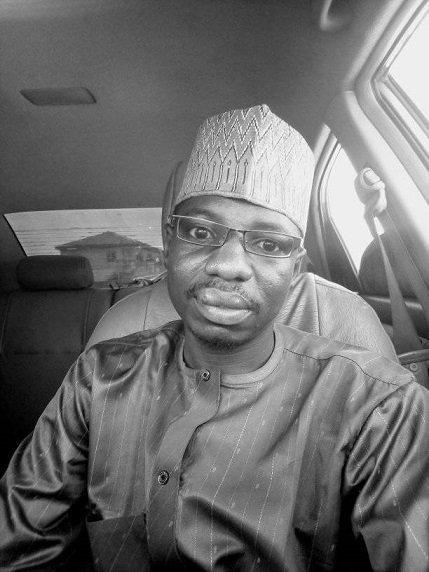
Muhammad Isyaku Malumfashi with the Ramadan dose.

Nigeria’s out-of-school children situation is disheartening

By Abdullahi Adamu 

The description recently by Senator Comrade Adams Oshimole, again at his best, advocating for good funding and monitoring of Universal Basic Education of the ever-rising number of out-of-school children across Nigeria as a “time bomb” is a repetitive sound bite. The reality of a large population of uneducated Nigerian youths has been a talking point for decades and is still rising. It is a pointed reflection of the incompetence, neglect and utter lack of vision of successive federal and state governments.

Talk is cheap; Senator Adam urged the state governments and the elite, including FCT, to take the necessary extraordinary measures immediately to defuse the deadly incendiary situation they created.

UNICEF adds that one in three children in Nigeria is out of school, totalling 10.2 million at the primary level and 8.1 million at the junior secondary school level. It said one in every five out-of-school children in the world is in Nigeria. These statistics are depressing; state governors can no longer afford to nurture another generation of illiterates.

The worst and increasingly incorrigible offenders are the Northern states and the region’s elite. Over 60 per cent of the total is in the North.

Out-of-school children are a social and serious security problem for us. I want to say that there are more than 20 million out-of-school children because the 20 million we are talking about are possibly only in basic education, that is, primary school and junior secondary school; what about those who have finished junior school and are unable to go back to Senior Secondary School? 

“We must be talking about 30 million out of school. That is a vast population and is a major issue. This is one issue that the state and federal government must take seriously,” Senator Lawan said.

Education is the key to Nigeria’s development. Oshiomhole stressed that Nigeria appears to be failing in its national plan for growth due to the lack of basic education. “It is not right for us to boast of an ultra-modern government house and have the most dilapidated schools and even employ teachers not to pay them.”

We have angry and hungry people in the classroom; they can’t be nice to our children, and when they show no kindness to those children, those children grow up without care, without feeling, and believing that society is uncaring.

This is a call to the government to embark on a comprehensive and radical educational curriculum review across Nigeria and prioritise skills rather than old-fashioned theories and colonial educational system expansion to help human economic growth, skills acquisition, and small-scale industry expansion.

The government must take a close look at what is happening to our children in Nigeria and the opportunities they are missing out on because they lack education. 

We need to look towards communities—leaders, parents, teachers, and caregivers—and together, find the best strategies to ensure that all children enroll in school, have access to continuous learning, and emerge with quality skills that equip them for a prosperous future. The situation has even worsened since then, up to 2023.

The government also need to ensure that children are safe when they are in school – no child should be afraid to enter a classroom – afraid their school might be attacked or that they will be kidnapped. And no parent should fear sending their children to school.”

In 2021 alone, there were 25 terrorist attacks on schools. A total of 1,440 children were abducted, while 16 children were killed. In March 2021, about 618 schools were shut down in Sokoto, Zamfara, Kano, Katsina, Niger and Yobe states over the fear of attack and abduction of pupils and members of staff.

Nigeria’s education system can be transformed through adequate funding.

Abdullahi Adamu wrote via nasabooyoyo@gmail.com.

Governor Abba K. Yusuf’s admin under scrutiny: Mismanagement and controversies rock Kano

By Umar Sani

Governor Abba Kabir Yusuf’s tenure in Kano State has been marked by a series of controversies and challenges, with the most recent scandal surrounding the Ramadan feeding program shedding light on broader issues of governance, priorities, and accountability. As we delve into the intricacies of these matters, it becomes evident that there are systemic failures that need to be addressed urgently to restore public trust and ensure effective governance in Kano.

The Ramadan feeding program scandal serves as a microcosm of the larger issues plaguing Governor Yusuf’s administration. This program, which is meant to provide essential support to the less privileged during the holy month of Ramadan, has instead been tainted by allegations of corruption, mismanagement, and inhumane practices. Reports indicate that resources allocated for the program have been misappropriated, with food meant for the needy ending up in the hands of those who are already well-off. Furthermore, there have been disturbing revelations of substandard food being distributed, posing health risks to the recipients.

Such egregious mismanagement not only squanders public funds but also undermines the intended purpose of welfare programs, which is to alleviate poverty and provide a safety net for society’s most vulnerable members. It reflects a blatant disregard for the welfare of the people and a failure to uphold the principles of transparency and accountability in governance.

However, the issues plaguing Governor Yusuf’s administration extend beyond the mismanagement of specific programs. There are deeper underlying problems related to governance, priorities, and political dynamics that must be addressed comprehensively.

One key issue is the misplacement of priorities. Despite the pressing need for investment in critical sectors such as healthcare, education, and infrastructure, resources have been diverted towards superficial endeavours associated with Governor Yusuf’s political agenda. The phenomenon of Abba Gida Gida, characterized by flashy projects and grandiose gestures, has overshadowed genuine efforts to address the socio-economic challenges facing Kano State.

The emphasis on political symbolism over substantive governance reflects a fundamental disconnect between the government and the governed. Instead of focusing on initiatives that have a meaningful impact on people’s lives, Governor Yusuf has prioritized activities that serve his political interests and consolidate his power base. This shortsighted approach not only undermines the credibility of the government but also exacerbates the suffering of the ordinary citizens who bear the brunt of poor governance.

Moreover, Governor Yusuf’s close association with the Kwankwasiyya political movement has further complicated governance in Kano State. While political alliances are a common feature of Nigerian politics, the tight grip of Kwankwasiyya on the state’s affairs has stifled dissent and marginalized opposing voices. This monopolization of power has created a culture of impunity where accountability is sacrificed at the altar of political expediency.

The entrenchment of Kwankwasiyya in Kano’s political landscape has also fueled factionalism and polarization, undermining efforts to foster unity and inclusivity. Instead of governing for the collective good, Governor Yusuf has been preoccupied with consolidating his grip on power and silencing dissenting voices within his own party and the opposition.

Furthermore, the lack of effective checks and balances has enabled corruption and malfeasance to thrive unchecked. The absence of independent oversight mechanisms has emboldened corrupt officials to exploit public resources for personal gain, exacerbating the state’s economic woes and widening the gap between the rich and the poor.

To address these challenges and chart a path towards genuine reform, Governor Yusuf must demonstrate a commitment to transparency, accountability, and inclusivity in governance. This requires a paradigm shift away from political patronage and towards evidence-based policymaking that prioritizes the needs of the people above partisan interests.

In addition, there is a need for robust institutions and mechanisms to curb corruption and hold public officials accountable for their actions. This includes strengthening anti-corruption agencies, empowering civil society organizations, and promoting a culture of transparency and accountability across all levels of government.

Moreover, Governor Yusuf must prioritize investments in critical sectors such as healthcare, education, and infrastructure to improve the quality of life for all citizens. This requires prudent resource management and strategic planning to ensure that public funds are utilized efficiently and effectively to address the most pressing needs of the population.

Furthermore, Governor Yusuf should endeavour to build bridges across political divides and foster a spirit of inclusivity and cooperation in governance. This means reaching out to opposition parties, civil society groups, and other stakeholders to solicit their input and support in addressing the state’s challenges.

Ultimately, the road to meaningful reform in Kano State will require courage, vision, and a genuine commitment to the principles of democracy, good governance, and social justice. Governor Yusuf has a historic opportunity to leave a positive legacy by addressing the root causes of the state’s problems and charting a new course towards prosperity and progress for all its citizens. However, this will require bold leadership and a willingness to challenge the status quo in pursuit of a brighter future for Kano State.

Umar Sani wrote via umarhashidu1994@gmail.com.

It is time to redesign Hajj management in Nigeria

By Zayyad I. Muhammad 

Hajj management in Nigeria is facing two main problems. Firstly, funding is tied to the dollar; once the dollar’s value fluctuates against the naira, the hajj fare becomes uncertain. This is currently happening. The second problem relates to flight schedules to and from Saudi Arabia, etc. These problems are twofold, so to speak, and should be collectively tackled by both the National Hajj Commission of Nigeria (NAHCON) and state Hajj commissions.

The solution to these problems could be as follows:

Firstly, the Nigerian hajj fare should be tied to or pegged to the Saudi Riyal. The Riyal is stable due to the country’s strong economic fundamentals and prudent financial management. Additionally, apart from pegging the Nigerian hajj fare to the Saudi Riyal, the National Hajj Commission of Nigeria should study the Malaysian hajj management model.

In Malaysia, the Hajj has a funding management system called the Tabung Haji. Research on the Malaysian system of hajj management indicates that it involves several components. The Tabung Haji (Pilgrims’ Fund Board) plays a crucial role in managing the financial aspects of Hajj for Malaysian pilgrims.

Malaysian Muslims intending to perform Hajj must make regular contributions to Tabung Haji. These contributions accumulate over time and cover expenses such as transportation, accommodation, and other logistical needs associated with Hajj. NAHCON also implements a similar savings scheme, albeit with limited success. It’s time for NAHCON to redesign the Hajj Savings Scheme in collaboration with banks and other financial institutions, particularly those offering Islamic banking services.

The new scheme should allow intending pilgrims to enter into an investment plan for more than one year. As pilgrims deposit funds into their accounts, the bank or financial institution would invest the money for a period ranging from 2 to several years. By the end of this period, pilgrims would have accrued enough funds for the Hajj fare, along with additional profits. This approach would streamline the process for both pilgrims and commissions, providing ample time for planning.

Taking a clue from the Malaysian Tabung Haji, it manages its funds through various Shariah-compliant investment instruments, such as equities, real estate, and sukuk (Islamic bonds). The returns from these investments sustain Tabung Haji’s operations and cover the costs of Hajj for Malaysian pilgrims.

In addition, the Malaysian Tabung Haji has achieved remarkable success by offering diverse Hajj packages customised to meet the needs and preferences of Malaysian pilgrims. These packages encompass a range of services, including luxury accommodation in Makkah and Madinah, transportation, meals, and guidance.

Moreover, Tabung Haji extends financial assistance to eligible Malaysian pilgrims who may require support to undertake the Hajj journey. This assistance may comprise subsidies for Hajj expenses or loans to cover pilgrimage costs, which can be repaid in instalments.

The National Hajj Commission has demonstrated commendable efforts over its three decades of existence. However, the current instability in the exchange rate between the dollar and the naira underscores the need for the commission to consider pegging the hajj fare to the stable Saudi Riyal. Additionally, NAHCON should revamp the Hajj Savings Scheme to offer long-term, Halal investment options for intending pilgrims. This approach would contribute to a more organised and financially sustainable hajj management system.

To achieve these goals, NAHCON should establish a diverse team comprising individuals from various sectors to assist in redesigning the Hajj Management System, particularly the pilgrim savings scheme.

Zayyad I. Muhammad writes from Abuja via zaymohd@yahoo.com.

Salute to a Woman of Substance: Hajiya (Dr) Hafsatu AbdulWaheed, D.Litt., Honoris causa

By Prof. Abdalla Uba Adamu

She has done it again. She first did it in 1974/80. In 2024, she repeated it. The feat that no female northern Nigerian has ever performed. Hajiya Hafsatu Abdul Waheed (b. 1952, Kano, northern Nigeria) was the first woman creative fiction writer from northern Nigeria to be published in any language, although hers was in Hausa.

On 13th April 2024, she became the first female Muslim northern Nigerian to be honoured with D.Litt. (Honoris Causa “for the sake of the honour”) doctorate degree from a no less institution than the biggest online university in Africa, the National Open University of Nigeria (NOUN). This was at the 13th Convocation Ceremony of the university held on 13th April 2024 in Abuja, the main headquarters of the university.

In a way, Ms. AbdulWaheed represents a paradox. She is not Hausa or Hausa-Fulani. She is Fulani, pure and simple. She learnt Hausa only outside her family home, in school, but at home, it was Fulfulde all the way. Yet her creative writing has always been in Hausa, with the exception of one book of poetry in English and the recently published collection of short stories titled Sharo. Nothing in Fulfulde, though.

The common historical narrative on literary development in northern Nigeria was that a literary competition to encourage the reading culture among Hausa youth was organized by the Northern Nigerian Publishing Corporation (NNPC) in 1978. One of the entries, which was also one of the winners, was “So Aljannar Duniya” by Hafsatu Abdul Waheed. It was in the Hausa language. However, it would appear, according to Hafsatu herself, that she wrote the novel in 1972, and it was published in 1974.

It was, quite simply, the most radical novel in Hausa literary history. Even “Ƙarshen Alewa Ƙasa” by Bature Gagare (who died in 2002), an unconventional novel, , published in 1982 (as a result of a literary competition organized by the then Federal Department of Culture, Ministry of Social Welfare and Culture) did not come close. Curiously, they contrasted each other. Gagare’s novel is about the lost glory of the ‘original’ Hausa people—the Maguzawa. Hafsatu’s novel is about breaking the Pulaaku—the Fulani code of behaviour. Both Hafsatu and Gagare became spokespersons of their ethnicities.

So Aljannar Duniya is brash, bold, audacious, trenchant, and unapologetic. It is a declaration of war against Pulaaku. It was unarguably the first Fulani feminist tract written in Hausa. Hafsatu’s style and critique of tradition might be compared with those of Bilkisu Salisu Ahmed Funtuwa and Balaraba Ramat Yakubu. However, there are quite a few differences.

Despite its pioneering boldness, So Aljannar Duniya is difficult to read. Perhaps that was because the author started writing it while still in secondary school! Its narrative is often jumbled and non-linear. Understandable. It was written in anger, so words tend to wobble, but the message is clear. This is more so because it is ethnographic. Hafsatu wove a story around her sister, of course, a Fulani, who had every intention of marrying an ‘alien’—an Arab from Libya. So Aljannar Duniya is, therefore, a true story, spiced up by fictional elements to convey a message. As I said before, it is a feminist tract.

Balaraba Rama Yakubu, however, writes in a deeply engaging mature and absorptive style with plenty of hooks. For instance, “Wa Zai Auri Jahila?”, which I consider her best novel, is dark and deeply disturbing narrative of what in contemporary feminist Woke world would be considered an injustice to women, especially young girls in a traditional African society.

Although Novian Whitsitt, who did his PhD on Balaraba’s novels, referred to it as ‘feminist’ I disagreed with him. I labelled her works ‘womanist’, after Alice Walker’s short story, ‘Coming Apart’ (1979). As explained elsewhere, “a womanist is committed to the survival of both males and females and desires a world where men and women can coexist while maintaining their cultural distinctiveness.” This inclusion of men provides women with an opportunity to address gender oppression without directly attacking men (Adamu 2003). Balaraba reflects this in her novels, especially “Alhaki Kwikuyo” (translated by Aliyu Kamal and published by Blaft Books in India). Can’t say much about Bilkisu Funtuwa’s books, though, as I have never read any.

But Hafsatu AbdulWaheed is a feminist—at least as portrayed in So Aljannar Duniya. The plot revolves around a young Fulani lady who wants to marry an ‘alien’ (Arab) from Libya. In real life, Hafsatu’s elder sister. Their parents rejected the idea. The plot of the novel does away with the Fulani Pulaaku and introduces a brash, assertive, loud and anti-establishment heroine, Boɗaɗo, who, armed with a degree in Pharmaceutical Sciences, comes back to her village to set up a drug store (called Chemists in Nigeria, a bit like Walgreens) and introduces her fiancé—all un-lady like behaviours in the Fulani mindset.

Thus, she discards the Fulani munyal (self-control), semteende (modesty) and hakkillo (wisdom)—central components of Pulaaku—and declares, openly, her love for an “alien” in her auntie’s presence! The opening dialogue from the novel sets the pace in which Boɗaɗo, speaking, informs her aunt:

(Hau) Aure! Inna ni fa na gaya muku ba zan auri kowa ba sai wanda nake so. Kun san zamani ya sake.

(trans) Marriage! Aunty, I have told you that I will only marry the man I love. You know times have changed.

Such direct confrontation in a Fulani village was uncommon and reflects the author’s autobiographical rebellion against tradition. Her aunt—delegated to mediate in these matters on behalf of the protagonist’s mother—is shocked. As she lamented:

(Hau) Mhm! Wannan zamani, Allah Ya saukaka. Yarinya ki zauna kina zancen auren ki, sai ka ce hirar nono da mai. Don haka fa ba ma son sa ɗiyar mu makarantar boko. In kun yi karatu sai ku ce kun fi kowa. Me kuka ɗauke mu ne?

(trans) Mhm. These are difficult times. May Allah save us. Listen to you talk about your marriage as if you are talking about milk and butter. That is why we don’t want to send our daughters to school. After you finish, you feel superior to everyone. What do you take us for?

A battleground and the rules of engagement have been established—female empowerment through education—and Hafsatu chose the most conservative arena: a Fulani settlement, considered generally more trenchant about Pulaaku than urban Fulani. Additionally, the novel’s subtext of rebellion against arranged and forced marriage underscores Hafsatu’s acerbic demand for personal choice in marital affairs by women. It was a template for rebellion.

Another contrast between Hafsatu’s So Aljannar Duniya and Balaraba’s Wai Zai Auri Jahila? is in the choice of careers. Hafsatu chose Pharmacy for her protagonist, while Balaraba made her own a nurse. Pharmacy was a profession in the period, and by making her character a pharmacist, she thrusts Boɗaɗo into a man’s world to compete equally with men. Balaraba, on the other hand, by making her character a nurse instead of a doctor, maintains the womanist ethos of an achieving woman in a male-dominated society, fitting in with career stereotypes of women in caring professions.

The success of So Aljannar Duniya sent a message to the budding Hausa literati to pick up their pens and set to work—thus spawning a genre which t revolutionized the Hausa literary landscape in contemporary times.. Furthermore, the combined effects of the harsh economic realities of the 1980s (the decade of military coups and counter-coups in Nigeria) ensured reduced parental responsibility in the martial affairs of their children. Therefore, fantasy, media parenting, especially Hindi films, anti-authority and a loud, persistent message from bursting testosterones in a conservative society that sees strict gender separation combined to present Hausa youth with soyayya (romance) as the central template for creative fiction. It was a safety valve to repressed sexuality.

Hafsatu’s radicalism, however, did not end at rebellion against arranged or forced marriage for women. At one stage she declared to run for the office of the Governor of Zamfara State. This was provoked by a statement by the sitting governor that there were no educated women in the state. To prove him wrong, she decided to campaign for his chair! She even made posters, but was asked by her father to stop. At least, she had made a statement. Furthermore, her real-life echoes Boɗaɗo’s—she was also married to an ‘alien’ from the Middle East (a Syrian). Incidentally, it was a marriage that took her to Gusau, the Zamfara State capital, and I had the pleasure of meeting her late husband, Malam Ahmad Abdul Waheed, during a British Council “Intensities in Ten Cities” Islamophobia tour on 9th July 2003. Both Hafsatu and her husband were born and raised in Kano. It was his career that took them to Gusau.

In literary circles, she also has a voice. For one, she used to assiduously attend every single literary convention anywhere it was held. As part of ANA Kano activities, we were together in Niamey and Maraɗi in Niger Republic at various times to attend international conventions of Hausa writers. She never tired of attending and actively participating. Wonderful enough, she often went with her children and grandchildren, showing them the way. It is little wonder that some of these children became well-celebrated in their chosen professions—for they had a strong role model at home. A good example is her eldest daughter, Kadaria Ahmad, the award-winning journalist who owns and runs the NOW FM radio station in Lagos.

Thus, the recognition of the pioneering efforts of Hafsatu AbdulWaheed by the National Open University of Nigeria (NOUN) on 13th April 2024 during the university’s 13th Convocation was a salute not only to the resilience of feminist women but also to all Hausa language writers of both genders. As far as I know, she was the first female Muslim Fulani (or Hausa) writer to be so honoured by any university in Nigeria. She has, therefore, entered the history books. She is truly a woman of substance.

References.

Adamu, Abdalla Uba. “Parallel Worlds: Reflective Womanism in Balaraba Ramat Yakubu’s Ina Son Sa Haka.” JENDA: A Journal of Culture and African Women Studies, no. 4 (2003). https://bit.ly/3Q2gNlY.

Whitsitt, Novian. Kano Market Literature and the Construction of Hausa-Islamic Feminism A Contrast in Feminist Perspectives of Balaraba Ramat Yakubu and Bilkisu Ahmed Funtuwa. PhD dissertation, University of Wisconsin, 2000.

Malam Jabir Maihula: A hero archetype

By Abdulrahman Sani (philosopeace)

The German psychologist Carl Jung proposed archetypes as universal themes within the collective mental frameworks of humans. They represent the primary human drives, impulses, hopes, and desires that shape behaviours, perceptions, and actions. While he identified approximately seven archetypes, my interest lies in the Hero archetype, which symbolizes the relentless pursuit of excellence, growth, and overcoming challenges. I believe Malam is a living example of the Hero archetype.

Malam had a modest upbringing in Sokoto before gaining admission to major in Hadith Sciences at the Islamic University of Madina. After graduation, he furthered his studies with a postgraduate Civil and Criminal Justice diploma at the same university. Upon his return, he began teaching in Islamic schools. His breakthrough came through deputizing for his mentor, Professor Mansur, in his Sahih al Bukhari class.

Malam  as an Academic 

Malam’s primary training was conducted in Arabic. Still, due to his daring pursuit of excellence, he chose the unconventional route of pursuing a Master’s in Law at the University of East London instead of following the familiar path taken by others within his academic circle, which typically involves going to Sudan or Egypt for a Master’s in Islamic Sciences. Malam had to work on his English fluency to pave the way for a more multifaceted academic journey. His PhD journey was equally challenging, pushing the limits of his capabilities. Malam’s PhD was supervised by one of the foremost Taymiyyan scholars in Western academia, Professor Jon Hoover.

I recall calling Malam upon hearing that he had started his PhD and recommending that he look into Professor Hoover. Malam was pleasantly surprised that I knew about Hoover and informed me that Hoover was actually his supervisor. I became acquainted with Hoover through his book, Ibn Taymiyya’s Theodicy of Perpetual Optimism. In less than three years, Malam completed his PhD. He later published a portion of his research as a book titled Ibn Taymiyyah in the Literature of Contemporary Jihadists, an excellent book with a title I have reservations about, but that’s a topic for another article.

Malam’s work ethic as the Head of the Department of Islamic Studies at Sokoto State University was commendable. Despite his popularity and significant social influence, he never allowed these factors to impact his primary duties to his academic constituents negatively.

Malam as a Scholar 

Malam has mastered the social landscape in his relentless pursuit of excellence. The most important lesson from his scholarly life is to stay away from controversies and unproductive verbal spats while remaining true to one’s principles and beliefs. Although Malam is non-confrontational, it doesn’t prevent him from engaging in polarized intellectual discourse. He once wrote a booklet engaging with and critiquing a pamphlet written by one of the Sokoto scholars on a polarizing theological issue. Still, in his characteristic fashion, that discourse didn’t translate into conflict.

Apart from his scholarly rigour and eloquence, an even more impressive trait is his accessibility to all and sundry. He is not merely an ivory tower scholar buried in the dust of books, shielded from his immediate realities. Malam is a Hero archetype who is not afraid to take the road less travelled. He constantly evolves his da’wah to fit the spirit of the times while staying true to tradition.

Malam as a Public Servant 

Malam has just started his journey as a public servant and is making a significant impact with his meticulous approach to public service. I know for a fact that he had no financial incentive to take that job. It was purely out of giving back to his society. He occupies a sensitive position as the commissioner for religious affairs because of the sectarian divides but has been able to navigate those tricky waters and gain confidence across the religious divide.

A good documentary on his official Facebook page delves into his incredible accomplishments within just a hundred days in office. Still, beyond that, I am particularly interested in how he has made Almajiri Education a priority, laying a groundbreaking blueprint and even seeking international partnerships. It is an impossible challenge to overcome for so many reasons, but if there is anyone for it, it is Malam.

I have a lot more to say, but the Arabs have a saying that “the best of speech is that which is concise.” You might have noticed that I have purposefully refused to use the honorifics “Dr” or “Honorable” to describe Malam. It’s because Malam is more important than anything else. Finally, and even more importantly than positive appraisals, is prayer: May Allah guide him throughout this challenging journey of incidental public service.

Abdulrahman Sani (philosopeace) wrote via philosopeace@yahoo.com.

Palliative Tragedy: Distributions in tertiary institutions can go differently

Bello Hussein Adoto

The tragic deaths of two students and the injury of 23 more at the botched distribution of palliatives at Nasarawa State University on Friday is a disturbing addition to what has been a troubling period for undergraduates in Nigeria.

Just last Friday, nine students of Federal University Gusau regained their freedom after spending over 170 days in terrorists’ captivity. On Thursday, three medical students of Abia State University died in a road traffic accident while returning from their seniors’ induction.

Unlike these other tragedies, however, the Nasarawa stampede could have been envisaged and prevented. The successful distribution of similar palliatives at the University of Ilorin shows us how we can do things differently.

Following subsidy removal and the attendant inflation in the country, several state governments distributed palliatives—foodstuffs and stipends—to ease the economic burden on citizens. Some states like Kwara and Nasarawa recently extended the palliatives to students in their tertiary institutions.

The initial distribution of the palliatives across institutions in Nasarawa state was peaceful. A government statement released after Friday’s stampede noted that previous distributions were “a huge success.” Students got two 7.5 kg bags of rice and 5,000 naira each.

However, events leading to the stampede at Nasarawa State University, Keffi, points towards a mismanagement of crowd control by the organizers responsible for distributing the palliatives. According to media reports, the palliatives were scheduled at the university convocation square until students arrived in large numbers and disrupted the distribution.

“After our arrangement for the distribution of palliatives to the students which was to hold at the University’s convocation square, they (students) suddenly arrived at the venue in their numbers and overpowered the security,” said Yunusa Baduku, National President of the Nasarawa State Students Association, in a Punch Online report.

He added that the students “broke through the gate into the Convocation square where the bags of rice was to be shared,” leading to the stampede that consumed the two students and injured many more.

Sadly, such chaos is not new. In February, the Nigerian Customs Service had to suspend its sale of seized bags of rice after seven people died at one of its centres in Yaba, Lagos. Some two years ago, 31 people died at a stampede at the King’s Assembly in Rivers state church during the distribution of palliatives to church members; seven more were injured.

Although the state governor, in a statement by his Chief Press Secretary, was quoted as calling the tragedy “a needless stampede,” the state could have prepared better for it. Distribution events, especially those intended to provide aid or relief, tend to draw large crowds, making effective crowd control essential.

In Unilorin, for instance, where students received palliatives—cartons of noodles—from the Kwara State government, distributions were such that students did not have to gather in their numbers at the arena or use vouchers.

The government sent the palliatives to the university, who distributed them to the faculties. From the faculties, they were distributed to departments, where class representatives from each level went to retrieve the packages for their class. It was as seamless as public distributions go.

I suppose the Unilorin model could help other tertiary institutions plan more effectively. The university leveraged student associations and divided the population into manageable chunks. Such divisions made it difficult for hoodlums to gatecrash, as the class reps knew their colleagues. The strategy also eased accountability.

While I admit there is a risk of student representatives appropriating the palliatives or shortchanging their colleagues, this is more manageable than asking a crowd of desperate undergraduates to gather for government handouts.

A departmental or level advisor can be mandated to coordinate the distribution, even if he has to be paid or receive palliatives, too. It is not likely that the coordinator will conspire with the student reps to loot the palliatives. In the rare event that that happens, then so be it. Nigeria students have suffered enough than to die in avoidable stampedes.

Adoto writes from Ilorin via bellohussein210@gmail.com.

Harvard Encounters: A day of holistic journey of intellectual exchange and spiritual enrichment

“And another time – you shall see something wondrous.”
“And I thank my Lord that my secret is not sterile or barren.”
– Sheikh Ibrahim Niasse

By Umar Sheikh Tahir

Harvard University is renowned for its academic excellence and intellectual vibrancy. Visitors often expect encounters with great minds and engaging discussions with professors, students, and highly enlightened individuals. However, my recent visit transcended mere intellectual exchange; it was a holistic experience that seamlessly intertwined intellectual discourse with spiritual enrichment, specifically with my fellow Tijjāniyah Faydah community, where I shared my day with them, which was superb and was a Friday full of activities. 

On March 29, 2024, the day commenced with an eagerly anticipated lecture under the Islam in Africa initiative Lecture Series, co-organized by Prince Bin Al-Waleed Bin Talal Islamic Studies Program, Hutchins Center for African and African American Research, Harvard Faculty of Arts and Sciences, and Harvard Divinity School, and also the program convened by Professor Ousmane Kane al-Waleed Bin Talal, Professor of Contemporary Islamic Religion and Society.

My friend and interlocutor, a fellow Tijjānī disciple Amadu Kunateh, is a PhD candidate who works on Islamic Intellectual Traditions in Sub-Saharan Africa and their philosophical currents. He presented a lecture on the reception of theology (Kalam) and philosophy (Falsafa) in Modern Sub-saharan Africa. He utilised Sheikh Ibrahim Niasse as a case study of African ulemas’ engagement with the subjects. In keeping with the form of the subject matter, Amadu summarised his work in syllogistic form: 

Premise 1: In Islam in Sub-Saharan Africa, Kalam and Falsafa were present but held limited valorisation.

Premise 2: Sheikh Ibrahim Niasse denounced Kalam and Falsafa as ‘evil innovations’.

Premise 3: Kalam’s aim of providing certain knowledge was refuted by Niasse, who argued that it cannot offer certainty.

Premise 4: Ma’rifa and tarbiya, offering certain knowledge, negate the necessity of Kalam.

Premise 5: Critics suggest that Ma’rifa is exclusive, leaving Kalam and speculative reasoning as alternatives for the populace.

Premise 6: In the Islamic context of West Africa, under Sheikh Ibrahim Niasse’s guidance, Ma’rifa is universally attainable.

Conclusion: Thus, in this milieu of the `Ārifeen in Subsaharan Africa, Kalam and Falsafa become redundant. 

Notwithstanding, Amadu suggested that despite the privileging of ma’rifa and tarbiya as alternative cognitive modes, he showcased the continued presence of profound intellectual contributions to the issues pertinent questions of Kalam and Philosophy found in Sheikh Ibrahim’s Fi Riyād al-Tafseer.

The Q&A session allowed for more in-depth engagement with particular issues ranging from questions on Sheikh Ibrahim’s conception of Time, God’s Attributes (Sifat) & Dhat (Essence), the limits of the Intellect (‘aql), and more. The lecture ended with a hot meal, which was enjoyed by non-Muslims who are not observing Ramadan fasting, and takeaway containers for Muslim fasters.

Since it was Friday, we went to the Masjid for Friday prayer, where I found myself spiritually immersed, complementing the intellectual discourse seamlessly. Serendipitously, the Friday sermon (khutbah) was delivered by Dr. Ousmane Kane, who reminded congregants of the importance of God-consciousness (taqwa) and how taqwa results in God teaching you knowledge directly. This was a poignant reminder for an audience of academics and students in the pursuit of knowledge. 

The sermon echoed Amadu’s earlier presentation on the alternative epistemologies and limits of the intellect. How remarkable to have heard a presentation on Sheikh Ibrahim Niasse only to follow it up with a khutbah at Harvard by his grandson, Dr. Kane, the son of his daughter Seyda Maryam Niasse. It was evident that the Flood (Fayda) had indeed travelled westward, and its wonders reverberated through the Harvard walls. 

Dr Ousmane Kane

Following the Juma’ah prayer, the day continued to unfold its tapestry of spiritual and philosophical threads, culminating in two extraordinary meetings: one a private meeting with Dr. Kane in his office. During my meeting, I updated him on my project and the progress I am making at Columbia University. He gave me some valuable academic tips and then prayed for us with my friends.

My doctoral dissertation is about the tradition of Arabic Islamic logic in Subsaharan and North Africa. As such, it was suggested that I meet Āqil, an undergraduate student at Harvard College majoring in Math and philosophy, with a particular focus on modern logic. He is well-versed in Islamic tradition, having had madrasa training in Malaysia before arriving at Harvard. 

Our conversation explored the relationship between Modal Logic, Classical Logic, and Arabic logic. The discussion focused on the metaphysical assumptions that ground modern logic and go unnoticed by modern logicians like Frege, Russel, and Wittgenstein. However, precise and comprehensive due to its extensive utilisation of symbols, it can be used for contemporary Usul al-Fiqh (Principles of Jurisprudence) as classical Arabic logic was traditionally espoused as an ‘instrumental’ tool for Usul and Theology. We were not convinced of the utility of modern logic for the Islamic sciences, but this issue requires further exploration. 

Since it was Friday, and as Tijjānī adherents, we headed out to the Zawiyah located at Shaykh Ousmane Kane’s home to engage in more remembrance (dhikr), Qur’an recitation, poetry recitals community before the Maghrib prayer. In the midst of rigorous intellectual engagement, moments of spiritual reflection provided a refreshing pause. A moment of tranquillity presented itself during the Haylala at the Zawiyah. The evening culminated with the Quranic khatm, which is done every week following a complete recital of the Quran by members of this community. 

We broke our fast together, which fostered a sense of community and companionship. It was amazing to experience a day of intellectual fasting at Harvard – with each conversation serving as a reminder of Allah. 

The Path to Paradise is the prayer and the fast.
And the Path to Allah is abandoning everything apart from Allah.

– Sheikh Ibrahim Niasse

As we partook in the communal meal, it became evident that such gatherings not only nourish the body but also nurture the soul, and the healing food is exclusively cooked with the heart before the hand. Thanks to Kane’s family.

By the way, not surprisingly again, Shaykh Ousmane Kane presented the annual Ramadan Lecture (Durūs al-Hasaniyah)hosted by His Majesty the King of Morocco in front of Muslim global ‘ulema on Western Academia and Islamic Intellectual Tradition in Sub-saharan Africa and his efforts at Harvard to unravel that history. It’s astonishing and unprecedented that Shaykh, who lectured in front of the world’s Islamic scholars in Morocco, was a Harvard professor, khatib, and spiritual leader (muqaddam). It is a testament to Dr Kane (complex of two oceans of mind and spirit, as I named him in lines of my poetry last year,) the grandson of Shaykh al-Islam and Harvard professor.  Indeed, the Fayda has flooded over from Africa to Harvard and its nurturing hearts and minds. 

Reflecting on the day’s experiences, it’s evident that intellectual and spiritual pursuits need not exist in isolation; rather, they can complement and enrich one another, as is currently occurring at Harvard. Within Harvard’s diverse intellectual community, there exists a small group of people championing a holistic approach to learning. 

Umar Sheikh Tahir, PhD Candidate at Columbia University. He can be contacted via ust2102@columbia.edu.

Salary increase or stronger Naira: My appeal to the President

By Sani Bello Hamza

Mr. President, before I delve into my concerns, it is indeed important to lay a proper foundation. As an aspiring lawyer and an opinion leader in my own capacity, I am not unaware of the challenges and intricacies of leadership. The stress, strain, and challenges are sometimes daunting and discouraging.

However, Mr. President, even your enemies and those from the opposition party can not doubt your capacity to lead and your unique style of leadership. Your ability to lead and manage successful politicians, industry men and academics leaves us in awe and surprise.

Your ability to understand and provide lasting solutions to national issues ought to be given careful consideration and serve as an exercise for students at various levels. Your unique style of leadership is indeed worthy of emulation and study. The Asiwaju school of thought!

Dear President Bola Ahmed Tinubu, It has been a year since Nigerians qued in mass to support you and the renewed hope agenda. They voted for you and supported your candidacy. Nigerians, from every nook and cranny of the country, shun the nay-sayers and triumph to support you and the APC to make sure you make it to the Villa. It has now become history and forms a special part of the Asiwaju school of thought! 

Mr. President, sir, Before you declared your intention to run for president in early 2022, Nigerians were lost in search of a trusted and reliable leader, a qualified politician capable of steering them to the promised land. The APC seems to be falling after eight years of sheer disappointing tenure, and the PDP was not an option to be considered, given its 16-year tenure.

The resurgence and emergence of the renewed hope agenda and the “emilokan” slogan gave Nigerians a sigh of relief and hope that the table would turn around. That is, it’s time to reap what they sow and enjoy the fruit of their labour and hard work. 

Mr. President, I wish I could write this letter and deliver it directly to your mail or doorstep. Sadly, it’s not possible. I still wish I could be featured on national television to address you and beg you for one thing, yes, just one thing, Mr. President. 

If I were given the opportunity to meet you, the president, in a one-on-one conversation, I wouldn’t talk much. I promise to make the conversation short, brief, and succinct. Who will give me this golden opportunity? 

Anyway, the popular Hausa adage; “guntun gatarin ka ya fi sari ka bani” meaning your short axe is better than cut and give me” is what kept resounding in my skull. I will use the little I have to achieve what I don’t have. I will send this letter out, hoping that one day it’ll reach you, Mr. President. In a one-on-one meeting with the president, I will tell him to put aside anything that has to do with salary increases for the working class and concentrate on bringing back to life the already dead Naira. A stronger Naira is the only option.

Okay, back to the subject matter: Nigeria is indeed a blessed country with abundant natural resources (Minerals and Humans). Yet, our economy keeps dilapidating day in and day out. It always seems that yesterday was better than today, last month was better than the current month, and we wish to be taken back to the previous administrations. 

Why is this happening? What is the problem with Nigeria?

I was tempted to share a post on my Facebook timeline from March 2015 (nine years ago) in which the writer lamented how the prices of commodities skyrocketed during the fasting period. The only price that caught my attention was the price of spaghetti, which rose from 60 – 70 naira. Man! How much are you buying spaghetti now? They’ll say the dollar has risen.

Mr. President, back then, in 2014, the exchange rate of dollar to naira was 60-70 per dollar. The minimum wage then was 18,000 naira, which is enough for an average Nigerian to buy a bag of rice and other commodities to sustain himself throughout the month.

Fast forward to 2024, 10 years later, the Naira hit an all-time record of 1900 to a dollar, and the minimum wage has graciously increased from 18,000 to 30,000. The 30k will not be enough for the average Nigerian to buy half a bag of rice, not to talk of other daily life struggles.

Mr. President, I strongly believe a salary increase will only increase the amount of money in circulation, thereby making inflation the front seat of our economic discourse. They say more money, more problems. 

Mr President, sir, a good road network connecting rural to urban areas spiced up with increased exports will benefit the country more than an increased salary for less than five per cent of the country’s population. 

Dear President Bola Ahmed Tinubu, I equally believe the renowned economists in your midst understand the intricacies of our economy and where it’s heading to. With your continuous support, dedication and unwavering commitment to the progress of our nation, Nigerians will one day smile and say Alhamdulillah!

Sani Bello Hamza is a Law Student at Ahmadu Bello University Zaria. He writes from Zaria and can be reached via sanibellohamza@gmail.com.


Japa: Addressing misconceptions on helping young Northerners craving to move abroad

By Dr. Muhsin Ibrahim

Some people accused us (Hausa/Fulani folks living in the West) of not doing enough to bring our own here – as our counterparts from the South do. This is not the first time and will not be the last I heard such accusations. In short, they are baseless.

Years ago, we spent hours giving a webinar on how to get scholarships and jobs in Germany under the Arewa Youth Mentorship Program (AYMP) platform. AYMP has been organising such events for years. I have shared it here and with many people personally. One of them complained that it was too long!

I went to bed last night thinking about the accusation. I almost slept when I felt the need to share a website about working, studying, and living in Germany, which I did. However, see how many people reacted to it (30 as I type this; the one before it has almost 1500). One of the three people who commented on the post asked, “How can I apply”? Click on the darn web link!

Folks, it is not easy to come to Europe or any other part of the world via legitimate means for a gainful job. First, you need to have the required skills or qualifications. Second, you must have either an admission, scholarship, or job contract. Third, you must have a visa.

I swear some of those people we praise for ‘helping’ their own follow dubious means. I know several people working with others’ documents and identities. I have heard of people charging astonishing amounts of money to be others’ guarantors (to come here). I cannot do any of these.

I have shared scholarship and job opportunities countless times and have been mentoring people—directly or indirectly—for years. Some of these folks have made it—Alhamdulillah. However, others haven’t. I cannot satisfy everyone.

Others have disappointed me, thinking I should do everything for them. I cannot recall how often I asked some so-called mentees to collect their academic transcripts or write proposals for applications to do their postgraduate studies abroad. Come on! I have other essential engagements myself.

Upon waking up, seek God’s help and avoid falling for scams out of desperation (the topic I discussed yesterday, though in Hausa).

May Allah help us all, amin.

Dr. Muhsin Ibrahim teaches Hausa Studies at the Institute of African Studies, University of Cologne, Germany. He can be reached via muhsin2008@gmail.com.